They Took Her Bus Keys After a Child Was Found Alone, but One Detail Made Her Question the Accusation
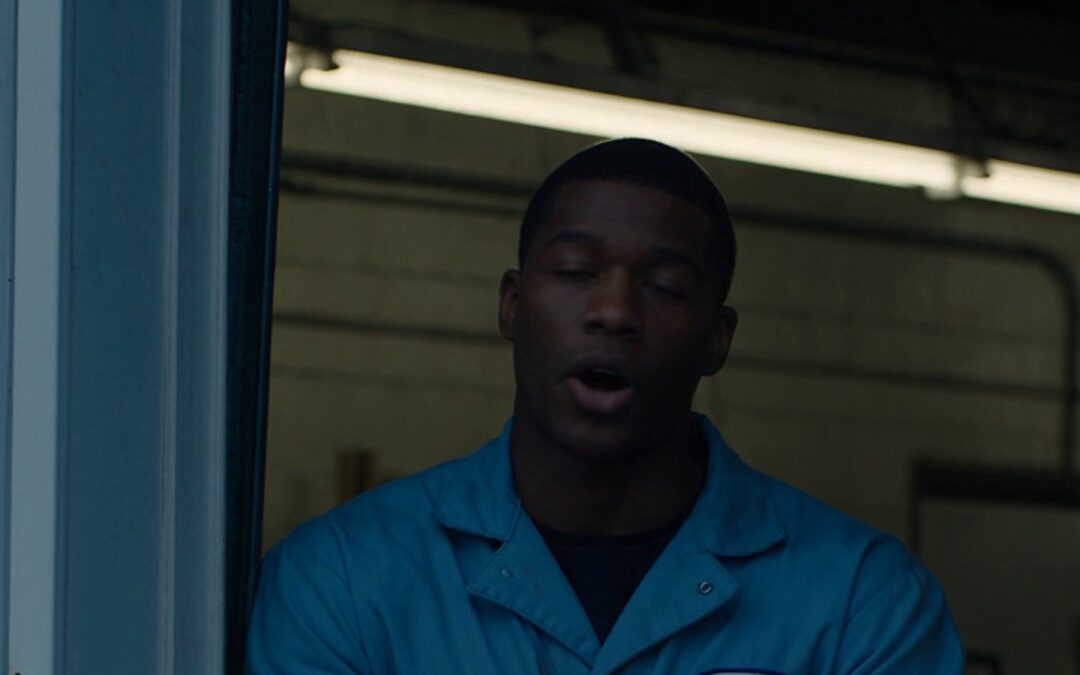
Chapter 1: Empty
Gwen held up the orange EMPTY paddle while a little boy’s mother stood beside Bus 18.
“You said you checked it,” she told Jo.
The boy had been found asleep across the back seat forty minutes after the afternoon shuttle returned to the depot.
He was awake now, wrapped in his mother’s arms, but he would not look at either driver.
Jo had spent eleven years driving children over the narrow roads of their northern Maine district.
She knew what happened to a driver who signed an empty-bus check and left a child aboard.
“I checked my bus,” Jo said.
Gwen turned the paddle over and pointed to Jo’s initials on its handle.
The dispatch board still listed Jo beside Bus 18, and Jo had initialed its inspection sheet that morning.
Last month, Gwen had warned her for filling in a check sheet after leaving the yard instead of at the bus.
Jo had argued that the depot needed another dispatcher before somebody missed something worse.
Now that argument sounded like a prediction.
Cal stood by the garage door, rubbing grease from his thumb with a paper towel.
He had found the boy when he came to move Bus 18 into its parking space.
“I heard him coughing,” Cal said.
Jo started to explain that she had driven Bus 24 that afternoon.
Gwen raised a hand.
“Your sheet for 24 came in after we found him.”
Jo had put it through the office slot when she returned, but the slot had no time stamp.
Behind Gwen, the boy’s mother tightened her hold on him.
Jo could feel the small, deserved shame of last month’s late sheet getting tangled with this accusation.
“I should’ve filled that one in sooner,” Jo said.
“But I wasn’t driving eighteen this afternoon.”
Gwen looked at the board, then at the paddle.
“Give me your keys.”
Jo laid them on the desk.
Through the office window, she could see Bus 18 beneath the depot lights.
The orange paddle was no longer on its dashboard.
It had been pulled from the windshield and placed behind the driver’s seat.
Jo remembered setting it flat on the dashboard after her morning sweep, its handle pointing toward the door.
Anyone could have moved it since.
That proved nothing.
Still, she kept looking at the empty place beneath the glass as Gwen closed her fist around the keys.
Why was the paddle behind the driver’s seat when Jo had left it on the dashboard?
Chapter 2: After the Last Stop
Why was the paddle behind the driver’s seat when Jo had left it on the dashboard?
Jo asked Gwen to let her look inside Bus 18.
Gwen followed her gaze through the office window but did not move.
“The bus stays where it is until I document it,” she said.
“Then document where the paddle was.”
“I will.”
“Document where I said I left it, too.”
Gwen’s pen paused over the form on her desk.
She wrote that down, though Jo could not see the words.
Cal folded the paper towel around his blackened thumb and dropped it in a bin.
“I moved the bus after I found him,” he said.
“Did you move the paddle?”
“I don’t remember touching it.”
Jo looked at him.
Cal looked back without lowering his eyes, and that steadiness made her less certain of what she had noticed.
The boy’s mother guided him toward the door.
Jo stepped out of their way.
“I’m sorry he was left there,” she said.
The mother stopped, her hand firm on the boy’s shoulder.
“Were you the driver?”
“No.”
“Then let them find out who was.”
The door shut behind them with a soft hydraulic sigh.
Jo could still see the boy’s socks above his shoes, one twisted halfway around his ankle.
Gwen took Jo’s keys and told her she was off her routes while the district investigated.
The transportation director would call the boy’s family and the school, collect the inspection sheets, and speak to both drivers.
Gwen would send Jo written notice in the morning.
“Am I getting paid?” Jo asked.
“For now.”
“For how long?”
“I don’t know yet.”
Jo wanted to tell her that uncertainty was an answer of its own, but Gwen looked as tired as she felt.
She had watched Gwen stay after hours to drive children home when a route went uncovered.
She had also watched Gwen erase a bus number from the dispatch board and write another over it with the side of her hand.
“Who changed me to 24?” Jo asked.
Gwen glanced at the board.
“Dispatch was busy.”
“That isn’t a name.”
“I’ll look at the assignments.”
Jo picked up her lunch bag.
Her daughter, Esme, would be waiting at home to hear why her mother had returned without the bus she drove each day.
Jo had taught Esme that an inspection sheet meant something because a child could disappear between the seats.
Last month, Jo had signed one late.
Tonight, that small failure would be the first thing Esme remembered.
At the office door, Jo turned back.
“Cal, what time did you find him?”
“Around four-thirty.”
“You said you came to move the bus.”
“I did.”
“From where?”
Cal rubbed his thumb against his palm, though the grease was gone.
“From the rear row.”
Gwen lowered her pen.
“Jo, go home.”
Jo went.
At home, Esme had pushed her homework aside and set out two bowls of leftover soup.
She was sixteen, old enough to follow the district’s messages closely and young enough to read each one aloud as though doing so might change it.
The school had told families that a student was safe after being found aboard a bus.
It had not named a driver.
Esme looked at Jo’s empty key hook.
“They took them?”
“While they investigate.”
“Did you drive eighteen?”
“This morning.”
Esme sat down.
Jo told her about the switch to 24, the boy, the board, and the paddle.
She left out the late inspection sheet from last month until Esme asked why Gwen had doubted her.
“You told me that part was fixed,” Esme said.
“I fixed how I do it.”
“You still did it.”
“Yes.”
Esme stirred her soup without taking a bite.
Jo could have blamed Gwen for keeping a board that showed an old assignment.
She could have blamed the office slot for lacking a time stamp.
Neither would make last month disappear.
“I was wrong then,” Jo said.
“I didn’t leave that boy today.”
Esme’s spoon touched the side of the bowl.
“I believe you want that to be true.”
Jo looked up.
Esme’s face tightened, as though she had surprised herself.
“That came out wrong.”
“No,” Jo said.
“It came out the way you meant it.”
Esme took her bowl to the sink.
Jo stayed at the table until the soup cooled.
In the morning, Gwen’s notice arrived by email.
It said Jo had been placed on paid administrative leave pending a review of the child-left-on-bus incident.
The attached account listed Bus 18 as Jo’s assigned bus for both morning and afternoon.
It listed her signed morning inspection and the orange paddle bearing her initials.
It noted that Jo’s afternoon sheet for Bus 24 had been received after the child was found.
It did not say Jo had been proved responsible.
Jo read it twice before calling Gwen.
“The board was wrong,” she said when Gwen answered.
“That’s one of the things we’re reviewing.”
“Who drove eighteen after school?”
“We’re interviewing everyone involved.”
“You already know who had the keys.”
“I know who says they had the keys.”
Jo took the phone away from her ear, then put it back.
“Did Cal drive it?”
“I’m not discussing his statement with you.”
“Then tell me what you need from me.”
“A written account by Friday.”
It was Wednesday.
Jo had two days to explain an afternoon the records already seemed to have assigned to her.
She began with the ordinary things she could remember without trying to make them useful.
Bus 18 had started on the first turn.
One of its wipers had made a dry squeak on the return to the depot.
Jo had swept it from back to front, put the orange paddle on the dashboard, and carried the keys into the office.
Gwen had called across the room for her to take 24 on the afternoon run because another driver was out.
Jo had taken 24’s keys from their hook.
She had not asked Gwen to change the board.
At the time, asking would have felt like interrupting the work that put children on buses.
Now the unchanged board sat at the center of Gwen’s account.
Jo wrote down the times she was sure of and left spaces beside the ones she had only guessed.
She resisted the urge to fill them.
Then she drove her own car along Bus 24’s afternoon route.
It began at the elementary school, crossed the river, climbed past a closed mill, and ended at a cluster of houses off a gravel road.
Jo stopped where she had let the last three children out.
A woman collecting mail at the corner recognized her bus jacket.
“You’re the driver they’re talking about,” the woman said.
“They haven’t said that.”
“They haven’t had to.”
Jo held her phone in her hand and asked whether the woman remembered Tuesday’s bus number.
The woman shook her head.
“I remember my grandson coming home.”
“Could you tell someone I drove him?”
“I could tell them what I saw.”
“What did you see?”
“An orange bus and my grandson.”
It was honest, and it was not enough.
Jo thanked her.
On the way back, she stopped at the elementary school.
The secretary would not release its bus loading records to her while the investigation was open.
Jo had expected that answer.
She had come because the school kept two afternoon loading areas, one for regular routes and one for late shuttles.
She stood where families waited by the front doors and looked across the lot.
Bus 24 had loaded under the covered walk.
The late shuttle loaded at the gym doors around the corner.
Jo had never seen Bus 18 there on Tuesday because she had been securing children on the other side of the building.
It was possible for both buses to have left the school without her noticing.
That gave her a question, not proof.
She asked the secretary how the gym loading area was staffed.
“A teacher checks the children against the list,” the secretary said.
“Who checked Tuesday?”
“I can pass your question to the director.”
The secretary’s voice stayed polite.
Jo left her number and returned to her car.
She did not want to put a school employee in the position of choosing between her and a supervisor.
She also could not afford to let a wrong line on a dispatch board become the only account of Tuesday.
At the depot, the buses were parked close enough to see from the road.
Bus 18 stood in the rear row.
Jo pulled over outside the fence.
From there, she could see its broad front window but not the paddle inside.
The rear row mattered.
Cal had said he came to move Bus 18 from there after the boy was found.
Jo had parked it in the front row that morning, beside the office door, because she expected to use it again.
She had watched Gwen hand her the keys to 24 and had not returned to move 18.
Someone else had driven it to the rear row.
She added that to her account.
Then she crossed it out and wrote what she actually knew: at the end of her morning route, she parked Bus 18 in the front row.
By the time Cal said he found the boy, it was in the rear row.
The distinction embarrassed her.
She had been teaching Esme to trust careful records, yet she was already tempted to turn a conclusion into a memory.
On Thursday morning, Jo received a second message from the district.
Cal had reported that he saw Jo near Bus 18 after the afternoon routes returned.
Gwen wanted Jo to address it in writing.
Jo stared at the sentence.
She had returned to the depot in 24 and walked past the rear row to reach the office slot.
If Cal had seen her near 18, he was telling the truth.
She called him.
He answered after four rings.
“Did you tell Gwen I touched the bus?”
“I told her I saw you beside it.”
“I walked past.”
“I don’t know what you did before I came around the corner.”
“Did you drive the late shuttle?”
A pause.
“Gwen told us to keep this between us and the review.”
“She told me to give a written account.”
“Then give one.”
He ended the call.
Jo sat on her bed with the phone against her knee.
Cal had three children and had taken extra routes whenever the district offered them.
He was capable of failing a sweep.
He was also capable of seeing her pass his bus and describing exactly that, leaving other people to decide what it meant.
She wrote that she had walked past Bus 18 on her way to the office.
She wrote where she had been before and after.
She did not describe Cal’s tone.
That evening, Esme came home carrying a folded handout from school.
A student meeting had addressed bus safety without naming Jo.
Someone had told Esme her mother had signed a sheet without checking a bus.
Esme put the handout on the table between them.
“That happened last month, didn’t it?”
“I completed the check,” Jo said.
“I wrote it down later.”
“You told me you fixed it.”
“I did.”
“But if you can sign later, the paper doesn’t show when you checked.”
Jo had no answer that would make the difference smaller.
“I got warned,” she said.
“I changed it.”
Esme pressed the crease flat with one finger.
“When I was little, you made me go back for my backpack.”
“You’d left it on the bus.”
“You said you needed to know where everything was before you said the bus was empty.”
“I still do.”
Esme stood up.
“Then why didn’t you write it down at the bus?”
Jo watched her go into her room.
She had an answer: she had been late, she had known the bus was empty, and she had believed memory was enough for a form she filled every day.
None of it excused what she had done.
It also had nothing to do with who drove Bus 18 on Tuesday afternoon.
Jo had to keep both truths in place while everyone around her tried to make one cancel the other.
On Friday, she took her written account to the district office in person.
Gwen was meeting with the transportation director and would not see her.
The receptionist gave Jo a receipt marked with the time of delivery.
Jo looked at the small clock behind the desk before she left.
She would not have to argue later about when she had handed this paper over.
Outside, she called the school and asked to speak with whoever had checked the late shuttle at the gym doors.
The secretary said the teacher could not discuss students or the investigation with her.
“I’m asking what bus came to the door,” Jo said.
“I understand.”
“Can you ask the district to interview her?”
“Yes.”
Jo thanked her, then stood beside her car and considered what she could still do herself.
The route along the river had parents who saw her in Bus 24.
The late shuttle had a teacher who saw its driver.
The depot had a board that had not been changed.
Somewhere between those places was a routine record that did not depend on anybody’s memory of an orange bus.
Jo remembered the brief training Gwen had given the drivers when the district installed a location service in the buses two years earlier.
It helped dispatch answer calls about late routes.
At a meeting, Gwen had said the service kept a record of where each bus traveled so staff could review complaints.
Jo had disliked the thought of her stops being measured from an office chair.
Now she wanted Tuesday’s records more than she wanted Gwen’s apology.
She wrote to the transportation director and asked him to preserve the location records for Buses 18 and 24.
She asked for the source files rather than a screenshot.
Then she sent a copy of the request to Gwen.
The reply came an hour later.
The district would preserve the records.
It would review them as part of its investigation.
It would not send Jo student route information while the review was open.
Jo could see the reason for that.
She still felt shut outside a room that held the afternoon she had driven.
On Monday, the paid leave continued.
The district had interviewed the teacher from the gym doors, but Gwen would not tell Jo what the teacher said.
Parents on Jo’s route began asking the school whether she would return.
A few asked for a different driver even if she did.
Jo heard that from the woman at the gravel-road corner, who called to say she had told the school she saw Jo on Tuesday.
“I said you brought my grandson home,” the woman told her.
“Did they ask about the bus?”
“They asked if I knew the number.”
“What did you say?”
“I said I didn’t.”
Jo thanked her for keeping to what she knew.
When the call ended, she looked at the afternoon account she had written.
The woman’s statement confirmed a piece of it.
It could not place Jo in 24 at the time the boy boarded 18.
Jo needed the location records, but first she needed to understand what they could answer.
She drove to the depot during the lunch gap and asked Gwen to come outside.
Gwen met her at the gate.
Jo stayed on the public side of it.
“Did the vendor keep both buses’ Tuesday trips?” Jo asked.
“We’ve requested them.”
“Does the record show a driver’s name?”
“It shows the bus.”
“Then the teacher’s statement matters.”
“It does.”
“Has she identified Cal?”
Gwen rested a hand on the gate latch.
“I can’t tell you what a witness said before you have a chance to respond to it.”
“I’m trying to respond.”
“You’ll get the information we rely on.”
Jo looked past her toward Bus 18.
Its orange paddle was no longer visible.
“Did anyone ask why the paddle was behind the seat?”
“Yes.”
“And?”
“Cal says he moved it while he checked the child.”
Jo had asked Cal whether he moved it, and he had said he did not remember.
She told Gwen that.
Gwen’s fingers tightened on the latch.
“Those statements are different,” Gwen said.
“Are they?”
“I’ll put the question to him.”
Jo could have demanded to know whether Gwen believed him.
She had already watched Gwen try to manage a frightened family, a frightened staff, and a district that needed its buses out every morning.
Belief was not the next record she needed.
“Ask him when he first saw the paddle,” Jo said.
“I will.”
At home, Esme was assembling a wooden model for a class project at the kitchen table.
She had run out of glue and was holding two pieces together with clothespins.
Jo put the groceries away without speaking.
Esme finally said, “I heard they might take your route.”
“They need somebody to drive it.”
“I mean for good.”
Jo closed the refrigerator.
“That might happen.”
Esme set down the model.
“Can I ask you something without you getting angry?”
“You can ask.”
“Why did you say the paddle mattered if anybody could move it?”
“Because somebody did move it.”
“That doesn’t tell you who.”
“No.”
“Then why keep talking about it?”
Jo sat opposite her.
“Because it tells me my last look at that bus wasn’t its last use.”
“You already know it moved.”
“I know it was in a different row.”
Esme frowned.
Jo picked up a clothespin, turned it over, and set it beside the model.
“When I saw that paddle behind the seat, I thought someone had picked it up after me.”
“And they had?”
“Cal says he did when he found the boy.”
“So that part has an answer.”
“It has his answer.”
Jo saw Esme’s mouth close.
She had made a fair question sound like a contest of loyalties.
“I’m sorry,” Jo said.
“I don’t need you to take my side against him.”
“I want to know what happened.”
“So do I.”
Esme returned to the model.
After a while, she asked whether Jo would help hold a piece until the glue set.
Jo put one finger against the small wall, and they sat together without trying to settle anything else.
The next day, Gwen called Jo to a meeting at the district office.
The transportation director would be there, along with a human resources employee who kept the investigation file.
Jo could bring someone to support her.
She asked her older brother to sit with her, then called him back and said she would go alone.
He believed her because he had known her all her life.
She needed people who believed the records.
The meeting room had a long table, a box of tissues, and a view of the employee parking lot.
Jo had once sat there to learn a new route.
This time, Gwen placed three pages in front of her.
The first was her morning inspection sheet for Bus 18.
The second was the dispatch board transcribed for Tuesday, still showing her beside 18.
The third was her afternoon sheet for Bus 24, marked received after the boy had been found.
The human resources employee asked whether Jo disputed any of them.
“I filled out both sheets,” Jo said.
“I didn’t change the board.”
“Did you drive Bus 18 on Tuesday afternoon?”
“No.”
The director leaned forward.
“We need to be precise about what you did after your afternoon run.”
Jo told them she parked 24, swept it, put its paddle on the dashboard, dropped the sheet in the slot, and walked to her car.
“Cal says he saw you near 18,” Gwen said.
“I walked past it.”
“He says you stopped.”
“I may have stopped to find my keys in my bag.”
“You didn’t mention that in your first account.”
“I didn’t remember stopping when I wrote it.”
The director made a note.
Jo felt how each honest qualification sounded beside the clean certainty of the board.
“Would you agree,” he asked, “that your memory of the walk across the yard isn’t exact?”
“Yes.”
“Would you agree that you have previously completed an inspection sheet after leaving the vehicle?”
“Yes.”
Gwen looked at her.
Jo held her gaze.
“I did that once,” Jo said.
“I received a warning, and I stopped.”
“Did you make the same mistake Tuesday?”
“No.”
The human resources employee turned a page.
“The gym teacher remembers an orange bus at the late loading doors.”
“Did she identify a driver?”
“She was focused on the children.”
Jo absorbed that.
The witness she had hoped might clear the assignment could not.
Gwen added that the location vendor had sent a preliminary view.
It placed Bus 18 at the gym and later in the depot’s rear row.
That confirmed the bus had been used after Jo’s morning route.
It did not show who had driven.
“Bus 24?” Jo asked.
“Their first export had a gap,” Gwen said.
“They’re checking it.”
Jo folded her hands beneath the table.
A location record for 18 and no complete record for 24 gave her the bus’s journey without hers.
The director said no final decision had been made.
He asked Jo to review the pages and respond to the new statements by Thursday.
When she left, she found Esme waiting beside her car.
Jo had told her the meeting would be short.
“It wasn’t short,” Esme said.
“No.”
“Did they find out?”
“They found out 18 went to the gym.”
“You told them it would.”
“They don’t know who drove it.”
Esme opened the passenger door.
On the drive home, she watched the trees beside the road.
Then she said, “I thought when they checked the bus record, it would be over.”
“So did I.”
Jo corrected herself.
She had hoped it would be over.
The record had answered what Bus 18 did, and she had been foolish to expect it to answer who sat at its wheel.
At the next intersection, Esme turned toward her.
“Are you sure you had 24?”
Jo pulled into a turnout.
She put the car in park.
“I drove you home in it on Thursday last week,” she said.
“That isn’t what I asked.”
“I know.”
Jo took her hands from the wheel.
“I drove Bus 24 on Tuesday afternoon.”
Esme nodded once.
“I needed to hear you say it without talking about the board.”
Jo understood.
She also understood that her daughter had been living in a town where other people had asked the same question and supplied their own answers.
“I should’ve told you sooner about last month’s sheet,” Jo said.
“Yes.”
They drove home.
On Wednesday, Jo went back to the elementary school after classes let out.
She did not approach the children or the gym doors.
She waited at the front office until the secretary had finished helping a parent.
“Is there a routine record of which bus loads at each door?” Jo asked.
“The route list,” the secretary said.
“Does anyone record a bus number when it changes?”
“Usually dispatch tells us.”
“Did they tell you Tuesday?”
The secretary checked the room behind her before answering.
“I can’t share the children’s list with you.”
“I don’t want their names.”
“I still need the director to handle this.”
Jo nodded.
As she turned to leave, she saw a rack of plastic sleeves behind the counter.
Drivers placed route notices there for teachers to collect.
She remembered taking a notice for Bus 24 from the depot office on Tuesday because Gwen had handed it to her with the keys.
The notice had been a bright green sheet, folded in half.
Jo stopped.
“When a bus changes, does the school keep the notice dispatch sends over?”
“For the week,” the secretary said.
“Then it goes in the route file.”
Jo had carried the green sheet into the front office before driving 24.
She had forgotten it because it was one small part of a hurried afternoon.
“Please ask them to look for Tuesday’s green change notice,” she said.
“I brought it here.”
The secretary picked up a pen.
“What should I tell the director it says?”
“That Gwen assigned me to 24.”
Jo paused.
“I can’t remember whether she wrote my name on it.”
The secretary wrote the request anyway.
Outside, Jo leaned against her car and let herself feel the risk of having come all this way for a sheet that might say only a bus number.
It existed for a reason: the school needed to send children to the right door when buses changed.
It should have survived because the school kept route notices for the week, then filed them.
Jo had handed it over herself.
For the first time since Gwen took her keys, Jo had found a record by retracing her own work rather than arguing with somebody else’s memory.
That evening, the director called.
The school had located the green notice in its weekly route file.
The secretary had marked its arrival in the office book on Tuesday afternoon.
The notice listed Jo on Bus 24 for the regular route and listed Cal on Bus 18 for the late shuttle.
Jo gripped the phone.
“Who wrote it?”
“Gwen.”
A long silence opened between them.
“Does Gwen remember?” Jo asked.
“She remembers making several changes.”
“That sounds like she doesn’t remember this one.”
“She’s reviewing it.”
“Can I have a copy?”
The director said the district would provide it before the next meeting.
Jo looked across the room.
Esme was reading on the couch, close enough to hear Jo’s side.
“Does this clear me?” Jo asked.
“It’s substantial,” the director said.
“We still have to reconcile it with the other records and everyone’s statements.”
Jo disliked the answer until she imagined him giving the same certainty to the boy’s mother before he had finished checking.
“When will you meet?” she asked.
“Friday morning.”
After the call, Jo told Esme about the notice.
Esme set down her book.
“You found it?”
“I remembered carrying it to the school.”
“And it has Cal’s name?”
“Yes.”
Esme came over and sat beside her.
“I’m glad,” she said.
Jo wanted to accept that as an end.
The director had not offered one, and the boy had still been left on the bus.
Jo asked Esme to let her finish the account before they celebrated.
On Thursday, the district sent the promised copy.
The green notice had Gwen’s handwriting across the top.
Bus 24 appeared beside Jo’s name.
Bus 18 appeared beside Cal’s.
The school’s office book confirmed the notice had arrived before afternoon loading.
Jo could see why the board at the depot had fooled Gwen: its old assignment stood where staff looked first, while the changed assignment had left the building in Jo’s hand.
The notice was strong evidence, but Jo could hear the argument against it.
Gwen could have intended Cal to take 18 and later switched drivers again.
Jo could have driven 18 after her regular route, though she had not.
The gap in Bus 24’s preliminary location export left room for that claim.
She wrote those objections on the back of a grocery receipt.
Then she called the director.
“Did the vendor explain 24’s gap?”
“They say the first export was a map view, not the underlying trip record.”
“Will you get the record?”
“Yes.”
“Please include the time 24 entered the depot.”
“We’ve asked.”
Jo set the receipt beside the green notice.
She had spent a week chasing a paddle because someone had moved it.
The notice explained one move: who had taken Bus 18 after her.
The location record could show whether her own bus had stayed on its route while 18 carried the late shuttle.
Neither would tell them why Cal said he had only come to move 18.
That would require Cal to account for his own afternoon.
On Friday morning, the meeting room held an extra chair for Cal.
He sat at the far end of the table in a clean work shirt, both hands around a paper cup.
Jo sat opposite Gwen.
The transportation director began by saying the district was reviewing two questions.
The first was who had operated Bus 18 on its late shuttle.
The second was whether that driver had completed the required empty-bus check before leaving the vehicle.
The boy’s family would receive the district’s findings when the review was complete.
Jo appreciated hearing the questions separated.
She was still frightened of the answers.
The director asked Gwen to describe how assignments had changed on Tuesday.
Gwen said a driver’s absence had forced her to move Jo to 24 and put Cal on the late shuttle with 18.
She had handed Jo the change notice for the school.
She had meant to update the depot board after the buses left.
She had not done it.
Cal looked down at his paper cup.
Gwen continued.
“When the child was found, I saw Jo’s name on the board and her initials on the paddle.”
“You knew you’d made a change,” Jo said.
“I knew I’d made several.”
“You asked for my keys before you checked the notice.”
“Yes.”
Gwen did not turn away.
“I should have checked it first.”
The director placed the green notice on the table.
Cal said Gwen had given him 18 for the shuttle, but the notice did not prove Jo had not taken it later.
Jo had expected that argument.
“Why would I?” she asked.
“I don’t know,” Cal said.
“You walked past it when you came back.”
“That puts me in the yard.”
“It puts you near the bus.”
Gwen raised a hand.
“Answer the director, Cal.”
Cal turned toward him.
“I drove the late shuttle,” he said.
“I brought the bus back and parked in the rear row.”
Jo felt Esme’s absent hand pressing against hers.
Cal had finally said aloud what the green notice showed.
The director asked whether he had checked the bus after parking.
“I walked the aisle,” Cal said.
“I didn’t see anyone.”
“Did you put up the EMPTY paddle?”
“It was already in the bus.”
“Where?”
Cal glanced at Jo.
“Behind my seat.”
Jo leaned forward.
“When you first got in at the depot?”
“I don’t remember that far back.”
“You told Gwen you moved it after you found the boy.”
“I might have.”
“And you told me you didn’t remember touching it.”
“I was trying to remember a bad afternoon.”
The director let the silence settle.
Cal had not said anything absurd.
A driver who had found a child asleep in his bus might forget where he had put a plastic paddle.
The paddle alone could not carry the case.
The director asked Jo about her own inspection on Bus 24.
“I checked from the last row forward,” she said.
“I left its paddle flat on the dashboard and dropped the sheet in the slot.”
“You have no time stamp for the sheet,” Cal said.
“No.”
“You’ve filled one in later before.”
“Yes.”
Cal turned to the director.
“That’s what I mean.”
Jo watched him make the argument carefully.
He was not claiming he had never driven 18.
He was claiming Jo’s late sheet and presence near the bus left open a second use she could not disprove.
The director put a new document on the table.
“The vendor supplied the underlying trip records yesterday,” he said.
He explained that the buses reported their movements to a service the district used for route questions.
The first map view had omitted part of Bus 24’s afternoon because its display stopped at the end of the regular route.
The underlying record continued through Jo’s return to the depot.
A district technology employee had checked the export against the vendor’s account, and the director had compared the recorded stops with Tuesday’s route assignments.
Bus 24 had followed Jo’s regular route and entered the depot shortly after four.
Bus 18 had left the elementary school’s gym doors on the late shuttle, completed its stops, and entered the rear row earlier.
Cal shook his head.
“That still doesn’t say who was driving,” he said.
“No,” the director agreed.
“Or who was inside after it came back.”
“No.”
Jo’s chest tightened.
The record she had asked them to preserve had arrived, and Cal had identified its limits before she could speak.
The director turned another page.
“The school change notice assigned you to 18 before loading,” he told Cal.
“You’ve confirmed you drove that shuttle and parked the bus.”
“I did.”
“The location record confirms that trip ended before Jo’s bus returned.”
Cal set down his cup.
Jo saw the consequence before anyone stated it.
She could not have gone back and failed the check on a bus Cal had already parked with the boy inside.
She had entered the yard in 24 after the shuttle ended.
Cal looked toward Gwen.
“She was beside 18 later,” he said.
“She could have opened the door.”
The director looked at Jo.
“Did you?”
“No.”
Cal spread his hands.
“How do we know?”
It was the smartest version of his defense.
Jo had been near the bus after returning.
Her afternoon sheet was late.
She had once completed a form away from a vehicle.
If the district tried to prove nobody else had touched Bus 18 after Cal parked it, every minute in the yard would become an argument.
Jo kept her voice level.
“You said you checked it when you parked,” she told him.
“I did.”
“Then the boy was there when you checked.”
Cal’s jaw shifted.
“He might have climbed back on.”
“The doors were closed,” Gwen said.
All four of them looked at her.
Gwen kept her eyes on Cal.
“You told me you closed them after you parked because the wind was catching them.”
“I did.”
“You didn’t say anyone opened them before you found him.”
“I didn’t see the whole yard.”
Jo waited.
She did not need Gwen to claim she had watched every door.
She needed the account of Cal’s own check to stay attached to the trip he admitted driving.
The director asked Cal whether he had seen the boy leave the bus at any stop.
“No.”
“Did you see him leave it in the depot?”
“No.”
“Did you see Jo open it?”
“No.”
Cal looked at the green notice, then at the record of the two buses.
“I thought I walked all the way back,” he said.
No one answered at once.
The director asked him to describe the sweep.
Cal said he had parked, taken his bag from behind the seat, and looked down the aisle.
He had gone several rows back.
He believed he had reached the last one.
The boy had been curled below the window on the rear bench.
The director wrote while Cal spoke.
Jo watched the orange paddle lying on the table between them.
Gwen had brought it as part of the original evidence.
Its handle still bore Jo’s initials from the morning.
“I left that on the dashboard,” Jo said.
Cal looked at it.
“When I got into 18, it was up there.”
“What did you do with it?”
“I took it down.”
“Why?”
“Because it said the bus was empty before I’d driven the shuttle.”
He stopped.
The director stopped writing.
Cal had removed a morning driver’s EMPTY paddle before carrying children in the afternoon.
He had set it behind his seat so it would not claim the bus was empty during his route.
Jo had seen that changed position through the office window and known only that someone had moved it.
Now its place had an ordinary, terrible meaning.
The paddle had never been Cal’s proof of a completed afternoon sweep.
It was Jo’s old morning paddle, put away before his trip and left there when he failed to reach the sleeping boy.
Gwen touched its handle.
“I saw her initials,” she said.
“I didn’t ask when she’d put it up.”
Cal stared at his hands.
Jo felt no pleasure in his silence.
His children would hear what Esme had heard about hers.
The boy’s mother would hear why her son had been alone.
Those consequences would be real whether Cal had meant to overlook him or not.
The director asked Cal if he wanted to add anything before they recessed.
“I didn’t know he was there,” Cal said.
“I believe that,” Jo answered.
“I know what you left there.”
Cal lifted his head.
Jo had not planned to speak to him directly.
Her voice came out quieter than she expected.
“You left him on a bus you were paid to check.”
Cal said nothing.
The director closed the folder.
He said the district would give Cal written notice of its findings and an opportunity to respond before deciding employment consequences.
Jo’s leave would end after the district completed its record.
The boy’s family would receive a direct account of what had happened, including the wrong initial attribution to Jo.
Gwen asked to speak with Jo after the others left.
They stayed at opposite sides of the table.
“I owed you a better first question,” Gwen said.
“You owed the boy one, too.”
“Yes.”
Jo picked up her copy of the green notice.
Gwen did not ask whether she was forgiven.
Jo was grateful for that.
“What happens to the board?” Jo asked.
“Changes will be entered there when they happen.”
“By whom?”
“The person assigning the bus.”
“And the school notice?”
“We’ll keep the matching copy at the depot.”
Jo nodded.
It was a useful change.
It did not give her back the week Esme had spent wondering whether her mother’s word could be trusted.
Two weeks later, the district sent Jo a written finding that she had not driven Bus 18’s late shuttle or left the child aboard.
The finding also kept her previous warning for the late inspection sheet on its own record.
Jo read both parts at the kitchen table.
Cal had been removed from driving while the district completed its employment process.
The district later told families that the driver responsible for the missed check no longer drove its routes.
It did not share every personnel detail, and Jo did not ask for them.
The boy was safe.
His mother had received an explanation and had asked the district to make drivers physically reach the back of a bus before marking it empty.
Jo had wanted that all along.
A family who had requested another driver for Jo’s route kept the request.
Most of the children returned to their usual seats without mentioning the investigation.
Esme took longer.
One evening she found Jo filling out a household form and watched her set it aside to check a date before signing.
“You always do that now,” Esme said.
“I should have done it before.”
Esme sat beside her.
“I should’ve listened when you said you drove 24.”
“You had a reason to ask.”
“I still hurt you.”
“Yes.”
Jo put down the pen.
“I hurt your trust before you asked.”
Esme leaned her shoulder against Jo’s.
They stayed that way until the kitchen light clicked off on its timer.
On Jo’s first morning back, she found a clean orange EMPTY paddle waiting in Bus 24.
It had no one’s initials yet.
At the end of the route, she walked the aisle, touched the back of the last seat, and came forward through the rows she had just checked.
Only then did she write her initials on the handle.
She set the paddle flat on the dashboard, where anyone opening the bus could see exactly when she had left it.