They Took Her Keys Over Her Sister’s Grain Ticket—Then She Noticed One Detail Nobody Could Explain
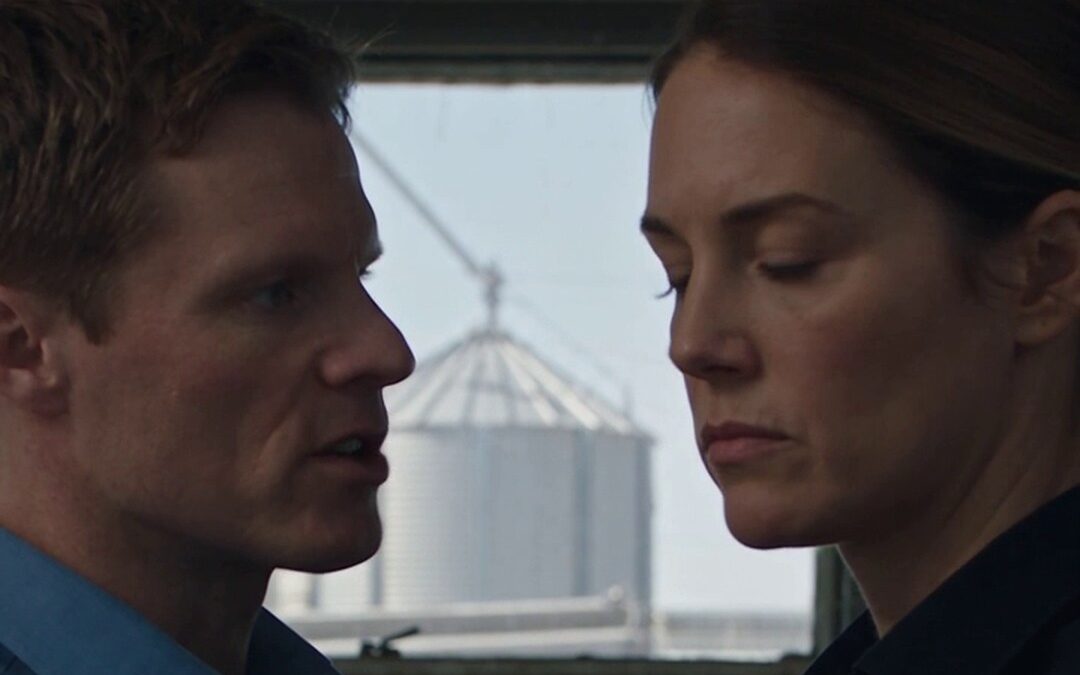
Chapter 1: The Corner in the Printer
Evan held up a yellow scale ticket with its corner torn away and asked Mara to hand over her keys.
The grain elevator’s office went quiet except for the ticket printer ticking beside her elbow.
“You changed the weight,” he said.
Mara looked at the ticket, then at the two farmers waiting by the door.
One of them had delivered corn that morning, and the other was waiting to be paid for last week’s load.
“I didn’t,” she said.
Evan laid the ticket on the counter and pressed one finger beside her initials.
The weight credited to Nell’s truck was higher than the weight in the elevator’s receiving record.
Nell was Mara’s sister, and everyone in that office knew her farm needed this payment.
“You corrected her ticket last month,” Evan said.
“A trailer number,” Mara said.
“Without telling me.”
That was true, and Mara heard the waiting farmers shift their boots on the concrete floor.
She had fixed a transposed number after Nell called from the road, then left the corrected slip on Evan’s desk instead of waking him.
It had been careless, and it looked worse now.
Darlene came in from the yard with grain dust on her sleeves and stopped when she saw Mara’s keys still in her hand.
Evan turned the ticket toward her.
“The buyer rejected the weight,” he said.
Darlene studied the paper but said nothing.
Mara reached for the receiving record, and Evan put his palm over it.
“Leave the records where they are.”
“I want to see the original.”
“That is the original.”
Mara pulled her hand back.
Beyond the office window, the truck scale sat empty, its painted edges bright against the dark pavement.
She remembered Nell’s trailer rocking to a stop on it that morning and the printer coughing out a strip of yellow paper.
She remembered tearing that strip free.
The corner had come away cleanly.
The ticket in Evan’s hand had a rough, crooked tear.
Mara glanced at the printer.
A tiny yellow triangle was still caught between the paper guide and the clear cover.
Evan followed her eyes, then closed his hand around the ticket.
“Keys,” he said.
Mara set them on the counter, but kept looking at the trapped triangle.
If that was the original ticket she had torn off that morning, why was its corner still in the printer?
Chapter 2: What the Scale Kept
If that was the original ticket she had torn off that morning, why was its corner still in the printer?
Mara reached toward the clear cover.
Evan stepped between her and the machine.
“Don’t touch it.”
“I’m looking at it.”
“You can look from there.”
Darlene leaned against the doorframe, her gaze moving from the yellow triangle to the ticket in Evan’s fist.
“Is she suspended?” she asked.
“With pay while we review it,” Evan said.
Mara let out a short breath.
He had found a way to say it before she had.
“Who reviews it?” she asked.
“I’ve called the cooperative’s auditor.”
“Then leave the printer alone until she gets here.”
Evan looked at it.
For a moment Mara thought he might open the cover himself.
Instead, he took his phone from his pocket and photographed the printer, the ticket, and the receiving record without moving any of them.
“Fine,” he said.
Mara had asked for the printer to stay untouched, but she regretted leaving her keys on the counter.
Evan’s phone could record what was visible.
It could not record how the ticket had been fed, or who had stood beside the printer since she left the office.
She took off her work apron and folded it with more care than it deserved.
One farmer turned his face toward the yard.
The other kept watching her.
Mara knew both men by their trucks and their voices, but neither spoke.
Darlene followed her out through the side door.
“The printer jammed yesterday,” she said.
“I know.”
“Could be old paper.”
“Could be.”
Darlene stopped walking.
“You think I should have said something in there.”
“I think you know what you saw.”
“I saw a corner in a printer.”
“That’s more than Evan let me say.”
Darlene rubbed the dust from her thumb with the side of her finger.
“My husband’s hours got cut again,” she said.
Mara looked at her.
Darlene had worked the yard long enough to know when an explanation was also an apology.
“I’m not asking you to lose your job for me.”
“I know,” Darlene said.
Mara crossed the lot to her car while Nell’s empty grain trailer waited beside the testing shed.
It had two rear axles, a rust patch shaped like a leaf near the ladder, and a length of blue rope Nell used to keep the tarp crank from rattling.
There was nothing extraordinary about it.
That was part of what made the accusation so hard to push away.
The truck had come in.
Mara had weighed it.
Her initials were on the ticket.
And Nell needed money badly enough that Mara had spent the previous month pretending not to see the final notices on her sister’s kitchen table.
Nell answered Mara’s call on the second ring.
“Did they finish the account?”
“They’re reviewing your load.”
“What does that mean?”
“It means they think I raised the weight.”
Silence filled the car.
Then Nell said, “Because it’s mine.”
“Because it’s yours, and because I changed the trailer number last month.”
“You changed two digits.”
“I didn’t tell Evan first.”
“I asked you to fix it.”
“I know.”
Nell sounded as though she had stepped outside.
Mara heard the hollow knock of the farm’s screen door.
“How much weight?” Nell asked.
“More than the receiving record shows.”
Nell named the difference before Mara did.
Mara sat up.
“How did you know?”
“The amount was on the payment notice Evan sent this afternoon.”
“He sent you a notice already?”
“He said the payment was on hold.”
Mara looked across the lot at the office.
The window reflected the scale so brightly she could no longer see inside.
“When did he send it?”
“About an hour ago.”
That was before Evan had confronted her.
Nell heard her pause.
“Don’t turn that into proof,” she said.
“I wasn’t going to.”
“You were.”
Mara rested her forehead against the steering wheel.
“What did your driver see this morning?”
“I drove it myself.”
“Then tell me exactly what happened.”
“I pulled onto the scale, you weighed me, and I took the ticket you handed me.”
“Which ticket?”
“The yellow one.”
“Did you keep it?”
Nell gave a tight laugh.
“I put it with the rest.”
“Please find it.”
“I have to unload the smaller truck first.”
“Nell.”
“I said I’ll find it.”
The call ended with neither sister saying goodbye.
Mara stayed in the car until the farmer who had watched her came out carrying a fresh ticket.
He slowed when he saw her, then climbed into his cab without a wave.
By evening, her unpaid neighbors would know.
By morning, Nell would hear that Mara had lost her keys.
Mara drove home through fields cut down to stubble and tried to account for every minute of Nell’s visit.
Nell had arrived shortly after eight.
Mara had checked the trailer number, taken the loaded weight, and sent her to the pit.
After unloading, Nell returned for the empty weight.
The system paired those weights and printed the ticket Mara had signed.
It was routine enough that Mara could picture her hands moving without being sure which hand had held the paper.
At home, she drew the route on the back of an old envelope.
Entrance, scale, sampling stand, pit, scale, exit.
The pit operator recorded what went in.
The scale recorded the truck before and after.
Those records could disagree if a load spilled, if the truck carried something it had not carried at the first weighing, or if the wrong transactions had been paired.
Evan had presented the disagreement as though it could have only one cause.
Mara could not yet present another.
Her phone lit with a message from Nell: FOUND IT. CALL ME.
Nell picked up at once.
“The original’s in my folder.”
“Describe it.”
“It’s yellow.”
“The corner.”
“What corner?”
“The upper right one.”
Nell shuffled paper.
“Straight across.”
“Are you sure?”
“It has a little square tab where you pulled it against the teeth.”
Mara closed her eyes.
The ticket in Evan’s hand had a diagonal tear.
“Don’t take it out of your folder,” Mara said.
“I need it for the account.”
“Put the whole folder in a clean bag.”
“You sound like an attorney.”
“I sound like someone who wants the paper tomorrow.”
“Can’t I just photograph it?”
“Do that too.”
Nell sent three pictures while they were still on the phone.
The ticket showed the same credited weight Evan had disputed.
Mara had hoped the original might show a different number.
It did not.
“You see?” Nell said.
“I see the weight.”
“And your initials.”
“Yes.”
“Does that mean they’re right?”
“No.”
Mara hated how much she needed to add.
“But it doesn’t mean they’re wrong.”
Nell was quiet for so long that Mara checked the call.
“I need that payment,” Nell said at last.
“I know.”
“I need you to understand that without making it your defense.”
Mara stared at the drawing on the envelope.
“I do.”
The next morning, Evan emailed a short notice stating that Mara would stay away from the elevator during the review.
It said the cooperative had placed Nell’s payment on hold and would preserve relevant records.
It did not say theft, fraud, or firing.
Those words had already traveled farther than the email.
A neighbor at the gas station stopped talking when Mara came in for coffee.
At the counter, the clerk asked if she wanted a receipt in a careful voice that made Mara want to leave without the cup.
She paid and took the receipt.
At ten, the cooperative’s auditor, Leah Baird, called.
Leah introduced herself as someone from the regional office and said she was reviewing the weight discrepancy, not deciding anyone’s employment that day.
“I’ll need your account from before you saw the records,” she said.
Mara described Nell’s arrival and both weighings.
She told Leah about the trailer-number correction the month before.
She told her about the triangle in the printer.
Leah did not praise the observation.
“Why does that matter to you?” she asked.
“The ticket Evan showed us was torn there.”
“Could it be from another ticket?”
“Yes.”
“Could the ticket he showed you be a later print of the same transaction?”
“Yes.”
“Then what are you asking me to check?”
Mara looked at Nell’s photograph on her phone.
“When that particular piece of paper came out.”
Leah paused.
“That’s a fair question.”
“Can I be there when you open the printer?”
“You can attend the review meeting if Evan agrees, but I’m examining the machine first.”
“Darlene saw it too.”
“I’ll speak to her separately.”
Mara appreciated that Leah did not ask her to gather Darlene’s account.
It also meant Mara could not tell whether Darlene would give one.
“Please keep the printer’s internal record,” Mara said.
“We’re preserving it.”
Mara hung up and wrote down Leah’s exact words.
Preserving was not the same as understanding.
At the elevator, the scale terminal stored entries made at the desk.
The printer stored a much plainer history of what it had been asked to print.
Mara knew because she had once spent forty minutes feeding a new roll through it while an equipment technician showed her how to check whether a stubborn job had printed twice.
She had forgotten his name.
She remembered the clear cover and the way a torn strip could ride along under the guide without stopping the next ticket.
That afternoon, Mara drove to Nell’s farm.
Nell met her in the machinery shed with the folder inside a grocery bag.
“I didn’t move anything,” she said.
Mara slid the ticket out by its edges and laid it on a clean workbench.
Its top edge was nearly straight.
A small square bite in the corner matched the printer’s usual cutter.
“Did you get another one?” Mara asked.
“No.”
“Did anyone at the office ask to see it?”
“Evan called after you left.”
“What did he ask?”
“He asked if I’d made a copy.”
“What did you say?”
“That I had the original.”
“Anything else?”
“He asked if you and I had talked about weights before I hauled.”
Mara looked up.
“Had we?”
“You asked how much the load might bring.”
“That’s what I remember.”
“He made it sound different.”
Nell folded her arms.
“He said you’d know exactly how much extra weight could save the farm.”
Mara wanted to tell her the question was unfair.
She had watched Nell choose which repair to postpone and which bill to pay.
She knew a heavier ticket would help.
“Did you tell him that?” Mara asked.
“I told him we’ve talked about money.”
“Good.”
Nell did not smile.
“Don’t thank me for telling the truth.”
Mara slid the ticket back into its sleeve.
A faint pair of staple holes marked the lower edge.
“Where was it attached?”
“To the load sheet,” Nell said.
“Can I see that?”
Nell pulled another paper from the folder.
Mara checked the holes without reading the smaller print.
They lined up.
“Why are you looking at the staple?”
“Because the ticket Evan showed me wasn’t stapled.”
“He could have pulled it out.”
“He could have.”
Mara put both papers back.
Every difference she found had a possible ordinary explanation.
That was frustrating, but it also kept her from building a defense out of wishful details.
Nell watched her refold the grocery bag.
“Tell me what you actually think.”
“I think Evan showed us a reprint.”
“Why?”
“I don’t know.”
“That isn’t much.”
“No.”
Nell pulled the shed door down halfway, leaving a bar of daylight across the floor.
“I’ve got growers asking whether I was in on this,” she said.
“Who?”
“It doesn’t matter.”
“It matters to me.”
“I know it does.”
Nell caught the chain before it rattled.
“That’s why I need you to find out what happened, not who’s talking.”
Mara left the farm with a photograph of the original ticket and Nell’s permission to give it to Leah.
She did not take the paper.
Nell would need it to challenge the hold on her payment, and Mara wanted Leah to see it where Nell had kept it.
On the drive home, Mara called the one person who might remember Nell’s truck moving through the yard.
Darlene let it ring five times.
“I shouldn’t talk about the review,” she said when she answered.
“Then don’t tell me what Leah asked.”
“She hasn’t called yet.”
“I want to know what you saw before yesterday.”
Darlene sighed.
“I saw Nell come across the scale twice.”
“Anything between those passes?”
“I was at the pit.”
“Did the grain come out clean?”
“That’s not what they’re accusing you of.”
“I know.”
“Then why ask?”
“Because the receiving record has less than her ticket.”
“The pit took the load.”
“All of it?”
“You’d have heard if it didn’t.”
Darlene lowered her voice.
“Ask yourself what a truck can carry on its second trip across the scale.”
Mara turned onto the shoulder.
“What are you telling me?”
“I’m telling you to do the work.”
Darlene ended the call.
Mara replayed the sentence all evening.
A truck could return to the scale with its driver, tools, chains, and anything picked up in the yard.
That morning Nell had carried a spare tire mounted under the trailer.
It was heavy, but nowhere near the disputed weight.
The bigger question was whether the truck that returned for the empty weight was the same truck the system had paired with Nell’s loaded weight.
It should have been.
Mara herself had entered the trailer number when Nell pulled back onto the scale.
She could picture Nell at the window, one elbow resting on the door.
She could not picture the number she had typed.
At midnight, Mara opened her personal notebook from work.
She kept it in the kitchen drawer because Evan had once asked the clerks to record printer trouble and unusual scale delays on paper until the terminal could be repaired.
Most pages were grocery lists and reminders.
Thursday’s page said: PRINTER SLOW AFTER 8 / NELL TWO PASSES / BLUE TRUCK WAITED.
Mara had written it during lunch.
The blue truck was a local hauler that often picked up another farm’s loads.
She could not remember why she had noted it.
She studied the words until they blurred.
Then she remembered the driver leaning out of the blue cab while Nell waited near the exit.
He had asked if he could roll over the empty scale before making another pickup.
Mara had told him to wait until Nell cleared.
Had he?
The note did not say.
She phoned Leah in the morning.
“I want the order of every scale entry between Nell’s first and second passes,” Mara said.
Leah asked why.
Mara read from her notebook and explained the blue truck.
“Was that note made yesterday?” Leah asked.
“At lunch on the day of the load.”
“I’ll need to see the page.”
“I can bring the notebook.”
“Bring the whole thing.”
Mara hesitated.
“It has personal notes in it.”
“Then bring it and show me the page in person.”
That afternoon, Mara met Leah in a small room at the cooperative’s regional office.
Leah was younger than Mara had expected, with a blunt pencil tucked behind one ear and a stack of empty folders in front of her.
She let Mara explain the notebook before touching it.
“Evan will say you wrote this after the dispute,” Leah said.
“He can.”
“Who knew you kept the notebook?”
“Darlene saw me use it.”
“Anyone else?”
“Maybe the technician who replaced the printer roll last spring.”
Leah photographed the page with Mara watching.
“The order of entries matters,” Mara said.
“It does, and it may still support Evan.”
“I know.”
Leah set the notebook down.
“I’ve looked at the receiving record.”
“You said you’d preserve the terminal log.”
“I did.”
“And?”
“I’m not ready to interpret it.”
Mara felt the words land.
“You found something.”
“I found entries that need a person who understands the system.”
“The equipment company?”
“Yes.”
“When?”
“They have a service visit scheduled tomorrow.”
Mara sat back.
“Can you tell me whether the blue truck crossed the scale?”
“Not from what I have in front of me.”
“Why not?”
“Because the terminal shows a transaction started, canceled, and started again around the same time.”
Mara remembered the printer slowing.
“Who canceled it?”
“That’s one of the questions.”
“Was it under my login?”
Leah met her eyes.
“Yes.”
Mara looked down at the notebook.
She had started the blue truck’s empty weight while Nell was clearing.
She might have canceled it when the driver backed away.
She could not remember doing either.
Leah slid the notebook back across the table.
“Tell me how you handled a truck that needed an empty weight first,” she said.
Mara explained that the terminal let a clerk open a transaction and pair it later with a loaded pass.
For farmers who arrived loaded, the order was reversed.
The screen showed pending transactions so the clerk could select the right one when the truck returned.
“There’s a vehicle number on each,” Mara said.
“Can those be wrong?”
“I corrected one last month.”
Leah let the silence stand.
Mara understood why.
The older correction made the current error easier to imagine, whether she had cheated or merely made a mistake.
“Could you select the wrong pending weight?” Leah asked.
“Yes.”
“Would you notice?”
“Usually the numbers would be wrong enough to stop you.”
“And if they weren’t?”
Mara had no answer she trusted.
At home, a voicemail from Evan waited on her phone.
He said the cooperative had received a complaint from another grower who wanted to know whether his weight had been affected.
He did not name the grower.
He said Mara should not contact customers while the review was open.
The message ended with a measured “Please call me if you have questions.”
Mara listened twice.
The first time she heard a threat.
The second time she heard a manager trying to keep a small business from losing more trust.
She called back.
“You told people I raised Nell’s weight.”
“I told the board there’s a discrepancy under review.”
“Someone in your office called it fraud.”
“I don’t control every conversation.”
“You control the office.”
“That’s what I’m trying to do.”
“Then tell them there’s no finding yet.”
“I have.”
Mara pressed a finger against her forehead.
“Why did you print that ticket again?” she asked.
“Leah asked for a copy.”
“Before you confronted me?”
“I printed it when I saw the discrepancy.”
“Why was the corner still in the printer?”
“I tore it badly.”
“Did you look at the original Nell took?”
“No.”
“Then why tell me yours was the original?”
Evan paused.
“Because I meant the original transaction.”
“You were holding a new sheet.”
“I was holding the record I had.”
“That’s a different thing.”
“It may be,” he said.
Mara had expected him to argue harder.
His willingness to give that inch unsettled her.
“Tell Leah exactly when you printed it,” she said.
“I already have.”
The next morning, Nell arrived at Mara’s house with two paper cups of coffee and a set of questions she had written on the back of a feed invoice.
Mara opened the door and saw the invoice first.
“You made a list.”
“I don’t want us to fight in circles.”
They sat at Mara’s kitchen table.
Nell asked whether Mara had ever changed a weight for anyone.
“No.”
“Have you ever used my account to practice a correction?”
“No.”
“Did you know the blue truck was there?”
“I wrote it down.”
“Did you touch its transaction?”
“I might have started one.”
Nell put the cup down.
“That’s the answer that scares me.”
“It scares me too.”
“If this was a mistake, I need to know before I tell anyone I’m innocent.”
“You didn’t touch the scale.”
“I signed the delivery papers.”
“You were entitled to trust the ticket.”
Nell stared at the table.
“So were the other farmers.”
Mara waited.
Nell drew a line through one question on the invoice.
“I thought you’d say there was no way you could have done anything wrong.”
“I can’t say that.”
“Yesterday I wanted you to.”
Mara folded her hands to keep from reaching for Nell’s.
She remembered them as girls dividing chores by drawing lines on scrap paper just like this.
Nell had always wanted an answer that held up when the adults came home.
“I did use your old correction without telling Evan first,” Mara said.
“That didn’t change a weight.”
“No, but it taught people I’d go around him for you.”
“I asked you to.”
“I should have told you to wait.”
Nell looked up.
“If they clear you, will you go back?”
“I don’t know.”
“I didn’t ask if they’d take you.”
“I know.”
Nell finished the coffee without tasting it.
Before she left, she gave Mara the original ticket, still sleeved with the load sheet.
“Leah called,” she said.
“She wants me there tomorrow.”
Mara stood with the papers in her hand.
“She didn’t tell me there was a meeting.”
“She asked me to bring the folder.”
“She should have.”
Nell stopped at the door.
“You can call her.”
It was a small correction, and Mara deserved it.
Mara called Leah while Nell was backing down the drive.
Leah said the equipment technician had reviewed the terminal and printer records, but she wanted the original ticket before drawing a conclusion.
She invited Mara to a meeting the following afternoon with Evan and one board representative.
“Am I allowed to see what you’re relying on?” Mara asked.
“You’ll see the relevant entries there.”
“Why not now?”
“Because I’m still checking how the software paired them.”
“Is the technician coming?”
“He’ll be on a call.”
Mara looked at the original ticket under its sleeve.
“Then I’ll be there.”
She wanted to spend the rest of the day building a case from memory.
Instead she drove the route Nell had driven.
She could not enter the elevator property, so she parked at the public road and watched trucks move across the scale.
A loaded truck rolled in.
A second waited near the entrance.
Darlene waved the first toward the pit, then held up one hand to stop the second.
Mara remembered the blue truck driver doing the same thing on Thursday.
He had rolled forward when Nell pulled away from the office window.
He had stopped with his front wheels just short of the scale.
The scene in her head changed.
She had entered his vehicle number before he moved.
Then Nell came back from the pit.
Mara could have left the blue truck’s pending transaction open.
Or she could have canceled it.
Either way, a transaction in her login did not mean a truck had been weighed.
Mara walked to the edge of the public shoulder.
From there she could see the scale’s small outdoor indicator, the one drivers watched while they settled their wheels.
A truck had to be fully on the platform before its weight held steady enough for the clerk to accept.
She had taught seasonal clerks to wait for that steady reading.
On Thursday, the printer had been slow.
Nell had been talking through the window.
The blue driver had been waiting.
Mara could have rushed.
But a rushed entry would not explain the receiving record’s lower weight.
She watched the truck leave the scale and then drove to the buyer’s grain terminal twenty miles away.
Nell’s corn had gone there in a combined shipment with other loads from the cooperative.
Mara could not ask the buyer to show her private records.
She wanted to learn what records existed.
At the public window, a clerk in a faded work shirt told her that trucks received a weight ticket on arrival and another after unloading.
Mara asked whether those weights were kept if a cooperative disputed its own scale.
“Usually,” the clerk said.
“For how long?”
“Long enough that last week won’t be a problem.”
“Who can request them?”
“The account holder.”
Mara thanked him and went outside.
She had driven there on her own time and spent fuel she could not replace easily, but the trip gave her a question she could bring to Leah.
It also gave her a limit.
A buyer’s total for a mixed shipment might confirm how much grain reached the terminal.
It could not, by itself, prove which farm’s corn made up the difference.
Mara called Nell from the parking lot.
“Would you authorize Leah to request the receiving weights?”
“If it helps.”
“It may only confirm the total shipment.”
“Then why ask?”
“Because Evan says the cooperative credited more grain than it received.”
“And the buyer might show what the cooperative sent.”
“Yes.”
Nell thought for a moment.
“Send me what to sign.”
“I’ll ask Leah for the form.”
Mara stopped herself before she said thank you again.
Nell had her own account to protect.
The review meeting took place the next day in the elevator’s upstairs room.
Mara had been there for safety talks, retirement cake, and one argument about a broken gate.
A long table filled most of it.
Leah sat with the original ticket, Mara’s notebook photograph, and a small stack of printed records.
Evan sat beside board member Rosa Bell, who ran a farm west of town and rarely spoke unless she had read everything first.
Nell sat at the far end with her folder.
Darlene stood near the wall until Leah offered her a chair.
She took it after seeing that Mara had one.
The equipment technician joined by speakerphone.
Leah began by saying no employment decision would be made in that room.
Evan nodded.
Rosa wrote the statement down.
“We need to understand two records,” Leah said.
“The scale credited Nell’s load at one weight, and the pit recorded a smaller delivery.”
Evan placed his hands on the table.
“The difference is large enough to affect payment.”
“Nobody disputes that,” Nell said.
“I’m saying why I stopped it.”
“You stopped it before you spoke to me,” she said.
“I was required to stop a disputed payment.”
Leah raised one hand.
“We’ll take the records in order.”
She asked Mara to describe Thursday without using the notebook.
Mara did.
She said she remembered the blue truck waiting, but could not remember whether she had started its transaction.
Evan turned toward Rosa.
“That uncertainty matters.”
“It does,” Mara said.
Evan looked back at her.
“You corrected your sister’s vehicle entry last month without approval.”
“Yes.”
“And now a second entry under your login benefits her.”
“A ticket under my login benefits her.”
“That distinction doesn’t erase the result.”
“I know.”
Leah let them finish.
She then asked the technician to explain the printer record in plain language.
A man’s voice came through the speaker, a little thin but clear.
“The printer logged one ticket when Ms. Vale completed Nell’s transaction,” he said.
“It logged a second print of that transaction after Ms. Vale had left for the day.”
Mara looked at Evan.
He kept his hands still.
“Who requested the second print?” Leah asked.
“The terminal record shows Mr. Hale’s login.”
Evan nodded.
“I printed it to compare with the receiving sheet.”
“The corner?” Rosa asked.
“That second ticket snagged under the guide,” the technician said.
“The triangle stayed there when Mr. Hale pulled the rest away.”
Mara felt a rush of vindication that lasted less than a second.
The corner explained why Evan had been holding a reprint.
It did not explain the weight.
Evan said as much.
“I used the wrong word when I called it the original, and I told Leah that.”
“You said it while taking my keys,” Mara said.
“I should have said transaction.”
“Yes.”
“But the numbers match Nell’s original ticket.”
“They do.”
Evan faced Rosa again.
“That is still the problem.”
Rosa tapped the table once with her pen.
“Then let’s get to it.”
Leah laid out the terminal entries.
Nell’s loaded weight appeared first.
A transaction for the blue truck had been opened under Mara’s login while Nell unloaded.
That transaction showed no accepted weight.
It had later been canceled.
Nell’s empty weight followed.
Leah asked Mara why she had opened the blue truck’s transaction before it reached the scale.
“I don’t remember doing it,” Mara said.
“You wrote that it was waiting,” Evan said.
“I saw it waiting.”
“You knew it was there.”
“Yes.”
“Starting it early would have saved time.”
“It would.”
Evan’s voice sharpened only slightly.
“You’ve told every new clerk not to do that.”
Mara looked at the canceled entry.
“I have.”
Leah turned a page.
“The technician confirmed the canceled entry did not supply either weight on Nell’s ticket.”
“That doesn’t rule out a manual change,” Evan said.
“It doesn’t,” Leah said.
He had made a fair point, and Mara could feel Nell watching her accept it.
Leah asked the technician how a clerk could alter a completed weight.
The technician explained that the system did not let a clerk type a new scale reading into a completed transaction.
A clerk could cancel a transaction, weigh again, and issue a new ticket.
Those actions would leave separate entries.
Evan leaned forward.
“Could she have changed the trailer number to pair a different empty weight?”
“She could select a pending transaction,” the technician said.
“Would that leave an entry?”
“Yes.”
“Do you see one?”
“I see Nell’s loaded pass paired with her return pass.”
“Based on what?”
“The stored scale readings and the sequence in the terminal.”
Evan shook his head.
“The office had a bad printer and a canceled transaction.”
“We’re discussing the printer separately,” Leah said.
“I understand that.”
“Then let him finish.”
The technician said Nell’s return pass had a stable weight recorded directly from the scale.
The paired vehicle number matched her trailer.
There was no second return pass, and no revision to that pairing.
Mara waited for someone to say she was clear.
Nobody did.
Rosa studied the records.
“What if she put extra weight on the scale for the first pass?” she asked.
The question made Nell turn.
“With what?” she asked.
“A vehicle, equipment, something beside the trailer.”
“The platform isn’t that wide,” Mara said.
Rosa held her gaze.
“I’m testing the explanation.”
“As you should.”
Evan picked up the pit record.
“A receiving employee wrote down less grain than the ticket credited.”
Darlene had been looking at the table.
Now she raised her head.
“I wrote it down.”
“You did,” Evan said.
“I want to explain how.”
Leah nodded.
Darlene described watching Nell’s trailer empty into the pit.
When the flow slowed, she had sent Nell forward.
After the truck left, Darlene checked the pit’s running total and wrote it on the receiving sheet.
She had used the figure on the display above the pit, the one that showed what the pit equipment had handled.
“That is our receiving record,” Evan said.
“It’s the number I used.”
“You’re saying you copied it wrong?”
“No.”
Darlene looked at Mara.
“I’m saying I believed it was showing Nell’s whole load.”
Mara sat up.
Darlene had chosen her words carefully.
She had not offered an answer.
She had opened another question.
Leah asked what else the pit display could show.
Darlene said it counted grain moved onward from the pit toward storage.
The pit itself could still hold grain after a truck drove away.
“How much?” Rosa asked.
“That depends on when the conveyor runs.”
Evan frowned.
“The conveyor was running.”
“After a stop,” Darlene said.
“What stop?”
Darlene reached into her shirt pocket and took out a folded maintenance request.
Mara had seen those slips on the yard clipboard for years.
Darlene smoothed it on the table but kept two fingers on it.
“Thursday morning, the conveyor tripped while Nell unloaded,” she said.
“I reset it.”
Evan looked at the slip.
“Why isn’t this attached to the receiving sheet?”
“It goes to maintenance.”
“Did you tell the office?”
“I told the yard crew.”
“That isn’t what I asked.”
Darlene’s face reddened.
“No.”
Leah leaned toward the speaker.
“Can the pit display show less than a load if the conveyor stops and the pit still holds grain?”
The technician said he serviced the scale, not the pit equipment.
He would not guess.
Rosa nodded once.
“That’s the answer I wanted.”
Mara looked at the maintenance slip.
Darlene had not called it an explanation because she could not prove how much grain remained in the pit at that moment.
“Why didn’t you tell me?” Mara asked.
Darlene kept her fingers on the paper.
“You were weighing the next truck.”
“I meant yesterday.”
“I was afraid I’d written the wrong figure.”
Evan’s chair creaked.
“You had a maintenance slip the whole time.”
“I filed it Thursday.”
“Where?”
“On the yard clipboard.”
Leah looked at him.
“Was that clipboard preserved?”
“Yes,” Evan said.
“Then we can verify when it was filed.”
Darlene drew her hand away from the slip.
Mara saw the cost on her face.
She had hidden nothing for Mara, but she had waited too long to explain her own record.
The room held still while Leah compared the slip with a photograph from the yard clipboard.
She had taken it during her first visit.
The slip was visible beneath two later requests.
“That places it on the clipboard yesterday morning,” Leah said.
“It doesn’t prove it was there Thursday.”
“No,” Darlene said.
“I put it there Thursday afternoon.”
Evan rubbed his jaw.
“If grain remained in the pit, where did it go?”
“Onward when I restarted the conveyor,” Darlene said.
“Into the storage bin.”
“Then the bin’s measured change should show it.”
“It might.”
Evan looked to Leah.
“Do we have that?”
“We have the bin record,” she said.
“Does it settle the amount?”
“Storage measurements are approximate.”
Rosa turned to Nell.
“Your original ticket shows the weight the scale credited.”
“Yes.”
“It doesn’t tell us what entered storage.”
“No.”
Mara felt the room lean back toward doubt.
The scale log had answered whether she edited the weight.
The pit slip had offered a reason the records differed.
But Evan could still argue that a load had been credited without all of it reaching the cooperative.
A driver and a scale clerk could have worked together before grain ever reached the pit.
Evan did not say the accusation aloud.
He did not have to.
Nell’s chair scraped.
“You’re thinking I hid part of my load.”
“I’m thinking we have to account for the grain,” Evan said.
“My trailer was empty when I crossed out.”
“I accept that.”
“Then say what you mean.”
Evan looked at Leah before answering.
“The scale and pit records disagree, and the account benefited your farm.”
Nell stared at him.
“That’s a careful way to say it.”
“It is.”
Mara wanted to defend her sister.
She needed a fact, not a sharper sentence.
Leah had not yet shown the buyer’s record.
“Did you request the shipment weight?” Mara asked.
“I did,” Leah said.
“Nell authorized it.”
“I know.”
Evan glanced at the stack in front of her.
“The buyer weighs the combined truck.”
“Yes.”
“It cannot separate Nell’s grain.”
“No.”
Leah slid out a page.
“But it can tell us whether the cooperative sent out more grain than the pit display had counted by the end of that day.”
Rosa set down her pen.
Leah explained that the cooperative’s shipment to the buyer included the grain from the storage bin used that morning.
The buyer’s receiving weight matched the cooperative’s shipping weight within the ordinary difference expected between two scales.
The storage record showed that more grain had entered the bin that day than the pit display’s running totals assigned to individual trucks.
The amount of that unassigned grain was close to the gap in Nell’s load.
“Close isn’t exact,” Evan said.
“It isn’t,” Leah replied.
“And other trucks used that pit.”
“They did.”
“Then the extra grain might belong to someone else.”
“It might.”
Mara felt Nell’s hope pull tight beside her.
Leah was refusing to turn a useful record into more than it proved.
Rosa asked Darlene how the pit total was assigned after a conveyor stop.
Darlene said the display resumed counting when the conveyor restarted.
If a truck had already been marked finished on the receiving sheet, any grain still in the pit would move without being attached to that truck’s line.
“Has that happened before?” Rosa asked.
“Not that I’ve recorded.”
“Could it happen without a stop?”
“It could if we ended a line too early.”
Evan folded his arms.
“Then this is a receiving error.”
“It looks like one,” Leah said.
“Looks like?” Nell asked.
Leah turned the page toward her.
“I want the maintenance record and the next storage measurement checked by someone who handles the pit equipment.”
“How long?” Nell asked.
“Tomorrow morning.”
“My payment has already been held three days.”
“I know.”
Leah’s voice stayed even.
“I’m not going to call an estimate a final weight because you need the answer today.”
Nell put her hand flat on the table.
Mara knew she was keeping herself from striking it.
Evan said he would keep the payment hold until the check was complete.
Rosa agreed.
The meeting ended without anyone asking Mara for her keys back.
Outside, Darlene waited beside the stairwell.
“I should have spoken yesterday,” she said.
“Yes,” Mara said.
Darlene looked away.
“The number on my sheet was real.”
“I know.”
“I thought if I told them about the stop, they’d say I caused it.”
“You didn’t make it trip.”
“I made the record.”
“That’s what they’ll ask you about.”
Darlene nodded.
“I’ll answer.”
Mara watched her go down the stairs.
At the first meeting, Darlene had seen a torn corner and chosen silence.
Today she had brought a maintenance slip that could expose her own mistake.
Mara could not make either moment disappear.
Nell came out carrying the folder.
“I thought Leah was going to finish it,” she said.
“So did I.”
“Evan’s still looking at me like I stole from him.”
“He’s looking at a record he trusted.”
“And the record’s wrong.”
“We haven’t shown exactly where yet.”
Nell gave Mara a tired look.
“You sound like Leah.”
“I’ve disliked hearing it from her all week.”
That made Nell smile for a moment.
Then she handed Mara the grocery bag.
“Take the ticket,” she said.
“You may need it.”
The next morning, Leah met Darlene and a service worker at the pit.
Mara waited across the road where she had parked before.
She could see them, but she could not hear them over the trucks.
Darlene pointed to the display, then to the conveyor housing.
The service worker opened a panel and stood with his hands at his sides while Leah photographed the equipment.
Mara had already given Leah all she had.
Waiting was its own kind of work now.
At noon, Leah called and asked Mara to return for a final meeting that afternoon.
She would not give a finding over the phone.
Mara called Nell.
Nell was hauling feed and could not get there until four.
Leah moved the meeting to four.
Evan arrived with Rosa.
Darlene came in behind them.
No technician joined by phone this time.
Leah had written her findings and put a copy at each place.
Mara left hers facedown until Leah began.
“The scale record shows Nell’s loaded and empty weights were captured from two stable readings,” Leah said.
“The printer produced the ticket Nell received, then produced a reprint later under Evan’s login.”
Evan nodded.
“I’ve confirmed that.”
“The canceled blue-truck transaction did not affect Nell’s ticket.”
Mara looked at the table.
She had broken her own rule by opening that transaction early.
Leah would have to say so.
She did.
“Mara’s early entry was poor practice,” Leah said.
“It created confusion during the review, but it did not change a weight.”
Rosa turned a page.
“And the pit?”
“The service worker checked the trip record on the conveyor control.”
Leah tapped the maintenance request.
“It shows a stop while Nell’s trailer was unloading and a restart after her receiving line had been closed.”
Darlene sat very still.
“The grain that moved after the restart was counted in the bin total,” Leah said.
“It was omitted from the number copied onto Nell’s receiving line.”
“How do you know that grain was hers?” Evan asked.
“Because the pit held one truck’s grain between those times.”
“Are you certain no other truck unloaded?”
“The yard sequence and Darlene’s account show the next truck waited.”
Evan looked at Darlene.
“You didn’t tell us that yesterday.”
“I told Leah this morning after she showed me the times,” Darlene said.
“I remembered holding the truck.”
Rosa read the service worker’s note.
“He verified the stop and restart from the control?”
“Yes,” Leah said.
“And the buyer’s receiving weight?” Evan asked.
“It independently confirms the cooperative shipped the grain the bin record says it held,” Leah said.
“It does not assign grain to a farm, but it supports the account from the pit.”
Evan sat back.
“So the receiving line was short.”
“Yes.”
“And the scale ticket was right.”
“Yes.”
Nell let out a breath through her nose.
Mara did not move.
Leah turned toward her.
“There is no evidence you altered Nell’s weight.”
Mara had imagined that sentence all week.
Spoken plainly in the upstairs room, it felt smaller than she had expected.
It could settle a record.
It could not call back the farmer who had looked away at the gas station.
Evan picked up his copy of the findings.
“I owe you a correction,” he said.
“You owe the board one first,” Mara replied.
“They’ll receive it today.”
“And the growers who heard fraud?”
“I’ll tell them what the review found.”
“Tell them what you said to me with two farmers in the room.”
Evan’s mouth tightened.
“I said you changed the weight.”
“You did.”
“I believed the scale ticket and the receiving sheet couldn’t both be right.”
“Darlene’s sheet counted what had moved, not everything in the pit.”
“That distinction wasn’t clear in our procedure.”
“It was clear enough to cost me my keys.”
Rosa looked from one to the other.
“I’ll see that the correction goes out,” she said.
Evan nodded once.
He did not ask Mara to forgive him.
Mara was relieved he understood not to ask.
Leah said Nell’s payment hold could be released through the cooperative’s ordinary approval process the next business day.
Nell asked whether the amount would stay the same.
“Yes,” Leah said.
Nell looked down at her original ticket as though checking it once more would make that answer hold.
Darlene asked what would happen to her receiving sheet.
“The sheet stays in the file with a correction explaining the omitted pit movement,” Leah said.
“Am I in trouble?”
“You’ll meet with Evan about closing a line after a conveyor stop,” Rosa said.
Darlene nodded.
“I should have called the office.”
“You should have,” Evan said.
Mara heard the sting in his voice and understood it.
Darlene had let him defend the wrong record for days.
She had also brought the slip that let Leah test it.
Both facts belonged in the room.
Rosa asked Mara whether she wanted to return to work after the suspension ended.
Mara looked at the keys Evan had placed near his folder.
“I’ll answer after I read the findings,” she said.
“That’s fair,” Rosa replied.
Three weeks later, the cooperative adopted a simple rule: if the pit conveyor stopped during unloading, the receiving line stayed open until the pit had cleared.
The office stopped opening a waiting truck’s transaction before its wheels reached the scale.
Leah had recommended both changes.
Mara had asked Rosa to put them in writing where seasonal staff could see them.
Nell received her payment the next business day.
It covered the repair she had delayed, though she had to borrow for a bill that came due during the hold.
The cooperative reimbursed the late fee after Nell sent a copy.
She and Mara still argued about the previous month’s trailer-number correction.
Nell thought Mara should have told Evan immediately.
Mara agreed, which left them with less to say about it.
Darlene received a written reminder about the receiving procedure.
She kept her job.
For a while she and Mara spoke about trucks and weather and nothing else.
Then Darlene asked if Mara would help train the new scale clerk, and Mara said yes.
Mara returned to work part time.
The farmers at the office window were polite.
One asked her how to tell an original ticket from a reprint, a question he might have asked before the review without lowering his voice.
She showed him the small mark the printer added to copies and told him to keep the ticket he received with his load papers.
Evan no longer described a discrepancy as a changed weight before the records were checked.
He still held payments when the figures required it.
Mara still disliked hearing him say so.
On her first full morning back, the printer caught a yellow corner under its clear cover.
Mara stopped the next ticket, opened the cover, and lifted the scrap out.
She set it beside the machine where everyone could see it.
Darlene came in from the yard and noticed.
“Keeping that one?” she asked.
“Until the roll’s changed,” Mara said.
Outside, Nell’s trailer settled onto the scale.
Mara waited for the reading to hold steady before she reached for the keys.








