They Took My Keys After 48 Cases of Baby Formula Vanished—Then I Saw the Orange Strap
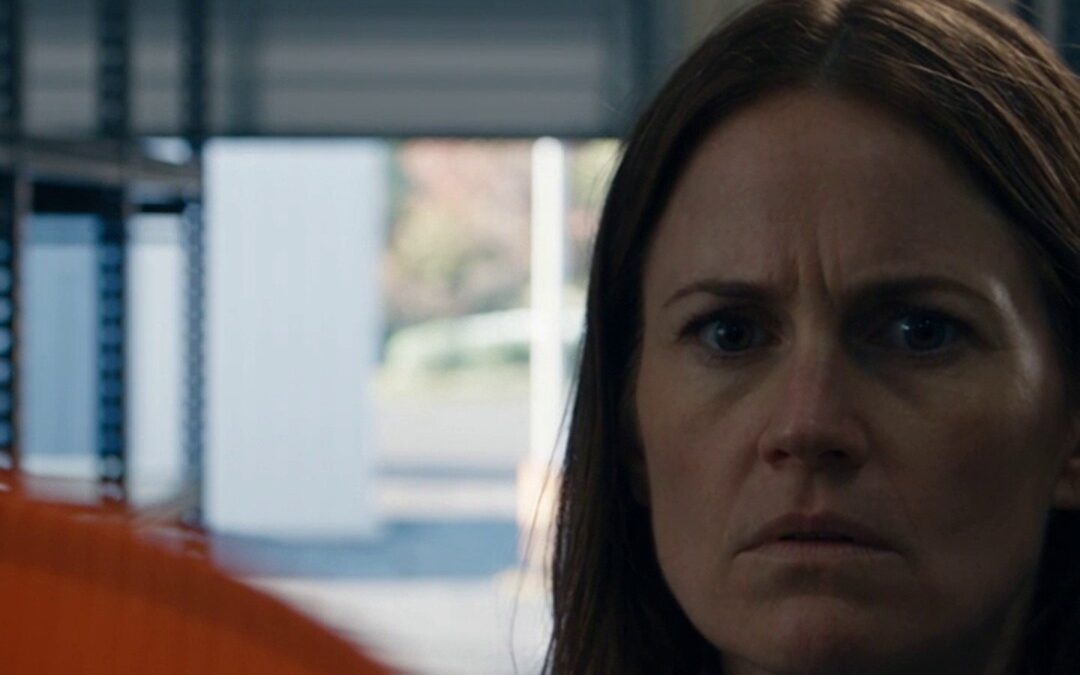
Chapter 1: The Empty Pallet
Ruth held up an orange ratchet strap like it had my name stitched into it.
“Forty-eight cases of formula are gone, Lena.”
Behind her, the shelf reserved for Thursday’s family pickup was bare.
Jonah stopped rolling his hand truck and looked at me instead of the empty pallet.
That was worse.
Ruth laid a warehouse printout beside the strap.
The shipment had been issued through the cracked scanner assigned to me, under the account I had left signed in when I went home.
“I left at six-twenty,” I said.
“The issue posted at eight-twelve.”
Ruth’s voice stayed low, but three volunteers stood close enough to hear.
I had spent eleven years keeping this food bank’s inventory, and my daughter helped pack the Thursday boxes after school.
By morning, families would arrive expecting formula I had promised them.
I reached for the printout.
Ruth drew it back.
“Let me see the scanner history.”
“I’ve asked Cal to preserve it.”
The printout looked bad even without the history.
My account was on it, the formula was gone, and last week I had changed a count from fifty to forty-eight without doing a second count.
Ruth knew about that.
So did Jonah, because I had asked him to check the shelf afterward and then forgotten to follow up.
“I should have counted twice,” I said.
“Yes,” Ruth said.
Jonah set the hand truck against the wall.
He didn’t offer to explain for me.
Ruth put the orange strap on the empty pallet.
One end hung through the slats, its two white paint stripes facing out.
Our drivers used that strap to secure deliveries in the warehouse van.
I started to point at it, but Ruth held out her hand.
“Your keys.”
For a second I thought she meant the keys to my car.
Then I understood.
I took the warehouse ring off my belt and placed it in her palm.
Jonah turned toward the loading door.
“Please don’t tell my daughter here,” I said.
Ruth closed her fingers around the keys.
“She’ll hear something, Lena.”
The cracked scanner sat on the charging rack by the door, its screen dark.
I could not tell whether someone had used it after I left, or whether its record meant what Ruth thought it meant.
But I knew where I had last put that orange strap: on the hook inside the warehouse van.
I looked from the strap to Jonah’s hand truck.
“Why was the delivery strap on the pallet you say I stole?”
Chapter 2: The Delivery Route
“Why was the delivery strap on the pallet you say I stole?”
Ruth looked down at the two white stripes.
“Because it was there when Jonah found the pallet,” she said.
“That’s where a delivery strap would be if a delivery went out.”
“Or if someone wanted to move forty-eight cases.”
Jonah kept his hands on the hand truck.
He had unloaded that formula with me on Monday, two mornings earlier, and he knew how much room forty-eight cases took.
“You could move it with the warehouse van,” he said.
I looked at him.
He lowered his eyes, but he did not take it back.
Ruth slipped my keys into her pocket.
“Go home for tonight,” she said.
“Am I suspended?”
“You’re off the schedule while we review the inventory.”
“Put that in writing.”
“I will.”
She folded the printout so the volunteers could not see it, though they had already seen enough.
Cal, the food bank’s operations director, stood at the office doorway with a phone in his hand.
He had been there since Ruth asked for my keys.
“Tomorrow’s pickup?” I asked him.
“We’ll borrow from another warehouse,” he said.
“Those families were told their boxes were ready.”
“I know.”
His answer came quickly, as if that part of the problem had already been solved.
I wanted to ask him which warehouse could spare forty-eight cases overnight.
Instead, I walked past him to the charging rack.
The scanner had a cracked corner and a strip of blue tape holding its battery cover flat.
I had put the tape there myself after it caught on my glove during Monday’s count.
I picked it up.
The screen stayed black.
“Leave it, Lena,” Ruth said.
I set it back in the cradle.
At the loading door, Jonah moved his hand truck aside for me.
“I checked the shelf after you changed the count,” he said quietly.
I stopped.
“You never told me.”
“It was forty-eight.”
Ruth heard him.
“That confirms the starting count,” she said.
“It doesn’t tell us where they went.”
I drove home with an empty place at my hip where the warehouse keys usually knocked against the seat belt.
My daughter, Maya, was at the kitchen table cutting cardboard dividers for the family pickup boxes.
She was sixteen and had volunteered there long enough to recognize the orange strap from the van.
“Why are you home?” she asked.
I put my coat over the back of a chair.
“Ruth took me off tomorrow’s shift.”
Maya laid down the scissors.
“Why?”
“Formula is missing.”
“Missing how?”
“The system says I issued it.”
She waited.
I had taught her that the inventory system was a record of movements, not a machine that made movements itself.
I had also taught her that when the count looked wrong, you counted again.
“I don’t know where it is,” I said.
“Did you count it?”
“Last week I changed the number without checking twice.”
Maya looked at the cardboard on the table.
“Why would you do that?”
“Two pallets came in while people were waiting for me to clear the aisle.”
“That’s what you told Ruth?”
“Yes.”
It sounded thinner at home.
Maya gathered the dividers into a neat stack.
She had been proud that I trusted her with the pickup boxes; now her hands had stopped moving.
“Am I still going tomorrow?” she asked.
“I don’t think you should.”
She nodded without looking at me.
I spent the rest of the evening writing down what I had done on Tuesday, before memory could start arranging itself around Ruth’s printout.
At 5:45, I had counted the formula shelf with the cracked scanner.
At six, I had helped Jonah clear an empty pallet from the loading aisle.
At six-twenty, I had clocked out and driven straight home.
I wrote down the strap last.
On Monday, Cal had asked me to bring it in from the van so he could check its buckle.
He said it had slipped on a delivery.
I remembered putting it back on the hook after he finished.
I could not remember seeing it there on Tuesday.
That gap bothered me more than the issue time.
I had noticed an object at the scene of the accusation and made my memory of it sound firmer than it was.
The next morning Ruth emailed a short notice placing me on paid administrative leave while the food bank reviewed a possible unauthorized distribution.
It said I could respond to the findings before any employment decision.
It also told me not to enter the warehouse or contact volunteers about the review.
I read it twice.
Then I called Ruth.
“I’m not coming inside,” I said when she answered.
“What do you need?”
“A copy of my clock record and the scanner’s original entries.”
“Cal is pulling the records.”
“I want them as they were recorded, including edits.”
There was a pause.
“I’ll ask,” she said.
“And the van route sheet.”
“Why?”
“The strap was in the van.”
“Lena, the strap isn’t a route sheet.”
“I know.”
“I can’t hand you operational records before we know whether they’re relevant.”
“Then preserve them.”
“I will.”
I stayed off the warehouse property.
The only route I could retrace for myself began in my kitchen, where I still had the handwritten note from Monday’s delivery clipped beneath a grocery list.
It contained no answer.
I had written “strap buckle” because Cal wanted it checked, then crossed the words out after he said it was fine.
My own note placed the strap in his hands on Monday, not on Tuesday night.
I called Jonah, stopped before the first ring, and put the phone down.
Ruth had told me not to contact volunteers about the review.
Breaking that instruction would give Cal a reason to call anything Jonah said coached.
I went to the public library instead.
The food bank’s monthly reports were posted for donors, and I wanted to know whether we had recently added a delivery site.
The public report listed totals by program.
It did not show individual shipments.
One line said forty-eight cases of formula were reserved for the Thursday family pickup.
Seeing the number in another place made the empty shelf feel real again.
I printed the page for myself and left.
At noon Ruth sent my clock record.
It showed six-twenty.
Cal had sent an image of the scanner transaction too.
My account had issued forty-eight cases at eight-twelve to a destination labeled “other distribution.”
That phrase was worse than a blank.
It sounded like the sort of category someone chose when they did not want to name a place.
I called Ruth.
“What was the destination?”
“That’s one of our questions.”
“Was the device online when it scanned?”
“The issue posted at eight-twelve.”
“That wasn’t what I asked.”
“I only have the transaction page.”
“Then please ask for the device record.”
“Cal says that’s the device record.”
“It’s the inventory entry.”
Ruth exhaled.
“I’ll request the export.”
I set the two pages side by side.
One placed me out of the building before seven.
The other placed an action under my name after eight.
Neither proved I was innocent.
I had left my account open on the scanner.
Someone could have picked it up, or I could have returned without clocking in.
I had no receipt from home at eight-twelve, and Maya had been upstairs doing homework.
An empty scanner battery did not give me an alibi.
I knew something else Ruth did not yet seem to know: the cracked scanner had been unreliable near the loading doors for months.
It saved work when it lost the warehouse network and sent the saved entries when it connected again.
I had complained about that delay because volunteers sometimes thought a case was still available after I had counted it.
Cal had told me the replacement order would wait for the next budget.
A delayed entry could explain the time.
It could not explain why a count appeared as an issue.
I opened my notebook and wrote two separate questions.
When did the scanner record the cases?
Who changed what those records meant?
By three o’clock, I had an answer to neither.
Cal called just before Maya came home.
His tone was mild.
“Ruth said you want an export.”
“I do.”
“The current transaction is what the system shows.”
“I want the original scanner entries.”
“We’re still gathering material.”
“Please keep the scanner offline until you have it.”
“It’s already set aside.”
“Good.”
Then he said, “The last count adjustment matters, Lena.”
“I know it does.”
“You made it without verification.”
“I told Ruth that myself.”
“You should be prepared to explain why.”
I looked at the note on my kitchen table.
“I am.”
He ended the call without mentioning the strap.
I had worked with Cal for four years.
He liked a clean report and could make a messy loading day look orderly by closing every open task before he went home.
Usually that meant chasing missing signatures, not accusing someone of taking food.
I did not know whether he believed Ruth’s printout or knew something I did not.
The following morning Ruth asked me to come to a meeting at two, with a written response if I wanted one.
Cal would attend.
She said a board member would take notes because the missing formula affected a donor-restricted program.
“This isn’t a hearing,” she said.
“I understand.”
“You can bring someone for support.”
“I’ll come alone.”
After the call, Maya stood in the doorway holding her backpack.
She had heard the word “board.”
“Are they firing you?”
“They’re reviewing it.”
“That’s what you say when you don’t know.”
“You’re right.”
She shifted the backpack higher on one shoulder.
“Jonah texted me.”
I looked up.
“He asked if I was all right.”
“What did you tell him?”
“That I was.”
She glanced at the paperwork on the table.
“I didn’t tell him anything about the case.”
“Thank you.”
“Mom, people know.”
“I know.”
At school, Maya sat beside a girl whose grandmother used the Thursday pickup.
I pictured them hearing a version of this in which the boxes were short because I had taken food from babies.
Maya saw where my eyes had gone.
“She didn’t say anything to me,” she said.
“That’s good.”
“She looked at me.”
The bus came before I could answer.
I watched Maya walk to it, then returned to my notebook.
I wrote my account of Tuesday without trying to make it sound better.
I included the count change from the week before and the fact that I had left my scanner signed in.
I included the orange strap but described only what I could remember: Cal asking for it Monday, my putting it back on the van hook, and Ruth showing it to me on the empty pallet Tuesday night.
Then I added the one question I could support.
Our scanner saved entries without a connection, so the posting time might differ from the time a scan was made.
That did not clear me.
It did mean Ruth needed the export before treating eight-twelve as the moment anyone handled the formula.
At the meeting, the board member introduced herself as Nina Ward.
She chaired the committee that reviewed restricted donations and had never managed my work.
She did not say she believed me.
Cal placed a thicker packet on the table than I had expected.
Ruth sat beside him, the orange strap coiled near her elbow.
Nina opened a notebook.
“Lena, you can start with your response.”
I handed each of them a copy.
Cal read the first page while I spoke.
“I left at six-twenty.”
“We agree your clock record says that,” Ruth said.
“The scanner can post saved entries later.”
“We’re checking.”
“I also left my account open.”
Nina looked up.
“You acknowledge someone else could have used it?”
“Yes.”
“And you could have come back?”
“Yes.”
Cal closed my response.
“That’s the difficulty,” he said.
He pushed a van mileage sheet toward Nina.
The Tuesday evening reading was twelve miles higher than the reading entered on Wednesday morning.
My name appeared on the Tuesday line because I had been the last employee assigned to the van for a Monday pickup.
I leaned forward.
“That sheet rolls an assigned driver’s name forward until the next route is entered.”
Cal tapped the line.
“It shows an increase before Wednesday.”
“It doesn’t show who drove.”
“It adds to the concern.”
Ruth looked at me.
“Did you move the van Tuesday night?”
“No.”
“Did anyone ask you to?”
“No.”
Nina wrote that down.
Cal opened another page.
A supplier invoice showed that fifty cases had arrived the previous week.
My inventory adjustment had reduced the count to forty-eight.
“If the original count was fifty,” he said, “we have a separate two-case discrepancy.”
“Jonah checked it afterward,” I said.
“He says he saw forty-eight on the shelf,” Ruth replied.
“That helps establish forty-eight,” Nina said.
“It also means Lena changed the record before the second count was documented.”
I could not argue with that.
Cal leaned back.
“Nothing here tells us where the shipment went.”
For one brief moment I thought he might finally say that the evidence did not identify me.
Then he added, “But we can’t release the inventory lead from responsibility for an issue under her account and an unexplained van movement.”
It was a careful sentence.
Nina asked Ruth whether any recipient had reported an extra delivery.
“Not yet,” Ruth said.
“How many have you contacted?”
“Cal has the route contacts.”
Cal’s hand settled on his packet.
“We’re checking through the proper channels.”
Nina nodded, though I saw her underline something.
I left the meeting with no decision and a copy of the new pages.
The mileage figure bothered me all the way home.
I knew how it could be wrong: anyone entering a route the next morning might record the van’s current mileage, and the system would assign the difference to the open route.
That was possible.
It was not proof.
Maya was making toast when I got in.
“How was it?”
“They found another record that looks bad.”
She put down the knife.
“What record?”
“The van moved.”
“You said the strap was in it.”
“I said I last put it there Monday.”
She stared at the toast.
“Did you go back?”
“No.”
“Then why is everything connected to you?”
I had no answer that would satisfy her.
“I left my account open,” I said.
“I know.”
“And I didn’t document the second count.”
“I know that too.”
She pulled the toast from the toaster with her fingertips and laid it on a plate.
“I need to go to Jonah’s after school tomorrow to help sort boxes.”
“You can if you want.”
“I don’t know if I want.”
That hurt more than Ruth taking my keys.
Maya was not cruel.
She was trying to stand on ground that kept moving beneath her.
That evening I studied the route sheet.
The form had spaces for the date, driver, destination, starting mileage, and ending mileage.
The image Cal had provided showed only the lower half.
I could see my name on a carried-over line and the two mileage readings, but not the destination or the handwritten note at the top.
I emailed Ruth and Nina together.
“Please send the full page, including the top and reverse, and preserve the original.”
Ruth replied that they would.
Cal did not reply.
The next morning I went back through my own work habits.
When a scanner lost connection, I usually kept scanning because stopping meant leaving cases in a half-counted aisle.
At the end of a count, I set the device in its cradle near the office, where the network was stronger.
That was how old entries finally posted.
Tuesday had been different.
I had left it on the loading rack because Jonah needed me to clear the pallet.
Had someone plugged it in later?
I called the scanner support number printed in the user guide I had kept at home.
The technician would discuss general behavior but would not release our food bank’s records to me.
I understood.
I asked whether a saved cycle count could become an issue simply because it uploaded late.
“No,” she said.
“The transaction type is saved with the scan.”
“Can an administrator change it afterward?”
“In your inventory software, an authorized user can reclassify a batch.”
“Would that leave a record?”
“There should be an audit history.”
“Who can request it?”
“Your account administrator.”
That was Cal.
I thanked her and wrote down her name, the time, and exactly what she had said.
It gave me a path, not an answer.
An administrator changing a batch could be fixing an ordinary mistake.
Cal had done that before when donated food arrived under the wrong program.
I needed the audit history to know whether this batch had been changed and why.
Ruth called at noon.
“The scanner export is delayed,” she said.
“Who is pulling it?”
“Cal.”
“Please have Nina request it directly from the vendor.”
“Why?”
“Because the transaction page can’t show whether a batch was reclassified.”
She was quiet.
“Is that what you think happened?”
“I don’t know.”
“Then why ask Nina?”
“Because Cal is the account administrator, and his interpretation is part of what you’re asking me to answer.”
Ruth did not like that.
“He hasn’t accused you beyond what the records show.”
“He showed the board a cut-off route sheet.”
“I’ve asked him for the full page.”
“Please ask Nina to get the audit history independently.”
“I’ll tell her.”
After we hung up, I sat with the phone in my hand.
I had just implied Cal might be shaping the evidence.
If I was wrong, I had made my position harder.
If I was right, he now knew what I was looking for.
Ruth’s notice did not forbid me from speaking to customers or recipients, but I stayed away from them.
I could not go from pantry to pantry asking whether they had formula.
A recipient might feel pressured to help me, and any answer would be easy to dismiss as a story I had gathered after the accusation.
The food bank had a routine that could answer the question better.
Every van route used a paper sheet.
Drivers signed it at departure.
The receiving site signed the bottom when cases were delivered.
Completed sheets went into a binder in the warehouse office before anyone entered the delivery into the system.
I had seen Cal carry that binder away from the desk on Tuesday.
At the time I thought he was closing Monday’s routes.
Now I wanted to know which sheet he had taken.
I wrote to Nina, copied Ruth, and asked that she preserve the complete Tuesday route binder.
I explained the ordinary reason the pages existed and the missing section on Cal’s image.
Nina replied an hour later.
“I have asked Ruth to secure the binder and the device pending review.”
That was the first time since Tuesday night that someone had acted on a question I raised.
It was not a victory.
The binder could show no Tuesday route at all.
Late that afternoon, Cal sent me a message through Ruth.
The board would meet Friday morning to decide whether I could continue as inventory lead.
If the missing formula had not been accounted for, he would recommend ending my employment for failure to safeguard restricted goods.
Ruth called to make sure I received it.
“Are they saying I stole it?” I asked.
“The proposed finding is unauthorized distribution under your account, with inadequate controls.”
“Are you recommending that?”
“I’m still reviewing.”
“You asked for my keys before you had the scanner history.”
“I had an empty shelf and your account on a transaction.”
“And my daughter in the building.”
Ruth let that sit between us.
“I believed I needed to secure the warehouse,” she said.
I knew she was telling the truth.
It did not make the memory of her outstretched hand any easier.
Friday gave me less than two days.
I took the bus to the library again because sitting at home with the records had begun to feel like waiting for a verdict.
On a public computer, I opened the donor report and compared its monthly totals with the shipment list I had saved before Tuesday.
The formula appeared once in the Thursday pickup allocation.
There was no planned partner delivery for it.
That made an ordinary scheduled route less likely.
It also made the orange strap harder to dismiss.
If the van had carried the formula, someone had made an unscheduled delivery or taken it elsewhere.
I thought of the full route sheet.
A routine form could survive even when a system entry changed, because drivers needed the recipient’s signature before they returned.
But I could not get the binder myself.
I walked home past the food bank without turning down its street.
The warehouse was close enough that I could picture the rack where the scanner sat and the hook in the van.
At home, Maya had left me a note saying she was at Jonah’s house sorting cardboard with his wife.
She had gone.
I was relieved and hurt at once.
When she came back, she placed a small stack of flattened boxes by the door.
“Jonah says he wasn’t told to stop volunteering,” she said.
“He wasn’t accused.”
“He says you’d have told him if you moved a whole pallet.”
“He also said I could have moved it with the van.”
Maya nodded.
“He told me that too.”
We stood in the kitchen.
“I don’t want him to lie for me,” I said.
“I know.”
“I want him to say what he saw.”
“He said the strap was already on the pallet when he found it.”
“That’s what he told Ruth.”
Maya pushed a loose cardboard tab flat with her thumb.
“He also said Cal asked him to move the hand truck before the meeting.”
“What meeting?”
“The one where Ruth took your keys.”
I looked at her.
“Did he say why?”
“He said Cal wanted the aisle clear.”
That could mean nothing.
Jonah moved equipment for Cal all the time.
I did not put it in my written response.
Maya watched me put away the boxes.
“Are you going to ask him?”
“I’m not supposed to contact volunteers about the review.”
“Even if he knows something?”
“Especially then.”
She nodded, and for the first time in two days she looked as if my caution made sense to her.
On Thursday morning, Nina sent the scanner export.
The vendor had delivered it directly to her, and she had copied Ruth and me.
It was a spreadsheet with columns for device time, upload time, user, transaction type, item, and batch number.
I printed it at the library so I could see every column.
The forty-eight cases appeared as twelve scans of four cases each.
The device time began at 5:48 and ended at 5:57 on Tuesday.
The upload time was 8:12.
I had made those scans.
I could remember the rhythm of them, lifting each case corner enough to reach its label.
Every line’s original type said “cycle count.”
The issue under my account was a later interpretation of that batch.
My hands shook so badly I had to set the pages down.
It was the first key fact I had earned since the accusation, and it still did not prove where the formula went.
I could have counted forty-eight cases before six and returned to take them later.
Someone could also have changed the transaction for a legitimate reason.
I read the export again.
The batch number was there, but the change history was not.
I called Nina.
“The scans happened before I left,” I said.
“I see that.”
“The posting time was never proof of an eight-twelve issue.”
“It was proof of an eight-twelve upload.”
“Who reclassified the batch?”
“We’ve requested the audit.”
“From Cal?”
“From the vendor.”
I closed my eyes.
“Thank you.”
“Don’t thank me yet,” Nina said.
“We still have forty-eight missing cases.”
She was right.
I took the pages home and laid them beside my clock record.
For two days, everyone had been talking as though the scanner placed me in the warehouse after dark.
Now it placed me at the shelf when I said I was there.
That changed the accusation.
It did not end it.
Ruth called that afternoon.
“I was wrong about the time,” she said.
“You were given the posting time.”
“I repeated it as the issue time.”
“Yes.”
“I should have waited for the export.”
I appreciated that she said it plainly.
Then she added, “I still need to know why the cases are gone.”
“So do I.”
Nina sent the full route sheet shortly before five.
Cal had photographed the lower portion for the meeting.
The complete page showed a Tuesday evening destination written in the top field: Ridge Pantry, a partner site across the county.
The recipient signature field at the bottom was empty on that copy.
A pencil note beside the destination said “urgent, call ahead.”
The sheet did not name formula.
It showed a route opened Tuesday evening and a twelve-mile change in the van reading.
I stared at it until the lines blurred.
Cal’s earlier page had made the mileage look like a mysterious movement attached to my name.
The full page made it look like a delivery.
I emailed Nina.
“The route sheet has a destination, but the copy lacks a recipient signature; please check whether a completed copy or receiving record exists.”
She replied that she would.
I wanted to call Ridge Pantry myself.
I did not.
If someone there had accepted formula, Nina needed a record gathered without my asking them what to say.
Instead, I returned to the orange strap.
Monday, Cal had checked its buckle.
Tuesday, a route sheet had been opened.
Tuesday night, Ruth had placed the strap on the empty pallet as evidence against me.
The strap was not proof of who drove.
It was an ordinary object that followed van work, and van work had happened.
That was the reframe taking shape, but I could still lose.
A delivery to Ridge Pantry might have contained something else.
Cal might say I opened the route and then took the cases.
I had left my scanner open and had access to the van keys until Ruth took my warehouse ring.
The argument against me had become narrower.
It had not disappeared.
Friday morning, Maya stood by the door before I left.
“Can I come?”
“It’s a work meeting.”
“I can wait outside.”
“You have school.”
She folded her arms.
“People at school already know.”
“That’s exactly why I want you there today.”
She considered that.
“Will you tell me what happens?”
“As soon as it ends.”
She stepped forward and hugged me quickly, her cheek against my shoulder for one second.
Then she pulled away.
“I still don’t know what to think,” she said.
“I know.”
At the food bank, Nina had moved the meeting from Cal’s office to the volunteer room.
Ruth sat near the door.
Cal sat across from me with the same calm expression he used when a truck arrived late.
The orange strap lay on the table.
I had not expected to see it again.
Nina had asked Ruth to keep the physical evidence together with the records.
“I want us to make a finding based on the complete sequence,” Nina said.
Cal opened a folder.
“The formula is still unaccounted for,” he said.
“That remains the central fact.”
Ruth nodded.
“The shelf was empty Tuesday night.”
“And Lena’s account generated the issue,” Cal added.
I kept my hands flat on the table.
“The scanner recorded a count at 5:48.”
“It uploaded later,” Cal said.
“That explains the time discrepancy, and I accept that.”
He turned to Nina.
“It does not explain why the batch became an issue or why the van moved.”
“Agreed,” Nina said.
Cal looked back at me.
“Lena had the account and the keys.”
“My account stayed open,” I said.
“That was careless.”
“You controlled the scanner.”
“I left it on the loading rack.”
“You also changed the prior count.”
“I did.”
He had built his case from things I could not deny.
For a moment the truth looked too small to hold against them.
Nina asked Cal to continue.
“The donor restricted this shipment for Thursday’s family pickup,” he said.
“Forty-eight cases vanished before that pickup.”
“If they went to another partner,” I said, “they were moved without my authorization.”
Cal’s jaw tightened.
“A destination written on a route sheet doesn’t prove a delivery.”
“No,” I said.
“The recipient record would.”
Ruth looked from me to Nina.
Nina did not reach for a receiving record.
She took out the vendor’s audit history.
“First,” she said, “we need to establish how Lena’s count became an issue.”
Cal leaned forward.
“The software permits an administrator to correct transaction types.”
“It does,” Nina said.
“Corrections are routine when devices work offline.”
“Yes.”
He held her gaze.
“So an edit is not itself evidence of misconduct.”
I felt my stomach drop.
It was a fair argument.
A change in the audit could tell us who touched a record without telling us why.
Nina turned the page.
“Tuesday at 7:36 p.m., the batch was reclassified from cycle count to issue.”
She looked at Cal.
“The administrator account used was yours.”
“I was reconciling an urgent movement.”
That was the first time he had called the movement urgent.
Ruth heard it too.
“What movement?” she asked.
Cal looked at her, then back at Nina.
“A possible partner delivery.”
“You told us we were checking whether there had been one,” Ruth said.
“I was checking whether it had been completed.”
Nina put down the audit page.
“Did you direct the van to Ridge Pantry?”
“I opened a route to Ridge Pantry.”
“Did you direct formula onto it?”
“The route sheet doesn’t list items.”
“I’m asking what you did.”
Cal glanced at the orange strap.
“I asked the driver to take available family nutrition supplies because Ridge had an unexpected shortage.”
“Which driver?” Nina asked.
“Jonah.”
Jonah had not been in the room.
Nina said, “Ruth spoke with him this morning after I secured the records.”
Cal’s eyes moved to Ruth.
“He told me you asked him to load the formula,” Ruth said.
“He said you signed the cases out on a paper pick sheet and told him the system entry would follow.”
Cal rested both hands on his folder.
“He could be mistaken about the number of cases.”
“Then we need the receiving record,” I said.
Cal turned toward me.
“Even if Ridge received formula, your account was open, and you had already made an undocumented adjustment.”
He had defended the interpretation twice now: the edit could be routine, and a delivery would not excuse my poor controls.
Both claims had enough truth to sting.
“I’m responsible for those mistakes,” I said.
“I’m not responsible for an issue you created from my count after I left.”
Nina took a second document from her folder.
It was a copy of Ridge Pantry’s receiving sheet, requested that morning from the site’s coordinator.
The coordinator had sent both sides of the page from its bound delivery book.
The entry showed forty-eight cases of formula received Tuesday evening.
Jonah’s signature was beside the delivery.
A receiving volunteer’s signature was beside the count.
The page number followed Monday’s entry and preceded Wednesday’s; Nina had verified that sequence with the coordinator by phone.
Cal’s face did not change much.
He looked tired for the first time.
“The goods reached a partner site,” he said.
“Yes,” Nina replied.
“That means the donor’s intended families still received aid.”
“Ridge families received aid,” Ruth said.
“Our Thursday families arrived for boxes we had promised and couldn’t fill.”
“We sourced replacements.”
“After we called three partners at dawn.”
Nina looked at Cal.
“Why didn’t you tell Ruth about the route when she found the shelf empty?”
“I thought the entry would reconcile by morning.”
“Why did you let her ask Lena for her keys?”
Cal rubbed his thumb along the folder edge.
“I had a pending issue under Lena’s account, and I didn’t know whether the delivery count matched.”
Ruth’s chair shifted against the floor.
“You knew you had sent the van.”
“I knew I had opened a route.”
“You told me the cases might have been stolen.”
“I said they were unaccounted for.”
I could hear how much he wanted the distinction to hold.
It would not give me back Tuesday night.
Nina turned the audit page toward him.
“You reclassified Lena’s count as an issue to make the inventory balance after you sent the cases.”
“Yes,” he said.
“I intended to add the route detail when Jonah returned.”
“Jonah returned before Ruth called Lena in.”
“I had other work.”
“And when Ruth called?”
“I should have said what I knew.”
It was the closest he came to admitting the harm.
There was no sudden confession of a secret plan.
The records had forced him, one step at a time, to describe decisions he had been willing to leave attached to my name.
Nina asked why Ridge needed the formula.
Cal said its scheduled delivery had been delayed and its coordinator had called him directly.
He had authority to approve emergency transfers between partners, but donor-restricted stock required the change to be documented and cleared with Ruth before release.
He had skipped that step.
He had used my open count batch to bring the inventory number down immediately, planning to fix the destination later.
Then Ruth saw the empty shelf and the issue under my account.
“I thought I could sort it out before the board needed a report,” he said.
Ruth’s reply was quiet.
“So you let me accuse her.”
Cal did not answer.
I looked at the orange strap.
It had been on the van hook because that was where I put it.
Jonah had used it to hold a legitimate delivery in place, then left it with the empty pallet when he unloaded the hand truck.
The object Ruth had lifted as proof of theft had been part of a routine route.
I had seen that possibility the first night, but I had needed the route sheet, the audit history, and a receiver’s count to make it more than a question.
Nina closed her folder.
“We have enough to find that Lena did not remove or authorize the removal of the forty-eight cases,” she said.
“The cases were delivered to Ridge Pantry on Cal’s direction.”
She looked at me.
“Your open scanner session and undocumented count adjustment are separate control issues.”
“I understand.”
“We’ll address them as such.”
Cal started to speak.
Nina raised a hand.
“We’ll discuss your actions with the board after Lena leaves.”
I wanted her to say more.
I wanted Ruth to say the word she had avoided when she held out her hand for my keys.
Instead, Ruth reached into her pocket and placed the warehouse ring on the table.
“I was wrong to treat the posting time as the time of the issue,” she said.
“I was wrong to let that stand when you asked for the export.”
I picked up the keys.
They felt heavier than they had on Tuesday.
“I asked you not to tell my daughter there,” I said.
Ruth looked at me.
“I remember.”
“She heard anyway.”
“I know.”
I did not forgive her in that room.
I did believe she understood what her certainty had cost.
Two weeks later, the board sent me its written findings.
It removed the allegation of unauthorized distribution from my record.
It gave me a written warning for leaving my scanner signed in and for changing the earlier count without documenting Jonah’s second count.
I signed the acknowledgment because those parts were true.
Cal was placed on leave while the board reviewed his failure to document the transfer and his handling of the investigation.
He resigned before that review ended.
The food bank changed the scanner permissions so a count batch could not be reclassified without a recorded reason and a second approval.
Emergency partner transfers received their own paper sheet, with a copy for inventory before the van left.
The changes came too late for the families who waited at Thursday pickup while Ruth and Jonah assembled substitute boxes from three different sites.
They came too late for Maya’s walk through school that week.
I returned to work, but I asked to spend my first month away from the Thursday pickup line.
Maya stopped volunteering for a while.
She did not say it was because of me, and I did not ask her to make me feel better about it.
One afternoon she came in after school and found me counting cases at the loading dock.
“Jonah says you make him check everything twice now,” she said.
“Only the things I count.”
“That sounds like everything.”
She took the pencil I offered her and read back the number while I marked the sheet.
Jonah rolled the hand truck toward the van.
The orange strap lay on its hook inside, two white stripes showing against the door.
He reached for it.
“Buckle still all right?” he asked.
I checked it before handing it over.
“It is.”
Maya held the sheet steady while Jonah secured the delivery, and I waited for her to finish the count before I signed my name.








