When Our Ceiling Collapsed, My Roommate Knew It Was Coming—and Her Secret Could Change Everything Between Us
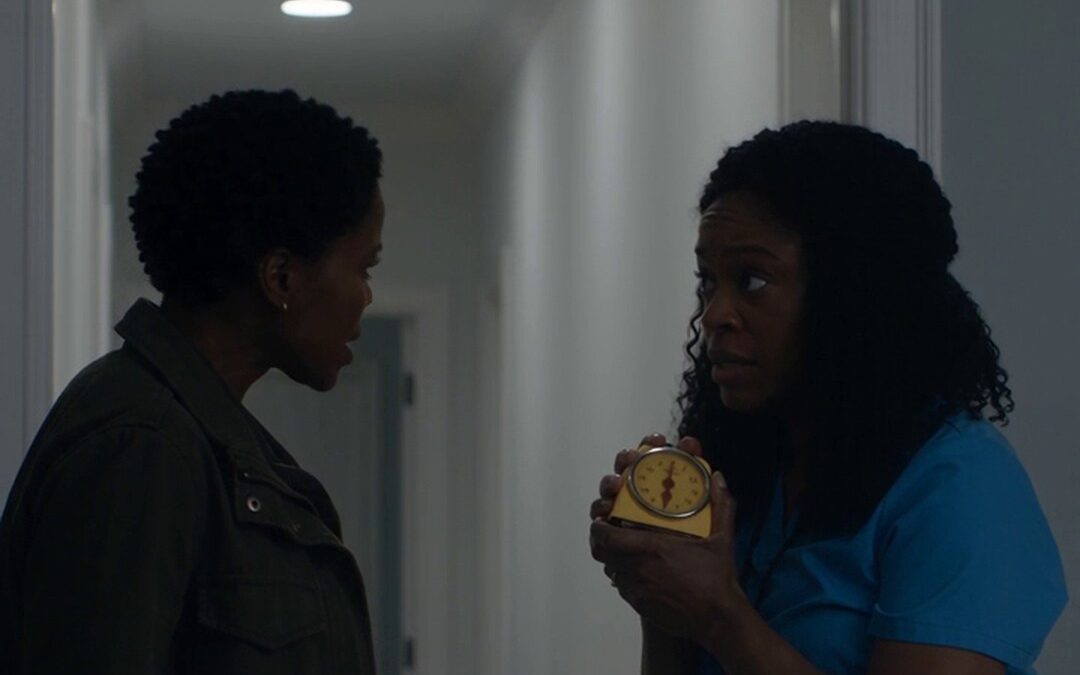
Chapter 1: The Kitchen Ceiling
The first thing June said when Lena came home was, “Leave your boots by the door.”
It was an ordinary request. June had mopped their kitchen every Sunday for six years, and Lena had tracked salt across it every Sunday from November to March. The odd part was the way June stood between Lena and the kitchen, gripping the little yellow timer they used for hard-boiled eggs.
“It’s raining,” Lena said. “There’s no salt.”
“Please.”
Lena worked on commercial doors. She had spent the afternoon adjusting the closer at a grocery store, then driven home through a thunderstorm with a headache and an invoice she knew the store owner would dispute. She wanted dry socks and the leftover chili June had promised to save.
A dark circle had spread across the kitchen ceiling.
Lena stepped around June. “That’s new.”
“Stay here.”
“Mrs. Velez upstairs leave her tub running again?”
“I don’t know.” June’s thumb rested on the timer’s dial. It was set just short of two minutes, though nothing was cooking. “I need you to listen to me this time.”
Lena turned. “This time?”
A crack traveled across the plaster. June seized Lena’s sleeve and pulled her into the hall. Half the ceiling came down where Lena had been standing, scattering wet plaster over the table and burying the covered bowl of chili.
For a moment, they listened to water tapping onto the wreckage.
June let go of Lena’s sleeve. Her hands were shaking.
“You saw the crack,” Lena said.
“Yes.”
“Why didn’t you say that?”
“I did.”
Lena looked from June to the timer. Its bell gave a small, tired click, though the dial had never moved.
They were friends because of a broken washing machine. Six years earlier, Lena had met June at a laundromat, helped her carry an impossible load of sheets, and mentioned the spare room in her Milwaukee apartment. Since then, June had brought home bruised fruit from the clinic where she worked, Lena had fixed every cabinet hinge in the place, and they had learned how the other took bad news. June made tea. Lena looked for a tool.
Now June was looking at Lena as if she had already lost her once tonight.
Water fell from the ruined ceiling into June’s favorite blue bowl.
Lena said, “Tell me what you meant.”
June closed her hand around the timer. “I will. First we have to get Mrs. Velez out of her apartment. The pipe under her sink is about to burst.”
Chapter 2: What a House Remembers
Lena did not move toward the stairs. “How do you know?”
June looked up at the water running through the broken ceiling. “Because it did.”
“June.”
“I can explain after we shut it off.”
The upstairs door was open. Mrs. Velez stood in her kitchen wearing a bathrobe and one rain boot, trying to catch a thin spray from beneath her sink in a saucepan. She had called the landlord and received a voicemail. Lena found the shutoff valve, turned it, and watched the spray become a drip. The pipe had split beside an old coupling. It would need a plumber, and the wet floors would need attention before anyone could safely sleep below them.
Mrs. Velez thanked them both. June asked her to gather her medication and stay with her daughter for the night. When the older woman had gone to pack, Lena pointed at the pipe.
“You said it was about to burst.”
June stared at the wet cabinet floor. “It split a minute before you got home.”
“Then why was it only starting to leak when we arrived?”
June folded her arms tightly across her chest. “Because that minute happened twice.”
Lena waited for the rest of the sentence. Rain ticked against the window over Mrs. Velez’s sink.
“I was downstairs the first time,” June said. “I heard the pipe go. You came into the kitchen, saw the stain, and went under it before I could stop you. The ceiling fell. A piece of the light fixture hit you.”
Lena touched the side of her head. There was no cut, no tender place, nothing to tell her she had been struck.
“Come downstairs,” June said. “I’ll show you what I can.”
The kitchen looked like a room somebody had searched in anger. Plaster coated the table. Water dripped through the bare laths into every bowl they owned. Lena moved the coffee maker away from the outlet, turned off the kitchen circuit, and set a bucket under the worst of the leak. Her hands knew those jobs. They gave her something to do while June fetched towels.
On the shelf beside the stove sat a pair of oven mitts Lena had sewn badly after burning through the old ones. June lifted them, exposing a small square of clean paint where the timer usually stood.
“Sit with me,” she said.
They sat in the living room, where the ceiling was still whole. June placed the yellow timer on the coffee table between them. It had a chip near the bell and a spot on its dial where years of kitchen grease had darkened the plastic.
“The timer isn’t special,” June said. “I’ve tried it with other windup timers. This one is the easiest to hold. I turn it backward through two minutes. I get those two minutes again.”
“You go back.”
“I do. Everything does. Nobody else remembers the first version.”
“Then you can’t show me.”
“I can tell you things I learned the first time, before they happen the second time. I can also tell you what it costs me.”
Lena glanced toward the kitchen. “How often?”
“I can do it once between sunrises. Only while I’m inside a place I call home. It takes a memory of that home from me afterward.”
“What kind of memory?”
“A good one. A time when I felt I belonged there. It takes the newest one I still have.”
Lena looked at her. June’s account was impossible, but she had described the pipe before it split. She had warned Lena about the ceiling with a fear that made more sense now.
“You knew that fixture would hit me,” Lena said.
“Yes.”
“Was I badly hurt?”
“I couldn’t tell. You were on the floor, and you weren’t answering me. I turned the timer.”
Outside, tires hissed through rainwater on Alder Street. Lena remembered June kneeling on their kitchen floor last winter to scrub coffee from the grout, scolding her for balancing a mug on top of a ladder. June had made that kitchen a place where Lena could come home exhausted and find food, company, or quiet, depending on what she needed.
“What did you lose?” Lena asked.
June rubbed the chip in the timer with her thumb. “I don’t know yet. It isn’t as though I feel it being taken. I’ll come across a photograph or you’ll mention something, and there’ll be a space where the day should be.”
“Have you done this here before?”
“Yes.”
“For me?”
June nodded.
“How many times?”
“Four, counting tonight.”
Lena stood. She needed to be farther from June to think, though the living room allowed only three steps before she reached the bookshelf. “You’ve been changing things in my life for six years.”
“Four times.”
“That you remember.”
June flinched. “I keep a record.”
“Of course you do.”
Lena heard the bitterness in her own voice. June heard it too. She did not ask Lena to take it back.
The landlord arrived forty minutes later, after Mrs. Velez’s daughter had collected her. Mr. Pike was a narrow man with a talent for standing just outside the mess he had come to inspect. He photographed the kitchen ceiling, asked whether Lena had noticed the stain earlier, and said a contractor could come in the morning. Lena told him to call one tonight. Water was still entering the wall, and the kitchen circuit was off.
He made another call from the front porch. By the time he returned, his expression had softened into the patient look he used when he wanted tenants to thank him for doing what the building required. A plumber would come shortly. He had found a motel room for June and Lena, and another for Mrs. Velez if she needed one.
Lena packed two changes of clothes and her work boots. June took her clinic uniform, medication, and a small spiral notebook from beneath her mattress. She did not hide the notebook when Lena noticed it.
At the motel, they occupied separate beds beneath a painting of a sailboat. June set the notebook on the nightstand. Lena turned on the bedside lamp and asked for it.
The first page was dated six years earlier, two months after June had moved in. It contained their address, both full names, and a warning in June’s careful handwriting: *If you have used a turn today, wait for sunrise. You cannot get another one by trying harder.*
Lena read the next lines. *Two minutes. Inside home. One cherished memory of home, newest remaining, lost after each turn. Other people do not recall the first two minutes.*
“You learned that before me,” Lena said.
“I learned the cost when I was nineteen.”
Below the rules, June had written a list of places she had lived. Only three had entries beside them. At her childhood address were many dates, then a note: *I no longer remember the smell of Dad’s coat.* At a house in Ohio, where Lena knew June had lived with a former friend, there were more dates and longer notes. One read: *Ask no one there for a description of what I was like before.*
Lena closed the notebook without reading farther. “Who was the friend?”
“Celia. We shared a house after my father died. I told her what I could do. At first it was emergencies. Once she broke her ankle on the stairs and I got her back before the fall. Later, whenever something frightened her, she wanted to know whether I had turned the timer. When her mother called with bad news, Celia asked if I could make the call go differently. I couldn’t, and she thought I was refusing.”
June looked at the motel’s sailboat. “She wasn’t cruel all the time. She was frightened of losing people. I was frightened too. I used it when I should have said no, and still couldn’t give her what she wanted.”
“What happened to her?”
“She moved to her sister’s. We haven’t spoken in years.”
Lena opened the notebook again. Four dates under their current address had short descriptions. The earliest was five years ago: *Loose stair tread; Mateo falling. Called to him before he stepped. Lost something recent. Ask Lena about the night she came home from her mother’s funeral.*
Mateo was Mrs. Velez’s grandson. At eleven he had run up and down the stairs as if they belonged to him. Lena remembered June suddenly insisting Mr. Pike replace a loose tread, standing beside it until he arrived. She had thought June was being protective.
The second entry concerned a pot of oil catching fire while Lena was cooking. June had come in from her shift, shut off the burner, and covered the pot. Lena remembered being embarrassed by her panic. June’s note said Lena’s sleeve had caught in the first two minutes.
The third date was last autumn. A car had struck the building’s front steps. Lena had been carrying a package inside. She remembered June shouting her name from the window before the car mounted the curb. The note said June had watched her fall and turned back before the driver hit the railing.
“Why didn’t you tell me after that?” Lena asked. “I could have been more careful on those steps.”
“I asked you to use the back door until they were repaired.”
“You gave me an instruction. I didn’t know why it mattered.”
June accepted that without an argument. “I was afraid you’d start looking at every ordinary morning and wondering whether I’d already changed it.”
“I’m doing that now.”
“I know.”
Lena set the notebook down. Her mother’s funeral had been in April, five years earlier. Lena remembered coming home to find June sitting on the kitchen floor because all the chairs were covered with laundry. June had heated tomato soup and divided the last grilled cheese in two. They had eaten beside the refrigerator without talking. Lena had not known until that night how badly she needed someone willing to sit there.
“You wrote yourself a note about my mother,” she said.
“Because you told me I stayed up with you. I remember you coming home the next day. I don’t remember that night at all.”
Lena felt the first clear shape of what June had lost. The absence had lived beside her for years. Lena had sometimes mentioned her mother and wondered why June responded with kindness but never with the familiarity of someone who had held that grief alongside her. She had decided June was giving her space.
“You should have told me,” Lena said.
“Yes.”
June’s answer made Lena angrier. It left nowhere for an argument about whether the omission mattered.
The plumber repaired Mrs. Velez’s pipe before midnight. Drying the wall and ceiling took longer. Mr. Pike told them they could return to the apartment but would have to leave the kitchen clear for workers. The motel had served decent coffee and little else; Lena was glad to take her belongings home. She was less certain what she wanted to do with June.
For three days, their conversations stayed close to chores. Lena made coffee on a hot plate in the living room. June carried plates to the bathroom sink to wash them. They worked around plastic sheeting and an industrial fan whose constant hum erased the small sounds by which they usually knew the other was home.
June went to the clinic before dawn. Lena stayed late at a job repairing the rear entrance of a neighborhood grocery, though she had finished the adjustment by five. On the drive home, she passed their block twice before parking.
She had questions she could ask only June. She also wanted a day in which June was simply her roommate again, a woman who bought bananas too green and forgot to bring them to work. That day no longer seemed available.
On Thursday, Lena found June standing in the hall with a photograph. It had fallen from the wall when a worker moved their coat rack: the two of them in front of Lake Michigan, both squinting into wind, June’s scarf flying across Lena’s face.
“Do you remember this?” Lena asked.
“Yes. We got coffee afterward. Yours spilled in the car.”
“What did you lose on Sunday?”
June looked at the photograph again. “The first time you asked me to stay.”
Lena remembered the evening clearly. June had originally rented the room for six months. At the end of that term she had found a cheaper place across town. Lena had stood in the kitchen pretending to sort mail before saying she hoped June would renew. June had smiled so broadly Lena had almost regretted how long she had waited to ask.
“I know from the notebook that it happened,” June said. “I know we were here. I can picture the counter from other days. I can’t find your face when you asked.”
Lena leaned against the wall while the fan beat warm air past her ankles. “Is that always what goes first? The most recent one?”
“The most recent one that’s still there and still matters to me.”
“Then every time you do it, you work backward.”
June nodded.
Lena looked at the photograph again. She understood why June had kept the notebook. It held dates and facts, but it could not restore the look on a friend’s face.
That evening, Lena made them both sandwiches and carried them to the front steps, away from the fan. Mrs. Velez came down with a bag of garbage and asked if the kitchen was nearly fixed. Lena said the contractor had another day of work. June asked how Mateo was doing at college. Mrs. Velez spoke for five minutes about a statistics class, a new girlfriend, and the astonishing cost of textbooks.
When she went back inside, Lena said, “He would have broken his leg on that stair.”
“He landed against the radiator the first time. I didn’t wait to see if it was worse.”
“You saved him, and you lost the night after my mother’s funeral.”
“I think so.”
“You never told me you were deciding between those things.”
“I had about two minutes,” June said. “I didn’t decide to lose that night. I decided to try again for Mateo.”
Lena watched a bus turn at the corner. Its windows showed a row of people riding home through the dark, each of them carrying things the others couldn’t see.
“I understand why you did it,” she said. “I don’t understand why you let me keep asking what was wrong when you forgot things.”
June rested her sandwich on its paper napkin. “At first I thought telling you would make every dangerous thing my responsibility. Then I used it for you. I was ashamed I’d let you believe I had a good reason for forgetting the funeral. After that, every month made telling you harder.”
“You could have said you had memory trouble.”
“I did say that.”
“You said your shifts made you tired.”
“They do.”
Lena gave a short, unwilling laugh. June smiled, but only for a moment.
“Celia made demands on you,” Lena said. “I wouldn’t have had to know how to want something from you.”
“I should have trusted you to answer for yourself.”
For the first time since the ceiling fell, Lena believed June understood exactly what she was angry about. June had loved their household and made a choice that shaped Lena’s place in it without telling her. Both things were true.
The work crew removed the fan the following week. Their new kitchen ceiling was smoother and whiter than the walls around it. Lena put the blue bowl back on its shelf, its rim still flecked with plaster despite repeated washing.
Life resumed around the changed space. June went to work. Lena repaired doors. They split the electric bill and argued mildly about whether a narrow rack would fit beside the refrigerator. Lena took the rack’s measurements twice. On nights when one of them came home late, the other left a light over the stove.
Their old ease returned in pieces, and each piece made Lena aware of what had happened to it. When June forgot the name of a place they had eaten, Lena wondered whether the meal had been taken from her. When June remembered a detail from years ago, Lena felt foolishly relieved.
She began to ask before correcting June. “Do you want me to tell you about it?”
Sometimes June said yes. Sometimes she said, “Give me a minute.” Lena learned to wait through that minute.
One Saturday they cleaned the storage cage in the basement. The ceiling repairs had left a fine dust on their boxes. Lena found an old receipt for the blue bowl, purchased at a church sale for fifty cents. June had written *ours* on the back in purple ink, probably to keep it from being mixed with the sale’s donation slips.
June took the receipt and laughed. “I thought you’d hate that bowl.”
“Why?”
“You said blue dishes made food look cold.”
“I said the blue plates at your old place made eggs look gray. That bowl is different.”
“Apparently I defended it so hard you bought it for me.”
“You were carrying it already. I paid because you didn’t have change.”
June held up the receipt. “Proof of ownership.”
Lena wanted to say something about proof. A receipt could establish who paid fifty cents; it could not prove what the afternoon had meant. June remembered that one. Lena hoped she would keep it.
At the back of the storage cage stood a folded metal gate Lena had promised to install across the basement’s unused loading alcove. It belonged to her employer until they cleared out old stock, and she had permission to take it. She touched the gate’s bent hinge, thinking through how to straighten it, then noticed moisture along the basement wall.
It had rained the night before, but the dark line was high enough to concern her. The building sat on a low stretch of Alder Street where stormwater sometimes filled the gutters. Mr. Pike had a sump pump in a pit behind the furnace. Lena lifted its lid. The water was near the top, and the pump was silent.
She called Mr. Pike from the steps. He said he would send someone during the week. Lena explained that the pump had no power and water was entering the basement wall. He said the breaker might have tripped and asked her to check it. She told him the panel cover was stained with rust and she would leave it for an electrician.
June listened to the end of the call. “How worried are you?”
“Worried enough to move our boxes off the floor.”
They spent the afternoon raising what they could onto shelves. Mrs. Velez came down to retrieve a winter coat and watched them stack things. Lena showed her the waterline and asked her to tell Mr. Pike she was concerned too. By evening the water had receded a little. Mr. Pike texted that a contractor was coming Tuesday.
On Monday, the forecast called for heavy rain. Lena brought home sandbags from a hardware store and put them inside the basement’s rear loading door. She checked the door’s closer, which had been sticking for months, and found that the latch would not catch unless someone pulled it hard. She adjusted the strike plate. This was the kind of problem she could solve with a screwdriver and twenty minutes, and it calmed her.
Mr. Pike’s contractor arrived Tuesday morning, plugged the pump into a different outlet, and reported it running. He was gone by lunch. Lena came home to find the pit lower, though the rust on the electrical panel remained. She photographed it and sent Mr. Pike a request for an electrician. He replied, *Will get a quote.*
The rain came Wednesday night.
It arrived in long sheets that struck the windows too hard for conversation at the table. Lena checked the basement before bed. Water flowed into the pit, and the pump carried it away. She put a flashlight on the kitchen counter and set her boots beside the bedroom door. June set the yellow timer on its clean square of paint next to the stove.
“You’re thinking about it,” Lena said.
“I keep it there all the time.”
“I know.”
June sat down at the table. “If something happens, I’ll do what I can.”
“I need to know what that means.”
“I can’t promise to ask first if there are only seconds.”
“I’m asking you to tell me afterward. Every time.”
“I will.”
“And if the danger has passed and you’re thinking about using it to make something easier, talk to me before you do.”
June nodded. “I can promise that.”
Lena considered whether to ask for more. She wanted a rule that would protect them both, one they could follow under any pressure. No such rule came to her. Two minutes could be enough to save a life and too little time for any discussion.
“Okay,” she said.
Their conversation held for the next hour. They made toast, listened to the rain, and watched an old cooking competition on Lena’s laptop. June objected to a contestant serving undercooked potatoes. Lena said the judges looked perfectly capable of surviving them. At eleven, Mrs. Velez knocked to borrow batteries. Lena gave her a packet and reminded her where the basement stairs were if she needed the interior hallway during the storm.
Near midnight, the lights flickered. The pump stopped for several seconds, then started again.
Lena went downstairs with a flashlight. Water had risen in the pit but stayed below its rim. The panel was dry on the outside. She listened to the pump cycle once, returned upstairs, and told June they could sleep.
At two in the morning, someone pounded on their door.
Mrs. Velez stood outside barefoot, wrapped in a coat over her pajamas. “I smell smoke.”
Lena smelled it too, faint and bitter. She told June to call the fire department and went into the hall. The building’s smoke alarm began to sound, followed a moment later by one upstairs.
There were four apartments: Lena and June on the first floor, Mrs. Velez and a young couple on the second, and a father named Andre with his daughter on the third. Lena knocked hard on the couple’s door as Mrs. Velez climbed toward Andre’s floor, calling up the stairwell. The couple emerged with a dog and no shoes. Lena told them to go out the front and keep moving.
June was speaking to the dispatcher in their doorway. She gave the address, said there was smoke in the central stairs, and counted the people she could see. Lena went downstairs to check the rear exit.
Smoke pushed from beneath the basement door. The air there was already hot enough to make her retreat. Through its small wired-glass window, she saw a dim orange light near the electrical panel. She closed the door and shouted for everyone to stay out of the basement.
The front door opened onto rain and a crowd forming under umbrellas across the street. Lena pushed the couple and Mrs. Velez toward it. June stayed at the foot of the stairs, looking up.
“Andre?” she called.
“Coming,” he shouted.
He appeared on the third-floor landing with his daughter, Willa, bundled against his chest. Willa was seven and often left sidewalk chalk drawings on their front steps. Andre started down. Smoke rolled above him, then thickened across the second-floor landing.
“Stay low,” Lena yelled.
The hall lights went out. For a few seconds, Lena could see only Andre’s flashlight bobbing against the wall. Willa coughed. Andre called that the stairwell was too smoky and backed up toward the third floor.
Lena knew the building’s rear service stairs. They started at a narrow door beside Andre’s apartment, descended behind the kitchens, and ended in the basement loading alcove. Years earlier, when Mr. Pike had replaced the door to the alley, he had asked Lena to make its closer work. She knew the stairs were steep, and she knew the basement end could be blocked by water or smoke.
“There’s a service stair beside you,” she called. “Check the door. If it’s clear, take it down one floor and stop.”
Andre’s flashlight vanished. She heard a door open, then a rush of air. Smoke entered the main hall from above.
June caught Lena’s arm. “I’m going upstairs.”
“Stay here. Tell the firefighters where they went.”
“They’ll come out behind the second floor.”
“If the door there opens,” Lena said.
It had a stiff latch she had meant to repair. She remembered pressing it once with her thumb and leaving it for another day.
Lena climbed to the second floor, keeping one hand on the railing. The smoke was thicker there, pressing low enough that she had to crouch. She found the service door by touch. The latch held when she pushed it. In her work bag downstairs she had a screwdriver and a thin pry tool. She had brought neither.
She went back down two steps, pulled the metal bar from a loose coat hook on the wall, and fitted its end behind the latch plate. The bar bent. Lena swore and tried again.
From inside the service stairs came Andre’s voice. “Lena?”
“I’m here. Hold the door shut until I get it open.”
“The bottom’s full of smoke.”
“Stay where you are.”
Metal scraped. The latch shifted a little, then stuck. Lena worked it again, coughing against her sleeve. Below, June was calling her name. Lena could hear another voice through the front entrance, a firefighter arriving.
She got the latch open. Andre pushed the service door toward her. Willa’s face was pressed into his shoulder, eyes shut. Lena led them down the main stairs, one hand along the rail, each step clearer than the last. At the bottom, a firefighter guided them out.
June was just beyond the front door with Mrs. Velez. Her hair was wet and her face was gray in the flashing red light. She took Lena by both shoulders, looked at her, and let go only when Lena said, “I’m okay.”
A second firefighter asked whether anyone remained inside. Lena counted aloud. Four apartments. Eight residents. The young couple and their dog stood across the street; Mrs. Velez was beside June; Andre and Willa were with the first firefighter. Lena pointed to each person as she counted. Everyone was out.
They watched water pour from the fire hoses into a building that had already taken too much of it. The smoke emerged from the basement vents and then thinned. An ambulance crew checked Willa and Andre, then Lena. Their eyes were irritated, and they had breathed smoke, but they could sit and answer questions. June refused a blanket until someone draped one over her shoulders.
The firefighters kept them outside until dawn. By then the rain had eased. Mr. Pike arrived, spoke to the fire officer, and crossed the street toward his tenants with water streaming off his coat.
Lena was tired enough to find his wet hair almost funny. She did not ask him about the electrician. There would be time for that after everyone had slept.
The fire had damaged the basement and sent smoke through the service stairs. The apartments above had water damage. No one could go back in yet. Mr. Pike said he would arrange rooms. Mrs. Velez’s daughter came to collect her. Andre and Willa went with Willa’s aunt. The young couple found a friend who would take the dog.
Lena and June returned to the same motel. This time their room faced the parking lot. June put the yellow timer on the table beneath the window.
Lena stared at it. “You didn’t turn it.”
“No.”
“You were holding it downstairs.”
“I took it when we left the apartment. I thought I might need to go back in.”
Lena looked at June’s hands. “Could you have changed something?”
“I don’t know. By the time Andre was in the service stairs, I was outside. I can only turn it from home.”
“You were inside when he went up there.”
“Yes. I could have used it then.”
“And you chose not to.”
“I thought you knew the building. I thought Andre could follow your directions. I didn’t know the second-floor door would stick.”
Lena sat on the bed and pulled off her damp shoes. For days she had pictured June’s ability as a hand that could reach back into any mistake. Now she could see the seconds as June had faced them: a child coughing above them, smoke moving down, no certainty that going back would offer a better path.
“I should have fixed that latch,” Lena said.
“You opened it.”
“I had to tear a coat hook off the wall.”
“And you opened it.”
Lena looked up. June’s voice was firm, the same voice she had used when Lena came home from work blaming herself for a customer’s broken door. It still belonged to the woman Lena knew. That comfort made her throat tighten.
June sat on the other bed. “When I saw you come down with them, I was glad I’d waited. That isn’t a judgment about the next time. It’s only what happened tonight.”
“I know.”
They slept until noon. Lena woke to a dry mouth and a message from her supervisor telling her to take the day off. June had left a bottle of water by each bed. She was awake, looking through her notebook without writing.
“Are you making an entry?” Lena asked.
“No turn to record. I wanted to see what I wrote after the car hit the steps.”
June passed her the notebook, open to last autumn’s date. Lena read the familiar short account and a sentence she had missed before: *She told me afterward that she’d have gotten out of the way when she heard the engine. I had seen her trip. She deserves to know, but I didn’t tell her.*
Lena handed it back. “You knew even then.”
“I kept hoping I’d find the right way.”
“I wish you’d let me be angry last autumn. We might have had this part behind us by now.”
June looked down at the page. “So do I.”
For several days, they lived out of duffel bags. Lena bought two mugs at a thrift store because the motel cups held three swallows of coffee. June went back to the clinic, where she scheduled rides for patients and handled the calls that could be made from a borrowed desk. Lena visited the building each afternoon when the cleanup crew allowed it. She photographed the damaged basement for her belongings claim and saw that the service door’s latch had been forced so hard its plate hung from one screw.
She spoke with the fire investigator once, standing in the alley while workers carried wet drywall into a bin. He said the cause was still being examined. The fire had been near the basement’s electrical equipment; he would issue a report when the investigation was finished. Lena told him about the pump and the panel’s condition and sent the photographs she had taken before the storm. He thanked her. She did not ask him to promise a conclusion he did not yet have.
Mr. Pike called that evening to say restoration would take weeks. He offered them a vacant apartment in another building for the same rent until their place was ready. It was across town, farther from both their jobs. Lena asked for the address and said she would look at it.
After the call, June spread a city map on the motel bed. She marked the clinic, Lena’s shop, and the offered apartment. “You’d have to drive. I can take two buses.”
“We should see it first.”
“We should.”
Lena noticed June had written the address in her notebook. She had written Lena’s supervisor’s number there too, and Mrs. Velez’s daughter’s. The notebook had become a place for ordinary emergency details alongside its stranger record.
The temporary apartment had clean windows, thin carpet, and a kitchen large enough for two people to pass without turning sideways. Lena checked its exterior door out of habit. The strike plate sat square. June opened every cupboard and found a single fork left by the previous tenant.
“It has a fork,” June said. “That’s practically furnished.”
Lena smiled before she remembered they had not decided to take it.
From the kitchen window they could see a schoolyard. Someone had drawn a sun in chalk beside the basketball court, its rays stretching across the asphalt. June stood beside Lena, not touching her.
“You don’t have to move with me,” June said.
“I know.”
“I mean it. If you want your own place, I’ll help get your things out when the building opens.”
Lena ran a finger along the window frame. “I haven’t decided what I want for six months from now. I can decide where to sleep next week.”
“That’s fair.”
“I also don’t want you offering to help me move as if I’m the one who made our home hard to return to.”
June kept looking out at the schoolyard. “I made it hard for you to trust me there.”
“Yes.”
After a moment she said, “I’d like to live with you while we work that out. I need you to understand that I might change my mind.”
June nodded. “I do.”
They signed the temporary lease on Friday. Mr. Pike covered the rent under the arrangement he had offered, and their belongings stayed in storage while the fire cleanup continued. Lena bought a folding table. June brought the thrift-store mugs and the blue bowl, which the cleanup crew had found unharmed in an upper cabinet.
On their first night, they ate takeout noodles from the bowl and its mismatched companions. June complained that the new stove burner heated unevenly. Lena examined its dial and said the stove could have one night off before she tried to fix it. They both reached for the last dumpling, then cut it in half.
There was no yellow timer in the kitchen.
Lena found it in June’s duffel the next morning while looking for the spare keys. She held it for a moment and went to the bedroom doorway.
“Are you keeping this put away because of me?”
“I don’t know where to set it yet.”
“You can put it on the counter.”
“I thought seeing it might bother you.”
“It will, sometimes.” Lena turned the dial gently to zero without winding it. “I’d rather know where it is.”
June came out and placed it beside the stove. There was no clean square of paint waiting for it. The counter was all one color.
A week later, Andre brought Willa to visit. They had moved in with family while their apartment dried. Willa carried a drawing of their old building. She had given every window a face and drawn the back stairs in orange crayon.
“I drew the door you opened,” she told Lena.
Lena knelt to see it. The orange door was nearly as big as the building.
“Your dad found those stairs,” Lena said.
“He said you opened the stuck part.”
“We both helped.”
Willa considered this and added a small figure beside the door: Lena, with arms shaped like wrenches. June set the drawing on the refrigerator with a magnet. When Andre and Willa had gone, Lena stood in the kitchen looking at it.
“We got lucky,” she said.
“We did.”
“Not the whole way. Andre kept her close. Mrs. Velez woke us up. You called. I opened the door. The firefighters came.”
“All of that happened,” June said.
Lena understood what June was giving her. The result belonged to many people making choices while frightened. It did not belong to a single person who might have turned back time.
They went to Alder Street together the following Sunday to retrieve what the cleanup crew had cleared. The building smelled of wet wood and fresh primer. Their old kitchen ceiling remained intact, pale above the empty table space. Lena took the bowl’s receipt from the storage cage and tucked it into her wallet. June found the badly sewn oven mitts and said they had finally earned retirement.
Upstairs, Mrs. Velez’s apartment door stood open for drying. Her daughter was packing framed photographs into a box. She came down to tell them her mother planned to return when the work was done. Then she asked if they would too.
“Maybe,” Lena said. It was the honest answer.
June carried a box to the car. Lena stayed in their doorway for a moment. She had once thought the home itself held their history safely: the nick in the doorframe from a bookshelf, the spot where they dropped mail, the floorboards that announced June’s return from a late shift. She had learned that June could stand in those rooms and find one of their days missing. Now even the rooms might change beyond recognition.
Lena locked the door and went downstairs. June was waiting beside the car with room for another box in the trunk.
That night, Lena brought the photograph from Lake Michigan to their temporary kitchen. She set it near Willa’s drawing. June was washing the thrift-store mugs.
“I want to tell you about the night I asked you to stay,” Lena said.
June turned off the water. “You’ve told me what happened.”
“I know. I thought I could tell you why I finally asked.”
June dried her hands and came to the table.
Lena told her how lonely she had been after work that winter, how she had begun saving small stories to tell June when they met in the kitchen. She told her about sorting the same three envelopes again and again because asking someone to remain in your life felt enormous when you had only meant to offer a room. June listened without interrupting.
“I said you could renew for another six months,” Lena finished. “You said, ‘How about a year?’”
June laughed softly. “That sounds like me.”
“It did.”
“I wish I remembered saying it.”
“Me too.”
They sat with that for a while. Lena had wanted the story to give June back the evening. It couldn’t. But June was here to hear what it had meant to Lena, and she had asked to stay in the temporary apartment with a clear understanding that Lena could choose differently later. That choice was theirs to remember now.
June reached for the yellow timer. “When I was nineteen, I thought that if I could undo a terrible minute, I could make everyone feel safe afterward. My father used to say a house was safe when its people told each other where they were going.”
“Did you tell him?”
“He knew. He never asked me to turn back anything. After he died, I wished he had. I thought there must have been some moment I could have caught if I’d been beside him.”
Lena looked at the timer in June’s palm.
“There wasn’t,” June said. “He was in another state. I couldn’t get those minutes. Celia knew how much I wished I could, and for a while she thought I could keep other losses from happening. I let her think it too.”
“You don’t have to keep me from every loss.”
“I know that better than I used to.”
“Do you?”
June smiled sadly. “I’m learning it better than I used to.”
She set the timer back on the counter. Lena took their empty mugs to the sink. The refrigerator hummed; through the open window came the thump of a basketball in the schoolyard. Their new rooms did not know them yet. They would have to fill them with days they could each speak about truthfully, including the ones that hurt.
The fire report arrived months later. It named a failure in the basement electrical equipment as the likely cause. Mr. Pike had the panel replaced as part of the repairs. Lena sent him her copies of the earlier photographs when he asked and kept the originals with her other records. None of that settled where she and June should live. By then the temporary apartment had developed its own habits: June’s shoes by the door, Lena’s invoices on the table, Willa’s drawing above the stove.
When their Alder Street apartment was ready, they went to see it. The kitchen was bright. The wall had been rebuilt, the floor cleaned, and a new smoke alarm sat high in the hall. Mrs. Velez was upstairs arguing cheerfully with someone about where her sofa belonged.
Lena stood by the doorway and listened to her voice. She could imagine moving back. She could also imagine leaving the place to the people they had been before the ceiling fell.
June walked around the kitchen once. “What do you think?”
“I think Mrs. Velez will need help moving that sofa.”
“We can do that.”
Lena looked at June. “Afterward, let’s go home and talk about the lease.”
June understood which place she meant. Her expression changed, just enough for Lena to see that this day would matter to her.
“Okay,” she said.
They went upstairs together. Mrs. Velez opened the door before they knocked, and Lena took one end of the sofa.








