A Billionaire Shamed His Granddaughter Over a Cracked Violin—Then Her Grandmother Heard the Tune
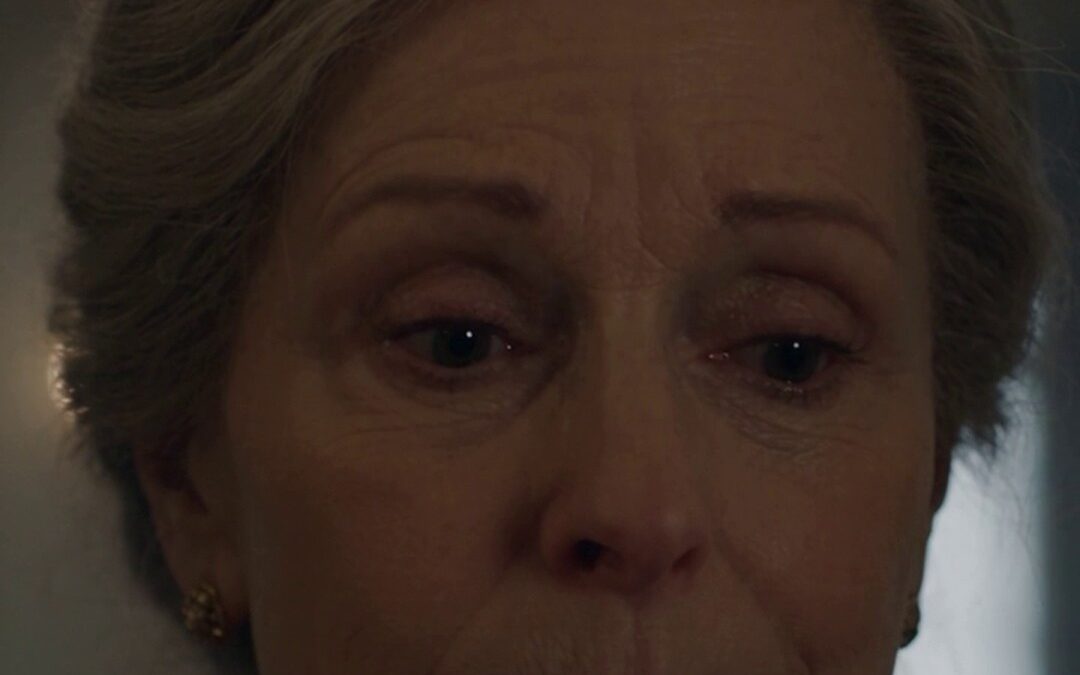
Chapter 2: The Song Beneath
The locks clicked behind the guests.
No one cheered.
No one moved.
Mara clutched the broken violin.
Celia kept one arm around her.
The silver-haired woman stood between them and Gideon.
“Open those doors,” she said.
Gideon’s voice stayed even.
“Mother, you have been gone twelve years.”
“I came back.”
“You cannot walk into my foundation event and make accusations.”
“I haven’t made one yet.”
The woman looked at Mara.
“May I sit beside you?”
Mara watched her hands.
They trembled.
Celia bent close.
“You can say no.”
Mara nodded once.
The woman lowered herself onto the carpet.
She did not reach for the child.
“My name is Vivienne Vale,” she said. “I’m your grandmother.”
Mara’s expression did not change.
“Grandmothers don’t lock doors.”
“No,” Vivienne said. “They don’t.”
Gideon moved toward the control panel by the service entrance.
Celia stepped into his path.
“Don’t touch that.”
“It’s a safety lock,” he said. “The security system has been alerted.”
“Then it can alert the police, too.”
One of the guests quietly raised a phone.
Gideon saw it.
“Put that away.”
The guest kept recording.
Vivienne’s eyes stayed on the violin case.
“May I ask you something, Mara?”
“You can ask.”
“Did your mother keep a little blue notebook?”
Mara looked at Celia.
Celia’s face had gone pale.
“What notebook?” Gideon asked.
Vivienne looked at him at last.
“The one you said burned.”
“I said nothing of the kind.”
“You told the family she took it.”
“You left before you knew what happened.”
“I left because you gave me a choice between silence and exile.”
Gideon’s jaw shifted.
“Not in front of guests.”
“You invited them to witness the truth.”
“I invited them to hear a concert.”
Mara held the violin case tighter.
“What’s in the notebook?”
Vivienne’s eyes softened.
“Songs. Letters, perhaps. I don’t know.”
“You said she stole it.”
“I said I thought it was gone.”
“You think?”
Vivienne let the question stand.
Mara looked down at the broken instrument.
“You should tell the truth.”
“I should have told it sooner.”
Celia crouched beside Mara.
“Are you hurt?”
“No.”
“Did you cut yourself?”
“No.”
Celia checked her hands anyway, careful and quick.
Mara kept watching Vivienne.
The woman who claimed to be family had arrived too late to feel safe.
The man who controlled the doors had called her mother a thief.
“Why are you crying?” Mara asked.
“Because I remember your mother playing this song.”
“That doesn’t mean you remember her.”
Vivienne flinched.
“No,” she said. “It doesn’t.”
Gideon’s hand hovered over the panel.
“Mother, the event is over.”
“Then let them leave.”
“They can leave when the instrument is returned.”
“It was given to Mara.”
“You cannot prove that.”
“Neither can you.”
Mara set the case on the floor.
The brass bird clasp pointed toward Vivienne.
A thin groove ran along its underside.
Vivienne leaned forward, then stopped herself.
“May I show you something?”
Mara’s eyes narrowed.
“From there.”
Vivienne stayed where she was.
“Your mother used to press the bird’s beak twice.”
Mara stared at the clasp.
“She showed me once.”
“She told you that?”
“She said it was a trick.”
Mara reached down and pressed the beak twice.
A tiny spring clicked.
The clasp opened.
Inside the lid, beneath worn velvet, sat a narrow paper strip folded into thirds.
The color had faded to cream.
Mara lifted it out.
It carried six lines of handwritten music.
Vivienne covered her mouth.
The melody was a river tune, short and unsettled, with a pause before the last note.
“That’s it,” Mara whispered.
“It’s the first verse,” Vivienne said.
Gideon stepped forward.
“Give me the paper.”
Celia shifted between them again.
“You’ve made one grab already.”
“I was securing family property.”
“She is not your property,” Celia said.
A uniformed security officer appeared at the ballroom entrance.
He had a key card in hand.
Gideon nodded toward him.
“Mr. Colby, clear the room.”
The officer glanced at Mara.
Then at the phone still recording.
“Sir, the police are on their way.”
Gideon’s expression stayed calm.
“By whose order?”
“Mine,” Vivienne said.
The officer opened the door.
The guests began to move.
Gideon did not stop them this time.
Mara folded the strip and slid it into the violin case.
“Don’t take it,” Gideon said.
Mara looked at him.
“I’m taking what belongs to me.”
Vivienne gave a small, surprised smile.
Celia guided Mara toward the exit.
At the threshold, Vivienne called after them.
“Will you let me see you again?”
Mara did not turn around.
“Ask Celia.”
“I will.”
Outside, rain hit the stone steps.
A police cruiser waited by the drive.
The officer asked if anyone needed medical attention.
“No,” Celia said.
“Did he touch you?”
“He tried to take the case.”
Gideon came through the doorway behind them.
“I did not touch her.”
The officer took statements anyway.
Mara stayed close to Celia while the adults spoke.
The broken violin rested inside its case.
Vivienne stood under the entrance canopy, alone.
Before Celia’s car pulled away, the old woman called out one last thing.
“Your mother did not steal from him.”
Mara looked through the rain-streaked window.
“What did she steal?” she asked.
Vivienne’s answer came too late for the car.
The next morning, Celia received a call from a family attorney.
He said the Vale estate had filed an emergency claim for the violin and all associated materials.
He said the hearing would happen within days.
He also said the foundation had suspended Celia’s placement agreement.
Celia put the phone down.
Mara sat at the kitchen table, drawing the brass bird from memory.
“Are we going back?” she asked.
“We’re staying here tonight.”
“Can he take the case?”
“Not if we can show it was yours.”
Mara touched the folded music strip through the case’s lining.
“He wanted this.”
“I know.”
“Why?”
“That’s what we need to find out.”
* * *
Celia called a legal aid office before lunch.
They connected her to an attorney named Jonah Price, who handled guardianship disputes and nonprofit fraud cases.
Jonah arrived with a canvas briefcase and rain on his shoulders.
He had gray at his temples and a habit of waiting before answering.
Celia explained the ballroom.
Mara listened from the doorway.
Jonah asked to see the violin case.
“Only if you don’t take it,” Mara said.
“I won’t,” he replied.
He put on cotton gloves and examined the brass clasp.
“The paper is fragile,” he said. “We’ll have it copied by a conservator.”
“Does that prove anything?” Mara asked.
“Not yet.”
“Then why copy it?”
“Because facts matter more than guesses.”
Mara studied him.
“Do you believe my mom stole something?”
“I believe we need evidence before deciding who stole what.”
Celia nodded toward the chair.
“Have a seat, Mara.”
“I want to hear.”
Jonah glanced at Celia.
“If she wants to stay, she can stay.”
He explained the immediate issue.
The Vale family claimed the violin had been loaned to Mara’s mother, Renee Bell, and never returned.
They had filed a petition to take custody of it while ownership was reviewed.
A judge could issue a temporary order.
The claim could also pressure Celia to return Mara to county placement.
“That’s why they filed it,” Celia said.
“Maybe,” Jonah replied. “We need to prove that.”
Mara pointed to the case.
“My mom said it was mine.”
“Did she ever write that down?”
“She wrote lots of things.”
“Where are they?”
Mara stood still.
“I don’t know.”
Celia knew she had lived with Renee until she was three.
After Renee died, Mara moved through two foster placements, then a county shelter.
When Celia first met her, Mara had already learned to pack everything into one small backpack.
“We have her case file,” Celia said. “It might list personal property.”
“It might,” Jonah said. “We’ll request it.”
Mara looked at him.
“Do you think the music proves she wrote it?”
“It proves someone wrote it. We need to establish whose hand it is.”
Vivienne arrived that afternoon with an attorney of her own.
She waited on the porch until Celia opened the door.
“I won’t come in unless you invite me,” she said.
Celia glanced at Mara.
Mara looked at the wet coat, the silver hair, and the empty hands.
“You can sit by the door.”
Vivienne sat where she was told.
She brought no gift.
Only a copy of a newspaper clipping, dated twenty years earlier.
The photo showed a young woman in a rehearsal room, violin under her chin. Beside her stood Vivienne, much younger, with one hand resting on the girl’s shoulder.
Renee.
Mara touched the photo.
“She looks like me.”
“She did,” Vivienne said.
“What happened?”
“I can tell you what I know.”
“Tell me what you know, not what you wish.”
Vivienne swallowed.
“Your mother wrote the river song when she was seventeen. I heard it first in this house.”
“What did she take?”
“Nothing.”
Gideon had claimed Renee stole a blue notebook and a set of family papers.
Vivienne had believed him for a time.
She had been traveling overseas when the accusation surfaced. Gideon sent her a letter saying Renee had vanished with the notebook.
Vivienne’s husband had died the year before.
The family company was in a restructuring crisis.
She accepted Gideon’s version because it was easier than returning to a home where every conversation ended in a fight.
“I let him isolate her,” Vivienne said. “Then I told myself she had chosen to leave.”
Mara’s hand stayed on the photograph.
“You knew she had a daughter?”
“No.”
“You never looked?”
“I looked too late.”
“Why now?”
“Because I received a letter last month.”
“From who?”
“Your mother.”
Vivienne took an envelope from her coat pocket.
It had been mailed six weeks earlier, routed through an attorney’s office.
Renee had written it two years before she died.
The letter asked Vivienne to protect Mara if Gideon ever learned where she was.
It did not name the violin.
It named the blue notebook.
The letter had sat in a lawyer’s file until the executor closed an old trust.
“Why didn’t the lawyer find it before?” Jonah asked.
“His predecessor retired. The file was misindexed.”
“Convenient,” Celia said.
“I know.”
“Do you have proof this letter is real?”
“I brought the original. The postmark and paper can be checked.”
Jonah examined it without removing it from the sleeve.
“Good. We’ll verify the chain.”
Mara looked up.
“My mom knew he’d come after me?”
“She feared he would,” Vivienne said.
“Why?”
“I don’t know yet.”
“Did you ask her?”
“No.”
“Then you don’t know.”
Vivienne’s eyes lowered.
“No. I don’t.”
That evening, Jonah arranged for the paper strip to be examined by a music archivist.
The archivist, Dr. Eunice Park, had cataloged the Vale family’s donated scores.
She confirmed the handwriting appeared consistent with Renee’s known notation, but needed original samples for a stronger opinion.
Jonah requested records from the foundation.
The estate sent a formal refusal.
He requested Renee’s trust documents from the county archive.
They found a sealed inventory from the year Renee died.
No violin.
No notebook.
But the last listed address for Renee was an apartment above a closed print shop in Jersey City.
Mara watched Jonah read the file.
“Did she live there?”
“According to this, yes.”
“Can we go?”
“Not without checking the current owner and safety.”
Celia looked at the address.
“I can take her.”
Jonah shook his head.
“First we get the court’s permission to access the records and belongings.”
“I want to go,” Mara said.
“I know,” Celia replied.
Jonah tapped the inventory.
“Your mother didn’t list the violin as estate property.”
“Because it was mine.”
“Maybe. Or because she had already hidden it.”
The next day, Dr. Park examined the music strip under magnification.
She photographed the ink and paper.
The marks matched a notation Renee had used in a college composition file.
More strikingly, the tune contained a deliberate error.
A sharp note where the melody required a natural.
Dr. Park found the same error in a recording made at a student recital twenty years earlier.
The soloist was Renee Bell.
“She played the wrong note every time?” Mara asked.
“Not wrong,” Dr. Park said. “A private variation.”
“Why?”
“That would be a question for the composer.”
Mara looked at Vivienne.
Vivienne’s face had gone white.
“You wrote the tune,” Mara said.
“I wrote the first version.”
“But the wrong note?”
“Renee added it.”
“Why?”
Vivienne pressed her fingers together.
“She said the song needed a place where it could breathe.”
Jonah leaned in.
“Was that phrase written anywhere?”
Vivienne shook her head.
“No.”
Dr. Park pointed to the folded paper.
“Someone wrote a phrase on the reverse. It’s faint.”
She angled a light across the surface.
A line appeared in pencil.
Not musical notation.
A sentence.
“Where the river turns, the names stay.”
Mara stared.
“What does that mean?”
Vivienne shut her eyes.
She knew the phrase.
It had been written on the cover of Renee’s blue notebook.
The notebook had been kept in the family’s old music archive.
Gideon had claimed it disappeared.
But the archive was now inside Blackthorn Hall.
Jonah wrote the phrase down.
“Then the notebook may still be there.”
Vivienne opened her eyes.
“He told me it burned.”
“Who did?” Mara asked.
“Gideon.”
The lie did not lead to a stranger.
It led straight back to the man who had locked the doors.
* * *
Gideon struck before Jonah could file a new request.
A courier delivered a notice to Celia’s apartment.
The foundation had ended her placement contract.
The Vale family requested Mara’s immediate transfer to an emergency foster bed, citing “instability and unauthorized contact with relatives.”
Celia read it twice.
“I’m calling my supervisor.”
Jonah scanned the notice.
“They’re trying to move her before the hearing.”
“Can they do that?”
“Not without review. But they can make the process harder.”
Mara sat on the floor beside the violin case.
“Will I have to leave?”
“Not tonight,” Celia said.
Gideon’s attorney filed a statement accusing Celia of coaching Mara to make false claims.
He described Vivienne as medically unstable.
The foundation board received an anonymous packet claiming Renee had forged signatures and stolen funds.
Jonah asked the clerk to preserve all filing records.
He also filed an emergency motion to keep Mara in Celia’s home pending a hearing.
“You said we’d use the law,” Celia said.
“We are.”
“And if the court moves too slowly?”
“Then we document every delay.”
Mara walked to the window.
A dark sedan had been parked across the street for ten minutes.
Celia saw it too.
Jonah called the police nonemergency line.
The car pulled away before officers arrived.
No one had been threatened.
No one had touched the apartment.
The license plate belonged to a private security contractor retained by the estate.
Jonah recorded the plate and requested the company’s assignment logs.
“They’re watching us,” Mara said.
“They’re trying to make us feel watched,” Celia replied.
“Is it working?”
“Yes,” Celia said honestly. “But we don’t have to let them choose our next move.”
That night, a brick came through the front window of Jonah’s office.
It landed on a stack of boxes.
No one was inside.
A note was tied to it.
Return the case.
Jonah called it in.
The police photographed the note and collected the brick.
The office had a camera over the rear entrance.
Its footage showed a person in a hood, face turned away.
The same contractor’s sedan appeared at the curb three minutes earlier.
The police could not identify the thrower.
The footage was copied to two secure drives.
“No private revenge,” Celia told Mara.
“Did you think I was going to throw a brick?”
“No. I’m reminding myself.”
Mara almost smiled.
Jonah brought the family to a confidential shelter for the weekend while Celia’s window was repaired.
It was a plain apartment above a community center, staffed by a social worker.
Mara slept with the violin case beside her mattress.
The next morning, she sat at a small table while Celia made toast.
“Can I ask something?”
“Always.”
“If my mom was so worried, why did she keep the bird?”
“Maybe it was the only way she could keep the music.”
“It opened the case.”
“Your grandmother said your mother showed you the trick.”
“I was little.”
“Little isn’t the same as unable to remember.”
Mara drew the bird clasp again.
“Did you know her?”
“Not really.”
“Do you wish you did?”
“Yes.”
Mara looked down.
“Then don’t pretend.”
Celia set the toast on a plate.
“I won’t.”
They ate in silence.
Afterward, Mara placed the paper strip beside her plate.
She hummed the river tune quietly.
The notes carried through the room.
Vivienne appeared in the doorway with Jonah.
She had brought a portable keyboard, not a present.
“Would you teach me the part you remember?” she asked.
Mara hesitated.
“I’m not very good.”
“Neither am I.”
“You’re a musician.”
“I was.”
“You still know the notes.”
“I don’t know your version.”
Mara tapped the table.
The first three notes.
Then the pause.
Vivienne listened.
She played them back on the keyboard.
One note came out wrong.
Mara corrected her.
“Not that one. The other one.”
Vivienne tried again.
The little melody settled between them.
For a moment, the adult’s eyes closed.
The room did not become safe because of a song.
But it became warmer.
Mara pointed to the final note.
“Mom always stopped there.”
“Why?”
“She said the ending belonged to whoever heard it.”
Vivienne looked at her.
“Your mother was right.”
The social worker called Jonah aside.
The county had located a second box of Renee’s belongings.
It was being held at a storage facility connected to her old case file.
Jonah requested a supervised retrieval.
The appointment was set for Monday.
On Sunday, a legal notice arrived from Gideon’s attorney.
He was seeking temporary guardianship of Mara through the family trust.
The filing claimed he was her closest living male relative and that the trust required him to supervise her education.
The social worker’s report showed he had never met Mara before the ballroom.
“He can’t pretend he’s been raising her,” Celia said.
“He can argue the trust gives him authority,” Jonah replied. “The judge will decide whether the clause applies.”
“What clause?”
Jonah turned the document toward her.
The trust named Gideon as guardian of any descendant who inherited the Vale music archive.
Mara had not inherited the archive.
The violin case was the only object in dispute.
Gideon’s petition tried to tie her identity to the family’s property.
Mara heard from the doorway.
“He wants the notebook.”
“Probably,” Jonah said.
“And me?”
“He may want control of both.”
“Why?”
“We don’t know yet.”
The storage unit contained two plastic bins and a small wooden trunk.
The county worker used a key from the case file.
Celia and Jonah were present.
Mara was permitted to observe from the doorway.
The first bin held clothes, school papers, and an envelope of photographs.
The second held sheet music, old receipts, and a cracked portable recorder.
The wooden trunk had been locked.
A locksmith opened it under the worker’s supervision.
Inside were a blue notebook, a paper folder, and a cassette tape.
Mara recognized her mother’s handwriting on the notebook cover.
Where the river turns, the names stay.
Jonah photographed each item before touching it.
The notebook’s pages included song fragments, dates, and a list of payments made from a charitable account.
A number appeared beside a line marked “Scholarship fund.”
Celia leaned toward Jonah.
“Those are foundation payments.”
“Yes,” he said.
The notes listed names of students Renee had helped.
Some were still working as musicians.
One name repeated beside several entries: Elias Ward, the foundation’s former treasurer.
Another name appeared in the margin.
Gideon.
Mara looked at the folder.
“What’s in there?”
A letter from a bank.
A statement showing that funds had been redirected from the student scholarship account into a private holding company.
The company was owned by Vale Transit Group.
The date matched the year Gideon accused Renee of theft.
Jonah photographed the page.
“Could she have made this herself?” Celia asked.
“She might have,” he said. “We need bank records and independent confirmation.”
The cassette tape had a handwritten label.
Renee and Mom. March 14.
Vivienne stared at the date.
“That was the night she told me she was leaving.”
“You said you never heard from her after that,” Jonah said.
“I didn’t.”
“Who had the tape?”
“Renee.”
A forensic audio specialist digitized the cassette.
The recording began with room noise.
Then Renee’s younger voice.
“You moved the money.”
Gideon’s voice answered.
“I moved it to protect the foundation.”
“You moved it into your company.”
“I used it to keep the rail line solvent.”
“You took scholarship money.”
“It was temporary.”
“You signed my name.”
“I had authority.”
“You didn’t.”
The tape ended with the sound of a chair scraping.
Then Vivienne’s voice, farther away.
“Stop this, Gideon.”
A second voice replied.
“Mother, she’s confused.”
The recording was not proof of every crime.
It was enough to show the conflict was real.
It showed Vivienne had been in the room.
It showed Gideon knew about the account.
The investigator hired by Jonah traced the holding company through old filings.
The money had been transferred in smaller amounts over four months.
A former accountant confirmed that the scholarship fund had been used to cover a cash shortfall at Vale Transit.
The accountant had kept copies of the reconciliation records.
He had left the company before the accusation against Renee.
His records matched the notebook.
The independent confirmation arrived in a signed affidavit.
Gideon had not merely lied about the notebook.
He had used the lie to hide the money.
* * *
The threat came in an envelope addressed to Mara.
It arrived at the county office, not Celia’s apartment.
Inside was a copy of Renee’s old school photograph.
Someone had drawn a black line across the image.
There were no words.
The county worker reported it to the police.
The envelope’s postmark placed it in a mailroom used by the Vale Foundation.
A camera there showed a foundation employee placing a stack of outgoing letters into the bin.
The employee told investigators she had been asked to mail “a family notice.”
She did not know what was inside.
The investigators did not arrest her.
They interviewed her and collected the original mail logs.
Jonah asked the court for a no-contact order.
Gideon’s attorney opposed it.
He called the envelope a prank and suggested Mara had sent it herself to damage the family.
The hearing officer denied a broad order but required all contact to go through lawyers and the county worker.
The threat remained unexplained.
The evidence remained preserved.
Gideon’s filing continued.
He demanded access to Mara’s school records, medical records, and placement notes.
Jonah objected to the fishing expedition.
The judge limited disclosure to what related directly to the guardianship question.
Mara watched the court proceedings by video from a quiet room.
She disliked the way adults discussed her as if she were a document.
Afterward, Celia brought her to the community center gym.
They sat on the bleachers while basketball practice echoed below.
“You don’t have to watch the hearings,” Celia said.
“I want to know what they say.”
“Some of it might hurt.”
“Not knowing hurts too.”
Celia leaned her elbows on her knees.
“I can’t promise you’ll stay with me forever.”
Mara looked at the court floor.
“I know.”
“I can promise I’ll tell you what happens.”
“Even if it’s bad?”
“Especially then.”
Mara nodded.
That was the first promise she believed.
Jonah met with the former accountant, Harold Finch, at a diner near the courthouse.
Celia accompanied him.
Mara stayed with the county worker.
Harold carried a cardboard folder with punched holes.
He had worked for the foundation for fourteen years.
The scholarship account was supposed to be restricted.
Gideon had used it as collateral during a loan renewal.
When Renee questioned the transfers, Gideon told the board she had authorized them.
Harold had asked to see the signed approval.
Gideon produced a page with Renee’s signature.
Harold said it looked wrong.
He did not confront Gideon.
He copied the ledger and quit.
“Why didn’t you report it?” Jonah asked.
“I thought the board would handle it.”
“Did they?”
“They believed Mr. Vale.”
“And you?”
“I did nothing.”
Harold kept his eyes on the folder.
“I am not proud of that.”
He signed an affidavit.
The foundation’s accounting firm independently verified his copies against bank records retained under a court preservation order.
The transfers were real.
The signature was not Renee’s.
A handwriting examiner compared it with known samples.
The examiner could not say with absolute certainty who wrote it, but found strong evidence it was traced from another document.
Jonah summarized the result.
“Enough for the civil hearing. Maybe enough for prosecutors to investigate.”
The criminal inquiry belonged to the state.
Jonah would not promise charges.
He would submit the records through the proper channel.
Mara asked him if Gideon would go to jail.
“That isn’t something I can predict,” he said.
“Then what can you promise?”
“That the judge will see what we can prove.”
The legal fight moved slowly.
Celia’s contract remained suspended.
The county found a temporary caregiver for weekends, but Mara refused to leave the apartment.
The worker honored that choice while the emergency order remained in place.
Vivienne visited twice a week.
She did not bring gifts.
Sometimes she brought music paper.
Sometimes she sat while Mara drew.
They practiced the river tune in small pieces.
The final note remained unfinished.
Mara insisted it stay that way.
“Mom did that on purpose,” she said.
“Maybe she wanted to leave room,” Vivienne answered.
“For what?”
“For you.”
Mara looked skeptical.
“You keep making everything about a song.”
“I’m sorry.”
“Mom was more than music.”
“I know.”
“Do you?”
Vivienne set down the keyboard.
“I know I have to learn.”
Mara accepted that answer.
One afternoon, Jonah received a call from the foundation’s current board chair.
The board wanted to meet privately.
Jonah declined a private session.
He requested an open board hearing with counsel present and a court reporter.
The chair agreed.
The hearing was set for the following week.
The foundation had to decide whether the scholarship fund would be restored and whether the estate’s guardianship petition reflected the charity’s interests.
Gideon wanted to attend.
The board’s counsel confirmed he would.
The hearing would be public to members and select scholarship recipients.
Mara wanted to go.
Celia worried it would be overwhelming.
“Can I decide after I see the room?” Mara asked.
“That’s fair,” Jonah said.
The day before the hearing, the county worker confirmed the placement order would remain in effect through the next review.
Mara could stay with Celia.
The threat envelope remained under police review.
The court had also granted limited access to Renee’s archived records.
The blue notebook was now a copied exhibit.
The original stayed with the county evidence custodian.
The river music strip was placed in protective storage after Dr. Park completed her examination.
The violin itself remained with Mara under a temporary order.
Jonah filed a notice that the estate’s claim could not proceed without proving title.
Gideon’s attorney asked for a settlement.
The proposal offered Celia a year of expenses and promised to leave Mara’s placement untouched if the case ended.
Celia read it at the kitchen table.
Mara watched her face.
“What does it say?”
“They want us to stop.”
“Would you?”
“No.”
“Because of the money?”
“Because they’re trying to buy silence.”
Jonah shook his head.
“Keep the letter. It may show motive.”
Celia placed it in a folder.
Mara touched the folder.
“I don’t want them to buy the violin.”
“They won’t,” Celia said.
“Or me.”
“They can’t.”
Mara took a moment to answer.
“Can they try?”
“Yes.”
Celia held her gaze.
“But trying is not the same as deciding.”
Mara set the pencil down.
That night, she slept without the violin case beside her bed.
It stayed on a chair near the door.
* * *
The board hearing took place in the foundation’s original library.
The room had long windows and a table made from dark oak.
Mara sat between Celia and Jonah.
Vivienne sat on the opposite side, represented by her own counsel.
Gideon arrived last.
He wore a navy suit and spoke softly to the chair.
He looked composed.
The chair opened the hearing.
The foundation’s counsel summarized the claims.
The charity had received an allegation of fraud.
It had also received an accusation that Mara was being pressured by adults.
The board would review evidence and decide whether the foundation should support Gideon’s guardianship petition.
Gideon’s attorney spoke first.
He argued the notebook was unreliable.
It had been found in a storage unit controlled by the county.
The tape could have been edited.
The paper strip could have been planted.
Renee had a history of conflict with the family.
He called the scholarship transfers temporary loans.
He said no student had lost a scholarship.
He said Mara’s presence at the gala had been a staged ambush.
Gideon listened with his hands folded.
The attorney almost made the case sound reasonable.
Then he placed the brass bird clasp on the table.
It had been removed from the violin case for conservation.
He said the clasp bore the Vale family mark.
He argued the case had never belonged to Renee or Mara.
Jonah stood.
“The clasp was attached to the case before Mara was born.”
“Do you have proof?” the attorney asked.
“Yes.”
Jonah presented a photograph from Renee’s college recital.
The violin case sat open on the floor beside her.
The brass bird clasp was visible.
The photograph had been scanned years earlier from a university archive.
The archive confirmed its date and source.
Gideon’s attorney asked whether the case might still have been a family loan.
Jonah answered carefully.
“We have a letter from the instrument maker stating the case was commissioned by Renee Bell with her own funds.”
He offered the receipt.
The receipt bore the same distinctive brass-bird design.
The maker had confirmed it by affidavit.
The attorney pivoted.
“Even if the case was hers, the song is a family composition.”
Vivienne stood.
“I wrote the first draft.”
She presented her own manuscript from the archive.
The melody was similar, but incomplete.
Renee’s version included the private variation.
Dr. Park described the notation and compared it with Renee’s recital recording.
The independent confirmation came from the university archive.
The recording had been deposited twenty years earlier, before the dispute.
It contained the same altered note and the same pause.
No one could have planted it after the fact.
Gideon’s attorney asked if Renee had copied the tune from Vivienne.
“Not the version Mara carries,” Dr. Park said.
The board members leaned toward one another.
Gideon’s composure did not break.
He looked at Mara.
“Your mother told you to bring that case into the ballroom?”
“No.”
“Did Celia tell you what to say?”
“No.”
“Did your grandmother?”
“No.”
“Who told you I lied?”
“My mom.”
“You were three when she died.”
“She told me before.”
“Do you remember her saying that?”
“I remember the words.”
“Children can confuse memories.”
Mara looked down at the table.
Celia’s hand rested near hers, not touching.
Mara looked up again.
“I remember the bird.”
Gideon tilted his head.
“That’s not an answer.”
“It’s the one I have.”
His attorney turned to the board.
“Her testimony is unreliable. The adults around her have an interest in the outcome.”
Jonah offered the audio tape.
The board’s counsel had already reviewed the digitized copy.
The recording was played in the room.
Renee’s voice accused Gideon of moving restricted funds.
Gideon’s voice called it temporary.
Then Vivienne’s voice entered.
The recording was rough but clear.
“Stop this, Gideon.”
The room seemed to tighten.
Gideon’s attorney objected to the tape’s use.
The board’s counsel explained that it was being considered as evidence in a civil governance review, not as a criminal finding.
The tape did not alone establish the transactions.
The bank records did.
The accountant’s affidavit did.
The examiner’s report did.
One of the board members asked Gideon whether he had authorized the transfers.
Gideon stood.
“I kept the foundation alive.”
“Did you move scholarship money?”
“I moved money within affiliated accounts.”
“Did you sign Renee’s name?”
“I relied on staff.”
“Which staff member?”
Gideon paused.
No one answered for him.
His attorney objected to the question.
The board chair overruled it.
Gideon finally said, “I don’t recall who prepared the form.”
Harold Finch sat in the back row.
He raised a hand.
The chair called him forward.
Harold explained the ledger and the copies he had kept.
He did not accuse Gideon of personal theft.
He described dates, signatures, account numbers, and instructions.
The bank’s independent records matched his entries.
The foundation’s counsel asked one question.
“Was the scholarship money repaid?”
“Not fully.”
The room changed.
Gideon’s attorney said the amount had been covered through later donations.
The board’s treasurer checked the files.
No repayment had been made.
Gideon’s face remained calm.
But his fingers had locked around the edge of the table.
His attorney tried one final argument.
“Mr. Vale was acting to preserve hundreds of jobs. Renee Bell took confidential records and violated a family agreement. This hearing should not reward a child’s claim to a disputed object.”
Jonah answered without raising his voice.
“No one is asking you to reward a claim. We are asking you to follow the records.”
He placed the music strip beside the receipt.
The bird clasp.
The notebook.
The bank ledger.
The recording.
The objects formed a line across the table.
Each connected to a different source.
Each could be checked.
The board chair asked for a recess.
During the break, Gideon approached Celia.
“You can still keep your placement contract,” he said. “I can arrange a permanent role.”
Celia did not move.
“You can stop this.”
“No.”
“I am offering security.”
“You are offering a price.”
“You have a child to protect.”
“I do.”
“Then think carefully.”
Celia looked at him.
“I did.”
Gideon glanced at Mara.
“You don’t know what your mother set in motion.”
Mara stood beside Celia.
“She set me free.”
Gideon’s eyes hardened.
“You have no idea what that means.”
“Maybe not.”
Mara’s voice did not shake.
“But you don’t get to decide.”
The board returned.
The chair announced that the foundation would not support Gideon’s guardianship petition.
It would suspend his authority over the scholarship account.
It would commission an independent audit and return any verified shortfall.
The board referred the records to state investigators.
The decision did not declare Gideon criminally guilty.
It did not grant Mara permanent custody.
Those decisions belonged elsewhere.
But it removed the foundation’s backing from his claim.
Gideon’s attorney requested a written copy.
The chair agreed.
The meeting ended.
Gideon remained seated.
His final sting came quietly.
“Your mother spent her life running from responsibility.”
Mara looked at him.
“She spent hers protecting people you could erase.”
He stared at her.
“She left you without a family.”
Celia’s hand found Mara’s shoulder.
Mara answered before anyone else could.
“She left me with the truth.”
* * *
The family court hearing took place three weeks later.
The judge reviewed the placement record, the trust language, and the foundation’s board decision.
Gideon’s petition depended on a clause tied to inheritance of the music archive.
Mara had not inherited it.
The disputed violin case did not make her a beneficiary of the archive trust.
The judge denied the petition.
Celia’s temporary placement continued while the county completed a full review.
The order required all future contact from the Vale family to go through the child’s representative.
Gideon’s claim to the violin was dismissed without prejudice because the estate could not establish ownership.
The court did not decide the criminal investigation.
That review remained open.
Months passed.
The state investigator interviewed Harold, Vivienne, and former foundation staff.
The independent audit found that scholarship funds had been used to cover company expenses.
The foundation restored the money from its reserve.
The board adopted new controls.
Two employees resigned.
Gideon stepped down as foundation chair.
He remained chief executive of Vale Transit while the investigation continued.
The state later reached a civil settlement with the company.
The company repaid the diverted funds and paid a penalty.
Gideon signed the agreement without admitting criminal wrongdoing.
The state declined to bring criminal charges after reviewing the evidence, citing the age of the records and the limits of proving who prepared the signature.
The public report named the transaction and the control failures.
It did not call Renee a thief.
That mattered to Mara.
Celia’s contract was restored.
The county approved a longer-term placement.
A year later, Celia adopted Mara.
The hearing was held in a small courtroom with a painted mural of trees.
Mara wore a blue dress with pockets.
Celia wore the same navy jacket she had worn to the first court date.
The judge asked Mara if she understood what adoption meant.
“It means Celia gets to be my family even when we disagree.”
The judge smiled.
“That is one part of it.”
“Can I still ask my grandmother questions?”
“Yes,” Celia said.
The judge approved the adoption.
Vivienne was in the gallery.
She did not try to take the front row.
Afterward, Mara walked to her.
“Do you still want to see me?”
“Yes.”
“Then keep asking Celia.”
“I will.”
“You have to tell the truth when it’s ugly.”
“I will.”
“And you can’t call my mom careless.”
“I won’t.”
Mara considered her.
“Okay.”
It was not forgiveness.
It was a door left unlatched.
The violin went to a specialist for repair.
The crack along the neck could not be made invisible.
The instrument would never sound exactly as it had before.
Dr. Park found a luthier who agreed to stabilize it without replacing the original wood.
Mara visited the workshop with Celia.
The luthier explained every step.
He let Mara choose the color of the thread used to bind the repair.
She chose dark blue.
“Why blue?” he asked.
“Because it shows where it broke.”
The luthier nodded.
“Good reason.”
The brass bird clasp stayed on the case.
The paper music strip was archived in a climate-controlled folder.
Mara kept a certified copy.
She also kept the blue notebook, though she did not read it all at once.
Some pages belonged to her mother’s private life.
Jonah advised that the foundation’s financial records remain with the legal archive.
Mara agreed.
The trust had offered her a college account and a cash settlement for “family reconciliation.”
She refused the personal payment.
Jonah made sure the decision was documented without pressure.
Mara asked instead for the scholarship fund to carry Renee’s name.
The board agreed.
The new Renee Bell Fund paid for lessons and instruments at three community music programs.
It did not require students to perform at galas.
It did not require their parents to sign away their stories.
Vivienne offered to contribute part of her own inheritance.
Mara told her to put it through the same audited channel as everyone else.
Vivienne did.
On the first scholarship announcement night, Mara stood at the community center and played the river tune.
The repaired violin produced a warm, slightly rough sound.
She stopped before the final note.
The children in the front row waited.
Mara looked at Celia.
“Do I have to finish it?”
“No,” Celia said.
A boy with a borrowed clarinet raised his hand.
“Can we finish it together?”
Mara looked at the music.
“Do you know the note?”
“No.”
“Then we’ll find it.”
The children gathered around the piano.
Vivienne sat at the back, listening.
No one asked Mara to perform again.
When the tune ended, the room clapped.
Not because the song was perfect.
Because she had chosen to play.
* * *
Five years later, Blackthorn Hall reopened its music archive to the public.
The foundation had been reorganized.
The ballroom doors stayed unlocked during events.
Mara was thirteen now.
She wore sneakers with her concert dress.
Celia waited near the side aisle.
Vivienne sat beside her, hands folded over a program.
The blue notebook was on display behind glass, open to a page about the scholarship students Renee had once helped.
The violin case sat beside the display.
Its brass bird had dulled with age.
The repaired neck showed its dark blue binding.
Mara had asked for the case to be included because the truth belonged beside the music.
A reporter asked if she felt nervous returning to the ballroom.
“A little,” Mara said.
“Are you afraid of Gideon?”
“No.”
“Do you forgive him?”
Mara looked toward the empty place where he once stood.
“I don’t know him well enough to forgive him.”
The reporter lowered the recorder.
“Do you want to?”
“I want the truth to stay true.”
That evening, Gideon sent a letter through Jonah.
He apologized for calling Renee a thief.
He said he had been afraid of losing the company and had convinced himself the money could be replaced.
He did not ask Mara to visit.
He did not ask for forgiveness.
Mara read the letter once.
Then she put it in the archive with the court records.
She sent no answer.
Her boundary was clear.
She would not meet him alone.
She would not pretend the letter changed what happened.
She would not let his apology become another demand.
Vivienne had changed too.
She asked before touching Mara’s shoulder.
She kept every promise to tell the truth.
She learned the song’s unfinished ending with the children at the community center.
When Mara invited her to the concert, she came early and sat where she was asked.
No grand entrance.
No claim on the music.
Just a grandmother in a plain gray coat.
Before the performance, the organizer asked Mara to say a few words.
She looked at the audience.
“I used to think a family was something people could take away.”
Celia watched her from the aisle.
“I know now that family is also what people choose to keep.”
Mara lifted the violin.
The first notes came steady.
The room settled around them.
She played the whole river tune this time.
For the final note, she had written something new.
It rose, held, and came home.
The guests stood.
Celia cried without hiding it.
Vivienne smiled with both hands pressed to her heart.
Mara lowered the violin.
The case waited beside her, repaired but still marked.
The bird clasp caught the light.
A small door.
A saved song.
A name restored.
A home that did not lock.
THE END








