At a Millionaire’s Memorial Dinner, His Granddaughter Cut Open His Favorite Chair and Asked Why Her Mother’s Confession Was Inside
Chapter 2: The Other Page
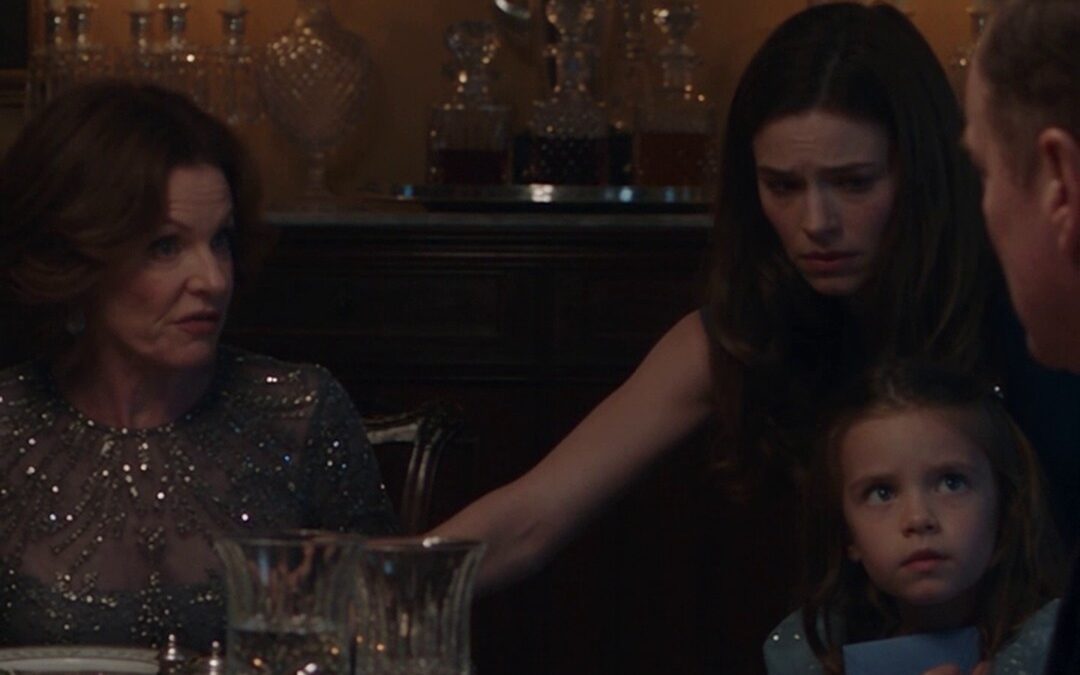
June reached her daughter before Edmund could.
She folded Willa against her side.
The scissors lay beneath the chair.
A server quietly removed them.
Nobody resumed eating.
At the table’s far end, candles flickered beside Martin Bellamy’s photograph.
He had been dead six weeks.
June had almost refused this dinner.
Then the executor forwarded Martin’s written request.
June and Willa were to attend.
Together.
Veronica was to hear them.
June had taken an unpaid evening from the hotel laundry.
She had borrowed decent shoes.
Now one heel was slipping.
It seemed absurd to notice.
“Give that here,” Edmund said.
He held out his hand.
June moved the paper behind her.
“You can ask.”
“This is private material.”
“You discussed my confession publicly.”
Veronica looked at the torn chair.
Martin had occupied it every Sunday.
She had ordered it reupholstered twice.
He had refused both times.
“Who told you about this?” she asked Willa.
“Grandpa.”
“When?”
“At his birthday lunch.”
June remembered that visit.
Three months earlier.
Martin had finally called her directly.
He wanted Willa to visit.
June stayed throughout the afternoon.
She no longer trusted invitations from that house.
But Martin had seemed different.
Smaller.
Unusually careful with his words.
He and Willa had played beneath the dining table.
A blanket had made a tent.
June had watched from the doorway.
She remembered his hand resting on the chair’s wooden rail.
“What exactly did he say?” Veronica asked.
Willa looked at her mother first.
June nodded.
“He said there was something underneath.”
“Under the chair?”
“Inside the loose part.”
Willa touched the velvet.
“He said grown-ups might forget to give it to you.”
Edmund pushed back his seat.
“This is grotesque.”
“Sit down,” Veronica said.
“Your husband put a child—”
“Sit.”
He remained standing.
For the first time, nobody moved to accommodate him.
June lowered herself beside Willa.
“Did Grandpa ask you to cut it?”
“No.”
Willa’s mouth trembled.
“I couldn’t untie the string.”
“You should have asked me.”
“I thought they’d take it.”
June looked toward Edmund’s empty hand.
She couldn’t promise otherwise.
“You’re not in trouble.”
“The chair is.”
A startled breath escaped someone nearby.
Then silence returned.
June smoothed her daughter’s hair.
“We’ll deal with the chair.”
Veronica extended her hand.
“May I see the paper?”
June studied her.
Five years earlier, that hand had pushed a document across a polished desk.
Sign the settlement.
Leave quietly.
Keep your daughter out of it.
June hadn’t signed a confession.
She had signed an agreement ending her employment.
She had needed the promised final wages.
Her rent was overdue.
Her husband, Reid, had been dead a year.
Grief had left her slow with numbers.
Fear had made her slower.
Edmund called that proof.
June now placed the paper on the table.
She kept two fingers on it.
“Read it here.”
Veronica bent forward.
The heading said PERSONAL STATEMENT.
Beneath it, June supposedly admitted altering foundation payment records.
There was a signature.
Close to hers.
Too close.
Along the margin ran Veronica’s handwriting.
Please let this settle the matter.
And beneath that:
I signed her name.
Willa pointed.
“Did you?”
Veronica closed her eyes.
Edmund answered for her.
“She means she witnessed it.”
“No,” June said.
She remembered Veronica’s handwriting.
Birthday envelopes.
Condolence cards.
The note accompanying Reid’s wedding watch.
That peculiar backward loop in her capital J.
It appeared in the signature.
Veronica sat down heavily.
“Where’s the second page?” she asked.
June opened the envelope wider.
Another folded sheet remained inside.
Edmund stepped forward.
“Before you read that—”
June looked at him.
“Finish the sentence.”
He didn’t.
She removed the sheet.
It was Martin’s writing.
The letters shook toward the bottom.
Veronica signed the statement.
Edmund supplied the accusation.
I believed them both.
June stopped reading.
Her daughter’s fingers tightened around her sleeve.
There was more.
Dates.
An accountant’s name.
A request to preserve foundation records.
At the bottom, Martin had written one last sentence.
June read it twice.
Then she passed it to Veronica.
Across the table, Edmund reached for his phone.
Veronica read aloud.
“June never confessed to anything.”
* * *
By morning, the dining room was empty.
The chair remained overturned.
Veronica had forbidden anyone to touch it.
June and Willa had gone home.
They hadn’t stayed for dessert.
They hadn’t accepted a guest room.
Veronica’s driver offered to take them.
June called the neighbor who had promised a ride.
It took forty minutes.
Veronica waited with them outside.
Willa slept against her mother.
Nobody discussed forgiveness.
At nine the next morning, June entered an accountant’s office downtown.
Her shoes were her own.
Flat.
Scuffed.
Comfortable enough to stand in.
Beside her walked Celeste Wynn, an attorney recommended by June’s union.
Veronica arrived separately.
So did a woman carrying Martin’s estate files.
Her name was Della Price.
She had handled Martin’s personal legal work.
She hadn’t handled the foundation.
That distinction mattered to everyone now.
The accountant introduced himself as Amos Pike.
He had received Martin’s letter two months earlier.
“Why didn’t you contact me?” June asked.
“I didn’t have your name.”
He opened a folder.
Martin’s first request concerned unusual vendor payments.
A preliminary review.
Nothing accusing June.
Then Martin had canceled an appointment.
Hospital admission.
A second appointment never happened.
Della placed her own letter beside his.
Martin had asked her to arrange a meeting.
Private.
Without foundation staff.
“He died before it took place,” she said.
June looked from one document to another.
“So he knew.”
“He suspected financial misconduct,” Amos said.
“The statement came later.”
Veronica stared at her hands.
“Three weeks before he died.”
Everyone turned.
“I found him reading it.”
“Where?”
“My desk.”
June felt something cold settle beneath her ribs.
“You kept it there?”
“In an old correspondence file.”
“You kept a lie about me in a drawer.”
Veronica didn’t answer.
Della slid Martin’s second page into a clear sleeve.
“He appears to have taken these after that conversation.”
“Why hide them in a chair?” Celeste asked.
Veronica swallowed.
“Edmund’s staff managed his office.”
Martin had become increasingly dependent after his illness.
Foundation assistants sorted his mail.
They scanned documents.
They scheduled his appointments.
Edmund called it helping.
Martin had begun complaining that papers disappeared.
Veronica had dismissed those complaints.
“He said I always explained everything away.”
June looked through the office window.
Below, people crossed a wet street.
Carrying coffee.
Missing buses.
Having ordinary mornings.
She wanted one.
Just one morning untouched by these people.
Instead, she turned back.
“What can we actually prove?”
Amos nodded.
That was a question he could answer.
The confession wasn’t enough.
The annotations weren’t enough.
Even Martin’s letter wasn’t enough.
They needed original payment records.
Vendor files.
Bank confirmations.
Approval histories.
Veronica offered foundation access.
Celeste stopped her.
“Through independent counsel.”
“Of course.”
“And June receives copies.”
“Yes.”
“And nobody contacts her daughter.”
Veronica flinched.
Then she agreed.
June opened her canvas bag.
Inside sat an old school folder.
One corner had dissolved in rain years earlier.
She had reinforced it with packing tape.
“I kept these.”
Pay stubs.
Her termination agreement.
A printed transaction list.
Copies of emails she had sent before losing access.
Amos drew the folder closer.
Edmund had accused June of redirecting forty-eight thousand dollars.
Three payments.
A clinic renovation fund.
June had worked in accounts administration.
She entered approved invoices.
She didn’t authorize them.
“I told them that,” she said.
“Who approved these?”
She tapped a column.
“The paper says I did.”
“Did you?”
“No.”
Amos studied the printout.
“How could your name appear?”
“We shared an accounting system.”
“Shared passwords?”
“No.”
June leaned closer.
“This column isn’t approval.”
She pointed again.
“It’s entry.”
Amos examined the heading.
The printout had been cropped.
Only the final letters remained.
ED BY.
Entered by.
Approved by.
Someone had presented them as the same thing.
“Do you have an uncropped version?”
“No.”
“Could the foundation?”
“It should.”
Veronica pressed a hand against her mouth.
June didn’t look at her.
She had explained this five years earlier.
Across another expensive table.
While Edmund interrupted.
While Veronica watched the clock.
Amos asked about the vendors.
June recognized two.
The third name made her pause.
Northline Facilities.
“They didn’t do renovations.”
“What did they do?”
“Storage.”
She remembered invoice envelopes.
Monthly charges.
A warehouse for donated medical equipment.
“They changed names before this happened.”
“To Northline?”
“From Northline.”
Amos wrote that down.
“How do you remember?”
June touched the taped folder.
“I had to correct the mailing labels.”
It had been tedious work.
An entire Wednesday afternoon.
She remembered because Willa had started preschool that morning.
June had worried through every label.
Whether Willa would cry.
Whether she would eat.
Whether other mothers still had husbands waiting at home.
That ordinary afternoon now gave Amos a place to start.
He asked permission to copy everything.
June agreed.
Then he left to call the foundation’s independent board chair.
Celeste followed him.
Della gathered the estate papers.
For a moment, June and Veronica sat alone.
“Why?” June asked.
Veronica’s eyes filled.
“Edmund said you were overwhelmed.”
“I was.”
“He said prosecution would destroy you.”
“So you forged my name?”
“He said a confession would let us handle it privately.”
June’s fingers curled beneath the table.
“You could have asked me.”
“I thought you’d deny it.”
“I did deny it.”
Veronica looked away.
That answer was worse than an excuse.
It was the truth.
She hadn’t needed June to confess.
She had needed June to stop contradicting the family.
Amos returned twenty minutes later.
He carried a fresh printout.
“The board chair authorized preservation of the accounting system.”
“Good,” Veronica said.
“And the bank?”
“Formal requests are being prepared.”
He hesitated.
“What?” June asked.
“The historical vendor file has an address.”
He turned the paper.
Northline Facilities had received the disputed payments.
Its listed business address matched a property-holding company.
Veronica recognized the street immediately.
She had attended Christmas parties there.
Edmund’s townhouse.
* * *
The first call came that afternoon.
June was loading towels.
Her supervisor waved from the doorway.
Someone from the foundation wanted to discuss a donation.
Industrial washing machines.
New ones.
Enough to replace the two that kept flooding.
The caller had also asked about June.
Her attendance.
Her reliability.
Whether recent personal difficulties affected her work.
June stood very still.
“What did you tell them?”
Her supervisor, Noreen, frowned.
“That donations don’t buy employee records.”
June’s shoulders dropped.
“Thank you.”
“Anything I need to know?”
June looked at the turning dryers.
Yesterday, she would have said no.
She had spent years protecting people from the inconvenience of her problems.
“Yes.”
Noreen listened without interrupting.
Then she wrote down the caller’s name.
The time.
The exact offer.
She emailed the account to Celeste.
June finished her shift.
She needed the hours.
At home, Willa sat at the kitchen table.
A spelling sheet lay untouched.
Their neighbor had made grilled cheese.
The edges were black.
Willa usually loved those parts.
Tonight, she picked them off.
“Are we moving again?”
June set down her bag.
“Why?”
“The last time Grandma got mad, we moved.”
Willa had been four.
June hadn’t realized she remembered.
Their old apartment had belonged to a foundation affiliate.
The notice arrived shortly after June’s dismissal.
Proper notice.
Correct signatures.
Cruel timing.
June had packed with borrowed boxes.
Willa had carried a stuffed rabbit.
They had lost the rabbit between apartments.
For months, June suspected the moving van.
Then Willa admitted hiding it.
She thought leaving something behind meant they could return.
June sat beside her.
“This apartment is ours to rent.”
“Can they tell us to leave?”
“They don’t own it.”
“Can they buy it?”
June felt the answer catch.
A child should not have to ask that.
“Celeste is helping us.”
“Is she stronger than Grandma?”
“She knows what to do.”
Willa considered this.
Then she pushed the spelling sheet away.
“I shouldn’t have cut it.”
“The chair?”
“Everything got worse.”
June pulled her close.
“Some things got louder.”
“Same thing.”
“Not always.”
Willa rested her forehead against June’s shoulder.
They stayed that way until the sandwich cooled completely.
Later, June found a message from Edmund.
He requested a private meeting.
No lawyers.
He could offer security.
A better home.
School tuition.
An arrangement that respected everyone.
June forwarded it to Celeste.
She didn’t answer.
The next morning, Edmund sent a second message.
It included a draft statement.
June supposedly regretted the misunderstanding at the memorial dinner.
She acknowledged that grief had affected everyone’s memories.
There was no mention of theft.
No direct accusation.
Just enough uncertainty to preserve the old story.
At the bottom sat an offer.
Two hundred thousand dollars.
Confidential.
Final.
June read it in the laundromat break room.
Beside a vending machine that stole quarters.
For nearly a minute, she imagined accepting.
Paying the credit cards.
Replacing the car.
Buying Willa shoes before the old ones pinched.
Then she opened the attached statement again.
My daughter misunderstood.
That was the third sentence.
June sent everything to Celeste.
Her reply contained four words.
He cannot have that.
At the foundation, Veronica faced a different pressure.
Edmund arrived with two trustees.
He wore the expression he used during emergencies.
Calm.
Burdened.
Already forgiving everyone’s mistakes.
“You’ve compromised the organization,” he told her.
Veronica sat behind her desk.
The desk where she had signed June’s name.
She no longer wanted to touch it.
“The records are being reviewed.”
“Based on a child vandalizing furniture.”
“Based on financial discrepancies.”
“Martin was ill.”
“He could still read.”
Edmund’s mouth tightened.
One trustee shifted.
The other looked down.
“We need you to take leave,” Edmund said.
Veronica looked at the trustees.
“Do you agree?”
They avoided answering directly.
Concern.
Distraction.
Public confidence.
Words she had used against other people.
Now she heard their emptiness.
“I will step away from decisions concerning this investigation.”
“That isn’t sufficient.”
“It will have to be.”
Edmund leaned forward.
“Think of Reid.”
Veronica’s face went white.
“Don’t.”
“He would hate this.”
“You don’t get to tell me that.”
June learned about the meeting from the board chair.
He called through Celeste.
Edmund had been denied access to the preserved records.
An outside accounting team had been engaged.
The board was considering temporary administrative leave.
Nothing had been proved yet.
June appreciated that last sentence.
She wanted them to be careful.
Careful was what nobody had been with her.
Three evenings later, Veronica came to the apartment.
She had called first.
June allowed twenty minutes.
Willa stayed in her bedroom.
Veronica brought no gifts.
She stood awkwardly beside the kitchen table.
“I need to tell you something.”
June waited.
“The apartment notice.”
“I remember.”
“Edmund suggested it.”
“And you approved it.”
“Yes.”
Outside, a bus hissed at the corner.
June folded a dish towel.
Then unfolded it.
“Why come here with this?”
“Because you shouldn’t learn it from someone else.”
“You’re five years late.”
“I know.”
“No.”
June placed the towel down.
“You know the date.”
Veronica accepted that.
She didn’t sit until June offered.
She left after eighteen minutes.
From her bedroom doorway, Willa watched her go.
“Did she say sorry?”
“Yes.”
“Did it work?”
June considered the question.
“It isn’t a key.”
Willa nodded slowly.
The following afternoon, Amos called.
The company records had arrived.
Northline’s name had been reused.
A dormant vendor had become a payment destination.
The receiving account belonged to a company controlled through Edmund’s longtime business manager.
Then the bank confirmations came.
The money had moved again.
Not into June’s account.
Not anywhere near it.
Into a failing private development.
Amos had traced additional transfers.
The forty-eight thousand dollars was only the beginning.
June sat down before he finished.
Edmund had taken foundation money to cover his own property losses.
Then June’s old emails explained the timing.
She had noticed duplicate invoice numbers.
She had asked questions.
She had copied Martin.
Edmund had answered before Martin returned from travel.
By the following week, June was accused.
By the following month, she was gone.
“He didn’t think you stole it,” Amos said.
June looked at the framed photograph of Reid.
For five years, she had wondered why Edmund refused to believe her.
Now she knew.
“He needed me to have stolen it.”
* * *
The confrontation happened on a Thursday.
Not in the dining room.
Not before donors.
In the foundation’s conference room.
The people present had responsibilities.
Trustees.
Independent counsel.
The outside accountants.
June and Celeste.
Veronica.
Edmund and his attorney.
A recorder sat in the center.
Everyone had agreed to its use.
June chose the chair nearest the door.
She didn’t want Edmund between her and the exit.
He noticed.
For a moment, shame seemed possible.
Then he smiled.
“June.”
She nodded once.
He looked older than at dinner.
But his suit was perfect.
His documents were organized.
He had come prepared to sound reasonable.
The board chair began.
“This meeting concerns financial findings and employment records.”
Edmund’s attorney interrupted.
“My client disputes the characterization of those findings.”
“Your objection is noted.”
Amos opened his report.
He explained the vendor history.
The bank transfers.
The reused company name.
The private development account.
He identified the sources separately.
Foundation records.
Bank confirmations.
Public company filings.
June listened carefully.
Nobody asked her to trust a powerful man’s memory.
Nobody said everybody knew.
Every statement had a page.
Every page had an origin.
Edmund waited until Amos finished.
Then he leaned forward.
“I authorized temporary transfers.”
Veronica’s fingers tightened around a pen.
“For what purpose?” the chair asked.
“Investment.”
“With whose approval?”
“Martin understood.”
Della had supplied Martin’s correspondence.
Nothing supported that claim.
Edmund shrugged.
“Brothers-in-law don’t document every conversation.”
“You weren’t brothers-in-law in this capacity.”
“We were building something.”
His voice strengthened.
“The development would have returned a substantial profit.”
“To the foundation?”
“Yes.”
“Under what agreement?”
“The paperwork was incomplete.”
June watched the trustees.
Some wanted to believe him.
She could see it.
A reckless investment was manageable.
A trusted officer deliberately stealing was something else.
Edmund understood that hunger.
He fed it.
“I made poor decisions.”
He lowered his eyes.
“The market changed.”
Nobody spoke.
“I was trying to protect the clinics.”
June glanced at Veronica.
Her face showed recognition.
That was how he did it.
He placed something vulnerable in the middle.
A clinic.
A grieving widow.
A child.
Then he said everyone must trust him for its sake.
His attorney distributed a memo.
It described the transfers as anticipated bridge financing.
Dated five years earlier.
Signed by Edmund.
Unsigned by Martin.
Amos examined it.
“Where was this maintained?”
“My personal files,” Edmund said.
“Why wasn’t it produced earlier?”
“I located it yesterday.”
Amos made a note.
He didn’t accuse.
He didn’t speculate.
June appreciated him more for that.
Edmund turned toward her.
“You entered the payments.”
“From approved invoices.”
“You knew there were irregularities.”
“I reported them.”
“To me.”
“And to Martin.”
“He never responded.”
“You told me he was unavailable.”
“He was.”
June opened her folder.
Celeste had prepared copies.
The original email sat on top.
June’s question.
Edmund’s response.
Do not bother Martin with bookkeeping confusion.
Edmund glanced at it.
“An unfortunate phrase.”
“An instruction,” June said.
“I was under pressure.”
“So was I.”
He looked toward the board.
“She had recently lost her husband.”
June heard Celeste shift beside her.
But June raised one hand.
She could answer.
“Yes.”
“The department was struggling.”
“Yes.”
“And you made mistakes.”
“I once duplicated a reimbursement entry.”
Edmund seized it.
“Exactly.”
“I reported it that morning.”
She turned a page.
“Payroll corrected it before payment.”
The board chair read the attached email.
June had kept that, too.
For years, she thought keeping everything made her bitter.
Now the folder lay open.
Useful.
Edmund’s attorney asked for a break.
The chair allowed ten minutes.
June went to the hallway.
Her hands began shaking there.
Celeste offered water.
“I nearly took his money,” June said.
“You didn’t.”
“I thought about it.”
“You needed money.”
June leaned against the window frame.
Below, a maintenance worker was replacing a dead planter.
She watched him loosen the roots.
“How much longer?”
“Today?”
“All of it.”
Celeste didn’t pretend to know.
“Today is one step.”
Veronica emerged from the conference room.
She stopped several feet away.
“I can say it.”
June looked at her.
“In there,” Veronica said.
“What I did.”
“You have to.”
“Yes.”
There was no comfort in the answer.
Only agreement.
When the meeting resumed, Edmund changed direction.
“The financial questions deserve review.”
He spread his hands.
“But this campaign centers on a family document.”
His attorney nodded.
“A deeply unreliable document.”
Edmund looked at Veronica.
“My sister was protecting June.”
Veronica stood.
The chair offered her the floor.
She remained beside her seat.
“I signed June’s name.”
The recorder’s red light blinked.
Nobody interrupted.
“Edmund drafted the statement.”
His attorney objected.
Veronica continued when the chair permitted it.
“He told me June had admitted the theft privately.”
June stared at her.
That was new.
“He said she was ashamed to tell me.”
“Did you ask her?” Celeste said.
“No.”
“Why?”
Veronica’s voice thinned.
“I preferred his version.”
Edmund rose.
“That is not what happened.”
Veronica faced him.
“You said a public case would hurt Willa.”
“You’re confused.”
“You brought the paper to my house.”
“You asked me to solve a problem.”
“I asked you to keep a scandal quiet.”
The room went still.
Veronica did not soften it.
“That is what I wanted.”
June felt tears rise.
Not because the apology was beautiful.
It wasn’t.
It was ugly.
Specific.
Finally large enough to resemble what had happened.
Edmund’s attorney requested another break.
This time, the chair refused.
Della’s written account was read.
Martin had intended to present the statement with the financial records.
His death had interrupted that effort.
Then Amos displayed a scanned file.
The confession.
The same false signature.
The same wording.
But not Veronica’s later handwritten admission.
“This copy came from the foundation’s retained correspondence archive.”
Edmund looked toward his attorney.
“It was sent to the personnel file five years ago.”
“By whom?” the chair asked.
“Mr. Bellamy.”
Edmund shook his head.
“My office sent hundreds of documents.”
Amos displayed the accompanying message.
Signed, as agreed.
Use this version if she challenges termination.
Keep the payment approvals out of personnel.
June heard someone exhale sharply.
The instruction existed in the archive.
Its date matched her dismissal.
Its recipient had been the foundation’s former human-resources director.
That woman had provided a signed account.
She remembered questioning the missing approvals.
Edmund had told her legal counsel had reviewed everything.
Counsel had not.
The blue envelope had exposed the forgery.
The archive showed how Edmund used it.
The bank records showed why.
There was no single dramatic document left to discredit.
There were separate records.
Separate keepers.
Matching dates.
The trustees voted that afternoon.
Edmund was removed from his executive role.
The findings went to the appropriate authorities.
Assets and claims would be pursued through counsel.
Veronica resigned as board chair.
June’s employment file was corrected.
A written retraction went to everyone who had received the accusation.
June insisted on seeing the list.
Some names hurt.
A former neighbor.
A scholarship committee.
The manager who had once considered hiring her.
She requested each correction individually.
Edmund caught her near the elevator.
His attorney stood beside him.
“You’ll destroy the family for money.”
June pressed the call button.
“I asked you for my final paycheck.”
He said nothing.
“That was five years ago.”
The doors opened.
She stepped inside.
The legal process took nineteen months.
Investigators obtained their own records.
Lawyers argued.
Dates changed.
June gave statements and answered questions.
The foundation recovered part of the missing money through settlements and asset sales.
Edmund eventually admitted financial crimes in court.
His sentence included prison and restitution.
Veronica’s conduct was investigated separately.
She admitted the false statement.
She accepted the penalties imposed and the civil settlement June’s attorney negotiated.
June attended the hearings she needed to attend.
She skipped the ones she didn’t.
At the final hearing, Edmund spoke without looking toward her.
He said he regretted the consequences.
June waited.
The judge asked whether he disputed knowingly directing the unauthorized transfers.
His answer filled the room.
“No.”
* * *
Healing began before the case ended.
It had to.
Rent didn’t wait for verdicts.
Neither did fourth grade.
Willa needed poster board.
June needed a repaired radiator.
The laundry needed someone for Saturday mornings.
Life kept asking small questions.
They answered those first.
The foundation offered June a payment through her attorney.
Lost wages.
Damaged employment prospects.
The housing disruption.
The documented expenses that followed.
June almost refused.
Accepting anything from them felt like reaching into the same trap.
Celeste set the agreement down.
“There’s no silence clause.”
June checked.
Twice.
“No statement about Willa?”
“No.”
“No employment condition?”
“No.”
June read until the words stopped swimming.
Then she signed.
Her own name.
In her own handwriting.
She used some money to clear debts.
She replaced the car.
She established savings for Willa.
She kept her job while deciding what came next.
Noreen pretended not to care about the new car.
Then she inspected every seat.
“Cup holders in the back?”
“Two.”
“Disgusting luxury.”
June laughed hard enough to surprise herself.
The laugh lasted longer than the joke.
Noreen let it.
Veronica wrote every Friday.
Short letters.
No declarations.
No expectation of an answer.
At first, June read them alone.
Then she let Willa decide.
The first letter Willa answered concerned a bird.
Veronica had found a nest beneath the porch light.
She wanted to know whether switching it on would bother the chicks.
Willa consulted a library book.
Then she wrote three careful paragraphs.
She did not write Love.
Veronica did not complain.
A month later, she asked to visit.
June offered a public garden.
One hour.
She would stay.
Veronica arrived ten minutes early.
Willa arrived carrying a magnifying glass.
They inspected insects.
Veronica wore shoes unsuitable for damp paths.
Willa noticed immediately.
“Those are dinner shoes.”
“I see that now.”
“Worms don’t care if you’re fancy.”
“Apparently not.”
June sat on a bench nearby.
For the first twenty minutes, she watched every movement.
Then she watched a little less.
That felt dangerous.
It also felt necessary.
Afterward, Veronica approached her.
“May I ask something?”
“You can ask.”
The phrase hung between them.
The same one June had used over the envelope.
Now Veronica nodded before continuing.
“Would Willa like to see Reid’s photographs?”
June looked toward her daughter.
Willa was examining mud on her knees.
“I’ll ask her.”
“Thank you.”
“Copies first.”
“Of course.”
Veronica brought a box the following week.
She handed it to June at the door.
She did not ask to come inside.
Inside were ordinary pictures.
Reid eating cereal.
Reid asleep over homework.
Reid with a disastrous teenage haircut.
Willa found that one first.
“Did Dad lose a bet?”
June laughed.
“No.”
“He chose that?”
“Every morning.”
Willa looked horrified.
For years, Reid had existed in their home mostly as a wedding photograph.
A handsome young man.
A fixed smile.
Someone gone.
Now he became a boy with crooked socks.
A teenager with bad judgment.
A man holding a fish too small to boast about.
June had forgotten some of those versions.
She cried over a photograph of him washing dishes.
Willa leaned against her.
Neither tried to stop the other.
Martin’s photographs were harder.
Willa still missed him.
June still felt angry.
Both feelings occupied the same room.
One evening, Willa asked whether Grandpa had been good.
June put down her book.
“He loved you.”
“That wasn’t it.”
“No.”
June considered her answer.
“He believed something he should have questioned.”
“But he fixed it.”
“He tried.”
“Is that different?”
“Yes.”
Willa traced the couch seam.
“Can I still miss him?”
June pulled her close.
“Every day you want.”
The chair remained at Veronica’s house.
A furniture restorer had examined it.
The cut could be repaired invisibly.
Veronica asked June what she wanted.
June was startled.
“It’s your chair.”
“It holds your history, too.”
June thought about that.
“Ask Willa.”
Willa wanted the tear repaired.
But with different thread.
“Blue,” she decided.
“Like the envelope.”
The restorer explained that blue stitching would show.
“That’s the point.”
Veronica agreed.
The chair returned with a neat blue seam beneath its velvet seat.
You had to bend down to see it.
But it was there.
Veronica also offered June a place on the foundation board.
June refused.
“I don’t want another job inside your family.”
“You could change things.”
“I can change things elsewhere.”
Veronica accepted the answer.
That was new.
The money June had left after debts gave her breathing room.
She used some for evening classes.
Bookkeeping certification.
Updated software.
Subjects she already understood, taught without Edmund interrupting.
She was good at them.
Her instructor asked whether she had considered working for herself.
June started slowly.
One local bakery.
A plumber.
Then a small food pantry whose treasurer had retired.
She explained reports without making people feel foolish.
She kept approvals separate from entries.
She taught clients where to look.
Noreen became her fourth client.
The hotel laundry had become an independent service.
Its new owner was excellent with machines.
Less excellent with spreadsheets.
June kept one Saturday shift for a while.
She liked the women.
She liked finishing something visible.
Dirty towels became clean towels.
A broken process sometimes offered that satisfaction.
People rarely did.
Veronica kept apologizing.
Not constantly.
That would have become another demand.
She apologized when something specific surfaced.
The apartment.
The missed birthday.
The holiday card addressed only to Willa.
June answered honestly.
Sometimes with anger.
Sometimes with silence.
Once, she said, “I’m too tired today.”
Veronica left without making her feel guilty.
Months later, June agreed to dinner at the house.
Just the three of them.
No trustees.
No donors.
No portrait photographer.
Willa requested macaroni and cheese.
The cook had retired.
Veronica attempted it herself.
The sauce separated.
The noodles stuck.
The breadcrumbs burned.
Willa inspected her plate.
“Did the oven win?”
“Decisively.”
They ordered pizza.
June found herself laughing at the old dining table.
Then she stopped.
The room held too much.
Veronica noticed.
“We can eat in the kitchen.”
June looked at her daughter.
Willa was folding a slice in half.
“Please,” June said.
They moved.
Nobody called it a failure.
That winter, Veronica asked permission to place a small photograph on her kitchen shelf.
June examined it.
Willa in the garden.
June on the bench.
Veronica’s muddy dinner shoes at the edge.
“You’re barely in it,” June said.
“I know.”
June handed it back.
“That one’s fine.”
Veronica put it beside Reid’s photograph.
Not in place of anything.
Beside it.
When the final court hearing was over, June came home to find Willa waiting with two mugs.
Hot chocolate.
Too much powder.
Marshmallows stacked dangerously high.
“Are we done?” Willa asked.
“With court, probably.”
“With being scared?”
June set down her bag.
She thought of unanswered calls.
Of letters she no longer dreaded.
Of a savings account.
Of her daughter sleeping through the night again.
“More done than before.”
Willa accepted that.
They sat on the kitchen floor because the mugs were already there.
For once, nothing needed proving.
* * *
Seven years after the memorial dinner, Willa returned to the dining room carrying fabric scissors.
June saw them and stopped.
“Absolutely not.”
Willa grinned.
“They’re for ribbon.”
“That sounds familiar.”
“I was nine.”
“You were efficient.”
The old house was noisier now.
Not with trustees.
With teenagers.
Veronica had opened several unused rooms to a local after-school program.
The arrangement had taken planning.
Insurance.
Staff.
Rules.
June had helped review the operating budget as a paid outside bookkeeper.
She had insisted on a contract.
Veronica had signed it without comment.
The dining room hosted a year-end exhibition.
Photographs.
Drawings.
A lopsided architectural model.
Willa had contributed a series of portraits.
Hands, mostly.
Noreen folding towels.
June marking a ledger.
Veronica planting bulbs.
No faces.
Her teacher had asked why.
“People pose with their faces,” Willa explained.
“Their hands get distracted.”
June stood before her own portrait.
A pencil balanced between her fingers.
Her nails were short.
There was a faint scar near her thumb from a laundry cart.
She looked capable.
Not rescued.
Not waiting.
Willa appeared beside her.
“You like it?”
“Very much.”
“I made your handwriting nicer.”
“Fraud already?”
“Artistic interpretation.”
Across the room, Veronica laughed with a student.
She was slower now.
She used a cane outdoors.
She still corrected crooked place settings without realizing.
Some habits survived everything.
Others had changed.
She asked before making plans.
She listened through answers she disliked.
She did not discuss Edmund in front of Willa.
When June asked, she answered.
He had completed his prison sentence.
Restitution obligations remained.
He had no role in the foundation.
Veronica’s contact with him was limited.
She no longer confused loyalty with defending him.
The foundation continued under independent leadership.
Its clinics remained open.
The money recovered had gone back to their work.
The accusations against June had been publicly withdrawn years earlier.
Some former friends apologized.
Some didn’t.
She stopped keeping track.
Her business now employed two people.
She paid them on time.
She checked their work respectfully.
She took vacations.
That still felt extravagant.
Willa wanted to study photography.
She also wanted to keep changing her mind.
June had told her both were allowed.
Near the window stood Martin’s chair.
It was used.
That mattered to Willa.
No velvet rope.
No little plaque explaining tragedy.
Just a good wooden chair.
An elderly volunteer sat in it now, eating a cookie.
Beneath the seat, blue stitches held.
The envelope lived elsewhere.
Della had preserved the originals during the case.
Afterward, June kept them in her own document box.
The confession.
Martin’s note.
The records correcting the accusation.
The first paper could not be understood without the others anymore.
That mattered, too.
At the exhibition’s end, Veronica approached Willa.
She carried a roll of blue ribbon.
“The students chose the color.”
“I approve.”
“Will you help me?”
Willa lifted the scissors.
“That’s why I brought these.”
They tied ribbons around the small bundles of student prints.
June helped stack them.
For several minutes, they worked without speaking.
Three pairs of hands.
Different ages.
The same task.
Then Veronica looked at June.
“There’s something I’d like.”
June waited.
“Dinner next Sunday.”
“Here?”
“The kitchen.”
Willa smiled at the ribbon.
“Who’s cooking?”
“Someone qualified.”
“That’s reassuring.”
Veronica kept her eyes on June.
Only asking.
Leaving room.
June thought about the years between that first dinner and this one.
There had been no single moment when everything became easy.
There had been groceries.
Letters.
Hard conversations.
A changed lock.
An honest signature.
A door opened carefully.
She reached for another bundle.
“Six o’clock works.”
Veronica’s hand trembled slightly.
She steadied the ribbon.
“Thank you.”
Willa finished her knot.
Then she bent beneath the old chair to retrieve a dropped print.
The volunteer had gone.
The blue seam caught the window light.
Willa touched it once.
June saw.
“Still holding?”
“Still holding.”
Veronica lowered herself beside them.
Slowly.
With help she now accepted.
Willa looked up at her.
“Mom has her voice back.”
June smiled.
“I always had it.”
Veronica nodded.
“This time, we listened.”
Outside, parents called children home.
Inside, June pulled out three kitchen chairs.
THE END








