Her Husband Tagged Her “Rejected” at a Billionaire’s Gala—Then Detroit’s Most Feared Man Read the Other Side
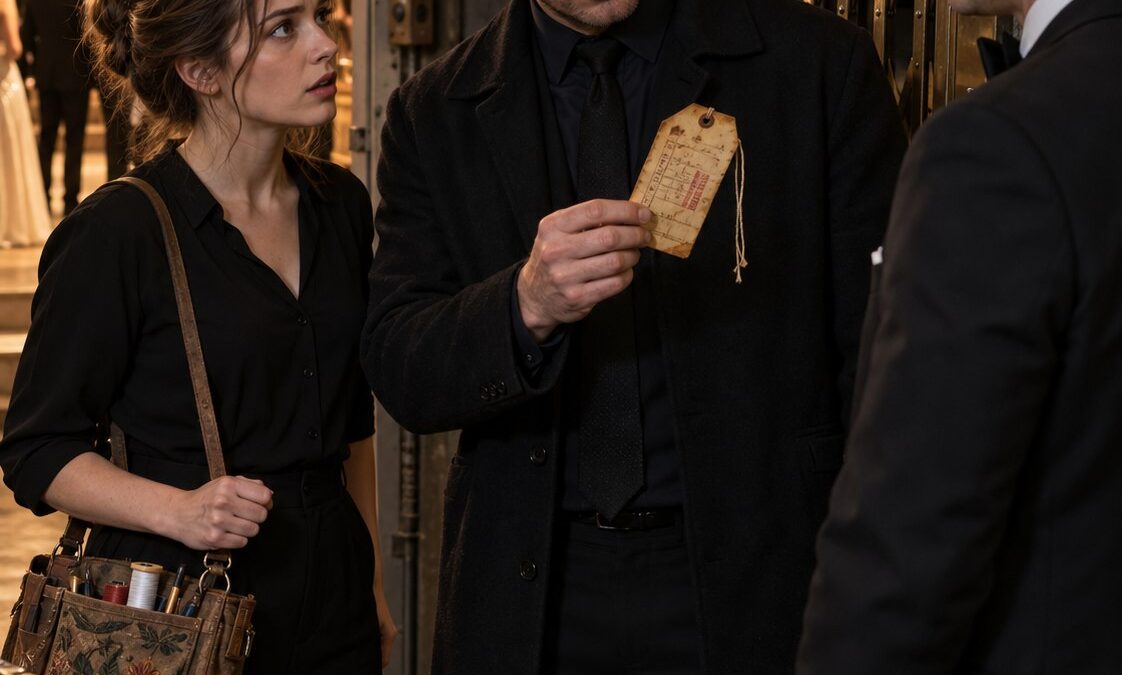
Chapter 2: What the Tag Kept
The elevator bell rang behind her.
Nobody entered.
Willa looked at her husband.
“Tell him it’s wrong.”
Grant adjusted his sleeve.
“Tell him.”
“You’re upset.”
Dorian moved toward the service door.
“Stay here, please.”
It took Willa a second to realize he meant Grant.
The guard returned before Grant could answer.
“The facilities chief has stopped the ceremony.”
“Good.”
“Should I call the police?”
Dorian looked at Willa.
She wanted someone to decide for her.
That frightened her more than anything.
“First I want to see it,” she said.
“The certificate?”
“The thing I supposedly signed.”
A woman carrying a tablet entered through the ballroom.
Her gray hair was cut sharply.
Her expression was sharper.
“Priya Shah,” she told Willa.
“I’m counsel for the theater company.”
“Not for me.”
“No.”
That honesty steadied her.
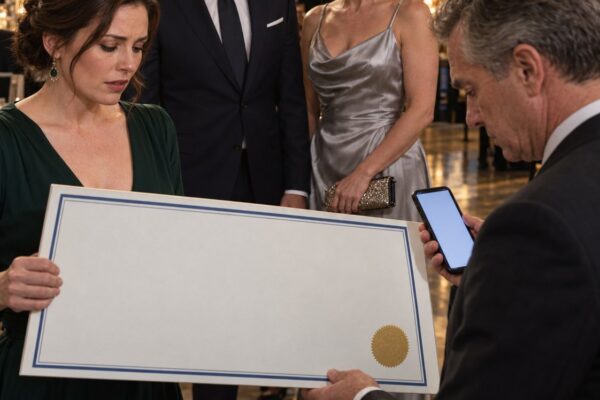
Priya opened a document.
Willa’s name sat beneath a paragraph about inspection.
Her signature curved underneath.
The W was unmistakable.
She had made it that morning.
On a delivery acknowledgment.
“That’s mine,” she whispered.
Grant exhaled.
“But not there.”
Priya watched her closely.
“Explain.”
Willa touched the screen without pressing it.
“I signed for returning four repaired panels.”
“On paper?”
“On Grant’s tablet.”
“Did you receive a copy?”
“He said the system would send one.”
It never had.
Dorian asked Priya to preserve everything.
The submitted certificate.
The upload history.
The delivery form.
“Preserve,” Grant said.
“As though I’m a criminal.”
“As though documents matter,” Priya replied.
Willa’s hands had started shaking.
She tucked the tag into her bag.
Dorian noticed.
“Have you eaten?”
“That seems unrelated.”
“It doesn’t seem unimportant.”
She almost laughed.
The sound hurt.
“My sandwich is in there.”
“Then let’s find somewhere you can eat.”
Grant took a step forward.
“We’ll discuss this at home.”
Willa looked at him.
The word home meant her sewing machine.
The mug with a chipped handle.
The rent she paid while he claimed his salary was tied up.
It no longer meant him.
“I’m not going home with you.”
“Don’t let him make decisions for you.”
“He asked whether I was hungry.”
“That’s how men like him operate.”
“And how do men like you operate?”
Grant looked toward Priya.
He finally understood the value of silence.
Dorian offered Willa the adjoining conference room.
She agreed because its door opened onto the vestibule.
She wanted an exit she could see.
Priya stayed with Grant and the guard.
Nobody claimed he was under arrest.
Nobody promised he could leave with company equipment.
Inside the conference room, Dorian pulled out a chair.
Willa sat without thanking him.
She was afraid gratitude might start her crying.
He placed water beside her.
Then moved away.
“Did you know about my father?”
“I knew the public account.”
“Everyone does.”
“I didn’t know it was wrong.”
“You don’t know that now.”
“No.”
She looked up.
He stood across the table.
“Then why stop the ceremony?”
“Because a woman told me she hadn’t approved something.”
“And you believed her?”
“I believed we should check.”
She unwrapped the sandwich.
The bread had flattened.
Egg salad.
Too much pepper.
Her stomach clenched at the first bite.
Dorian waited until she swallowed.
“Your father worked here before we bought it.”
“Yes.”
“My company acquired the property eighteen months ago.”
“From the Kells trust.”
“Yes.”
“Celeste’s family.”
His face tightened.
“The trust retained an interest in the restoration partnership.”
“And my husband got his promotion.”
“On their recommendation.”
Willa set the sandwich down.
“Was tonight supposed to introduce me?”
“I wanted the craft workers acknowledged.”
“Grant said you disliked personal publicity.”
“I dislike dishonest publicity.”
She studied him.
“Did you pay for all this?”
“Most of it.”
“Then you bought a very expensive delay.”
“I’ve bought worse.”
“Such as?”
“Advice from people I shouldn’t have trusted.”
It wasn’t an apology for what he hadn’t done.
She appreciated that.
A knock came.
Priya entered with another woman on a video call.
“Independent counsel,” she explained.
“Her name is Tamsin Bell.”
“Who pays her?”
“The company can cover emergency fees.”
Willa stiffened.
Tamsin spoke from the screen.
“My duty would be to you.”
“We can discuss payment separately.”
Willa nodded slowly.
Then Priya placed a scanned page beside the tablet.
“This is from the old case file.”
The room seemed to narrow.
Willa recognized her father’s name.
She didn’t recognize the statement below it.
A statement attributed to her.
She had supposedly seen him alter an inspection record.
She had supposedly begged him to stop.
Her knees went cold beneath the table.
“I never said this.”
Tamsin asked her to leave the page untouched.
Priya slid it into a folder.
“Your father’s former solicitor supplied the scan tonight.”
“Why would Dad believe it?”
“There was an attached email.”
Willa stared at her.
“Sent from your address.”
Grant had known her password.
He had set up the account.
Dorian sat down across from her.
This time, she was grateful.
Her father hadn’t stopped writing because he was ashamed.
He had thought his daughter testified against him.
* * *
By midnight, the ballroom had emptied.
The theater remained closed.
Willa sat with Tamsin on a private call.
Dorian waited outside.
He hadn’t asked what she told her lawyer.
He had asked whether she wanted the door shut.
She had.
Now the room smelled of cold coffee.
Tamsin took her through the evening carefully.
No rushing.
No filling gaps.
“What did you personally see?”
“What did Grant tell you?”
“What do you still have?”
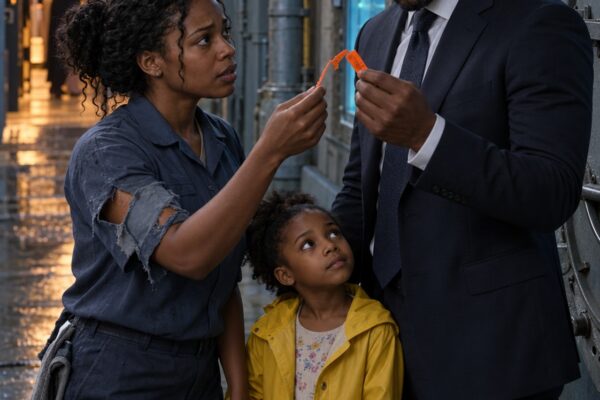
Willa retrieved the yellow tag.
“Photograph both sides,” Tamsin said.
“Then stop handling it.”
Willa laid it flat.
For years, she had kept it in a tin of spare buttons.
It had survived two apartments.
One leaking roof.
Her own temptation to throw everything away.
“Why did you keep it?”
“Dad asked me.”
Tamsin waited.
“And he never asked for much.”
They arranged for the original to be documented and secured.
Willa would keep a copy.
She hated that part.
It felt like surrendering her father again.
Tamsin understood without making promises.
“Keeping evidence safe is a way of keeping it.”
The next morning brought an independent theater inspector.
His name was Ellis Boone.
He wore work boots and carried no patience for anyone’s title.
Willa met him beneath the empty stage.
Dorian stood beside the facilities chief.
Grant had been suspended.
His access had been disabled after company records were preserved.
Celeste had left the gala with her mother.
Willa hadn’t seen either woman go.
She was glad.
She had only enough strength for one discovery at a time.
Ellis pointed toward the installed fire curtain.
“I’ll assess the system.”
He looked at Willa.
“You’re here for identification, not certification.”
“Believe me, I understand.”
Dorian almost smiled.
It vanished when Ellis opened the delivery packet.
The listed manufacturer differed from the wrapper Willa remembered.
“Where was the packaging?”
“Under the south stair.”
A porter had already moved the waste.
For one awful moment, she thought it was gone.
Then the facilities chief explained that oversized material waited in a locked collection cage.
They found the tube.
And the torn wrapper.
Willa recognized the corner she had folded underneath.
Ellis photographed everything where it lay.
He checked the installed material against its labels.
Then he made several calls.
Willa stood beside the cage.
Her hands wanted work.
A needle.
A loose hem.
Something she could make obey.
Dorian noticed her rubbing her fingers together.
“You can go upstairs.”
“I’m staying.”
“I meant you don’t have to watch.”
“I’ve spent six years not watching.”
He nodded.
No argument.
At noon, Ellis gave his preliminary finding.
The installed curtain didn’t match the specified product.
He couldn’t yet say who substituted it.
He could say the theater would remain closed.
The manufacturer would examine samples.
The documents would be checked independently.
Nobody would test anything with an audience present.
Willa felt the first solid piece of ground beneath her.
Not vindication yet.
A fact.
Tamsin arrived carrying a paper bag.
“Breakfast.”
“It’s noon.”
“Then my timing is terrible.”
Inside was a warm cheese pastry.
Willa ate it standing up.
Her phone vibrated.
Grant.
You are making a private misunderstanding into a public disaster.
Another message followed.
Your father won’t thank you.
Tamsin photographed the messages with Willa’s permission.
Then Willa called her father.
The number had changed twice.
She had the current one because an aunt sent Christmas addresses.
It rang seven times.
“Hello?”
His voice was thinner.
Older.
Willa couldn’t speak.
“Who is this?”
“It’s me.”
Silence.
Then a chair scraped.
“What happened?”
She closed her eyes.
Of all the questions he could have asked.
“Dad, I didn’t write that statement.”
His breathing changed.
“I never knew it existed.”
“Willa.”
“I didn’t tell anybody you changed the records.”
He said nothing.
She heard a television in the background.
A weather report.
Ordinary rain falling somewhere outside her life.
“Did Grant tell you I wouldn’t visit?”
“Yes.”
“He told me you refused.”
Her father made a small, broken sound.
She pressed her fingers against her mouth.
Dorian turned away.
Tamsin moved several paces back.
“They said you were frightened of me,” Owen whispered.
“No.”
“He brought printed messages.”
“No, Dad.”
“I thought you needed distance.”
“I needed you.”
The words came out before she could protect them.
Owen began crying quietly.
So did she.
For a minute, neither tried to stop.
Then he asked what he always asked.
“Have you eaten?”
She laughed through the tears.
“A lawyer brought breakfast.”
“That sounds expensive.”
“It had cheese.”
“Worth it, then.”
Two hours later, he arrived in a borrowed pickup.
Willa recognized his walk first.
One shoulder lower.
The old injury from hauling scenery.
She met him outside the hotel.
He stopped as though uncertain of the rules.
She crossed the last few feet herself.
His coat smelled of laundry soap and sawdust.
He held her carefully.
Then less carefully.
“I should have come,” he said.
“So should I.”
They stayed that way until the valet quietly walked around them.
Inside, Tamsin asked Owen about the tag.
He identified his handwriting.
He explained the supplier code.
He described handing the rejected curtain back to the procurement office.
“Who accepted it?”
“A young assistant.”
“Do you remember a name?”
“Celeste Kells.”
Willa’s fingers tightened around her cup.
Celeste hadn’t entered her life recently.
She had been there before the wedding.
Owen looked at his daughter.
“I thought you knew they worked together.”
“Who?”
“Grant and Celeste.”
Tamsin stopped writing.
Owen continued carefully.
“He came to my workshop with her.”
“When?”
“The week before the fire.”
Willa remembered that week.
Grant had told her he was interviewing at a shipping firm.
He had asked to borrow money for a suit.
She had given him her savings.
Tamsin asked about anything Owen had retained.
“My solicitor might have the carbon copy.”
“Of what?”
“The return receipt.”
That afternoon, the retired solicitor’s archive yielded it.
The handwriting wasn’t enough by itself.
But it gave investigators somewhere to look.
A name.
A department.
A date.
Dorian’s records team found the corresponding archived vendor entry among the acquired theater files.
Grant’s employee number appeared beside it.
His relationship with the Kells operation had begun months before he claimed.
Willa read the entry twice.
Then she looked at the wedding photograph on her phone.
Grant had already been working for the people her father accused.
He married her after the fire.
* * *
Willa moved into a small furnished apartment above a friend’s upholstery shop.
Dorian offered a hotel suite.
She refused.
He offered transportation.
She accepted rides to meetings after Tamsin suggested keeping her routine private.
He didn’t turn either answer into an argument.
That was becoming unsettling.
She had grown accustomed to kindness carrying an invoice.
On the fourth morning, her landlord called.
Grant had requested access to collect “joint property.”
The landlord had declined without speaking to her.
Willa thanked him.
Then she sat on the apartment’s narrow bed.
Her sewing machine remained in the marital apartment.
Her pattern books.
Her mother’s photographs.
Ordinary things had become hostages without anyone using the word.
Tamsin arranged a scheduled collection.
A neutral witness attended.
Grant wasn’t there.
Willa packed in forty minutes.
She left the wedding photographs facedown.
She took the frames.
Good frames were expensive.
When she carried her sewing machine downstairs, Dorian was waiting beside his car.
She stopped.
“Did my lawyer call you?”
“Your father did.”
“Why?”
“He said you’d try carrying this alone.”
“I could.”
“Yes.”
He looked at the machine.
“Would you like help anyway?”
She handed him one handle.
“Only this end.”
They carried it together.
At the upholstery shop, he set it on the worktable.
Then he studied the battered machine.
“How old is it?”
“Older than your jacket.”
“That isn’t particularly old.”
“It cost less, too.”
“I’m beginning to feel judged.”
“You’ll survive.”
He rolled up his sleeves.
“Where does it go?”
She pointed.
He moved the table six inches.
Then three inches back.
Then one inch left.
“You enjoy this.”
“A little.”
“Good.”
That answer quieted her.
She looked down at the plug in her hand.
For a moment, the room felt almost normal.
Then her phone rang.
An unknown number.
She let it go.
A voicemail appeared.
Celeste.
Willa played it with Tamsin listening remotely.
“You’ve misunderstood things badly.”
A pause.
“My mother was trying to protect your father.”
Another pause.
“Consider whether reopening all this will actually help him.”
No shouting.
No explicit threat.
Just the confident assumption that Willa could be frightened back into place.
Tamsin told her to preserve it.
Dorian’s expression hardened.
Willa saw, briefly, the man the city whispered about.
“What would your grandfather have done?”
He looked at her.
“Something that made the problem larger.”
“And you?”
“Let your lawyer hear the message.”
She let out a small breath.
“Good.”
The following week, the pressure became more practical.
Two clients canceled repair orders.
Both said they had heard she was being investigated.
One sounded apologetic.
The other sounded pleased to have an excuse.
Willa wrote down their exact words.
Then she called the remaining clients herself.
She told them there was a disputed certificate.
She said she had not signed it.
She offered progress photographs and revised collection dates.
Three stayed.
One sent another chair.
The upholstery shop’s owner, Mavis, read the cancellation emails.
“People are idiots.”
“Some people.”
“I’m rounding up.”
Willa smiled.
Then a reporter appeared downstairs.
Mavis told him appointments were required.
“For upholstery?”
“For breathing near my front door.”
By then, Dorian had hired outside investigators for the company.
Tamsin coordinated Willa’s submissions separately.
Police received the evidence through ordinary channels.
Nobody promised immediate charges.
The old conviction required its own legal work.
Owen found that hardest.
He had already spent years paying for a story.
Now he had to wait while people checked it.
Willa found him one evening sitting in Mavis’s shop.
A dismantled chair stood before him.
He was touching its wooden frame.
“I could fix that joint.”
“Mavis would marry you.”
“She looks difficult.”
“She’d say the same.”
His smile faded.
“I should have trusted you.”
Willa sat beside him.
“I believed things, too.”
“You were twenty-four.”
“I was old enough to call.”
“And I was old enough to answer.”
They sat with that.
No easy forgiveness.
No arithmetic that made the lost years fair.
Then Owen picked up a loose dowel.
“Where does she keep the glue?”
Willa showed him.
It was something they could do that evening.
The investigators found the next piece through an old maintenance contractor.
He had kept invoices because the former theater owners disputed payment.
Among them was a request to isolate part of the alarm system during renovations.
The authorization came from the trust office.
The timing overlapped the fire.
It didn’t prove the fire was deliberate.
Investigators found no reason to call it deliberate.
That distinction mattered.
The fire began during contracted work.
The deeper wrong was what had been disabled.
What had been substituted.
Who had known.
The supplier’s archived correspondence showed repeated warnings.
A cheaper material had been ordered.
A compliant replacement had been quoted.
The replacement never arrived.
Willa read the chain with Tamsin.
One message referred to Owen as “the obstacle.”
Another proposed resolving the problem through personnel.
The sender’s name appeared at the bottom.
Beatrice Kells.
Celeste’s mother.
Former chair of the theater trust.
Current restoration partner.
The woman who had thanked donors for preserving Detroit’s history.
Dorian joined the meeting after Willa agreed.
Priya brought the financial records.
The trust had been under pressure six years earlier.
A lender could demand repayment if the theater missed its reopening deadline.
Beatrice had chosen to conceal the substitution.
After the fire, blaming Owen protected the trust’s claim that management had been deceived.
It also protected documents used in a later insurance settlement.
“The current fraud?” Willa asked.
Priya opened another file.
“The restoration partnership included a final payment tied to reopening.”
“How much?”
“Enough to cover liabilities they concealed from us.”
Dorian’s jaw tightened.
“They sold you the same lie twice.”
“Yes.”
“Why use me?”
Tamsin answered.
“Your work gave you legitimate access.”
“And my father’s history made the story easy.”
Nobody contradicted her.
Priya showed her an internal message recovered from Grant’s company account.
Beatrice had written it.
The old paper must be recovered before inspection.
Below that, Grant had replied.
I can get her to bring it.
Willa felt the room recede.
She imagined his thumb typing those words.
The same thumb that had wiped tears from her cheek.
“Did he choose me because of Dad?”
“We don’t know yet,” Tamsin said.
That was mercifully precise.
The investigators knew enough about the architect.
Beatrice had arranged the substitutions.
She had pushed the blame downward.
And when the renovation threatened to expose the old batch records, she had decided the daughter would serve the same purpose as the father.
At the bottom of the recovered message, Beatrice had added one sentence.
A Mercer is believable.
* * *
The confrontation took place three weeks after the gala.
No chandeliers.
No quartet.
A long table in the theater’s rehearsal room.
The people who mattered had been invited.
The independent board directors.
The insurer’s counsel.
The restoration lender.
The city representative overseeing the public grant.
Owen sat beside Willa.
Tamsin sat on her other side.
Dorian had offered to postpone until Owen felt ready.
Owen had shaken his head.
“I spent enough time absent from rooms about me.”
Beatrice arrived with two lawyers.
Celeste followed.
Grant came separately.
He wore the same watch.
Willa found herself glad.
She wanted to remember that particular detail.
Beatrice took her seat without looking at Owen.
She was elegant in dark green.
Her face suggested that other people’s feelings were scheduling problems.
Before Priya could begin, Beatrice spoke.
“I want the record to reflect our concern.”
“For what?” an independent director asked.
“For this company’s judgment.”
Her eyes moved to Dorian.
“A costly reopening was canceled on an unqualified worker’s allegation.”
Willa felt Owen shift.
She touched his sleeve.
Beatrice continued.
“Now we’re discussing a resolved criminal matter.”
“A matter under review,” Tamsin said.
“Because your client dislikes the outcome.”
“Because evidence contradicts the account used against him.”
Beatrice leaned back.
“Evidence or sentiment?”
It was a good performance.
Willa could admit that.
No panic.
No foolish confession.
Beatrice understood the room.
Budgets mattered here.
Reputations.
Liability.
She spoke their language fluently.
“Our company inherited incomplete records,” she said.
“Errors occur during restoration.”
Priya placed the independent inspector’s report before the directors.
“The installed product was not approved for the specified use.”
“A vendor issue.”
“The approved product was billed.”
“Then pursue the vendor.”
“We have.”
Beatrice’s hand paused near her water glass.
Only for a second.
The supplier had produced order records.
The compliant material had been quoted.
The cheaper material had been purchased through a related company.
The invoice submitted to the restoration partnership used the higher specification.
Beatrice’s lawyer asked to review the documents privately.
The board chair agreed to a short pause.
Willa watched them move to the far end of the room.
Grant remained seated.
He looked at her.
For the first time since the gala, he looked afraid.
“Willa.”
Tamsin turned.
He lowered his voice.
“I didn’t know how far this would go.”
She looked at the watch.
“Which part?”
“What?”
“The tag?”
“The certificate?”
“My father?”
He swallowed.
“I was trying to fix a situation.”
“Whose?”
He looked away.
That was still his answer.
When the meeting resumed, Beatrice changed direction.
She questioned Willa’s motive.
Her marriage was failing.
She had financial difficulties.
She had a personal grievance.
And now she had the attention of a powerful man.
Dorian’s hands stayed flat on the table.
Willa understood the effort that required.
Beatrice looked directly at her.
“Has Mr. Rusk offered you money?”
“He offered to cover emergency legal fees.”
“How generous.”
“My lawyer represents me.”
“Has he offered accommodation?”
“Yes.”
“There we are.”
“I declined.”
Beatrice smiled.
“A carefully managed appearance.”
Willa let the insult settle.
Then she opened the folder in front of her.
“You invited me here through my husband.”
Beatrice’s smile thinned.
“I did no such thing.”
“Your message said he could get me to bring the paper.”
“That message lacks context.”
“Then give it some.”
Silence followed.
Not victory.
A pause in which Beatrice calculated.
“We sought a historic document for the archive.”
“Why did he pin it to my clothes?”
“I can’t answer for his manners.”
“Can you answer for the certificate?”
“That is for the project personnel.”
Every answer pointed elsewhere.
Willa saw the method clearly now.
An assistant.
A vendor.
A rigger.
A wife.
Someone smaller.
Someone disposable.
Priya displayed the certificate’s submission history.
The document had been uploaded from Grant’s company account.
The source file contained a signature image extracted from a different form.
The recovered delivery acknowledgment showed the original placement.
Same strokes.
Same small break where the stylus had skipped.
Different document.
The independent digital examiner had documented the extraction.
Grant’s lawyer asked for a break.
The board chair refused another delay but allowed Grant to consult quietly.
Nobody treated the examination as a criminal verdict.
It was enough for the board’s immediate decisions.
Enough to preserve.
Enough to refer.
Beatrice folded her hands.
“Even if an employee acted improperly, that doesn’t implicate ownership.”
Priya changed the display.
The instruction came from Beatrice’s email account.
Use the contractor acknowledgment already obtained.
Below it was Celeste’s reply.
Grant has the signature.
Celeste stopped looking at her mother.
Willa noticed that first.
Then Beatrice said the accounts could have been accessed by staff.
Her lawyer touched her wrist.
She withdrew it.
Willa understood why the yellow tag mattered now.
Not because handwriting was magic.
Because it joined records that had been kept apart.
Tamsin brought forward the documented photograph.
Front.
Back.
The supplier code.
The batch number.
Her father’s rejection.
Beatrice glanced at it.
“A scrap of paper retained by an interested party.”
“Yes,” Willa said.
“My father retained it because he expected trouble.”
“He later admitted responsibility.”
“After someone forged a statement from his daughter.”
Beatrice’s expression didn’t move.
“That allegation is convenient.”
Tamsin displayed the recovered email attachment.
Then the old solicitor’s dated receipt.
Then correspondence showing Grant had supplied the printed statement during discussions before the plea.
There were gaps investigators still needed to resolve.
Tamsin said so.
She didn’t need to pretend otherwise.
The paper trail was already larger than Beatrice’s explanation.
Owen spoke for the first time.
“I rejected that curtain.”
Beatrice looked at him.
“You accepted a reduced sentence.”
“I was told my daughter would be questioned.”
His voice roughened.
“I was told she could lose her job.”
“That was your choice.”
Willa’s chest tightened.
Owen’s hands lay open on the table.
“Yes,” he said.
“It was.”
He looked at his daughter.
“And I was wrong not to ask her.”
Beatrice almost smiled.
She thought he had conceded something useful.
Then Priya introduced the independent confirmation.
The supplier’s retired quality manager joined by video.
He identified the batch number from archived production logs.
He identified the tag format.
And he identified the complaint Owen had lodged before the fire.
The complaint had been retained because it involved a disputed sale.
Attached was a scan of the yellow tag.
Made six years ago.
Before the fire.
Before the prosecution.
Before Willa married Grant.
The scan matched the original.
Even the crooked hole from Owen’s stapler.
Beatrice looked at the screen.
For the first time, she had no immediate answer.
The quality manager read his own follow-up note.
Management declined replacement pending opening.
He named the person who had declined it.
Beatrice.
Her lawyer closed his folder.
The board moved to terminate the Kells partnership’s management authority under the applicable agreements.
Further payments were frozen pending the contractual process.
The evidence went to investigators and the insurer.
There were no handcuffs in the rehearsal room.
No theatrical arrival.
Just people who had once deferred to Beatrice writing down what she had done.
As the meeting ended, she approached Willa.
Dorian moved slightly.
Willa lifted one hand.
She could manage this distance.
Beatrice stopped before her.
“You have no idea what this will cost.”
Willa looked at her father.
Then back.
“I know exactly what silence cost.”
“You’ll always be the daughter of a convicted man.”
“Then you should pay attention to the next hearing.”
Beatrice left without another word.
The next hearing didn’t solve everything.
Neither did the one after it.
The investigation took months.
The court reviewing Owen’s conviction considered the new evidence.
The prosecutor eventually agreed the conviction could not stand.
The order clearing it arrived eleven months after the gala.
Willa read every page with him.
Twice.
The new criminal case moved separately.
Grant cooperated after charges were filed.
His account was tested against documents.
It wasn’t accepted because he suddenly sounded sorry.
Celeste also provided records through her lawyer.
Her cooperation didn’t erase her part.
Beatrice contested the case.
She lost on the central fraud charges.
The sentences came more than a year after the gala.
Custody for Beatrice and Grant.
A lesser sentence and restitution obligations for Celeste, reflecting her role and cooperation.
The civil claims took longer.
Willa stopped treating every legal date as the day she would finally breathe.
She learned to breathe between them.
At Grant’s sentencing, he asked to address her.
The judge permitted it.
He said he had loved her.
He said ambition had changed him.
Then he finally answered the question she had asked through Tamsin.
He had first approached her because Beatrice wanted someone close to Owen.
Willa’s hands went still.
There it was.
The last locked door.
Grant looked toward her.
“I thought I could become someone better afterward.”
She didn’t answer.
She no longer needed him to explain himself kindly.
Her marriage had begun as an assignment.
* * *
The divorce became final on a wet Thursday.
Willa went to work afterward.
There was a dining chair waiting.
Its owner wanted the old fabric saved.
Mavis thought the fabric looked like boiled cabbage.
Willa thought it could survive one more generation.
Both opinions went on the estimate.
By then, she had rented the shop’s second-floor workroom properly.
A lease.
A deposit.
Utilities in her own name.
Dorian offered to buy the building.
She stared at him.
“What?”
“The owner mentioned selling.”
“And you happened to be listening?”
“I was standing there.”
“With your wallet open?”
He leaned against the doorframe.
“You could simply say no.”
“No.”
“All right.”
She narrowed her eyes.
“That’s it?”
“Would you prefer paperwork?”
“No.”
“Then that’s it.”
He left her an hour later with a repaired coat and no property deed.
She found that more persuasive than flowers.
He did bring flowers once.
They were beautiful.
They also occupied her only cutting table.
She moved them to the stairwell.
The next time, he brought lunch.
“You learn,” she said.
“Occasionally.”
They ate beside an unfinished theater valance.
He asked about the stitches.
She explained.
He listened without pretending to understand faster than he did.
That mattered.
Grant had always treated her work as something to summarize.
Dorian asked why the thread changed direction.
She showed him.
His attempt at a stitch was dreadful.
She pulled it out.
“You own freight terminals.”
“Yes.”
“Could you not destroy six inches of linen?”
“I’m trying to remain humble.”
“You’re succeeding.”
He laughed.
It changed his face.
She had begun looking forward to that.
They didn’t call these visits dates.
At first, that was honest.
Later, it became cowardice.
Willa knew the difference.
One evening, Dorian arrived after a board meeting.
His tie was loosened.
His expression wasn’t.
She put down her needle.
“Bad day?”
“Old contracts.”
“Old people?”
“A few.”
“Old family?”
He looked at her.
She waited.
“My grandfather’s associates still expect favors.”
“What kind?”
“The kind that don’t belong in a legitimate company.”
“And?”
“I declined.”
“Did they like that?”
“No.”
“Do you?”
“Yes.”
She nodded.
That was the answer she needed.
Not that his name had no shadow.
That he knew where it fell.
He sat across from her.
“My money came with things I didn’t earn.”
“So did my shame.”
He looked at her carefully.
She returned to her seam.
Neither tried to make the comparison larger.
After a while, he asked if she would have dinner with him.
She pointed at the cartons between them.
“This is dinner.”
“Somewhere with plates.”
“Mavis has plates.”
“Willa.”
She smiled.
“Yes.”
“To plates?”
“To a date.”
His relief was almost comical.
“You could have said that sooner.”
“You could have asked sooner.”
“I wasn’t certain you wanted—”
“I know.”
She set down the needle.
“I needed you to ask anyway.”
Their first actual date was at a neighborhood restaurant.
Dorian arrived early.
Willa arrived with a loose button on her sleeve.
He noticed.
She saw him notice.
“Don’t.”
“I said nothing.”
“You were thinking.”
“Dangerous habit.”
She ordered the pasta she wanted.
Not the cheapest.
Not the one easiest to eat gracefully.
He ordered something that came in a small tower.
She looked at it.
“Will they bring the rest?”
He laughed hard enough to disturb the tower.
Halfway through dinner, her phone lit up.
A message from Owen.
Chair finished.
Photo attached.
The chair stood in Mavis’s shop.
Mavis stood beside it.
Their hands were touching.
Willa looked at the photograph.
Then she turned the phone toward Dorian.
“Oh,” he said.
“Yes.”
“Should we pretend we didn’t notice?”
“Dad taught me to examine workmanship.”
She sent back a heart.
Then another for Mavis.
Owen replied after four minutes.
Don’t be difficult.
Willa smiled for the rest of dinner.
Healing arrived in embarrassingly ordinary forms.
Her father calling to complain about paint colors.
Mavis buying decent coffee.
Dorian remembering she hated chilled butter.
A client paying without reminding her of her troubles.
A morning when she forgot to check for news about the case.
Then another.
There were hard days.
She sometimes heard Grant in harmless questions.
Who were you talking to?
What did that cost?
When will you be back?
Dorian noticed her go still once.
They were leaving a hardware store.
He had asked whether she needed to return to work.
She stared at the passenger door.
He waited.
“I’m not asking for an account,” he said.
“I know.”
“Do you want to drive?”
She looked at him.
“That depends.”
“On?”
“How attached you are to this car.”
He handed her the keys.
“Moderately.”
She drove them to the river.
They sat without discussing Grant.
That helped, too.
Owen’s financial settlement came in stages.
His lawyer explained the options.
He chose a modest house near Willa.
He bought tools he had sold.
He put money aside.
Then he asked whether she would help start an apprenticeship fund.
“For rigging?” she said.
“And textile work.”
“Those are different trades.”
“They both need people who say no when something’s wrong.”
She agreed.
Dorian offered a donation.
Willa sent him the same terms given every donor.
No control over admissions.
No naming rights attached to individual students.
Independent oversight.
He signed.
“You’ve made charity surprisingly strict.”
“You should see my invoices.”
“I have.”
“You paid late once.”
“By one day.”
“A memorable day.”
The fund opened with six apprentices.
Two worked with Owen.
Two trained with another certified stage technician.
Two studied textile repair with Willa.
The theater commissioned her studio through a documented selection process.
She won the work because her samples were excellent.
Dorian stayed out of the decision.
She read the scoring sheets anyway.
He pretended not to be offended.
She pretended to believe him.
Celeste’s apology arrived through Tamsin.
A letter.
No request for secrecy.
No demand for forgiveness.
She admitted that she had known about Grant’s marriage before the gala.
She admitted she had helped conceal the substitutions.
She said she had thought her mother could make consequences disappear.
Willa read it once.
Then she wrote a short reply.
She acknowledged the admission.
She asked for no further contact outside legal necessities.
She didn’t add that Celeste deserved happiness.
She didn’t wish her suffering.
The boundary was enough.
Grant sent a longer letter.
Willa didn’t open it immediately.
When she did, she found fewer excuses than expected.
He apologized for the false statement.
For the marriage.
For the tag.
At the end, he asked if they could someday speak.
She answered through counsel.
No.
She owed him accuracy.
She owed herself peace.
A month later, Dorian came upstairs carrying a flat box.
Willa eyed it.
“If that’s a necklace, I’m busy.”
“It’s a frame.”
She opened it.
Inside lay a high-quality copy of the yellow tag.
The original remained secured until every proceeding requiring it had finished.
Beneath the copy was no dramatic inscription.
Just a small blank space.
“I thought you might want it,” he said.
“Or you can throw it away.”
She touched the glass.
“Why blank?”
“I don’t get to decide what it means.”
Her throat tightened.
She set the frame down.
Then she crossed the room and kissed him.
Softly.
Without urgency.
When she stepped back, he stayed still.
“That was clear,” he said.
“I can repeat it.”
“I’d appreciate that.”
She did.
Later, he asked whether she would spend Sunday with him.
“No gala?”
“No.”
“No board?”
“No.”
“Will there be breakfast?”
“I can manage breakfast.”
She rested her forehead against his.
“Yes.”
It was such a small word.
This time, it belonged entirely to her.
* * *
Three years after the gala, the freight elevator broke again.
Willa stood in the service vestibule with a garment bag over one arm.
Above her, the brass gate rattled halfway open.
Then stopped.
She looked at Dorian.
“You own this building.”
“I’ve heard.”
“Have you considered maintaining it?”
“We have excellent maintenance.”
“Does the elevator know?”
A technician approached from the corridor.
Willa stepped back to give him space.
Dorian carried the garment bag.
Inside was Owen’s dinner jacket.
Willa had finished the final alteration twenty minutes earlier.
Her father claimed the shoulders had shrunk.
Mavis said his appetite had expanded.
Their wedding was scheduled for four.
The reception would follow in the restored theater.
No giant donor wall.
No elaborate unveiling.
Just eighty people.
Good food.
A dance floor Owen pretended not to fear.
The theater had reopened long before this afternoon.
Its safety systems had been independently checked.
Its records were accessible to the people responsible for them.
The apprentices knew where those records were kept.
Willa considered that a greater improvement than the new chandelier.
The technician freed the gate.
It rose with a familiar clatter.
For an instant, she was thirty again.
Black blouse.
Empty pocket.
Her husband on the other side.
Then Dorian’s hand appeared beside hers.
Open.
Waiting.
“Would you like the stairs?”
She looked at him.
He never pretended the past had vanished.
He also never insisted she live inside it.
“No.”
She stepped into the elevator.
He followed.
The yellow tag was in her studio now.
The original had finally been returned.
Its legal usefulness was over.
Its other work continued.
She had framed it with the rejected side facing outward.
Beneath it, she had written six words.
A warning is not a defect.
Students asked about it.
She told them the truth.
Not on their first day.
On the day they first felt pressure to sign something they hadn’t checked.
The elevator reached the ballroom level.
Dorian held the door.
“After you.”
“Very wise.”
They found Owen standing before a mirror.
His tie was crooked.
His expression was worse.
“I’ve forgotten how knots work.”
“You maintained stage rigging.”
“Nothing on a stage ever looked at me like Mavis does.”
Willa set down the garment bag.
“That’s probably fortunate.”
She straightened his tie.
He watched her in the mirror.
“You’re happy.”
It wasn’t quite a question.
“Yes.”
“With him?”
She glanced toward Dorian.
He stood across the room speaking to a young apprentice.
Listening seriously to something about a counterweight.
“With myself,” she said.
“And with him.”
Owen nodded.
“That sounds right.”
He reached for her hand.
“I missed so much.”
She squeezed his fingers.
“You’re here for this.”
His eyes filled.
“So are you.”
Mavis appeared at the doorway.
Her dress was blue.
She had rejected white on practical grounds.
“I refuse to spend my wedding worrying about gravy.”
Owen stared.
Mavis stopped.
“Well?”
He tried twice before managing speech.
“You look beautiful.”
She smiled.
“Good answer.”
Willa stepped aside as her father crossed the room.
Dorian joined her.
For a moment, neither spoke.
There was no need.
Downstairs, someone tested the music.
A laugh traveled up the stairwell.
The kitchen sent out the smell of warm bread.
Dorian glanced at Willa’s shoulder.
She followed his gaze.
A loose white thread clung to her dress.
“May I?”
The words carried her back.
To a service light.
To a pin.
To the first person that evening who had asked.
She nodded.
He lifted the thread away.
“Still repairing everybody,” he said.
“Not everybody.”
“No?”
“Some things get returned to the manufacturer.”
He smiled.
She slipped her hand into his.
They had married the previous autumn.
A small ceremony.
Her father present.
Mavis complaining that the cake portions were timid.
Dorian had asked privately.
Willa had answered privately.
The city learned afterward.
She kept Mercer professionally.
He kept showing up with lunch.
Their apartment had two worktables.
His books migrated onto hers.
Her thread appeared on his jackets.
Neither won that argument.
Both kept trying.
At four, Owen took Mavis’s hand.
Willa stood beside her father.
Dorian sat in the front row.
When the officiant asked for the rings, Owen checked the wrong pocket.
Mavis closed her eyes.
Willa produced the small box.
“I know,” she whispered.
Owen gave her a grateful look.
“You always did.”
Afterward came music.
And plates passed between tables.
And a toast short enough to survive hungry guests.
Owen thanked the people who had helped him come home.
He looked at Willa last.
No speech could return six years.
They both knew it.
So he raised his glass.
“To the years we still get.”
Willa raised hers.
The old accusation was gone.
The marriage built on it was over.
The people responsible had answered.
Her work had her name.
Her father had his.
Near the service vestibule, an apprentice struggled with a heavy equipment case.
Willa started toward her.
Dorian reached it first.
“Would you like help?”
The young woman considered him.
“Only this end.”
Willa laughed.
Dorian looked back.
And beneath the raised brass gate, he smiled at his wife.
THE END