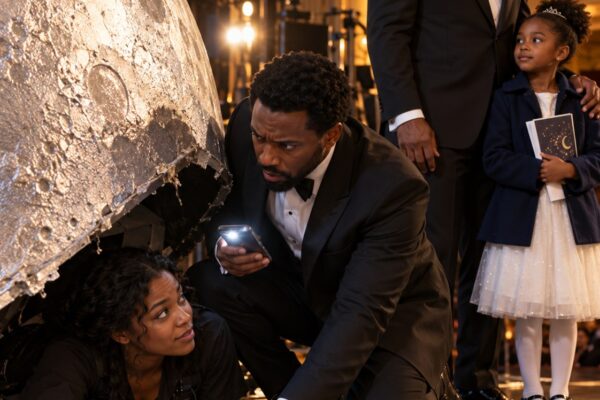
Her Husband Made Her Kneel Beneath an Auction Piano—Then the City’s Most Feared Billionaire Asked Who Had Signed Her Name

Chapter 2: The Page He Feared
The director reached the platform without smiling.
Her badge read Inez Calder.
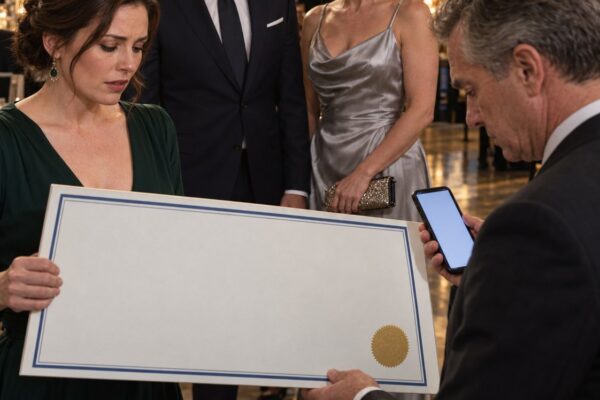
She looked at Dorian’s phone.
Then at Grant.
“Who submitted this?”
Grant adjusted his cuff.
“It was a precautionary report.”
“Against a named person?”
“We had concerns.”
Maren heard the pronoun.
We.
Celeste had started edging toward the stairs.
Inez noticed.
“Please remain available.”
“You can’t detain me.”
“No,” Inez said.
“But the police may want your account.”
Celeste stopped.
Dorian turned to Maren.
“Do you have somewhere safe tonight?”
She almost answered automatically.
Home.
Then she pictured Grant’s coat behind their door.
His shoes beside hers.
His hand reaching for the book.
“I need my tools.”
“Where are they?”
“The preparation room.”
“Inez can have someone bring them.”
“I’ll collect them.”
Dorian considered her.
“All right.”
Grant gave a short, irritated laugh.
“You’re treating me like a criminal.”
Maren looked at the report again.
“You named me in advance.”
“I was protecting us.”
“From what?”
He had no answer she believed.
Inez asked to photograph the blue book.
Maren held it tighter.
Dorian’s voice softened.
“You keep the original.”
Something in her shoulders loosened.
“Yes,” she said.
“But photograph every page.”
Grant’s eyes moved.
Only briefly.
Toward the back cover.
Maren saw.
For years, she had mistaken observation for suspicion.
Grant had taught her that.
Why are you checking?
Why are you making trouble?
Why can’t you trust me?
She opened the back cover.
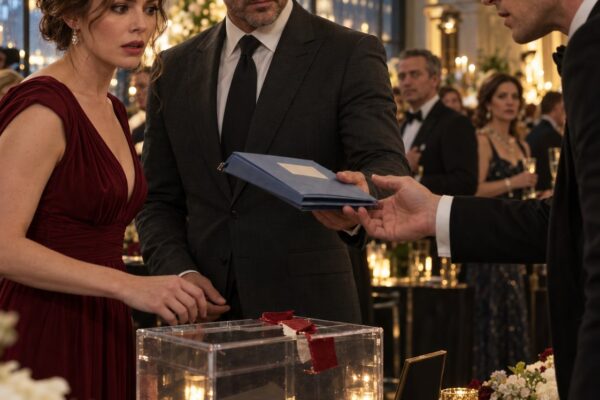
A folded sheet sat inside the cloth pocket.
Her father had stored loose service slips there.
She had read most of them.
Not all.
Grief made certain drawers difficult.
Grant took a step.
Dorian watched him.
Grant stopped.
Maren unfolded the paper.
Three short lines.
A date.
Her father’s signature.
She recognized the letterhead.
North Quay Music Storage.
The warehouse that had burned.
“What is it?” Dorian asked.
“A release acknowledgment.”
The original piano’s inventory number appeared halfway down.
Beneath it, a destination.
Ashcombe House.
The Rusk family’s former country estate.
Maren read the date again.
Three days before the fire.
Her father had initialed the instrument’s condition.
A transport supervisor had signed below him.
Grant spoke quickly.
“That could mean anything.”
“It means the piano left,” she said.
“Temporarily.”
“It was reported destroyed.”
“People make mistakes.”
Dorian looked at him.
“Apparently, several.”
Maren felt cold despite the warm room.
All those years.
The insurance articles.
The customers withdrawing their instruments.
Her father sitting at the kitchen table, reading an accusation he couldn’t afford to fight.
She had been eighteen.
She had thought adulthood meant somebody would eventually correct an obvious wrong.
Nobody had.
Inez photographed the release sheet.
Then its reverse.
Then the pocket where Maren had found it.
“I’m calling our counsel,” she said.
“The auction is canceled.”
Grant shook his head.
“You’ll lose hundreds of thousands.”
“Less than selling under false documents.”
Celeste finally spoke.
“The chair approved everything.”
Dorian turned.
“Everything?”
She looked away.
Maren’s stomach clenched.
Dorian offered no reassurance he couldn’t prove.
Instead, he took off his jacket.
He held it out.
“Your dress is wet.”
“I’m not cold.”
“You’re shaking.”
“That’s different.”
“I know.”
She accepted the jacket.
It smelled faintly of cedar.
He did not settle it around her.
He let her do that herself.
The director stepped away to make calls.
Grant tried Maren’s name.
She didn’t turn.
He tried again.
The second time sounded smaller.
That hurt more than she expected.
Some part of her still recognized him.
The man who had brought soup during her father’s illness.
The man who had learned which pharmacy stayed open late.
The man who had made himself useful before making her dependent.
Dorian waited until Grant moved aside.
“Did you know about the certificate?”
“No.”
“I believe you.”
“You barely know me.”
“I know he needed that book gone.”
Maren looked down.
“Believing me could cost you.”
“It already should have cost someone.”
“Your family?”
His jaw tightened.
“If that’s where the evidence goes.”
She studied him.
“Why are you helping?”
“My name is above the door.”
“That’s an answer for a board meeting.”
He glanced at the piano.
“My mother trusted your father.”
Maren went still.
“She played?”
“Badly.”
Despite everything, a laugh escaped her.
“My father liked those customers best.”
“He said she practiced with determination.”
“That meant badly.”
Dorian’s mouth curved briefly.
Then Maren looked again at the release.
At the date before everything collapsed.
Her father hadn’t lost the piano in the fire.
He had watched it leave.
* * *
By midnight, Maren sat in a conference room overlooking the empty harbor.
Her tools rested beside her chair.
The blue book lay on clean paper.
A lawyer named Priya Shah sat opposite her.
Dorian had introduced Priya carefully.
“She represents you if you want her.”
“Who pays?”
“I can cover the initial consultation.”
“Does that make her your lawyer?”
“No,” Priya said.
“It makes him the person receiving my invoice.”
Maren liked her immediately.
Priya explained the choices without rushing.
Preserve the records.
Protect business access.
Find somewhere else to sleep.
Make no public accusations they couldn’t support.
Maren nodded at each.
Then she asked the smallest question.
“Can I get my clothes?”
“Yes.”
“The good scissors are mine too.”
Priya made a note.
Dorian looked puzzled.
“Fabric scissors,” Maren explained.
“Grant uses them on packaging.”
“That seems relevant to character,” Priya said.
Maren laughed.
It sounded rusty.
The laugh ended quickly.
Her phone kept lighting up.
Grant.
Grant.
Grant.
Then a message.
You are destroying six years over a misunderstanding.
She turned the phone facedown.
Priya asked permission to preserve the messages.
Maren gave it.
Inez entered with the museum’s document manager.
The woman carried a laptop.
They had traced the supposed certificate.
It came from Grant’s consulting company.
Celeste had forwarded it.
The attached signature matched one on Maren’s maintenance agreement with the museum.
Exactly.
Same slight ink break.
Same tiny mark above the final letter.
“Copied?” Maren asked.
“Apparently,” the document manager said.
“We’ll have a specialist examine the files.”
Apparently.
Maren appreciated the restraint.
For twelve years, people had used certainty carelessly.
She wanted it earned.
Dorian stood near the window.
He hadn’t taken a call in twenty minutes.
His phone vibrated again.
He checked the name.
“My aunt.”
Priya held up a hand.
“No discussion of evidence without foundation counsel.”
He nodded.
Then declined the call.
Maren looked at him.
“You don’t have to stay.”
“I know.”
“You have people for this.”
“Yes.”
“But?”
He glanced toward the book.
“I’d like to hear what happens next.”
She understood that.
She wanted to hear it too.
The transport company on the release had changed names.
The document manager found its successor through archived business records.
A request went out the following morning.
Not a demand.
Not Dorian making a threatening call.
A formal request to preserve and locate records.
Maren spent that morning at Priya’s office.
She had slept at her cousin Tessa’s apartment.
Four hours.
Perhaps five.
Tessa had left a clean towel on the bed and asked no questions until coffee.
Then she had asked seventeen.
Maren answered fourteen.
The remaining three concerned Grant’s character.
Tessa supplied her own answers.
At the office, Maren read the old fire coverage.
She had avoided it for years.
Now she forced herself through every paragraph.
Her father’s name appeared beside “restoration work.”
Beside “possible electrical fault.”
Beside “questions about maintenance.”
None of the articles said he had been charged.
None said he had been cleared either.
The official report was less dramatic.
The cause remained undetermined.
An electrical problem was considered possible.
There was no finding against her father.
Maren sat back.
“They let people think it.”
Priya nodded.
“Who spoke publicly?”
“Beatrice.”
“Anyone else?”
“The warehouse manager.”
His name appeared in the book.
Owen Pritchard.
Maren turned to a page from the previous month.
Her father had recorded a call.
Then another.
Then a third.
“Look.”
Priya leaned closer.
Transformer smell near south wall.
Reported to O.P.
Keep instruments clear.
Maren touched the words.
“He warned them.”
“Can anyone confirm?”
“The book is his handwriting.”
“We’ll need more.”
Maren looked at the adjoining pages.
Her father used little circles beside completed invoices.
Squares beside unpaid ones.
Triangles beside work he refused.
People thought the symbols decorative.
Maren had learned them before multiplication.
A triangle appeared next to a service number.
“I know where to look.”
Her father had kept duplicate invoices by year.
Maren had kept the boxes because throwing them away felt like another funeral.
They were in her workshop.
The workshop Grant controlled through the lease.
Priya arranged access through the landlord.
Maren went with Tessa and a professional inventory clerk.
Grant wasn’t there.
The place smelled of felt and wood dust.
For one second, her body believed everything was normal.
Then she saw the empty desk drawer.
Grant had taken the business laptop.
“He can keep the machine,” she said.
Priya had already arranged preservation requests for the business accounts.
Maren wanted the boxes.
They found the invoice.
A refusal to continue work near the south wall until the electrical issue was assessed.
Her father had mailed a copy.
The postal receipt remained stapled behind it.
The recipient was the foundation office.
Signed for by Beatrice’s assistant.
Maren sat on her work stool.
Tessa rested a hand between her shoulders.
Neither spoke.
That afternoon, the transport company responded.
Its records confirmed a paid movement.
North Quay to Ashcombe House.
Same inventory number.
Same date.
The driver had retired.
The firm still retained a scanned delivery sheet.
Beatrice’s office had arranged payment.
Dorian read the scan in Priya’s office.
Maren watched his face.
He looked less surprised than wounded.
“Did you suspect her?” she asked.
“Not this.”
“What did you suspect?”
“She’s resisted an independent foundation audit.”
“Why now?”
“The board plans to sell unused property.”
Maren looked up.
“Which property?”
“The old repair court.”
Her workshop stood there.
So did eleven other small businesses.
Grant had said the leases were secure.
He had said many things.
Dorian opened the proposed sale summary.
Grant’s company had prepared it.
Maren recognized the letterhead.
Then a second document arrived from the museum.
A compensation agreement.
Grant would receive a substantial completion fee if the auction succeeded.
Celeste would receive a donor placement bonus.
The payments required an uncontested sale.
And the authenticity warranty attached to the agreement bore Maren’s copied signature.
Priya read every page.
Then she placed one finger beneath a clause.
Maren leaned forward.
The warranty extended beyond authenticity.
It stated that Maren’s workshop had held the instrument during final preparation.
Any substitution during that period would be her responsibility.
She hadn’t held it.
She hadn’t even seen it until that evening.
“Why would he include that?” she asked.
Priya didn’t answer immediately.
Dorian’s hand flattened against the desk.
The museum sent one more attachment.
An email from Grant to Celeste.
If questions arise, the wife’s custody period gives us separation.
Maren read it twice.
The wife.
Not her name.
Not even a person.
A period in a chain of custody.
Then she looked at the date.
Six weeks earlier.
On their anniversary.
Her husband had built the escape route through her.
* * *
The threat arrived as an eviction notice.
It came by courier two days later.
Maren was replacing a worn hammer felt when the knock sounded.
For a foolish instant, she thought a customer had come early.
Then she saw Grant’s company letterhead.
Immediate surrender demanded.
Alleged breach.
Unauthorized use.
She read the page standing up.
Her knees preferred that.
Tessa wanted to drive to Grant’s office.
Maren asked her to make tea.
“Violent tea?”
“Strong tea.”
“I can do strong.”
Priya reviewed the notice that afternoon.
She found reasons to challenge it.
She also advised Maren to document everything inside.
The dispute would take time.
That was the point.
Grant knew how little spare money she had.
He had watched her count it.
The next pressure came through customers.
Three canceled.
One forwarded an anonymous email.
Questions had arisen about Maren’s honesty.
Potential theft.
Pending investigation.
The wording sounded careful enough to have been reviewed.
Maren stared at her empty Thursday.
Then she called the customer.
“I haven’t stolen anything.”
“I didn’t think so.”
“But you canceled.”
“My husband said we should wait.”
Maren thanked her for answering.
Then she hung up.
Dorian arrived an hour later.
She hadn’t asked him to.
He stood in the doorway with two coffees.
Tessa had apparently answered one of the questions Maren hadn’t.
“You look busy,” he said.
“I’m repairing a middle C.”
“Is it serious?”
“It’s been dramatic for years.”
He set the coffee down.
“Can I help?”
“Do you know how to regulate an action?”
“No.”
“Then don’t touch anything expensive.”
He glanced around the crowded room.
“How do I identify that?”
“Assume.”
He kept his hands in his pockets.
She liked him for it.
That was becoming inconvenient.
He noticed the notice on the bench.
“Priya told me.”
“She shouldn’t tell you everything.”
“She asked your permission yesterday.”
Maren remembered.
She rubbed her forehead.
“Sorry.”
“You don’t owe me an apology for checking.”
He looked at the unfinished piano.
“Could the foundation rent another workshop for you?”
“No.”
The answer came too quickly.
He nodded anyway.
“All right.”
She waited for persuasion.
None came.
“You’re not going to explain why I’m being foolish?”
“Are you?”
“Probably a little.”
“Then you seem informed.”
She smiled despite herself.
He took the chair Tessa normally used.
It protested beneath him.
“That chair predates your empire,” Maren said.
“I’ll show respect.”
For several minutes, she worked.
He watched without filling the room.
Outside, a delivery truck backed toward the loading bay.
Maren flinched at the warning beeps.
Dorian noticed.
Again.
She wished he noticed less.
Then she wished more people had noticed sooner.
“Do people really fear you?” she asked.
“Yes.”
“Do you enjoy it?”
“Sometimes.”
The honesty stopped her hands.
He looked down.
“I’m trying to need it less.”
“Does that work?”
“Not consistently.”
Maren set the tool aside.
“My father was afraid of your family.”
“I’m sorry.”
“You didn’t do it.”
“I still benefited from people staying quiet.”
She studied him.
He didn’t look away.
She believed the discomfort.
More than she would have believed a perfect answer.
The workshop bell rang.
Owen Pritchard stood outside.
Older than Maren remembered.
Bent slightly through the shoulders.
He held his cap with both hands.
Dorian rose.
Owen stopped.
“I can come back.”
“No,” Maren said.
“What do you want?”
Owen looked at the floor.
“I got a call about your father.”
“From whom?”
“The investigator your lawyer hired.”
Priya had told her.
A retired investigator.
Records first.
Interviews second.
No promises.
Owen swallowed.
“I said I didn’t remember.”
“Do you?”
“Yes.”
Maren felt her fingers go cold.
Dorian remained silent.
Owen looked toward him again.
“I won’t say this with him here.”
Maren considered the demand.
Then looked at Dorian.
“Would you wait outside?”
“Yes.”
He left immediately.
Owen’s surprise was almost insulting.
Maren pointed to the chair.
“Sit carefully.”
He did.
“The transformer was mine to maintain.”
“You knew it was failing.”
“Yes.”
“My father reported it.”
“Yes.”
“Why didn’t you say that?”
Owen’s cap twisted between his hands.
“Beatrice said the insurer would come after us.”
“Us?”
“The staff.”
“Was that true?”
“I don’t know.”
Maren stared at him.
He had hidden inside that sentence for twelve years.
She had lived outside it.
“They paid my severance,” he said.
“And you stayed quiet.”
“I had a sick wife.”
“So did my father.”
Owen’s eyes closed.
Maren let him feel that.
Then she called Priya.
If he wanted to speak, he could speak where it mattered.
An account given properly.
Questions asked.
Details checked.
Owen agreed.
Before leaving, he looked at the blue book.
“Your father kept everything.”
“He had to.”
“I should have helped him.”
“Yes,” Maren said.
“You should.”
That evening, Priya called with another discovery.
The original piano had surfaced in an old estate inventory.
Ashcombe House had sold it privately nine years earlier.
The purchaser was a conservatory foundation in Switzerland.
Its online collection listed a donor history.
Its photographs showed the curved bridge graft.
Maren opened them on her phone.
There.
Her father’s work.
Alive.
A careful crescent of pale wood.
She sat down hard.
Dorian was still outside.
He had waited through Owen’s departure.
Through her closing the workshop.
Through her forgetting he existed.
She opened the door.
“I found it.”
He came no closer until she stepped aside.
She showed him the photograph.
His expression changed.
“Can they verify the number?”
“Priya has asked.”
Maren enlarged the repair.
“I used to hand him clamps.”
“For this?”
“Yes.”
She remembered being seventeen.
Her father saying the wood needed patience.
Her own impatience.
The radio too loud.
A Tuesday she had not known to treasure.
Dorian crouched beside her stool.
He looked at the photograph as though it deserved quiet.
“My mother played that piano.”
“Before the fire?”
“Before she died.”
Maren looked up.
“How old were you?”
“Twenty-four.”
“I’m sorry.”
He nodded.
Now she understood his attention.
The auction had advertised the recovery of his mother’s favorite instrument.
His aunt had sold him his own grief.
Priya called again before either spoke.
The conservatory had answered promptly.
Its files contained the private purchase agreement.
The seller was an entity controlled by Beatrice.
The same entity had funded the cheap substitute’s recent refinishing.
Maren put the call on speaker.
Priya’s voice remained measured.
“We have the purchaser’s records.”
Dorian stood very slowly.
His aunt hadn’t merely concealed a mistake.
Beatrice had sold the original.
* * *
The foundation’s special board meeting took place eleven days after the canceled auction.
Maren nearly stayed outside.
Not from fear.
From exhaustion.
For eleven days, people had asked her to remember.
Every date.
Every conversation.
Every time Grant touched a document.
Memory had become another job.
Now she stood beside Dorian at the meeting-room doors.
Her dress was navy.
Dry.
Her own.
Tessa had insisted on checking the hem.
Priya stood on her other side.
“You don’t have to address them,” Priya said.
“I know.”
“You can answer through me.”
“I know.”
Dorian looked at the blue book under her arm.
“Ready?”
“No.”
He nodded.
“Neither am I.”
That helped.
Inside sat the foundation trustees.
Museum representatives.
Independent counsel.
The outside accountant reviewing the auction and proposed property sale.
Grant sat beside Celeste.
They were not touching.
Beatrice occupied the head of the table.
Pearls.
Cream jacket.
A face Maren had seen on plaques.
She looked at Maren’s book.
Then at Dorian.
“You’ve made this needlessly theatrical.”
Dorian pulled out a chair for himself.
Maren took the one beside it.
No presentation.
No grand introduction.
She was grateful.
Independent counsel opened the meeting.
The foundation had suspended the auction.
Relevant records had been preserved.
Authorities had received a preliminary referral.
This meeting would address governance and immediate protective action.
It would not determine criminal guilt.
Beatrice listened with visible patience.
When invited to respond, she folded her hands.
“The foundation survived difficult years.”
Her voice was warm.
Reasonable.
“I made practical decisions under enormous pressure.”
Maren watched the trustees.
Several nodded.
Beatrice had funded hospitals.
Scholarships.
A winter shelter.
She knew the names of their children.
Maren knew she would be good at this.
“The original instrument was moved before the fire,” Beatrice continued.
“That is established.”
“Why was it included in the loss inventory?” counsel asked.
“A mistake during a catastrophe.”
“Why wasn’t that corrected?”
“I relied on staff.”
Owen’s chair remained empty.
He had provided a statement.
He had not agreed to face the board.
Maren understood cowardice could outlast confession.
Beatrice glanced at her.
“I regret that Mr. Ellery suffered professionally.”
Her father’s name.
Spoken like a damaged delivery.
“But I never accused him of a crime.”
“You suggested his work caused the fire,” Maren said.
“I expressed concerns based on information available.”
“My father sent a warning.”
“Which I apparently never received personally.”
The assistant who signed for it had died.
Beatrice knew that.
Of course she did.
Counsel placed the delivery receipt on the screen.
Beatrice barely glanced up.
“Receipt by an office isn’t proof of knowledge.”
A trustee shifted.
Maren felt the room considering it.
The argument was good.
That made it worse.
Beatrice turned toward Dorian.
“You were young.”
“You were grieving.”
“I kept everything functioning.”
Dorian’s expression remained still.
“You sold my mother’s piano.”
“The estate needed liquidity.”
“Then why tell me it burned?”
“I thought the truth would hurt you.”
Maren’s nails pressed into her palm.
A familiar sentence wearing better clothes.
Beatrice looked around the table.
“The current instrument was intended as a commemorative reconstruction.”
“The catalog calls it the original,” Inez said.
“An error.”
“The certificate names Maren as authenticator.”
“Grant handled outside contractors.”
Grant straightened.
Beatrice did not look at him.
There it was.
The next person beneath the piano.
Grant spoke.
“My firm relied on foundation records.”
“And fabricated my signature?” Maren asked.
“I believed I had administrative authority.”
Priya slid a document forward.
“Your agreement authorized scheduling and invoicing.”
“Business administration is broader than—”
“Not in this agreement.”
Grant looked at the page.
His own signature looked remarkably unhelpful.
Celeste stared at the table.
Counsel displayed the digital findings.
The signature image originated in a maintenance form.
It had been inserted into the authenticity certificate on Grant’s company computer.
The document had then traveled to Celeste.
She had forwarded it to the museum.
Grant’s mouth tightened.
“That proves assembly, not intent.”
Maren hated that she recognized his office voice.
The voice he used while her dinner cooled.
The voice that made deceit sound like a scheduling problem.
Beatrice leaned back.
“This is precisely why we shouldn’t rush.”
“A contractor’s dispute has become a public spectacle.”
“The canceled event harmed our beneficiaries.”
One trustee nodded again.
Maren looked at the blue book.
At its worn corners.
At the small line on her father’s release sheet.
Her eyes stopped.
She had read the page twenty times.
She had understood the date.
The destination.
The signatures.
She hadn’t understood one abbreviation until seeing the proposed sale files.
B.R. office — retained value copy.
Her father had made a second copy.
For the recipient.
Because somebody wanted the insured value documented.
Maren leaned toward Priya.
“Ask for the attachment.”
“Which attachment?”
“The transport invoice’s valuation attachment.”
The accountant looked up.
“We have that.”
Beatrice’s hand stopped moving.
The accountant searched her folder.
The transport company had supplied the complete billing packet.
Most attention had gone to the delivery acknowledgment.
The attached valuation instruction appeared on the screen.
Beatrice’s office had sent it.
The piano’s identity.
Its insured value.
Instructions to move it discreetly before a private appraisal.
And a reply from Beatrice herself.
Thank you, Owen.
Keep this separate from the general inventory until I advise.
Maren felt the room change.
Not dramatically.
A pen lowered.
A trustee sat forward.
Someone stopped nodding.
Beatrice looked at the screen.
“That doesn’t establish the later insurance handling.”
“No,” counsel said.
“So we requested those records too.”
The insurer had supplied material through the appropriate representatives.
Its archived correspondence included the claimed loss schedule.
The piano appeared there.
Beatrice had approved the schedule after the move.
A later email from the adjuster asked specifically about high-value instruments removed before the fire.
Her response said none had been removed.
Maren stared.
Twelve years collapsed into two sentences.
Beatrice’s face remained composed.
Her hands didn’t.
One thumb rubbed hard against the other.
Dorian looked at the independent counsel.
“Continue.”
The conservatory’s authenticated purchase records came next.
The original serial number.
The seller’s company.
The payment.
Current photographs confirmed the bridge graft and mounting hole.
An independent piano specialist had examined the museum instrument.
Different production details.
Altered identification plate.
Recent refinishing around the attachment points.
One original had been sold.
One substitute had been dressed for auction.
Both trails led through Beatrice’s office.
Grant glanced at Celeste.
She moved her chair away from his.
It was only an inch.
Maren saw it anyway.
Then counsel displayed the recent emails recovered from foundation accounts.
Beatrice had demanded that Grant provide a “defensible outside custodian.”
Grant had proposed Maren.
He described her limited finances.
Her reliance on his lease.
Her reluctance to discuss her father publicly.
Maren’s throat tightened.
She kept reading.
Beatrice’s response was brief.
Then she is unlikely to challenge the foundation effectively.
Dorian pushed his chair back.
Only an inch.
His hands stayed flat on the table.
Maren placed her own hand beside his.
Not on it.
Beside it.
He looked at her.
She shook her head once.
He stayed seated.
Beatrice noticed.
Her expression hardened.
“You’re making a serious mistake, Dorian.”
“Several people did.”
“You think you can run this family through lawyers?”
“I intend to run this foundation through its charter.”
The trustees voted without Beatrice.
Her authority was suspended immediately.
Independent management would oversee the records.
The property sale would halt pending review.
Grant’s contract was terminated under its suspension provisions.
Further decisions would follow the investigation.
No handcuffs appeared in the meeting room.
No miraculous verdict arrived before lunch.
Instead, counsel collected documents.
Trustees signed resolutions.
Investigators would interview witnesses separately.
The slow machinery had finally started.
Maren stood.
Beatrice spoke directly to her for the first time.
“Your father wasn’t a sophisticated man.”
Maren closed the blue book.
“No.”
“He trusted people he shouldn’t have.”
“So did I.”
Beatrice’s mouth tightened.
“You’ll find your victory expensive.”
Maren looked at the woman’s pearls.
Then at Grant.
Then back.
“I already paid for your version.”
Nobody stopped her when she left.
Dorian followed only after asking with his eyes.
Outside, Maren reached the end of the corridor.
Then she sat on a bench.
Her legs had finished being brave.
He sat beside her.
For a while, neither spoke.
Finally, she said, “I wanted to throw something.”
“I noticed.”
“What would you have done?”
“Moved the expensive objects.”
She laughed.
Then cried.
He offered a clean handkerchief.
She looked at it.
“Of course you have one.”
“My aunt raised me.”
That startled another laugh out of her.
He waited while she wiped her face.
Then she took his hand.
It was the first thing she had asked of him without words.
Months later, the investigation would establish the financial path.
The original sale proceeds had gone toward debts on Beatrice’s private development venture.
The planned auction would cover a new shortfall.
The repair-court sale would have provided another fee through an undisclosed interest.
The fire itself remained accidental or undetermined.
No evidence established that Beatrice had caused it.
She had seen a disaster.
Then she had used it.
And when counsel finally gave Maren the complete written findings, one conclusion stood clear.
Her father had been right.
* * *
Five months after the auction, Maren signed her divorce papers at a table with a wobbly leg.
Priya apologized for the furniture.
“The office is being renovated.”
“It’s comforting.”
“How?”
“Something in this building needs my skills.”
Priya smiled.
The settlement separated Maren’s business from Grant’s company.
The workshop dispute had been resolved during negotiations.
A new lease stood in her name.
Her bank access was hers.
Her appointments were hers.
The scissors had been returned.
Damaged.
She considered that final detail appropriate.
Grant arrived after she finished signing.
His lawyer waited outside.
Priya asked whether Maren wanted him admitted.
She thought about it.
Then nodded.
Ten minutes.
That was what she offered.
Grant looked thinner.
His expensive watch was gone.
She tried not to assign meaning to that.
He sat across from her.
“I’m sorry.”
Maren waited.
“I know that isn’t enough.”
“No.”
He looked at his hands.
“Celeste gave them everything.”
“Good.”
“She’s trying to protect herself.”
“So were you.”
His face tightened.
Then he nodded.
“Yes.”
It was the first clean answer he had given her in months.
Perhaps years.
“I told myself it would never reach you.”
“You wrote the report.”
“I thought you’d agree to settle quietly.”
“There it is.”
“What?”
“What you actually expected.”
He looked up.
She held his gaze.
“You didn’t think I was innocent.”
“You thought I was manageable.”
He looked away first.
Outside, someone wheeled a cart down the corridor.
The front wheel squeaked.
Maren found herself measuring the rhythm.
A habit.
A small piece of herself returning.
“I did love you,” Grant said.
She believed he believed that.
It changed nothing.
“You also knew where I was weakest.”
He swallowed.
“I can testify about your father.”
“Tell the truth because it’s true.”
“Not to buy something from me.”
His eyes shone.
She felt sorrow.
Not responsibility.
That distinction had taken months to learn.
“Will you ever forgive me?”
“I won’t spend my life hating you.”
His face lifted slightly.
She continued.
“You won’t be in it.”
He nodded slowly.
When ten minutes passed, she stood.
He did too.
He didn’t reach for her.
She appreciated that final restraint.
Then she left with Priya.
On the sidewalk, sunlight struck the office windows.
Maren checked her phone.
A message from Dorian.
How is the table?
She smiled.
Priya had apparently mentioned it during scheduling.
Still unstable, she typed.
And you?
She considered.
Then answered honestly.
Less so.
Their first dinner had happened six weeks after the auction.
Maren chose the restaurant.
A place where the paper menus had coffee stains.
Dorian arrived early.
The waitress called him honey.
Maren enjoyed that more than she should have.
He ordered soup.
She ordered breakfast.
“At seven in the evening?” he asked.
“You own ships.”
“I do.”
“Let me have eggs.”
He conceded immediately.
They talked about ordinary things.
His dislike of skiing.
Her inability to keep basil alive.
The childhood dog he had loved.
The neighbor who practiced trumpet at eleven.
He asked about her father.
She told him a story without mentioning the fire.
That felt like opening a window.
Her father once spent three hours searching a piano for a rattle.
The cause was a toy dinosaur.
Maren had put it there.
“You confessed?”
“After he billed the customer.”
“Bold.”
“I was six.”
“Still.”
At the end of dinner, Dorian walked her to her car.
He stopped before she reached the door.
“May I see you again?”
She looked at him.
“You can ask.”
“I just did.”
“I’m appreciating it.”
He smiled.
A real one.
It changed his face enough to feel private.
“Yes,” she said.
“You may.”
They moved carefully.
Sometimes too carefully.
On their fourth date, Maren finally said, “You can disagree with me.”
“I have.”
“About parking.”
“It was a serious error.”
“You own the garage.”
“The lines still apply.”
She laughed so hard she had to sit down.
Later, he told her what the newspapers left out.
His family’s old associations.
The businesses he had closed.
The employees who resented the changes.
The times he had used fear because it was easier than explanation.
She listened.
Then asked questions.
He answered without requesting admiration.
That mattered.
She did not need a flawless man.
She needed one whose truths did not arrive by accident.
By summer, the foundation’s independent review was public.
It corrected the record about her father.
The museum issued its own statement.
So did the insurer.
The statements were careful.
Specific.
They acknowledged the warning he had sent.
The absence of evidence against him.
The false account of the instrument’s destruction.
Maren read them in her workshop.
Then she printed copies.
One for her records.
One for her father’s box.
One for the wall.
Tessa cried over the last one.
Maren pretended not to notice.
Tessa accused her of pretending.
They both laughed.
The foundation offered Maren a settlement for the documented harm connected to its actions.
Priya negotiated it independently.
Dorian stayed out.
Maren accepted what fairly belonged to her.
She paid her debts.
Replaced failing equipment.
Set aside a reserve she checked too often.
The first month, she opened the account every morning.
The second month, twice a week.
Eventually, she stopped needing to reassure herself that it existed.
Dorian also proposed funding a large new workshop.
Maren read the plans.
High ceilings.
Practice rooms.
A showroom with her name in metal letters.
“It’s beautiful,” she said.
“But?”
“I don’t want employees because you drew twelve workstations.”
“We can change the plans.”
“I want to change the idea.”
He waited.
She tapped the drawing.
“What if we taught people?”
“Piano repair?”
“And the business side.”
“Contracts.”
“Pricing.”
“How not to sign your life away.”
He looked at her.
She looked back.
“No giant letters.”
“Small letters?”
“A doorbell.”
They built a training program through an independent local nonprofit.
Maren sat on its working committee.
So did other repair-court tenants.
Scholarships had written criteria.
Donations carried no control over admissions.
The foundation leased unused space to the program.
Maren kept her own shop next door.
Her father’s name appeared on the scholarship fund.
Modest letters.
She approved those.
Owen came to the opening.
He stayed near the back.
Afterward, he approached her.
“I read the statement.”
“So did I.”
“They included what I told them.”
“Yes.”
“I wish I’d done it sooner.”
Maren looked at his shaking hands.
“So do I.”
He nodded.
She offered him coffee.
Nothing more.
It was enough for that day.
The criminal case moved more slowly than the repairs.
Beatrice’s lawyers challenged documents.
Grant’s counsel disputed intent.
Celeste cooperated and admitted her role in forwarding the false paperwork and supporting the planned accusation.
Maren gave evidence.
She answered questions.
She went home tired.
Dorian never called the process beneath him.
He drove when she wanted company.
Stayed away when she wanted space.
One evening, after another long interview, she found him outside her apartment.
He held takeout.
“Do you want me here?”
“Yes.”
“Do you want to talk?”
“No.”
“Excellent.”
He lifted the bag.
“I brought carbohydrates.”
She let him in.
They ate on the floor because her table was covered in student applications.
Afterward, she leaned against him.
He kissed her hair.
She turned toward him.
The first kiss was gentle.
The second made her forget the cooling noodles.
When they separated, he rested his forehead against hers.
“Still all right?”
She smiled.
“Very.”
For once, the next moment belonged to her.
* * *
Three years after the auction, Maren returned to the Harbor Exchange with blue thread caught on her sleeve.
Dorian noticed it in the car.
He pulled it free carefully.
“Occupational hazard?”
“Student upholstery project.”
“Successful?”
“The bench survived.”
“And the student?”
“Very proud of the corners.”
He offered his arm outside.
She took it.
The glass doors reflected them together.
No receiving entrance.
No whispered instructions.
No borrowed permission.
Inside, the platform stood where it always had.
The freight rails still crossed the floor.
A familiar piano waited beneath the chandelier.
This time, it was the original.
The conservatory had agreed to a temporary exhibition loan after the ownership history was resolved.
Its purchase had been made in good faith.
Nobody had demanded it surrender a treasure because someone powerful felt entitled.
Lawyers had settled the competing claims.
The instrument had remained where generations of students could play it.
Now it had come home for six weeks.
Maren had supervised the condition inspection.
Her father’s bridge repair remained sound.
She had cried privately over that.
Then checked the humidity.
He would have preferred both.
Near the entrance stood a small display case.
Inside rested the blue service book.
Open to the warning entry.
Beside it lay a reproduction of the release acknowledgment.
The original stayed safely stored.
A plain label explained her father’s work.
His craftsmanship.
His warning.
The false allegations.
The correction.
His life occupied more than the scandal.
Maren had insisted.
The display included a photograph of him laughing in the workshop.
She was seventeen beside him.
Holding a clamp.
Looking impatient.
She loved the girl in the photograph now.
She had spent years believing that girl should have done more.
Found the right person.
Asked the right question.
Saved him.
Now she saw a daughter.
A child near adulthood.
Someone who had stayed.
That had mattered.
Dorian stopped beside her.
“Too much?”
“No.”
He looked at the case.
Then at her.
“Your father would have liked the scholarship students.”
“He would have complained about their tools.”
“Then bought better ones?”
“Quietly.”
Dorian nodded.
“I thought so.”
Across the room, Tessa waved.
She stood beside the first three graduates of the training program.
One now repaired school instruments.
Another had joined a restoration shop.
The third had opened a small business with prices Maren considered wonderfully unembarrassed.
Their families filled the front rows.
No auction paddles.
No four-million-dollar minimum.
Tonight, the piano would be played.
That was the whole point.
Justice had arrived in pieces.
Beatrice had eventually pleaded guilty to fraud-related charges under an agreement approved by the court.
She received a prison sentence and substantial restitution obligations.
Her remaining foundation titles were removed.
Assets were sold.
The repair court survived.
Grant had also pleaded guilty for his role in the attempted fraud and false documents.
His sentence included imprisonment.
Maren had read the notice.
Then gone to work.
Celeste’s cooperation and lesser role resulted in a separate sentence that included probation and restitution.
She sent Maren a letter.
It admitted the bracelet story had been staged.
It admitted knowing the accusation was false.
Maren kept it with the case records.
She did not answer.
No loose thread required her hands forever.
Dorian and Maren had married the previous autumn.
A courthouse ceremony.
Dinner afterward.
Tessa gave a speech twice as long as promised.
Dorian cried once.
Maren never let him deny it.
They lived in a house close enough that she could walk to work.
He still owned ships.
She still insisted on buying her own tools.
They disagreed about parking.
And basil.
His survived.
She found that irritating.
At the platform, a young pianist adjusted the bench.
Maren saw the unevenness immediately.
She stepped forward.
Dorian followed.
The bench needed a small correction.
She crouched beside it.
Her dress touched the floor.
For half a second, the old image returned.
Wet fabric.
Grant’s shoes.
Her father’s book clutched like an apology.
Then Dorian knelt beside her.
“Are you hurt?”
She looked at him.
At the question that had first made room for her.
“My pride no longer needs an estimate.”
He smiled.
“Good.”
“Hold this steady.”
He did.
She adjusted the mechanism.
The bench settled level.
A simple repair.
Two people sharing the weight.
When they stood, he offered his hand.
She took it because she wanted to.
The pianist began.
The first notes rose cleanly toward the glass.
Maren looked at the blue book.
Then at the students.
Then at the man beside her.
Her father’s name restored.
Her work protected.
Her choices returned.
The old room changed by ordinary music.
Dorian’s thumb brushed her hand.
She leaned against his shoulder.
And this time, nobody asked her to move.
THE END