I Bought My Mistress a Diamond Necklace While My Bound Wife Arrived in a Freight Elevator Carrying My Family’s Death Order
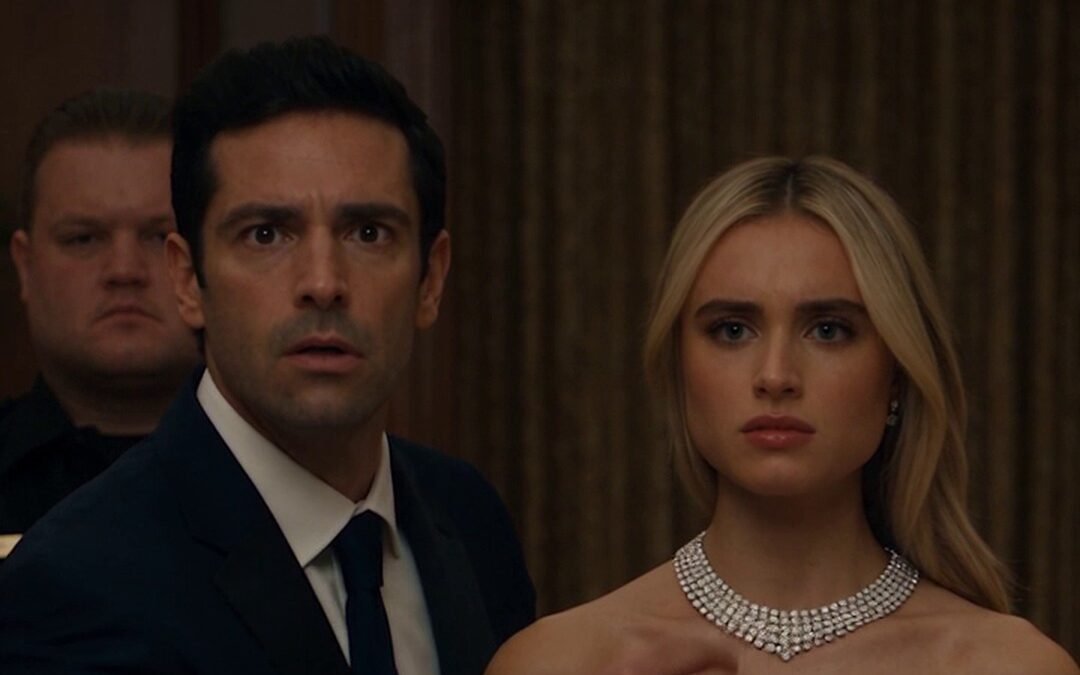
Chapter 2: What the Tag Carried
“Give me your phone,” Tessa said.
I had already found my uncle’s number.
She caught my wrist before I pressed it.
“Not him.”
“You said he ordered this.”
“I said the building was his.”
I looked at the shipping tag again.
The crossed-out destination was a furniture conservator’s workshop.
The replacement address belonged to Bellandi Cold Storage.
We had closed that warehouse two winters earlier.
No staff.
No scheduled deliveries.
No reason to send a living woman there.
“Who do I call?”
“Anika Shaw.”
“Your attorney?”
“My attorney.”
The distinction landed exactly where she intended.
I handed her my phone.
Her fingers shook against the screen.
She dialed from memory.
“Anika, it’s Tessa.”
She watched the porter while she spoke.
“I’m at Calder House.”
A pause.
“Enzo found me.”
Another pause.
“No, I haven’t told him everything.”
Brynn stood near the entrance.
“You’re all acting like this is real.”
Rafe looked at her.
“An ambulance is coming.”
“I have a car waiting.”
“Then you can wait outside.”
Tessa lowered the phone.
“Ask her who called her at eight seventeen.”
Brynn’s expression changed.
Only slightly.
Enough.
“What does that mean?” I asked.
“It means she was downstairs.”
“I was looking for the restroom.”
“The loading entrance has a restroom?”
Brynn reached for her purse.
I stepped aside rather than block her.
“Rafe, give the police everyone’s names.”
“You’re calling the police?” she asked.
Tessa answered before I could.
“Yes.”
Brynn looked at me as though that word betrayed our entire way of life.
Perhaps it did.
My family had solved problems through locked doors for decades.
I had inherited the habit along with the terminals.
Tessa held my phone toward me.
Her attorney was still connected.
“Mr. Bellandi,” Anika said, “keep everyone away from that chair.”
“Why?”
“Because your wife was restrained in it.”
I looked at the knife in my hand.
At the severed straps.
At everything I had already touched.
“Tell me what to do.”
“Help her receive medical care.”
“After that?”
“Tell the truth when someone asks.”
The porter made a small, broken sound.
Rafe released his sleeve.
The young man stayed where he was.
“My name’s Owen,” he said.
Nobody answered.
“I didn’t put her in it.”
“Then who did?”
“Mr. Pell and another man.”
Calder House’s operations manager.
I knew Pell.
He had arranged the private preview.
“He told me she’d had some kind of episode.”
Tessa stared at him.
“I told you my name.”
“I know.”
“I told you to call someone.”
Owen swallowed.
“He said I’d lose my job.”
The ambulance crew arrived through the gallery entrance.
Their questions interrupted everything else.
Tessa answered clearly.
Her ankle.
Her wrists.
The brief dizziness after struggling.
No, she hadn’t lost consciousness.
No, she didn’t want me answering for her.
I stepped back.
One medic asked permission before touching her shoulder.
Something in that simple courtesy hurt worse than Brynn’s diamonds.
I had spent years assuming marriage gave me permanent permission.
Tessa looked toward Owen.
“Tell them why the elevator stopped here.”
He rubbed his hands against his trousers.
“I heard her kicking the gate.”
“You heard me before.”
“I know.”
His voice thinned.
“I pressed the gallery floor.”
It was a small admission.
It saved his job from being the worst thing he had lost that night.
A police officer entered behind the medics.
Then another.
The auction house’s polished quiet filled with ordinary questions.
Names.
Times.
Who had touched what.
I gave them the knife.
I explained the straps.
I admitted whose necklace I had been fastening.
Brynn finally removed it.
She set it on a velvet display stand.
Nobody looked at the stones.
As the medics helped Tessa onto the stretcher, she held out the tag.
The officer photographed it before taking it.
“Wait,” I said.
I needed another look at the handwriting.
Tessa studied my face.
“You remember.”
I nodded.
The blue door had belonged to our childhood basement.
When our father drank, Nico hid behind it.
I stood outside and told him stories until the shouting stopped.
Once, I promised him nobody would ever reach him without going through me.
At twenty-eight, I had let Silvio drive him out of our family.
I hadn’t even opened the door myself.
“Tessa.”
She waited.
“What did Nico send you?”
“Proof.”
“That he didn’t steal the money?”
Her expression stayed level.
“That he came back that night to save it.”
* * *
At the hospital, Tessa asked for a room without me.
I waited in the corridor.
There were no private-floor demands.
No calls to trustees.
I filled out the section of the intake form she allowed me to complete.
Address.
Insurance.
Emergency contact.
My pen stopped at the last box.
A nurse took the clipboard.
“Her attorney is here.”
Anika Shaw arrived carrying a canvas briefcase.
She looked nothing like the lawyers who attended my dinners.
No practiced smile.
No appreciation of my surname.
“Your wife wants you present for one conversation.”
“Is she all right?”
“The doctors are evaluating her.”
“Anika—”
“You can ask her yourself.”
Tessa sat upright with a blanket over her legs.
Her ankle had been supported.
Someone had cleaned the shallow abrasions on her wrists.
The empty place where her ring belonged remained.
I stayed beside the door.
“Where’s your ring?”
“In a drawer at home.”
“Since when?”
“Three weeks.”
I had been eating across from her.
Sleeping down the hallway.
Looking directly at her hands.
I had noticed nothing.
Anika pulled out a chair for herself.
“Nico contacted Tessa seven weeks ago.”
“Where is he?”
“Somewhere safe.”
“He’s my brother.”
“And she’s your wife.”
I sat down.
Tessa looked toward the window.
“He saw the public notice about the pension settlement.”
Our former warehouse employees had spent six years fighting over vanished retirement reserves.
My uncle called it a paperwork dispute.
I had signed funding extensions.
Paid consultants.
Let Silvio handle the people.
“Nico knew the settlement relied on false records,” she continued.
“He wanted to stop it.”
“Why contact you?”
“Because I answered him.”
I took that without moving.
“How did you know it was Nico?”
Anika opened her briefcase.
“He agreed to independent identification through my office.”
“Anyone could—”
“We didn’t rely on a photograph.”
She explained the checks without handing me the file.
Old records.
A former physician.
A lawyer who had represented him before the fire.
A direct meeting arranged through counsel.
Then details no stranger could have assembled easily.
Tessa gave me one.
“Your mother kept grocery money inside the broken kitchen clock.”
I looked down.
Nico used to steal quarters from it for arcade games.
I used to put them back.
“He’s alive.”
“Yes,” Tessa said.
“Why didn’t he come home?”
“Ask him what happened when he tried.”
Anika placed a laptop on the bedside table.
The connection took a moment.
A man appeared against an unpainted wall.
Older.
Thinner through the face.
A pale scar disappeared beneath his collar.
But his right eyebrow still rose before he said anything difficult.
“Enzo.”
I gripped the edge of my chair.
“Nico.”
He looked past the camera.
Then back.
“Is Tessa there?”
“I’m here,” she said.
“I’m sorry.”
“Stay where you are.”
“They found you.”
“They found the delivery.”
His mouth tightened.
I leaned forward.
“What delivery?”
“A chair.”
“The one she was tied to?”
He nodded.
“I restored it.”
For six years, while I occupied the family offices, my brother had repaired other people’s furniture under his middle name.
He had stayed with an old tradesman outside Worcester.
Cash work at first.
Then ordinary payroll once a lawyer helped him address the warrants Silvio claimed existed.
There had been no warrant.
Only rumors carried by people my uncle paid.
“Why the auction house?” I asked.
“Pell handled an estate shipment for my employer.”
Nico glanced toward Anika’s image.
“I thought it was an ordinary collection point.”
Tessa spoke.
“I was supposed to collect an envelope with the chair.”
“What was in it?”
“Copies of transfer notices,” Nico said.
“And instructions for accessing originals held by my attorney.”
“Why not send those directly?”
“Because I wanted Tessa to know the package was mine.”
“The blue door.”
He nodded.
The tag had been attached at his workshop.
His handwriting authenticated a delivery.
Someone else had changed its destination.
“I called Calder House to confirm collection,” Tessa said.
“Pell asked whose behalf I was acting on.”
“You told him?”
“I said yours.”
Her mouth tightened.
“I thought your name would protect me.”
Nico turned away from the camera.
I kept looking at the screen.
“What happened the night of the fire?”
“Silvio told you I drained the reserve account.”
“Yes.”
“I found the transfers.”
My brother spoke slowly now.
“He moved the money into three lending companies.”
“His companies?”
“Not on paper.”
“And you went to the warehouse.”
“The original approvals were in the administrative office.”
Nico had called me.
Four times.
I remembered the missed calls.
Silvio had been sitting across from me when they came.
He told me my brother would cry, lie, and bargain.
I turned the phone facedown.
“I went back for the files,” Nico said.
“The fire had already started.”
A watchman died that night.
Harold Boone.
I had sent flowers to his widow without learning her name.
“Nico, did you see who started it?”
“No.”
The clean answer made the others heavier.
“I saw a fleet van leaving.”
“Which van?”
“I wrote down the number.”
The transfer notices in the envelope included that number.
The records he had saved were partial.
Useful.
Not enough alone.
Six years earlier, he had been injured, frightened, and certain the police were mine.
My uncle had worked hard to make that certainty reasonable.
Anika leaned toward the screen.
“We were arranging a formal witness interview before the shipment went wrong.”
I looked at Tessa.
“Why didn’t you tell me?”
“I asked for ten minutes this morning.”
I had no answer.
A knock sounded.
Anika stepped into the corridor.
She returned holding her own phone.
“The police found Pell.”
“Where?”
“In his office.”
“Is he talking?”
“He gave them a transport authorization.”
I stood.
Tessa watched my face.
“Whose?”
Anika read from the message.
“The approval came from Brynn’s company email.”
* * *
Brynn called before dawn.
I was sitting in a hospital vending alcove, holding coffee I hadn’t tasted.
“You left me with police.”
“They asked you questions.”
“For two hours.”
“What did you tell them?”
“The truth.”
“Tell it again.”
Her breathing sharpened.
“I didn’t know she was tied up.”
“What did you know?”
“That she was causing trouble downstairs.”
“Who told you?”
“Your uncle.”
There it was.
Spoken with irritation.
As though Silvio had inconvenienced her.
“He asked me to keep you occupied,” she said.
“I thought it was family business.”
“So you called Pell.”
“He said he needed approval to move a disputed item.”
“My wife.”
“I didn’t know that.”
“Then give the police the messages.”
A pause.
“My lawyer says you’re trying to blame me.”
“Get a good lawyer.”
“Enzo, listen.”
I ended the call.
Then I wrote down what she had said while I remembered it.
Anika took the note later.
She told me investigators would decide what could be established.
She didn’t call it a confession.
Neither did I.
By morning, Rafe had brought my overnight bag.
He set it beside my chair.
Then laid his company phone on top.
“What is that?”
“Six years of instructions.”
“Whose?”
“Yours.”
I looked up.
“I kept work messages.”
“Why?”
“Because your uncle liked saying things nobody remembered afterward.”
Rafe had worked for me eleven years.
He had done enough ugly errands to understand the value of a written instruction.
Some involved me.
He knew it.
“I’ll give it through counsel,” he said.
“Yes.”
“All of it.”
“Yes.”
He stayed standing.
“There’s something else.”
“Tell me.”
“I checked Nico’s old apartment after he disappeared.”
“I remember.”
“Silvio told me you wanted it cleared.”
“I didn’t.”
“I figured that out too late.”
Rafe had sent two men.
They boxed Nico’s belongings.
Changed the lock.
Made his disappearance complete.
“Did you threaten him?”
“No.”
“Did your men?”
“I need to find out.”
“Then find out with a lawyer present.”
His jaw moved once.
“Understood.”
The habits of my life kept offering themselves.
Private conversations.
Pressure applied quietly.
A car sent to collect someone.
For the first time, I could see where those habits led when another man held the instructions.
Tessa was discharged that afternoon.
She chose a small hotel near Anika’s office.
I paid nothing.
Her attorney arranged it.
I drove behind their car because Tessa permitted that much.
At the entrance, she lowered the window.
“You can go now.”
“Do you have what you need?”
“Yes.”
“Will you call?”
“If I choose.”
I watched the car disappear into the garage.
Then I called my operations office.
“Preserve everything.”
“Which accounts?”
“All of them.”
“Silvio already requested routine file cleanup.”
“Cancel it.”
“He has equal authority.”
“Then call company counsel.”
Within an hour, the lawyers had issued preservation instructions.
That evening, our financing bank requested an emergency discussion.
Two credit facilities were under review.
A pending equipment payment had been stopped.
Silvio had spent decades building the plumbing beneath my empire.
Now he was turning valves.
He called me from the family office.
“You’re frightening the lenders.”
“Where were you sending Tessa?”
“Your wife became hysterical.”
“Answer me.”
“Pell arranged a quiet place until you could collect her.”
“She was strapped to a chair.”
“I wasn’t there.”
“But your building was.”
He sighed.
I had heard that sigh since childhood.
The burdened adult.
The difficult boys.
“Come in tomorrow,” he said.
“We’ll straighten this out.”
“Through counsel.”
“You’ve changed overnight.”
“No.”
I looked at the hospital wristband Tessa had left in my car.
“I’m learning what didn’t change.”
The next morning, Anika received photographs from Tessa’s hotel lobby.
An unknown number.
No message.
A second photograph showed the car she had arrived in.
Anika called investigators.
The hotel preserved its recordings.
Tessa moved again.
I wasn’t told where.
When she called that evening, I heard a kettle clicking in the background.
“Did he send them?” I asked.
“We don’t know yet.”
“I can put people outside.”
“No.”
“They would only—”
“Enzo.”
I stopped.
“I need people whose authority doesn’t depend on your mood.”
I leaned against the kitchen counter.
At home, someone had removed her cup from its usual place.
I put it back.
“What can I do?”
“Find the settlement paperwork.”
I went to my study.
She stayed on the line while I searched.
Under a stack of acquisition proposals, I found the folder I had signed the previous month.
The pension settlement.
The last page bore my initials.
“I have it.”
“Read the release clause.”
I read it once.
Then again.
The proposed settlement would close claims against a network of related entities.
Not just the warehouse operator.
The lending companies.
The property trusts.
The shell firms Nico had named.
All in exchange for pennies against the missing reserves.
“Who drafted this?”
“Your uncle’s outside firm.”
“Why now?”
“The pension trustees finally obtained discovery they’d fought over for years.”
There was a knock on her end.
She told someone to come in.
Then her voice softened.
“I have to eat.”
“Have you eaten today?”
“Yes.”
“You used to say that when you hadn’t.”
A small silence.
“I have soup.”
“What kind?”
“Chicken.”
“The kind you hate?”
“The kind someone brought without being asked.”
I closed my eyes.
“Eat it while it’s warm.”
“Enzo?”
“Yes.”
“Don’t mistake this conversation for coming home.”
“I won’t.”
After she hung up, I read the settlement again.
On the back schedule, one trust controlled the largest beneficiary.
My mother’s maiden name appeared in its title.
I had assumed it existed for us.
The trust instrument in the corporate archive said otherwise.
Silvio was its sole beneficiary.
The settlement would have made the stolen money safely his.
* * *
I met my uncle in the family boardroom four days later.
He chose the long table.
He always did.
Our lawyers chose the rest.
Company counsel.
Anika, representing Tessa.
Counsel for the pension trustees.
Two independent directors who had previously approved whatever Silvio recommended.
Nobody was there to witness a family reconciliation.
The meeting concerned access to records, emergency governance, and the proposed settlement.
Outside investigators were doing their work elsewhere.
Silvio arrived in a gray suit.
He kissed neither cheek.
“Where is your wife?”
“Recovering.”
“From an unfortunate misunderstanding.”
Anika opened a folder.
“Please describe the misunderstanding.”
He ignored her.
“You’ve frozen accounts while payroll is due.”
“Payroll has separate funding,” company counsel said.
“Approved this morning.”
That was my first contribution.
I had sold a liquid personal investment and placed the funds in an independently administered payroll account.
No leverage.
No conditions.
My uncle’s first hostage had been released before he entered.
He sat.
“Very generous.”
“It was necessary.”
“So is stability.”
He spoke to the directors now.
Not me.
He explained the fire.
My brother’s instability.
The missing documents.
The settlement that would finally give elderly employees something.
His version was practiced because he had been telling it for years.
“Nico was always impulsive,” he said.
“He mishandled funds.”
“He panicked.”
“He vanished.”
One director nodded.
I had nodded at those same sentences.
Silvio turned toward Anika.
“Now a grieving woman receives messages from someone claiming to be him.”
“Nico’s identity has been independently confirmed.”
“By people she hired.”
The pension attorney leaned forward.
“We’ve met him.”
“Then ask why he stayed hidden.”
“We did.”
Silvio folded his hands.
I recognized the next move before he made it.
He looked at me with reluctant concern.
“Enzo threatened him.”
The room went still.
“He told Nico never to come back.”
I remembered the conversation.
My brother outside my office.
My uncle beside my desk.
Nico trying to speak.
Me telling him to leave before I had him removed.
Silvio had not invented everything.
That was why he was dangerous.
“Yes,” I said.
My attorney shifted beside me.
I continued.
“I told him not to come back.”
Silvio watched me.
“I believed an accusation without checking it.”
“Your own admission—”
“Doesn’t make the accusation true.”
For the first time, he looked annoyed.
Anika laid out the transport authorization.
Pell’s name.
Brynn’s email.
The revised destination.
Silvio barely glanced down.
“A shipping dispute.”
“A restrained woman,” Anika said.
“I did not authorize restraint.”
“Did you authorize moving her?”
“No.”
Company counsel turned a laptop toward the table.
“The building entry records show your driver admitted Pell that afternoon.”
“My driver runs errands.”
“Pell’s phone contained your messages.”
“My lawyer has addressed that.”
His lawyer finally spoke.
“My client will not discuss an ongoing criminal inquiry.”
“Then we’ll discuss your authority over company records,” company counsel said.
Silvio leaned back.
He knew which questions he could refuse.
He also knew the directors feared losing his relationships.
One began talking about a temporary leave.
A soft landing.
A quiet withdrawal.
My uncle let him finish.
Then he offered his hand toward me.
“We can settle this.”
I looked at his palm.
The same hand that had steadied my bicycle.
The same hand that had signed my school forms after our mother died.
The same hand I had trusted with everything I didn’t want to examine.
Anika slid a photograph across the table.
The shipping tag.
Front and back.
Silvio’s hand returned to the tabletop.
“You’re basing this on a scrap of paper?”
“No,” she said.
“We’re showing you what your employees overlooked.”
The crossed-out destination had not been the important mark.
Neither had Nico’s message.
At the bottom sat a small printed freight code.
CH-6148.
Calder House generated sequential tags from a duplicate book.
Owen had told the police where the book was kept.
Officers obtained it with the other shipping records.
The carbon copy preserved the original destination.
It also preserved the routing instruction written before the tag was attached to the chair.
S.B. HOLD. CALL BEFORE RELEASE.
Silvio looked toward his attorney.
Anika continued.
“That notation alone could mean several things.”
She turned another page.
“But Pell kept the corresponding voicemail.”
Silvio’s face remained controlled.
The room’s attention changed anyway.
Pell had saved the message because the instruction was irregular.
Because he wanted protection if the auction house questioned him.
Because people who helped Silvio eventually learned to keep receipts.
Company counsel played only the portion relevant to the company’s internal inquiry.
My uncle’s voice filled the boardroom.
“Mrs. Bellandi collects nothing until I’ve spoken with her.”
A pause.
“If she insists, use the holding address.”
Another pause.
“Brynn will keep my nephew upstairs.”
The recording stopped.
“That doesn’t authorize violence,” his lawyer said.
Anika nodded.
“The police will determine responsibility for the restraint.”
She didn’t overstate it.
She didn’t need to.
Silvio had lied about knowing Tessa was being moved.
Everyone at that table had heard him do it.
The independent directors asked him to surrender his access credentials.
He refused.
Company counsel explained the emergency resolution.
The pension attorney added that the settlement would not proceed on the existing terms.
Silvio looked at me.
“You think the money is sitting in a drawer?”
“No.”
“You’ll bankrupt this family chasing a dead account.”
“The account wasn’t dead.”
The pension attorney opened his own folder.
Records obtained through the long-running civil case had finally arrived from a former lending administrator.
They matched the transfers Nico had preserved.
Dates.
Amounts.
Intermediate companies.
A trail into the trust Silvio controlled.
No single dramatic page solved six years.
Several independent records, created for ordinary business reasons, had finally met each other.
My uncle’s lawyer asked for a recess.
Company counsel declined to delay the vote.
Silvio stood before it finished.
At the door, he stopped beside my chair.
“Your wife will still know what you were doing upstairs.”
“Yes.”
“You can’t buy your way out of that.”
“I know.”
He had intended to leave me smaller.
Instead, he had finally said something true.
The directors voted without him.
His authority ended that afternoon.
The criminal case took longer.
Investigators interviewed Owen repeatedly.
They obtained loading-bay footage showing Pell and his assistant restraining Tessa.
The camera had no sound.
The images were enough to contradict their claim that she agreed.
Brynn’s messages showed she knew Tessa was downstairs and being prevented from leaving.
They did not show she expected the straps.
She eventually admitted she had agreed to distract me.
She had been paid through a consulting company controlled by Silvio.
The affair was real.
So was the arrangement underneath it.
Silvio had introduced us at a fundraiser nine months earlier.
Brynn had pursued the access.
I had supplied the betrayal.
No invoice changed that.
Pell cooperated after charges were filed.
His account led investigators to the men who had sent the hotel photographs.
They had acted at Silvio’s direction.
The old fire investigation reopened.
The fleet number Nico recorded matched a van signed out to a contractor on Silvio’s payroll.
Payment records alone proved no fire.
The contractor’s later testimony, supported by archived messages and location records, gave prosecutors more.
Nico had not been the intended victim.
The records were.
Harold Boone’s presence had been dismissed as an inconvenience.
That fact remained the hardest to hear.
There was no elegant motive.
Only a man deciding someone else’s life cost less than exposure.
Fourteen months passed before the principal case ended.
There were hearings.
Delays.
Arguments over evidence.
Then Silvio entered guilty pleas covering the financial crimes, Tessa’s confinement, and his responsibility for the fatal fire.
Other defendants received their own outcomes.
Nobody vanished.
Nobody was quietly forgiven.
At sentencing, Harold’s widow read his last grocery list.
Bread.
Coffee.
Peaches, if they looked good.
Silvio stared at the table.
When the judge gave him a sentence measured in decades, I looked at Mrs. Boone.
She folded the list.
That was all.
Outside, a reporter asked whether my family had finally received justice.
I moved aside so she could reach the steps.
“The Boone family has a name,” I said.
Then Nico came through the courthouse doors.
For the first time in six years, he used his own.
* * *
Tessa rented a small apartment above a bakery.
I learned the address only after she invited me.
Three months had passed since Calder House.
She opened the door with a cane in one hand and flour on her sleeve.
“You bake now?”
“The downstairs mixer broke.”
“That doesn’t explain your sleeve.”
“I attempted diplomacy.”
From inside, a timer sounded.
She closed her eyes briefly.
“Apparently diplomacy is burning.”
I followed her only after she stepped aside.
The kitchen contained six uneven biscuits.
One looked like a collapsed building.
I looked at it too long.
“Don’t,” she said.
“I didn’t.”
“You had an expression.”
“I’ll apologize to the biscuit.”
The corner of her mouth moved.
Then it settled.
Warmth was possible.
It was also temporary.
I had learned not to grab it.
She placed two plates on the table.
“Anika said you signed.”
“Yes.”
The separation agreement sat beneath a bowl of oranges.
Her own bank accounts.
Her own home.
No restrictions on what she could say.
No requirement that she attend events.
No automatic reconciliation date disguised as a financial deadline.
She had asked for independence.
I had signed the paperwork that made it practical.
“You didn’t argue about the house,” she said.
“You don’t want it.”
“No.”
“Neither do I.”
“That isn’t a reason to give it away.”
“I haven’t.”
I had put it on the market.
The proceeds would remain mine until the separation terms were completed.
Then I intended to direct a substantial share toward the pension shortfall through a supervised restitution arrangement.
It would not purchase silence.
It would not settle my own obligations to Tessa.
She had insisted those remain separate.
She was right.
“Rafe came by,” she said.
I looked up.
“When?”
“Yesterday.”
“I didn’t send him.”
“I know.”
He had brought her the damaged shoes recovered from Calder House.
Then asked whether she wanted them discarded.
She did.
“He apologized,” she said.
“For what?”
“For making your life easy enough that you stopped noticing anyone else’s.”
I put down my fork.
“He said that?”
“More or less.”
Rafe had left my personal service.
He still worked in legitimate terminal security, under a director who wasn’t me.
He had also given investigators the messages he promised.
Some had embarrassed me.
A few had led to difficult questions about my own business.
I answered through counsel.
I paid penalties where misconduct was established.
I ended contracts that existed only because people feared saying no.
It cost money.
It cost influence.
It should have.
Tessa broke a biscuit.
“Are you still buying Harbor Nine?”
“No.”
“Because of the investigation?”
“Because the seller’s employees said my people had been pressuring them.”
“And you believed them?”
“I checked.”
She nodded once.
Approval no larger than the fact deserved.
I ate.
The biscuit was hard enough to require planning.
She watched my jaw.
“You can say it.”
“It’s ambitious.”
This time she smiled.
Only for a second.
It was enough to make me understand what I had treated as permanent.
After lunch, she took the plates to the sink.
I stood.
“May I?”
She handed me the dish towel.
We worked side by side.
No diamonds.
No staff.
Just a badly adjusted faucet spraying my shirt.
Tessa reached past me and tightened it.
“You always pull it too far.”
“You’ve seen me use this sink twice.”
“It was enough.”
I dried the plates carefully.
When we finished, she stayed facing the window.
“You haven’t apologized properly.”
“I thought—”
“I know what you thought.”
I waited.
“You’ve said you failed me.”
“Yes.”
“You’ve said you should have listened.”
“Yes.”
“You haven’t named what you chose.”
The room seemed to narrow around the small table.
I set down the towel.
“I chose the affair.”
She turned.
“I liked being admired without being questioned.”
Her face stayed still.
“I let Brynn laugh at things you cared about.”
“Which things?”
“The pension fight.”
Tessa’s hand rested on the counter.
“The dinners you missed?”
“Yes.”
“The weekend in Boston?”
“Yes.”
She had asked me to go away with her.
I had claimed a financing meeting.
“Was there ever a meeting?”
“On Friday morning.”
“And the rest?”
“With her.”
Tessa looked toward the window again.
I didn’t approach.
“I’m sorry I made you live beside a lie.”
She said nothing.
“I’m sorry I treated your loyalty like something that couldn’t run out.”
“That’s closer.”
“I don’t expect that to fix anything.”
“Good.”
Outside, a delivery truck reversed toward the bakery.
Its warning sounded through the glass.
Tessa waited until it stopped.
“Did you love her?”
“No.”
“Don’t say that because you think it helps.”
“I loved how little she expected of me.”
Tessa nodded slowly.
“That I believe.”
She went back to the table.
I remained by the sink.
“The separation stays,” she said.
“Yes.”
“If we try anything, it happens slowly.”
“Yes.”
“You don’t check where I am.”
“I haven’t.”
“You don’t send someone to solve arguments.”
“I won’t.”
“And if I decide the answer is no?”
I made myself answer without dressing it up.
“Then the answer is no.”
She looked at me for a long time.
“Would you like coffee?”
“Yes.”
It was not forgiveness.
It was coffee.
I drank it as carefully as anything I had ever been offered.
The months that followed had no dramatic shortcut.
Some weeks she wanted dinner.
Some weeks she wanted distance.
Once, she canceled after seeing a photograph of Brynn in an old society article.
I said I understood.
Then I stayed home instead of making her comfort me.
Nico visited her before he visited me.
That was appropriate too.
He opened a restoration workshop under his full name.
I offered him capital.
He declined.
“I’d like one thing without your signature.”
So I became an ordinary customer.
He repaired our mother’s kitchen chair.
Charged me the posted rate.
Made me wait behind two dining tables.
When I complained about the schedule, he lifted one eyebrow.
“You want special treatment?”
“No.”
“Then stop looking wealthy at the calendar.”
I laughed once.
The sound surprised us both.
Then we talked about the basement.
About the years after our mother died.
About how Silvio had made gratitude feel like debt.
None of that excused my choice.
Nico made sure I understood.
“You didn’t have to believe him.”
“I know.”
“You wanted the easy brother.”
“The one who didn’t challenge me.”
“Yes.”
I looked at the chair between us.
“Do I get another chance?”
He sanded a rough edge before answering.
“You get Thursday.”
“What happens Thursday?”
“We eat.”
So we ate on Thursdays.
Sometimes Tessa joined us.
Sometimes she didn’t.
The pension recovery moved in pieces.
Trust assets.
Property sales.
Insurance disputes.
My contribution.
Court-supervised distributions.
There was no single check that erased the years people had spent afraid.
But envelopes began arriving with amounts worth opening.
Mrs. Boone used part of hers to repair her roof.
She sent the trustees a photograph.
Not me.
I saw it because they included it in a progress report.
That was where it belonged.
After the criminal case ended, Tessa asked Calder House for the chair.
The auction house relinquished its claim.
It had never actually sold.
The red mark on its inventory label had identified a pending internal transfer.
Another thing I had seen and misunderstood.
Nico restored the damaged arms.
Tessa paid him.
I offered once.
She said no.
The chair went into her apartment beside the window.
When I first saw it there, I stopped at the doorway.
“Why keep it?”
“Because it’s a chair.”
I looked at the walnut.
The new upholstery.
Her book resting on the seat.
“It doesn’t get to stay what they made it.”
A year later, she invited me to sit beside it.
Another year after that, she asked whether I wanted a key.
I held out my hand.
She closed her fingers around it first.
“This opens the front door.”
“I understand.”
“It doesn’t open every door.”
“I understand that too.”
Then she placed the key in my palm.
I had once owned buildings across the harbor.
Nothing had ever felt less like property.
* * *
Five years after the elevator opened, we returned to Calder House.
The auction firm had moved.
The building had been sold through an ordinary sale after its former owners settled their civil obligations.
A local foundation bought it.
Tessa chaired the committee that turned the ground floor into a workers’ legal clinic and restoration training shop.
She took no salary.
She also refused my name on the entrance.
I donated anyway.
The brass letters above the doors read Boone Center.
Mrs. Boone approved the name only after the foundation promised she wouldn’t have to give speeches.
That afternoon, she cut a ribbon and immediately handed the scissors away.
“Once was plenty,” she told Tessa.
“I put it in writing,” Tessa replied.
We stood in the same gallery where I had fastened Brynn’s necklace.
The velvet display stands were gone.
Workbenches occupied one side.
Meeting rooms occupied the other.
The freight elevator remained.
Its machinery had been inspected and replaced where necessary.
The gate carried a new safety sensor.
Owen supervised deliveries now.
After cooperating with investigators, he had testified about his own delay as carefully as everyone else’s actions.
He had not pretended courage came first.
Tessa offered him work only after he completed training.
He approached carrying a clipboard.
“Ready for the chair?”
Tessa nodded.
“Bring it up.”
I felt my shoulders tighten.
She noticed.
“This was my choice.”
“I know.”
The elevator hummed.
Nico stood beside its controls.
He had volunteered to deliver the chair himself.
Through the rising gate, I saw polished walnut.
Cream upholstery.
A small cushion Tessa had chosen that morning.
No straps.
No price tag.
Nico wheeled it into the gallery.
A young apprentice steadied one leg.
“Where does it go?” she asked.
Tessa pointed toward the window.
“Where somebody can sit.”
They placed it in a square of afternoon light.
Mrs. Boone tried it first.
She leaned back.
“Harold would have called this too fancy.”
“Is it comfortable?” Nico asked.
“Very.”
“Then he would have survived the fanciness.”
She smiled at him.
I looked away for a moment.
Across the room, inside a shallow glass frame, hung the shipping tag.
The original had been returned after the legal proceedings ended.
Tessa had chosen to display its back.
Nico’s handwriting faced the room.
Ask Enzo what happened behind the blue door.
A short plaque explained who Harold Boone had been.
A watchman.
A husband.
A man whose death had been hidden beneath a convenient accusation.
It also explained why preserving ordinary records mattered.
Tessa had approved every word.
My name appeared only where the account required it.
Beside the frame was a door painted blue.
It opened into a quiet interview room.
People could speak there without being overheard.
The color had been Nico’s idea.
He stood beside me now.
“You all right?”
“Yes.”
“You’ve been staring at it.”
“I remember the old one.”
“So do I.”
We watched a staff attorney guide an elderly couple through the doorway.
The husband carried a grocery bag full of papers.
The attorney took neither bag nor arm without asking.
Nico touched my shoulder once.
Then he went to help his apprentice.
Tessa joined me.
She wore a plain wedding band.
So did I.
We had chosen them together three years after the separation.
No renewal gala.
No public declaration that everything had been repaired.
Only a dinner.
A decision.
A future neither of us could demand.
“Your meeting starts in ten minutes,” she said.
I had agreed to answer questions from the clinic’s small-business class.
About payroll.
About contracts.
About the cost of signing things without reading them.
“I’ll be there.”
“Your brother says you still overpay suppliers.”
“He says everyone overpays except him.”
“He may be right.”
She straightened my collar.
The gesture was brief.
Freely given.
I held still for it.
Across the gallery, Owen opened the freight gate for another delivery.
Its metal wheels rattled.
Tessa turned toward the sound.
Then back to me.
For years, I had wondered whether this place would always take something from her.
Now she looked at the crowded workbenches.
At the waiting room.
At Mrs. Boone comfortably occupying the chair.
“It’s loud,” she said.
“It’s busy.”
“Good.”
A volunteer called her name.
She lifted one finger to ask for a moment.
Then she looked at me.
“Do you have ten minutes?”
I took my phone from my pocket.
Turned it off.
Put it away.
“Yes.”
She led me toward the window.
Past the chair.
Past the elevator.
Past the tag that no longer named a destination someone else had chosen.
A brother restored to his name.
A widow heard.
Workers paid.
Doors that opened from inside.
Tessa sat beside me in the afternoon light.
This time, when she began speaking, I listened.
THE END








