I Came Home to Find My Daughter Counting Cracker Crumbs—Then My Stepson Told Me What His Mother Had Been Recording
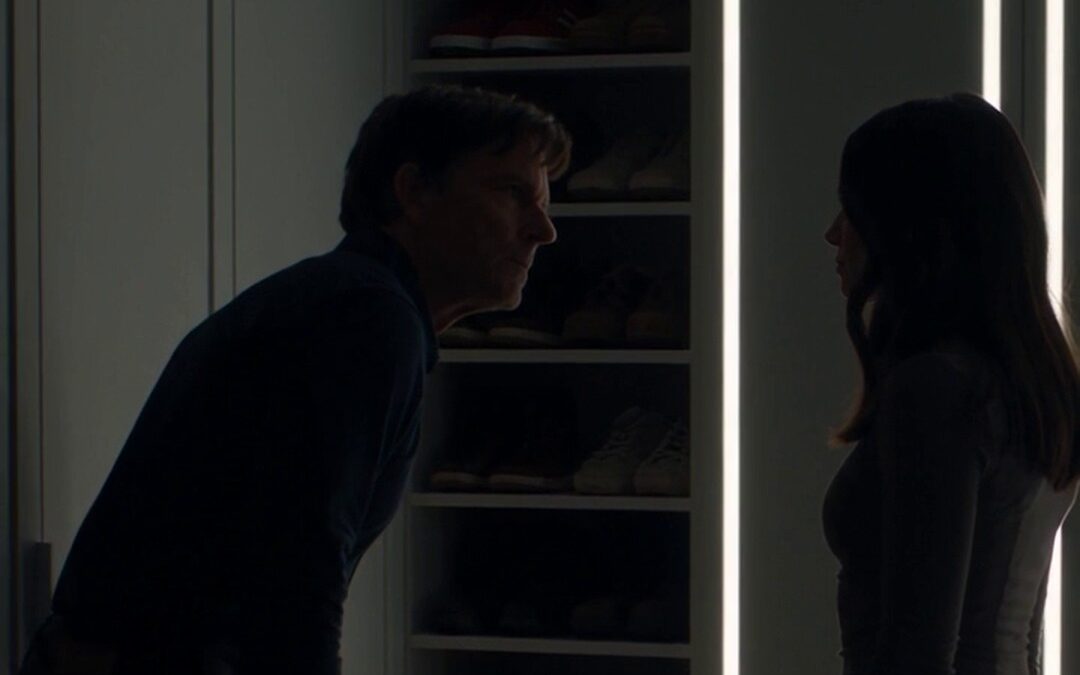
Chapter 2: The Phone in the Closet
Camille stopped reaching for the paper.
Nora’s fingers tightened around my shirt.
Eli stood at the foot of the stairs.
“Don’t touch that closet,” Camille said.
Her voice had gone calm again.
That frightened me more.
I folded the paper and put it in my pocket.
“Eli, stay with your sister.”
“He’s not going anywhere,” Camille said.
“I’m calling the police.”
“You’re overreacting.”
“Then you won’t mind.”
My phone was in my work bag.
I called anyway.
Camille watched the pocket where I’d put the paper.
“Dad, the old phone has videos,” Eli said.
“Have you watched them?”
“Some.”
“Why?”
“Because I wanted to know if I was wrong.”
Camille turned toward him.
“You went through my things?”
“I heard Nora crying.”
“Eli, that’s enough.”
“No,” I said. “It isn’t.”
“You’re taking his word over mine?”
“I’m taking both children seriously.”
She laughed once.
“You have no idea what you’re doing.”
“I know Nora was hungry.”
“She steals.”
“She’s five.”
“She lies.”
Nora hid her face against my leg.
I picked her up.
The dispatcher asked for our address.
I gave it.
Camille’s face paled.
“Tell them this is a family disagreement.”
“I won’t.”
“Think about what this will do to Eli.”
“I am.”
“He’ll lose his mother.”
Eli lifted his chin.
“I’m right here.”
The dispatcher asked whether anyone was injured.
I described the red mark on Nora’s wrist.
I told her about the paper and the old phone.
Camille crossed her arms, waiting for me to doubt myself.
I didn’t.
The first officer arrived, followed by a second.
They spoke to each of us separately.
Nora stayed in my arms.
Eli sat on the stairs with his hands folded.
Camille said the paper was a meal plan.
She said Nora had been sneaking food.
She said the strap mark was an accident.
The officer asked why the list said, “No snack. Asked twice.”
“She was asking for treats,” Camille said.
He photographed the paper and Nora’s wrist.
He asked to see the phone.
Camille refused.
“It’s my property.”
“It may contain evidence related to a child welfare concern.”
“Get a warrant.”
“Understood.”
The officer didn’t argue.
He asked whether Eli knew the passcode.
Eli nodded.
“Don’t go into the closet,” the officer told him. “We’ll handle it.”
Camille took a step toward the stairs.
The second officer moved between her and Eli.
“Please stay here, ma’am.”
“This is ridiculous.”
“It’s a precaution.”
“I am his mother.”
“You can remain in the room.”
One officer asked Camille to step outside with him.
She looked at me.
“You’re going to regret this.”
“Maybe.”
“You think you can raise them alone?”
“I can keep them safe.”
She left with the officer.
The other asked Eli what he meant about the videos.
“Mom would put Nora in the laundry room,” Eli said.
“How long?”
“Until dinner sometimes.”
“Was the door locked?”
He nodded.
“Was there food?”
“No.”
“Water?”
“Sometimes.”
Camille came back inside.
The officers said they were filing a report and contacting child services.
I was to keep the children with me.
Camille was not to be alone with Nora until the agency assessed the situation.
She should leave for the night.
“This is over a snack?” she said.
“No,” Eli replied. “It’s everything.”
Camille looked at him, then at me.
She left for her sister’s house.
The front door shut.
Nora began to cry.
I sat beside her on the rug.
The officers gave me a case number and instructions.
They didn’t promise charges or tell us everything would be fine.
They told me what to do if Camille returned.
I listened.
After they left, Eli stayed beside the couch.
“Are they going to take Mom away?”
“I don’t know.”
“Is Nora going to be okay?”
“Yes.”
I wanted to promise more.
I couldn’t.
My sister Tessa arrived with pajamas and clean towels.
She made tea, set out grapes, and didn’t demand the whole story.
Nora ate four.
Eli ate nothing.
I sat between them until they fell asleep.
At three in the morning, I checked every door.
Then I sat at the kitchen counter with the case card.
A child services worker called at eight.
Her name was Ms. Alvarez.
She asked for the children’s school and doctor information, and the names of the adults who cared for them.
I told her Camille had a key.
She advised me to arrange new locks after checking with the officer.
She said a trained investigator would speak with Eli and arrange an interview for Nora if needed.
“Can I ask you something?” I said.
“Of course.”
“What if the videos are worse than Eli says?”
“Then we document what they show.”
“And if they aren’t?”
“We document what we know.”
It wasn’t comfort.
It was a next step.
Camille texted: You’ve made this uglier than it had to be.
Then: Bring Eli to my sister’s. He needs his mother.
I saved both messages and showed them to Ms. Alvarez.
Camille called and left a voicemail.
“I want to talk calmly,” she said.
“You can’t keep my son from me.”
A pause.
“I did what I thought was necessary.”
I saved that too.
A locksmith changed the deadbolt that afternoon.
Eli watched from the window.
“Is Mom coming back?”
“Not today.”
“What about later?”
“I don’t know.”
“Will I have to choose?”
“No. You can tell the truth. The adults handle the choices.”
The caseworker and a detective arrived later.
The detective introduced himself as Sergeant Webb.
He asked me to separate what I had witnessed from what the children had told me.
He photographed the laundry room and checked the latch.
It could be turned from outside.
Nora stayed with me in the living room while he inspected the door.
She held the lunchbox by its handle.
When he finished, she asked to leave the room.
We did.
Ms. Alvarez spoke with Eli and Nora separately, explaining that either could stop whenever they wanted.
Eli spoke for nearly forty minutes.
Nora described the laundry room, the handle she couldn’t reach, and the times the light went off.
The next morning, Sergeant Webb returned with a search warrant.
He collected the old phone from the hall closet, sealed it, and said a digital team would preserve the files and verify them.
“Did you know about it?” he asked.
“No.”
“Did anyone else?”
“Camille and Eli knew it was there.”
He wrote down the passcode Eli knew.
“We’ll verify what we find before we rely on it.”
I didn’t touch the phone.
For several days, we waited.
Ms. Alvarez arranged a temporary safety plan: Camille would have no unsupervised contact with Nora, and any contact with Eli would be arranged through the caseworker while they assessed what he wanted.
The officer would seek legal process for the phone.
I hired a family lawyer.
He told me to keep records and avoid direct contact with Camille.
My supervisor moved me to earlier shifts and cut my overtime.
The pay loss would hurt.
The new hours meant I could meet the children after school.
I accepted.
At home, I replaced the lunchbox strap with a soft one.
Nora carried the box around without food in it.
She held it like a stuffed animal.
Eli found a faint impression on the back of the paper list.
“Look at this.”
I tipped it toward the light.
Words from another page showed through: “Quiet room. Do not interfere. Camera.”
“Did she set one up?” I asked.
“I don’t know.”
“We’ll let the investigator find out.”
I put the paper in an envelope as Ms. Alvarez instructed and recorded when I’d handled it.
Sergeant Webb asked about Camille’s work.
She managed donor relations for a youth arts foundation and sometimes worked from home.
I remembered a donation receipt in our mail drawer.
The program name was Safe Steps Youth.
The foundation supported arts workshops in public schools.
I hadn’t looked closely before.
I also remembered the old tablet Camille used for donor events.
I told the detective.
He said not to turn it on or search it.
He arranged to collect it.
The children had forensic interviews.
I waited outside with Ms. Alvarez.
She said the children wouldn’t be asked to repeat every detail to every adult.
The interviews would protect their accounts and reduce the burden on them.
I understood.
I still wanted to know every detail.
I didn’t get it.
The family court ordered supervised contact while the investigation continued.
The judge made no final custody decision.
Camille’s lawyer said the note was a meal plan and argued that I was interfering with her parenting.
Our lawyer provided the report number, caseworker’s contact, and my work schedule.
He reminded me that the judge needed records, not anger.
So I kept a daily log: meals, school pickups, calls, difficult nights.
The entries were ordinary.
That made them hard to write.
I noted when Nora asked permission for a second helping.
I noted when Eli woke from a dream.
I noted when they laughed.
A week after the search, Sergeant Webb called.
The phone contained recordings of Nora in the laundry room.
The dates matched the handwritten list.
A camera had been mounted inside the room and linked to a household cloud account.
The detective said they were still checking access logs.
“Could other people have watched?”
“Possibly. We don’t know yet.”
“Did you know about the camera?”
“No.”
He asked me to bring any records connected to Camille’s foundation work.
I had none, but I remembered the tablet.
He repeated that I shouldn’t search it myself.
I watched Eli shooting baskets at the school gym while Nora colored beside Tessa.
Then the detective said the recordings included a video call.
The other person’s face was clear.
“Do you know Martin Pell?” he asked.
The name meant something.
Martin was the foundation’s deputy director of operations.
He had shaken my hand at the annual benefit and praised Camille’s judgment.
“Why was he on a call with her?”
“We’re verifying the context.”
“Did he watch the recordings?”
“The call includes playback.”
“Was he aware Nora was there?”
“We have reason to believe he knew.”
I watched Eli take another shot.
Martin had told donors that the foundation helped children find a voice.
Now the detective was telling me he had watched my daughter in a locked room.
Martin Pell knew.
* * *
Sergeant Webb called the next morning.
The camera had been bought through a store account in Camille’s name.
The cloud subscription had been paid with a card issued to the foundation.
That didn’t prove the foundation knew about the recordings.
It did show organizational money had paid for a personal device.
The old tablet contained emails between Camille and Martin.
They discussed “behavior samples,” “home-based documentation,” and “a difficult child.”
One email said, “The footage is cleaner when the room stays dark.”
The detective called the wording disturbing but said the team still had to verify the files and account activity.
He asked me not to contact Martin.
I hadn’t planned to.
“Could this be related to their work?” I asked.
“Maybe. We need evidence.”
“Could they have been studying Nora?”
“I don’t know.”
At breakfast, Nora took two bites of scrambled eggs, then stopped.
“You can have more later,” I said.
“Will it be there?”
“Yes.”
“Will it be mine?”
“Yes.”
She studied the plate, then ate another bite.
Eli was drawing a robot.
“What’s its name?” I asked.
“Latch.”
“Why?”
“It opens doors.”
He colored its chest blue.
That week, the school counselor called.
Eli had told his teacher he was worried he’d caused trouble.
The counselor offered check-ins without making him recount the events.
She asked if he wanted a small group for children dealing with family changes.
I discussed it with him.
“You don’t have to talk,” I said. “You can draw or sit quietly.”
He chose to draw.
Nora’s preschool teacher said Nora had started asking whether she could finish lunch.
I asked the teacher to offer food in the same quiet way she offered it to the other children.
She agreed.
The school nurse checked Nora’s wrist and documented that the mark had faded.
Each person had one small part.
Nobody solved it alone.
Camille’s sister called me.
“Camille says the note was taken out of context,” she said.
“Then she can explain it to the investigator.”
“She thinks you turned the children against her.”
“I didn’t.”
“You have made this a choice.”
“The safety plan was made by professionals.”
“She’s their mother.”
“Eli has a mother. Nora has a mother who died.”
The line went quiet.
I regretted the sharpness but kept my voice level.
“Please don’t ask the children to explain this to you.”
“I wouldn’t.”
“Please don’t pass messages from Camille.”
She agreed.
I gave the caseworker her number.
A supervised visit with the sister took place at a family center.
She brought a puzzle and didn’t ask the children what had happened.
Eli worked on the border pieces.
Nora ate a cracker her aunt offered after checking my face.
I nodded.
Her aunt didn’t make the moment bigger.
That helped.
Sergeant Webb called again.
A foundation board member had received an anonymous complaint about Camille’s “home documentation” six weeks earlier.
The member forwarded it to Martin.
He said he had reviewed the issue, found no concern, and marked it resolved.
The original email still had its sender address.
The sender was Keisha Bell, a program assistant.
Keisha had agreed to speak with police.
She said Martin had asked staff to save “behavior footage” from a small pilot project.
The pilot was supposed to use staged classroom exercises.
Home recordings were never authorized.
Keisha said Martin called Camille’s clips “a real-world example.”
She had objected because there was no consent form.
She had sent Martin a photograph of the laundry room door after visiting the house to help prepare a donor event.
Nora had been at preschool.
Keisha heard her ask to be let out.
Camille called it a reset.
Keisha saw a cup on the floor and noticed the child latch was on the outside.
She sent a complaint to Martin instead of calling the police.
She said she believed the foundation’s reporting procedure required her to tell a supervisor.
She trusted him to act.
The detective asked why she had waited six weeks.
“I was afraid of losing my job,” she said. “I’m a single parent. I work two jobs. My mother is sick. I knew it wasn’t enough, but I was scared.”
The photograph matched our laundry room.
The date matched a day I had worked overtime.
The cup had a yellow handle.
Nora recognized it.
“That was mine,” she told Ms. Alvarez.
The caseworker stopped asking questions.
Keisha’s account confirmed Camille had used the room before I came home.
It also confirmed Martin had received a warning and dismissed it.
The detective asked me to attend a meeting with the foundation’s board lawyer.
Our family lawyer came with me.
The board had opened an internal inquiry.
Three board members sat across the conference table.
Martin wasn’t there.
Camille’s lawyer attended.
“I had no knowledge of the camera,” I said. “I didn’t approve recordings. The children didn’t know what the recordings were for.”
“Your daughter is five,” Camille’s lawyer said. “Consent is not the issue.”
“Then what is?”
He didn’t answer.
The board lawyer said the foundation had not authorized recordings at a private residence.
He said they were checking who approved the subscription charge and whether anyone accessed the footage through the foundation account.
I asked why a personal camera subscription was paid with the foundation’s card.
“An expense review is underway,” he said.
“Who approved it?”
“We’re checking.”
The lawyer asked whether I had a copy of the footage.
“No.”
“Have you watched it?”
“No.”
“Would you like to?”
“No.”
Camille’s lawyer seemed surprised.
“I don’t need to watch my daughter frightened to believe her,” I said.
The board lawyer asked if I would support an external review of their video storage procedures.
I said yes, provided it protected the children’s identities and involved people who understood child welfare.
He agreed.
At home, I moved Nora’s bed away from the closet wall.
The star-shaped night light Camille had once put in the laundry room now sat beside Nora’s bed.
“Can we leave the hall light on too?” Nora asked.
“Of course.”
“Will it stay on all night?”
“Yes.”
She placed the lunchbox beside her bed.
Eli came in with a blanket.
“Can I sleep in the chair?”
“You don’t have to.”
“I want to.”
I sat on the floor between them until they fell asleep.
The detective later confirmed the camera files were unaltered.
Their timestamps matched the home router logs.
The cloud records showed four sessions from Camille’s work laptop and three from Martin’s office network.
No other access had been found.
The recordings showed Camille putting Nora in the laundry room and leaving her there.
One included the light switch being turned off.
There were no visible injuries.
There was distress.
Audio from the hall captured Camille telling Nora she would not get dinner until she “settled down.”
The prosecutor was reviewing the case.
“Did Martin design this?” I asked.
“We have evidence he encouraged Camille to create the recordings.”
“Why?”
“That’s still under review.”
The detective explained that Camille started recording three months earlier.
At first, the clips were short and seemed to document meals and behavior.
Then the clips grew longer.
Martin asked for “consistent samples.”
Camille began calling the laundry room a “quiet room.”
A folder on the tablet was labeled “household behavior file.”
An email to Martin had the subject “Nora samples.”
The text read, “This gives us a baseline.”
The detective said Martin had reviewed at least three clips.
He had written that they were “strong evidence for the household behavior file.”
The foundation used case files for its youth program.
Nora had never been enrolled.
There was no consent form.
I sat with the detective’s explanation and tried to fit it beside the house I thought I knew.
Camille had called Nora difficult.
Martin had called the recordings useful.
Both had treated my daughter as evidence for something.
“Could this be related to a grant?” I asked.
“We found a proposal for a family resilience study,” he said. “We’re checking how the recordings were used.”
He showed me an email dated two days after the first clip.
Martin wrote: “They show the need more clearly than the exercises.”
Camille replied: “Then I’ll keep them consistent.”
The detective said it wasn’t proof of every motive, but it supported the prosecutor’s review.
The study promised measurable behavior data from children in unstable homes.
The grant required informed consent.
Martin had not obtained it for Nora.
The footage strengthened a proposal for a private donor.
The detective found no direct payment to Camille for the clips.
She had received a performance bonus later that year, tied to fundraising.
The detective said that connection still had to be evaluated.
The foundation suspended the project, froze the grant, and hired an outside investigator.
Their records showed three folders in the project.
Two involved teenagers in classroom workshops with signed consent forms.
Nora was the only child recorded at home.
The board removed Martin from his position while the inquiry proceeded.
A grant draft used a still image of the laundry room door, captioned, “A child in need of structured support.”
It had never been sent to the donor.
The image was saved in the grant folder.
Martin had written the caption.
Camille had sent him a clip and described Nora as “unmanageable after school.”
I stared at the words.
We were not a case.
We were a father working too much, a grieving child, and a woman who had used her authority to punish her.
The draft was removed.
The board notified the donor and referred the matter to law enforcement.
The prosecutor filed misdemeanor child neglect charges against Camille.
Martin was charged over unauthorized access to a child’s recording and obstruction related to Keisha’s complaint.
The detective explained that charges had to match what the evidence could support.
I wanted the record to be accurate.
I didn’t ask for the harshest possible charge.
Our family lawyer prepared for another hearing.
Camille’s lawyer argued that Nora had a history of food anxiety.
That was partly true.
After her mother, June, died, Nora sometimes asked whether there would be dinner.
Her pediatrician’s notes showed that the anxiety had gradually improved, then risen sharply during the months Camille cared for her after school.
The lawyer said the videos weren’t authenticated.
Sergeant Webb confirmed the digital team was still verifying timestamps and file integrity.
The judge ordered temporary supervised contact.
Nora could end a visit at any time.
Eli could decide whether to attend.
Camille’s lawyer said she was willing to follow parenting guidance and asked to resume unsupervised visits gradually.
The judge did not agree.
She ordered continued supervision, a family assessment, and no direct contact outside approved channels.
She made no final custody decision.
The hearing lasted less than an hour.
In the hallway, Camille approached me.
Her lawyer said, “Please don’t.”
She stopped.
“I just want to talk.”
“Use the caseworker,” I said.
“I’m asking you.”
“I can’t.”
“You’re making it impossible to fix.”
“You have to fix what you did first.”
“I know.”
“Then respect the order.”
She looked toward the room where the children waited with Tessa.
“I miss them.”
“I know.”
“That doesn’t count?”
“It counts as a feeling.”
“You’re cruel.”
“I’m keeping the boundary.”
She turned away.
I didn’t feel like I’d won.
I felt tired.
* * *
Martin’s name appeared in a local news report a month later.
The foundation had suspended him during an investigation into unapproved recordings.
The report did not name the children.
The foundation said its board had found that Martin used organizational resources outside approved policy and had referred the matter to law enforcement.
The independent review confirmed that the still image had appeared in a grant draft.
The report admitted a staff concern had been closed without adequate investigation.
The board created an outside reporting line and changed its recording rules.
Those measures could not repair what happened.
They could make it harder for the same thing to happen again.
The criminal cases took months.
During that time, the children continued supervised visits with Camille.
Eli attended two.
After the second, he told the caseworker he didn’t want to continue.
She asked him privately.
“No,” he said.
She told him that was a complete answer.
Camille’s lawyer asked the family court to require attendance.
The judge refused.
Eli was nine.
His wishes mattered, though the court would consider his safety and needs as well.
He paused visits and continued counseling.
Nora attended four.
She drew pictures and stayed on the other side of the table.
At one visit, Camille brought snacks.
Nora put one in the lunchbox and did not eat it until she was home.
I told the caseworker.
She said we should note it without making Nora feel watched.
We adjusted our routine.
A bowl of snacks stayed on the counter.
The kitchen stayed open.
The children knew they could ask for food.
They also knew they could say no.
Nora still hid crackers beside her bed sometimes.
Eli still checked the front door when the house was quiet.
Their counselor and pediatrician helped us make a plan without turning every meal into an examination.
I permanently changed my work schedule.
I gave up weekend overtime.
We canceled a streaming package and delayed replacing my truck tires.
I picked the children up myself whenever I could.
When I couldn’t, Tessa did.
I told my supervisor the truth in broad terms.
He said he could work with the schedule.
It was the first time I saw that asking for help didn’t always cost what I feared.
Eli joined a robotics club.
He built a small wooden robot with a latch-shaped hand and named it Blue.
Nora started kindergarten with the lunchbox and its new strap.
The dented latch remained.
I didn’t replace it.
It was hers.
The foundation asked for a written statement for its outside review.
My lawyer reviewed it.
I wrote what I had seen, what the children reported, and what I should have noticed.
I didn’t speculate beyond the verified records.
The board asked whether I would accept help with counseling costs.
They offered reimbursement through a community family services fund.
I asked that the fund also support other families affected by the foundation’s failure.
The board agreed.
The money went to a small fund for confidential counseling, managed by an outside agency.
I didn’t want a check with the foundation’s name on it.
I wanted help to reach families without making the children a story.
Camille’s sister, Leah, kept visiting.
She followed the rules and let the children choose what to do.
One day, Eli asked her to help build Blue’s new arm.
She held the wood steady while Nora colored nearby.
Leah didn’t ask about her sister.
That helped.
At another visit, Leah brought old photographs.
One showed June holding baby Nora.
“Was Mom nice?” Nora asked.
Leah looked at me.
I nodded.
“June was kind,” she said. “She loved you fiercely.”
“What does fiercely mean?”
“It means she protected you.”
“Would she have let me be hungry?”
“Never,” Leah said.
Nora put the photograph beside the lunchbox.
We let it stay there.
Camille eventually acknowledged the central facts in a written statement.
She said she had used the laundry room as a quiet space because she felt overwhelmed by Nora’s grief.
She said she believed recording the child would help her understand her behavior.
She acknowledged sending clips to Martin.
She said she thought they would be used internally and denied knowing an image would appear in the grant draft.
Martin’s emails showed that he had told her the clips could support the program.
The prosecutor offered a plea agreement.
Our lawyer asked whether I wanted to submit a victim statement.
I said yes.
I wrote one page.
I didn’t call Camille evil.
I wrote what the children needed: accountability, safety, and time without being asked to comfort the person who frightened them.
I wrote that Eli had carried a truth that belonged to adults.
I wrote that Nora had learned to hide food.
Camille pleaded guilty to misdemeanor neglect.
The court imposed probation, parenting education, and supervised contact.
She had to follow treatment recommendations and could not supervise Nora alone.
The judge ordered a review after six months.
Martin reached a separate agreement.
He admitted accessing and using the recording without authorization.
He paid a fine and accepted a restriction from youth program work.
The foundation terminated his employment.
There was no jail sentence.
The prosecutor said the outcome reflected the evidence and the legal limits.
The judge called it a start.
Afterward, Camille asked through the caseworker whether she could apologize to the children.
Eli said no.
Nora asked whether Camille would apologize without asking her to forgive.
The caseworker said she would make that clear.
The meeting happened at the family center.
I wasn’t in the room.
The caseworker stayed nearby.
“I put you in the laundry room,” Camille said.
“I was scared,” Nora replied.
“I know.”
“You turned off the light.”
“Yes.”
“You didn’t give me a snack.”
“Yes.”
“Why?”
Camille took time to answer.
“I was angry and wanted you to stop crying.”
Nora looked at the floor.
“That wasn’t fair,” Camille said.
“No.”
“I’m sorry.”
Nora didn’t say it was okay.
The caseworker didn’t ask her to.
Camille asked if she wanted to draw.
“No,” Nora said.
The visit ended.
In the car, Nora watched the trees pass.
“Do I have to see her again?”
“Not today.”
“Later?”
“We’ll ask you and the caseworker.”
“Can I say no?”
“Yes.”
She rested her hand on the lunchbox.
“Okay.”
Eli was building a tower when we got home.
It fell as Nora came in.
They rebuilt it together.
The caseworker recommended gradual contact only if the children wanted it.
Eli still didn’t.
Nora agreed to another short supervised visit six weeks later.
Camille read her a book without touching her.
Nora listened from the far side of the table.
At the end, Camille asked, “Would you like another story next time?”
“I don’t know.”
“That’s okay.”
The caseworker ended the visit on time.
No one asked for more.
The laundry room door stayed open.
We removed the child latch.
The star light moved to Nora’s bedroom.
Eli stopped checking the front door.
Nora stopped hiding crackers most nights.
The first time she ate a full dinner without watching my face, I kept my expression ordinary.
She reached for another helping.
I passed the bowl.
She served herself.
Nobody counted.
Six months after the first hearing, the judge reviewed the family assessment.
Camille had attended parenting classes and completed an evaluation.
The evaluator said she could improve with continued treatment but needed to recognize that her discipline had become punishment.
Camille’s lawyer asked for unsupervised visits.
The caseworker recommended continued supervision for Nora and no forced contact for Eli.
The judge agreed.
Camille could have supervised visits every other week if Nora chose to attend.
Eli could decide whether to be present.
The order remained for one year.
Camille asked to return to the house.
The judge declined.
It was the children’s home.
Camille had another place to live.
She asked to send birthday cards through the caseworker.
The cards could be offered to the children.
Eli declined his.
Nora kept hers unopened for three days.
Then she asked me to read it.
Camille hoped kindergarten was going well.
She was sorry.
She loved Nora.
She didn’t ask for a reply.
Nora placed the card in the lunchbox.
“Do you want to keep it there?” I asked.
“Yes.”
She closed the latch.
The next visit, Nora brought the lunchbox.
It was empty.
“That was a gift from your aunt,” Camille said.
“It was.”
“Do you still like it?”
“I like the sun.”
Camille nodded.
“Would you like me to bring a snack next time?”
“No.”
“All right.”
The visit continued with a book and puzzle.
Camille didn’t ask again.
Nora didn’t become warm.
She didn’t have to.
The judge continued supervised contact at the one-year review.
Camille had followed the schedule, but the children weren’t ready for anything else.
The judge said compliance did not create an entitlement to trust.
Camille accepted the order.
Eli still declined visits.
Nora chose to attend some.
She could cancel, and sometimes she did.
Camille did not come to our house or supervise Nora alone.
The boundary was the shape safety required.
Life brought ordinary things back in pieces.
Eli’s robotics team came second at a regional event.
He said second was fine because first place had better wheels.
Nora lost a shoe in the yard and blamed the neighbor’s dog.
The dog had no comment.
Some days were hard.
Some were only Tuesday.
Nora asked about her mother more often.
At home, we put June’s photograph on the kitchen shelf.
Leah brought flowers one Sunday.
Nora chose the yellow vase that had belonged to June.
She filled it with water while Leah held the stems.
The vase stayed beside the snack bowl.
We didn’t explain what it meant.
The foundation’s review ended in spring.
The board published a summary without naming the children.
It admitted that Martin had used a home recording without authorization and that a staff concern had been mishandled.
It created an independent reporting line and funded a family support program.
Keisha received a written apology.
She kept her job and became the outside reporting coordinator.
Martin’s agreement barred him from youth organization work for a period set by the court.
The footage remained sealed.
The court ordered its destruction after the case ended, and the digital examiner provided confirmation.
I watched the certificate arrive.
The records had mattered.
Then they were put away.
The paper list was returned after the court released it.
I asked Nora whether she wanted to keep it.
She read it once, then tore it into four pieces.
She put them in the recycling.
Eli stood beside her.
Neither of them spoke.
The lunchbox stayed.
Sometimes it held crayons.
Sometimes a sweater.
Sometimes nothing.
Nora stopped hiding food.
Eli stopped checking the door.
The children knew where the food was.
They knew where the truth could go.
They knew they could say no.
At a later supervised meeting, Camille gave Nora a fuller apology.
“I told people you were difficult,” she said.
Nora held the lunchbox handle.
“I was a kid.”
“Yes,” Camille said. “You were.”
“I was missing my mom.”
“Yes.”
“You didn’t help.”
“No. I didn’t.”
Camille didn’t make an excuse.
She said she had felt like an outsider in the family.
She had resented how much attention Nora’s grief required.
Martin praised her for bringing him examples, and she wanted to be seen as competent at work.
She had wanted recognition and control.
Nora had carried the cost.
“Did you want me to go away?” Nora asked.
Camille’s eyes filled.
“No.”
“Did you act like you did?”
“Yes.”
“I’m sorry,” Camille said.
Nora asked to end the visit.
The caseworker ended it.
In the car, Nora asked, “Was that a good apology?”
“It was honest.”
“Does that mean I have to like her?”
“No.”
“Does it mean I have to see her?”
“No.”
She leaned against the window.
“Okay.”
That answer was enough.
The court kept the supervision order.
Eli chose not to resume visits.
Nora chose limited contact with Camille in public, sometimes with a counselor.
She could cancel.
She did sometimes.
Camille respected the schedule.
Nora did not owe her more.
At school art night, Nora invited Camille.
The caseworker checked that Nora understood Camille would attend with a supervisor.
“I do,” she said. “Will Dad be there?”
“I will,” I told her.
Children’s drawings covered the gym walls.
Nora’s showed a yellow sun over a blue box.
Two little figures stood beside it.
One held a larger cracker.
The other held a smaller one.
“Do you want to explain it?” her teacher asked.
“They’re sharing,” Nora said.
Camille stood several feet away.
She didn’t reach for Nora.
“I like the sun,” she said.
“Thank you.”
They stood together for less than a minute.
Then Nora went to show the picture to Eli.
He had come, though he didn’t want to see Camille.
“Is this Blue?” he asked.
“No. It’s the lunchbox.”
“Blue could hold it.”
“Blue has hands.”
“Blue needs a better name.”
“He likes his name.”
Eli studied the drawing.
“Then it’s good.”
Camille stayed where she was.
She didn’t call them back.
That mattered.
* * *
Eight years after that night, Nora stood in the same mudroom doorway.
She was thirteen.
The blue lunchbox sat on a shelf behind her.
Its fabric had faded.
The crooked yellow sun remained.
Eli was seventeen and taller than me.
He carried groceries into the kitchen.
Nora took out the bread and set it beside a bowl of oranges.
The table held paint markers and poster board.
She was making a sign for her school’s community food shelf.
“We need a better slogan,” Eli said.
“We need more cans.”
“Both can be true.”
She smiled.
I was making coffee.
The kitchen smelled warm and familiar.
The laundry room door stood open.
It had stood open for years.
The lunchbox had become a box for art supplies.
Nora chose when to use it and who could touch it.
Camille was no longer part of our home.
Her contact with Nora had stayed limited and deliberate.
They met in public.
They spoke with a counselor.
They never returned to the old arrangement.
Eli chose not to resume visits.
Camille respected that.
Nora could cancel any meeting.
Sometimes she did.
Neither child owed her closeness.
The foundation had replaced its director.
Keisha still sent the children holiday cards.
The family fund helped other children get counseling.
Nora’s name never became public.
No one used her face in a presentation.
No one called her a case.
The grant draft sat in a restricted archive for investigators and auditors.
The footage was gone.
The confirmation of its destruction stayed with the case records.
The list had been recycled.
The dented latch still clicked.
Nora turned her poster toward me.
“Does this read clearly?”
It said, “Take what you need. Leave what you can.”
“It reads clearly.”
“Would you change anything?”
“Make the letters bigger.”
She nodded.
Eli held the poster steady while she painted.
The lunchbox sat between them, the yellow sun faded but bright enough.
Nora leaned her shoulder against Eli’s.
He shifted to give her room.
I poured coffee into three mugs.
The kitchen window was open.
Cool air moved through it.
Nothing was locked.
Nothing was hidden.
The children knew where the food was.
They knew they could say no.
They knew an apology did not erase a boundary.
They knew love could be real and still be unsafe.
They knew a family could change shape and remain a family.
Nora snapped the lunchbox shut.
“Ready?” she asked.
Eli picked up the poster.
I took the groceries.
Together, we walked out through the mudroom.
The door stayed open behind us.
THE END


