I Trusted My Wife Until I Found Our Nanny Guarding the Nursery With a Brass Key—and Heard What She’d Hidden
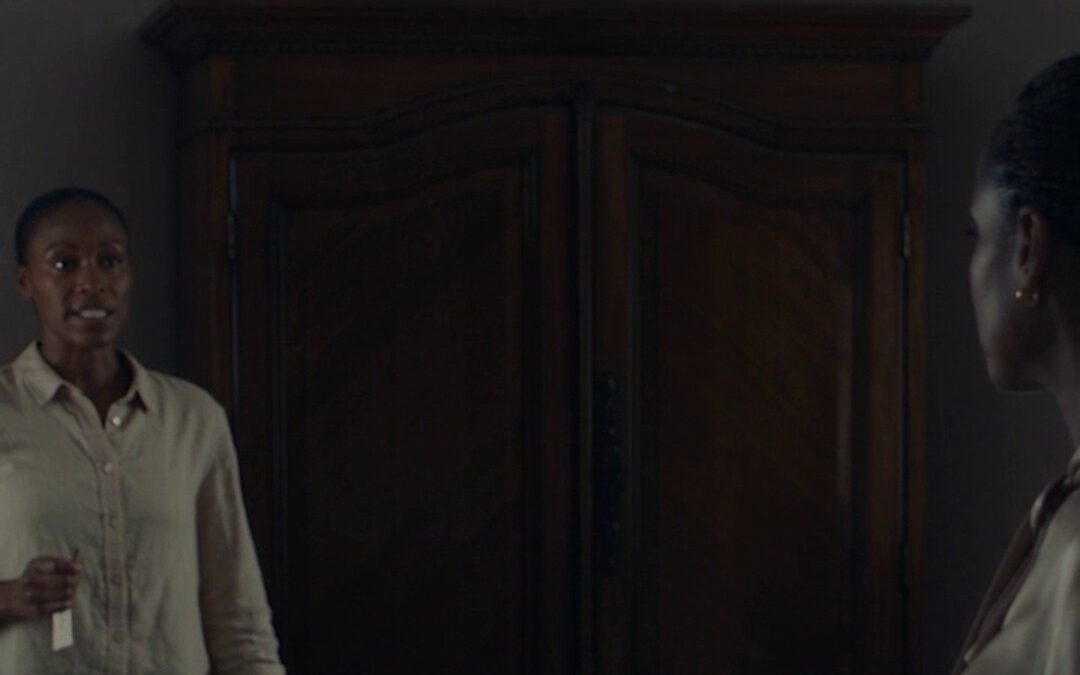
Chapter 2: The Room Behind
The fist struck the hidden door again.
Celeste grabbed my sleeve.
“Don’t open it.”
Ruthie held the key between us.
“That’s your daughter.”
The twins cried in their cribs. I looked at the painted wall behind the wardrobe, then at my wife.
“Move it.”
“Daniel, please.”
“Move it.”
We dragged the wardrobe aside. A brass lock waited on the hidden door. Ruthie lifted the key.
“Are you sure?” I asked.
“I heard her.”
The key turned.
A girl stood in the dark, wearing yellow pajamas patterned with white moons. Her brown hair reached her shoulders. A plastic bracelet circled her wrist.
She looked about six.
“Dad?”
My knees nearly gave.
The girl took one step forward.
“Dad, it’s cold.”
I reached for her. Celeste moved between us.
“Don’t touch her.”
Ruthie stepped beside the girl.
“Let her come out.”
“Get away from her.”
“Her name is June,” I said.
Celeste’s eyes shone with panic.
“That is not June.”
The girl took Ruthie’s hand.
“She says I’m June.”
The plastic bracelet read ELISE BELLAMY. 04/18. My daughter had been named June.
I stared at my wife.
“Who is this?”
“I can explain.”
“Start now.”
The girl leaned into Ruthie.
“She said I had to stay quiet.”
Ruthie lifted her chin.
“I found her at six this morning.”
Celeste turned on her.
“You weren’t supposed to be in that room.”
“I heard a child coughing.”
“The room was locked.”
“Not from the inside.”
“You should have told me.”
“I tried.”
“You went through my things.”
“I was looking for medicine for the twins. I found the key.”
“You knew what you were doing.”
“I knew a child was alone.”
The girl clutched Ruthie’s fingers.
“Can I have water?”
I reached for a bottle on the changing table. Celeste blocked me.
“Daniel, we have to be careful.”
“With a glass of water?”
“She’s been sick.”
“What does she have?”
“Nothing serious.”
“You said she wasn’t your daughter.”
“She isn’t.”
The girl’s face crumpled. I handed her the bottle. She drank in quick, small swallows while Ruthie kept a hand on her shoulder.
“Is Mommy mad?” she asked.
Celeste lowered her eyes.
“Sweetheart—”
The girl shrank back.
I put myself between them.
“Don’t.”
That was the first time I had ever spoken to my wife that way.
The twins’ cries softened. Ruthie glanced at them.
“They need feeding.”
“Then feed them,” I said.
Celeste reached for the girl. I stopped her with my arm.
“Not until a doctor sees her.”
“You can’t take her from me.”
“You just said she wasn’t yours.”
“She isn’t.”
“Then tell me who she is.”
The answer came from Ruthie.
“She’s my daughter.”
The room tipped.
I looked at the bracelet.
“Elise Bellamy.”
“She was born in a hospital room next to yours,” Ruthie said. “I had her six years ago.”
Celeste shut the hidden door with her palm.
“We are not doing this in front of the children.”
“Which children?” I asked.
Her hand fell.
I called our pediatrician, then 911. Celeste objected.
“If you involve the police, they’ll take her.”
“They’ll get her medical help.”
“They’ll take the twins too.”
“Why would they do that?”
She looked at Elise.
For the first time, my wife seemed afraid of the child.
Ruthie sat on the floor with Elise tucked against her. Her sleeve was dark with blood. I noticed the raw red line around her wrist.
“Did Celeste do that?”
“She shoved me against the door,” Ruthie said.
“I was trying to stop her from entering.”
“Stop lying.”
Celeste lifted her chin.
“I have never lied to you.”
The brass key lay in my palm. I turned it over. On its tag, June’s name had been written beside the date she died.
The first siren rose in the distance.
“What else have you hidden?” I asked.
Celeste closed her eyes.
“Daniel.”
The officers arrived with our pediatrician. A caseworker came soon after. The doctor examined Elise and the twins. None was in immediate danger, but Elise was dehydrated and underweight. She needed a hospital evaluation.
Celeste argued against every step.
“I’m her mother.”
“You said she wasn’t,” I replied.
“I said she wasn’t June.”
“Then who is she?”
She had no answer.
The caseworker interviewed Elise with Ruthie present. The officer spoke with Celeste in the sitting room. With the officer beside me, I went down the service passage toward the old nursery. The brass key opened its lock.
The room smelled of dust and old paint. It held a narrow bed, a dresser, children’s books, and a wall covered with faded paper stars. A night-light glowed beside the bed. On a tray sat a cup of water and half a piece of toast.
No windows.
The officer photographed everything.
“Who set this up?” he asked.
Celeste didn’t answer.
A framed picture stood on the dresser. It showed Ruthie in a hospital bed holding a newborn. Celeste stood beside her.
I turned it over. The date was six years old.
Underneath was another photograph: Celeste beside a hospital bassinet, a white blanket over the small bundle. A card read, For June.
My hands shook.
“Where did you get this?”
Celeste looked away. The officer put on gloves and took both pictures.
Back in the nursery, Ruthie sat with Elise under one arm. The pediatrician checked one twin’s temperature.
My phone buzzed. An unfamiliar number appeared.
“Mr. Bellamy? Dr. Shah from Northbridge Medical. I received a call about a child found in your home.”
“When?”
“Your first daughter was admitted here six years ago. I was on call.”
“I thought she died.”
“She did.”
The words landed quietly.
I looked across the room at Celeste.
“Then who is Elise?”
“I can’t discuss her records by phone,” Dr. Shah said. “But I can tell you the hospital records connected to her birth were amended after I filed them.”
“By whom?”
“I reported the discrepancy at the time. No one followed up.”
“Do you still have the original records?”
“I kept copies.”
“Can we meet?”
“Yes. Bring the child’s guardian and the officer.”
“Who was listed as her guardian?”
“Ruth Bell.”
I hung up. Ruthie understood from my face.
“They changed my records?”
“Dr. Shah kept copies.”
Celeste stood abruptly.
“That doctor is mistaken.”
“Then help us prove it.”
“I don’t need to prove anything.”
The caseworker stepped closer.
“You’ll need to answer questions, Ms. Bellamy.”
Celeste glanced toward the nursery door. For a moment, she seemed to consider running. Then she looked at the twins and sagged.
“Not in front of them.”
The officer arranged a separate interview. A medic cleaned Ruthie’s wrist; it was scraped and bruised by the door’s metal edge.
“You should have called me,” I said.
“I did.”
“When?”
“Three times.”
I checked my phone. No missed calls.
“She uses the house account,” Ruthie said.
“What?”
“Celeste had the office transfer my calls to the nursery line. I thought you were too busy to answer.”
There were no calls from Ruthie because I had blocked her number six months earlier. Celeste had said Ruthie called during meetings about small household matters. I’d told Ruthie to use the house phone. Celeste controlled that one, too.
“I’m sorry.”
“You can be sorry after you listen.”
“I’m listening.”
“I didn’t stay because I trusted your wife. I stayed because I needed the health insurance.”
She had cared for our children while her own daughter lived behind a hidden door.
“Why didn’t you leave?”
“I tried.”
“When?”
“After I found Elise in Room B.”
“You only found her today.”
“No. Three weeks ago.”
The room went quiet.
“What?”
“Celeste told me she was a niece from out of town. She said Elise had a contagious rash and needed to stay isolated until a doctor cleared her.”
Ruthie looked toward her daughter.
“She knew her birthday. She knew the scar on her shoulder.”
“Why didn’t you call the police?”
“I didn’t know who would believe me. Celeste had a lawyer, a staff, and a story ready. She said she’d tell them I was unstable.”
“You could have called me.”
“I did. You didn’t answer.”
I lowered my eyes.
“I saw the key today,” she continued. “I heard Elise coughing. I opened the door. Celeste came in and locked the nursery behind us.”
“Why?”
“She said I’d stolen her property.”
“Elise isn’t property.”
“Tell Celeste.”
Elise slid down from her chair, holding the empty cup in both hands.
“Are you mad at Ruthie?”
“No,” I said.
“Are you mad at Mommy?”
I paused.
“Yes.”
She nodded.
“Can I have more water?”
I filled the cup. She drank slowly this time.
The pediatrician recommended Elise stay overnight at the hospital for hydration and observation. Ruthie went with her. I stayed with the twins.
Celeste sat on the edge of the sofa, hands folded, face composed.
“What happened to June?” I asked.
Her eyes lifted.
“I buried her.”
“Then what is in that room?”
“Nothing.”
“Dr. Shah says the hospital records were amended.”
“Dr. Shah has a grudge.”
“Against whom?”
“She lost her position.”
“Because of you?”
“Because she made a mistake.”
“What mistake?”
Celeste leaned toward me.
“Your daughter died. I was alone in a hospital room. I had just watched her stop breathing. You weren’t there.”
“I was on a plane.”
“You were in Chicago. I told you June was stable.”
“Then she wasn’t.”
“I wanted to remember her alive.”
“You hid a child in our house.”
“I protected a child.”
“Whose child?”
She stared at me.
I had been in Chicago for the acquisition. Celeste said she’d needed me to stay. After June died, I returned to work within days, convinced I was doing what she wanted. She had never told me she wanted me to stay.
“I wanted to keep a piece of her,” she said.
“You kept another woman’s daughter.”
“I kept a child alive.”
“By hiding her from her mother?”
“I gave her a home.”
“Behind a locked door.”
“She was safe.”
“She was alone.”
Celeste turned away.
The twins slept in my bedroom that night. The police photographed the hidden room, and Elise stayed at the hospital with Ruthie. I called a new lawyer after our longtime family attorney arrived having spoken with Celeste first.
The next afternoon, I met Dr. Shah at Northbridge with Ruthie, the officer, and my lawyer.
Dr. Shah’s office was plain. She opened a box of paper files.
“This is the original birth record,” she said.
The first page listed Elise Bell’s birth and Ruth Bell as her mother. A handwritten note recorded a complication during delivery and a transfer to the adjoining neonatal unit. Another page identified June Bellamy and recorded her death at 2:16 a.m.
The transfer order had been amended to say Elise was moved to a private family room at Celeste’s request.
“That isn’t my signature,” Dr. Shah said.
“Do you have the original version?” my lawyer asked.
She showed us a faint carbon copy. Before the amendment, the destination had been Ruth’s family room.
“Why did you keep it?” I asked.
“I saw Elise before the transfer. She was stable. Later, the bassinet was empty. I asked a nurse, who said the baby had been discharged to her mother. Ruth was still in the hospital.”
“What did you do?”
“I filed an incident report.”
“Who received it?”
“Hospital administration and legal.”
“Did you contact police?”
“No. They told me it was a clerical issue and the child was with family.”
“Did you believe that?”
“No.”
She set down a visitor log. Celeste had signed in at 1:42 a.m. on the night of the births. Her destination was Ruth’s room. There was no exit time.
Ruthie stared at the date.
“Was I asleep?”
“Your chart says you’d been given medication,” Dr. Shah said. “You were likely drowsy, but I can’t say you were unconscious.”
“Did anyone tell you Elise had died?” my lawyer asked.
“Celeste did,” Ruthie said. “She said there’d been a complication and I was too sick to understand what the doctor told me.”
The hospital’s staffing list identified Evan Cole, a resident on duty. He had since retired, but his record could be requested.
Ruthie pressed her bandaged wrist against her lap.
“Celeste told me she had something showing I’d signed away my rights. Last week.”
The lawyer asked whether Ruthie had signed anything.
“I signed a discharge form. I don’t remember anything about giving her up.”
Dr. Shah checked the file. No release-of-custody form was there.
“I was medicated,” Ruthie said. “My bag and phone had been taken for surgery. My mother kept telling me to sign so they’d release my belongings.”
“Could the hospital have a separate form?” my lawyer asked.
“It should,” Dr. Shah said. “But I don’t see one.”
“Who had access to the file?”
“Records, administration, family services. Celeste was known here through the foundation.”
The logs showed she had visited Ruth twice before the birth, bringing meals and arranging a private consultation with a hospital social worker. A week after Elise was born, Celeste requested access to Ruth’s family services file. The request carried the hospital foundation’s approval initials: C.B.
My lawyer requested preservation of any surviving hospital and foundation records. The officer documented the copies and took Dr. Shah’s statement.
“Did you ever tell anyone what happened?” Ruthie asked.
“I did.”
“Did you believe me?”
“I did.”
“Then why did you stop?”
Dr. Shah didn’t defend herself.
“I let people with titles convince me I’d done enough.”
It wasn’t forgiveness, but Ruthie nodded.
Elise’s examination showed she had been underfed but had no acute injury. She remained overnight for hydration. Ruthie stayed beside her.
I returned home to find Celeste in the kitchen.
“Did you take her?” I asked.
“I found her.”
“Where?”
“In the nursery.”
“What happened to June?”
“I wanted to tell you.”
“When?”
“I don’t know.”
“Six years ago?”
“I was in shock.”
“Was June alive?”
“She lived for eleven minutes.”
The kitchen clock clicked behind us.
“Did you hold her?”
“Yes.”
“Then what happened?”
“The hospital staff took her.”
“That’s what happens when a baby dies.”
“They took her away before you arrived. They asked if I wanted to see her again.”
“Did you?”
“I said no.”
She wiped her face.
“I wanted her to stay alive.”
“That wasn’t an option.”
“I know that now.”
“You knew it then. How did Elise enter the story?”
Celeste looked at the counter.
“She was crying. I’d been awake for hours. I thought I was hallucinating.”
“So you went to Ruth’s room.”
“She was asleep.”
“And you took Elise.”
“I picked her up.”
“Then you brought her here.”
“I thought I could keep her safe until I could think.”
“You kept her for six years.”
“I became attached.”
“She was Ruthie’s baby.”
“I know.”
“Did you tell Ruthie her baby had died?”
“Yes.”
“Why?”
“I was afraid she’d take her.”
“She was her mother.”
“I didn’t think I could let her go.”
“You weren’t thinking about Elise. You were thinking about the space June left.”
Celeste’s head lifted.
“I cared for her.”
“You hid her.”
“I gave her a safe home.”
“Without her mother.”
“I thought Ruthie was unstable.”
“Was she?”
“She had no money, no partner, no family nearby.”
“She had a mother.”
“She was barely twenty-three.”
“She was an adult.”
Celeste folded her arms.
“I was afraid.”
“Of what?”
“Losing her.”
“You lost June.”
“I couldn’t survive losing another.”
There was truth in the fear. It didn’t excuse what she had done.
“What did you tell yourself when you locked Ruthie in the nursery?”
“She was going to take Elise.”
“She was protecting her daughter.”
“She was taking advantage of us.”
“She worked for us for years.”
“She used the job to stay close.”
“That’s what mothers do when they can’t get their children back.”
Celeste covered her mouth.
“Ruthie signed a form,” she said.
“Dr. Shah found no form.”
“I have a copy.”
“Where?”
“In the study safe.”
“Is it genuine?”
“I don’t know.”
“Then don’t use it.”
“I was trying to protect my family.”
“Your family includes Ruthie’s daughter.”
“I loved her.”
“You loved that she filled the space June left.”
Celeste looked down.
The next morning, police searched the study under a warrant, with her attorney present. The safe held tax papers, deeds, and a folder marked FAMILY SERVICES. Inside was a photocopy of a consent form bearing Ruthie’s signature.
The first page authorized temporary care while Ruth recovered. The second said she had voluntarily relinquished custody. The staple holes did not match.
A document examiner later confirmed the second page had been copied from a different form and attached to Ruthie’s signature page. The original first page remained at the hospital. The false page had been printed on our office copier.
The printer’s service log showed a scan-to-print job from Celeste’s user account on the date marked on the form. Its description read “R. Bell custody.” Celeste’s lawyer argued she had asked an assistant to scan documents for counsel. The assistant denied it. The evidence did not identify who physically pressed the button, but it put the altered paperwork within Celeste’s office and account.
Then Mrs. Donnelly, our former housekeeper, called.
She agreed to meet us and the officer. She looked older, but her voice was steady.
“I knew Elise wasn’t ours,” she said.
“Why didn’t you tell me?” I asked.
“You weren’t there. When you came home, Mrs. Bellamy said she’d adopted a baby.”
“She said that?”
“She said the mother had signed the papers and disappeared.”
“Did you believe her?”
“I wanted to. I needed the job. And I was ashamed of what I’d seen.”
She had seen Celeste carrying the baby down the service hall the night she brought Elise home. Later, while cleaning the old nursery, she found a hospital bracelet in a blanket pocket. It bore Ruth Bell’s name.
“I confronted her,” Mrs. Donnelly said. “She showed me a photocopy and said Ruth had signed the baby away.”
“Did you know Elise was in Room B?”
“I knew she had a room. I didn’t know the door was locked from the hall.”
Mrs. Donnelly opened her canvas bag and removed a small household notebook.
“I kept dates.”
The entries documented Celeste’s trips to Northbridge, the day she brought Elise home, and later visits from Ruthie. One entry read: Girl asks when her mother is coming. Told to stay in room.
Another read: Mrs. Bellamy says child must remain hidden from father until he accepts her.
I read it twice.
“Why hide Elise from me?”
Mrs. Donnelly looked at me.
“She planned to tell you the child was yours.”
“What?”
“She said if you loved the girl, you’d believe she was the daughter you’d lost.”
Celeste had imagined introducing Elise as a new child, perhaps an adoption. She never followed through.
“Why not?”
“You were traveling,” Mrs. Donnelly said. “Then the foundation had trouble. She said she’d wait until things settled.”
“What trouble?”
“A finance officer named Martin Keene warned the board that Mrs. Bellamy was using the charity to get private access to hospital families. They called him difficult.”
I knew the name. Keene had resigned after a dispute over the children’s hospital fund.
Mrs. Donnelly’s notebook documented Elise’s life behind the hidden door: visits, meals, school lessons, and the days Celeste allowed Ruthie to see her. It also showed Celeste had planned to present Elise to me and changed course.
The first secret led closer to home.
The security company still had maintenance tickets for the old nursery lock. Its records showed six code changes and requests from Celeste’s office to disable the interior release, then reinstall it, then disable it again. The technician confirmed the requests came from Celeste’s account. A digital audit showed her code had opened the old room almost daily at first, less often over the years.
The room had not been locked every minute of Elise’s life. But she had lived where no one else was allowed to see her.
The hospital opened an internal review. It found Celeste’s foundation role had given her informal influence over staff, though no official access to patient records. A former clerk recalled letting her into Ruth’s file, assuming she had approval.
The police interviewed Evan Cole, the retired resident.
He remembered Ruthie asking for her baby after surgery. He had been told Elise was in a family room.
“Who told you?” the officer asked.
“Mrs. Bellamy.”
“Did you see a release form?”
“No.”
“Did you check?”
“No. I assumed social services had handled it.”
He agreed to make a statement. Dr. Shah’s records, the visitor log, the false form, the printer log, the security records, and Mrs. Donnelly’s notebook all pointed toward a planned concealment. None alone answered every question, but together they made a clear account.
The real architect was Celeste.
Her motive was grief twisted into possession, then protected by money and access.
When the story reached the local paper, the headline called Elise “the hidden child.” Ruthie asked me not to respond. The family caseworker handled the press instead.
Celeste was charged with unlawful restraint, custodial interference, and falsifying records. The prosecutor did not charge kidnapping; the state’s legal standard wasn’t met. Celeste was released pending trial under conditions keeping her away from Ruthie and Elise. The foundation placed her on leave.
Supervised visits with the twins continued at a family services center. Celeste arrived in a plain navy dress, without jewelry or a camera crew. The children ran to her.
“Mom!”
She hugged them and cried. She didn’t mention Elise.
At the end, they asked if she was coming home.
“Not yet,” Celeste said.
“Why?”
“I hurt someone.”
“Ruthie?”
“And Elise.”
“Did you hurt us?”
“No.”
“Did you lock Ruthie up?”
Celeste looked at me. The supervisor gave her time.
“I did,” she said.
“Why?”
“I was afraid.”
“Are you still afraid?”
“Yes.”
“Can you stop?”
“I’m trying.”
The visit ended quietly. The children walked out holding my hands.
The prosecutor offered Celeste a plea: two felonies and a misdemeanor, a short jail term, probation, treatment, restitution, and no contact with Ruthie or Elise unless a family court later approved supervised contact. She could reject it and go to trial.
Her lawyer argued that no one could prove who carried Elise from the hospital. The records showed access and intent, but not the act itself. Celeste had been a respected philanthropist with no prior convictions. She could argue that she had made a terrible choice while believing she was protecting a child.
The prosecutor knew a jury might find that persuasive.
“Will she get Elise?” Ruthie asked.
“That isn’t part of this case,” the prosecutor said. “The custody court will decide based on Elise’s safety.”
“What if Celeste says I gave her away?”
“The documents don’t support that.”
Ruthie looked at me.
“What do you think?”
“I think she’ll argue she loved Elise.”
“Did she?”
“I think she believes she did.”
“That’s not the same thing.”
“No.”
Ruthie studied the evidence file. The brass key was listed as Exhibit 17, sealed in a clear bag. Its tag bore the date June died and the words Room B.
“Why was it hidden in the nursery?” I asked.
“I know,” Ruthie said. “Celeste used to give it to me when she wanted me to bring Elise something. She’d say the room was safe, then take it back.”
“Why didn’t you keep it?”
“I didn’t know where the room was. She watched me go.”
“But you saw Elise?”
“Sometimes. Through the doorway.”
“Why didn’t you take her then?”
“Because I was afraid Celeste would hide her somewhere else.”
The key had been permission, handed out in small pieces. Celeste had left it in the nursery drawer after coming in to change the twins’ sheets.
“Maybe she was tired,” Ruthie said. “Maybe she wanted me to find it.”
“Why?”
“She wanted me to see Elise. She didn’t want me to take her.”
Celeste accepted the plea two days before trial.
At the hearing, the courtroom was full. The foundation board sat in the back row. Dr. Shah and Martin Keene were there. Celeste stood at the defense table.
The judge asked whether she had knowingly kept Elise from her mother.
“Yes.”
“Did you use a locked room to keep her hidden?”
“Yes.”
“Did you confine Ruth Bell in the nursery?”
Celeste hesitated.
“I did.”
“Did you understand she wanted to leave?”
“Yes.”
The judge invited her to speak.
Celeste turned toward Ruthie.
“I’m sorry.”
Ruthie didn’t move.
“I told myself I was giving Elise a home,” Celeste continued. “I told myself her mother couldn’t care for her.”
“Did you ask?” Ruthie said.
“No.”
“Did you let her choose?”
“No.”
“Did you tell her I was dead?”
Celeste’s eyes filled.
“Yes.”
“Did you tell her I didn’t want her?”
“Yes.”
“Why?”
“I thought she would hate me less if I said it.”
Ruthie’s jaw tightened.
“Then you were wrong.”
“I know.”
The judge sentenced Celeste to ninety days in county custody, with credit for time served, five years of supervised probation, required treatment, and restitution for Ruthie’s lost wages and medical costs. Contact with Elise was prohibited unless the family court later approved it.
Outside, Celeste called my name.
“Daniel.”
I stopped but didn’t turn.
“I’m sorry.”
“I heard you.”
“I never meant to hurt you.”
“That’s not the same as taking responsibility.”
“I know.”
“You hurt Ruthie. You hurt Elise. You lied to me for six years.”
“I know.”
“You don’t get to make me the person who forgives you.”
“I don’t expect that.”
“Then let the court do its work.”
I left.
* * *
Elise stayed with Ruthie in a small apartment arranged through a family services organization. I offered to pay for a private place. Ruthie refused direct help.
“I don’t want to owe you.”
“You don’t.”
“I do if you control the money.”
I arranged for the organization to hold the lease. I paid through a charitable account without conditions or control over how Ruthie used it.
She accepted.
I also offered a year’s salary. She refused that, too.
“I’m not taking money because your wife hurt me.”
“It isn’t hush money.”
“I know. I still don’t want it.”
“What would help?”
“A reference that tells the truth.”
I wrote one. It said Ruthie had cared for our children with patience and skill, and had acted to protect a child who wasn’t safe.
She read it twice.
“Thank you.”
The twins asked about Ruthie every week.
Sometimes they asked about Elise, too. I answered plainly.
“Mommy made a serious mistake.”
“Is she bad?” my daughter asked.
“No one is only one thing.”
“That doesn’t answer,” my son said.
“No,” I admitted. “It doesn’t.”
The custody hearing took months. The judge returned Elise fully to Ruthie’s care and ordered no contact with Celeste unless Elise’s guardian agreed and the court approved. The order also allowed Elise to keep seeing the twins through Ruthie.
Ruthie enrolled in a nursing program. She studied after Elise went to bed and took weekend clinic shifts. Her apartment was small, but she filled it with books, plants, and a secondhand couch that sagged in the middle.
Elise started school that spring. Ruthie sent me a picture of her holding a paper flower outside the classroom. Her smile was cautious. She wore her yellow pajamas beneath her uniform because she insisted on bringing them.
The twins sent a card. They had drawn three children and a dog with six legs. Elise wrote their names, then mine.
Dad.
I stood in the kitchen with the card for a long time.
Ruthie called that evening.
“She wants to know if she can visit the twins at the park.”
“Of course.”
“Not at the house.”
“I understand.”
“Not alone with you. She wants me there.”
“Then you’ll be there.”
“Celeste isn’t invited.”
“She won’t come.”
“Can you promise?”
“Yes.”
At the park, we sat at a picnic table while the children ran between the swings and a low stone wall. Ruthie stayed close to Elise. I stayed near the twins.
They traded snacks, then argued over a red ball. No one asked them to explain anything.
After an hour, Elise sat beside me.
“Are you sad?”
“Sometimes.”
“Because Mommy’s gone?”
“Because a lot happened.”
“Are you still my dad?”
I took care with my answer.
“I can be someone who cares about you. Ruthie is your mother. You decide what you call me.”
She watched the children.
“Can I call you Daniel?”
“Yes.”
“Can I call you Dad sometimes?”
“If you want.”
“Not today.”
“That’s okay.”
I didn’t ask Ruthie to forgive me.
The foundation completed an outside audit. It found no theft, but it documented Celeste’s use of donor relationships to gain access to hospital staff and records. She resigned from the board. Martin Keene’s old warning—that she blurred boundaries by using the charity’s name to approach hospital families—was finally taken seriously.
He didn’t want an apology from me.
“Your wife wasn’t the only person who benefited from people looking away,” he said.
He was right. I had ignored Ruthie’s long hours and let Celeste answer for her. I had stopped answering Ruthie’s calls because Celeste said they were a distraction.
I had mistaken trust for attention.
The twins continued supervised visits with Celeste. At one visit, my daughter asked why she had hidden Elise.
“Because I was scared of losing her,” Celeste said.
“You weren’t her mom.”
“No.”
“You knew?”
“Yes.”
“Why didn’t you let Ruthie have her?”
“I told myself I was helping.”
“Was that true?”
Celeste looked at the supervisor, then at our daughter.
“No.”
It was the first honest answer I’d heard from her in months.
The court approved no contact with Elise for the first year. After that, the family judge could consider a letter, if Ruthie and Elise’s counselor believed Elise was ready. Celeste’s visits with the twins remained supervised.
We filed for separation. I stayed in the house with the children but moved into the guest suite. We did not announce it to the papers.
The hidden nursery door came down. Behind it, the carpenter found a paper star taped to the inside, drawn in blue crayon. Elise had made it.
I kept it with the hospital records.
Celeste sent Elise a letter through the counselor two years after the arrest. Ruthie read it first and asked Elise whether she wanted to hear it.
“No.”
Ruthie sealed it again. She didn’t throw it away or press Elise to accept it.
Celeste wrote the twins birthday cards through the supervisor. She apologized without asking them to comfort her. She completed her sentence and continued probation.
A year later, Elise asked to hear the letter. Ruthie brought it to the kitchen table. The twins played in the living room.
Celeste wrote that she had loved Elise and used that love as an excuse to keep her. She apologized for the room, the lies, and the birthdays Elise had spent without Ruthie.
The letter asked for nothing.
“Can I keep it?” Elise asked.
“Yes,” Ruthie said.
“Can I still say no to seeing her?”
“Yes.”
Elise folded the letter and put it in her school folder.
“Then I’m keeping it.”
She did not ask to see Celeste.
Nobody pressed her.
* * *
Three years after the arrest, Ruthie graduated from her nursing program. Elise sat in the front row between the twins. I sat behind them. Celeste watched from the back, at the distance set by the court.
When Ruthie crossed the stage, Elise cheered the loudest. The twins followed. Celeste clapped quietly.
Ruthie saw her but didn’t wave.
Afterward, Ruthie came to the park near her apartment with a small cloth pouch.
“You don’t have to keep that,” I said.
“I know.”
“Why do you want it?”
“Elise asked about the room. I told her the truth.”
Ruthie held out the pouch.
“I thought she should have it someday.”
The brass key had been returned to me after the case. The court had treated it as evidence; now it was a choice Elise could make.
Ruthie gave it to her.
“Can I open it?” Elise asked.
“Of course.”
She untied the pouch and studied the key.
“It’s small.”
“It opened a door,” Ruthie said.
“Did it keep you out?”
“Yes.”
“Did it let you in?”
“Yes.”
Elise considered the key, then closed the pouch.
“I want to keep it.”
Ruthie nodded.
The years did not erase the room. They changed what we did with it. When Elise was ten, she asked to see Celeste in a supervised setting. Ruthie agreed after several conversations with Elise’s counselor.
Celeste arrived early and sat on a bench with her hands clasped. When the children entered, she stood but didn’t reach for them.
“Hi,” she said.
“Hi,” Elise replied, staying beside Ruthie.
“I’m glad you’re here.”
“I wanted to see if you were still scared.”
Celeste lowered her eyes.
“I am.”
“Of what?”
“Of hurting you again.”
“Then don’t.”
“I’ll try.”
“Trying isn’t enough.”
“No,” Celeste said. “It isn’t.”
The children chose to stay. They talked about school, books, and a science project. Celeste asked before offering Elise a birthday card. Elise accepted it.
At the end, Celeste asked if she could hug her.
Elise shook her head.
“Maybe next time.”
“Okay.”
Celeste didn’t ask again.
The visits stayed occasional and supervised. Elise chose when they happened. Ruthie never told her to forgive. I never told her what Celeste should be called.
At thirteen, Elise called her Celeste. At sixteen, she called her Grandma once, then went back to Celeste. No one corrected her.
The twins grew close to Ruthie and Elise. They spent weekends together, then summers. They fought over small things and made up over snacks.
After the twins left for college, we sold the house. The nursery became an office. The old hidden room became storage, then a reading nook with a window cut into the wall.
Elise kept the key in a small wooden box in her dorm room. The tag had faded, but June’s name remained legible.
One day, she asked who June had been.
I told her about my first daughter, about the eleven minutes, and about my mistake in believing grief gave me permission to stop asking questions.
“Were you angry at Celeste?”
“Yes.”
“Did you love her?”
“Yes.”
“Can both be true?”
“They can.”
“What about Ruthie?”
“I love her.”
“She’s my mom.”
“She is.”
Elise touched the key.
“Do you think June would have liked me?”
“I think she would have liked having a sister.”
Elise nodded. That night, she set the key beside a photograph of the twins and Ruthie at graduation.
Ten years after I came home to the nursery, we returned to the house to retrieve a box from the attic. The new owners had invited us in. The twins were adults. Ruthie was a nurse practitioner. Elise was in graduate school, studying social work.
We stood in the old nursery. The painted stars were gone. Sunlight came through the new window into what had been Room B.
Ruthie stood where the locked door had been. I stood beside her.
The attic box held old blankets, baby books, and a music box that had belonged to June. Elise turned the brass key in her hand.
“Do you remember that night?” I asked.
“Yes.”
“What do you remember?”
“The crying.”
“The twins?”
“Me.”
She looked at Ruthie.
“Then I remember your hand.”
Ruthie took hers.
“I remember the key,” I said.
“I remember being told to stay quiet,” Elise replied.
She looked around the room.
“I don’t have to stay quiet anymore.”
“No,” Ruthie said.
The tag had fallen away years earlier. Elise placed the key beside June’s music box.
A room with a window.
A family with its truth.
A mother who had found her daughter.
Children who understood that love did not cancel accountability.
Ruthie rested one hand on Elise’s back.
And nobody locked the door.
THE END







