Tessa Hid the Evidence Before Her Husband Came Home, Never Guessing the Housekeeper Had Saved the Original
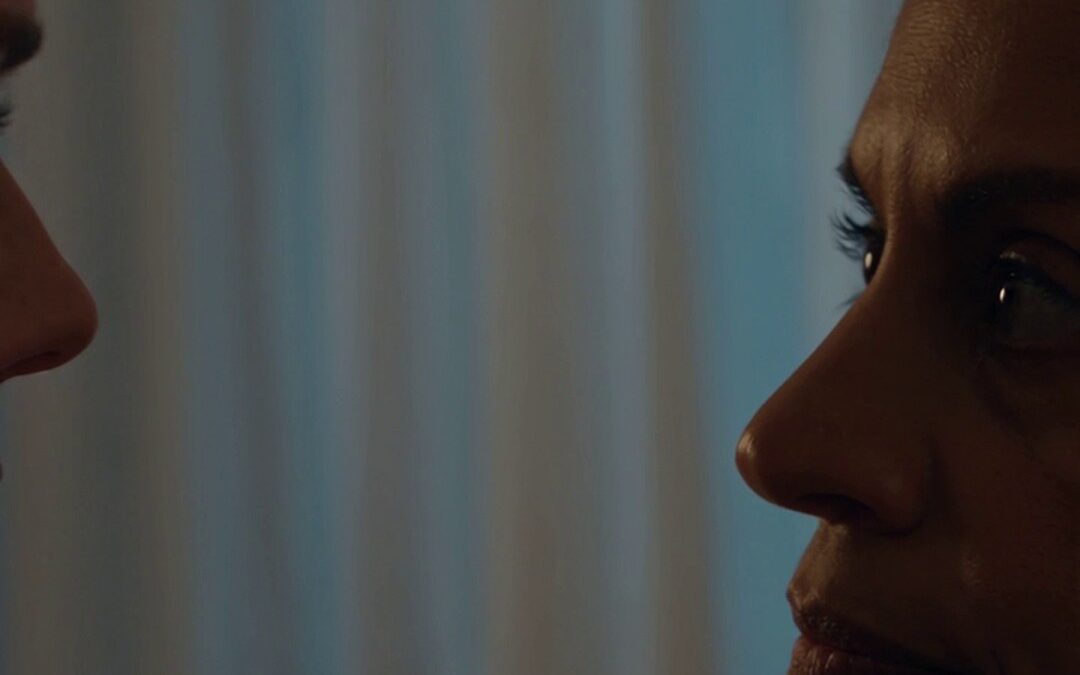
Chapter 2: The Recording
The door swung inward.
Elena held the envelope.
Tessa stood between her and Micah’s crib.
Micah cried into the quiet room.
Marcus Vale looked from the monitor to his wife.
Then he saw the blue paper.
“Put it down,” Tessa said.
Marcus did not answer.
His eyes had fixed on the amber light.
“Why is that recording?”
“It’s a motion setting,” Tessa said.
“It wasn’t yesterday.”
“You’re home early.”
“I asked a question.”
Elena steadied the envelope with both hands.
Marcus was a civil engineer.
His name appeared on city projects, hospital expansions, and two university buildings.
He was known for careful plans.
He had learned to distrust anything that looked too tidy.
“Micah needs his bottle,” Tessa said.
“Then we’ll get him one.”
“You’re upsetting him.”
“You’re standing over his crib.”
“That’s where he is.”
“Step away from him.”
Tessa looked at Marcus as if he had insulted her.
“You’re taking her side?”
“I’m asking you to move.”
Elena reached into the crib and lifted Micah.
She checked his face and hands.
His skin was warm, but not feverish.
He settled against her shoulder.
Marcus saw the way she held him.
The baby’s crying softened.
“You found the envelope?” he asked.
“I found it in the study.”
“Did you open it?”
“No.”
“Did she?”
Tessa crossed her arms.
“You’re letting a housekeeper interrogate me?”
“No one is interrogating you.”
“Then give me that envelope.”
Marcus turned to Elena.
“Please don’t.”
Tessa’s face went still.
“Marcus.”
“I want to know what it is.”
“You know what it is.”
“Then tell me.”
The blue paper had a water stain on one corner.
A strip of old tape held the flap closed.
Elena had seen the envelope once before, though not in the study.
It had been tucked inside a coat pocket.
She knew because she had mended that coat.
“Where did you see it?” Marcus asked her.
“Last month. In your gray coat.”
“I haven’t worn that in months.”
“It was hanging in the back closet.”
Tessa laughed once.
“You expect us to believe that?”
“I expect you to check the coat.”
Marcus’s face changed.
He knew the coat.
He also remembered the night he had worn it to the hospital.
Micah had been three weeks old.
The hospital had called about a billing discrepancy.
A form had listed a second patient number under Micah’s name.
Marcus had asked Tessa about it.
She had said it was a clerical mistake.
He had believed her.
“Did you keep anything?” Marcus asked Elena.
Elena touched her apron pocket.
“I kept a copy of the page I found.”
Tessa stepped closer.
“Give it to me.”
“No.”
“You are stealing private papers.”
“I’m keeping evidence.”
“Evidence of what?”
“That’s what the envelope can answer.”
Marcus held out his hand.
“Give it to me.”
Elena did.
He opened the flap carefully.
Inside lay a folded hospital invoice.
There was a birth record.
And a typed note with three words underlined.
“Transfer completed today.”
Micah quieted against Elena’s shoulder.
Marcus read the note twice.
Then he looked at Tessa.
“What transfer?”
She said nothing.
“Who was transferred?”
“Marcus, this isn’t what you think.”
“What do I think?”
“That you can fix everything by calling someone.”
“I’m calling no one yet.”
The monitor continued recording.
Tessa glanced at it.
“You made this happen.”
Elena rocked Micah once.
“No. I noticed it.”
Marcus looked at the invoice.
The date matched the day Micah was born.
The second patient number had a different surname.
A name he recognized.
A name belonging to Tessa’s younger sister.
“Is there another baby?” he asked.
Tessa looked at the crib.
Her silence answered first.
Then she said, “There was.”
* * *
Marcus asked Elena to take Micah downstairs.
He did not ask Tessa to leave.
Elena carried the baby into the kitchen.
She could still hear them through the stairwell.
Their voices stayed low.
The words did not.
“Where is she?”
“I don’t know.”
“You told me she moved to Oregon.”
“She did.”
“You said she never had a child.”
“I said she gave him up.”
“Who is him?”
Tessa did not reply.
Elena warmed a bottle.
Her hands were steady.
Inside her pocket, the folded copy pressed against her fingers.
She had made it because the hospital page looked wrong.
She had worked in medical laundry before joining the Vales.
She knew how records traveled.
She knew what a duplicate patient number meant.
She also knew a copied page proved little by itself.
The original envelope mattered.
The names mattered.
And a baby mattered more than the adults who had hidden him.
Micah drank from the bottle.
His fingers opened against Elena’s blouse.
Marcus came down after several minutes.
His face looked older.
“Is he all right?” he asked.
“He’s hungry. He’s safe.”
“Thank you.”
“I didn’t do it for you.”
“I understand.”
He sat opposite her at the kitchen table.
The invoice lay in his hand.
“Did you find this at the hospital?”
“I found it in the study.”
“How?”
“The filing cabinet was left open. I was dusting.”
“Why did you keep a copy?”
“Because the second number was typed in a different font.”
Marcus stared at the page.
“You noticed that?”
“I used to sort medical claims.”
“What did the number mean?”
“I don’t know. It could mean a linked account. It could mean a second patient.”
“And you didn’t tell me.”
“I tried.”
He looked up.
“You tried?”
“Twice. The first time, Tessa said it was a mistake. The second time, she told me my son’s private records were none of my business.”
Marcus’s mouth tightened.
“Why didn’t you come to me?”
“Because I needed my paycheck.”
“That’s fair.”
“No, it isn’t.”
He accepted the correction.
“I’m sorry.”
Elena shifted Micah to her other arm.
“You can be sorry after you find the child.”
Marcus folded the invoice.
“Who told you the child existed?”
“No one.”
“What made you think there was another?”
“The number. And the note.”
“What did the note say?”
“Transfer completed today.”
He looked toward the stairs.
“Tessa said she didn’t know where the baby went.”
“She said she didn’t know where he was now.”
“That’s different.”
“Yes.”
Marcus called his attorney, then stopped before dialing.
“Should I call the police?”
“Call your lawyer first. Then ask what keeps the children safe.”
He nodded.
The first person he reached was his family attorney, Ruth Calder.
Ruth had represented him before his marriage.
She had also drafted the trust that paid for Micah’s medical care.
Marcus described the invoice, the envelope, and Tessa’s admission.
Ruth told him to preserve the paper.
She said not to confront anyone else.
She said to bring Micah to the pediatrician that afternoon.
“Why the pediatrician?” Marcus asked.
“To confirm his records and make sure no medical decision was made without your consent.”
Tessa came into the kitchen.
“You called Ruth?”
“Yes.”
“Of course you did.”
“She asked us to preserve the envelope.”
“Give it to me.”
“No.”
“You can’t hold my private medical records.”
“I can preserve evidence of a child.”
“You don’t know what happened.”
“That’s why we’re checking.”
Her eyes moved to Micah.
“You’re turning this into a scandal.”
“It already happened.”
“You promised me we would keep it private.”
“I promised to protect our son.”
“That is what I did.”
“From what?”
She looked away.
The answer was not there.
Or she did not dare give it.
Ruth arrived within the hour.
She brought a document box and a small recorder.
She did not touch the baby.
She asked Marcus to describe each item in the envelope.
She asked Elena where she had found it.
Then she photographed the front, the flap, and the water stain.
“The envelope stays sealed again,” Ruth said.
“It’s already open,” Marcus replied.
“Then we document who opened it and when.”
She placed the papers in a clear sleeve.
Tessa watched.
“This is absurd.”
“It’s procedure,” Ruth said.
“It’s family business.”
“Children make it everyone’s business.”
Tessa gave a short, brittle smile.
“You’re not a judge.”
“No. I’m the attorney who can keep your choices from becoming worse.”
Elena stood by the counter.
The old copied page remained in her apron.
Ruth noticed the movement.
“Do you have something else?”
Elena looked at Marcus.
He did not answer for her.
She took out the folded copy.
“It’s a photocopy of the patient page.”
Ruth examined it without unfolding it all the way.
“Where did this come from?”
“From the same file.”
“Why did you copy it?”
“I thought something was wrong.”
“Did you alter it?”
“No.”
“Did anyone see you copy it?”
“No.”
Ruth placed it beside the envelope.
“Good. We’ll log it.”
Tessa’s eyes narrowed.
“You planned this.”
Elena had expected the accusation.
She had not expected the old memory it stirred.
Years earlier, she had reported a broken lock at a memory-care facility.
The manager said she had exaggerated.
A resident fell that night.
Elena lost her job after the family sued.
She had learned that silence could feel like protection until it became permission.
“I planned to keep a copy,” she said. “Not this.”
Ruth turned to Marcus.
“Your wife may need separate counsel.”
“I know.”
“You should not discuss the records alone.”
“I know.”
“Micah’s doctor should receive his full file.”
“I know.”
“Then we move carefully.”
Tessa pushed her chair back.
“You’re all acting like I hurt someone.”
No one answered.
Ruth closed the document box.
“Did you?”
Tessa left the room.
The front door closed behind her.
Marcus stayed at the table.
He had the invoice.
He had an unexplained transfer.
He had a wife who had admitted there was another baby.
And he had no idea where that child was.
That afternoon, Micah’s pediatrician reviewed his records.
She found no sign of injury or unapproved treatment.
She did find a hospital authorization for a cord-blood donation.
The signature resembled Tessa’s.
Marcus’s signature did not appear.
The pediatrician referred them back to the hospital’s records office.
The records officer confirmed that a second infant had shared the delivery suite.
The patient number belonged to a baby boy.
The mother listed was Tessa’s sister, Mallory Price.
The child’s name was listed as Jonah.
The discharge destination was a licensed foster-care agency.
The transfer had happened twelve hours after birth.
Tessa’s sister had not been sent to Oregon.
She had been admitted to a residential treatment center in Pennsylvania.
The officer could not share more without legal authority.
Ruth obtained the proper release the next morning.
The hospital’s social worker confirmed the next part.
Mallory had signed temporary placement papers.
She had not signed an adoption consent.
The placement had been extended through a guardianship order.
That order had been filed in another county.
The guardian’s name was Tessa Vale.
Marcus read the line in the courthouse corridor.
His hand shook once.
Then it steadied.
“She took her sister’s child?”
Ruth checked the file.
“Legally, she was named temporary guardian.”
“That’s not what I asked.”
“No.”
The paperwork had given Tessa the right to arrange care.
It had not given her the right to hide Jonah from his mother.
The hospital’s notes said Mallory had asked for a family placement.
A handwritten line said the aunt would provide updates.
No updates appeared.
No visitation record existed.
The child had been placed with an agency family at four months.
That family had since moved out of state.
Their address was sealed.
“Can we find Jonah?” Marcus asked.
“We can ask through the court,” Ruth replied.
“How long?”
“Days if the judge sees urgency. Longer if the county resists.”
“Then file today.”
Ruth looked at Elena.
“You were right to preserve the copy.”
Elena thought of the tuition payment due Friday.
“Does being right help me keep my job?”
“It should.”
“That’s not an answer.”
Marcus heard her.
“You will keep your salary. You can leave if you choose.”
“And the tuition?”
“I’ll pay what I owe under our agreement.”
“I don’t want a favor.”
“It isn’t one.”
“Then put it in writing.”
He did.
The agreement confirmed her hours, wage, and tuition payment.
No confidentiality clause.
No release.
Elena signed after Ruth reviewed it.
She had protected the evidence.
Now she had protected herself.
That evening, Marcus sat beside Micah’s crib.
The monitor showed the baby sleeping.
The green light stayed on.
Tessa had not returned.
She had sent one message.
I need time.
Marcus placed the phone facedown.
Elena came to collect her coat.
“You should stay here tonight,” he said.
“Why?”
“Because I don’t know what Tessa will do.”
“I’m not afraid of her.”
“I know.”
“That doesn’t mean I’m staying.”
He nodded.
“I’ll arrange a ride.”
“I can take the bus.”
“It’s late.”
“I’ve taken it later.”
He did not argue.
He opened the envelope’s clear sleeve again.
The bottom of the old hospital invoice carried a faint emboss.
Ruth had missed it.
Elena pointed to the raised letters.
“That’s not part of the hospital form.”
Marcus tilted the page toward the lamp.
The mark belonged to a private bank.
A trust department.
He recognized the symbol.
It matched the bank that held his late father’s estate.
The envelope had been hidden behind his father’s statements.
The transfer had led closer to home.
And the money had come from Marcus’s family trust.
* * *
The bank’s records showed a monthly payment.
Each payment went to a case-management account.
The account had been opened two months before Jonah’s birth.
The listed sponsor was the Vale Family Foundation.
Tessa had signed as administrator.
The foundation’s board chair was Marcus’s uncle, Graham Vale.
Graham had built the family’s charitable reputation.
He funded children’s hospitals and public libraries.
He appeared at fundraisers beside city officials.
He had paid for the townhouse where Tessa and Mallory grew up.
He had also controlled the trust after Marcus’s father died.
Marcus called him the next morning.
Graham answered on the second ring.
“You’re calling about the foundation?”
“I’m calling about Jonah Price.”
The line went quiet.
Then Graham said, “You should not use that name.”
“Why?”
“Because it’s a sealed placement.”
“Who sealed it?”
“Your wife knows the details.”
“She says she doesn’t know where he is.”
“She is under stress.”
“Did you pay for the case account?”
Graham sighed.
“Your father intended the foundation to help vulnerable families.”
“Did you use it to hide my wife’s nephew?”
“We placed an infant in a stable home.”
“His mother wanted family.”
“His mother was unwell.”
“You decided that?”
“The court decided.”
“After you controlled the file.”
Graham’s voice hardened.
“Be careful, Marcus.”
The call ended.
Ruth requested the trust records through the foundation’s independent auditor.
The auditor confirmed payments totaling eighty-four thousand dollars.
The payments had covered placement fees, legal retainers, and a private relocation.
The destination state was not Pennsylvania.
Jonah had been moved to Maine at five months old.
The move had been funded under “family safety services.”
Mallory had never been notified.
The agency had received a letter saying she posed a direct risk.
The letter had no evaluation attached.
It bore the signature of Dr. Leon Voss.
Voss had treated Mallory for postpartum anxiety.
He had not treated her after the first appointment.
He had not authorized a placement.
His signature appeared to have been copied.
Ruth asked the licensing board to verify the letter.
The board confirmed Voss’s office had reported the signature as forged.
The record had existed for one reason.
To make Mallory look dangerous.
Elena noticed the date.
The letter had been filed two days before Jonah’s transfer.
She remembered the laundry schedule from that week.
The hospital had sent a sealed bag of Tessa’s clothing to the house.
Tessa had been recovering there.
Elena remembered seeing a white hospital wristband in the pocket of a cardigan.
A second name had been written on it.
Jonah.
She had not understood the significance then.
“Could that wristband still exist?” Ruth asked.
“I don’t know.”
“Did you throw it away?”
“I gave it back with the cardigan.”
“Who received it?”
“Tessa.”
The lawyer recorded the memory.
It was not proof.
It was a direction.
The hospital retained its wristband records.
The serial number on the discharge copy matched Jonah’s chart.
Ruth asked for the original records to be preserved.
The hospital confirmed the wristband had been scanned at the transfer desk.
A photograph existed in the agency’s intake file.
That photo showed Jonah wearing the band.
It also showed a small silver clasp looped through it.
Tessa’s family had used that clasp for newborn bracelets for decades.
Marcus knew it.
His mother had kept one after Micah’s delivery.
He had assumed it was sentimental.
The serial number connected the child to the hospital.
The clasp connected the family to the placement.
The missing explanation remained Mallory.
She was found in a residential program outside Philadelphia.
A court-appointed advocate arranged a video call.
Marcus joined from Ruth’s office.
Elena stayed in the hall.
Mallory looked tired.
She was thirty-one, with dark circles beneath her eyes.
She wore a plain sweater and held a paper cup.
“I asked for my sister,” she said.
“Tessa told us you were unavailable,” Marcus replied.
“She visited me once.”
“When?”
“The day after Jonah was born.”
“Did she tell you where he went?”
“She said the hospital had moved him because of my medication.”
“Did you sign a placement order?”
“I signed a temporary emergency form.”
“Did you sign an adoption consent?”
“No.”
“Did you agree to an out-of-state placement?”
“No.”
“Did anyone tell you Jonah was in Maine?”
Mallory shook her head.
“I thought he was with a family in Pennsylvania.”
“Why?”
“Tessa said the county arranged it.”
“Did she show you a letter from Dr. Voss?”
“She showed me a copy.”
“Did you speak to him?”
“No.”
Mallory rubbed her thumb against the paper cup.
“He called me a danger.”
“Did you believe him?”
“I believed everyone who said I was broken.”
Marcus looked down.
“I’m sorry.”
“You didn’t do it.”
“My family did.”
“Your family helped.”
“That’s true.”
Mallory’s voice wavered.
“Can I see Jonah?”
“We’re asking the court.”
“How long?”
“I don’t know.”
“Please don’t promise.”
“I won’t.”
She studied him through the screen.
“Is Micah safe?”
“Yes.”
“Does he know anything?”
“He’s six months old.”
“That isn’t what I mean.”
“He’s loved.”
Mallory closed her eyes briefly.
“Good.”
The call ended.
Marcus stayed seated.
He had expected rage.
What he felt was smaller and heavier.
The truth had not arrived as one dramatic confession.
It came in forms, dates, coded accounts, and the fear in a woman’s voice.
Ruth filed an emergency petition.
The court appointed an independent child advocate for Jonah.
It also ordered Tessa and Graham to surrender relevant records.
A process server delivered the order to the Vale home.
Tessa was not there.
Graham’s office was.
The foundation’s auditor froze new payments.
A bank compliance officer preserved the account history.
Nobody was arrested.
Nobody was publicly accused.
The law moved at the speed of signatures.
That evening, Marcus found Elena on the back steps.
She was reviewing a tuition ledger.
“You don’t have to keep working,” he said.
“I know.”
“I can place you with another family.”
“I can place myself.”
He sat one step below her.
“That was clumsy.”
“Yes.”
“I’m trying to help.”
“Then ask what I need.”
He considered that.
“What do you need?”
“To know my son won’t be used as a reason to silence me.”
“He won’t.”
“Your word?”
“My word and Ruth’s paperwork.”
“Better.”
A car rolled slowly along the street.
It passed the house once.
Then it passed again.
Elena watched it.
Marcus stood.
The driver did not look toward them.
The car turned at the corner and disappeared.
“Did you recognize it?” Marcus asked.
“No.”
Ruth heard about it when she arrived.
She advised them to note the time and save the exterior camera footage.
They did.
The footage showed a gray sedan circling the block.
The plate belonged to a car registered to the foundation’s security contractor.
Graham’s office said the vehicle had been assigned to “routine site review.”
Ruth reported it to the court.
She also asked the police to document the incident.
They took a statement.
They did not treat a slow drive as a threat.
They did treat it as context.
The next morning, Tessa returned.
She came alone.
She wore the same calm expression she used at fundraisers.
She carried no bag.
“I want to speak to Marcus,” she said.
Ruth was present.
“So do I,” Marcus said.
They sat in the dining room.
The blue envelope remained in a locked evidence drawer at Ruth’s office.
Elena watched from the kitchen doorway.
Tessa noticed her.
“You can leave.”
“No,” Marcus said.
“Then we have nothing to discuss.”
“We have Jonah.”
“You have no idea what you’re doing.”
“Tell me where he is.”
“I don’t know.”
“You signed the guardian order.”
“I arranged a safe placement.”
“You moved him across state lines.”
“I followed legal advice.”
“From Graham?”
“From counsel.”
“Which counsel?”
She looked at Ruth.
“Your firm.”
Ruth opened her notebook.
“I did not represent you.”
“Someone did.”
“Name them.”
Tessa did not.
Marcus asked, “Why didn’t you tell Mallory where he was?”
“She could barely care for herself.”
“That wasn’t your decision.”
“She was sick.”
“She was anxious after delivery.”
“She was unstable.”
“Dr. Voss says you forged his letter.”
Tessa’s expression cracked.
“He said that?”
“He says he never signed it.”
“He doesn’t remember.”
“The licensing board does.”
“Boards make mistakes.”
“Did you forge it?”
Tessa stood.
“You’re turning against me.”
“I’m asking what you did.”
“I protected a child.”
“From his mother?”
“From chaos.”
“From her, or from Graham?”
Tessa looked at him.
That was the first time she seemed frightened.
She sat back down.
“I thought I was helping.”
“Did Graham tell you to hide the placement?”
“He said the family needed privacy.”
“Did he threaten Mallory?”
“No.”
“Did he threaten you?”
“He said the foundation would collapse if the story came out.”
“That isn’t an answer.”
“He said I’d lose everything.”
“Did you believe him?”
“Yes.”
“Then why keep going?”
“Because by then, Jonah had settled with a family.”
“You didn’t know that.”
“I knew they wanted him.”
“You never saw them.”
Tessa looked at her hands.
“I saw a photograph.”
“From Graham?”
“Yes.”
“Was it Jonah?”
She swallowed.
“I don’t know.”
The answer landed harder than denial.
Marcus leaned forward.
“Then what did you know?”
“I knew he was safe.”
“You knew he was hidden.”
“I knew the case had been moved.”
“By whom?”
“Graham.”
“Why?”
Tessa glanced at Ruth.
“Because Mallory had threatened to tell the papers about him.”
“What did she know?”
“Nothing.”
“Then why threaten her?”
“She had his emails.”
“What emails?”
“I don’t know.”
“Did you read them?”
“Some.”
“What did they say?”
“Payments. Donors. The foundation.”
“Did they mention Jonah?”
“No.”
“Then why hide him?”
“Graham said Mallory could be used against him.”
Marcus rose.
“Used how?”
“I don’t know.”
“You helped him.”
“I thought I was keeping Jonah out of a scandal.”
“You kept his mother from seeing him.”
“I thought she would recover.”
“Then you should have brought him home.”
Tessa’s eyes filled.
“Home to whom?”
“To his mother.”
“She couldn’t care for him.”
“You didn’t let her try.”
Tessa had no answer.
Ruth ended the meeting.
She told Tessa to contact her own counsel.
Tessa left without another word.
Elena went into the nursery.
Micah was awake.
She lifted him gently.
For the first time, she felt the story beneath the papers.
A child had been moved to protect a powerful man.
His aunt had been used as a convenient reason.
His mother had been told the lie was legal.
And every adult had called it care.
The next court filing identified the architect.
The foundation’s payment approvals traced to Graham Vale.
His motive was not charity.
Mallory had copied his private emails before entering treatment.
The emails showed he had diverted donor money into shell accounts.
He had feared that she would expose him.
He had used Jonah’s placement to discredit her and keep her quiet.
Graham had ordered the move.
* * *
Graham’s lawyer responded before noon.
He called the court petition an invasion of privacy.
He said the family had acted within the law.
He said no child had been harmed.
Ruth’s reply was careful.
No one claimed Jonah had been physically harmed.
The issue was whether his mother had been deceived.
The issue was whether a forged medical statement had shaped a court order.
The issue was whether charitable funds had paid for secrecy.
The judge set a hearing.
The hearing would include the child advocate, the hospital, the foundation auditor, and both families.
The court ordered Jonah’s current guardians to be notified.
They were not accused of wrongdoing.
They had received a sealed file and believed it complete.
Their names were kept private.
Mallory asked to attend by video.
The judge approved.
Tessa retained separate counsel.
Graham hired a public-relations firm.
The firm released a statement about “misunderstood family support.”
It did not mention Mallory.
It did not mention Jonah.
It praised Graham’s decades of service.
The statement appeared on local news sites.
Comments divided quickly.
Some people defended the family.
Some asked why an infant’s location was hidden.
Some demanded the sealed records be opened.
Elena did not read the comments.
She had learned that public outrage could be loud and brief.
The courthouse was different.
The hallway smelled of old paper and floor polish.
The hearing room held twelve chairs.
Marcus sat beside Ruth.
Elena sat behind them.
She had been asked to testify about the envelope and the photocopy.
She wore a navy dress she had borrowed from her sister.
The blue envelope rested in an evidence sleeve.
Tessa sat at the far table.
Graham sat beside his lawyer.
He wore a dark suit and a silver pin from the foundation.
The judge entered.
Everyone stood.
The child advocate spoke first.
She described the current guardians’ cooperation.
They had no prior reason to distrust the placement.
They had offered to support a gradual transition.
The judge thanked them for acting in good faith.
Then the hospital records officer testified.
She explained the patient number.
She described the transfer record.
She confirmed that the signature on the medical letter was not Dr. Voss’s.
The licensing board’s report was admitted.
Graham’s lawyer objected to the phrase “forged signature.”
The judge allowed it as a finding from the board.
The foundation auditor followed.
He explained the payment trail.
The money had passed through three accounts.
The final account had paid for the out-of-state relocation.
The auditor had no evidence the current guardians knew the funds’ source.
Graham’s lawyer asked whether the money could have been an ordinary placement expense.
“It could have been,” the auditor said.
“But the account description said ‘family safety services.’”
“Yes.”
“Is that unusual?”
“It was not an approved category.”
“Did Mr. Vale personally approve the transfer?”
“The approval used his authorization code.”
“Could someone else have used it?”
“Yes.”
“Was there any other evidence?”
The auditor opened a binder.
“There were emails.”
Graham shifted in his chair.
The auditor displayed them.
The messages were dated three days before the forged letter.
One said Mallory had begun asking about foundation accounts.
Another asked whether “the infant issue” could be moved out of county.
A third said the family should “close the lane before she talks.”
Graham’s lawyer objected.
The judge asked where the emails came from.
The auditor said Mallory had copied them from a shared office printer.
Her login remained in the file metadata.
The original server copies matched.
The chain of custody had been verified by an independent examiner.
Mallory had not created them.
She had preserved them.
The courtroom stayed quiet.
Graham leaned toward his lawyer.
His lawyer whispered something back.
Then Elena was called.
She took the witness seat.
The clerk swore her in.
Ruth asked where she found the envelope.
“In the study desk.”
“Was the desk locked?”
“No.”
“Did you open it?”
“No. I recognized it from a coat pocket.”
“Why?”
“I mended the lining. I saw the envelope then.”
“Did you copy the hospital page?”
“Yes.”
“Why?”
“The patient number looked wrong.”
“Did you alter the copy?”
“No.”
“Did you show it to anyone?”
“Not until Marcus asked.”
Tessa’s lawyer stood.
“Ms. Ruiz, you were employed by the Vales.”
“Yes.”
“You were paid by them.”
“Yes.”
“You had access to private rooms.”
“Yes.”
“You could have placed the envelope in that desk.”
“I could have.”
“Did you?”
“No.”
“Could you have changed the papers?”
“No.”
“Your copy alone proves nothing, correct?”
“Correct.”
“Your memory alone proves nothing.”
“It proves what I saw.”
“Do you know where Jonah is today?”
“No.”
“Have you met him?”
“No.”
“Then you cannot tell this court he was unsafe.”
“I did not say he was.”
The lawyer paused.
“You accused Mrs. Vale of hiding a child.”
“I said I found a paper showing a transfer.”
“Those are different things?”
“Yes.”
“Did you want Mrs. Vale fired?”
“No.”
“Did you want money?”
“No.”
“Did you want to punish her?”
“No.”
“What did you want?”
Elena looked at the judge.
“I wanted someone to check.”
Tessa looked down.
The judge thanked Elena.
Then Ruth introduced the envelope.
The evidence sleeve had been sealed and logged.
The water stain was visible.
The old tape was still attached.
The envelope itself was not the decisive proof.
The hospital invoice inside it had a faint bank emboss.
That mark linked the paper to the foundation account.
The invoice also held a pressure impression from a page that had once sat above it.
A forensic document examiner had lifted the impression.
The hidden writing read:
“Hold placement until Mallory releases copies.”
The examiner explained the process.
The words were faint.
The paper had not been altered.
The impression matched the typed note’s line spacing.
Graham’s lawyer asked whether the phrase could refer to some other placement.
The examiner said it could, standing alone.
Then the auditor confirmed the date.
The phrase matched the day Jonah was transferred.
The hospital confirmed the patient number.
The bank confirmed the payment.
The independent pieces fit.
The envelope had been kept in the study because it carried the message that linked the child’s transfer to Mallory’s silence.
Tessa’s lawyer asked for a recess.
The judge granted ten minutes.
In the hallway, Marcus stood beside a window.
Elena came to stand near him.
“You all right?” he asked.
“I am.”
“You don’t have to stay for the rest.”
“I want to hear it.”
He nodded.
Tessa came out with her attorney.
She approached Elena alone.
“I’m sorry,” she said.
Elena said nothing.
“I shouldn’t have threatened your job.”
“No.”
“I was afraid.”
“So was I.”
Tessa looked toward the courtroom.
“I thought if I kept things quiet, Jonah would be fine.”
“You didn’t ask his mother.”
“I know.”
“You didn’t ask him.”
“I know.”
“You asked everyone with money.”
Tessa’s face crumpled.
Her attorney called her back inside.
She turned away.
The hearing resumed.
Mallory appeared on the screen.
She wore a gray sweater.
Her advocate sat beside her.
The judge asked if she wished to speak.
“Yes.”
Mallory’s voice was steady.
“I signed a temporary form because I needed help.”
She looked at Tessa.
“I did not give up my son.”
Tessa shut her eyes.
“I asked for updates.”
No one moved.
“I asked for his name.”
Mallory took a breath.
“I was told he was better without me.”
Graham’s lawyer stood.
“Ms. Price, you had been diagnosed with postpartum anxiety.”
“Yes.”
“You had missed medication.”
“I was taking medication prescribed to me.”
“You had been admitted to a treatment center.”
“Yes.”
“You needed help.”
“Yes.”
“You could not care for a newborn at that moment.”
“I asked for help with care.”
“You were not prepared to parent.”
“I was not prepared to be lied to.”
The judge stopped further questioning.
The child advocate recommended a staged plan.
Jonah would remain with his current guardians during the initial review.
Mallory would receive supervised video contact.
An independent evaluator would assess her readiness.
The guardians would have access to full, accurate records.
The judge ordered Tessa to provide every document related to the placement.
He ordered Graham to preserve the foundation records.
He referred the forged letter and payments to the relevant authorities.
He did not decide criminal guilt.
He did not need to.
His order gave Mallory a path to her son.
It also stopped the family from controlling the record.
Graham left the courthouse through a side exit.
Reporters waited outside.
His lawyer said he would comply with the process.
He did not answer questions.
Tessa walked out beside her attorney.
A reporter called her name.
She kept walking.
Marcus stood on the courthouse steps.
Elena joined him.
“You did what you came to do,” he said.
“No.”
“What do you mean?”
“We found the beginning.”
“The rest will take time.”
“Yes.”
“Are you angry?”
“I’m tired.”
“That makes sense.”
“Don’t make my feelings easy for me.”
“I’m not.”
She gave him a small nod.
That was enough.
Three weeks later, Mallory met Jonah by video.
The current guardians set the tablet on a low table.
The child advocate sat nearby.
Jonah was eight months old.
He had a tuft of brown hair and a soft blue blanket.
Mallory cried when she saw him.
She did not reach for the screen.
She said his name.
“Jonah.”
He turned toward the sound.
The guardian looked down.
“He knows your voice from the hospital recordings.”
“Can you play one?”
The advocate nodded.
The clip came from the newborn ward.
Mallory’s voice sang a simple tune.
Jonah’s face changed.
He smiled.
Mallory covered her mouth.
Marcus watched from the other room.
Elena stood beside him.
Neither spoke.
That evening, Marcus received a call from the child advocate.
The guardians were willing to discuss a gradual transition.
They wanted to know whether Mallory had stable housing.
She did.
She had secured a small apartment near her treatment program.
She had completed the first stage of her care plan.
She had never been found unfit.
She had been kept from the evaluation that mattered.
The county arranged two supervised visits.
The first lasted thirty minutes.
The second lasted an hour.
Jonah cried when the visit ended.
Mallory cried after he left.
The advocate wrote that the bond was developing.
The court approved more time.
The current guardians chose to remain in Jonah’s life.
They did not want to erase the first eight months.
Mallory agreed.
She wanted her son to have more people who loved him.
Tessa’s role changed during the same weeks.
She resigned from the foundation.
She surrendered her records.
She did not contest the court’s findings about the forged letter.
She said Graham had pressured her.
The emails proved his part.
They did not erase hers.
The foundation placed her on leave.
The board announced an outside review.
Graham refused an interview.
The attorney general’s office opened an inquiry into the fund payments.
The police reviewed the forged medical letter.
The process remained slow.
It remained public.
Six weeks after the hearing, Graham’s board removed him as chair.
The foundation froze his approval access.
The family trust hired an independent fiduciary.
The bank returned the unused portion of the payment.
The amount was not enough to undo the placement.
It was enough to fund Mallory’s legal help and Jonah’s transition.
Graham’s lawyer called it a misunderstanding.
The auditor’s report called it an unauthorized disbursement.
The court called the placement improperly obtained.
No one called it an accident.
* * *
By spring, ordinary mornings had returned to the Vale house.
Micah learned to sit upright.
He learned to throw spoons.
He learned that Elena would always pick them up.
Marcus learned to warm a bottle without burning his thumb.
He learned that a stroller had more buckles than expected.
Tessa moved into an apartment across town.
She saw Micah twice a week with a supervisor.
She arrived on time.
She brought soft books and clean clothes.
She did not ask to return home.
The court set a temporary family plan.
Marcus retained primary care of Micah.
Tessa was allowed supervised visits while the investigation continued.
She followed the plan.
That did not make the marriage whole.
Marcus filed for separation.
Tessa did not contest it.
Her attorney asked whether they could keep the filing private.
Marcus said no.
The court file remained open.
He would not use privacy to hide the children’s story.
Elena kept her job for another month.
Then she moved to a school district maintenance position.
The hours were better.
The pay was slightly lower.
Her nursing-school payment was made in full.
Marcus offered to cover the difference.
Elena declined.
“Put it in a scholarship account,” she said.
“For whom?”
“For workers who see something wrong and need time to speak.”
He created the account through an independent community clinic.
Elena helped write the rules.
The grants would support training, certification, or childcare.
They would not require public stories.
They would not require gratitude.
A year later, Mallory’s visits became weekends.
Jonah learned to walk between two rooms.
The guardians remained part of his life.
They were called by their first names.
Mallory did not ask him to choose.
Jonah called her Mama.
He called the guardians by the names they had always used.
There was enough love for all of it.
At a spring picnic, the children met in a park.
Micah was nearly two.
Jonah was almost eighteen months.
They chased bubbles across the grass.
Marcus carried a cooler.
Mallory brought sandwiches.
Elena brought oranges.
Tessa arrived with a picture book.
She waited for Mallory’s approval before approaching Jonah.
Mallory nodded.
Tessa sat on the blanket.
She opened the book.
“Can I read this?”
Jonah handed her a bubble wand.
“That’s not an answer,” Marcus said.
“It’s the answer he has.”
They all smiled.
It was not a perfect day.
It was a day without secrets.
After the picnic, Tessa asked Elena if they could speak.
They walked a short distance.
“I owe you a direct apology,” Tessa said.
“You’ve apologized.”
“I know.”
“I’m listening.”
“I used your job to frighten you.”
“Yes.”
“I knew you needed the money.”
“Yes.”
“I thought that made you easier to control.”
Elena waited.
“I was wrong.”
“You were.”
Tessa’s eyes shone.
“I don’t expect you to forgive me.”
“Good.”
“I need you to know I’m sorry.”
“I know.”
“That’s all?”
“That’s what I can give you.”
Tessa nodded.
Elena did not offer comfort.
She did not punish her.
She returned to the blanket.
That was the boundary.
Two years later, the foundation inquiry ended.
Graham accepted a settlement that barred him from charitable management.
He repaid the diverted funds.
He did not admit criminal intent.
The state did not file charges.
The court’s findings remained public.
Tessa agreed to a civil order confirming that she had exceeded her authority.
She was not allowed to make decisions about Jonah’s care.
She completed a supervised family program.
Her visits with Micah became unsupervised after review.
Marcus still required advance notice.
Tessa followed the schedule.
Graham never visited the children.
He sent letters through counsel.
Mallory did not answer.
The children did not receive them.
When Jonah turned three, the court finalized the arrangement.
Mallory became his legal parent.
The guardians remained his respite caregivers and emergency contacts.
The judge thanked everyone for protecting the child’s relationships.
Nobody clapped.
Mallory cried in the hallway.
Marcus hugged her.
Tessa stood several feet away.
She did not step closer until Mallory asked.
Then she joined them.
Elena was there too.
She had no legal role.
She had kept the first copy.
That was enough.
Years passed.
The Vale house changed hands after Marcus sold it.
He bought a smaller home near the school where Micah would begin kindergarten.
Mallory and Jonah moved closer.
The children grew up knowing the truth in simple, age-appropriate pieces.
They knew that adults had made choices that hurt their family.
They knew the courts had helped correct those choices.
They knew Elena had saved a paper because she thought someone should check.
They knew nobody had been perfect.
They also knew nobody had to stay silent.
The scholarship account helped eleven workers.
One was a hospital laundry clerk.
One was a home health aide.
One was a school bus monitor.
Elena never appeared in the account’s brochures.
She preferred the grant recipients to own their stories.
At seven, Micah asked why the envelope had been blue.
Marcus told him it had been the only color Tessa could not mistake for a bill.
The children laughed.
It was the first time the story had made them laugh.
On the tenth anniversary of the day Elena found the envelope, Marcus invited everyone to the school garden.
Micah was ten.
Jonah was nearly ten.
They planted a small tree near the back fence.
Mallory brought soil.
Tessa brought water.
Elena brought the old blue envelope.
The court had released it after the investigation.
The paper was thin now.
The water stain had spread.
The flap had torn where Ruth opened it.
Elena set it inside a clear display frame.
It was not a trophy.
It was a record.
Marcus asked her to read the words pressed into the invoice.
“Hold placement until Mallory releases copies.”
The children knew the story behind them.
They knew the sentence had once helped hide Jonah.
They knew the paper had helped bring him home.
Elena placed the frame on a shelf in the garden shed.
“What should we call this?” Micah asked.
“A reminder,” she said.
“Of what?”
“That looking closely can matter.”
Jonah touched the glass.
“Good thing you looked.”
Elena smiled.
The tree waited in its new bed.
The children pressed soil around its roots.
Marcus steadied Micah’s bucket.
Mallory steadied Jonah.
Tessa held the water can for Elena.
No one asked anyone to forget.
The blue envelope stayed beside the garden door.
Years of rain could not wash its words away.
THE END


