The Boy Thomas Invited to Dinner Had Come Back With a Story Valerie Could No Longer Ignore
Chapter 1: The Untouched Plate
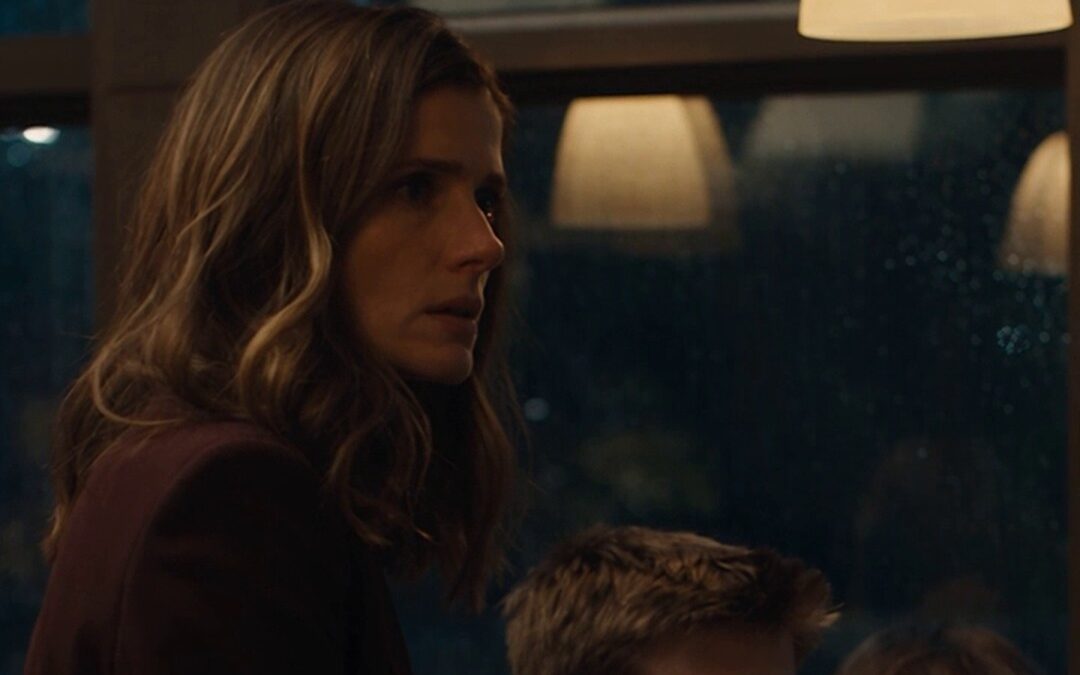
Thomas stood beside the restaurant booth, between his mother and the boy he had invited, while two forks lay untouched beside a plate of spaghetti.
Valerie had come downstairs from her office expecting to settle a question about a meal charged to her account, and she had assumed Thomas was feeding someone who had pressured him for money outside.
The boy looked about Thomas’s age, with a fading bruise along his cheek and one sleeve pulled low over his wrist.
“He took the blows Dad meant for me,” Thomas said, loudly enough that a server stopped beside the kitchen door.
Valerie’s hand remained on the back of the booth as she asked, “What happened last night?”
The boy watched the aisle rather than her face, and Valerie noticed that he had chosen the seat with the clearest path to the front door.
“Nick saw Dad grab me in the River Street garage, and Dad hit him when he got between us,” Thomas said.
Nick pushed his chair back an inch and said, “I should go.”
“You can go if you want,” Thomas said, “but I asked you to come, and the food’s yours.”
Valerie remembered Thomas refusing to let Daniel drive him to school that morning, and she remembered accepting Daniel’s explanation that their son was angry about losing his phone.
A month earlier, when Thomas had stopped joining dinner until Daniel left the table, she had accepted another explanation about twelve-year-old boys wanting privacy.
“Why didn’t you tell me when you got home?” she asked.
Thomas studied a spot of sauce on the tablecloth before saying, “Dad said you believed him when I told you he scared me in the car, and you did.”
Valerie recalled telling Thomas that his father had only raised his voice because traffic had been dangerous, though she had never asked what had happened before the shouting.
Nick slipped an old phone farther beneath his sleeve, then looked at the folded restaurant receipt Thomas had left beside his plate with the address written on its back.
“I didn’t come to make trouble,” Nick said.
The front door opened before Valerie could answer, and Daniel crossed the dining room in his office coat with the easy smile he used for customers who recognized him.
He saw Nick, stopped smiling, and pointed toward the plate.
“This boy tried to rob me in the garage,” Daniel said, “and now he’s followed our son here for money.”
Chapter 2: A Place at the Table
Valerie moved to the end of the booth, leaving room for Nick to pass while putting herself between Daniel and both boys.
“Thomas, go with Lena to the office,” she said, turning to the restaurant manager who had paused near the kitchen door.
Thomas looked at Nick before he moved, and Valerie heard the question he did not ask about whether Nick would be welcome upstairs too.
“Both of them, if Nick wants to,” she added.
Nick rose so quickly that his chair struck the wall, and Daniel reached toward him with an open hand.
“Don’t leave before we clear this up,” Daniel said.
Valerie stepped sideways, and Daniel’s hand stopped short of Nick’s shoulder.
“He can leave with a responsible adult when we know he’s safe,” she said, “and you need to stay away from him.”
Daniel lowered his hand and glanced at the diners nearest them, as though Valerie had chosen an unfortunate place for a private disagreement.
“You’re frightening everybody,” he said.
Lena had already come around the counter, and Valerie asked her to take the boys through the staff corridor to the small office overlooking the kitchen.
“Nick, you can walk beside her, or I can show you another quiet table,” Valerie said.
Nick looked toward the street, then at the plate he had barely touched, and followed Thomas toward Lena without answering.
Valerie waited until the corridor door swung shut before asking the host to call emergency services for an officer and medical help for two children who might have been hurt.
Daniel heard her and said, “Thomas slipped when he pulled away from me, and that kid rushed us from behind a pillar.”
“That may be your account,” Valerie said, “but they need care, and I’m not sending them home with you.”
A muscle worked in Daniel’s jaw before he said, “You’re making a report based on something a stranger told our son.”
“Thomas told me what happened to him,” Valerie said.
The host, a college student named Priya, repeated the restaurant address to the dispatcher and handed Valerie the phone when asked for details.
Valerie gave the children’s names and the garage location, described the injuries she had seen without guessing how they happened, and said Daniel was present but separated from them.
The dispatcher asked whether anyone needed immediate treatment, and Valerie admitted that she had not yet examined either child closely enough to know.
Daniel listened with his hands in his coat pockets, then said quietly, “I was protecting Thomas.”
Valerie remembered how many times she had let that sentence end a conversation.
“Stay here and speak with the officers,” she said.
“I’m his father.”
“You can tell them that.”
For a moment she expected him to walk toward the corridor anyway, but he turned to Priya and asked for water as though he were a guest waiting for a late reservation.
Valerie asked Lena by phone whether the boys wanted her upstairs, and Lena said Thomas did while Nick had asked whether the office had another exit.
“It has a hall door to the kitchen,” Lena said, “and I showed him.”
Valerie felt the first sting of recognizing that Nick needed to know he could leave a room before he could bear to sit in it.
She told Lena help was coming, then asked Priya to save the dining room camera footage and the receipt from the booth.
Priya glanced toward Daniel and nodded, though the footage would show only what had happened in the restaurant.
Upstairs, Thomas sat in Valerie’s desk chair with his knees drawn against its edge, while Nick stood by the hall door holding his phone in one hand.
Lena had brought water and clean napkins, and the covered plate of spaghetti waited on the corner of the desk.
“I called for medical help,” Valerie said.
Nick’s fingers tightened around the phone, and he said, “If they take me back, I don’t want them saying I started it.”
“I’ll tell them what you told me and what I saw,” Valerie said, “and I’ll listen to what you want them to know.”
“That isn’t what happens.”
Valerie wanted to ask who had taught him that, but Thomas was watching her with an expression she recognized from every time he had waited for her to answer Daniel first.
“I should have listened when you told me Dad scared you in the car,” she said to Thomas.
“You thought I was exaggerating.”
“I said you were exaggerating,” Valerie said, “and I was wrong to dismiss you without asking what happened.”
Thomas pressed his lips together, and she let the apology stand without asking him to make her feel better.
Nick set the phone on his knee and said, “I don’t need you to say sorry to me.”
“You don’t,” Valerie said.
“I need to know if he’s coming in here.”
“He isn’t,” she said, then looked to Lena for the part she could not guarantee alone.
“I’ll stay by the kitchen hall until the officers arrive,” Lena said.
Nick sat down at last, choosing the chair nearest the hall.
Valerie noticed a dark mark near his wrist where the sleeve had slipped, and she asked whether he wanted a medic to look at it when they arrived.
“Yes,” Nick said after a pause, “but I want them to tell me what they’re doing first.”
“I’ll ask them to.”
Thomas leaned toward the plate, then drew back when Nick glanced at it.
“You can eat,” Nick told him.
“I ordered it for you.”
“And now it’s getting weird because you’re both staring at it.”
Thomas gave a brief laugh, the first sound from him that Valerie recognized as ordinary, and Lena found another fork.
The medic arrived ahead of the officers with a second crew member and explained each step before examining Nick’s bruised cheek and sore wrist.
Nick answered some questions himself, declined to have Valerie hold his coat, and accepted a cold pack when he was told exactly where he could put it.
Thomas had a tender upper arm and a scraped palm, and the medic recommended that both boys be assessed at the hospital because Nick could not recall whether his head had struck the garage wall.
Valerie agreed to take Thomas, while the crew and responding officers worked out a safe way to get Nick there without treating Valerie as his guardian.
When an officer named Rivera came upstairs, she asked to speak with each boy separately and invited a second officer to remain within sight of the hall.
Thomas’s eyes flicked toward Valerie.
“You don’t have to tell me first,” she said.
“I know,” he answered, though his voice suggested he had only just begun to believe it.
Nick raised the phone and asked Rivera, “If I give you this, do I get it back?”
Rivera crouched beside the empty chair rather than standing over him.
“We can look at what you want to show us while you hold it,” she said, “and we’ll explain before we ask to keep anything.”
“It’s old, but it works if I charge it,” Nick said.
He told her he had used the charging shelf at a youth drop-in center that afternoon, and Valerie understood why his phone still showed a green battery icon when everything else he carried looked worn.
Daniel’s voice reached faintly through the floor when he spoke to the other officer downstairs.
Nick heard it too, and his thumb slipped on the screen.
“We can wait until he’s farther away,” Rivera said.
“He’ll say I edited it.”
“Then we’ll make a careful record of what’s on it and ask about anything it leaves out.”
Nick glanced at Thomas, who nodded without urging him.
The file was less than a minute long, and Valerie heard its beginning in a hush made stranger by the kitchen noises below.
Traffic hummed somewhere beyond the phone, followed by a scrape and Nick’s breath close to the microphone.
Daniel’s voice came from farther away, sharp enough to distinguish when he said, “You are not telling your mother about that transfer.”
Thomas’s answer was too muffled to make out.
A shoe struck concrete, the sound swelled as the phone moved, and Nick’s voice called, “Let go of him.”
Daniel said something Valerie could not separate from a passing engine, then a thud and a burst of crackling fabric swallowed the rest.
Near the end, a new voice called for everyone to step apart, and Nick stopped the recording while that voice was still speaking.
Rivera asked where the phone had been, and Nick said he had started recording while walking toward the voices, then slipped it into the loose front pocket of his sweatshirt when Daniel turned.
“I wanted somebody to hear he was yelling at the kid,” Nick said, “but I didn’t know he’d hit me.”
Valerie felt Thomas go still beside her.
Nick had not recorded Daniel’s first words to Thomas, the blow itself was hidden in noise, and the voice at the end belonged to a person none of them had identified yet.
The file established that Daniel had demanded Thomas’s silence about a transfer and that Nick had told him to let Thomas go; it left open what each person had done in the missing seconds.
“Who told everyone to step apart?” Rivera asked.
“The guard in the yellow rain jacket,” Nick said.
Thomas added, “He had a silver flashlight with red tape around it.”
Rivera wrote that down.
Valerie pictured the River Street garage, two blocks from the restaurant, and remembered a private security desk by the vehicle exit.
Rivera asked Nick for his account from the moment he first saw them, then asked Thomas to wait in the hall with Lena so the answers would be their own.
Nick watched Thomas leave and began with the thing he knew least about.
“I heard Mr. Bell say something about a transfer before I saw him,” he said, “but I didn’t know what that meant.”
He had been crossing the garage entrance on his way toward the drop-in center when he heard a boy say, “You’re hurting me,” and had looked up to see Daniel holding Thomas against the side of a parked car.
Nick said he called out, saw Daniel turn, and raised his phone because no one else seemed nearby.
When Daniel stepped toward him, Nick moved between Daniel and Thomas, and the next part came out in fragments that Rivera did not try to smooth into a cleaner story.
“He shoved me, and then I was by the wall,” Nick said.
“Did you strike him?” Rivera asked.
“I pushed his arm away because he grabbed my sweatshirt.”
“Anything in your hands besides the phone?”
“No.”
Nick wiped his thumb across the phone’s cracked case and added, “I don’t remember where the phone went while I was falling.”
Rivera thanked him for saying what he did not remember.
After Thomas returned, she listened while he described seeing an unfamiliar payment request on Daniel’s tablet in the car before they reached the garage.
Daniel had been parked outside Valerie’s restaurant office earlier, waiting for Thomas’s music lesson to end, and Thomas had read his mother’s business name above a large amount before Daniel snatched the tablet away.
“I saw forty-eight thousand dollars and a company I didn’t know,” Thomas said, “and it said Mom had to approve it.”
Valerie knew Daniel handled vendor contacts for her catering company, but amounts that large required her approval, and she could not tell from Thomas’s glimpse whether he had seen a draft, a scheduled request, or something already submitted.
“What did you ask him?” Rivera said.
“I asked why Mom had to approve something if she hadn’t seen it.”
“And then?”
“He said I was getting ideas from looking at things I didn’t understand.”
Thomas swallowed before adding that Daniel had driven into the garage to retrieve a packet from his car trunk and had kept pressing him to promise he would say nothing to Valerie.
“Why the garage?” Valerie asked before she could stop herself.
Thomas looked at her rather than Rivera.
“His car was there from work, and he said the packet was in it,” he said.
Valerie had seen Daniel leave his car there on days he worked at the restaurant, paying a monthly rate for the space, so she let the answer settle without turning Thomas’s interview into her own cross-examination.
Rivera asked what happened after Nick approached, and Thomas said Daniel grabbed Nick’s sweatshirt, then struck him twice while Nick tried to cover his head.
“I know because I was looking,” Thomas said.
“Did anyone else see those strikes?” Rivera asked.
“The guard got there after.”
Thomas stared at the desk when he described the guard’s arrival, and Valerie waited while Rivera asked a narrower question about what the guard had actually seen.
“Dad still had my arm,” Thomas said, “and Nick was on the ground.”
Valerie heard how much rested on that difference.
If the guard had arrived after the violence, he could confirm positions and reactions but could not honestly identify who had delivered the blows.
Rivera asked how both boys had reached the restaurant the next day, and Thomas gave the answer Valerie most dreaded hearing.
The guard had separated them, and Daniel had told him that Nick tried to snatch his wallet while Thomas stumbled in the struggle.
Thomas had started to object, but Daniel tightened his hand around Thomas’s shoulder and reminded the guard that he was the child’s father.
“The guard asked if I was okay,” Thomas said, “and I said I wanted to go home.”
Rivera asked whether he meant that.
“I wanted Dad to stop talking,” Thomas said.
Daniel had taken Thomas home, held on to his phone as punishment for looking at business messages, and stayed awake in the living room until after midnight.
Valerie had been at a catering job across town, dealing with a broken refrigeration unit and an event that ended late, and she had found Thomas asleep when she got home.
The next morning Daniel had said Thomas was angry over the phone and had offered to drive him to school, an offer Thomas refused so sharply that Valerie had called it rude.
She remembered the word and felt it lodge in her throat.
“I thought I could tell you here,” Thomas said, “because there would be other adults.”
Valerie wanted to say he could always tell her anywhere, but his plan had been more careful than any promise she could make about the past.
“Thank you for finding a way,” she said.
Thomas’s face tightened.
“I didn’t tell you last month either.”
Rivera looked up, and Thomas explained that when Daniel had frightened him in the car, he had tried to say so at home.
Valerie had answered before hearing the whole account, agreeing with Daniel that a sharp turn and a raised voice were nothing more than a bad drive in traffic.
“Dad brought that up last night,” Thomas said, “and said you knew who to believe when I made him look bad.”
Valerie could recall Daniel watching her that evening while she told Thomas to apologize for his tone.
She had been wrong about what her son needed, and Daniel had chosen to use that mistake as a threat.
“I said those things,” she told Rivera, because the account should include her part, “and I did not know Daniel would use them to keep Thomas quiet.”
Thomas looked startled that she had offered the detail without making him force it out.
Rivera asked whether she could have the restaurant’s camera footage preserved and whether the garage had its own incident record.
Valerie said Lena was saving the restaurant footage and offered the guard company’s name from an old parking invoice in her desk.
Before Rivera went downstairs, Nick asked whether she had to tell the people from his placement where he was.
“We need a care worker to help us find a safe place for tonight,” she said, “and I’ll tell them what you say about where you left.”
“They’ll call me a runaway.”
“They may use that word in a record,” Rivera said, “but I will also record that you say you left because you were unsafe.”
Nick considered that answer, then asked whether Thomas could keep the receipt.
It lay beside the plate with the restaurant address on the back, written in Thomas’s uneven block letters.
Thomas slid it into his pocket, and Valerie wondered why a scrap of paper mattered enough for Nick to ask about it.
At the hospital, Nick sat with a care worker named Mara while a clinician checked his wrist and asked about the missing stretch of memory after he struck the wall.
There was no fracture, and the clinician gave instructions for monitoring a mild head injury, arranging follow-up, and returning for worsening symptoms.
Thomas’s arm and hand needed cleaning and rest, and he watched the hallway each time footsteps approached their room.
Valerie asked the hospital staff to keep Daniel from being brought into either boy’s space while officers were still taking statements.
She could not order the hospital to make him vanish, but she could tell them what the children had disclosed and ask for help maintaining separation.
Mara introduced herself to Nick without reaching for his file first.
“I work with the county’s emergency placement team,” she said, “and I’m going to ask where you slept last night and where you feel safe.”
Nick gave Valerie a wary glance.
“You can ask me outside the room,” Valerie said.
“I want him here,” Thomas said.
Mara turned to Nick.
“Your choice.”
Nick let Thomas stay, but he asked Valerie to wait beyond the curtain, where she could hear only the low sound of questions and answers.
She obeyed, despite wanting every fact at once.
In the corridor, Rivera told her the guard company had located a shift report, and the guard was still on duty at a different site across town.
“He wrote about two boys, one adult, a possible theft, and a disturbance,” Rivera said, “but he didn’t call police.”
“Did he see Daniel strike Nick?”
“He says he did not, and I’m going to speak with him about exactly what he did see.”
Valerie rubbed the indentation her wedding ring had made against her other hand.
Daniel called while she stood there, and she let it ring until she could step into an empty alcove with Rivera nearby.
“I’m at the hospital,” she said when she answered.
“Thomas is fine,” Daniel said, too quickly.
“Both boys are being examined.”
“The other kid can say whatever he wants if people keep rewarding him with attention.”
Valerie watched a nurse wheel a cart past the alcove.
“He has an injury that needed examination,” she said.
“Because he lunged at me, and I stopped him.”
“Tell the officers what happened.”
“I did, and now I need to bring our son home.”
“Thomas is staying with me tonight.”
Daniel exhaled into the phone.
“You know what happens to the restaurant if you treat me like a criminal in front of staff who rely on me to manage contracts.”
Valerie knew exactly how many vendor contacts he handled and how many service orders would be delayed if she removed his access without a replacement.
She also knew he had noticed that burden before she had.
“I’ll manage the contracts,” she said.
“You don’t even know what he read.”
“Then I’ll find out through our records.”
Daniel fell silent long enough for Valerie to hear the public address system in the hospital lobby.
“You’re letting a child and a stranger run our family,” he said.
Valerie ended the call without answering that version of her decision.
When Mara came through the curtain, she said Nick had slept at a youth drop-in center the night before and had no placement he felt safe returning to.
The center had given him a mat, a charging place for the old phone, and a list of daytime services, though no one there had known he had been hurt in the garage.
Nick had left a temporary foster home three days earlier after the caregiver’s adult nephew repeatedly entered the room where Nick slept and took things from his bag.
Mara did not tell Valerie more than Nick had agreed she could share.
“There’s a specific concern for us to check,” Mara said, “and he doesn’t have to return there while we do.”
Nick came out holding his discharge papers as though they might prove he was entitled to stay indoors.
Valerie asked if he wanted her to carry the plate Lena had packed from the restaurant.
“No,” he said, then softened the answer enough to add, “It smells okay.”
Thomas grinned at him.
“It’s better hot.”
“It’s probably better than the hospital crackers.”
Valerie almost offered to bring Nick home with them, but Mara was making calls to find a placement that had been checked and could take him that night.
She asked instead whether Nick wanted anything from the restaurant besides the food, and he asked for a pencil.
Thomas said he had one in his backpack with a tiny plastic astronaut on the end, and Nick said he wanted a pencil that did not look like it belonged to a second grader.
They argued quietly over the astronaut while Mara arranged the next steps.
Valerie took Thomas home after dark, following a patrol car long enough for an officer to meet them at the front door.
Daniel was gone, though his shoes still stood under the hall bench and his coffee cup remained in the sink.
Rivera had explained that an officer had taken Daniel’s statement and that the investigation would continue; no one had promised Valerie he would be arrested that night.
She kept Thomas beside her while they collected medication, school clothes, and his drawing notebook.
“Are we leaving our house?” he asked.
“Tonight we’re staying with Aunt Jo,” Valerie said.
Jo was Valerie’s sister, and Thomas knew the room where he slept on visits well enough to picture it.
“Is Dad going to be there?”
“No.”
“Will he get in trouble because I told you?”
Valerie set his notebook inside the bag.
“What happens next is for adults to handle, and what he did is his responsibility.”
Thomas looked at the kitchen doorway.
“He’s still my dad.”
“I know.”
“I don’t want him hurt.”
“You can feel that and still tell the truth about being hurt yourself.”
Thomas put the astronaut pencil on top of the notebook and zipped the bag.
On the drive to Jo’s house, he asked whether Nick would know where he was.
Valerie said Mara would be able to pass along a message if Nick wanted contact and if his caregiver agreed.
“That’s a lot of ifs,” Thomas said.
“It is,” she admitted.
He watched the passing storefronts until the restaurant disappeared behind them.
By morning, Valerie had spoken with her business attorney, Elise Park, and the bank officer assigned to her company accounts.
She owned the restaurant and its catering operation, while Daniel had authority to request vendor payments and manage approved orders below a set limit.
He could prepare a larger payment for her review, but her approval was needed before the money left the main account.
Elise asked Valerie to sit at her desk in the restaurant office while they looked at the records together, and Valerie found a pending request for forty-eight thousand dollars to a consulting company she did not recognize.
Daniel had created the vendor entry two weeks earlier and had attached a short service description that did not match any contract Valerie remembered.
The request had not been approved, and the bank confirmed no money had moved under it.
Elise advised preserving the record, reviewing recent approvals, and suspending Daniel’s business access under the company’s existing authority while an independent accountant checked the supporting documents.
Valerie authorized the suspension and called the people who would have to cover his work.
Lena said she could handle the restaurant’s daily orders for a week, but the catering staff would need somebody else to confirm two large events.
Valerie took that work herself and began calling clients.
By noon, Daniel’s brother had left three messages about Valerie humiliating the family, and a longtime supplier had asked why Daniel’s account no longer worked.
The cost of her decision arrived through ordinary tasks, one after another, with no dramatic announcement to mark it.
Elise did not call the pending payment theft, and Valerie did not ask her to.
“A prepared request shows an action and a destination,” Elise said, “but we still need to learn what Daniel intended and whether any service was promised.”
Valerie copied the documents through the company’s normal record process and gave Rivera the relevant records after asking Elise how to provide them.
She also checked an email Daniel had sent asking her to review a batch of payments after the weekend, a message she had skimmed between catering calls and left unanswered.
Thomas could not have known what the request would become, yet he had understood enough to see why Daniel did not want his question repeated.
Valerie thought of Daniel telling him that looking at business messages made him disloyal.
She had once called Thomas observant with pride when he spotted a wrong price on a grocery receipt.
Daniel had made the same habit dangerous because it had turned toward him.
That afternoon Rivera called with the guard’s direct account.
His name was Edwin Shaw, and he had been patrolling the garage’s upper ramp when he heard a raised voice and a heavy impact.
He reached the row in time to see Nick crouched by the wall, Daniel holding Thomas by one upper arm, and Thomas pulling away.
Shaw had told everyone to separate, and Daniel released Thomas while saying Nick had tried to rob him.
Shaw saw no wallet on the ground and no weapon, though he had not searched anyone and could not rule out a struggle that began before he arrived.
He had written down Daniel’s name from a business card, recorded that Thomas said he wanted to go home, and let Daniel take him.
“He’s acknowledged he should have called police or the child protection line,” Rivera said, “especially after seeing the boys’ condition.”
Valerie asked whether Shaw had written anything about the injuries at the time.
“He wrote that Nick held his face and that Thomas kept his left arm close to his body.”
Those observations could not prove how either injury happened, but they answered Daniel’s claim that Nick had walked away unhurt and invented the story the next day.
Shaw also remembered Nick asking whether Thomas could leave with somebody else.
“I said my mom’s restaurant was close,” Thomas told Valerie when she asked him later, “but Dad said you were at work and I was coming home with him.”
He sat on Jo’s back steps while she spoke with him, drawing circles in the dust with the astronaut pencil.
“Did Mr. Shaw hear you say that?” Valerie asked.
“He was writing something down, so I don’t know.”
She thanked him and stopped there.
Rivera could ask Shaw what he remembered without Thomas having to make a detail firmer than it was.
At the end of that first day, Mara called to say Nick had been placed in a short term home with a caregiver who had experience with older children and had agreed to let him keep his phone.
Nick had asked whether someone would tell Thomas that he had not lost the receipt.
Valerie relayed the message and watched Thomas unfold the paper from his pocket.
“He has the other half,” Thomas said.
Only then did she learn that after Shaw separated them, Nick had asked Thomas if he was really going home with Daniel.
Thomas had been too frightened to answer in front of his father, so while Daniel argued with the guard about a supposed robbery, he wrote the restaurant address on a receipt from his coat pocket and tore it across the middle.
He gave Nick the half with the address and said he could get him dinner the next afternoon.
“I wanted somebody who saw it to be there when I told you,” Thomas said.
“And you wanted him to eat,” Valerie said.
“He said he was going to the drop-in, and I knew they had dinner there, but he looked like he might not go.”
Valerie remembered how Nick had sat facing the door with a full plate before him.
Daniel had called his presence proof of pursuit, while the receipt showed that Thomas had asked him to return.
The paper did not prove the assault, but it changed the meaning of a boy appearing at the restaurant with no money and no appetite.
“Did you tell Dad you invited him?” Valerie asked.
“No.”
“Did you think he would stop you?”
“I thought he’d get there first.”
Valerie reached for an answer that would fix that fear and found none.
“I’m going to keep making sure you can reach me without going through him,” she said.
Thomas drew one more circle with the pencil, then said, “Okay.”
Two days later, Rivera arranged separate interviews at a child advocacy center, where trained staff could speak with each boy without making them repeat their accounts to every adult involved.
Valerie waited in a room with a box of tissues she did not touch and a stack of magazines she could not read.
Mara arrived with Nick’s caregiver, a woman named Celia, who stayed near the door until Nick chose a seat.
Nick had changed into a blue sweatshirt, but he still held the old phone in both hands.
Valerie offered him a greeting without commenting on how he looked.
“Thomas says you kept your half of the receipt,” she said.
“It’s in the phone case.”
“He kept his too.”
Nick glanced toward Celia and said, “That doesn’t make it a contract.”
“No,” Valerie said, “it means he expected you.”
Nick looked at the carpet for a while.
“Is he mad I left the restaurant without eating?”
“He saved you a complaint about cold spaghetti.”
“That bad?”
“Worse after a ride across town.”
Nick’s mouth moved toward a smile, then stopped when the interview room door opened.
Valerie stayed in the waiting area while he went inside.
She had spent the previous night wanting to give him answers about his placement, his aunt, and Daniel, but she knew only pieces.
Mara had learned that Nick was thirteen and that his mother had died the previous year.
His aunt on his mother’s side had once cared for him during school vacations in another state, but the number Nick remembered was disconnected and the address he had written on an old card was years out of date.
Mara was tracing her through case records and family contacts, then would need the receiving state’s workers to assess any proposed home.
Nick had asked about her himself, which told Valerie more about his hopes than a promise from Valerie ever could.
When Thomas came out of his interview, he looked exhausted and irritated.
“They asked the same thing three ways,” he said.
“The details matter,” Valerie said.
“I know, but it felt like if I said a different word I’d ruin it.”
Valerie sat beside him without touching him.
“You can tell them when you’re unsure,” she said, “and you can say you don’t remember.”
“Dad always said that sounded guilty.”
“Your job is to tell what you know.”
Thomas picked at a thread on his sleeve.
“I said I was scared when Nick fell, and then I didn’t help him up.”
“You were twelve and frightened.”
“I’m still twelve.”
“I know.”
He looked at her then, as if she had finally answered the part that mattered.
Rivera met Valerie after the interviews and explained that Daniel had offered two points the investigators would have to examine closely.
First, he claimed the recording began after Nick approached aggressively, so the threat on it referred only to a business matter Thomas had misunderstood.
Second, he said Nick’s injury came from falling after he lunged toward Daniel’s wallet, while Thomas’s sore arm came from Daniel pulling him out of the way.
Valerie could see why a person hearing only Daniel’s account might ask questions about the seconds missing from the file.
“What answers that?” she asked.
“The boys’ separate accounts, the guard’s observations, the medical findings, and any records that put his explanation in context,” Rivera said.
“Does the pending payment settle the business part?”
“It helps establish what Thomas saw and why Daniel might have wanted silence, but it doesn’t tell me who struck whom.”
Valerie was grateful for the boundary even as she wanted a simpler answer.
Rivera had obtained the garage’s entrance and exit records, which placed Daniel’s car there before Nick arrived but showed nothing inside the row where the struggle happened.
The garage had cameras near the payment machines, not above every parking space, and no clear footage of the blows.
Shaw’s report had been written that night, before Nick reached the restaurant, and his description of Daniel holding Thomas’s arm contradicted Daniel’s claim that he had already let go when Nick appeared.
Rivera said she would seek a further statement from Shaw about the exact order of his observations.
Valerie understood that corroboration could be useful without becoming perfect.
After the meeting, Thomas saw Nick across the waiting room and held up the astronaut pencil.
“You can borrow it,” he said.
“I asked for one without that thing,” Nick said.
“It writes better because of the thing.”
Nick crossed to inspect it, and they spent a minute debating whether astronauts would choose spaghetti over freeze-dried food.
Celia listened, then told Nick they had time to stop for a snack before going home.
“Can Thomas come?” Nick asked.
Mara answered gently that the families needed to arrange visits through her for now, and Nick’s face closed before she could explain why.
Valerie asked whether the boys could exchange a short message through the caregivers while arrangements were made.
Mara said she would help them do that within the care plan.
Nick nodded, though he kept the pencil.
That evening Daniel sent Valerie a message asking her to meet him alone at the restaurant after closing.
He said the company would suffer if they kept speaking through lawyers and that Thomas needed to see his parents settle things together.
Valerie showed the message to Elise and Rivera, then replied only that matters concerning the business would go through Elise and matters concerning Thomas would follow the safety arrangements being discussed.
She did not ask Thomas to attend a meeting designed around Daniel’s reputation.
Daniel answered that she was overreacting to a misunderstanding, then called the restaurant three times.
Lena forwarded the calls and asked whether Valerie wanted her to tell staff what had happened.
“Tell them Daniel no longer has business access and that any questions about his work come to us,” Valerie said, “and keep the boys’ details private.”
The practical consequences filled the next week.
A supplier refused to release a catering order until someone with authority confirmed it, a wedding client asked why Daniel had vanished from the email chain, and Valerie missed Thomas’s school art display while resolving a delivery error.
She apologized for missing the display and asked Thomas to show her the drawings at home, knowing that a better explanation did not give him that afternoon back.
He spread them across Jo’s kitchen table without pretending to be pleased.
One showed the River Street garage in thick black pencil, with the cars reduced to dark shapes and a small rectangle of light at one end.
“I didn’t draw people,” he said.
“You didn’t have to.”
He studied her face.
“Are you going to say drawing it is bad for me?”
“I was going to ask what you want me to notice.”
“That there was a way out, and I couldn’t see it from where we stood.”
Valerie looked again at the lit rectangle.
“I see it now,” she said.
Thomas drew the paper back toward himself.
“I wanted Dad to stop being angry before any of this happened.”
“I know.”
“I thought maybe if I hadn’t looked at the tablet—”
“Daniel chose what he did after you looked,” Valerie said, then waited to see whether the sentence gave Thomas room or closed it.
He stared at the picture.
“I still looked.”
“You can talk about that too.”
He folded the corner of the page and did not answer, but he left the drawing on the table instead of putting it away.
A family lawyer helped Valerie apply for temporary protective arrangements concerning Thomas, and the court set a hearing rather than granting every request from the papers alone.
The first interim order limited Daniel’s contact with Thomas while the matter was reviewed and gave instructions for necessary communication through counsel.
Valerie filed for separation and began the longer process of ending the marriage, knowing those steps would not finish at the same speed as a hospital examination or an account suspension.
She told Thomas what the order actually said, and she did not promise that Daniel would never be seen again.
“He might be allowed to write later?” Thomas asked.
“That’s possible, depending on what the court decides and what is safe.”
“I don’t know if I’d want that.”
“You don’t have to decide today.”
He seemed relieved by the word today.
Mara called the following week with news about Nick’s aunt.
Her name was Rosa Alvarez, and she had moved from Ohio to Pennsylvania after changing jobs, which explained why Nick’s old address and phone number no longer reached her.
Case records confirmed that Nick had spent parts of two summers with her, and a relative supplied her current contact information.
Rosa had searched for him through the last address she knew after his mother’s death, but she had been told he was in care without being given a way to reach the right worker once his placement changed.
Mara said there had been gaps and mistakes to review, but she would not turn them into a promise that one phone call could undo a year of distance.
“She remembers his ridiculous dinosaur drawings,” Mara told Valerie, “and Nick remembers that she put cinnamon in pancakes even when he asked her not to.”
Valerie laughed before she realized she had been holding her breath.
“Does he want to see her?”
“He wants to talk to her first.”
Rosa’s identity and history had been checked, but the proposed move still required an assessment of her home, her circumstances, and what support Nick would need there.
Nick would remain with Celia while that work went on, and Mara had begun looking into the complaint about the prior placement.
Valerie asked whether there was a practical barrier she could help with.
“Nick needs ordinary things while he waits,” Mara said, “and the team has resources for those.”
“Call me if there’s something specific I can do within the plan.”
“We will.”
Valerie put down the phone with no satisfying task to buy her way through the waiting.
Later, when she told Thomas about the possible reunion, he asked whether Nick would move so far away that they would stop being friends.
“Pennsylvania is far,” Valerie said, “but people can call, write, and visit if their caregivers agree.”
“He’s bad at answering.”
“He may be busy deciding what he wants.”
Thomas picked up his pencil.
“He said he used to draw monsters with Rosa.”
“You could send him one.”
Thomas drew a monster eating the astronaut pencil and sent it through Mara without a speech attached.
Nick sent back a drawing of the monster with a fork in one hand and a plate of spaghetti in the other.
At the next arranged visit, Celia brought Nick to a public library near the restaurant, where Valerie and Thomas met them for an hour.
Nick wore the same blue sweatshirt and carried the phone, but he left it on the table while they argued over a book of impossible buildings.
Celia sat within sight with a mystery novel, and Valerie stayed far enough away for the boys to talk without turning every word into a report.
Nick asked Thomas whether he had found another place to sleep.
“At Aunt Jo’s,” Thomas said.
“Do you like it?”
“She has a dog that acts like I invented food.”
“That sounds good.”
“It is, except he stands outside the bathroom.”
Nick grinned and said Celia’s cat stole hair ties, which Valerie counted as more valuable information about his days than another account of the garage.
When they left, Nick paused beside her.
“Rosa sounded like herself,” he said.
“Were you glad?”
“Mostly.”
“You can be more than one thing.”
He frowned as if the answer annoyed him.
“I know.”
Valerie nodded and let him go to Celia without demanding a deeper confession.
The investigation moved less smoothly than the children’s drawings.
Daniel’s attorney provided messages showing that Valerie had considered hiring a consultant for the catering business earlier that year.
He argued that the pending payment was part of a legitimate proposal, and Daniel claimed Thomas had seen only a screen without understanding the work.
Elise found the old proposal, which came from a different company for a much smaller amount, and asked the independent accountant to trace the new vendor’s paperwork.
The accountant confirmed there was no signed contract for the forty-eight-thousand-dollar request and no completed payment, but Valerie knew the review could establish only what the records contained.
She gave the findings to the appropriate investigator and kept the business question separate from what Nick and Thomas had said about the assault.
Daniel’s attorney also pointed out that Nick had left a placement without permission and that his phone file began after the initial argument.
Valerie disliked how quickly that first fact could be made to sound like a character judgment, but she understood that the missing beginning was a real limit.
Rivera returned to the guard, the boys’ separate interviews, the hospital documentation, and the timing of Daniel’s own account.
Shaw clarified that when he arrived, Daniel’s hand was around Thomas’s upper arm and Thomas was trying to twist free.
That detail matched Thomas’s sore arm and Nick’s first recorded words, “Let go of him,” though it still did not put Shaw at the spot where either blow landed.
The guard’s incident entry, created before Daniel learned Nick had a recording, noted Nick holding his face beside the wall and Daniel describing a theft without identifying any missing property.
Rivera told Valerie that the connected facts made Daniel’s wallet story harder to sustain, while the decision about charges belonged to the prosecutor.
Valerie found herself wanting to repeat every piece to Thomas as proof that adults finally believed him.
Instead, she asked what he wanted to know.
“Did they find the part where Dad said Nick tried to steal?” he asked.
“They found no report of anything missing,” she said, “and the guard wrote down that Nick was hurt when he arrived.”
“Does Dad still say it?”
“Yes.”
Thomas bent over the monster drawing.
“I thought when grown-ups found out, he’d stop.”
“I thought some things would be simpler too.”
“He’s good at saying stuff.”
Valerie remembered Daniel at the restaurant entrance, his office coat uncreased, explaining a twelve-year-old’s injuries as a misunderstanding before asking for water.
“People can sound convincing and still be wrong,” she said.
Thomas glanced at her.
“You used to believe him.”
“I did.”
He waited.
“I’m working on listening all the way through before I decide what I know,” she said.
“That sounds like one of your staff meetings.”
“It probably does.”
“At least you know.”
Valerie accepted the small laugh he gave her.
Nick’s questions were different when she saw him next.
He had learned that the former placement was being investigated and that he would not return there, but he wanted to know whether adults would care about that once his interview about Daniel was over.
Mara sat with him at Celia’s kitchen table while Valerie and Thomas visited for a planned hour.
“The placement review is happening because of what you reported about your safety there,” Mara said, “and it would happen whether or not you could tell anyone about the garage.”
“What if they say I mixed up who took my stuff?” Nick asked.
“We’ll check the details and talk with the people involved,” Mara said, “and you can tell us what you remember without guessing.”
Nick turned the pencil over in his fingers.
“Would I still stay with Celia while they check?”
“Yes, under the current plan.”
“What if Rosa can’t take me?”
Mara paused long enough to make clear she was answering a real question.
“Then we keep working with you on a safe longer term plan, and we don’t send you back to a place you’ve told us was unsafe just because one option takes time.”
Nick looked at Celia, who was slicing apples at the counter.
“I’m keeping my drawer here for now,” Celia said.
He nodded and asked whether the apples could have peanut butter.
Valerie had imagined a powerful sentence that would settle his fear, but Celia’s answer about the drawer and the snack reached him in a way her own promises could not.
Before they left, Nick handed Thomas the astronaut pencil.
“Your monster can have it back,” he said.
“You need a pencil.”
“Celia has normal ones.”
Thomas inspected the plastic astronaut as if checking it for damage.
“I’ll send another drawing.”
“Make the monster less ugly.”
“No promises.”
Their ease lasted until a car door slammed outside, when Nick stopped talking and looked toward the window.
Celia told him whose car it was after a glance, and he returned to his apple without having to explain why he had looked.
Valerie carried that moment home with her.
The protective hearing came several weeks after the restaurant disclosure.
Valerie answered questions about what she had directly seen, what Thomas had told her, and the steps she had taken once he spoke.
She did not claim she had witnessed the garage incident, and she did not offer the prepared payment as proof of violence.
Thomas’s interview and the other evidence were handled through the process arranged for him, without requiring him to perform his fear in front of every adult who had an opinion about Daniel.
The court continued temporary restrictions while the related investigation proceeded and ordered that any future contact with Thomas follow a supervised process unless the court changed it.
Valerie knew an interim arrangement was not the end of the family case.
Afterward, Daniel approached her counsel in the corridor and asked whether Thomas knew his father had come.
Valerie heard the question from a few steps away.
Elise answered that all communication would go through the agreed channels, and Daniel looked past her at Valerie.
“You’re teaching him to be afraid of me,” he said.
Valerie thought of the garage drawing, the arm Thomas had kept close to his body, and the month he had waited until Daniel left dinner.
“He told me he was afraid before I understood why,” she said.
Daniel’s expression changed only slightly.
“He’s my son.”
“Yes,” Valerie said, “and that is why you were responsible for his safety.”
She walked away before the corridor could become another place where Thomas’s experience was argued in front of strangers.
A prosecutor later filed charges related to the garage assault after reviewing the interviews, the guard’s account, the recording, and the medical records.
Daniel denied them, and Valerie explained to Thomas that a charge meant the case would be examined, not that every question had already been decided.
The financial review remained separate.
Investigators asked Daniel about the pending vendor request, and Valerie provided the company records through Elise, but no one told Thomas that his glance at a tablet had solved a financial crime.
For him, the important fact was smaller and clearer: he had asked a reasonable question, and Daniel had tried to frighten him out of telling his mother.
On a rainy evening soon after, Thomas said he missed how Daniel used to make pancakes in the shape of animals.
Valerie was closing the restaurant accounts at Jo’s kitchen table, and she put down her pen.
“He was good at that,” she said.
“I feel stupid saying it.”
“You don’t have to erase good memories to tell me about the bad ones.”
Thomas nodded, though he did not look relieved.
“Would Nick think I’m awful?”
“You can ask him what he thinks if you want, but you don’t need his permission to have complicated feelings.”
Thomas rolled the astronaut pencil across the table.
“He doesn’t talk about the garage unless somebody asks.”
“Neither of you has to make it the only thing you share.”
Thomas caught the pencil before it fell.
“His monster drawings are terrible.”
“Then yours have a worthy opponent.”
He smiled, and Valerie went back to the accounts only after he had returned to his own drawing.
Mara’s work with Rosa took time that Nick measured in calls.
The first video conversation lasted seven minutes because he decided the camera made her kitchen look unfamiliar.
The second lasted almost half an hour, and he asked whether the small window over her sink still stuck in winter.
Rosa laughed and showed him that it did, then told him she had kept the pencil box he had painted during one summer visit.
Nick told Mara he wanted to see Rosa in person before agreeing to move.
The assessment team reviewed Rosa’s home and circumstances, coordinated with the other state, and arranged a visit with Celia and Mara involved.
Valerie learned the broad steps from Mara, who shared only what Nick wanted her and Thomas to know.
She paid for a modest restaurant lunch when Rosa came to town, with Mara’s agreement, but left the care decisions to the people charged with making them.
Rosa arrived carrying no grand gifts, just a small tin of pencils and a photograph of Nick beside a lopsided birthday cake from years before.
Nick took the photograph, studied the older version of himself, and asked why Rosa had kept the one where he looked angry.
“Because you were angry that the candles melted before we finished singing,” Rosa said.
“I still hate slow singing.”
“I remembered.”
Valerie watched them speak across the table and understood that recognition could be built from small true things without settling every hurt of the missing year.
After Rosa left, Nick told Thomas he wanted to go but was worried that wanting it would hurt Celia.
Thomas repeated the question to Valerie on the drive home because he did not know what to say.
“Celia can care about him and still help him go where he wants to be,” Valerie said.
“Do adults really do that?”
“Sometimes they have to work at it.”
At the next visit, Celia told Nick she had helped pack children’s bags before and still remembered each child who had slept in her house.
“You don’t owe me staying,” she said.
Nick asked whether he could send pictures of the terrible drawings Thomas kept demanding.
“I’d like that,” Celia said.
The move was approved after the visit and the required checks, with plans for Nick’s school enrollment, medical follow-up, and regular contact with the people he wanted to keep.
Mara explained each step to him before a date was set.
Nick chose to take the phone, the photograph, a few clothes from Celia, and a paper folder thick with drawings.
He also asked to see the River Street restaurant once more before leaving.
Valerie opened the door for their planned lunch, and he stopped just inside as if the room might still contain Daniel’s voice.
Thomas waited at the same booth with two menus, but neither boy sat until Nick had looked toward the kitchen corridor and found Lena there.
“Are we staying here?” Nick asked.
“If you want,” Valerie said.
He chose a different table near the window, and Thomas followed without comment.
They ordered two plates of spaghetti and spent most of lunch arguing about whether the astronaut pencil should travel to Pennsylvania or stay in Jo’s kitchen.
In the end Nick refused it again, saying Thomas had already put too much pressure on a plastic astronaut.
Thomas promised to send drawings anyway.
Rosa sat with Mara near the front, discussing the travel plan without making Nick’s meal into a ceremony.
Valerie paid the bill, and Nick thanked Lena for bringing extra bread without being asked.
He ate half his spaghetti, wrapped the rest, and carried it out himself.
The restaurant felt quieter after they left, though Valerie knew it was only the gap between lunch and dinner service.
By the time three months had passed since the first untouched plate, Valerie and Thomas had moved into a small apartment close to his school.
The divorce case and Daniel’s criminal case were still moving through separate calendars, and the restaurant’s independent review had helped Valerie rebuild the business records and routines that Daniel had controlled.
Nick lived with Rosa in Pennsylvania under the approved family care plan.
He called Thomas most Sundays, sometimes to talk for an hour and sometimes to show him a drawing and hang up after five minutes.
On his first visit back, Rosa brought him to the restaurant after a morning at the park with Thomas and Jo’s dog.
Valerie had reserved a table without choosing Nick’s seat.
He selected the chair facing the room, then changed his mind and took the one beside the window when Thomas pointed out a bus painted with a giant tomato.
Lena set down two plates of spaghetti, and Thomas immediately reached for the grated cheese.
“Ask first,” Nick said.
Thomas held the shaker above his own plate.
“I was going to.”
“You always say that after.”
Nick took a bite before the sauce had stopped steaming, made a face, and reached for his water.
Valerie started to warn him, then let him decide whether he needed more time.
Rosa asked if he wanted the plate moved away while it cooled.
“No,” Nick said, pulling it closer, “I’m staying right here.”


