The Heiress Held Up a Sealed Letter as Her Stepmother Reached for the Locked Observatory Door
Chapter 2: The Letter Above the Stars
The key turned behind them.
Mara held Celeste’s wrist.
“Let go of me,” Celeste said.
Mara released her.
Celeste moved toward Willa.
“Stay away from her.”
“No.”
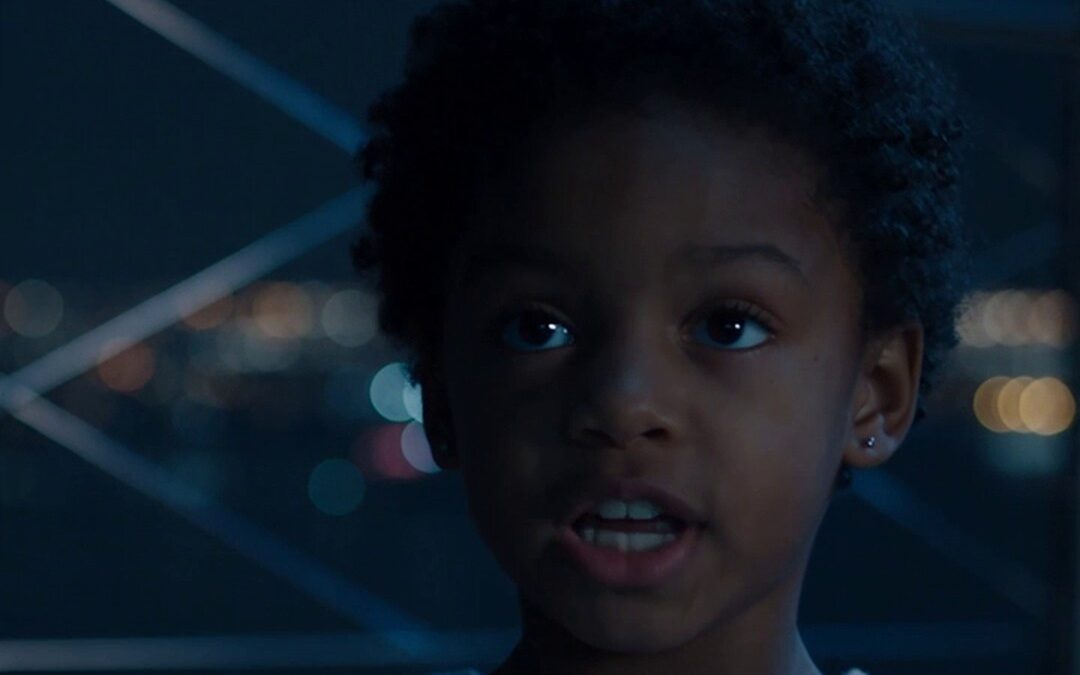
Six-year-old Willa stood between the locked door and the railing, gripping the envelope.
“Celeste?”
Adrian’s voice came through the door.
Willa looked at Mara.
“Is that Dad?”
“Yes.”
“Can I give you the letter?”
“If you want to.”
Willa stepped toward her.
Celeste blocked her.
“Give it to me, sweetheart.”
“You said it was boring.”
“It is.”
“You said Mom wrote it.”
Celeste’s expression tightened.
“Willa, stand beside me,” Mara said.
“She has no authority here,” Celeste said.
The door opened.
Adrian Vale entered with two security officers. At forty-one, he chaired Vale Meridian and could open a senator’s office with one call.
He saw Celeste’s hand on Willa’s shoulder.
“What happened?”
“She attacked me,” Celeste said.
Mara glanced at the key in Celeste’s hand.
“Which part?”
“Don’t.”
“Which part did I attack?”
“Your behavior is not helping.”
“Neither is lying.”
Adrian looked at the envelope.
“What is that?”
“Mom’s letter,” Willa said.
His face changed.
Celeste stepped between him and the girl.
“She’s confused.”
“I know who wrote it,” Adrian said.
Mara touched the scar beneath her collar. She had learned to keep it covered, even in summer.
“You have no right to be here,” Adrian told her.
“I know.”
“Then why are you?”
“Because she called me.”
Willa raised her chin.
“I did.”
Adrian’s mouth opened, then closed.
“Your father and I are handling this,” Celeste said.
“She said the letter was trash.”
“It’s an old note.”
“She said Mom was dead.”
Adrian turned to Celeste.
“You told Willa her mother was dead?”
“I told her Mara was gone.”
“That isn’t what she said.”
“She’s six.”
Mara kept her attention on Willa.
“Where did you find it?”
“In the blue desk.”
“What blue desk?”
“The one in the room with the pictures.”
Adrian stared at Mara.
“You went into the house?”
“No.”
“Then how did she find it?”
“Ask her.”
“I’m asking you.”
“And I’m telling you I didn’t.”
Celeste held out her hand.
“Willa, give me the envelope.”
Willa backed toward Mara.
Mara moved between them.
“Don’t.”
Adrian raised a hand to his security chief, Tomas.
“No one touches her.”
Celeste looked at him.
“You’re taking her side?”
“I’m asking what happened.”
“You know exactly what happened.”
“Then explain it.”
“She wandered away from the reception.”
“Why was she up here?”
“She wanted to see the projector.”
“I wanted to see the door,” Willa said.
Celeste’s face hardened.
“Why did you want to see it?” Adrian asked.
“Because she locked Mom’s things in there.”
The planetarium guests below had stopped moving.
Adrian glanced at Tomas.
“Close the planetarium.”
“Already doing it.”
“Get the guests out quietly.”
Celeste shook her head.
“This is a public event.”
“There’s a child on a technician’s balcony.”
“It’s perfectly safe.”
Willa looked at the sealed door.
“She said I couldn’t go in.”
“Why?” Adrian asked.
“She said the room was dangerous.”
“The equipment is expensive,” Celeste replied.
“You put the key in her hand,” Mara said.
“I did not.”
“It fell out of your pocket,” Willa said.
Celeste closed her fist around it.
“You’re a clever girl.”
The phrase sounded like a warning.
Mara felt the old instinct rise: take Willa and run.
She had done that eight months ago, with a bleeding shoulder and no plan beyond the next locked door. She had lost her job, her apartment, and the right to hear Willa say good night.
Running now would cost more.
Adrian watched her.
“You left without a hearing.”
“I left because your lawyer said I could be charged with trespassing.”
“You had access to the house.”
“Not after Celeste changed the locks.”
“She had a temporary order.”
“She had your signature.”
His jaw tightened.
Willa looked between them.
“You both said you didn’t know.”
Adrian knelt.
“Know what?”
“That Mom came to the gate.”
Mara stopped breathing.
Celeste went still.
“When?” Adrian asked.
“Three nights after I left,” Mara said.
“You didn’t tell me.”
“I told the guard. He said he’d deliver my message.”
“Which guard?”
“Eli Hales,” Mara said.
“He retired last winter.”
“He was on duty then.”
Tomas turned to Adrian.
“I can pull the gate logs.”
Celeste raised her voice.
“This is not the place.”
“You made it the place,” Adrian said.
“I was protecting Willa.”
“From what?”
“From this.”
She pointed at Mara.
Willa looked down at the green wax seal, stamped with a crescent moon.
“Your mother sealed that,” Adrian said.
Willa nodded.
“She said I should open it when Dad stopped listening.”
“That’s a lie,” Celeste said.
Mara looked at Willa.
“Did I say that?”
“No.”
“What did I say?”
“‘Keep this safe until your father asks.’”
Mara remembered the blue desk, the paper cut on Willa’s thumb, the brass crescent stamp. She had hidden the envelope behind a loose drawer panel after Celeste began asking about school records.
“Maybe I did,” Mara said.
Adrian stared at her.
“Why hide a letter from me?”
“I didn’t. I may have told her to keep it safe.”
“Why?”
“Because you weren’t listening.”
Adrian lowered his eyes.
Willa held out the envelope.
“Can you open it?”
Mara reached slowly. Willa let her take it.
“Should we open it here?” Adrian asked.
“She wants us to.”
“Willa, do you want your father here?”
“Yes.”
“Do you want Celeste here?”
“No.”
Adrian turned to Tomas.
“Please take Ms. Harrow downstairs.”
“Adrian, you can’t remove me.”
“I’m asking you to leave the balcony.”
“I’m his wife.”
“You’re not her guardian.”
“I’m her stepmother.”
“You’re not her guardian.”
Tomas moved toward the door.
Celeste glanced at Mara.
“You have no idea what you’re opening.”
“That’s why I’m opening it.”
“Some things are better left buried.”
“Not when a child is carrying them.”
At the threshold, Celeste looked back.
“You should have stayed gone.”
Mara watched her leave.
Adrian stayed beside Willa.
“May I read it too?”
Willa nodded.
Mara turned over the envelope. The crescent had been pressed into the wax at an angle.
Her fingers trembled.
“Mom?”
“I’m here.”
“Can you open it?”
Mara broke the seal.
Inside lay a folded letter and a smaller, yellowed sheet.
The letter was in her handwriting, dated eight months earlier.
Mara read the first line.
“If you are reading this together, then someone kept you apart.”
Willa gripped Adrian’s sleeve.
He did not pull away.
Mara read on.
“I did not leave because I stopped loving you.”
Adrian closed his eyes.
The letter said Mara had found a copy of a restricted property transfer in Adrian’s study. His signature appeared on it, but it was false.
Mara looked up.
“You signed a transfer?”
“No.”
“Did you authorize one?”
“No.”
She kept reading.
“I told Adrian. He asked me to wait until his counsel reviewed it.”
Adrian went pale.
“When was this?”
“Before I left.”
“You found a forged transfer?”
“Yes.”
“You never told me.”
“I did.”
“You said it might be a clerical error.”
“I said it could be.”
He looked at the page.
“What property?”
Mara unfolded the smaller sheet.
It was a copy of the observatory deed. Adrian’s mother, Nora, had placed the land in trust after her death. The second transfer listed a trust as the new owner and carried Adrian’s signature and the date of his wedding to Celeste.
Adrian took the page.
“This is a copy.”
“It came from the blue desk,” Willa said.
“Where exactly?”
“The bottom drawer.”
The blue desk had belonged to Nora, who kept the observatory’s records there. Celeste had insisted it be moved from the house, calling it sentimental clutter.
Mara read the next line.
“The original is not in the desk.”
Adrian looked at her.
“Where is it?”
“I left the original with Elin Park, the observatory’s former accountant. I didn’t trust the household staff to keep it safe.”
Elin had retired before Mara met Adrian.
“She’s alive?” Willa asked.
“Yes,” Adrian said. “She lives in Northbridge.”
Mara read the last sentence.
“If I disappear, ask Elin who paid Hales.”
* * *
Adrian called the observatory director and requested the building records and old foundation ledger.
Mara stopped him from calling the family attorney.
“Not the firm that handled the transfer.”
He lowered his phone.
“You know which firm handled it?”
“Your house lawyer came to see me after I left. He said he represented you and warned me your family would pursue me if I made more accusations.”
“Name?”
“Silas Crowe.”
“Crowe never represented you,” Adrian said. “He was outside counsel for the foundation.”
“Then he had a conflict,” Mara said.
“He did.”
Adrian called June Bell, a former federal prosecutor who had represented the foundation before Crowe joined it. He described the possible forgery and Mara’s blocked attempt to contact him.
He did not ask June to keep the matter quiet.
He asked her to preserve records.
When he ended the call, Willa was drawing stars on a paper napkin.
“Are we going somewhere?” she asked.
“To see Ms. Park,” Adrian said.
“Will Mom come?”
“If she wants to.”
“I’ll come,” Mara said.
Adrian nodded.
It did not repair anything.
It was the first useful thing he had offered.
They took separate cars.
At a red light, Willa asked, “Did Dad know the letter was there?”
“I don’t know,” Mara said.
“Did Celeste?”
“I don’t know.”
“She knew the key.”
“She did.”
“Why did she want the letter?”
“I think she was afraid of what it said.”
“What does it say?”
“That I didn’t leave because I stopped loving you.”
“Did you stop loving Dad?”
“No.”
“Did he stop loving you?”
“I don’t know.”
“That’s not what I asked.”
“I know.”
Willa watched the traffic.
“Can people love you and still do something bad?”
“Yes.”
“Can they say sorry?”
“Yes.”
“Does that mean you have to go back?”
“No.”
Elin lived above a bakery in a brick apartment building. She answered with a cane in one hand and a reading magnifier in the other.
When she saw Adrian, she said, “About time.”
He accepted it.
“Yes.”
She looked at Mara.
“You brought the girl.”
“Willa insisted.”
“Good.”
Inside, file boxes lined one wall. Several bore the observatory’s name.
“Did you keep all this?” Adrian asked.
“I kept what I was instructed to keep.”
“By whom?”
“Your mother.”
He touched one box.
“I thought those records went to the foundation.”
“The foundation got duplicates. Your mother knew the difference between a duplicate and proof.”
Elin sat at the table. Willa settled beside Mara. Adrian remained standing.
“You can sit down,” Elin said.
He did.
“Tell me about the transfer.”
“Not until June Bell arrives.”
“Why?”
“Because you’re a witness.”
“I’m also the owner.”
“Not of that land.”
Elin opened a folder and slid a document toward him.
“This is the original trust deed.”
It transferred the observatory’s land into the Nora Vale Educational Trust six months before Nora died. Adrian could not revoke it.
“It was supposed to protect the observatory,” Elin said.
“It did.”
“Then someone filed another instrument.”
“The one in the envelope,” Adrian said.
“A copy of it.”
“How do you know?”
“I checked the registration number.”
She showed them the state filing receipt. Crowe’s office had described the document as a correction, changing the trustee from the foundation to Vale Meridian Holdings.
“That’s my company,” Adrian said.
“It also lists you as signer.”
“I didn’t sign it.”
“I know.”
“How?”
“I watched you sign documents for fifteen years. You make the final stroke of your A with a hard downstroke. This one doesn’t.”
“That isn’t enough to prove forgery.”
“It’s enough to ask questions.”
“Who else knew?”
“Me. Your mother. Whoever made the filing.”
“Celeste?”
“I don’t know.”
Elin looked at Mara.
“I told you there was a second copy.”
“You said it was in the blue desk.”
“I said the desk held a copy. The original was safe.”
Mara looked at Adrian.
“Why did I think the original was in the desk?”
“You didn’t,” he said. “You searched for the foundation’s old insurance policy.”
Mara stared at him.
“I remember searching it.”
“You searched for the policy, not the deed.”
The memory shifted: raised voices, Adrian asking her to wait, Celeste standing behind her.
“You were there,” Mara said.
“I was.”
“You told me not to involve Elin.”
“I said not to confront anyone before we had proof.”
“You said we’d deal with it after the benefit.”
“I had the board vote the next morning.”
“You had a board vote,” Mara said. “I had a false deed with your signature.”
“I know.”
“You didn’t believe me.”
“I thought it could be a mistake.”
“That isn’t belief.”
Elin placed another file on the table.
“Your mother left one more note.”
Adrian opened it. The note named the trust as permanent owner and Elin as custodian of its records.
“Why did you leave?” he asked Mara.
“You know why.”
“I want to hear you say it.”
“Celeste told me she could make sure Willa never saw me again.”
“She couldn’t.”
“She said you’d signed away my access.”
“I never did.”
“She showed me the order.”
“The temporary order was filed after you left.”
“It had your signature.”
“It wasn’t mine.”
Mara looked down. The scar at her shoulder ached.
“How did you get it?” Adrian asked.
“You know. The lighting rail fell during benefit setup. I pushed Willa clear.”
“I heard it was an equipment failure.”
“It was.”
“Who told you she was alone?”
“Celeste.”
“Who said she’d been with the caterers?”
“Celeste.”
Elin studied them.
“Was the incident reported?”
“The observatory wrote it up,” Adrian said.
“Then get the report,” Elin replied.
June Bell arrived twenty minutes later, silver-haired and carrying a leather case. She greeted everyone, including Willa, then asked for dates.
The transfer had been filed eleven days after Adrian’s wedding. The trustee change was recorded two days later. The annual audit missed it because the land appeared under the holding company’s name.
Elin found it during a routine title review.
Crowe told her the registration was temporary and a correction would follow.
It never did.
“Who controlled the electronic records?” June asked.
“Crowe’s firm,” Adrian said.
“Who approved the filing?”
“I don’t know.”
“Who had signing authority?”
“Me, the general counsel, and the chief financial officer.”
“Could Celeste have filed it herself?”
“She wasn’t an officer.”
“Could she have obtained your signature?”
“I don’t know.”
“Could someone have used your digital credential?”
“Possibly.”
June took notes.
“Then we need the system logs.”
Adrian looked at Tomas.
“Secure the company archive.”
“Already done.”
“Include email retention and access logs. Don’t notify Crowe.”
June nodded.
Willa had drawn planets on the napkin.
“What happens to the observatory?” Mara asked.
“Nothing changes today,” June said. “The trust still owns it. We’ll notify the registrar, request a hold, and file a formal dispute.”
“And Willa?” Mara asked.
“No one can remove her from a public observatory without a legal basis.”
“She can’t stay with us if Celeste has custody.”
“Celeste doesn’t have custody,” Adrian said. “I’m Willa’s legal guardian.”
“Then why did you leave her with Celeste?” Mara asked.
“As my wife, she was in the house.”
“She had access to Willa. You let that happen.”
“I thought Celeste was safe.”
“You thought she was convenient.”
“That isn’t fair.”
“Neither was leaving me to fight alone.”
He absorbed the hit.
June kept her voice even.
“No custody decisions in this room. We’ll arrange a neutral meeting with Willa’s counselor and both parents.”
“I’m not asking for a decision,” Adrian said.
“Good. Ask Willa what she wants tomorrow.”
He looked at her.
“Would you like me to come to school?”
Willa stopped drawing.
“Will Celeste come?”
“No.”
“Will you talk about Mom?”
“Yes.”
“Will you let Mom talk too?”
“Yes.”
“Will you tell everyone I wanted her there?”
“Yes.”
Willa studied him.
“Then you can come.”
June noted it.
“That’s a start.”
Adrian turned to Elin.
“Who paid Hales?”
Elin’s face hardened.
“Your mother asked that before she died.”
“What did she find?” Mara asked.
“Private transfers from a family office account.”
“Which account?” Adrian asked.
“An emergency trust account. It was closed on paper.”
Elin opened another file.
“Three payments went to Hales Security Consulting.”
“Eli Hales?” Adrian asked.
“He registered the company.”
“Why would my mother pay him?”
“She didn’t.”
The payments came from Meridian Residential Services, which managed the estate.
“Who controlled it?” June asked.
“Operations and finance.”
“Who approved payments?”
“Any two officers.”
Elin turned the ledger around.
“One approver was Silas Crowe.”
“And the other?”
She tapped the last line.
“Celeste Harrow.”
* * *
The name sat between them.
No one spoke.
Willa’s pencil broke. Mara helped her find another.
Adrian made no call. June gave him a short list: preserve the accounts, estate logs, property files, and emails. Do not confront Celeste, threaten anyone, or promise what a court would do.
He agreed.
Outside the apartment, he offered to have a car take Mara and Willa to a hotel.
“I have a place,” Mara said.
“I know you never went back to the house.”
“That’s not the same as knowing where I live.”
“No.”
“What are you asking?”
“Let me pay for somewhere safe tonight.”
“I can pay for my room.”
“I know.”
“Then why ask?”
“Because Willa is in the middle of this.”
“Your money is part of why she is.”
He lowered his head.
“Stay somewhere you choose. Let me cover it without conditions.”
“What does it buy?”
“Nothing.”
“Will you put it in writing?”
“Yes.”
“Will you stop contacting me directly?”
“Until you say otherwise.”
“Will you speak through June or Willa’s counselor?”
“Yes.”
“Then maybe.”
Her account held less than three hundred dollars. Her apartment above the laundromat on Wren Street had one bedroom and a window that would not close.
She hated needing help more than she hated the thought of Willa sleeping there.
“One night,” she said. “Near school. Not a Vale hotel.”
“Understood.”
June wrote down the terms.
They booked a small inn under Mara’s name. Adrian paid the inn directly.
Willa held her mother’s hand in the lobby.
“Are we going home?”
“Not tonight.”
“Where are we going?”
“Somewhere quiet.”
“Is Dad coming?”
“Only if you ask.”
Willa considered it.
“I want him at breakfast.”
“Breakfast only,” Mara told him.
“Breakfast only,” Adrian agreed.
He arrived the next morning with three muffins and strawberries.
“You brought too much,” Mara said.
“I didn’t know how hungry she’d be.”
“She’s six.”
“I’m learning.”
Willa took a muffin.
“Dad, can I ask something?”
“Anything.”
“Did you know Mom was scared?”
“I knew she was worried.”
“That’s not what I asked.”
“No,” he said. “I didn’t understand.”
“Why not?”
“I was busy.”
“Being a billionaire?”
He didn’t smile.
“Being responsible for too much.”
“Did you have to be?”
“No.”
Willa ate a bite.
“Can you say you’re sorry?”
Adrian looked at Mara, then at Willa.
“I’m sorry I didn’t listen.”
“Are you sorry you were busy?”
“I’m sorry I chose work when I should have chosen you.”
“Okay,” Willa said.
It was not forgiveness.
He accepted it that way.
June’s investigation moved through proper channels.
The registrar placed a hold on the land filing. The foundation’s bank froze the relevant account after receiving a court order. A forensic accountant reviewed the transfers.
The company’s digital logs showed Adrian’s signature token had been used from a workstation assigned to Crowe’s office. The access record did not prove who signed, but it showed the credential had not been used from Adrian’s office.
An audit found a scanned version of the transfer in Celeste’s private folder, uploaded two days before filing. That alone did not establish intent.
“Evidence builds in layers,” June reminded them.
Adrian moved into a separate apartment. He did not ask Mara to return.
Willa stayed with him Tuesdays and Thursdays under an interim schedule recommended by her counselor. Celeste was not present.
Three days later, Adrian called June. A lawyer had delivered Mara a letter claiming she stole confidential property and manipulated a child. It demanded the envelope.
“Do not reply,” June said.
“They’re trying to make her look unstable,” Adrian said.
“They’re trying to build a custody record. Keep records, follow the schedule, and answer any court notice.”
“What do they say I stole?” Mara asked.
“The trust deed and original correspondence.”
“I don’t have the original deed.”
“It’s with Elin,” June said. “Your letter belongs to you.”
Willa colored a paper planet nearby.
“Can we go to the library?” she asked.
“Yes.”
“Even if Celeste is mad?”
“Yes.”
The doorbell rang.
Mara wasn’t expecting anyone.
A courier stood outside with a flat cardboard box bearing her name and no sender.
Mara did not open the door.
June told her to photograph the label and leave the package outside. The building manager and police were called.
Officers photographed it and requested the courier’s pickup record.
They opened it in the lobby.
Inside was a framed photograph from the benefit where the lighting rail had fallen. Mara was on the ground, one arm around Willa. Celeste stood behind them.
The image was cropped to show Mara’s face and the damaged rail.
A note was taped to the frame.
Leave old accidents buried.
The message did not name its sender.
The officers logged it and collected the box.
The courier account had been prepaid by a shell company through Meridian Residential Services.
“Celeste,” Adrian said.
“Maybe,” June replied. “The account was used by her company. Others had access.”
“She was there.”
“Yes. That proves she was there.”
Mara studied the picture. The crop removed Celeste’s expression.
“She wants me to react.”
“Probably,” June said.
“I won’t.”
“Good.”
The forensic report came ten days later.
An independent examiner found the transfer signature was a copied image, lifted from an earlier filing.
The document used a digital certificate assigned to Adrian’s assistant, who was on leave. A remote session came from Crowe & Vale’s office. The file metadata showed an account named S.Crowe had modified the document.
The payments to Hales were confirmed. Two were approved by Crowe and Celeste. A third by Celeste and the chief financial officer.
“Why pay him?” Mara asked.
“We don’t know yet,” June said. “An investigator can ask.”
June hired Peter Nwosu, a licensed investigator who worked with counsel.
Hales admitted receiving the money. He said he was asked to “manage a family access issue.”
He produced a calendar entry from the week Mara came to the gate.
No entry. No message delivered.
Hales said Celeste told him Mara was unstable and could not be allowed onto the property. He had assumed Adrian approved it.
“He never asked me to block her,” Adrian said.
“Did Hales tell you she came?” June asked.
“No.”
“Did you verify?”
“No.”
Mara read the calendar entry.
“Did you receive my message?”
“No.”
“Did you ask what happened?”
“I told Hales to handle it.”
“He never told you I came.”
“No.”
“You didn’t check.”
“No.”
The admission sat between them.
“I thought you’d chosen not to contact me,” Adrian said.
“I thought you’d chosen to silence me.”
“I see that.”
“You could have asked.”
“I should have.”
“You didn’t.”
“No.”
Hales agreed to give a sworn statement. He also said Crowe asked him to remove a file box from the observatory office. Hales refused because Elin’s name was on the custody record.
The foundation’s facilities manager located the box in a locked cabinet. It held maintenance reports from the night the lighting rail fell.
One safety pin had been missing and replaced.
The original had never been recovered.
The incident had been classified as mechanical failure.
A technician remembered Celeste telling staff not to delay the benefit over “one loose clip.” The technician had not seen her touch the equipment.
The report did not accuse her.
It changed the context.
“Was I the intended target?” Mara asked.
“We can’t say,” June replied.
“Was Willa?”
“We can’t say.”
“Could it have failed on its own?”
“Yes.”
“Could someone have removed the pin?”
“Yes.”
Adrian looked at the report.
“Celeste handled event logistics.”
“Responsibility isn’t proof of sabotage,” June said. “Give the report to police and preserve everything else.”
The police assigned a detective to the forged transfer and possible obstruction.
Family court scheduled a temporary custody review. The foundation’s board called an emergency meeting.
June advised Adrian to disclose the conflict and recuse himself from votes about the land.
He did.
Celeste arrived with an attorney. Mara watched by video from June’s office. Willa stayed at school with her counselor.
“This is a family misunderstanding being used to damage my reputation,” Celeste said.
June presented the filing records.
The board’s independent auditor testified that the signature was copied. Celeste’s attorney argued that copied signatures could result from routine document preparation.
The auditor agreed.
Then came the finance ledger: payments to Hales, account approvals, dates.
Celeste called them routine consulting fees.
The board asked for a signed scope of work. Her attorney had none.
The board asked why a family access consultant had been paid from a residential services account.
Celeste said the company handled estate security.
“Did Adrian authorize the payments?” the chair asked.
“No.”
“Did you tell Hales to refuse Mara’s message?”
Celeste looked toward Adrian.
“I believed Mara was trying to destabilize Willa.”
“That wasn’t my question.”
“I asked him to keep things calm.”
“Did you ask him not to deliver the message?”
“I don’t remember.”
Adrian said he had given Celeste limited authority over event logistics, not access to Willa’s mother.
“You were absent,” Celeste said.
“I was in the next building.”
“You told me to handle it.”
“I did not tell you to block Mara.”
“You wanted her gone.”
“I wanted the argument to stop.”
“You called her impossible.”
“I was wrong.”
The board suspended Celeste’s foundation access pending investigation. It did not fire her or decide criminal guilt. It referred the records to company counsel and the registrar.
At the door, Celeste paused.
“Mara thinks she won.”
Mara said nothing.
“You don’t get to keep him.”
“I’m not asking for him.”
“You want the money.”
“I want Willa safe.”
“You always wanted to be the injured one.”
“I wanted to be believed.”
Celeste left.
The investigation continued, as did the custody review.
The next day, Willa had counseling. Mara waited in the hall with Adrian.
The counselor invited both parents inside.
Willa sat in a small chair, feet dangling. She had drawn three circles: blue, green, and gray.
“This is Mom,” she said, pointing to blue.
“This is Dad.”
She pointed to green.
“And this is the scary part.”
She touched the gray circle.
“Can it go away?”
“Some parts change when adults handle them safely,” the counselor said.
“Can I make it go away?”
“No. You don’t have to fix it.”
Willa looked at Mara.
“Can Mom and Dad still talk?”
“Yes,” Mara said.
“Can they be mad and still talk?”
“Yes.”
“Can Dad live somewhere else?”
“Yes.”
“Can I love Celeste?”
Mara felt the question in her chest.
“Yes. You can love someone and still need boundaries.”
“Can I not see her?”
“Yes.”
“Can I change my mind later?”
“Yes,” Adrian said.
“Can I change it back?”
“Yes.”
Willa rubbed the gray circle.
“Can we make it smaller?”
“We can make a plan that helps you feel safe,” the counselor replied.
“Will Dad be mad if I don’t want to visit Celeste?”
“No,” Adrian said.
“Will you tell her?”
“I’ll tell the adults.”
“Can I tell Mom too?”
“Always.”
“Can I tell the counselor?”
“Especially the counselor,” June said.
Willa looked at the gray circle.
“Okay.”
Adrian’s face was wet. He wiped it once and did not ask Willa to comfort him.
* * *
The family court hearing lasted two mornings.
The judge heard from the counselor, the school, and both parents. Celeste had no legal custody and no independent right to schedule visits.
The judge ordered Willa to remain on a shared schedule with Mara and Adrian. Celeste could request contact through counsel later. No contact would occur without Willa’s agreement and professional guidance.
Mara requested written transitions and no surprise visits.
The judge approved.
Willa’s school and counselor stayed the same. Neither parent could discuss the land case with her.
The ruling did not determine whether Celeste had forged the filing or interfered with Mara’s access. It gave Willa stability while investigators continued.
Outside the courthouse, Adrian walked with Mara.
“You did well,” he said.
“I answered questions.”
“You were clear.”
“I had practice.”
He glanced at the scar beneath her collar.
“Can I ask about it?”
“You know what happened.”
“I know the report. I want to hear what you remember.”
“The rail shifted before it fell.”
“Why didn’t you leave?”
“Willa was under it.”
“You pulled her clear.”
“Yes.”
“I should have been there.”
“You were at work.”
“I was two buildings away.”
“You were running a company.”
“I was choosing to be.”
Mara turned to him.
“Don’t turn this into a speech.”
“I’m not.”
“Then keep doing the work.”
“I will.”
“You can be her father without being my husband.”
“I know.”
“Do you?”
“I’m learning.”
She nodded once.
Police obtained a warrant for Crowe’s office records.
They found draft versions of the transfer and a note: “Replace trustee before annual review.”
Another read: “A.V. approval to follow.”
There was no approval.
File metadata tied the drafts to Crowe’s account.
He resigned from the company and claimed the transfer was a bookkeeping correction.
The state examiner matched the copied signature to an old scan. Logs showed Celeste opened the file shortly before submission.
The investigation still needed to establish what she knew.
A former assistant in Crowe’s office came forward. She said Celeste had visited twice. During one visit, Celeste asked how quickly the trust could be changed.
Crowe said he needed valid authorization.
Celeste replied that Adrian would sign when shown the final page.
The assistant had saved an email because Crowe later asked her to delete it.
It was sent from Celeste’s account three days before the transfer:
Get the trustee change filed before the gala. Adrian will sign when I put the final page in front of him. Keep the draft off the board packet.
The firm’s server backup verified the message.
Celeste said it referred to another filing.
The document log showed only one trustee-change draft.
She then said Crowe might have used her account without her knowledge.
The access log showed the file opened from her office computer. Visitor records placed her in the suite. Neither fact alone proved who used the keyboard.
The decisive evidence came from Mara’s letter.
Elin found a faint notation folded inside:
Blue desk copy replaced. Original in vault box 14. Ask who paid Hales. N.
The “N” was Nora’s initial.
Vault box 14 was at the foundation’s bank, under a dual-control policy. Elin and Nora had been the listed custodians. After Nora died, Elin remained.
June and an independent auditor opened it.
Inside was Nora’s original handwritten instruction: the land was to remain in trust permanently. No trustee could sell or transfer it.
On the back, in another hand, was a note:
Crowe says the filing can be reversed after the gala. C says Adrian need not know until then.
The initials alone could not establish who wrote it. A handwriting analyst found similarities to Celeste’s correspondence, but not enough for a definitive attribution.
The note showed that someone expected the filing to be temporary.
The registrar rejected the transfer and restored the trust’s title. The foundation regained clear control of the observatory.
The board removed Crowe from company work.
Celeste was placed on leave from the foundation.
Police still needed evidence of her knowing role.
“Everything points to her,” Mara told June.
“Everything points toward her,” June said. “That difference matters in court.”
“What do they need?”
“Proof she knowingly directed or assisted the fraud.”
“We have the email.”
“It can be interpreted two ways.”
“The note.”
“Unattributed.”
“The payments.”
“Evidence of a relationship with Hales, not proof of motive.”
“What about the false access order?”
“The filing came through a document service used by Crowe’s office.”
“What do we know about the property?”
The audit found the land’s value had increased after the transit authority announced a station nearby. The observatory parcel connected the station to a public park.
The foundation planned to keep it as an educational site.
Vale Meridian had once considered a hotel and conference center on the adjacent land. Nora’s trust had blocked the idea.
A private assessment showed the combined parcels could support a development worth more than two hundred million dollars. Meridian Residential Services had commissioned the assessment, and Celeste approved payment.
Crowe’s archive held a sale option giving a development company ninety days to purchase the land.
The buyer was a new partnership with two of Celeste’s cousins as directors. It had little money and was meant to secure the option, then sell the rights to a larger developer.
A note called it “the clean route.”
Someone had planned to move the land into Adrian’s company before the transit announcement, then sell the opportunity.
June assembled the documents.
The state attorney reviewed them. Police asked Adrian not to make a public statement.
He agreed.
The board scheduled a public session to explain the land’s status and restore confidence. Celeste’s lawyer asked to attend.
The board allowed her to speak.
June advised Mara not to go.
Mara chose to attend. The observatory mattered to Willa. It had been Nora’s favorite place and the first place in Adrian’s family where Mara had felt welcomed.
The session took place beneath the same dome. The balcony door was locked.
Willa sat between Mara and Adrian.
The chair described the investigation: the transfer was invalid, the trust remained intact, and no development agreement would proceed. An independent custodian would review the records.
Celeste stood to speak in a pale gray suit, without notes.
“I supported the observatory’s future. I helped fund repairs and programs. I believed the land could serve more people through a responsible partnership.”
Several people nodded.
“Adrian knew the company had considered development,” she continued. “He knew the site had value.”
Adrian did not move.
The chair asked whether he had approved the transfer.
“No,” Celeste said.
“Did you tell him the trustee was changing?”
“I expected him to sign the final document.”
“Did he?”
“No.”
“Why was the document filed before he signed?”
“Mr. Crowe made an error.”
“Why did your account access the draft?”
“I had access to the office.”
“Why move the property before the transit announcement?”
“I didn’t know about the announcement.”
The public notice was dated a week after the transfer. The land assessment was months older.
The chair asked about the sale option.
Celeste said she had not seen it.
The auditor put a copy on the table. Crowe had signed it. Celeste’s signature appeared as witness.
She stared at the page.
“I signed as a witness.”
“To a sale option you hadn’t seen?”
“It was in a packet.”
“Was the land trust supposed to approve the sale?”
“I assumed the trustee would.”
“The trustee was the foundation.”
“I don’t handle trust law.”
“You approved the company payments.”
“I approved security expenses.”
“You opened the filing draft.”
“I had access.”
“You told Hales to block Mara.”
“I wanted peace.”
The chair displayed the household access order. It bore Adrian’s name, but the court clerk had rejected it because the signature could not be verified.
The digital log showed Crowe’s office submitted it.
Celeste said she had never seen it.
Then the assistant’s saved email appeared on screen. It came from Celeste’s personal account to Crowe.
Its subject was “Access.”
If Mara comes back, say Adrian has barred her. Do not bring Willa into it.
It was dated the night Mara had arrived at the gate.
The room stayed still.
“Did you write this?” the chair asked.
Celeste’s lawyer stood and requested a recess.
After fifteen minutes, counsel announced that Celeste would not answer further questions.
The board accepted that choice. The evidence was sent to the state attorney and police.
Outside the planetarium, Willa held Mara’s hand.
“Did she do it?”
“The records show she did some things,” Mara said.
“Did she steal the land?”
“We don’t know what a court will say.”
“Did she tell Mr. Hales not to let you in?”
“Yes.”
“Did Dad know?”
“No.”
Willa looked at Adrian.
“Did you ask?”
“No.”
“Why?”
“I believed what I was told.”
“Did you believe Mom?”
“Not enough.”
“Will you next time?”
“I’ll ask questions first.”
Willa considered that.
“Okay.”
She returned to Mara.
The state attorney reviewed the file for two months.
Crowe entered a cooperation agreement. He admitted preparing the false transfer and access order. He said Celeste had told him Adrian would sign later.
He claimed he believed the development plan had Adrian’s private approval, but he had never confirmed it.
The state charged Crowe with document fraud and attempted filing of a fraudulent land transfer. Celeste was charged with conspiracy to commit fraud and obstruction related to the false access order.
She denied the charges.
The judge set a trial date.
The family court continued Willa’s schedule with Mara and Adrian. Celeste’s contact remained paused.
No one told Willa to forgive or hate her.
Mara kept working at the library.
Adrian attended school meetings, arrived on time, and learned Willa’s teacher’s name and which books she carried home.
He learned Mara’s boundaries too.
He did not use money to enter her life. He sent no flowers and appeared only when invited.
When he wanted to speak with Mara, he wrote through June unless the conversation concerned Willa.
One evening, he asked Willa whether she wanted a picnic with both parents.
She asked Mara first.
Mara said yes.
They ate sandwiches in the observatory courtyard. Willa sat between them and spilled juice on the blanket.
“I thought you were the billionaire,” she told Adrian. “Why is this blanket so thin?”
“It’s standard.”
“Your blankets need a board meeting.”
Mara laughed before she could stop herself.
Willa smiled.
Adrian smiled too.
It lasted a second.
It was enough.
* * *
The criminal case lasted six months.
The trial took place in a state courtroom without cameras.
Celeste’s lawyers challenged the emails, signature analysis, and Crowe’s cooperation agreement. They argued Crowe had forged the transfer alone, that Celeste thought the sale option was routine, and that Hales had been paid for legitimate security work.
The state presented the registrar’s file.
The signature expert explained how the image had been copied. The forensic analyst described the metadata. The company auditor testified that the development assessment predated the false filing.
Hales testified that he had been told to block Mara and hide the access record. He had kept the calendar entry because he routinely recorded family office requests.
The former assistant testified that Celeste asked her to remove the draft from the board packet.
The prosecutor asked if Celeste had explained why.
“She said Adrian didn’t need to see it yet.”
“Did she say he had approved it?”
“No.”
“Did she say he would?”
“She said he’d sign when the final page was ready.”
Crowe admitted preparing and falsifying the filing.
Celeste’s lawyer pressed him about the agreement that reduced his possible sentence. The jury heard his incentive as well as his testimony.
Celeste did not testify. Her lawyers argued her silence could not be treated as guilt.
The judge instructed the jury accordingly.
The jury deliberated for two days.
They found Crowe guilty of fraudulent filing and obstruction. They found Celeste guilty of conspiracy and obstruction.
They acquitted her on a count involving the company payments, finding the state had not proved beyond a reasonable doubt that she understood their purpose.
The verdict did not establish a confession or answer every question. It decided the specific acts charged.
The judge sentenced Crowe to prison and ordered restitution to the foundation.
Celeste received probation, community service, and a fine. She was barred from serving as a foundation trustee or officer.
The judge issued a no-contact order protecting Mara and Willa from direct harassment.
The family court continued Willa’s schedule with Mara and Adrian.
After sentencing, Celeste passed Mara in the courthouse hall with her lawyer.
“You got what you wanted.”
Mara kept walking.
“No.”
“What did you want?”
“For Willa to sleep without worrying about who would disappear.”
“She’ll grow up and understand.”
“She already understands enough.”
“You think you’re better than me.”
“No.”
“You think your poverty makes you pure.”
“I don’t think about your money.”
“You always did.”
“I was trying to keep my daughter safe.”
“And Adrian?”
“He can answer for himself.”
Her lawyer touched her arm.
“We need to go.”
Celeste looked at Mara.
“You think you won.”
“I think Willa gets to choose who she sees.”
Celeste left.
No one clapped.
Outside, rain silvered the courthouse steps.
Adrian waited.
He did not ask Mara to talk.
“She’s with her counselor,” Mara said.
“I know.”
“Then you know she’ll decide.”
“I do.”
“Do you resent me?”
“For what?”
“For the case.”
“No.”
“The board?”
“No.”
“Yourself?”
“Yes.”
“That can become selfishness too.”
He took the rebuke.
“What should I do with it?”
“Use it.”
“On what?”
“Be reliable.”
“I will.”
The observatory reopened with a corrected land title, a new security system, and an independent records officer.
The board published its findings without blaming Mara. It described the false filing, the audit failures, and the repairs made.
Adrian recused himself from the vote on new policies.
The board named Elin honorary records adviser.
She accepted because she liked the title and the parking space.
Willa attended the first open night after reopening in a yellow coat, carrying the envelope.
“Do you still want it?” Mara asked.
“Yes.”
“What does it mean to you?”
“That you wrote to me.”
“I wrote to both of you.”
“Then why is it mine?”
“Because you kept it safe.”
Willa touched the broken seal.
“Can I put it in my room?”
“Yes.”
“Can I keep it when I’m grown?”
“Yes.”
“Can I read it again?”
“Whenever you want.”
She tucked it into her coat.
Adrian stood at the entrance while the observatory director showed him the new deed display.
He read it, then joined them.
The first show began. The dome darkened and stars appeared.
Willa took one hand from each parent.
“Look,” she whispered.
Afterward, she asked whether the observatory belonged to her grandmother.
“It belongs to the trust,” Adrian said.
“What does that mean?”
“It belongs to the community your grandmother wanted to serve.”
“Does that mean I own it?”
“No.”
“Can I still come?”
“Anytime it’s open.”
“Can Mom come?”
“Yes.”
“Can Dad come?”
“Yes.”
“Can I bring my class?”
“Absolutely.”
“Can I bring Mr. DeShawn?”
“Who is Mr. DeShawn?”
“My librarian.”
“Of course.”
The next morning, Adrian offered Mara a job running the foundation’s community programs.
She declined.
“I like the library.”
“It would pay more.”
“I know.”
“It would give you influence over the observatory.”
“I already have a vote as a community member.”
“You’d have room to build something.”
“I don’t want a job from you.”
“I understand.”
“Do you?”
“Yes.”
“I could fund a public program,” he said. “The board would oversee it. You wouldn’t work for me.”
“That sounds better.”
“I won’t make the offer again unless you ask.”
“Good.”
She reached for her coat.
“Mara.”
“What?”
“I’m sorry. I’m saying it without asking you to answer.”
“I appreciate that.”
He nodded.
She left.
The sentence stayed between them, not as a promise but as truth.
* * *
One year later, Willa asked to see Celeste.
She was seven and had written a list of questions.
Mara read them with her.
“Why did you lock Mom out?”
“Did you make Dad’s name look different?”
“Were you going to sell Grandma’s observatory?”
“Did you ever like me?”
Mara did not answer for Celeste.
Adrian did not either.
They brought the list to Willa’s counselor, who proposed one supervised meeting. Willa could leave at any time, bring a trusted adult, or decide not to go.
She chose to meet Celeste at the counseling center.
Mara waited nearby.
Adrian went in with Willa.
The meeting lasted twenty-five minutes.
Willa asked every question.
Celeste admitted she wanted the property deal and had feared Adrian would stop loving her if she failed. She admitted telling Hales not to let Mara in.
She said she never meant for Willa to be frightened.
“Did you want me to love you more than Mom?” Willa asked.
Celeste paused.
“Yes.”
“Why?”
“I was selfish.”
“Are you sorry?”
“Yes.”
“Can I go now?”
“Yes.”
Willa stood.
Adrian opened the door.
Celeste did not reach for her.
Willa walked out on her own.
In the car, she was quiet.
“I don’t want to see her again,” she said.
“All right,” Mara replied.
“Maybe when I’m older.”
“All right.”
“Will you remember?”
“Yes.”
“Will Dad?”
“I will,” Adrian said.
“Can I still be mad?”
“Yes.”
“Can I stop being mad?”
“Yes.”
“Can I forget her?”
“You don’t have to decide today,” Mara said.
Willa leaned against the window.
“Good.”
They did not speak until they reached the library.
DeShawn had set aside a book about constellations.
The contact order remained in place.
Celeste did not request another meeting.
She sent one letter through the counselor.
Willa chose not to read it.
No one forced her.
Years passed.
Mara and Adrian never remarried. They built a workable friendship around Willa, sharing school events and holidays.
They argued about screen time and bedtime.
They stopped using old wounds as weapons.
Adrian remained a billionaire.
Mara remained a librarian.
Their power did not become equal.
Their choices became more honest.
When Willa was nine, she asked Adrian why he had not known the observatory belonged to the trust.
He showed her the old deed.
“Because I didn’t read carefully.”
“Did you sign things without reading?”
“Sometimes.”
“Did that make you rich?”
“It helped.”
“Did it make you a good dad?”
“No.”
“Then maybe you should read everything now.”
“I do.”
“Even school emails?”
“Especially school emails.”
She nodded.
“Good.”
At ten, Willa helped Elin catalog foundation records. She learned to compare signatures, why dates mattered, and how paper could tell the truth if someone read it carefully.
At eleven, she loaned the envelope to the observatory archive.
The display showed the envelope, crescent seal, and a note in Willa’s handwriting:
Someone kept us apart. We found each other again.
She took the envelope home when the exhibit closed.
At twelve, Willa joined the observatory’s youth board as a student representative. She proposed that any land or building transfer require two independent reviews.
The board adopted the rule.
At thirteen, she found Jupiter through the observatory’s new telescope.
Mara stood beside her.
Adrian held the lens cap.
“I can see the stripes,” Willa said.
“Are they clear?” Adrian asked.
“Mostly.”
“Want me to adjust it?”
“No. I have it.”
She adjusted the focus herself.
The planet sharpened.
“Found it,” she said.
Adrian handed her the lens cap.
“Keep this safe.”
“I will.”
The phrase had once been a warning.
Now it was trust.
* * *
On Willa’s sixteenth birthday, the observatory hosted a public night.
She invited her classmates, teachers, DeShawn, Elin, and every librarian who had ever covered Mara’s shift.
Willa stood on the balcony with a microphone.
The steel rail had been replaced.
The door had a clear window.
The key hung on a public hook.
Mara watched from the control room.
Adrian stood beside her.
He did not hold her hand.
Their shoulders touched.
“This place almost became something else,” Willa told the audience.
“It stayed what my grandmother wanted.”
Stars moved across the dome.
“The envelope my mom wrote was the first proof that I wasn’t alone.”
Mara touched the scar beneath her collar.
Willa continued.
“But the important part wasn’t the paper.”
She looked toward her parents.
“It was that they came when I asked.”
Adrian’s eyes shone.
Mara handed him a folded tissue.
“You brought one?” he whispered.
“I know you.”
Willa opened the balcony door.
The audience clapped.
She stood beneath the stars.
“Come up,” she called.
Mara and Adrian walked toward her.
“Together?” Willa asked.
“Only if you want,” Mara said.
“I do.”
They stepped onto the balcony.
The envelope rested in Willa’s jacket pocket. Its wax was gone. Its paper had softened.
It no longer held a secret.
It held a choice.
Willa took one parent’s hand, then the other’s.
The observatory doors remained open.
The stars moved overhead.
THE END








