The Heiress Was Sealed Inside The Flooded Ballroom—Then The Night Guard Held Up A Clock That Was Still Ticking
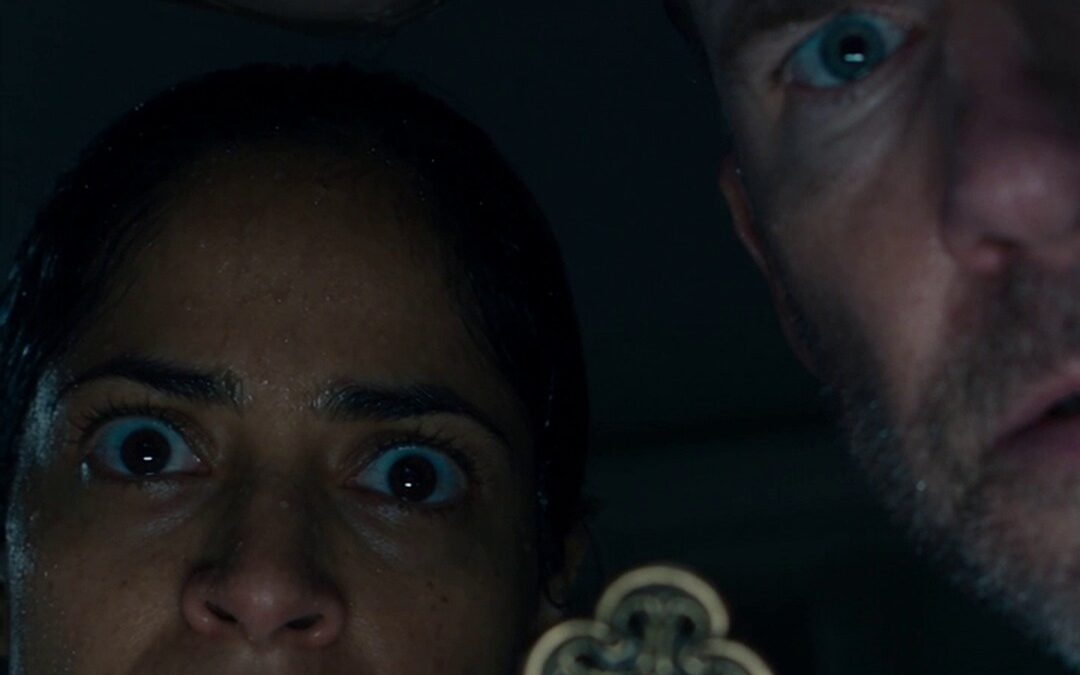
Chapter 2: The Room Beneath
The clock chimed again.
June tightened both arms around Mara.
The lobby smelled of rainwater and hot wires.
“Get her upstairs,” Graham ordered.
Mara kept June close.
“Where’s the control room?”
“Not here.”
The brass key lay between June’s fingers.
“Then why does she have its key?”
Graham looked at his daughter.
June stared back.
A medic moved through the crowd.
Graham blocked her path.
“She’s fine.”
“She swallowed water,” Mara said.
“Let the medic check her.”
June’s wet shoes slipped on the marble.
Mara steadied her.
The medic crouched and spoke gently.
“Can I listen to your breathing?”
June looked at Mara first.
Mara nodded.
The medic checked her chest.
“No emergency,” she said. “But she needs observation.”
Graham’s jaw tightened.
“Take her to the suite.”
“She stays with me,” Mara said.
“You work for me.”
“I did.”
His eyes shifted to her badge.
“You quit?”
“I quit when you locked those doors.”
The guard who had grabbed Mara’s arm stepped between them.
“Mr. Vale, the police are outside.”
“Keep them in the lobby.”
“They’re already coming in.”
Two officers entered with a fire captain.
The captain surveyed the flood line and the broken glass.
“Everyone away from the lower floor.”
Graham stepped forward.
“I own this building.”
“And I’m responsible for what happens inside it.”
The captain pointed toward the stairs.
“Guests upstairs. Staff with them.”
June took Mara’s hand.
“I heard the knocks.”
“I know.”
“They were counting.”
“Who was?”
June swallowed.
“The person Daddy said was gone.”
Graham turned sharply.
“June.”
She flinched.
Mara felt it through her hand.
The officer noticed.
“Mr. Vale, I’ll need to speak with her.”
“She’s my daughter.”
“She can tell us who she feels safe with.”
“She’s eight.”
“She can still answer a question.”
June pressed against Mara.
“I want her.”
Graham’s face hardened.
Mara remembered the clock’s dead second hand.
The first knock.
Then the second.
Then the third.
It had come from beneath the ballroom floor.
The captain called for building plans.
Graham said they were in his office.
A hotel employee hurried over.
“The backup generator is losing power.”
“How long?” the captain asked.
“Maybe ten minutes.”
Mara heard the pump strain beneath them.
A cough.
A pause.
Another cough.
The captain studied the building plans Graham had brought back.
“This section is underwater.”
“There’s a laundry passage behind the old pantry,” Mara said.
The captain looked at her.
“Where does it go?”
“To the station cellar.”
Graham’s expression changed.
“That passage was sealed.”
“Not from the pantry side.”
The captain asked for the lower-level access.
“There is no safe access,” Graham said.
Mara had worked nights at the hotel for eleven months.
She knew the service corridors better than the floor plans.
She had learned maintenance because pipes burst and elevators failed, and there was never a technician on every shift.
More than that, she knew the sound of a failing pump.
She had heard it the night her brother drowned.
“There’s a manual release,” she said.
Graham faced her.
“No.”
“You told staff the pump had been modernized.”
“It was.”
“Then why is its warning tied to the old station clock?”
The captain studied the clock.
“You know the system?”
“I worked maintenance with the night crew.”
“You’re housekeeping.”
“I was.”
Mara had learned every service stair.
She had learned the pump’s rhythm.
The captain looked toward the pantry.
“Show me.”
Mara glanced at June.
“I’m staying with her.”
The medic nodded.
“I’ll stay right here.”
June clutched the blanket someone had brought.
“Don’t leave me.”
“I’ll be right there.”
The girl held out the key.
Mara looked at Graham.
He said nothing.
The brass was worn smooth.
Blue thread passed through its bow.
Mara recognized the thread from the old station’s emergency keys.
“That belongs downstairs.”
The captain took the key with June’s permission.
“We’ll see what it opens.”
He led Mara toward the pantry.
Graham followed.
The ballroom doors had been barred.
Water pressed against the lower panes.
The captain ordered everyone back.
Mara pointed to an alcove.
“Behind that panel.”
The panel looked like decorative wood.
She had wiped it every night.
She knew where the paint concealed its edge.
The captain wedged in a pry tool.
The panel came loose.
A steep metal ladder dropped into darkness.
Cold air rose from below.
The captain aimed his flashlight down.
“I need a structural team.”
“Someone could be trapped,” Mara said.
“And rushing in could trap more people.”
Graham stepped toward the ladder.
“She’s right.”
The captain looked at him.
“You said there was no access.”
“I was speaking generally.”
Mara studied Graham’s face.
He looked at the opening.
Then at the clock.
Recognition had replaced fear.
The captain called for a confined-space team and medical support.
Static crackled through his radio.
The emergency system was failing.
The ballroom lights came on.
The clock’s red indicator blinked faster.
Mara followed its wire into the wall.
“The manual release is behind that panel.”
Graham stepped toward her.
“You don’t know that.”
“I saw the wiring during renovation.”
“You were hired afterward.”
“I helped repair the corridor when your contractors left it open.”
She opened a cabinet beneath the pantry counter.
A metal box had been painted to match.
The key fit.
Inside were a lever, labels, and a paper log.
PUMP OVERRIDE.
STATION ACCESS.
BALLROOM DRAIN.
Mara read the log.
The most recent entry was six days old.
A signature followed.
G. Vale.
The captain photographed it.
“Mr. Vale, did you make this entry?”
“That isn’t my handwriting.”
The signature matched the maintenance notices Mara had seen for months.
The captain photographed the cabinet and secured the key.
Graham’s voice sharpened.
“Don’t touch the system. You don’t know what those switches do.”
Mara knew the ballroom drain had been set to closed.
She moved the lever toward open.
The pump growled.
Water surged through the pipes.
The ballroom windows bowed outward.
Everyone stepped back.
The captain turned the lever off.
“Don’t move it again.”
“I won’t.”
The pump needed power.
The generator had to last until the water fell.
The captain called the electrical crew.
One officer began evacuating guests.
The other stood between Graham and the ladder.
Mara leaned toward the opening.
The flashlight showed a landing and another ladder descending below the waterline.
Something pale moved beneath the surface.
A white sleeve.
The captain caught her shoulder.
“Back.”
“It’s a person.”
“Could be a jacket.”
The sleeve moved again.
A hand closed around the chain on the wall.
The captain raised his radio.
“Person visible in lower access. Send the rescue team now.”
The radio gave him nothing.
The generator groaned.
The hallway went dark.
Emergency lights came on dimly.
The clock kept ticking.
Its red indicator stopped.
Then it flashed once.
A small panel beneath the clock had opened.
Inside was a narrow paper strip.
The clock wasn’t a timer.
It was a flood sensor connected to the cellar.
Each chime marked a rise in water.
Between the chimes, someone below had answered.
The captain understood.
“Can they hear us?”
Mara leaned toward the shaft.
“Can you hear me?”
The water below rippled.
A weak voice floated up.
“June?”
June ran forward.
The medic caught her.
Mara put a hand against the wall.
“Are you hurt?”
A pause.
“No.”
“Who are you?”
“Elias.”
Graham closed his eyes.
The captain looked at him.
“You know that name.”
Graham didn’t speak.
The person below knocked once.
Then twice.
Then once again.
Mara recognized the rhythm from a faded maintenance sheet.
It was the old station code for a locked door.
“Is there a barrier at the lower landing?” she called.
“Yes.”
“Can you open it?”
“Not from here.”
The captain asked if another route reached the lower level.
The radio remained silent.
The pump weakened.
The water had to fall before the person below ran out of air.
June shook in the medic’s grip.
Graham finally spoke.
“Elias was my brother.”
Nobody moved.
The captain’s expression hardened.
“You said he was dead.”
“I said he left.”
“You told your daughter he was gone.”
“He was gone.”
“From the hotel?”
Graham looked toward the shaft.
“From my life.”
June pulled free of the medic.
“You said he drowned.”
“I never said that.”
“You said the water took him.”
Mara looked at June, then Graham.
The girl hadn’t invented the story.
She had inherited pieces of it.
The captain’s voice turned hard.
“Why is your brother under this building?”
“I don’t know.”
The officer beside Graham lifted his radio.
“Sir, you’re coming upstairs.”
Graham went without arguing.
That frightened Mara more than his protests would have.
The rescue team arrived six minutes later.
They brought breathing gear, a compact hoist, and a medical bag.
The captain assigned two rescuers to the shaft.
Mara explained the old ladder and the jammed lower gate.
The team leader listened.
“Can you show us the release?”
“Yes.”
“You’ll stay on the landing.”
“I understand.”
The rescue team descended.
The pump cycled unevenly.
The shaft echoed with clipped radio checks.
June sat with the medic.
She held the blanket around her shoulders.
Mara knelt beside her.
“Did you know Elias was down there?”
“No.”
“Then how did you know about the room?”
“Daddy took me there once.”
“When?”
“After Mom died.”
Mara waited.
“He said it was a place where people could be quiet.”
“Did you see your uncle?”
“No.”
“Did you hear him?”
June nodded.
“Dad said it was the pipes.”
The clock’s brass rim was tarnished.
Its hands had been stopped for years before tonight.
Someone had disabled its chime but left the sensor working.
Why?
The radio came alive.
“Contact with one adult male.”
“Conscious?” the captain asked.
“Conscious. Weak.”
“Any serious injury?”
“No visible serious injury.”
They secured a harness.
The voice from below came through.
“Tell June I’m sorry.”
June gripped Mara’s sleeve.
“Tell him I’m here.”
Mara relayed it.
The team raised Elias slowly.
He emerged pale and soaked, his beard gray around his chin.
He wore a hotel maintenance jacket with a name patch.
ELIAS VALE.
Graham stood at the top of the stairs, escorted by the officer.
When Elias saw him, he stopped speaking.
The captain directed the medics to move Elias away from the shaft.
June approached.
“Are you my uncle?”
“I am.”
“You were supposed to be dead.”
Elias looked at Graham.
“I’m sorry they told you that.”
The captain ordered the medical team to check him.
“Can you tell us what happened?”
Elias nodded slowly.
“After the renovation, I found the flood controls had been altered.”
“Who gave the order?” the captain asked.
“I don’t know.”
“Did you know Graham was down there?”
“No.”
Elias looked directly at his brother.
“I knew someone locked the service gate.”
The officer tightened his grip on Graham’s arm.
“When?”
“Last night.”
“Why were you in the cellar?”
“I came to check the pump.”
“Why were you working here?”
Elias glanced at Mara.
“Because I never stopped.”
Graham’s face hardened.
“You left.”
“I left the company.”
“You left everything.”
“I left you.”
“You had your reasons.”
“I did.”
The medic wrapped Elias in a thermal blanket.
He flinched when they adjusted his sleeve.
The captain noticed red marks around his wrists.
“Were you restrained?”
“The gate latch caught.”
“Both wrists?”
Elias hesitated.
“No.”
The captain asked the medic to document the marks.
Graham stepped forward.
“This is a family matter.”
“It became a public safety matter when someone was locked in a flooded cellar,” the captain said.
“No one locked him in.”
Elias met his brother’s eyes.
“Then who did?”
The question stayed between them.
Graham looked at June.
She did not move toward him.
The captain ordered the officers to separate the brothers.
They took Graham to a conference room.
Elias went to the medical station.
June refused to leave his side.
The next hour passed in questions.
The captain interviewed Mara first.
She described the pump, the clock, the flooded ballroom, and the key.
The ballroom stayed closed.
The charity guests moved to another wing.
The captain interviewed staff.
Several said they had been told the station cellar was filled with concrete.
It wasn’t.
The building’s original plan showed an emergency corridor behind the pantry and a service gate.
A later plan had erased the lower drain.
The hotel’s architect said ownership had requested the change.
The captain asked who signed off.
The architect wouldn’t speculate.
He agreed to send his records.
Mara knew the answer might be in the system log.
The old flood controls kept paper records because the digital console had failed twice during storms.
When the captain removed the clipboard, he found a second page beneath the first.
PREVENT UNAUTHORIZED ACCESS TO ARCHIVE.
Under it was an initial.
G.V.
“Is there an archive below?” the captain asked.
Elias answered from the medical cot.
“There used to be.”
“What was in it?”
“Company records.”
“Who put them there?”
“Our father.”
Graham refused to speak in the conference room.
The officers asked him questions voluntarily.
He declined.
The captain did not arrest him then.
He documented the suspected crimes and requested the hotel’s incident records.
The rescue team gave Elias oxygen and fluids.
They took him to the hospital for evaluation.
June asked to go with him.
A social worker met her in the lobby.
She explained that June could stay with her father if she felt safe.
June looked at Mara.
The social worker followed her gaze.
“Would you like Mara to come with you?”
June nodded.
Graham objected from the conference room doorway.
“She has no legal standing.”
“She is the person June chose for support,” the social worker said. “We can make that work during the assessment.”
The officer reminded Graham that he couldn’t remove June from the hotel during the safety assessment.
Graham went quiet.
Mara rode in the ambulance with June and Elias.
At the hospital, doctors checked Elias for hypothermia and dehydration.
They found no major injury.
The red marks on his wrists were photographed.
A nurse asked whether he wanted to report them.
“Yes,” Elias said.
The detective arrived later that night.
She introduced herself as Detective Nina Patel and took statements separately.
Mara spoke in a small family room.
June sat with the social worker in the corridor.
Elias spoke after the doctor cleared him.
The detective asked Mara what she knew about the property.
Mara explained the pump’s uneven rhythm, the clock, and the sequence of knocks.
“You noticed all that while getting June out?”
“I’ve worked around pumps for years.”
“Why?”
“My brother died in a basement flood.”
“I’m sorry.”
“He was seventeen. The building owner said the alarm failed.”
“Was there an investigation?”
“Not much.”
“Did you believe the owner?”
“No.”
“What did you do?”
“I kept the maintenance ticket.”
Mara had carried the folded paper in her wallet for seven years.
It was the only record showing the pump had been reported before the storm.
The owner had blamed a power outage.
The ticket warned about a jammed gate.
The detective asked to see it.
Mara handed it over.
“Why did you keep this?”
“Because no one believed us.”
The detective scanned it and wrote down her brother’s name.
“Mateo Velez.”
The old case had no connection to Graham’s hotel.
It did explain why Mara recognized a failing pump.
It explained why she entered the water without waiting for instructions.
The detective asked whether she was hurt.
“My ribs are sore.”
“Let the nurse check.”
A nurse found a bruise near Mara’s hip and a small cut on her palm.
She cleaned the cut.
June watched from the doorway.
“I’m sorry,” she said.
“You didn’t do anything.”
“I took the key.”
“You helped us.”
“Dad will be mad.”
“Maybe.”
“He doesn’t like people touching his things.”
Mara folded a gauze wrapper.
“Was it his desk?”
“Yes.”
“Why was the key there?”
June looked down.
“I don’t know.”
The social worker stepped closer.
“Did your father tell you to take it?”
June shook her head.
“Did anyone else?”
“No.”
“Do you remember anything else about the clock?”
June closed her eyes.
“He made me stand by it.”
“Who did?”
“My dad.”
“When?”
“Before the party.”
“What did he say?”
“He told me to keep quiet if I heard the bell.”
Mara felt her sore ribs.
“Did the bell sound before the water came?”
“Yes.”
“Did you tell anyone?”
“He said it was just an old clock.”
The social worker did not press.
The detective returned after midnight.
She had verified the flood system records.
The manual override had been set six days earlier.
A security camera captured Graham entering the pantry alone.
It did not show what he did.
The hotel could not find the original recording.
The digital archive had been erased that afternoon.
“By whom?” Mara asked.
“That’s what we’re trying to establish.”
“Who had access?”
“Three people. Graham, the security manager, and a systems contractor.”
“Have you spoken to them?”
“We’re doing that now.”
The detective showed Mara an access report.
At 2:14 that afternoon, someone entered the security office.
At 2:19, the ballroom and pantry cameras went offline.
At 2:26, June entered Graham’s private office.
At 2:28, she left carrying the key.
The key had not been taken from his desk.
It had been left in an open drawer.
Mara asked why.
“We don’t know,” the detective said.
“Maybe Graham wanted her to find it.”
“That’s possible.”
“Why?”
“We’ll have to ask him.”
“He won’t answer.”
“Then we’ll find other evidence.”
The next morning, the detective interviewed the hotel’s security manager and systems contractor.
The contractor, Owen Pike, first denied entering the building.
The access records placed him there.
He said he’d repaired the camera feed but didn’t know it had been erased.
The server records showed his login cleared the ballroom archive.
He claimed someone else used his credentials.
His access card had also opened the cellar gate.
He said it must have been stolen.
The officer found it in his work van.
Owen agreed to a second interview, this time with a lawyer.
The detective asked for permission to search his van.
He refused.
The department obtained a warrant.
The search found a key-cutting receipt, a copy of the cellar plan, and a portable drive.
The drive held the erased footage.
Forensics recovered it.
The video showed Pike entering the pantry.
He opened the control cabinet and changed the flood override.
He left the key in Graham’s desk drawer.
Then he went through the service corridor and unlocked the cellar gate.
A loading-dock camera captured him returning alone.
The clip ended before he left the property.
The detective watched the footage with Mara.
“Do you recognize him?”
“Owen Pike.”
“Why would he leave the key where June could find it?”
“I don’t know.”
“Could Graham have asked him to?”
“Possibly.”
The footage showed Pike’s actions.
It didn’t establish who ordered them.
There was another recording.
The brass clock had a maintenance microphone, installed so crews could hear alarms below the ballroom.
It recorded sound locally.
The camera archive had been erased.
The clock’s memory card had not.
The detective recovered the card under warrant.
The audio contained a short exchange.
Pike spoke first.
“Gate is set.”
Graham answered.
“Leave the key upstairs.”
“Why?”
“Because Elias will know it.”
“Your daughter could find it.”
“She won’t.”
A pause.
“And if she does?”
“She’ll bring it to me.”
The detective replayed the final line.
Mara heard the clock ticking in the background.
Graham had placed the key where June could find it.
Not to help Elias.
To draw him out.
The detective said the recording did not prove Graham knew Elias would be in the cellar at that exact time.
The access records showed he had been warned.
A message from Pike to Graham read: He’s below.
Graham had replied: Keep the gate closed until I say.
The message came from Pike’s phone backup.
The provider confirmed the backup, and the detective requested the original device.
The records established a sequence.
The paper log showed the flood override.
The footage showed Pike changing it.
The message linked Pike to Graham.
The audio explained the planted key.
Each piece supported the others.
The detective brought the file to the district attorney.
Graham’s lawyer argued that the audio was incomplete.
The DA reviewed the chain of custody.
The department had obtained the clock card under warrant.
Two analysts verified the copy.
The original remained sealed.
The hotel claimed the clock was company property.
The judge ordered the recording preserved.
Graham’s lawyer said the voice comparison was not absolute.
The analyst could not identify the speaker with certainty.
But the linked messages verified Graham’s number.
The DA said the audio would be presented with the rest of the evidence.
The district attorney filed charges against Pike first.
He faced unlawful restraint, evidence tampering, and reckless endangerment.
Graham was charged later.
By then, June was living with Elias.
Mara returned briefly to the hotel while staff gave statements.
She did not return to housekeeping.
The company offered her a supervisor position.
She refused.
She wanted the staff to have a way to report hazards.
The company offered to consider a safety policy.
The union representative told her to put it in writing.
Mara did.
The district attorney asked her to testify before the hotel’s board.
The meeting took place in the lobby where Graham had demanded that June be handed over.
Board members sat behind a long table.
Hotel lawyers sat beside them.
Elias attended with June.
The social worker stayed nearby.
Mara placed the brass key on the table.
The evidence team had photographed it and returned it.
The blue thread had come loose.
She hadn’t tied it back.
The key looked smaller under the bright lights.
The board chair asked her to describe the night.
Mara told them about the pump’s uneven rhythm, the locked ballroom, and June’s hand around the key.
She explained how it opened the flood control cabinet.
She described the hidden corridor.
The chair asked why she had entered the water.
“Because the girl was trapped.”
“You could have waited for the emergency team.”
“I did wait for the door.”
“Why not wait longer?”
“The water was rising.”
One lawyer leaned forward.
“You were not trained for a rescue.”
“No.”
“You could have endangered the child.”
“I could have.”
“Was that reckless?”
“It was a choice.”
“Would you make the same choice again?”
Mara looked at June.
“Yes.”
The lawyer glanced toward the child.
“Did you understand your actions could cost you your job?”
“I understood I might not come back.”
The detective presented the verified records.
She gave dates, access logs, and the chain of custody.
Then the board watched the footage of Pike.
They heard the audio.
“Leave the key upstairs.”
The video ended.
The recording continued.
“Your daughter could find it.”
“She won’t.”
“And if she does?”
“She’ll bring it to me.”
The board chair turned to Graham’s counsel.
“Does your client dispute that the voice is his?”
The lawyer said they were reviewing it.
Pike’s lawyer argued the recording had been taken out of context.
The chair asked what context could make the planted key harmless.
He had no answer.
The lawyers asked the board to postpone its decision.
The chair agreed to review the materials.
Elias spoke before the meeting ended.
“I want the archive opened.”
The chair said the cellar had been secured.
“I mean the family archive.”
“That property belongs to the company.”
“My mother left it to both of us.”
“We have not located it.”
“I know where it is.”
The detective asked whether he would show them.
“Yes.”
The next day, a court-approved search team entered the station cellar.
Mara was not there.
Elias was.
The archive stood behind a steel partition beneath the ballroom.
It had not been flooded.
The evidence team photographed the boxes.
They contained ledgers, letters, and handwritten notes.
One envelope carried Evelyn Vale’s name.
It was addressed to both sons.
Inside, Evelyn explained that she had moved the company’s original financial records to the archive.
She had found money from the hotel’s flood-repair fund transferred to a private development company.
The transfers were signed by Graham.
The amounts matched the renovation that sealed the old drain.
The archive also contained the contractor’s original safety report.
It warned that the ballroom drain could not be permanently closed.
Graham’s office had marked the report received.
The renovation went ahead anyway.
The company used the flood fund to build a private event wing.
The wing opened two years later.
Evelyn had tried to stop it.
A letter from Graham to Pike was dated three months before the flood.
“Keep the lower archive inaccessible until the trust transfer is complete.”
That line established the motive.
Graham was preparing to sell the hotel.
The archive could stop the sale.
He wanted Elias to retrieve it.
He wanted his brother in the cellar until the documents were moved.
He had not planned to flood the ballroom while June was inside.
But he had arranged the controls to hide the risk.
He had relied on the storm passing.
It didn’t.
The attorney general’s office froze the sale.
The board removed Graham as chief executive.
The district attorney added charges related to fraud and evidence tampering.
Pike’s charges remained.
Months later, he accepted a plea agreement.
He admitted changing the flood control and blocking the gate.
He testified that Graham had ordered him to keep Elias below until the archive was moved.
Graham denied it.
The recording, messages, log, and archive contradicted him.
His defense argued that the key was a harmless way to bring Elias back into the family.
The prosecutor asked why he had told Pike to keep the gate closed.
The jury heard the answer.
Graham was convicted of unlawful restraint, evidence tampering, and fraud.
He was not convicted of intending to harm June.
The jury found the danger foreseeable.
The judge sentenced him to prison and ordered restitution to the company.
Pike received a shorter sentence for cooperating.
The hotel settled the guests’ claims and paid for the emergency repairs.
The board adopted a new safety system.
Staff could report hazards directly to an outside inspector.
The flood controls were tested monthly.
No manager could erase system records.
Mara’s brother’s maintenance ticket did not become evidence in the Vale case.
It did prompt a review of the flood inspection at his building.
The inspector found that the owner had ignored the warning.
The city reopened the case.
The owner accepted responsibility.
Mara’s family received a settlement.
She used some of it to help Mateo’s daughter finish nursing school.
The rest went to a fund for flood alarms in low-income buildings.
She named it after Mateo.
At the hotel, the company offered Mara a large cash award for saving June.
She refused the check.
“Put it toward the staff safety fund.”
The board chair asked if she wanted a promotion.
“No.”
“Would you train our night crews?”
“Yes.”
The hotel hired an independent safety director.
Mara helped design the training.
She taught staff to recognize the difference between a normal pump cycle and a failing one.
She taught them where the service panels were.
She made sure every shift had a printed map.
The board paid for her training.
She accepted that.
It was work.
When June recovered, she began sleeping at Elias’s house.
She kept a lamp on.
The social worker met with her regularly.
No one expected her to forgive Graham.
No one asked her to decide what she felt.
Elias stayed close.
He repaired an old train model with her at the dining room table.
He let her turn the crank.
He never told her not to ask questions.
Mara visited on Sundays.
The first time, June opened the door before Elias could reach it.
“You’re late.”
“I brought bread.”
“That’s not an answer.”
“It’s what I have.”
June accepted the paper bag.
“Is it cinnamon?”
“No.”
“Then you’re still late.”
Elias called from the kitchen.
“She has a strict schedule.”
June carried the bread inside.
The house smelled like tea and warm wood.
Elias had made soup.
He served June first.
She looked at her bowl.
“Did you make this?”
“I did.”
“Is it good?”
“I hope so.”
“That’s not confidence.”
“I’m a mechanic, not a cook.”
“You said you could do both.”
“I said I could learn.”
June looked at Mara.
“Can you make soup?”
“I can.”
“Then teach him.”
Elias set down the ladle.
“I’m being evaluated.”
“You are.”
Mara showed him how much salt to add.
June inspected the bowl.
She approved it after one more pinch.
The meal felt ordinary.
That was the point.
Weeks passed, then months.
The ballroom reopened after repairs.
The glass partition was replaced with a wider exit.
The old flood controls were removed.
The clock stayed in the lobby.
The board offered to send it to a museum.
Mara asked them to leave it in place.
“Why?” the chair asked.
“People should remember what it was connected to.”
The board agreed.
The clock was restored.
The red sensor panel was sealed behind clear glass.
A plaque explained the old emergency system and named the workers who repaired it.
Mara’s name was not there.
She had asked them to list the night crew.
The first line read:
A building’s safety belongs to everyone inside it.
The second listed the staff.
June came to the reopening with Elias.
She wore a yellow cardigan and carried a drawing.
It showed the ballroom doors open.
A clock hung above them.
A tiny figure stood beside it, wearing a red scarf.
“Is that me?” Mara asked.
“It’s supposed to be.”
“Why the scarf?”
“So you can find yourself.”
Mara looked at the drawing.
The ballroom was full of color.
The water was bright blue.
The door stood wide open.
“Can I keep it?”
“You can, if you don’t lose it.”
“I’ll put it somewhere safe.”
“Where?”
“On my refrigerator.”
“Good.”
The hotel’s safety director asked Mara to speak with the night staff.
She told them to report small failures.
She told them not to accept “that’s how it always sounds” as an answer.
She told them to trust what they learned by doing the work.
A young housekeeper raised a hand.
“What if management doesn’t listen?”
“Write it down.”
“What if they still don’t?”
“Send it to the safety office.”
“What if they punish us?”
“Bring it to the union.”
The worker nodded.
Mara added one more instruction.
“Never go into dangerous water alone.”
The captain, standing near the doorway, nodded.
“Good advice.”
June leaned toward Elias.
“She did go in alone.”
“She did.”
“Was that wrong?”
Elias considered it.
“She made a choice while someone was in danger.”
“Would you have gone in?”
“I would have tried.”
“Would you have been scared?”
“Very.”
“Would you still go?”
“Yes.”
June watched Mara speaking to the staff.
“Me too.”
Elias touched her shoulder.
“You shouldn’t have to.”
“I know.”
The anniversary came one year later.
The hotel held no gala.
They hosted a small dinner for workers and rescue crews.
Mara brought Mateo’s daughter.
June brought her drawing.
Elias wore a tie he hadn’t worn in years.
The brass clock chimed once at seven.
Everyone looked up.
“Just the hour,” June said.
“Just the hour,” Mara replied.
The second hand moved in a steady circle.
The flood sensor remained visible behind the glass panel.
The old service key rested in a display case.
The blue thread had been replaced.
June stood in front of it.
“Does it still open the control room?”
“No,” Mara said. “The lock was changed.”
“Then what does it open?”
“Nothing now.”
June considered the key.
“That seems sad.”
“It did a job.”
“Then it can rest.”
The key caught the lobby light.
For a long time, June had thought it meant a secret was dangerous.
Now she knew it had also opened a way out.
The hotel’s rebuilt ballroom had wide doors.
The windows were stronger.
The drains worked.
Emergency lights were tested every month.
Staff had a number that went outside the company.
The archive was secured at the courthouse.
The company’s money was returned.
The people who altered the system were held accountable.
Elias spoke to Graham once before the trial ended.
The meeting happened through lawyers.
Graham apologized for the danger.
He did not ask for forgiveness.
Elias accepted the apology as a fact.
He promised nothing else.
June received a letter from Graham after sentencing.
She read it with Elias nearby.
Graham said he was sorry he had lied about her uncle.
He said he had wanted to protect the company.
He said he had confused protecting the company with protecting his family.
June folded the letter and placed it in a drawer.
She did not answer.
She could write when she was ready.
She could wait forever.
No one would take that choice from her.
Mara left the hotel two years after the flood.
She had trained the new staff and helped the city install alarms in older buildings.
Then she accepted a job with the county safety office.
Her work took her into schools, apartment basements, and old public halls.
She framed Mateo’s maintenance ticket above her desk.
The paper had yellowed.
The warning remained readable.
The pump sounds wrong.
Check the lower gate.
The building owner had ignored it.
Mara had not.
She taught people to listen sooner.
June grew taller.
She began volunteering at the hotel’s youth program.
She designed signs for the emergency exits and insisted they use plain language.
The first draft said:
In the event of a flood, proceed to the upper level.
June crossed it out.
She wrote:
Go upstairs now. Do not use the elevator.
The director adopted her version.
When June turned twelve, she asked Mara if she could visit the ballroom alone.
“With Elias nearby?”
“With Elias nearby.”
“Then yes.”
June walked through the room at her own pace.
She stood near the doors where the water had risen.
The glass was gone.
Wide panels opened outward in its place.
She looked at the floor.
No water.
No broken lights.
No hidden latch.
The brass clock hung above the entrance.
Its hands moved.
June returned to the lobby.
“I don’t hear the pump anymore.”
“You shouldn’t.”
“Could I hear it if I tried?”
“Probably.”
“I don’t want to.”
“You don’t have to.”
She took Mara’s hand.
They walked outside together.
Years later, June would remember the water.
She would remember the clock and the key.
She would remember being afraid and asking for help.
She would remember Mara entering the ballroom.
Mara hadn’t promised everything would be fine.
She had promised to stay close.
That had been enough.
The old clock kept time above the open doors.
The key rested behind glass.
June’s drawing hung in Mara’s kitchen.
The rising water became a repaired room.
A secret became a public record.
A frightened child became a young woman who knew she could choose.
When the clock chimed, it meant only that another hour had begun.
THE END


