THE IRON KESTREL AND THE HORSE BENEATH THE HARBOR / They blamed a ferryman’s daughter for the flood until the guardians chose her
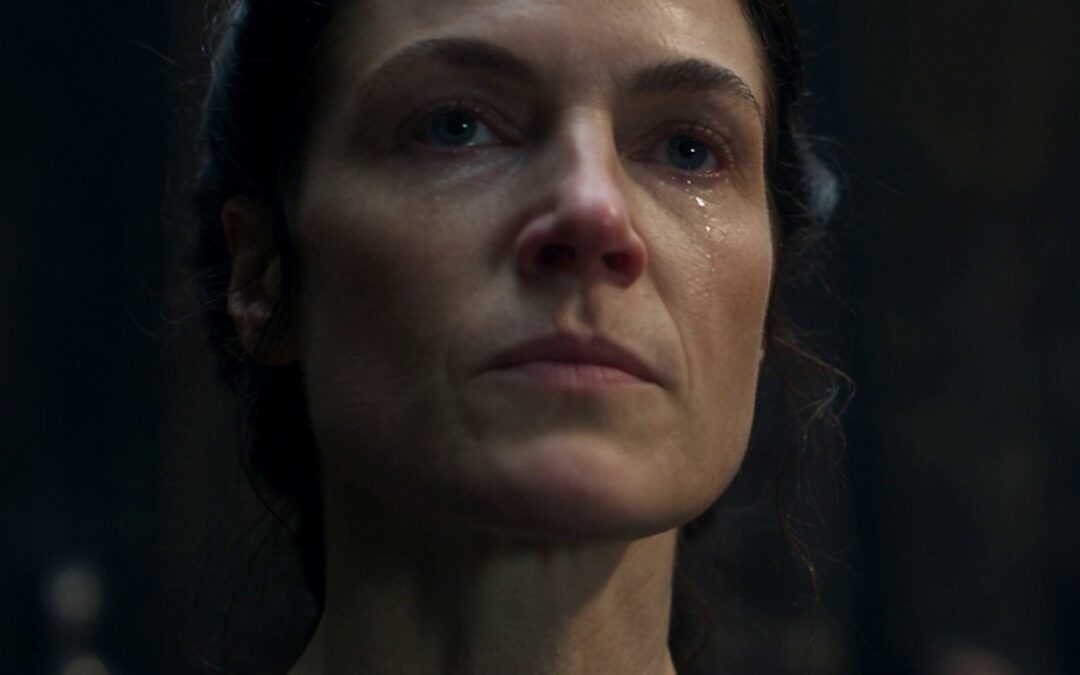
Chapter 2: The Warden’s Name
The south gate moved again.
A deep bell sounded beneath the city.
Tamsin pulled Nessa closer.
The sea horse stayed bowed.
King Corven ran to the open mosaic and looked down.
“Can it flood us?”
Tamsin listened to the bell.
One strike.
Then another.
“No,” she said.
“How do you know?”
“It’s opening outward.”
Rusk reached for the sounding disk.
The kestrel spread one wing.
He drew his hand back.
The king saw it.
“Leave the disk.”
“We need to secure the child,” Rusk said.
“She isn’t going anywhere,” Tamsin answered.
Nessa’s shoulders shook.
Tamsin put her coat around them.
It smelled of rope and rain.
“Did I open that gate?”
“No, love.”
“Then why did it hear me?”
Tamsin had no answer she could safely give.
The floor shuddered.
Water appeared in the open space below the mosaic, but it rose only to the lip of a stone stair.
A narrow passage led toward the south gate.
The sea horse stepped aside.
The kestrel stayed by Nessa.
Corven studied the passage.
“Who can close it?”
“The Warden could,” Rusk said.
“There is no Warden.”
Tamsin looked at him.
He had said it too quickly.
“Your harbor engineers have the plans,” she said.
“Send for them.”
Rusk pointed at Nessa.
“She brought both creatures here.”
“She was brought here under guard.”
“She had the disk.”
“So did I, yesterday.”
Corven took a breath.
“Enough.”
He ordered the hall cleared.
The councilors filed out beneath the broken skylight.
Two guards remained at the doors.
A third was sent for the chief engineer.
Tamsin asked the king for a blanket.
He removed the heavy cloak from his own shoulders and held it out.
Nessa did not take it.
Corven looked at the rope around her feet.
He bent and untied it.
Only then did Tamsin accept the cloak.
The knot had left a red mark on Nessa’s ankle.
Tamsin covered it with the wool.
“I should have stopped this sooner,” Corven said.
“Yes.”
He accepted the answer.
Rusk crouched beside the mosaic.
“The guardians may have been awakened by an old mechanism.”
The kestrel clicked its beak.
Rusk stood.
Corven looked at Tamsin.
“You recognized the bird.”
“My mother showed me its carving.”
“Your mother’s name?”
Tamsin watched Rusk.
“Bryn Vale.”
Rusk’s face did not change.
That frightened her more.
Corven knew the name.
“She was the south gate keeper.”
“She was dismissed,” Rusk said.
“After the old gate failed,” Tamsin replied.
“That is in the records.”
“My mother said the gate never failed.”
Nessa looked up.
“You never told me that.”
“I thought it was an old argument.”
“You kept her disk.”
“Yes.”
Tamsin remembered the night Bryn had given it to her.
Her mother’s hands had smelled of lamp oil.
She had wrapped the disk in a piece of sailcloth and made Tamsin promise to keep it dry.
Bryn had died the following winter.
Tamsin had been sixteen.
She had never learned why the promise mattered.
Footsteps sounded at the hall door.
A woman in an engineer’s gray coat entered with two assistants.
Chief Engineer Delle Marr stopped when she saw the horse.
Then she looked down the exposed stair.
“That passage shouldn’t be open,” she said.
“Will the gate flood the city?” Corven asked.
Delle listened to the bell.
“No.”
She sounded surprised.
“It’s venting pressure from the lower basin.”
“Can you close it?”
“I can inspect it.”
“I’m coming,” Tamsin said.
“Your daughter stays here,” Rusk said.
Nessa gripped her mother’s hand.
The horse raised its head.
It made no sound.
Tamsin understood its refusal anyway.
“She comes with me.”
Corven looked at the kestrel.
The bird stepped beside Nessa.
“All right,” he said.
Delle took a lantern.
They descended together.
Rusk followed last.
At the bottom, the air smelled of old stone and cold salt.
The bell sounded again.
Delle shone her lantern on the gate’s great bronze wheel.
A newer chain had been threaded through it.
She touched a link.
“This chain was installed last month.”
Rusk said nothing.
Tamsin stepped closer.
She knew the links.
Her measuring crew had checked their depth at dawn for twelve straight mornings.
They had been told the chain was part of a repair.
“Where does it lead?” she asked.
Delle traced it through a slot in the wall.
“To the north gate controls.”
Nessa pulled the disk from Tamsin’s hand.
She held it toward the slot.
Three knocks came through the stone.
The same sound she had followed on the flood night.
Delle’s lantern shook slightly.
“That’s a release weight,” she said.
“Each time it drops, it strikes the pipe.”
Rusk found his voice.
“The child may have triggered it.”
“The first flood was three nights ago,” Tamsin said.
“The chain has been here a month.”
Delle ran her fingers over a fresh scrape on the bronze wheel.
The metal had moved recently.
Tamsin met Corven’s eyes.
Nessa had heard the gate open.
She had gone to warn someone.
And the water had reached her first.
“The north gate was opened from here,” Delle said.
* * *
They closed the stair for the night.
Delle posted two engineers beside it.
The kestrel would not leave Nessa.
The horse sank beneath the mosaic, but its pale outline remained visible under the tiles.
Corven moved the hearing to the map room.
Tamsin insisted that Nessa sit beside her.
Rusk objected.
Corven ignored him.
A clerk brought the north gate record.
It was a thick book with numbered pages.
The entry for the flood night was neat.
Too neat.
Tamsin had seen the watchmen’s handwriting.
Most wrote while leaning on a damp ledge.
Ink blotted.
Numbers wandered.
This entry looked copied from a desk.
“The watchman signed it,” Rusk said.
Tamsin found the signature.
“Was he on duty?”
“He found the child.”
“That wasn’t my question.”
Corven called for the roster.
The watchman had begun his shift an hour after the gate opened.
Rusk leaned over the page.
“The time may be wrong.”
“Then the charge against Nessa is wrong,” Tamsin said.
Corven turned to the clerk.
“Bring the original gate slips.”
The clerk glanced at Rusk.
“I was told they were destroyed.”
“By whom?”
Rusk closed the book.
“Floodwater ruined several cabinets.”
“The gatehouse sits above the high-water line,” Delle said.
Rusk faced her.
“You have not inspected those cabinets.”
“I maintain that building.”
Corven sent the clerk with a guard.
Tamsin watched them leave.
She had spent years entering numbers no councilor read.
A sounding could tell a captain where to sail.
A false one could send a boat onto stone.
She knew how much damage a tidy page could do.
Delle spread a gate plan across the table.
The old south passage was marked in faded blue.
The newer chain was absent.
“Who ordered the work?” Corven asked.
“My office received a Crown work order.”
“Signed by me?”
“By the chancellor.”
Rusk folded his hands.
“The north gate needed reinforcement.”
“Why use the sealed south passage?” Delle asked.
“It was available.”
“It was sealed.”
Rusk looked toward Nessa.
“Until today.”
Tamsin recognized what he was trying to do.
He wanted the room to remember the creatures.
He wanted fear to stand in for a date.
“The chain went in last month,” she said.
“Nessa did not open the hall until this morning.”
Rusk gave her a thin smile.
“You know a remarkable amount about the chain.”
“I measured the water under it.”
“Then perhaps you helped.”
Nessa sat forward.
“My mother was with me on the flood night.”
“Where?”
“At home.”
“What hour?”
“After dark.”
Tamsin touched her hand.
“Don’t guess.”
Nessa looked down.
“We can prove where I was,” Tamsin said.
“My soundings were filed at the east quay at dusk.”
“That leaves hours,” Rusk replied.
“It leaves a route.”
Corven asked Delle to mark it.
The walk from east quay to the south passage took nearly an hour.
Tamsin had stopped at the clinic on the way home.
Nessa had been waiting there with a fever.
The clinic kept a night register.
“I’ll have it brought,” Corven said.
“Bring the keeper too,” Tamsin answered.
A paper could be changed.
A person might remember what the paper could not.
Nessa leaned against her.
“I was scared you would be angry.”
“I was scared too.”
“I took the disk.”
“You should have asked.”
“The knocking sounded like someone trapped.”
Tamsin brushed damp hair from her daughter’s forehead.
“I know why you went.”
The clerk returned with a wooden box.
A guard carried it because the bottom was wet.
Rusk pointed.
“There is your flood damage.”
Delle opened the box.
The upper slips had blurred.
The ones beneath were dry.
She set them on the table.
The flood night’s slip was missing.
The next morning’s slip remained.
Tamsin read it.
The gate had been found closed at dawn.
She checked the number beside the closing time.
It was lower than the number on the copied entry.
“That can’t be right,” she said.
“Why?” Corven asked.
“Gate turns are counted upward.”
She pointed to two earlier slips.
“Someone entered the closing turn before the opening turn.”
Delle brought the copied record close.
Rusk said, “Clerical error.”
“Then there are two errors,” Tamsin replied.
“The copied time and the turn count.”
“Errors happen.”
“Not in that order.”
She showed Corven the ink on the copied page.
The opening entry sat below a later line.
Someone had added it after the gate was closed.
The king called for the harbor registrar.
Rusk protested the hour.
Corven sent a guard anyway.
While they waited, Delle studied the sounding disk.
“There’s a second notch,” she said.
Tamsin had never noticed it.
It sat inside the deeper cut, so fine that her stiff fingers had passed over it.
Delle held it beneath the lamp.
“May I make an impression?”
Tamsin looked at Nessa.
Nessa nodded.
Delle pressed wax against the edge.
Two notches appeared.
One large.
One almost hidden.
“The old plans show that shape,” Delle said.
She unrolled the oldest sheet.
A disk was drawn beside the south gate wheel.
Under it stood a word.
WARDEN.
Rusk reached for the plan.
Corven laid a hand across it.
“Let her read.”
Delle read the note aloud.
The disk had been used to test the gate’s balance, not to open it.
The old Warden carried it during inspections.
Tamsin looked at the three waves on its face.
She had used it for the same work without knowing its name.
“Bryn kept it,” she said.
Delle checked the date.
“The plan is a hundred and twelve years old.”
“My mother was dismissed thirty years ago.”
“Someone gave it to her,” Corven said.
The harbor registrar arrived in a coat thrown over his nightclothes.
He examined the copied entry.
Then the original slips.
“The addition was made after the page was bound,” he said.
“Can you tell whose hand it is?” Corven asked.
“Not from this page.”
Rusk stepped back.
Tamsin saw it.
He had known which question mattered.
The registrar looked at the work order Delle had brought.
“This seal is genuine.”
Rusk spread his hands.
“Of course it is.”
“But the order number belongs to another office,” the registrar said.
“Which office?”
“The royal household.”
The room went quiet.
Corven reached for the paper.
Someone in his own household had ordered the hidden chain.
* * *
By morning, the north quay had heard about the guardians.
People crowded the streets below the map room.
Some called Nessa the Warden.
Others called her dangerous.
Tamsin kept her away from the windows.
The king assigned two guards to protect their door.
He also ordered every gate watched by engineers.
Rusk remained at the palace.
Corven said an accusation needed evidence.
Tamsin agreed.
She did not like how relieved Rusk looked.
At midday, a message arrived from the harbor office.
Tamsin’s employment was suspended pending inquiry.
Her eleven copper pieces stopped at once.
Corven offered her wages from the palace treasury.
She refused.
“The harbor office can restore what it owes me.”
“That may take time,” he said.
“I know.”
She had three days of food at home.
She also had a neighbor who would help.
She would not let the king turn her daughter’s hearing into a favor.
Nessa was sitting on the floor with the kestrel’s shadow beside her.
The bird itself perched on the roof.
Its shadow had not moved with the sun.
“Are we going home?” she asked.
“Soon.”
“Will the watchman come?”
“Not while the guards are here.”
“What about Chancellor Rusk?”
Tamsin knelt.
“We’re finding out what he did.”
Nessa held the disk.
“Grandmother knew, didn’t she?”
“Some of it.”
“Why didn’t she tell you?”
Tamsin thought of Bryn’s thin hands.
“She may have been waiting until I was older.”
“You were sixteen.”
“Yes.”
“I’m nine.”
“I know.”
Nessa put the disk in Tamsin’s palm.
“You can keep it.”
“It belongs to you too.”
A knock interrupted them.
Delle entered with a harbor inspector named Pell.
He carried a leather case of measurements.
“We found the chain’s invoice,” Delle said.
“Who paid?”
“The royal household.”
“Whose account?”
Pell opened the case.
“The Household Relief Fund.”
Tamsin knew the fund.
It repaired homes after storms.
“The flood repairs will come from it too,” she said.
“Yes,” Pell replied.
“So the fund paid for the chain that caused the flood.”
Delle nodded.
“The same fund has been buying the damaged properties.”
“Through whom?”
“Three separate agents.”
“Who controls the fund?”
Pell looked at the door.
“Chancellor Rusk.”
That was proof of opportunity.
It was not yet proof of the act.
Corven joined them with the registrar.
He had found the account entries.
The purchases were legal on their face.
Each owner had signed.
Each price was low.
People desperate to leave flooded homes had accepted what they could get.
Rusk could argue he had helped them.
“He will,” Tamsin said.
Corven looked surprised.
She had listened to Rusk for one morning.
That had been enough.
A guard brought another message.
The clinic’s night register had vanished.
The keeper had been told it was needed at the palace.
She had given it to a man wearing household colors.
Corven had sent nobody.
Nessa heard every word.
Tamsin watched her grow still.
“Can they take me?” she asked.
“No.”
Corven crouched at a careful distance.
“I won’t let them.”
Nessa looked at him.
“You let them tie the rope.”
He lowered his eyes.
“Yes.”
He did not offer an excuse.
Tamsin was glad.
Pell asked if they should seize Rusk’s offices.
Corven shook his head.
“Seal the accounts first.”
“And the chancellor?” Delle asked.
“Keep him in view.”
Tamsin held up the disk.
“We need to learn who gave this to Bryn.”
Delle knew a person who might.
The former south gate engineer lived across the estuary.
He had retired after Bryn was dismissed.
His name was Iven Holt.
He had signed the last inspection before the gate was sealed.
They traveled by royal launch.
The kestrel followed overhead.
Nessa slept against Tamsin’s side.
Corven sat across from them.
Without his coat, he looked less like a king.
The crossing took forty minutes.
Holt met them at his door.
He was eighty and walked with a cane.
He saw the disk before he saw the bird.
“Bryn kept it,” he said.
“Yes,” Tamsin answered.
“Did she send you?”
“She was my mother.”
Holt’s grip tightened around his cane.
He invited them inside.
His shelves held rolled plans, tide tables, and a chipped cup full of nails.
Tamsin felt at ease there.
Holt said Bryn had discovered a second control path to the north gate.
Someone had built it through the sealed south passage.
She had asked for an inquiry.
Instead, she was dismissed.
“Who ordered the path?” Corven asked.
“It was unfinished then.”
“Who stopped your inquiry?”
Holt stared at the king.
“Your father’s council.”
Corven absorbed that.
His father had died twelve years earlier.
Rusk had served on that council.
Holt fetched a narrow ledger.
It recorded each old Warden’s name.
The last official entry was crossed through.
Maren Vale.
Tamsin read it twice.
“My grandmother?”
Holt nodded.
“Your mother’s mother.”
“Why was her name struck out?”
“She opposed the private sale of gate rights.”
Corven turned sharply.
“Gate rights cannot be sold.”
“Not while a Warden lives,” Holt said.
He pointed to an old provision on the page.
“The Crown rules the city.”
“The Warden holds the gates in trust.”
No one had inherited the office after Maren’s death.
Bryn had refused to claim it publicly.
She feared the same council that had destroyed her mother’s standing.
“Then why keep the disk?” Tamsin asked.
Holt looked at Nessa.
“Because a Warden can choose who carries the trust next.”
“Bryn chose you?” Corven asked.
Tamsin shook her head.
Holt opened the ledger to a folded letter.
Bryn’s writing filled half the page.
She had named Tamsin as her successor.
Tamsin had never seen the letter.
The seal was unbroken.
Holt said Bryn had left it with him for safekeeping.
“She wanted me to give it to you when the council changed,” he said.
“Why didn’t you?”
“I was afraid.”
Tamsin looked at him.
He did not ask forgiveness.
He opened the ledger to the back.
A newer letter lay inside.
It bore Rusk’s seal.
Dated six weeks earlier.
Holt had been ordered to surrender every Warden record.
He had hidden this ledger before the men arrived.
“Why six weeks ago?” Corven asked.
Holt touched the map beneath his hand.
“The Crown was about to renew the harbor charter.”
Rusk had opened the gate to make the lower streets seem unsafe.
He meant to buy them cheaply and gain control of the land beneath the new seawall.
And if Nessa took the blame, nobody would listen when Tamsin claimed her family’s right to examine the gates.
* * *
They returned at dusk.
Corven called an open council hearing for the next morning.
Delle would testify.
The registrar would testify.
Holt agreed to come.
Tamsin asked to speak last.
“You are the one they harmed,” Corven said.
“That doesn’t make me the strongest witness.”
He accepted her choice.
Nessa slept at the palace under the guard of the kestrel.
Tamsin spent the night with the ledger.
She found entries for every gate repair Maren had approved.
The notes were practical.
Replace a pin.
Clear sand from a channel.
Ask the fishers before closing the east inlet.
Maren had not written like someone protecting a title.
She had written like someone protecting neighbors.
Near dawn, Tamsin found a page with three wave marks.
The same marks were on the disk.
Beside them were instructions for a balance test.
The Warden placed the disk in a slot at the south wheel.
If the gate was safe, its weight made the wheel ring once.
If the counterweight had been altered, it rang three times.
Nessa had heard three knocks.
Tamsin carried the page to Delle.
“Can the test still work?”
“The slot is intact.”
“Then do it before the hearing.”
They went down with Corven and two guards.
The sea horse appeared beneath the tiles as Nessa approached.
Tamsin asked her to stay above.
“I want to hear it,” Nessa said.
“You can hear it from here.”
Nessa thought about that.
“All right.”
Tamsin descended with Delle.
The disk fit the slot precisely.
Delle released it.
Three knocks sounded through the wheel.
She removed the newer chain.
The test rang once.
Corven had his guards witness both sounds.
Delle wrote the result in her own inspection book.
Tamsin made the registrar copy it.
Then they restored the chain exactly as they had found it and sealed the passage.
The morning hearing filled the Hall of Soundings.
Workers from the lower streets stood beside merchants and councilors.
The broken skylight had been covered with canvas.
The kestrel waited on a beam above it.
The sea horse’s shape lay beneath the mosaic.
Nessa wore her own shoes.
Tamsin had fetched them from the guardroom.
Rusk stood at the council table.
He looked rested.
That worried her.
Corven opened the hearing.
He described the charge against Nessa.
Then he withdrew it.
A murmur moved through the hall.
Rusk rose.
“The king is free to spare a child.”
“That is not why I withdrew it,” Corven said.
“Then I hope he has more than a bird.”
Delle presented the chain.
She explained its route.
The registrar presented the false entry.
Pell presented the fund accounts.
Rusk listened without interruption.
When they finished, he bowed his head.
Then he spoke.
“After the flood, families needed money.”
He turned toward the lower streets.
“I authorized purchases because the Crown could repair those homes.”
“Your agents offered less than half their value,” Pell said.
“They were damaged.”
“You controlled the damage,” Tamsin replied.
Rusk faced her.
“You cannot prove that.”
He was right about the missing step.
Delle could prove the chain caused the gate to open.
The accounts could prove Rusk paid for the chain.
He might still say he meant to strengthen the gate.
Rusk placed both palms on the table.
“The old south passage was unstable.”
“I authorized an emergency link.”
“The flood showed we needed more work.”
“Then why conceal the link?” Corven asked.
“To avoid panic.”
“Why change the gate record?”
“I did not.”
He looked at Tamsin.
“Your family has wanted the Warden’s office for generations.”
“Bryn never claimed it,” she said.
“She hid the disk.”
“She kept it.”
“Now your daughter arrives with creatures from a legend.”
He let the hall look at Nessa.
The kestrel’s talons closed around the beam.
Tamsin stepped between Rusk and her daughter.
“Speak to me.”
“I am.”
“No.”
“You’re making her carry your argument.”
Rusk turned to the council.
“Will you hand every harbor gate to this family because a child frightened us?”
Several members shifted.
One nodded.
Tamsin understood why.
Even with the evidence, they feared giving up control.
Holt came forward.
He showed Bryn’s letter.
He showed Maren’s name.
Rusk barely glanced at either.
“Old claims,” he said.
“The charter is law.”
“The charter also requires a public Warden’s inspection before gate rights change,” Holt replied.
“Bryn missed her chance.”
“She was dismissed before she could perform it.”
“By a lawful council.”
Corven’s face hardened.
“My father’s council,” he said.
Rusk spread his hands.
“Exactly.”
Tamsin brought out the disk.
She held it where the room could see the two notches.
“This was called a key at my daughter’s hearing.”
“It opens no gate.”
“It tests one.”
She asked Delle to read her inspection.
The three knocks with the chain attached.
The single ring after its removal.
Rusk shrugged.
“The test proves the link needs adjustment.”
“It proves the weight was changed,” Delle said.
Rusk opened his mouth.
Tamsin raised a second document.
She had found it in Maren’s ledger.
It listed the exact weight of each gate counterbalance.
The new chain carried a weight stamped with Rusk’s household mark.
Delle had measured it.
It matched the amount needed to pull the north gate open at high tide.
“That may be an error,” Rusk said.
“It is a very exact error,” Corven replied.
Rusk was not finished.
“You cannot know what I intended.”
A voice came from the hall entrance.
“I can tell them what you told me.”
The watchman who had found Nessa walked in beside two guards.
His name was Edrin Shaw.
Tamsin had expected him to hide.
Instead, he stood before the council with his cap crushed in his hands.
Corven had ordered him brought as a witness.
The guard confirmed Shaw had asked to speak without bargaining for protection.
Rusk stared at him.
Shaw looked at Nessa.
“I said I found her by the lever.”
“I found her trying to close it.”
Nessa squeezed Tamsin’s hand.
Shaw continued.
“Rusk told me to write it the other way.”
“Did I?” Rusk asked.
“You paid my brother’s debt last month.”
“I said you owed me the truth.”
Rusk’s face went still.
Shaw reached into his coat.
He produced a folded instruction bearing Rusk’s signet impression.
It told Shaw where to stand when the flood alarm sounded.
The time had been written before the flood.
The registrar checked the seal.
Pell checked the payment entry.
Two records, kept for different reasons, confirmed Shaw’s account.
Rusk looked toward the doors.
Guards stood there.
Corven did not call for a sentence.
He ordered the city magistrate to take the evidence and open a formal inquiry.
Rusk’s access to the gates and accounts was suspended.
The household agents’ purchases were frozen.
Shaw was placed under summons, not praised for speaking late.
That was fair.
The hall had no reason to forgive him yet.
Rusk turned once more to Tamsin.
“You think the gates will thank you?”
“No,” she said.
“I think people will.”
He looked at Nessa.
Tamsin moved closer to her daughter.
Rusk said nothing more.
The magistrate led him out.
Nessa waited until the doors shut.
“Can we go home?”
“Yes.”
“Will the horse come?”
Tamsin looked at the pale shape beneath the floor.
“I think it knows the way.”
* * *
The inquiry took eleven weeks.
Tamsin spent most of them working.
Corven restored her harbor wages.
The office paid the weeks it had withheld.
She used the first coins to replace the worn soles on Nessa’s shoes.
The rest went to rent and groceries.
No legend had ever made those bills disappear.
The magistrate heard engineers, clerks, owners, and guards.
Rusk’s agents had bought twenty-three properties.
The court set the sales aside where the owners had been misled by the flood damage he caused.
People who wanted to keep their homes could.
People who wanted to leave received an independent valuation.
The city repaired the north gate before winter.
Delle oversaw every bolt.
Tamsin checked the depth each morning.
Shaw admitted his part in the false charge.
He lost his watch post.
The magistrate required him to give a full account before deciding his penalty.
Nessa never had to speak to him.
She chose to write one sentence for the record.
I tried to close the gate.
Tamsin watched her sign it.
Her letters leaned uphill.
When the court finally ruled, Rusk was found responsible for the unlawful gate work, the false record, and the property scheme.
He was removed from office and sentenced under the city’s laws.
The judgment took an afternoon to read.
Tamsin listened to every word.
Afterward, she walked Nessa down to the east quay.
They bought two hot rolls.
Nessa fed a crumb to a gull.
The kestrel watched from a warehouse roof and did not object.
At home, Tamsin opened Bryn’s letter again.
It named her Warden.
It did not name Nessa.
Bryn had wanted her daughter to choose.
That mattered more to Tamsin than the title.
Corven came to their kitchen three days later.
He arrived without guards inside the house.
He had to duck beneath the doorframe.
Nessa laughed for the first time in his presence.
“You’re taller in here,” she said.
“The room is smaller,” he replied.
He brought a revised harbor charter.
The council had accepted the old Warden provision.
The office would inspect the gates independently.
Its budget would be public.
The Warden could not sell gate rights or pass the office to a child without that child’s consent when grown.
“I thought you would want that last part,” Corven said.
“I do.”
“The council wants you to take the office.”
Tamsin read the pay line.
It was more money than she had ever earned.
She closed the charter.
“I’ll take it if the inspection records stay open to everyone.”
“They will.”
“And Delle keeps authority over repairs.”
“She agreed.”
“And the lower streets choose two people to review the gates with us.”
Corven looked at her.
“The charter doesn’t require that.”
“Then change it.”
He took back the paper.
“All right.”
Nessa sat under the table with her shoes off.
“What does a Warden do?” she asked.
“Checks things,” Tamsin said.
“That sounds like your old job.”
“It is.”
Corven smiled.
“Your mother is making it a larger job.”
Tamsin thought of Maren’s notes.
Ask the fishers.
Clear the channel.
Check the chain.
That was a title she could live with.
When the charter returned, it held her changes.
She signed it at the harbor office, not the palace.
The two reviewers from the lower streets signed beside her.
One was a carpenter whose home had flooded.
The other was the clinic keeper who remembered Tamsin and Nessa on the flood night.
Her register had been recovered from Rusk’s office.
Its pages were intact.
The old lie had reached into their house, their work, and their ordinary hours.
The repair had to reach those places too.
Holt visited the next week.
He stood awkwardly in Tamsin’s doorway.
“I should have brought you Bryn’s letter years ago.”
“Yes,” she said.
“I thought I was keeping you safe.”
“I know.”
“That doesn’t excuse it.”
“No.”
He looked at Nessa, who was drawing boats at the table.
“May I help with the old plans?”
“You may give them to Delle.”
“You don’t want me on the inspections?”
“Not yet.”
Holt nodded.
He left the plans.
Months passed.
The lower streets dried.
Families returned.
Fresh paint covered the water marks on doors, though some owners left a small line visible to remember where the flood had reached.
Nessa started school again.
For a while, children asked her to make the horse appear.
She told them it came when it wanted.
One boy asked whether the kestrel ate nails.
Nessa said she had never offered it any.
Tamsin was grateful for such questions.
They sounded like childhood returning.
On the first clear morning of spring, Corven met them at the Hall of Soundings.
The skylight had been repaired.
The rope circle was gone.
The mosaic lay flat and dry.
Nessa stopped at its edge.
“Do I have to stand there?”
“No,” Tamsin said.
Corven stayed back.
Delle had prepared the annual gate test.
The council wanted Nessa present because the guardians had answered her.
Tamsin had agreed only after Nessa chose for herself.
“I want to watch,” Nessa had said.
“I don’t want to be part of the test.”
“That is enough.”
Now Tamsin asked again.
“Still want to stay?”
Nessa nodded.
Delle handed Tamsin the sounding disk.
For years, it had been a weight on a chain.
For Rusk, it had been a way to frighten a court.
For Bryn, it had been a promise she could not safely explain.
Tamsin slid it into the gate wheel.
One clear ring sounded beneath the floor.
Delle marked the result.
No one bowed.
No one needed to.
When the work was done, Nessa approached the mosaic.
The sea horse’s shape shimmered faintly below it.
“May I touch it?” she asked.
Tamsin looked at the horse.
It lifted its pale head.
“You may ask,” Tamsin said.
Nessa set her palm on the tile.
The horse touched the other side.
* * *
Seven years later, the Hall of Soundings filled with people again.
The lower streets sent their reviewers.
The harbor crews brought their ledgers.
Corven attended as king, but he sat among them.
Tamsin stood at the gate wheel with gray beginning at her temples.
Her left hand still stiffened in cold weather.
She had learned to hold the disk in her right.
Nessa was sixteen.
She had spent the summer helping Delle inspect the harbor pipes.
She could identify a blocked channel by listening at the wall.
She could also refuse a meeting when she wanted to go sailing.
Tamsin considered both skills useful.
The annual test began at noon.
Nessa watched from the repaired rail.
She wore her own shoes.
Above her, the Iron Kestrel rested in the sunlight.
The sea horse moved beneath the mosaic.
Tamsin placed the disk in its slot.
One ring.
Delle entered the result.
The reviewers signed.
Corven asked whether the city could open the hall to schoolchildren that afternoon.
Tamsin looked at Nessa.
“You’re the one they’ll ask about.”
“I know.”
“Do you want to stay?”
Nessa considered the crowd.
Then she looked down through the tiles.
“Yes,” she said.
“I’ll tell them about the pipes.”
Tamsin smiled.
“And the guardians?”
“If they ask.”
The doors opened.
Children came in with their teacher, whispering at the great bird overhead.
One little girl stopped at the edge of the mosaic.
“Is the horse angry?” she asked.
Nessa knelt beside her.
“I don’t know,” she said.
“But you can ask.”
The girl put a careful hand on the tile.
Beneath it, the horse lifted its head.
The child laughed.
Tamsin heard another sound beneath the hall.
A single, steady ring from the safe gate.
The ledgers were open.
The homes were occupied.
The false charge was gone.
Bryn’s disk still did its work.
Nessa had a life to choose.
Tamsin stood beside her daughter while sunlight crossed the harbor floor.
THE END








