The Little Girl Saw Her Missing Brother in a Photograph Taken Seconds Ago… Then Her Aunt’s Perfect Greenhouse Exposed a Terrifying Lie
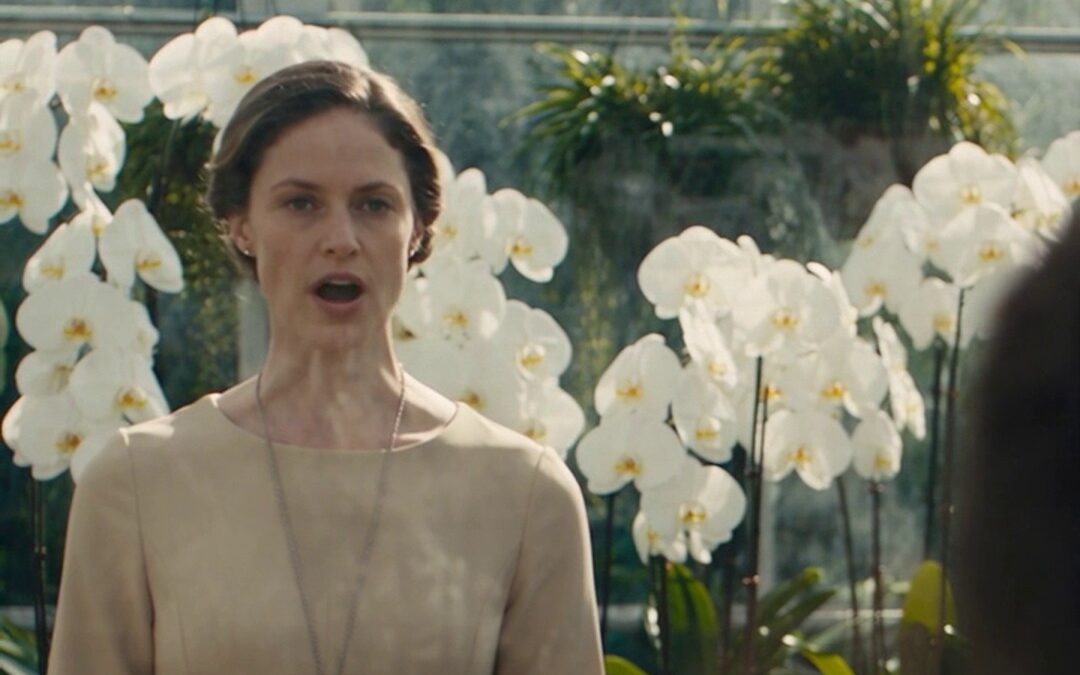
Chapter 2: What the Photograph Kept
Nolan carried Owen out of the potting room.
Wren held the greenhouse door open.
Celia stood beside the spilled lemonade.
No one touched the photograph.
Owen’s weight surprised Nolan.
For nineteen days, he had imagined lifting his son again.
In every imagined version, Owen had felt lighter.
The real boy was solid and shaking.
“Are you hurt?” Nolan asked.
Owen shook his head.
“Are you sick?”
“No.”
“Can you walk?”
Owen nodded.
Nolan kept holding him.
Wren touched Owen’s sleeve.
“I counted right,” she said.
“You always do.”
His voice sounded thin.
Wren pressed her face against his arm.
Celia took one careful step forward.
“Owen needs to sit down.”
Nolan turned away from her.
“He needs a doctor.”
“I can call someone.”
“Wren called the police.”
Celia looked toward the open door.
Beyond it lay the potting room.
Nolan could see a narrow couch, a folded blanket, and a tray holding an untouched sandwich.
A second door stood at the back.
He had no idea where it led.
The sight of it made him hold Owen harder.
“Were you here all nineteen days?” he asked.
Owen shook his head.
“Where were you?”
“I don’t know the name.”
Celia closed her eyes.
Nolan felt something cold settle in his chest.
Owen had never been far from somebody who knew exactly where he was.
“Who brought you here?”
Owen looked at Celia.
She opened her eyes.
“Let him rest, Nolan.”
“Who brought you here, Owen?”
“A man drove.”
“What man?”
“He said he worked for Aunt Celia.”
A siren sounded beyond the long drive.
Celia’s expression changed.
It was brief.
Then she became the woman who handled emergencies at charity events.
“I’ll meet them outside.”
“You’ll stay here,” Nolan said.
“You cannot keep me in my own house.”
“I’m asking you to wait.”
He had no power to make her.
He knew it.
So did she.
Nolan moved his children toward the greenhouse’s main entrance.
Two uniformed officers appeared through the glass.
Wren ran ahead and opened the door.
One officer crouched before Owen.
“I’m Officer Bell.”
Owen stayed close to Nolan.
“Can you tell me your name?”
“Owen Mercer.”
Officer Bell’s face tightened.
His partner spoke into a radio.
An ambulance was already on its way.
Bell asked Nolan to set Owen on a bench.
Owen refused to let go.
Bell did not insist.
Celia crossed the room.
“I want to explain.”
Bell raised a hand.
“You’ll have a chance.”
“She was helping me,” Owen said.
Nolan looked down.
“Who was?”
“The lady where I stayed.”
“Did she tell you her name?”
“Mrs. Vale.”
Celia spoke quickly.
“She’s a licensed caregiver.”
Bell turned toward her.
“How do you know which lady he means?”
The greenhouse seemed to shrink.
Celia stared at the wet place cards.
Nolan felt Owen’s fingers twist in his shirt.
A paramedic arrived with a medical bag.
She checked Owen gently while he sat on Nolan’s lap.
His temperature was normal.
His pulse was fast.
He had lost some weight, but the paramedic found no immediate injury.
Owen accepted a bottle of water.
Wren watched every swallow.
Bell asked whether Nolan would hand over the photograph.
Nolan hesitated.
It was the first proof he had touched in nineteen days.
Bell explained that she would record where it came from and give him a receipt.
Nolan gave it to her.
Wren’s yellow star faced up.
Celia stared at it.
Owen stared too.
“That’s the picture Aunt Celia wanted,” he said.
Nolan’s hand tightened around his son.
“What picture?”
“The one Wren took before.”
Wren lifted her head.
“I took one?”
Owen nodded.
“At the party.”
The party had been three weeks earlier.
Celia had hosted a fundraiser at the house two days before Owen vanished.
Wren had used almost an entire pack of film.
Nolan remembered Owen laughing as she photographed everyone’s shoes.
He did not remember a photograph anybody wanted hidden.
Bell asked Owen where the earlier picture was.
Owen looked at Celia.
“She told me Dad took it.”
Nolan shook his head.
Owen’s face crumpled.
“I thought you did.”
“I didn’t, buddy.”
“You signed the papers too.”
“I didn’t sign anything.”
Celia’s voice came from across the reflecting pool.
“Nolan, please.”
He looked at her.
For nineteen days she had brought groceries, called detectives, and stood beside him at a candlelight vigil.
Now she looked afraid of a child’s camera.
“What papers?” Bell asked.
Owen wiped his mouth with his sleeve.
“The papers that said Dad wanted me to stay away.”
* * *
At the hospital, Nolan learned how many questions a reunion could hold.
A doctor checked Owen.
A social worker brought him a sandwich.
A detective named Tessa Park came when Owen was ready to speak.
Nolan stayed beside his son.
Wren sat against his other side, drawing stars on a paper cup.
Owen answered what he could.
On the morning he vanished, Celia had picked him up after soccer practice.
She was listed as an approved adult at the school.
She said Nolan had been called to work.
Owen climbed into her car.
Nolan had been at work.
His supervisor’s time records showed it.
The detail had made Celia’s story easy to believe.
She drove Owen to a small house with blue shutters.
Mrs. Vale met them there.
Celia told him it was a quiet place for children whose families were having a hard time.
Owen asked to call home.
Mrs. Vale said he could after the paperwork was finished.
The call never happened.
Later, Celia showed him a form bearing Nolan’s signature.
The form said Owen would stay with Mrs. Vale for a while.
“She said you needed help with Wren,” Owen told him.
Nolan felt Wren lean closer.
“What did you think?”
“I thought you’d come when you were ready.”
Nolan wrapped an arm around both children.
“I was looking every day.”
“I know that now.”
Park let the room settle.
Then she asked Owen about the photograph.
At Celia’s fundraiser, Wren had chased him around with her camera.
She took a picture of him beside the greenhouse window.
Owen saw it develop.
There were three people reflected behind him.
Celia was one.
The other two stood in her office, beyond an open glass door.
Owen recognized the man who handled the trust left by his mother.
He did not know the woman.
He only remembered her red coat.
Celia snatched the picture before Wren could wave it dry.
She told Owen the film had failed.
Two mornings later, she collected him from practice.
Nolan looked at Park.
His late wife, Laurel, had set up a trust for both children after her first illness.
Celia managed it.
Her accountant sent Nolan annual summaries.
He had never challenged them.
He had been busy keeping his children fed and getting to work on time.
Park asked for the accountant’s name.
“Benton Shaw.”
Owen nodded.
“That’s the man in the picture.”
Park wrote it down.
She did not tell Nolan what it meant.
She did tell him not to contact Shaw.
The police would seek records from the school, the caregiver, and the trust.
Nolan asked whether he could see the form Owen had described.
Park had already requested it.
Mrs. Vale’s attorney had called the station after officers reached her house.
That did not make Nolan feel better.
It meant she knew she needed one.
The next morning, Park showed Nolan a copy.
They met at the police station.
Wren stayed with a neighbor she trusted.
Owen stayed beside Nolan.
The form was titled “Temporary Care Agreement.”
It named Mrs. Vale as a caregiver.
Celia’s name appeared as the arranging family member.
Nolan’s signature sat above the date Owen disappeared.
It looked almost right.
He studied the first letter.
Laurel used to tease him about the way his N rose too high.
This one rose perfectly.
His own signature had a small break in the last stroke because of an old injury to his hand.
This one did not.
“I didn’t sign it,” he said.
Park nodded.
“We’ll compare the original with known samples.”
“Where did they get mine?”
“We’re checking.”
Nolan kept staring.
The address printed beneath his name was his old apartment.
He had moved five years earlier.
Only one place in the family still carried that address.
Laurel’s original trust documents.
He told Park.
She made another note.
Nolan worked with paper more often than anyone guessed.
The city still kept some bus maintenance records in binders.
When a part failed, he had to show exactly who had signed for it and when.
He knew a copied signature when it came from an older form.
He also knew the date on Owen’s agreement did not line up with the page.
The text above it had been printed in a different shade of black.
Park asked him to explain.
He showed her under the desk lamp.
The signature and address were faint around their edges.
The care instructions were sharp.
Someone had reproduced an old signature, then added a new agreement around it.
A laboratory would have to confirm how.
Nolan understood that.
He was grateful Park understood it too.
She turned the page over.
A second name appeared at the bottom.
Benton Shaw had witnessed the agreement.
Owen pressed close to his father.
“That’s the man from the picture.”
Park looked at both of them.
She had already found Shaw’s name on the trust.
Now it was on the paper that kept Owen away.
* * *
Celia’s lawyer called Nolan that afternoon.
He used a careful voice.
Celia wanted to help Owen settle in.
She had been misunderstood.
She had arranged temporary care because she feared Nolan was overwhelmed.
Nolan asked whether Celia had reported Owen missing while knowing where he was.
The lawyer said he could not discuss an active investigation.
Nolan ended the call.
Ten minutes later, his supervisor called.
A complaint had reached the transit department.
It said Nolan had left work repeatedly during scheduled shifts and might be unsafe around heavy equipment.
His supervisor had checked the records.
Nolan had taken approved leave.
Still, someone had made the complaint.
The timing felt clear.
Park told him to save the voicemail.
He did.
He also wrote down the time of Celia’s lawyer’s call.
Then he made dinner.
Owen wanted toast.
Wren wanted toast because Owen did.
They sat at the small kitchen table while rain struck the window.
For nineteen days, Nolan had served Wren on one side and stared at the empty chair on the other.
Now Owen occupied it.
He cut his toast into four pieces.
Wren watched him.
“You can have my jam,” she said.
“I don’t want jam.”
“You used to.”
“I know.”
Nolan almost corrected him.
Then he stopped.
Nineteen days had happened to Owen.
The boy who came home did not owe anyone an immediate return to every old habit.
They ate without turning on the television.
Afterward, Owen asked whether Nolan would check the front door.
Nolan checked it.
Then Owen asked whether the bedroom door could stay open.
Nolan left it open.
When both children were asleep, he sat on the hallway floor where he could see them.
His phone lit up.
An unknown number had sent a photograph.
It showed Wren leaving school with Nolan six months earlier.
There was no message.
The picture might have come from a school event.
It might have meant nothing.
Nolan sent it to Park.
Her response came five minutes later.
Keep the children home tomorrow.
Officers would increase patrols near the house.
Nolan looked through the hall window.
A car passed.
Then the street was empty.
He did not chase the car.
He did not call Celia.
He waited for the detective to do her work.
At nine the next morning, Park arrived with another investigator.
They had spoken with Mrs. Vale.
She had agreed to provide her records.
Her house was registered as a small residential care service for children whose guardians needed short stays.
The records showed she had accepted Owen under the agreement bearing Nolan’s signature.
She had believed he was there with a parent’s consent.
At first, she said, Celia answered every request to contact Nolan.
Mrs. Vale had begun to worry when Owen asked to call home repeatedly.
She wrote those requests down.
“Why didn’t she report it?” Nolan asked.
“She says she was preparing to,” Park said.
“That’s easy to say now.”
“Yes.”
Park did not soften it.
Mrs. Vale’s notes mattered.
So did her phone records.
They showed daily calls from Celia.
The day before Wren took the greenhouse photograph, Celia told Mrs. Vale to bring Owen to the estate.
Mrs. Vale asked why.
Celia said Nolan had signed an updated agreement and the boy was returning home.
No updated agreement had been found.
Owen had spent one night in the potting room while Celia prepared the luncheon.
Nolan thought of the couch.
The sandwich.
The orchids arranged in front of the glass.
He asked about Shaw.
Park said financial investigators had begun reviewing the trust.
She could not share much yet.
What she did share was enough.
A large payment had left the children’s trust shortly before Owen vanished.
It had gone to a company connected to Celia’s design business.
Celia’s firm was in trouble.
The payment had been described as a loan.
There was no signed loan agreement.
Nolan had asked for an independent accounting two days before Owen disappeared.
He remembered the email.
He had sent it after finding that Laurel’s memorial scholarship, funded through the trust, had made no awards the previous year.
Celia told him the applications were still being reviewed.
He had believed her until the accountant’s summary arrived.
The numbers did not match.
Park watched him remember.
“Did Celia know you’d asked?”
“I copied her.”
“And Mr. Shaw?”
“Yes.”
Wren came into the room carrying the instant camera.
She placed it on the table.
“I found more stars,” she said.
The camera’s empty film compartment held three yellow stickers.
Owen had put them there before the fundraiser.
Nolan looked at the little stars.
He had spent nineteen days searching woods and roads.
The first clue had been waiting inside his own daughter’s camera.
Park’s phone rang.
She stepped onto the porch.
When she returned, her face was set.
Shaw had spoken with investigators.
He said Celia directed every transfer.
He had documents to prove it.
Then he told them why she had taken Owen.
The boy had heard her say the trust would be empty before his father could stop her.
* * *
Nolan expected Celia to deny everything.
She did.
Through her lawyer, she said Shaw had moved money without her approval.
She called the care agreement an unfortunate attempt to protect Owen during a family crisis.
She said Nolan’s exhaustion had worried her.
She pointed to his missed shifts.
She pointed to the nights he had left the children with neighbors while he searched.
She pointed to the fact that he had once fallen asleep in his car outside the police station.
Each fact was true.
The conclusion was not.
Nolan showed Park his leave approvals.
His neighbor confirmed the children had been safe.
A security camera outside the station showed him arriving after a sixteen-hour search.
He had slept for forty minutes before driving home.
Celia’s lawyer asked a court to restrict public release of the trust records while the investigation continued.
That request was ordinary enough.
Her public statement was not.
It described her as a woman who had “made difficult choices for vulnerable children.”
Nolan read it once.
Then he folded the newspaper.
Owen asked whether Celia could make him go back.
“No,” Nolan said.
He looked at Park before promising more.
Park nodded.
The agreement had no valid parental consent.
Mrs. Vale had been told not to contact Owen.
Celia had no right to place him there.
Owen slept better after that.
Not well.
Better.
He began leaving his door open only a few inches.
Wren still slept with her camera beside her pillow.
The police found the anonymous photograph’s source.
It had been taken from an old school newsletter and sent through an online account created that week.
They could not immediately prove who controlled the account.
Park kept it in the case.
She also told Nolan when officers began seeking a court order for Celia’s business records.
No one asked him to confront her.
No one needed him to.
His contribution had already changed the direction of the investigation.
He had recognized the copied signature.
He had kept the accountant’s summaries.
He had saved the email requesting an audit.
And Wren had taken the photograph.
The earlier photograph remained missing.
Celia said she had thrown it away because it was blurred.
Wren disagreed.
“It was good,” she said.
“Owen was making a face.”
Owen remembered more.
He had seen Celia take the photograph into her office.
Shaw had followed her.
The woman in the red coat had gone to the driveway.
Wren remembered the woman too.
“She had a white folder,” she said.
Park asked whether the folder had writing on it.
Wren shook her head.
“It had a flower.”
Celia’s design firm used a white camellia as its logo.
Park wrote that down.
Nolan asked what a photograph of three adults could prove.
“Maybe nothing alone,” Park said.
“Maybe when we know where everyone was, it proves more.”
Financial investigators found that Celia’s firm had taken payments from clients for homes it had not completed.
The firm owed contractors.
A lender had demanded repayment.
The trust transfer covered the immediate debt.
Another audit would expose it.
Nolan had requested that audit.
Owen had overheard Celia and Shaw arguing about it during the fundraiser.
He had not understood every word.
He understood “your father will see.”
He understood “the children’s money.”
He understood Celia saying, “I can keep him quiet until this is fixed.”
Celia claimed she meant Shaw.
Owen said she was looking at him.
That was his memory.
The investigators did not ask him to repeat it for every adult who wanted to hear.
They recorded his account once with a trained interviewer.
Nolan was glad.
One evening, while Owen built a tower of folded towels on the living room rug, Wren asked why Celia had smiled at the vigil.
Nolan looked at her.
“She was standing next to you,” Wren said.
“There were cameras.”
He remembered the candles.
Celia’s hand on his shoulder.
Her face turned toward the local news crew.
“I don’t know what she felt,” he said.
“I know what she did.”
Wren considered that.
Then she added another towel to the tower.
The stack leaned.
Owen caught it.
For a moment they were simply children disagreeing about whether a tower needed a stronger base.
Nolan went to the kitchen and let himself lean against the counter.
He had imagined revenge many times during the search.
Now he wanted records, witnesses, and a judge who would hear his children without making them perform their pain.
Park called the following morning.
Investigators had found a draft message on Shaw’s computer.
It was addressed to Celia.
It warned that Nolan’s audit request would uncover the trust transfer within weeks.
The draft was dated the night before Owen disappeared.
There was also a reply from Celia, recovered from the company’s records.
It contained only four words.
“I’ll handle the boy.”
* * *
The confrontation happened at the estate, with the people who had trusted Celia most.
It was not Nolan’s idea.
Celia’s foundation board had called an emergency meeting after investigators contacted its treasurer.
Several members also sat on the advisory committee for Laurel’s scholarship.
Nolan was invited because the children were its beneficiaries.
He went with Park’s knowledge and his lawyer beside him.
Owen and Wren stayed home with a neighbor.
The greenhouse had been prepared for the meeting.
Fresh white orchids lined the reflecting pool.
The glass wall had been cleaned.
The narrow door to the potting room stood shut.
Nolan noticed the new lock first.
Celia noticed him noticing.
She wore a dark blue suit.
There were no cameras this time.
The board chair opened the meeting by asking for an explanation of the trust transfer.
Celia stood.
She spoke clearly.
She said her firm had faced a short cash shortage.
She said she intended to repay the trust with interest.
She said Shaw had advised the arrangement.
She said Nolan had grown suspicious during a period of unbearable strain.
Several board members looked at him.
Nolan let her finish.
Then she turned to Owen.
“I made a terrible mistake trying to arrange care for him,” she said.
“I should have been direct with Nolan.”
“But I believed his family needed help.”
Her lawyer sat at the far end of the table.
He did not interrupt.
Celia described the nights Nolan worked late.
She described Wren’s grief.
She described Owen’s fear after Laurel died.
All of it sounded familiar.
That was why it nearly worked.
She had been there for those nights.
She had known where to press.
Nolan’s lawyer placed the copied care agreement on the table.
“Did you see him sign this?” he asked.
Celia glanced at Shaw’s witness line.
“I relied on Benton.”
Shaw was not present.
He had agreed to cooperate with investigators and was answering for his own conduct.
“Did you ask Nolan whether he had signed it?”
“I believed the document.”
“While helping the police search for Owen?”
Celia’s jaw tightened.
“I was trying to manage a complicated situation.”
Nolan looked at the greenhouse wall.
A faint mark remained where Owen’s hand had pressed against the glass.
The cleaners had missed it.
The board chair asked about the money.
Celia said repayment was already underway.
Her attorney produced a statement showing funds in an escrow account.
A board member leaned forward.
The amount covered the trust transfer.
It was persuasive.
It did not answer why Owen had been kept from his father.
Celia knew that.
She returned to Nolan’s exhaustion.
She spoke of safety.
She said she had feared he would refuse help until something worse happened.
Nolan’s lawyer asked why she had not sought a court order.
Celia said she had acted too quickly.
He asked why she had told police she did not know where Owen was.
Celia said her lawyer had advised her to be careful with an ongoing investigation.
Her lawyer looked down.
Nolan wanted to stand.
Instead, he took out the envelope Park had returned to him after documenting its contents.
Inside was Wren’s photograph.
The one she had taken eleven seconds before showing him.
He placed it on the table.
Celia’s eyes went to the yellow star.
“She was hiding him in this house,” Nolan said.
Celia shook her head.
“He was being brought home.”
“Then why was the door locked?”
“He was upset.”
“Why did you tell the police he was missing?”
Celia looked toward her lawyer.
He stayed silent.
Nolan turned the photograph over.
The yellow star had begun to peel at one point.
He remembered Owen sticking stars on the film sheets at the kitchen table.
He remembered Celia’s gaze fixing on it in the greenhouse.
He had thought she feared the image on the front.
Now he understood she feared what Wren might have kept on the back.
Wren had pressed the earlier photograph, still damp, against a fresh star sticker.
A thin square of its chemical coating had transferred.
Park’s laboratory had examined the sticker.
Under careful light, it held part of the earlier image.
Not enough to show faces.
Enough to show a red coat, the camellia logo on a white folder, and the date printed by Wren’s camera.
Celia frowned when Nolan explained.
“That proves someone wore a coat.”
“It helped them find her,” he said.
The woman in red was a courier.
Her company kept delivery logs.
On the night of the fundraiser, she had carried a loan document from Celia’s lender to the estate.
Her signed receipt placed her in Celia’s office at the moment Wren took the earlier photograph.
The lender’s copy of the document listed the children’s trust as proposed security.
Celia had told the board the trust transfer was a short loan made afterward.
The dated document showed she had already planned to use the trust before Nolan asked questions.
The courier had confirmed the office door was open.
She remembered a child outside it with an instant camera.
She also remembered Celia taking the photograph from that child’s brother.
The board chair set down her pen.
Celia’s explanation had room for a mistake.
It had no room for that sequence.
The photograph.
The lender’s document.
The courier’s record.
The copied signature.
Mrs. Vale’s notes.
Owen’s nineteen days away.
Each item had come from a different place.
Together they left Celia nowhere to stand.
One board member asked her to resign.
Another called for the foundation’s records to be preserved.
Celia looked at Nolan.
“You still brought them here,” she said.
He thought of Wren holding up the photograph.
He thought of Owen pressing his hand to the glass.
“I brought them because you told us this was family,” he said.
“It is.”
“Then you knew exactly whom you were hurting.”
Celia looked away first.
Investigators did not arrest her in the greenhouse.
They had warrants to complete and records to examine.
The board suspended her authority that afternoon.
Months later, Celia pleaded guilty to charges tied to the forged agreement, Owen’s confinement, and the misuse of trust funds.
Shaw faced separate charges for his role in the financial records.
Mrs. Vale’s failure to contact Nolan was reviewed by the agency overseeing her care service.
Her notes had helped establish what Owen asked for and what Celia told her.
The trust recovered most of the missing money through seized assets and repayment.
The rest took longer.
Celia’s final message to Nolan came through her lawyer.
She said Laurel would have wanted the children protected from public embarrassment.
Nolan asked his lawyer to send one answer.
“Laurel wanted them home.”
* * *
By spring, Owen could walk past a locked door without stopping.
Sometimes.
Other days, he asked Nolan to check it first.
Nolan checked.
Wren stopped sleeping with her camera under the pillow.
She kept it on a shelf where she could reach it.
The house grew loud again.
Shoes collected beneath the table.
Owen argued about bedtime.
Wren insisted he owed her four games of cards because he had missed four Fridays.
He said nineteen days was less than three weeks.
She said Fridays counted differently.
Nolan let them work it out.
His supervisor restored his regular shifts after the complaint was closed.
The city’s employee assistance fund covered part of the legal bill.
Neighbors who had searched for Owen dropped off meals long after the news crews left.
One brought a casserole Owen disliked.
He ate it anyway.
Then he asked Nolan whether gratitude required a second serving.
Nolan said it did not.
Wren asked whether that rule applied to broccoli.
“It does not,” Nolan said.
She called the ruling unfair.
It was the first joke she had made at dinner in weeks.
Nolan held on to the sound.
The foundation board asked him to join Laurel’s scholarship committee.
He accepted after reading the new accounting rules.
The committee would publish its awards and expenses every year.
No single person would control the trust’s transfers.
Nolan did not want his children’s story used in fundraising.
The board agreed.
A separate donor offered to buy Celia’s estate and give the family use of the greenhouse.
Nolan refused.
He did not need that room.
He did ask for Wren’s earlier photograph if investigators found it.
They did.
It had been in a folder inside Celia’s office safe.
Wren looked at the picture with Nolan and Owen at the kitchen table.
Owen stood in the foreground making a ridiculous face.
Behind him, Celia held the white folder.
Shaw stood beside her.
The courier’s red coat caught the light through the office door.
Wren studied it.
“I took a good picture,” she said.
“You did,” Nolan told her.
She put it facedown.
“I like the new one better.”
The newer photograph showed her yellow raincoat and Owen’s hand beyond the glass.
It frightened Nolan when he first saw it.
Wren said it showed the moment Owen heard them coming.
Owen said he had seen her camera flash and known she would find him.
Nolan let them give it that meaning.
He could still see the locked door.
They could see each other.
The trust settlement left money for both children’s education and care.
Nolan put part of the recovered funds toward the scholarship Laurel had created.
The awards would go to local students training for practical jobs.
Laurel had been proud that he could keep an old bus running.
She would have liked that.
Celia sent an apology through her lawyer.
It named what she had done.
It did not blame Nolan’s hours or grief.
He read it once.
He did not read it to the children.
When Owen asked whether Celia had said she was sorry, Nolan answered honestly.
“Yes.”
“Do I have to write back?”
“No.”
“Can I later?”
“If you want.”
Owen thought about it.
“I don’t.”
“That’s okay.”
Nolan did not ask him to change his mind.
Wren found the yellow star stickers months later.
There were three left in the camera case.
She gave one to Owen.
He stuck it on the cover of the book he read before bed.
She gave one to Nolan.
He placed it on the inside of his locker at work.
She kept the last one.
One Saturday, Nolan found the children at the kitchen table with the camera between them.
Wren had loaded a fresh pack of film.
Owen was teaching her how to frame a picture without cutting off someone’s head.
She was ignoring him.
“Can we take one of all of us?” she asked.
Nolan looked at the three chairs, the dishes in the sink, and the ordinary mess of home.
“Yes.”
“Can we use the timer?”
“This camera doesn’t have one.”
Owen held it up.
“I can ask Mrs. Ruiz.”
Their neighbor was watering the front garden.
Nolan opened the door and asked.
She came in smiling, but waited for the children to decide where to stand.
Wren chose the kitchen.
Owen chose the spot beside Nolan.
Nolan put an arm around each of them.
Mrs. Ruiz raised the camera.
“Ready?”
“Wait,” Wren said.
She looked up at Nolan.
“Is everybody here?”
Nolan glanced at Owen.
The boy nodded.
“Everybody’s here.”
The flash filled the kitchen.
* * *
Three years later, Wren took another photograph through glass.
She was nine and tall enough to reach the top shelf without asking.
Owen was twelve and pretended he no longer cared when she followed him around.
They had come to the city’s new conservatory for a scholarship reception.
Laurel’s first group of scholarship students had finished their training.
One had become a mechanic.
One worked in a hospital lab.
Another had learned to build greenhouses.
She had helped design this one.
Its glass walls opened onto a public garden.
Nobody needed a key to get from one side to the other.
Nolan stood near the entrance while Wren aimed her camera.
Owen was outside, holding a tray of seedlings for the new planting beds.
Through the glass, he raised one hand.
Wren took the picture.
She did not wait for it to develop before opening the door.
“You’re supposed to be in the middle,” she told him.
“I’m carrying dirt.”
“It’s a greenhouse.”
“That doesn’t mean I need dirt in my picture.”
She held it up as the shapes appeared.
A boy behind glass.
A girl in the foreground.
Nolan felt the old fear stir.
Then Owen opened the door with his free hand and walked in.
He set down the tray.
Wren examined the print.
“You’re blurry.”
“You moved.”
“You moved first.”
Nolan stepped between them.
The photograph showed Owen coming toward them.
Wren liked it.
She slipped it into her camera case beside the one from Celia’s greenhouse.
They kept both.
One showed the day they found him.
The other showed him free to walk through the door.
Wren closed the case.
Owen picked up the seedlings.
Nolan followed his children into the garden, where they argued over which small plants would bloom first.
Everybody was there.
THE END


