The Mafia Boss Opened His Private Recording Room and Found a Little Boy Asking His Dead Mother to Sing Again
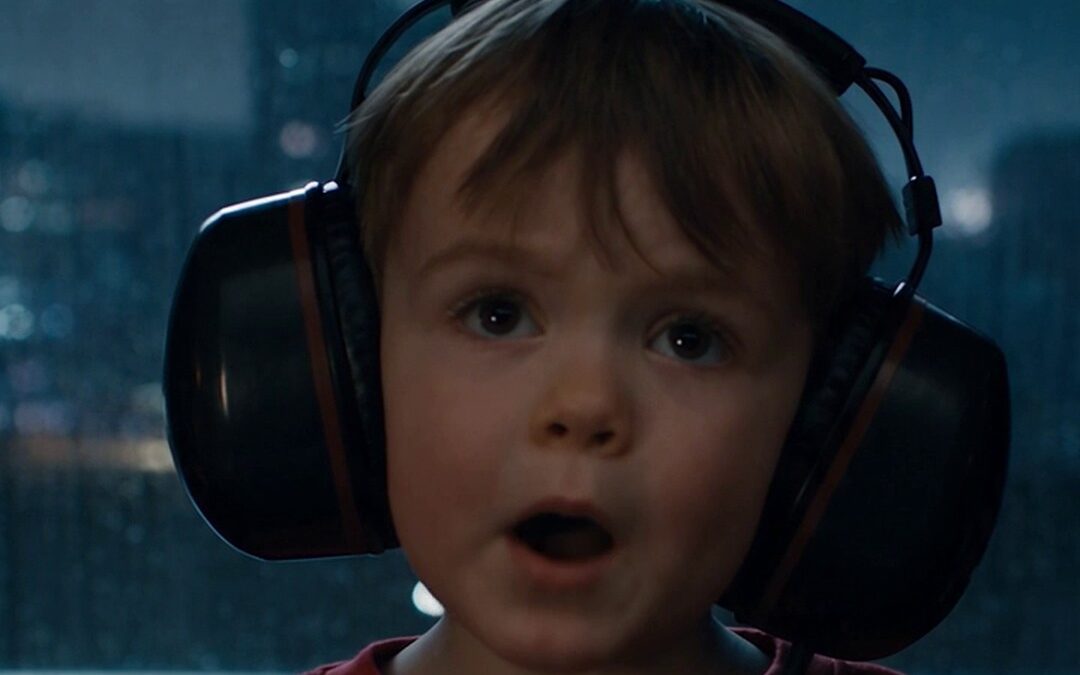
Chapter 2: What the Tape Remembered
Dorian reached for the stop button.
His hand missed.
Wren pressed it instead.
The room became painfully quiet.
Kit watched their faces.
“Was he being mean?”
Dorian looked at the boy.
“Yes.”
“Tell him stop.”
“I wish I could.”
Wren crouched beside her son.
“We’re going somewhere quieter.”
“Are you coming?”
“Yes.”
Dorian moved toward the door.
Wren stiffened.
He stopped immediately.
“There’s a sitting room opposite.”
“Who will be there?”
“Whoever you approve.”
She considered him.
“Your receptionist was kind.”
“Mrs. Pell?”
Wren nodded.
Dorian made the call himself.
No explanation through an assistant.
No order disguised as reassurance.
He asked whether Mrs. Pell could help.
Then he waited.
Kit examined his fallen sock.
“It has floor on it.”
“I noticed,” Dorian said.
“Can you fix that?”
“I can find another.”
“Not a grown-up one.”
“That limits my options.”
Mrs. Pell arrived carrying a clean blanket.
Wren spoke with her privately.
Dorian stayed beside the console.
He could still hear his father.
Not the words.
The composure.
August Rusk had sounded that way ordering dinner.
Wren returned without Kit.
The opposite door remained open.
They could hear Mrs. Pell discussing dinosaurs.
Dorian pointed toward the chair.
Wren stayed standing.
“Start with the tape.”
“A retired nurse gave it to me.”
“Her name?”
“Etta Voss.”
He remembered her.
A broad-faced woman.
Peppermint breath.
A blue cardigan over her uniform.
She had once brought him to visit his mother.
His father had stopped those visits.
“Why did she give it to you?”
Wren unfastened her coat.
Her fingers struggled with one button.
Dorian looked away until she finished.
“My adoptive mother died last winter.”
“I’m sorry.”
“She kept my placement paperwork.”
“Your adoption?”
“Yes.”
Wren drew a folded copy from her bag.
She placed it beside the machine.
Dorian didn’t touch it yet.
“There was a nurse’s name.”
“Etta.”
“She witnessed a document.”
“What document?”
“A consent to placement.”
His stomach tightened.
“Signed by whom?”
“A woman called Miriam Rusk.”
He finally looked down.
His mother’s name.
A date in October 1995.
Three days after the date on her gravestone.
“That isn’t possible.”
“That’s what I thought.”
“My mother died October ninth.”
“The hospital record says October twenty-third.”
He sat because his knees had changed.
Outside, water rattled against the glass.
Wren let him absorb it.
No dramatic insistence.
No demand to believe her.
Just the paper.
“I found Etta in June.”
“Why wait until now?”
“She wouldn’t talk at first.”
“What changed?”
“I kept asking.”
Wren glanced across the hall.
“Eventually, I brought Kit.”
Dorian looked up sharply.
“Not as a weapon,” she said.
“He was with me.”
“I didn’t say that.”
“You looked it.”
He accepted the correction.
Wren continued.
“Etta cried when she saw him.”
“Why?”
“She said I used to make that face.”
“What face?”
“When he wants something he’s afraid to request.”
Dorian knew the face already.
He wished he didn’t.
“She admitted keeping this recording.”
“Since 1995?”
“She was supposed to deliver it.”
“To whom?”
“My birth mother’s lawyer.”
“Why didn’t she?”
“You’ll need to ask her.”
“Did you listen before today?”
“To a short section she’d copied years ago.”
“And the original?”
“She gave me that Friday.”
Wren touched the reel’s cardboard sleeve.
“My equipment can’t play this speed properly.”
“So you applied for this contract.”
“After your office ignored my letters.”
“You came here deliberately.”
“Yes.”
“To use the machines.”
“And ask about the hospital.”
Dorian looked toward the opposite room.
“And you brought your son.”
“My childcare failed this morning.”
“You could have canceled.”
“Your uncle had already postponed me twice.”
Her voice broke on the last word.
She steadied it.
“I thought this was my last chance.”
Dorian rubbed his mouth.
He wanted somebody simple to blame.
Somebody standing within reach.
Wren had risked too much.
That didn’t make her the guilty one.
“What do you want from me?”
“The truth.”
“And after that?”
“I haven’t got that far.”
Across the hall, Kit laughed.
The sound seemed indecently ordinary.
Dorian looked at the placement document again.
A baby’s recorded weight.
A temporary nursery number.
A birth date.
October seventh.
He remembered standing outside a hospital door that morning.
Holding yellow flowers.
His father had taken them away.
He turned the paper.
The infant’s original name waited underneath.
Ada Miriam Rusk.
His sister wasn’t in the cemetery.
She was standing beside his chair.
* * *
Dorian called an attorney outside the family firm.
His uncle had hired the family firm.
That suddenly mattered.
The attorney arrived before midnight.
Her name was Tess Calder.
She wore sensible shoes and carried no expressions she hadn’t chosen.
She listened once.
Then she asked Wren a question.
“Do you have your own lawyer?”
“No.”
“You need one.”
Dorian nodded.
Tess looked directly at him.
“Independent means you don’t select them.”
“Understood.”
He didn’t enjoy being corrected.
Tonight, he found it strangely useful.
Tess photographed the reel in place.
She recorded who had handled it.
Then she contacted an audio examiner.
“No more casual playback.”
“It’s my mother,” Dorian said.
“It may also be evidence.”
That sentence cost him something.
He surrendered the reel anyway.
Wren watched the examiner package it.
“Will they damage it?”
“They’ll preserve the original,” Tess said.
“You’ll receive a listening copy.”
Dorian had expected Wren to resist.
Instead, she stepped back.
Her work had taught her what fragile things required.
Downstairs, Bennett requested his nephew twice.
Dorian refused twice.
On the third request, he answered.
“I’m occupied.”
“With the contractor?”
“With my attorney.”
A pause.
Then his uncle’s familiar sigh.
“Dorian, that woman came hunting money.”
“Then she chose a strange disguise.”
“What?”
“She’s exhausted and wearing repaired shoes.”
“Poverty doesn’t establish honesty.”
“Neither does our surname.”
He ended the call.
Tess offered no congratulations.
“Don’t discuss evidence with him again.”
“I wasn’t planning to.”
“Plan it explicitly.”
He did.
Wren refused a guest bedroom.
Dorian offered a hotel.
She refused that too.
“My apartment has his bed.”
“And people know where you live.”
“People already did.”
Tess intervened.
“Would you accept a licensed security driver?”
Wren considered it.
“Tonight.”
Dorian arranged it through Tess.
No armed procession.
No men entering her home.
Kit emerged wrapped in the blanket.
He pointed at Dorian.
“Did you make the lady happy?”
“Not yet.”
“You have to try.”
“I am.”
The boy nodded solemnly.
Then fell asleep against his mother.
Four days passed.
Dorian barely slept.
He attended meetings.
Signed payroll.
Sent an expensive shipment back because its paperwork was wrong.
His employees noticed.
Nobody asked.
A laboratory arranged the family testing.
Wren chose where to attend.
Tess explained what the result could establish.
It would answer kinship.
It wouldn’t prove every allegation.
Dorian appreciated the distinction less than he should have.
Meanwhile, records began arriving.
Not through threats.
Through consent forms.
Archive requests.
Letters bearing attorneys’ names.
Some records had been destroyed routinely.
Others survived for ordinary reasons.
Property trusts lasted.
Financial ledgers traveled.
Adoption paperwork had been kept by people who loved their daughter.
Wren’s adoptive parents had named her Wren.
They had raised her outside Lansing.
A school secretary.
A man who repaired elevators.
Dorian studied their photograph.
Not because they resembled criminals.
Because they didn’t.
“Did they know?” he asked.
Wren shook her head.
“The papers said my mother consented.”
“And your father?”
“Listed as unavailable.”
Dorian looked away.
“August was available.”
“He was certainly busy.”
It was the first bitter joke she made.
He didn’t ask her to soften it.
They visited Etta together on Thursday.
Wren chose to have Tess present.
Dorian agreed.
Etta lived in a modest retirement apartment.
Plants crowded the window.
Her hands shook around her tea.
She recognized Dorian immediately.
“You got tall.”
“I was already tall.”
“Yes.”
She put down the cup.
“I suppose I was.”
He didn’t help her.
Etta looked at Wren.
“I should have answered you in June.”
“You should have delivered the tape in 1995.”
“Yes.”
The admission landed without defense.
Dorian sat.
“Tell us.”
Miriam had been ill after delivery.
Weak.
Frightened.
Still fully aware of her daughter.
She had dictated messages onto a portable recorder.
Letters exhausted her.
Her husband visited one evening.
The machine remained running.
Etta found the reel later.
“Miriam asked me to take it to her lawyer.”
“Why didn’t you?”
“Bennett stopped me.”
Dorian’s fingers closed.
Tess shifted slightly.
He opened his hand.
“What did he say?”
“He knew I’d signed an inaccurate discharge entry.”
“For the baby?”
“Yes.”
“Why?”
“He said the family needed privacy.”
Etta’s eyes filled.
“I believed the placement was temporary.”
“And afterward?”
“Afterward, I knew better.”
Bennett had threatened her livelihood.
Her husband was ill.
Their insurance depended on her employment.
Dorian heard every reason.
None resembled permission.
“So you kept it.”
“I told myself that mattered.”
“Did it?”
Etta met his eyes.
“Not to the little girl.”
Wren looked down.
That answer seemed to hurt most.
Etta gave Tess a notebook.
Old shift dates.
Names.
A transfer vehicle number.
She had written them privately after Miriam died.
Tess arranged for investigators to interview her properly.
No promises.
No bargain made over tea.
Outside, Wren stood beneath the building’s awning.
Dorian waited beside her.
“I loved my parents,” she said.
“I know.”
“I’m allowed to.”
“Of course.”
She turned toward him.
“Your face keeps looking like you want them erased.”
He absorbed that.
Then shook his head.
“I’m looking at thirty-one missing years.”
“They weren’t missing to me.”
For a moment, he couldn’t answer.
Then he did.
“You’re right.”
The laboratory report arrived Friday.
The findings strongly supported full siblinghood.
Wren read it twice.
Dorian once.
He already knew what her silence meant.
They had gained someone.
Neither knew how to hold that.
Tess brought another document that afternoon.
Miriam’s trust.
Created before either child’s birth.
Half for Dorian.
Half for any surviving second child.
If there was no surviving second child, that share went into a charitable foundation.
Bennett controlled the foundation.
Dorian remembered its annual dinners.
His father’s speeches.
The nursery grants.
The name printed on invitations.
The Ada Rusk Memorial Fund.
Wren touched the printed name.
“They made a charity out of me?”
Tess turned the page.
Its assets had included valuable warehouse property.
Over the years, management fees flowed into companies connected to Bennett.
Some services appeared real.
Others required investigation.
Dorian looked at the opening transfer.
A physician’s death certification had supported it.
But the hospital archive contained no corresponding infant death entry.
Tess spoke carefully.
“The foundation received her share because someone certified her dead.”
Dorian stared at his father’s signature beneath the transfer authorization.
His father hadn’t merely hidden his daughter.
He had helped spend her inheritance.
* * *
The first threat arrived without a threat in it.
Wren’s biggest client suspended her contract.
Then another requested a background review.
A third mentioned troubling information.
All within one afternoon.
Dorian recognized coordination.
He had used its quieter cousins himself.
That recognition tasted foul.
Wren brought the emails to Tess.
She didn’t bring them to him.
He found that sensible.
He found it painful too.
“What do you need?” he asked.
“My clients back.”
“I can call—”
“No.”
The word stopped him.
She stood in his office doorway.
Kit colored at a side table.
Mrs. Pell sat nearby, reading.
Wren lowered her voice.
“I need my work to remain mine.”
Dorian glanced at Tess.
She nodded.
“We document the interference first.”
Bennett called that evening.
Dorian let Tess listen.
“You’re being manipulated.”
“By whom?”
“A woman with an unstable history.”
“Be specific.”
“Debt.”
“Most people have debt.”
“A child without a father present.”
“His father died,” Dorian said.
Wren had told him over coffee.
A road accident.
A grief that belonged to her.
He hated hearing Bennett reach for it.
His uncle adjusted smoothly.
“Then she’s vulnerable to suggestion.”
Dorian stared at the rain beyond his window.
“Send your concerns to counsel.”
“You’re making a public mistake.”
“Send them.”
He hung up.
Tess wrote down the time.
Wren was very still.
“Don’t tell me what you could do to him.”
“I wasn’t going to.”
“Your expression was.”
Dorian leaned against the desk.
She was right again.
He was developing a dislike for the sensation.
Three mornings later, a local reporter called.
Bennett had offered a story.
A grieving contractor.
A wealthy target.
A questionable recording.
Tess responded with a brief factual statement.
Verified kinship.
Preserved evidence.
An active civil dispute.
No details about Kit.
Dorian wanted to say more.
Tess told him why he shouldn’t.
He listened.
That night, a car sat outside Wren’s apartment.
The driver photographed her building.
Her security driver documented the vehicle.
They notified police.
Nobody chased it.
Nobody touched the photographer.
By morning, the reporter confirmed an agency had been hired for the story.
Wren still packed a suitcase.
Watching wasn’t the same as entering.
It was enough.
Dorian offered his house again.
She chose a furnished rental through her own attorney.
He paid the invoice into the attorney’s account.
No conditions.
No keys for himself.
Kit saw the apartment and frowned.
“Where’s our kitchen squeak?”
Wren blinked.
“Our what?”
“The cupboard.”
He demonstrated its squeal.
Dorian stood beside the delivery boxes.
He had paid more for silence than most people earned.
The boy missed a hinge.
“We’ll go home,” Wren said.
“When?”
“When things are settled.”
Kit considered this inadequate.
He sat under the table.
Dorian lowered himself to the floor nearby.
His knees objected.
Kit noticed.
“You make chair noises.”
“So I’ve heard.”
“Are you too old?”
“For the floor?”
“For being here.”
Dorian thought about that.
“Possibly.”
Kit pushed a toy truck toward him.
“Then you can be the bridge.”
Dorian held out one hand.
The truck crossed his fingers.
Again.
Again.
Wren continued unpacking.
Her movements became less hurried.
After a while, Kit asked about the lady.
“The singing one?”
“Yes,” Dorian said.
“Is she your mom?”
“She was.”
“Did she go away?”
“She died.”
The truck stopped.
“My daddy died.”
“I know.”
“He can’t answer phones.”
“No.”
“Neither can your mom?”
“No.”
Kit placed the truck in Dorian’s palm.
“You can keep that until I need it.”
Dorian looked down.
The paint was chipped.
One wheel leaned.
Nothing in his collection of expensive objects approached its value.
He returned it before leaving.
Kit needed it for bedtime.
The following week, the civil court issued a temporary order preserving relevant trust records.
It also restricted extraordinary transfers while the dispute proceeded.
Bennett’s lawyers objected.
They were entitled to object.
The records still had to remain.
Tess explained every step.
“An order isn’t a verdict.”
“I understand.”
“Then stop looking satisfied.”
Dorian wasn’t satisfied.
He was afraid of being hopeful.
The audio examiner completed the first report.
The recording’s physical characteristics were consistent with its age.
No evidence of the alleged conversation being assembled from separate words.
That didn’t establish every speaker automatically.
People who knew the voices would matter.
Contemporary records would matter.
Wren listened to the preserved copy wearing ordinary headphones.
Dorian sat opposite.
He let her choose where to begin.
His mother sounded exhausted.
But the exhaustion sharpened her anger.
“Those invoices aren’t nursery expenses.”
A man answered.
Bennett.
“You shouldn’t be concerning yourself with accounts.”
“They’re my accounts.”
“It’s family money.”
“It’s the children’s money.”
Dorian felt his pulse in his jaw.
The tape continued.
Miriam named three companies.
Then a bank.
Then an amount.
Wren paused it.
“I checked the company names.”
“When?”
“Yesterday.”
She had spent years sorting commercial recordings.
Names buried in hiss.
Dates obscured by machinery.
She knew when a repeated phrase was deliberate.
“She dictated those twice,” Wren said.
“So they couldn’t be misunderstood.”
Tess’s forensic accountant requested the corresponding ledgers.
A week later, he found the pattern.
Money had left Miriam’s trust before Wren’s birth.
Not after.
The foundation hadn’t begun Bennett’s theft.
It had concealed it.
A surviving daughter would eventually gain records and demand an accounting.
A memorial foundation controlled by Bennett would not.
One additional document supplied the missing link.
An old instruction letter.
Bennett had directed the family accountant to prepare the foundation transfer before Miriam’s death.
Before the false death certification reached the trust office.
He had already known what it would say.
Dorian read the date.
Then read it again.
Tess laid down the tape transcript.
Miriam had threatened to remove Bennett as trustee.
His father had agreed to the disappearance to keep the scandal contained.
But the plan had another author.
Not the nurse.
Not the adoption agency.
Not even August.
Bennett had buried a living heir to hide what he had stolen.
* * *
Bennett demanded a family meeting.
He called it a chance to prevent needless damage.
Tess called it an opportunity to hear his position.
Wren called her own attorney.
Then she agreed.
Dorian chose the boardroom at the foundation’s offices.
No house staff.
No armed men inside.
No child.
The people responsible for the trust would attend.
Its outside accountant.
The foundation’s remaining directors.
Lawyers on both sides.
The insurer’s representative joined remotely.
Dorian had wanted only one chair across from his uncle.
Tess explained why that would accomplish less.
He accepted the room full of witnesses.
Bennett arrived early.
Charcoal suit.
Brown oxfords.
Kit’s angry shoes.
Dorian watched them beneath the table.
He wondered how often children noticed the right thing first.
Wren sat beside her attorney, June Mercer.
She wore a navy jacket.
The sleeves had been shortened carefully.
Dorian recognized her own stitching.
She placed no dramatic object on the table.
The original reel remained safely stored.
Tess had brought authenticated copies and the examiner’s report.
Evidence didn’t need theatrical risk.
Bennett looked at Wren.
“I regret how you’ve been treated.”
“By whom?” she asked.
His smile tightened.
“By circumstances.”
June touched her pen to the page.
Wren waited.
Bennett turned toward the directors.
“The relevant events occurred three decades ago.”
Nobody interrupted.
“Memory deteriorates.”
He paused.
“Recordings can be misunderstood.”
Another pause.
“And families sometimes make desperate decisions during medical crises.”
He sounded reasonable.
Dorian hated how easily he recognized the method.
Start with something true.
Place the lie beside it.
Let people confuse the borders.
Bennett acknowledged the kinship result.
He acknowledged that the child had survived.
Then he placed responsibility on August.
“My brother controlled that household.”
Dorian said nothing.
Bennett looked at him.
“You know that better than anyone.”
He did.
For one dangerous moment, that shared knowledge felt like intimacy.
The old trap opened.
Bennett continued.
“August feared scandal.”
“What scandal?” June asked.
“Miriam was preparing allegations against him.”
“Were they false?”
“That isn’t what we’re here to decide.”
June wrote something.
Bennett adjusted his cuffs.
“The infant needed a stable home.”
Wren’s jaw moved.
Dorian watched her choose silence.
“She received one,” Bennett added.
Her attorney answered.
“A loving adoption doesn’t establish lawful consent.”
“No one here disputes her parents loved her.”
“You’re using that love to excuse deception.”
The room shifted.
Not dramatically.
A director set down his glass.
Bennett spread his hands.
“I administered the documents I received.”
Tess slid the instruction letter forward.
“You issued this before receiving them.”
He glanced at it.
“I anticipated several possible outcomes.”
“Only one appears in your instructions.”
“The hospital warned us.”
“Which physician?”
“My recollection is incomplete.”
“Conveniently incomplete,” Dorian said.
Tess looked at him.
He leaned back.
Bennett noticed.
Of course he noticed.
“Are you being advised not to speak?”
“I’m being advised to speak usefully.”
“Then explain your own businesses.”
The room went still.
There it was.
His uncle’s strongest weapon.
Not innocence.
Shared contamination.
Bennett turned toward the directors.
“Dorian wants moral authority.”
“I want records,” Dorian said.
“You want control.”
Wren looked at him.
Dorian kept his voice level.
“If the trust is restored, her share belongs to her.”
“And who influences her?”
Wren leaned forward.
“You keep saying my name without speaking to me.”
Bennett met her eyes.
“I’m trying to protect you.”
“Then answer me.”
“Ask.”
“Did my mother sign away her rights?”
Bennett’s expression softened.
It was a beautiful performance.
“I believed she did.”
Tess started the recording.
Miriam’s voice entered the boardroom.
Thin.
Furious.
Entirely alive.
“I have signed nothing giving you my daughter.”
Bennett moved.
Just a fraction.
The recording continued.
“You can’t keep threatening inquiries,” his younger voice said.
“Then stop stealing.”
A chair creaked.
On the recording, August spoke.
The same calm voice from the private room.
“Then tell Dorian the baby died.”
Tess stopped playback.
Nobody looked at Dorian.
He was grateful.
He was ashamed of being grateful.
Bennett drew a measured breath.
“A deeply distressed conversation.”
“Which you previously denied occurred,” Tess said.
“I denied your interpretation.”
June opened a folder.
“The hospital recorded a healthy infant discharged into an intermediary’s care.”
Bennett watched her.
“The intermediary’s invoice survives in your files.”
“That doesn’t prove—”
“It identifies your instructions.”
June placed the copy before him.
Then another.
“The placement agency retained your correspondence.”
Bennett looked toward his lawyer.
His lawyer read the document.
For the first time, Bennett waited.
June continued.
“The agency believed Miriam had consented.”
“She had.”
“The original form bears a signature.”
“That is generally how consent works.”
Dorian felt his hands curl beneath the table.
He opened them again.
June didn’t react.
“The signature examiner found significant inconsistencies.”
“An opinion.”
“Yes,” June said.
“Supported by samples from the same month.”
Tess added the financial records.
Bank statements.
Trust disbursements.
Invoices.
Ownership records for the receiving companies.
Independent sources.
Not a family argument.
Not merely a voice.
An accountant on the foundation’s board began reading.
He reached the third page.
Then he removed his glasses.
“These management contracts were never disclosed.”
Bennett looked at him sharply.
“They were approved.”
“By you.”
“As trustee.”
“For companies you owned.”
“My interests were known.”
“Not to this board.”
Bennett’s lawyer leaned toward him.
They whispered.
Dorian let them.
He had never understood how threatening patience could become.
The meeting paused.
People stepped into the hall.
Wren remained seated.
Dorian stood beside the window.
“You can leave,” he said quietly.
“I know.”
“You don’t have to hear more.”
“I need to hear what he calls it.”
Bennett returned ten minutes later.
The warmth was gone.
He addressed Wren.
“You would have had a terrible childhood here.”
Dorian closed his eyes briefly.
That could be true.
It didn’t rescue anything.
Wren folded her hands.
“You didn’t know my childhood.”
“I knew this family.”
“You knew the bank accounts.”
Bennett’s lawyer touched his arm.
He ignored it.
“Your brother will destroy everything to feel innocent.”
Dorian turned from the window.
“I don’t feel innocent.”
Bennett blinked.
“I won’t become innocent by exposing you.”
“Then what’s the point?”
“My sister gets the truth.”
“And you?”
Dorian looked at Wren.
“That’s enough to begin.”
The remaining directors requested Bennett’s resignation.
He refused.
Their counsel explained the removal provisions.
Then the meeting ended.
No handcuffs appeared at the door.
No official announced a verdict.
The evidence went where it belonged.
Investigators interviewed Etta.
They interviewed former agency employees.
They obtained bank records independently.
Some allegations were too old to prosecute.
Some required evidence nobody could recover.
The current financial conduct left a clearer trail.
Months passed.
The court replaced Bennett as trustee while the accounting proceeded.
Later, prosecutors charged him over the financial scheme and related false filings.
His lawyers fought.
Then negotiated.
He ultimately pleaded guilty to several financial charges.
The sentencing came more than a year after the boy had entered the recording room.
Dorian attended.
Wren chose not to.
Her attorney read her statement.
It asked for restitution.
An accurate record.
Protection for the foundation’s legitimate beneficiaries.
No performance of forgiveness.
Bennett received a prison sentence.
Assets were forfeited or sold toward repayment.
The civil settlement returned substantial property and money to Wren’s trust.
It also corrected the accounting.
Not every dollar was recovered.
Every dollar recovered had a destination.
Outside the courthouse, Bennett passed Dorian with his lawyer.
He had one final sentence.
“Your father would be ashamed of you.”
Dorian looked at the man who had taught him how to frighten rooms.
Then he answered.
“He should have been ashamed of himself.”
* * *
Before the criminal case ended, winter arrived.
So did ordinary disagreements.
Wren disliked Dorian’s kitchen.
Dorian found this inexplicable.
“It has everything.”
“It has nothing where a person expects.”
“The chef knows.”
“I’m not the chef.”
She opened a drawer.
Six identical silver utensils lay inside.
“What are these?”
“Something for shellfish.”
“Where’s a spatula?”
He didn’t know.
Kit stood between them wearing slippers.
“This kitchen is bad at breakfast.”
Dorian bought a spatula.
Wren informed him that buying one did not solve the organizational problem.
He bought a second.
She laughed despite herself.
It became the first easy sound they shared.
She hadn’t moved into his house.
He hadn’t asked again.
The rental had given way to her own apartment once the immediate harassment stopped.
Her contracts returned slowly.
Some clients apologized.
One didn’t.
She declined that client’s next offer.
Dorian wanted to make up the lost income.
June helped calculate documented losses for the civil claim.
That was where the matter belonged.
He learned to let it stay there.
Learning wasn’t graceful.
He sent a car when Wren mentioned rain.
She sent it back.
He ordered a replacement washing machine when hers broke.
She canceled it.
Finally, she arrived carrying a notebook.
“What is that?”
“Things you can ask before purchasing.”
“How many pages?”
“Currently eleven.”
Kit raised his hand.
“I said helicopter.”
“You’re not helping,” she told him.
Dorian sat.
For the first time, being corrected felt less like defeat.
More like being allowed to remain.
He apologized for the washing machine.
Not for caring.
For deciding.
Wren accepted exactly that apology.
Nothing larger.
They began Sunday breakfasts.
Twice monthly at first.
Then most weeks.
Sometimes at her apartment.
Sometimes at his house.
Kit preferred the apartment because the kitchen squeaked.
Dorian fixed the hinge once.
Kit stared at him in betrayal.
Wren laughed so hard she had to sit down.
The next Sunday, Dorian brought an inexpensive squeaking dog toy.
Kit considered the substitution.
Then accepted it.
Family, Dorian discovered, included appeals.
Wren asked to visit Miriam’s grave in spring.
He drove.
No convoy.
He parked outside the cemetery gate.
She carried white tulips.
Dorian had brought nothing.
He had never known what flowers accomplished.
At the grave, he understood less than ever.
Wren knelt beside the stone.
The date remained wrong.
They had already begun arranging its correction.
Beside it stood the small marker bearing Ada’s name.
Wren touched that one.
“Did you come here?”
“Every October.”
“For both?”
“Yes.”
She stood slowly.
“I’m sorry.”
He shook his head.
“You don’t owe me that.”
“I know.”
She looked at the smaller stone.
“I’m sorry anyway.”
They arranged for the false memorial to be removed.
Wren kept a rubbing of the inscription.
Not because she wanted the grave.
Because someone had once mourned her.
That fact belonged to her too.
Miriam’s corrected marker gave the actual date of her death.
The hospital record supported it.
Her medical notes described complications after childbirth.
No secret cause emerged.
No final conspiracy waited underneath.
She had been ill.
She had needed help.
Men protecting money had made her last weeks lonelier.
Dorian found that plain truth worse than some elaborate mystery.
They stood until the wind sharpened.
Then Wren tucked her arm through his.
“Let’s get breakfast.”
He looked down at her hand.
She didn’t withdraw it.
Etta asked to see them again.
Wren chose a café.
Dorian came only because she requested it.
The older woman brought no gifts.
That was wise.
“I gave a formal statement,” she said.
“We know.”
“I told them what I signed.”
“We know that too.”
Etta looked at Wren.
“I keep searching for a better explanation.”
“Is there one?”
“No.”
Dorian watched his sister’s face.
The café window reflected passing cars.
A server filled their water glasses.
Life continued with offensive ease.
Etta apologized.
She named the act.
The false entry.
The undelivered tape.
The years of silence.
No demand followed.
Wren placed both palms against her cup.
“I’m glad you finally told me.”
Etta nodded.
“That doesn’t make us close.”
“I understand.”
“You won’t meet Kit again for now.”
The older woman’s mouth trembled.
She accepted it.
Dorian drove Wren home afterward.
“Was that too harsh?” she asked.
“No.”
She watched the streetlights.
“I didn’t ask you to dislike her forever.”
“I know.”
“Do you?”
He considered it.
Then answered honestly.
“I’m learning the difference.”
His own accounting required more than learning.
For years, fear had made his businesses efficient.
It had also made them dangerous.
He couldn’t claim a new sister as proof of a new character.
Tess made that clear.
Wren made it clearer.
“I won’t bring Kit somewhere people are afraid to leave.”
Dorian looked around his office.
He had once considered that fear a compliment.
He retained separate criminal counsel.
He disclosed conduct that implicated him.
Not only Bennett.
Investigations took time.
Legitimate operations were placed under independent management.
Others closed.
There were settlements.
Forfeitures.
A conviction connected to his own financial conduct.
He served the sentence imposed.
Wren didn’t call it heroic.
Neither did he.
She brought Kit to visit only after careful conversations and according to the rules.
Some weeks, she came alone.
Some weeks, she didn’t come.
Dorian learned to receive a boundary without treating it as abandonment.
After his release, his world was smaller.
Fewer companies.
Fewer invitations.
No men waiting to carry out an angry suggestion.
The people who stayed used his first name.
He discovered he preferred it.
When Wren’s restored inheritance became available, an adviser presented options.
Property.
Investments.
A larger house.
She chose carefully.
A modest home near Kit’s school.
Savings.
A properly equipped audio workshop.
The rest remained invested or supported work she understood.
She established a grant for preserving ordinary family recordings.
Wedding toasts.
Immigrant grandparents’ stories.
A father reading bedtime chapters.
Voices that otherwise disappeared inside damp garages.
Dorian offered to fund the entire program.
Wren refused.
“You can sponsor equipment.”
“How much?”
“We’ll send you a budget.”
“I own the building.”
“Then you can still read a budget.”
He did.
He found two errors.
She corrected them without gratitude.
He liked that too.
The workshop opened on a Saturday.
Kit cut the ribbon with safety scissors.
It took a while.
Nobody hurried him.
Dorian stood beside Wren afterward.
“May I ask something?”
She eyed him.
“That sounds expensive.”
“It isn’t.”
“Proceed carefully.”
“Would you like to change your name?”
She grew still.
He corrected himself.
“I mean, do you want help with it?”
“No.”
“All right.”
“Hale was my father’s name.”
Dorian nodded.
“The man who raised me.”
“I understand.”
She studied him.
Then touched his sleeve.
“I’m still your sister.”
The sentence settled somewhere no document had reached.
That evening, Kit climbed onto the sofa beside him.
“Mom says you’re my uncle.”
“She’s correct.”
“Can I call you Uncle D?”
Dorian felt the old reflex.
Possession.
Certainty.
The temptation to make the moment bigger than the boy.
He kept his voice ordinary.
“If you want.”
Kit leaned against him.
“Okay, Uncle D.”
And Dorian finally understood what permission sounded like.
* * *
Six years after the recording room, Kit returned wearing shoes that fit.
He was ten.
He carried his own equipment bag.
Dorian regarded it suspiciously.
“What’s inside?”
“Important stuff.”
“That sounds expensive.”
“It’s cables.”
“Still possible.”
The old room had changed.
The security keypad was gone.
So was the rule excluding everybody.
One wall held shelves of carefully labeled recordings.
Another displayed drawings.
Kit’s dinosaurs occupied an unreasonable percentage.
Wren claimed this was a curatorial decision.
Dorian had stopped arguing.
The room now served the family archive project several afternoons each week.
People arrived by appointment.
They brought cassettes in grocery bags.
Reels in biscuit tins.
Phones holding the last voicemail from somebody loved.
Dorian greeted them.
Made coffee.
Learned which questions could wait.
Nobody called him boss there.
The original green-labeled reel remained in protected storage.
A copy sat beside the restored machine.
Its legal work was finished.
Its other work continued.
Wren entered carrying three mugs.
One contained hot chocolate.
Kit took it immediately.
Dorian reached for the wrong one.
“Yours has less sugar.”
“I didn’t authorize that.”
“You told your doctor you’d listen.”
Dorian accepted the mug.
His sister placed a fresh recording sheet on the desk.
Today’s project was personal.
Kit had a school assignment.
Record a family member discussing an important memory.
He had selected two.
His teacher had approved.
Dorian sat in the chair that had once sunk beneath him.
It had been repaired.
Kit checked the microphone.
Then frowned.
“Why are you sitting so straight?”
“I’m being interviewed.”
“You look like you’re in trouble.”
“That has happened.”
Wren laughed.
Kit adjusted the volume.
“Tell me about the first day.”
Dorian looked toward the console.
He could still see the red pajamas.
The slipping sock.
The boy listening without fear to a voice that had undone him.
“You were sitting right there.”
“I know that.”
“You were wearing my headphones.”
“Mom told me.”
“You thought my mother wasn’t finished.”
Kit glanced at Wren.
“Was she?”
Wren rested one hand beside the reel’s sleeve.
“No.”
Dorian looked at her.
She smiled.
“She had something left to tell us.”
They had learned all of it.
Miriam’s anger.
Her concern for both children.
Her intention to remove Bennett.
Her refusal to surrender her daughter.
The recording also held something nobody had needed in court.
Near its beginning, before the arguments, she had sung.
A simple lullaby.
Halfway through, she forgot a verse.
Then laughed at herself.
That laugh had become Wren’s favorite part.
They played it on birthdays.
Sometimes on difficult evenings.
Never as an obligation.
Kit opened his notebook.
“What happened to the people who lied?”
Dorian answered plainly.
Bennett had served his sentence and remained subject to the restitution judgment.
He no longer controlled family money.
He had no place in their lives.
August’s portrait no longer hung above the stairs.
His crimes stayed in the record.
His son no longer defended them.
Etta had died two years earlier.
Wren had sent flowers.
She had not rewritten the past.
Kit wrote slowly.
Then looked up.
“Did everybody forgive everybody?”
“No,” Dorian said.
“Did you still get happy?”
Dorian glanced at Wren.
Her workshop keys lay beside her mug.
Kit’s school calendar was pinned near the door.
Tomorrow, Dorian would help replace a shelf at her house.
On Sunday, they were making pancakes.
“Yes.”
Kit considered that.
Then wrote another sentence.
“What are you putting?”
“It’s private until I read it.”
Dorian raised both hands.
“Fair.”
Outside, rain began against the windows.
The same sound.
A different room.
A sister with her own name.
A mother’s voice preserved.
A child allowed to ask.
Money accounted for.
Doors opened.
Dorian reached toward the machine.
Kit touched his wrist.
“Wait.”
“What?”
“She isn’t finished.”
This time, Dorian smiled.
He left the recording running.
Beside him, Wren began singing along.
Kit joined on the wrong words.
Neither adult corrected him.
THE END








