The Orphan Warned Him Not to Drink the Amber Tea. Then His Fiancée Walked In and Saw the Untouched Crystal Glass.
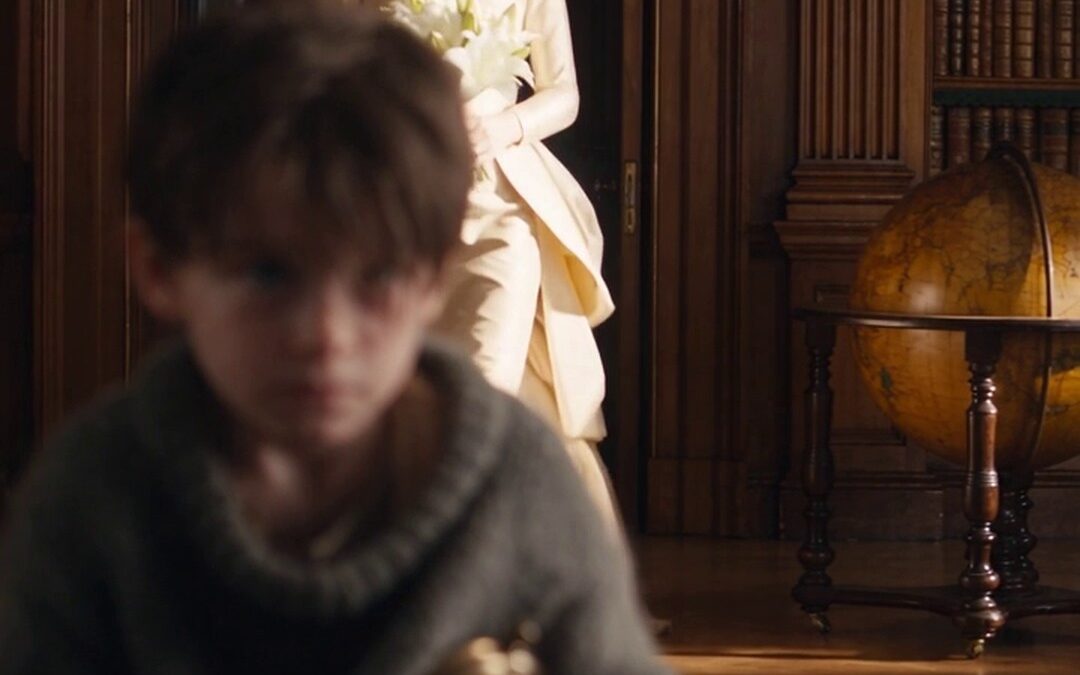
Chapter 2: The Silver Vial
Julian did not answer right away.
He watched her gloved fingers.
They tightened slightly around the stems of the calla lilies.
The green stalks bent under the sudden pressure of her grip.
A single white petal tore against her emerald ring.
“I was distracted,” Julian said.
His voice was calm.
His heart thudded behind his ribs.
Not with weakness.
Not with panic.
With cold, deliberate clarity.
“Distracted by what?” Clara asked.
She glided toward the desk.
Her perfume smelled of expensive white jasmine.
It drifted over the aroma of roasted chicory.
It seemed to coat the room in sweet, suffocating oil.
“By Toby,” Julian said.
Clara turned her gaze toward the corner.
Her eyes hardened.
It lasted only a millisecond.
Then the soft, maternal mask returned.
“Toby should be resting,” she murmured.
“The wedding is in three days.”
“The house is full of noise and movers.”
“The south wing is drafty, Toby.”
“Go back to Mrs. Gable, sweet boy.”
Toby did not move.
He pressed his back harder against the mahogany paneling.
His small fingers gripped the brass compass.
The brass was tarnished around the hinge.
His knuckles were white with strain.
“He was showing me something,” Julian said.
Julian reached out his left hand.
He opened his palm slowly.
On his skin lay the crisp hundred-dollar bill.
The green ink caught the gray afternoon light from the bay windows.
Clara looked at the money.
She did not blink.
Her throat moved in a dry swallow.
“Where did you get that, Toby?” she asked gently.
“You gave it to me,” the boy said.
The room fell completely silent.
The grandfather clock ticked against the oak wall.
Tick.
Tock.
Outside, a gull screamed over the slate roof.
Clara laughed softly.
It was a musical sound.
Light, practiced, and hollow.
“Children have such wild imaginations, Julian.”
“You know how Thomas raised him before the accident.”
“Always spinning tales about pirates and smugglers.”
“I haven’t seen a hundred-dollar bill all week.”
“He probably found it in the drawing room.”
“Or took it from my purse on the console table.”
Julian walked behind his desk.
He did not touch the leather executive chair.
He stood directly above the crystal tumbler.
“Toby says you made this tea.”
Clara took another step forward.
She laid the lilies on the edge of the leather sofa.
The flowers made a soft rustle against the calfskin.
“I did,” she admitted freely.
“Your chest felt tight this morning.”
“You were rubbing your left shoulder during breakfast.”
“I brewed your favorite chicory blend.”
“I brought it from the kitchen myself.”
“I wanted you to rest before the board meeting.”
Julian picked up the glass by its heavy base.
The liquid shifted slightly.
Tiny bubbles clung to the crystal facets.
A faint white film floated along the inner rim.
“Drink it with me,” Julian said.
Clara stopped moving.
Her hands hung motionless at her sides.
“What did you say?”
“Drink half,” Julian said.
“To our future.”
“To the wedding on Saturday.”
Clara stared at the glass in his hand.
Her breathing changed.
It became shallow and tight.
Her collarbone rose sharply beneath the silk neckline.
“Julian, don’t be ridiculous.”
“I despise chicory.”
“You know the smell makes me nauseous.”
“Just a sip,” Julian insisted.
He held the glass outward.
It hovered eighteen inches from her chest.
“A toast between us.”
“Just one swallow, Clara.”
Clara’s lips parted.
Color drained from her cheeks.
Her polished poise began to fracture like thin ice.
“Are you accusing me of something?”
“I asked for a sip,” Julian said.
“Because a frightened child told me a story?”
“Because you love me,” Julian countered.
Clara took a step backward.
Her heel struck the edge of the Persian rug.
The wood creaked under her weight.
She looked at Toby.
A look of sheer, venomous fury passed across her features.
Her teeth bared slightly behind her painted lips.
Toby flinched and stepped behind Julian’s coat.
The boy pulled the heavy wool around his face.
“You are losing your mind, Julian.”
Her voice went sharp and thin.
The sweet melody had vanished completely.
“The stress of the merger is ruining you.”
“You see threats in every shadow.”
“Throw that filthy tea away.”
“I will not be humiliated in my own home.”
Julian did not throw it away.
He set the glass down with absolute precision.
The base clicked softly against the green leather blotter.
“This is not your home yet,” Julian said.
“Julian, please—”
“Leave the library, Clara.”
“You cannot speak to me like this.”
“Leave.”
The single word fell like an iron weight.
Clara grabbed her silk purse from the side table.
Her fingers trembled so violently she dropped her compact mirror.
The small gold circle rolled across the floor and struck Toby’s shoe.
She did not bend to pick it up.
She walked out without looking back.
Her heels clicked faster this time.
Hurried.
Unsteady.
Resentful.
Julian waited until the heavy oak front doors slammed downstairs.
The vibration traveled up through the floorboards.
Then he looked down at Toby.
The boy was shivering despite the heavy sweater.
His breath came in tiny, ragged gasps.
Julian knelt down on the wooden floor.
He had never knelt before anyone in his adult life.
Not to business partners.
Not to bankers.
Not to his dying father.
He placed a firm, warm hand on the boy’s shoulder.
The boy felt impossibly small beneath the wool.
“Did she hurt you, Toby?”
“She squeezed my wrist,” Toby whispered.
He pulled back his woolen sleeve.
Four faint red marks circled his thin pale arm.
A thumbnail bruise showed dark purple near the vein.
Julian’s jaw clenched so hard his teeth ached.
A hot rush of blood surged behind his eyes.
“You saved my life today,” Julian said.
“My dad said the compass always points home,” Toby said.
He held the battered instrument up between them.
The needle quivered behind the scratched glass.
“He said home means people who keep you safe.”
Julian felt a dull ache deep behind his sternum.
His brother Thomas had died in an offshore storm two years ago.
The funeral had been cold, windy, and brief.
Julian had taken the boy out of duty, not tenderness.
He had paid the private school tuition.
He had bought the clothes and hired the nanny.
He had housed him in the grand, silent south wing.
He had never truly looked at the child until this hour.
“Your father was right,” Julian whispered.
He reached out and gently smoothed the boy’s rumpled hair.
“Stay right here with me.”
Julian stood up.
He pulled a silk handkerchief from his breast pocket.
Carefully, without touching the rim, he wrapped the crystal glass.
He stepped over to the oil painting of the Vance clipper ship *The Osprey*.
He swung the gilded frame forward on its brass hinge.
He spun the dial on the heavy iron wall safe.
Three turns right.
Two turns left.
The heavy bolts clicked open.
He placed the wrapped glass inside on the upper velvet shelf.
He closed the door and spun the wheel.
Then he picked up his private desk telephone.
He dialed an unlisted eleven-digit number.
“Arthur,” Julian said into the receiver.
“Bring the forensic kit to the estate.”
“Do not use the main gates.”
“Come through the old carriage lane behind the greenhouse.”
“And Arthur?”
“Yes, Mr. Vance?”
“Find out who manufactured the white powder Clara brought into my house.”
* * *
Arthur Pendelton arrived twenty minutes later.
He was fifty-five years old.
His gray hair was cut short like a military officer’s.
He had served as chief investigator for Vance Maritime for fifteen years.
Before that, he had spent twenty years in state police homicide.
He wore an unbuttoned raincoat and carried a black leather case.
He did not ask unnecessary questions.
He did not comment on the storm gathering outside.
Julian led him straight to the library safe.
Arthur opened the black case on the corner of the desk.
He put on blue nitrile gloves with practiced calm.
He pulled out three sterile glass vials and a graduated dropper.
Julian unlocked the safe and lifted out the wrapped glass.
Arthur unwrapped the silk handkerchief.
He inspected the dark amber liquid under a small tactical flashlight.
“No scent of lemon or mint to mask it,” Arthur noted quietly.
“Just chicory and honey.”
“She knows I take chicory plain,” Julian said.
“The honey was added to hide bitterness.”
“Smart girl,” Arthur said.
“Or someone coached her.”
Arthur drew two milliliters of the amber tea into the dropper.
He transferred the liquid into the first sterile vial.
He capped it and sealed the threads with red tamper-evident tape.
“Where is Miss Clara now?” Arthur asked.
“Upstairs in the guest suite,” Julian said.
“Packing her luggage?”
“No,” Julian said.
“She ordered dinner from the kitchen.”
“Braised lamb and asparagus.”
“She told Martha the wedding planner would call at eight.”
“She is pretending nothing happened.”
“Guilty people often do,” Arthur said.
“Panic looks like arrogance until the cuffs go on.”
Arthur opened a portable chemical testing unit.
It was an electronic spectrophotometer about the size of a cigar box.
He placed three drops of the liquid onto the sensor plate.
The machine hummed quietly on the desk.
A row of tiny amber lights flickered across the screen.
Julian stood by the tall window.
The rain was beginning to strike the tall glass panes.
Down below, the Atlantic harbor looked black and turbulent.
The distant lighthouse beam cut through the mist every six seconds.
Flash.
Darkness.
Flash.
“Well?” Julian asked.
Arthur looked up from the glowing green monitor.
His weathered expression was grim.
“Digitalis purpurea,” Arthur said.
“Concentrated foxglove extract.”
“Mixed with an anhydrous carrier powder.”
Julian’s voice remained steady.
“What would that do to me?”
“Your doctor prescribes digoxin for your arrhythmia,” Arthur said.
“At zero point one two five milligrams daily.”
“A very precise maintenance dose.”
“This sample contains over fifty times that amount.”
“Taken together?”
“Ventricular fibrillation,” Arthur said flatly.
“The heart muscles seize and flutter.”
“No blood to the brain.”
“Within thirty minutes of ingestion, you would collapse.”
“The local coroner would call it a fatal relapse.”
“An unavoidable heart failure of a grieving brother under corporate stress.”
Julian did not curse.
He did not strike the desk.
He simply closed his eyes for three seconds.
He pictured the glass sitting on his desk.
He pictured himself taking that first swallow while reading shipping logs.
When he opened his eyes, the coldness was absolute.
“She didn’t synthesize this herself,” Julian said.
“Clara has a degree in art history from Vassar.”
“She doesn’t know chemistry.”
“She doesn’t know how to extract alkaloids from foxglove.”
“Someone gave it to her,” Arthur agreed.
“Someone with access to pharmaceutical-grade precursors.”
“Someone who knows what your medical file looks like.”
Julian walked over to the desk.
He picked up plastic tweezers from Arthur’s kit.
He clamped the corner of the hundred-dollar bill.
“Check the serial numbers on this bill.”
Arthur took the note under the magnifying lens.
He switched on an ultraviolet torch.
The paper glowed faint purple under the dark beam.
Near the bottom corner, a faint blue ink stamp appeared.
It was an eagle inside an oval.
Beneath the eagle was a stamped numeral four.
“The Bayside Vault Company,” Arthur said.
“The private deposit facility downtown on Wharf Street.”
“They stamp every cash withdrawal from their master safe.”
“Only twelve individuals hold key-tier boxes there,” Julian said.
“Check my board of directors,” Julian commanded.
Arthur sat in the leather chair.
He opened his encrypted tablet.
He bypassed three security protocols using corporate credentials.
The screen lit up with names, dates, and account numbers.
Julian knew every man on that board.
Half of them had served under his father thirty years ago.
“Three directors hold boxes there,” Arthur read.
“Marcus Sterling.”
“David Thorne.”
“And your cousin, Vincent Vance.”
Julian paused.
The name hung in the air like smoke.
Vincent.
Vincent ran the European freight division out of Rotterdam.
Vincent had returned to Portland six months ago.
Vincent had attended every family dinner on Sundays.
He had sat at Julian’s table and drunk his wine.
“Vincent introduced Clara to me,” Julian said.
The memory snapped into focus with bitter clarity.
“At the yacht club charity ball last autumn.”
“He told me she was the daughter of an impoverished diplomat from Vienna.”
“He said she was fragile and proud.”
“He said she needed protection from high-society scavengers.”
“I thought I was saving her.”
Arthur tapped the screen again.
He pulled up the digital surveillance logs from the Bayside Vault.
“Vincent visited the Bayside Vault yesterday at two in the afternoon.”
“He withdrew twenty thousand dollars in cash.”
“All in fresh one-hundred-dollar notes.”
“And while he was there, he accessed Box 414.”
“Whose name is on Box 414?” Julian asked.
Arthur zoomed in on a PDF document.
It was an old commercial lease agreement.
“Dr. Alistair Finch,” Arthur read.
“A former cardiac surgeon.”
“His medical license was revoked six years ago by the state board.”
“For illegal prescription of cardiac stimulants and controlled toxins.”
“He runs an unlisted private lab above an auto shop on Commercial Street.”
The chain was complete.
The rogue doctor provided the lethal toxin.
Vincent provided the money, the access, and the plan.
Clara was the delivery mechanism.
And Toby was meant to be the silent witness who saw nothing.
“Call the district attorney,” Julian ordered.
Arthur looked up and shook his head slightly.
“Not yet, Julian.”
“Why not?”
“Think like a defense attorney,” Arthur said calmly.
“We have poisoned tea in your private safe.”
“We have one stamped hundred-dollar bill.”
“We do not have Clara on camera handling the silver vial.”
“We do not have an audio recording of Vincent handing her the bottle.”
“If we move now, high-priced defense lawyers will go to work.”
“They will claim Toby found the poison in the garden shed.”
“They will claim the boy put plant food in your cup by mistake.”
“They will claim you fabricated the entire story to break the engagement without financial penalty.”
“They will subpoena Toby.”
“They will drag a seven-year-old orphan through family court depositions for eight months.”
“They will destroy that boy’s mind on the witness stand.”
Julian looked toward the closed oak door that led to the south wing.
Toby was sleeping now.
Exhausted by terror and confusion.
“I will not let them touch that boy,” Julian said.
His voice was a low growl.
“Then we need the vial,” Arthur said.
“The physical silver container.”
“We need Clara’s fingerprints on the cap.”
“We need Vincent’s money trail linked directly to Finch.”
“And we need them admitting the conspiracy on a recording.”
Julian walked to the mahogany liquor cabinet.
He did not touch the Scotch.
He did not touch the brandy.
He picked up a clean glass of tap water.
He drank it down in one long, cold draught.
“Clara thinks she has until Saturday,” Julian said.
“She thinks I am suspicious, but uncertain.”
“She believes I only suspect her of bad manners and impatience.”
“She will try to get rid of the vial tonight,” Arthur suggested.
“She has to.”
“Watch the harbor road,” Arthur said.
“I have two surveillance cars parked near the lighthouse road already.”
“No,” Julian said.
“She won’t throw it in the ocean.”
“She knows the tide brings everything back to the Vance docks.”
“She won’t risk a beachcomber finding it with her prints on it.”
“She will give it back to the man who gave it to her.”
“Vincent is staying at the harbor hotel,” Arthur said.
“He won’t stay there,” Julian said.
“He will come to her.”
“He will want to know why I am not dead.”
* * *
Midnight arrived with a heavy coastal fog.
The harbor horns moaned across the bay like wounded animals.
The wind drove sea spray against the heavy slate shingles of the house.
Julian sat in the darkened study on the second floor.
The lights of the estate had been extinguished one by one.
The servants had gone to their quarters in the carriage house.
Toby slept under Mrs. Gable’s watchful eye in the nursery.
At twelve-fifteen, a floorboard creaked in the corridor outside.
Julian watched through the cracked door.
Clara moved like a ghost through the shadows.
She wore dark wool trousers and an oversized black coat.
She had abandoned her silk dresses and designer heels.
She wore soft-soled leather driving shoes.
She carried no purse.
Her right hand was buried deep inside her heavy pocket.
Her shoulders were hunched against the dark.
She slipped down the narrow service stairs toward the kitchen gardens.
Julian picked up his coat.
He did not rush.
He moved silently down the main staircase.
He stepped through the rear portico and into the wet night air.
Outside, the air was cold, damp, and smelled of salt and rotting kelp.
The fog wrapped around the granite pillars like wet linen.
It muffled every sound.
Down by the gardener’s iron gate, an engine idle thrummed softly.
A sleek black German sedan was parked beneath the dripping willows.
Its headlights were completely dark.
Only the amber parking markers glowed through the mist like predator eyes.
Clara reached the passenger side.
The door clicked open from within.
She slid quickly into the front bucket seat.
Julian stepped behind the stone archway of the Victorian greenhouse.
The glass panes were wet with rain and green with moss.
He pulled out his phone.
He did not call the police.
He dialed Arthur.
“Are you in position?” Julian murmured.
“Directly behind the boxwood hedge,” Arthur whispered back.
“Directional microphone is locked on the windshield.”
“Audio transmitter is live on channel two.”
Julian pressed the small wireless earpiece deeper into his ear canal.
A burst of static cleared into crisp, amplified audio.
A man’s voice filled his ear.
Smooth.
Familiar.
Arrogant.
“Did he drink it?” Vincent Vance asked.
“No,” Clara hissed.
Her voice was ragged with panic and exhaustion.
“The little brat was in the library.”
“He saw me.”
“He told Julian everything.”
A sharp, violent sound echoed over the radio.
The sound of an open palm striking leather.
“You incompetent idiot,” Vincent spat.
“You let an orphan ruin a forty-million-dollar estate?”
“I gave him a hundred dollars!” Clara cried.
“I gave him one of the fresh bills from your envelope!”
“I told him to go down to the wharf to buy model ships!”
“He was supposed to be gone for three hours!”
“He stayed!”
“He stood right there and pointed at the cup!”
“Where is the cup now?” Vincent demanded.
“Julian locked it in his wall safe.”
“Behind the clipper ship painting.”
Silence fell inside the car.
Julian could hear Vincent’s heavy, deliberate breathing over the receiver.
It was the breathing of a man doing cold arithmetic in his head.
“Then Julian knows,” Vincent said.
“He doesn’t know about you,” Clara pleaded.
“He thinks I acted alone.”
“He thinks I bought something on the black market to inherit early.”
“He ordered me out of the library.”
“He was furious, but he hasn’t called the police.”
“Take me away, Vincent.”
“We have the plane tickets to Lisbon.”
“We can drive to Montreal tonight.”
“Lisbon requires capital, Clara.”
“Capital tied up in Vance Maritime voting shares.”
“Shares that pass to me only if Julian dies without an heir.”
“The boy is his heir now,” Clara said.
“Julian filed the preliminary adoption papers last Tuesday.”
“I saw the draft on his desk.”
Julian stiffened against the cold stone of the greenhouse.
He had filed those papers in absolute secrecy.
Only his personal attorney, Harold Vance, had held the draft.
Vincent must have bribed Harold’s junior paralegal.
“The boy won’t be an issue,” Vincent said coldly.
“What do you mean?” Clara whispered.
“I mean accidents happen at sea all the time.”
“Thomas drowned in three feet of water during a squall.”
“Julian has a bad heart that could stop tomorrow.”
“Orphans get lost near the shipping docks every single year.”
Julian’s blood turned to liquid ice.
Not fear.
Pure, surgical rage.
They were not just planning his death.
They had planned Toby’s destruction from the very beginning.
They were going to throw a seven-year-old child into the freezing Atlantic.
“Give me the vial,” Vincent commanded.
“Why?”
“Because if Julian has his security search your suite, they cannot find it.”
“Give it to me.”
“I will take it down to the shipyard tonight.”
“I will drop it straight into the iron smelter.”
Julian heard the faint metallic clink over the earpiece.
Metal against metal.
“Take it,” Clara said.
“Now start the car.”
“Not yet,” Vincent said.
“We need that safe combination.”
“I don’t have it!”
“Then you will get it tomorrow morning.”
“You will go back into that house before dawn.”
“You will apologize to Julian.”
“You will drop to your knees and cry.”
“You will tell him you felt rejected and insecure about the wedding.”
“You will tell him the boy made up a story because he was jealous.”
“You will play the penitent, loving bride.”
“And while he feels guilty, you will open that safe and swap the tea for fresh chicory.”
Clara took a shaky, ragged breath.
“And if he refuses to forgive me?”
“Then we accelerate the schedule,” Vincent said.
“A faulty electrical wire in the east wing.”
“A tragic loss of the entire family in their beds.”
“Nobody questions ashes, Clara.”
Julian did not wait for another word.
He stepped out from behind the greenhouse wall.
He did not hide.
He did not seek cover.
He walked straight toward the idling sedan.
His heavy leather soles crunched on the gravel path.
Vincent saw the tall, dark figure appear in the rear-view mirror.
“What the hell—” Vincent gasped.
The sedan’s starter screamed as Vincent threw the car into reverse.
The rear tires spun violently against the wet gravel, spraying stones.
“Vincent, stop!” Clara screamed.
From the darkness of the carriage lane, a heavy black utility truck surged forward.
Arthur Pendelton swung the heavy steel bumper across the narrow driveway.
The truck struck the sedan’s front quarter panel with a deafening crunch.
Headlight glass shattered across the path.
Metal buckled and tore.
Steam hissed violently from the sedan’s ruptured radiator core.
The car lurched sideways and slammed against the heavy granite gatepost.
Its front wheels spun uselessly in the air.
Vincent kicked his driver’s side door open.
He stumbled out onto the gravel.
He held a small silver cylindrical object in his left hand.
His right hand reached frantically inside his leather jacket.
“Don’t move, Vincent,” Julian said.
Julian walked out of the swirling fog.
His hands were empty.
His coat hung open to the freezing night air.
“Step away from the vehicle.”
Vincent froze.
His face was sickly white in the amber glow of the truck’s running lights.
His expensive silk tie was crooked.
“Julian,” Vincent stammered.
“Julian, listen to me… you don’t understand what happened.”
“She called me in the middle of the night.”
“She said she was in terrible trouble.”
“She said you attacked her in the library.”
“I came here to protect her from you.”
Julian stopped three paces away.
The steam from the radiator swirled between them like gray smoke.
“You have Box 414 at Bayside Vault,” Julian said.
“You withdrew twenty thousand dollars yesterday.”
“You paid Dr. Alistair Finch for foxglove extract.”
“And you just threatened to drown my nephew in the harbor.”
Vincent’s eyes darted wildly toward the tree line.
Two uniformed Maine State Troopers stepped out from the shadows behind Arthur’s truck.
Their heavy Maglites pinned Vincent in blinding white beams.
“State police! Keep your hands where we can see them!” the lead trooper barked.
“Drop whatever is in your hand, sir!”
Vincent looked down at the silver vial.
With a desperate flick of his wrist, he threw it toward the dense boxwood hedge.
Arthur stepped forward with fluid grace.
His gloved hand caught the silver tube out of the air before it touched the leaves.
“Evidence secured,” Arthur said simply.
Clara sat inside the shattered car.
Her forehead rested against the deflated airbag.
She was weeping without sound, her makeup smeared across her cheeks.
Julian did not look at her again.
She was already irrelevant.
He looked only at his cousin.
“You stole from my brother’s estate while he was being buried,” Julian said quietly.
“You took my family name and dragged it through back-alley clinics.”
“You will spend the next twenty years explaining both to a jury.”
Vincent snarled, his lips curling back over his teeth like a trapped animal.
“You gave everything to an orphan!”
“A bastard child from a dead sailor!”
“I worked the European routes for ten years!”
“I built the Mediterranean contracts!”
“That estate was mine by blood!”
Julian stepped forward until he was inches from Vincent’s face.
He did not strike him.
He looked down into his cousin’s bloodshot eyes with utter contempt.
“You were never a Vance, Vincent.”
“You were just an expense.”
The troopers grabbed Vincent’s arms and forced him down onto the hood of the crushed sedan.
The steel handcuffs clicked shut with cold, mechanical finality.
* * *
By dawn, the mansion was completely silent.
The rain had stopped, leaving the lawn covered in glistening pine needles.
The police cruisers and the tow truck had departed two hours earlier.
The front driveway was marked only by dark oil stains and crushed gravel.
The morning light broke through the heavy gray Atlantic clouds.
Pale gold sunlight spilled across the library floor.
Julian sat in his leather chair behind the cherrywood desk.
The iron safe behind the clipper painting stood open.
On the desk sat the crystal tumbler wrapped in silk.
Beside it lay the silver vial inside an evidence bag.
The district attorney had already verified the chain of custody by telephone.
Dr. Finch had been arrested in his unlisted clinic at four in the morning.
He had broken within forty minutes of interrogation.
Finch had surrendered his private ledgers.
He had surrendered bank transfer receipts signed personally by Vincent Vance.
He had handed over handwritten notes detailing Julian’s exact cardiac regimen.
The case was airtight.
No high-priced legal team could unpick the thread.
A light, hesitant knock sounded on the library door.
“Come in,” Julian said.
The heavy door opened slowly.
Toby peeked inside.
He was dressed in a clean navy sweater and stiff blue jeans.
His hair was neatly combed to one side.
In his right hand, he clutched the battered brass compass.
“Are the bad people gone?” Toby asked.
Julian stood up from his desk.
He felt the deep, bone-weary exhaustion of the night.
Every muscle in his shoulders ached from tension.
Yet his heart beat steady, calm, and strong.
“They are gone,” Julian said.
“They will never set foot on this property again.”
Toby walked into the room with small, cautious steps.
He stopped in front of the desk.
He looked at the spot where the crystal glass had sat yesterday.
“Did you drink the tea?”
“No,” Julian said.
“I kept it.”
“Why?”
“Because your truth saved my life,” Julian said.
“And a man must never throw away the thing that proved who was loyal.”
Julian reached into his breast pocket.
He pulled out the crisp hundred-dollar bill.
It was smoothed out, flat and clean.
“This belongs to you,” Julian said, offering it across the mahogany.
Toby looked at the green paper and shook his head firmly.
“Miss Clara gave it to me to make me lie.”
“My dad said lie money brings bad storms.”
“I don’t want lie money.”
Julian looked at the boy.
He felt something crack open inside his chest.
Something old, frozen, and defensive that had lived there since Thomas drowned.
“Then we will buy something honest with it,” Julian said.
“What?”
“A new brass chain for your father’s compass.”
Toby’s gray eyes widened slightly.
“Can we go to the harbor shops?”
“We can,” Julian said.
“Today?”
“Right now.”
Julian walked over to the coat rack by the door.
He took his heavy wool overcoat.
He helped Toby pull on his bright yellow rain slicker.
He zipped the zipper up to the boy’s chin.
As they walked toward the front hallway, Mrs. Gable appeared from the dining room.
She held a polished silver tray.
On the tray rested two white porcelain mugs of hot cocoa.
Small white marshmallows floated on the dark chocolate surface.
“Mr. Vance,” the housekeeper said softly.
Her eyes were red-rimmed from worry, but her voice was steady.
“I thought the boy might need something warm before the harbor wind picks up.”
Julian looked at the silver tray.
He looked at Mrs. Gable’s weathered, honest face.
She had served his parents for thirty years.
She had baked bread for Thomas when they were boys.
“Thank you, Martha,” Julian said.
He took one mug and handed it carefully to Toby.
Toby held the warm porcelain in both hands and sniffed the steam.
“Marshmallows,” Toby whispered.
Julian smiled.
A real, unforced smile.
The first smile in two long, lonely years.
“Drink it, Toby,” Julian said softly.
“This one is safe.”
Toby took a long sip, leaving a mustache of white foam on his upper lip.
Julian drank his cocoa in two deep swallows.
It was sweet, scalding, and entirely pure.
* * *
Three months passed.
Summer arrived along the rugged Maine coastline.
The wild sea roses bloomed in bright pink clusters along the granite estate walls.
The heavy wedding invitations had been burned in the library hearth weeks ago.
The local society pages had buzzed with scandalous headlines for nine days.
Then a senator had resigned, and the reporters had moved on to newer prey.
Vance Maritime stock had risen four percent after the board removed Vincent.
Julian had restructured the entire governance model of the corporation.
He stripped the board of unilateral executive vetoes.
No single family member could ever again hold unchecked financial power.
He created an independent ethics committee overseen by outside auditors.
On a warm Tuesday afternoon, Julian walked down the wooden staircase to the pier.
The tide was high, lapping gently against the green pilings.
A forty-foot wooden cutter rocked gently against the rubber fenders.
Its white cedar hull was freshly caulked and painted.
Across the stern, new brass lettering gleamed in the afternoon sun:
*THE WATCHMAN.*
Julian stepped onto the salt-bleached wooden planks.
Arthur Pendelton was standing near the dock box, holding a thick manila clipboard.
He was wearing a faded linen shirt and canvas deck shoes.
“The plea agreement was finalized this morning in federal court,” Arthur said.
Julian adjusted his dark sunglasses against the water glare.
“What about Vincent?”
“Fourteen years at Cumberland Federal Correctional,” Arthur reported.
“No possibility of parole before ten.”
“His shareholdings were liquidated to pay restitution to the maritime pension fund.”
“He owns nothing.”
“And Clara?”
“Seven years,” Arthur said.
“Conspiracy to commit aggravated battery and extortion.”
“She surrendered her passport and signed an irrevocable waiver.”
“She cannot claim a single dollar from your estate or your foundation.”
Julian looked out across the sparkling blue water of Casco Bay.
The white seagulls wheeled and screamed against the cloudless sky.
“Did she ask to see me?” Julian asked.
“Once,” Arthur replied.
“Through her court-appointed defender.”
“She claimed she had information about Vincent’s European accounts.”
“What did you tell them?”
“I told them Mr. Vance does not entertain visitors from the past.”
Julian nodded once.
“Good.”
Arthur set the clipboard down on the cedar bench.
“Dr. Finch lost his medical credentials permanently.”
“He was sentenced to five years at Devens for illegal distribution of regulated toxins.”
“Justice was done, Julian.”
“By the book.”
“No shortcuts.”
“No backroom deals.”
“That is how my brother would have done it,” Julian said.
“Thomas believed in the law.”
Footsteps clattered loudly down the wooden ramp from the bluff.
Toby ran toward them, laughing in the warm salt breeze.
He wore blue canvas sneakers, denim shorts, and an orange life vest.
His skin had tanned golden over the late spring weeks.
He had gained six pounds and grown three inches taller.
He no longer looked like a terrified orphan hiding behind heavy velvet curtains.
He looked like a boy who owned the ocean wind.
“Uncle Julian!” Toby shouted, skidding to a halt on the planks.
“Look what arrived!”
He held up a thick legal envelope stamped with red wax.
Julian knelt down on the wooden dock.
“What is that?”
“The judge signed it this morning!” Toby yelled.
“Mrs. Gable drove me to the courthouse in town!”
Julian opened the envelope with steady fingers.
The heavy parchment felt cool against his skin.
The gold seal of the Cumberland County Probate Court gleamed in the sun.
*Order of Final Adoption.*
*In the matter of Tobias Thomas Vance.*
Julian traced the embossed letters with his thumb.
Tobias Thomas Vance.
Not a ward.
Not a dependent.
A son.
“Do I have to call you father now?” Toby asked.
His head tilted with solemn, childish curiosity.
“Only if you want to,” Julian said.
“You can call me whatever feels right in your heart.”
Toby thought for a moment, looking at the water.
“I like Uncle Julian,” Toby decided.
“It sounds like a ship captain.”
“Then Captain it is,” Julian smiled.
He pulled the boy into a brief, fierce embrace.
Toby smelled of salt, sun, and clean cotton.
From around the boy’s neck hung the old brass compass.
It was no longer held by frayed twine.
It swung securely on a thick, braided brass chain bought at the harbor chandlery.
“Is the boat ready?” Toby asked, pointing at the cutter.
“She’s completely ready,” Julian said.
“Where are we sailing today?”
“Around the offshore lightship,” Julian said.
“To check the outer channel buoys.”
“Can I hold the wooden helm?”
“If you watch the compass,” Julian said.
“I always watch the compass,” Toby promised.
* * *
Five years later.
The autumn gale had stripped the maple trees bare across the Vance estate.
Dark rain lashed the slate roof of the manor house.
Inside the library, the stone hearth held a roaring, crackling fire of birch logs.
Julian sat at the cherrywood desk.
A few streaks of silver touched his temples now, softening his sharp jawline.
He wore silver-framed reading glasses as he reviewed the quarterly shipping manifests.
A gentle, confident knock sounded at the heavy oak door.
“Come in,” Julian said without looking up.
Twelve-year-old Toby walked inside.
He was tall now, with his father’s broad shoulders and clear, steady gray eyes.
He wore a dark navy school blazer and carried a heavy leather book satchel.
“Finished your Latin translations?” Julian asked, signing a bill of lading.
“Finished an hour ago,” Toby said.
He walked over to the desk with quiet, purposeful steps.
He set down a heavy porcelain mug on the leather blotter.
Dark amber tea steamed inside the cup.
The fragrant aroma rose immediately into the quiet room.
Roasted chicory and wild clover honey.
Julian paused.
His fountain pen stopped an inch above the paper.
A tiny drop of black ink gathered on the gold nib.
He looked down at the dark, fragrant tea.
Then he looked up into the boy’s face.
Toby smiled.
It was a quiet, knowing, affectionate smile.
There was no fear in his eyes.
There was no shadow of the frightened child behind the curtains.
“I brewed it myself,” Toby said softly.
“From the chicory roots we dried from the south garden.”
Julian laid his gold pen down on the brass tray.
He did not hesitate.
He did not look for test tubes or call an investigator.
He reached out with a steady hand.
He picked up the warm porcelain mug.
He brought it to his lips and took a long, hot sip.
The chicory was bitter, deep, and earthy.
The honey was clean and sweet.
“How is it?” Toby asked.
“Perfect,” Julian said.
Julian set the mug down and looked across the wide room.
On the mahogany mantelpiece above the roaring hearth sat the original crystal tumbler.
It was empty, polished, and permanently dry.
Next to it rested the battered brass compass on its gleaming chain.
Both objects caught the amber light of the dancing flames.
They stood there not as reminders of betrayal or near death.
They stood as monuments to the day truth walked into a dying house.
Julian looked back at his son.
“Thank you, Toby.”
“For the tea?” Toby asked with a grin.
“For everything,” Julian said.
Toby turned back toward the hallway, his leather boots thudding softly against the oak floorboards.
Outside, the Atlantic gale howled against the granite walls of the house.
Inside, the fire held.
The tea was warm.
The compass pointed true north.
And the house was finally safe.
THE END








