The Philadelphia Crime Boss Came Home Early and Heard His Silent Daughter Speak—Then She Held Up a Ticket His Brother Had Hidden
Chapter 2: What the Ticket Kept
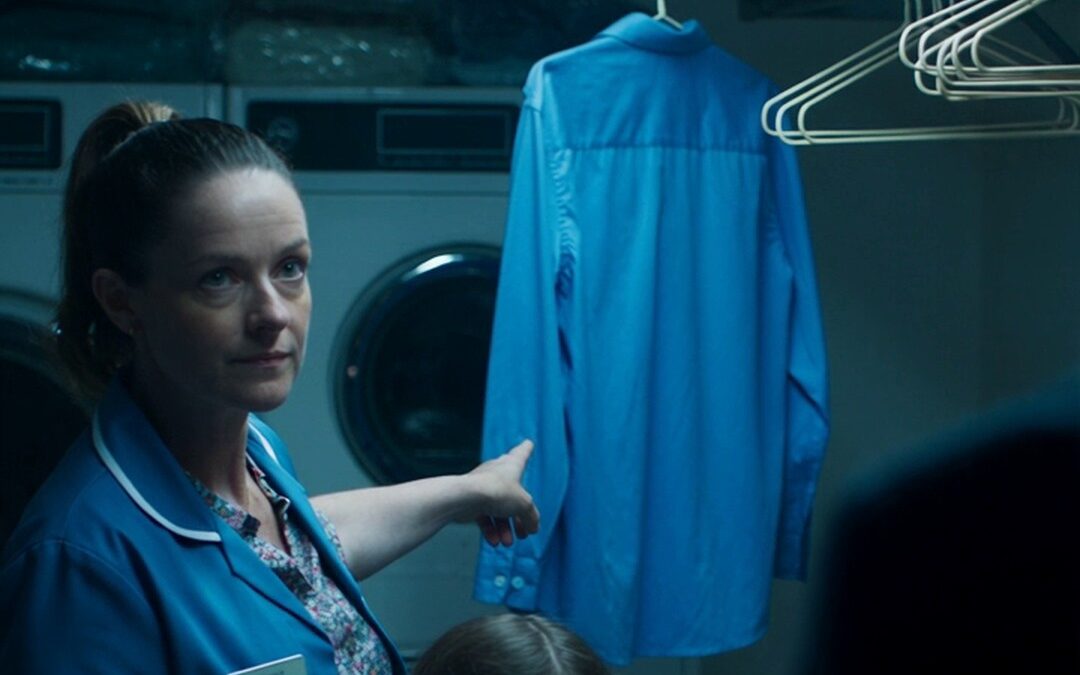
The laundry room door remained open.
I could hear Reed downstairs.
His shoes crossed the marble hall.
I folded the ticket into my palm.
“Stay here,” I told Iris.
“No,” she said.
It was only one word.
I had waited eleven months for it.
I could not ignore it.
Tessa moved closer to her.
“We can go somewhere else.”
Iris shook her head.
“He’ll take the coat.”
Reed called my name.
His voice sounded ordinary.
That frightened me more.
“You don’t have to see him,” I told her.
“He’ll say I made it up.”
I wanted to promise he would not.
I could not.
Tessa met my eyes.
“She can listen from here.”
I looked at the open doorway.
Then at the garment bag.
“Keep the coat with you,” I said.
Reed appeared before either woman moved.
He wore a gray suit.
He carried a paper sack from Iris’s favorite bakery.
For years, my brother had entered this house as though every room belonged to him.
His smile came easily.
It faltered when he saw me on the laundry room floor.
“Vic.”
He glanced at my cuff.
“What happened?”
“Glass.”
“I thought you were at the docks.”
“I was.”
Reed noticed Iris behind Tessa.
“Peach buns,” he said, lifting the sack.
Iris held Tessa’s hand.
“I don’t want one.”
The sack slipped in his grip.
For a moment, he looked almost tender.
Then he looked at me.
“She spoke?”
“Yes.”
“When?”
“Today.”
He stepped toward her.
Iris stepped back.
Reed stopped.
“She’s been through a lot,” he said.
I stood.
“So have you.”
“What’s that supposed to mean?”
I held up the ticket.
The color left his face.
Only for a second.
I had spent years noticing brief changes in other men.
I wished I could have missed that one.
“Where did you find it?” he asked.
“In Elena’s coat.”
He looked at the garment bag.
“That coat was packed away.”
“Apparently.”
“It could have come from anywhere.”
“It came from the Bellwether.”
“I can read.”
“Can you read the date?”
He took a breath.
“Vic, do this away from Iris.”
For once, we agreed.
“Tessa, take her to the kitchen.”
“No,” Iris said.
I turned to her.
“Then the sitting room.”
She shook her head again.
Reed spread his hands.
“She needs quiet.”
“She needs me to listen.”
Tessa’s gaze moved between us.
“I can stand in the doorway,” she said.
Iris nodded.
I left the choice there.
Reed lowered the bakery sack onto a machine.
“Are you questioning me because of a parking ticket?”
“I’m asking where Elena went.”
“To the pharmacy.”
“That’s what you told the police.”
“That’s what she told me.”
Iris spoke from behind Tessa.
“She didn’t.”
Reed looked at her.
His face did something I could not name.
Pity, perhaps.
Or calculation.
“Iris, honey—”
“Don’t,” I said.
His eyes hardened.
“You’re frightening her.”
I glanced at my daughter.
She was frightened.
I had been standing over her.
I moved beside the open door and sat on the bench there.
My hand ached from the broken glass.
Blood had dried along my cuff.
I held it out of sight.
“Tell me what you remember,” I said to Iris.
She stared at the ticket.
“Mom drove to the hotel.”
“Were you with her?”
She nodded.
I had been told she was home with a sitter.
Reed opened his mouth.
I lifted one finger.
He closed it.
“Mom said we were meeting someone kind.”
Iris swallowed.
“She told me I could stay in the car.”
Tessa crouched beside her.
Iris went on.
“Uncle Reed came out of the hotel.”
“Did he talk to Mom?”
“He took her keys.”
The room seemed to narrow.
Reed shook his head.
“She’s confused about that night.”
Iris pressed her lips together.
I saw the old silence approaching.
Then Tessa said, “You can stop.”
Iris looked up at me.
I forced my hand to open.
“Thank you,” I said.
“Is that all?”
“Yes.”
She pointed to the ticket.
“Mom said it would tell you.”
Reed gave a short laugh.
It contained no amusement.
“A child’s memory and a piece of cardboard.”
“Then you won’t mind a detective seeing both,” I said.
He stepped closer.
“We can settle this ourselves.”
“No.”
“We’re family.”
“Yes.”
That word hurt more than it should have.
I took out my phone.
Reed’s gaze dropped to it.
“You know what the police will do with our name.”
“I know what they’ll do with evidence.”
“Do you?”
“I’m going to find out.”
I called the attorney who had handled Elena’s estate.
Then I called the detective whose card I still kept in my wallet.
Reed remained where he stood.
So did I.
Neither of us touched the ticket again.
When the detective answered, I said my wife had been at the Bellwether before the collision.
I said my daughter had been with her.
There was a pause.
Then Detective Moreno asked who had told me otherwise.
I looked at Reed.
“My brother,” I said.
* * *
Detective Moreno arrived in forty minutes.
By then, Tessa had washed my hand.
She used cold water.
She did not ask how it happened.
Iris sat at the laundry room table with her.
The red ticket lay inside a clear food bag.
Tessa had suggested it.
Neither of us knew how much handling it had already endured.
Moreno did not promise a miracle.
She asked for the coat.
She photographed the pocket.
She photographed the cut seam.
Then she took the ticket.
“Who opened this?” she asked.
“I did,” Tessa said.
“Why?”
“Iris kept pointing to the stitching.”
“How long have you worked here?”
“Three weeks.”
“Did anyone tell you about the collision?”
“Only what the staff knew.”
Moreno wrote that down.
Reed had left the house before she arrived.
I had watched him drive away.
I had not stopped him.
Moreno asked where he was going.
“He said to his office.”
“Call if you hear otherwise.”
She turned to Iris.
“Would you like to speak with me today?”
Iris leaned against Tessa.
“No.”
“That’s fine.”
Moreno gave me a look.
It carried an instruction.
I followed it.
“Iris can choose,” I said.
Moreno asked about the hotel.
I told her what Elena had said to me.
She had called at 5:12 that evening.
I had checked the time too often since.
She asked whether I could meet her at the Bellwether.
I was finishing a dispute at the docks.
I said I would come later.
She said later might be too late.
I had thought she meant our marriage.
Moreno listened without interrupting.
“What kind of dispute?” she asked.
“Business.”
“What business?”
I gave her the names.
I gave her the location.
I also told her I carried a licensed firearm.
She looked at my clean bandage.
“Is anyone hurt?”
“I cut my hand.”
“Keep it that way.”
I deserved that.
I asked what she could check.
“The hotel’s records first.”
“And the collision report?”
“We’ll compare it with what we find.”
She explained that eleven months was a long time for video.
It was not always long for records.
The Bellwether used an outside valet company.
A claim number might connect to a vehicle.
The hotel could confirm a meeting room booking.
Phone records and old witness statements might help.
Each step needed its own source.
I watched Iris listening.
I had spent eleven months asking professionals to find the right question.
I had not asked why my daughter feared a car.
Moreno offered a child interviewer.
She said Iris could speak when she was ready.
No one in the room pressed her.
After Moreno left, my attorney arrived.
Jonah Bell had represented my family for fifteen years.
His hair was damp from the rain.
He heard what I knew.
Then he sat down.
“Elena contacted me that week,” he said.
I felt the bench beneath me.
“You never told me.”
“She asked me not to.”
“About what?”
“A separate account.”
“What account?”
“She wanted advice before showing you.”
“Showing me what?”
“She didn’t say.”
Jonah looked ashamed.
“She asked for a referral to a lawyer outside your circle.”
“Did you give her one?”
“Yes.”
“Who?”
“Naomi Calder.”
He found the name on his phone.
Naomi handled financial crimes and whistleblower matters.
Jonah had sent Elena her number two days before the crash.
He showed Moreno the email later.
He showed it to me first.
Elena’s reply contained six words.
Thank you. I’m taking Iris with me.
I read them twice.
I had assumed she meant she was leaving me.
Perhaps she was.
I would have earned that conversation.
It did not explain why Reed took her keys.
Naomi Calder answered Jonah’s call.
She remembered Elena.
She would speak to Moreno with the proper request.
She told Jonah one thing she could share immediately.
Elena had arranged to meet an investigator at the Bellwether.
She had asked how to preserve records safely.
Reed walked in while we were on the call.
He must have doubled back from his office.
Jonah ended the conversation.
Reed looked from one face to another.
“You’ve called Calder.”
“You know her?” I asked.
“Elena mentioned her.”
“You said she went to the pharmacy.”
“She could have done both.”
Tessa stood near Iris.
Reed noticed.
“I’m taking my niece upstairs,” he said.
“No,” Iris replied.
Her voice was small.
It held.
Reed’s jaw tightened.
“You’ve filled her head with this.”
Tessa did not move.
“I haven’t told her anything.”
“Then why is she suddenly talking to you?”
“Because she wanted to.”
Iris put her hand into mine.
I had forgotten how light it was.
“She listened,” Iris said.
Reed looked at our joined hands.
For a moment, I saw the brother who taught me to ride a bike on a cracked South Philadelphia sidewalk.
Then he turned away.
“You’ll regret bringing outsiders into this.”
“Maybe,” I said.
Iris’s grip tightened.
“But they’re here.”
Moreno called an hour later.
The valet company still had its billing archive.
Ticket 417 had been issued to Elena’s car.
The entry time was 6:38 p.m.
The exit time was 7:11.
The claim had been signed by someone other than Elena.
The driver had presented a staff authorization Reed used for family vehicles.
Moreno would obtain the original image.
She cautioned me against treating a signature as a verdict.
I understood.
The next fact was harder.
Elena’s car had struck a concrete barrier at 7:26.
The collision happened fifteen minutes after it left the hotel.
For eleven months, I had imagined her driving alone.
She had not driven out of that garage.
* * *
I sent Iris to bed with Tessa nearby.
I asked Tessa whether she wanted to stay.
She gave me a sharp look.
“Do you mean as an employee?”
“Yes.”
“Then I’m staying.”
I nodded.
Reed no longer had access to the house.
I had disabled his entry code.
Moreno had asked me to preserve the security records.
I did.
I also told my staff what had changed.
No one was to let Reed in.
No one was to argue with him.
They were to call me or the police.
The instructions made my home feel smaller.
I had spent years believing its gates could keep danger outside.
That evening, a car waited across the street.
It left when a patrol vehicle passed.
Moreno sent an officer to check the plate.
The car belonged to a company Reed controlled.
I did not go after it.
I sat with Iris while she built a crooked tower from wooden blocks.
Tessa worked at the folding table.
Nobody asked Iris to talk.
After a while, she pushed a block toward me.
I put it in the wrong place.
The tower fell.
A smile almost reached her mouth.
“You’re bad at this,” she said.
“I am.”
“You can try again.”
I picked up the block.
Those four words were more than I deserved.
The next morning, Naomi Calder met Moreno.
Then she met me, with Jonah present.
She had kept notes from Elena’s call.
She had also kept the appointment confirmation.
Elena wanted to discuss transfers from a scholarship fund.
The fund was mine.
My name was on its board.
Reed managed its finances.
“You knew about the transfers?” Naomi asked.
“I knew the fund made grants.”
“That wasn’t my question.”
I told her I signed annual reports.
I did not review each bank transfer.
I had trusted Reed.
Naomi looked at Jonah.
Jonah looked down.
“Some payments went to a consulting company,” Naomi said.
“Elena found the same vendor on three invoices.”
“What did it do?”
“The invoices described youth outreach.”
“Did it provide any?”
“That’s what she wanted checked.”
Elena had brought copies to the hotel.
She planned to meet an investigator working with the district attorney’s office.
She had not told Naomi which one.
Moreno found that name through the appointment log.
The investigator had been delayed by a highway closure.
He reached the hotel at 7:19.
Elena was gone.
No one had seen her leave the lobby.
Reed had.
Reed had come through a service entrance.
Moreno obtained that from a maintenance employee’s written statement.
The employee had seen him there often.
At the time, it meant nothing.
Now it placed him near the garage.
The investigator had kept Elena’s message.
It said she was waiting in her car with Iris.
It also said she thought someone had followed her.
I stared at the copy.
I had not been there.
My brother had.
Naomi touched the edge of the paper.
“Your wife wanted you told,” she said.
“About the fund?”
“Yes.”
“Why didn’t she tell me herself?”
“She wasn’t sure you’d believe her.”
That landed where it should have.
For years, I had answered every hard conversation with certainty.
Elena had learned to come prepared.
She had called me anyway.
At noon, Reed called my phone.
I let it ring.
He sent a message.
I can explain every transfer.
Then another.
You’re letting a stranger use Iris.
I saved both.
A third arrived.
Ask Tessa why she really came.
I took the phone to the laundry room.
Tessa was mending a sheet.
I showed her the message.
She read it without surprise.
“My aunt worked for the valet company,” she said.
“Is that why you took this job?”
“Partly.”
“What did she tell you?”
“Only that a woman and little girl had been at the hotel.”
“She remembered them?”
“She remembered the little girl’s yellow boots.”
Iris had owned those boots.
I could still see them beside our front door.
Tessa set down her needle.
“My aunt died in June,” she said.
“She left me her address book.”
“Was Reed in it?”
“No.”
“Then why come here?”
“Your family advertised for laundry help.”
She met my eyes.
“I wanted to know whether the girl was all right.”
I considered what she had withheld.
She let me consider it.
“You could have told me.”
“Would you have let me stay?”
I had no honest answer.
Tessa gave a tired nod.
“Your brother asked the same question when he saw my application.”
“He hired you.”
“He wanted me where he could watch me.”
I thought of Iris bringing her mother’s coat to the one person Reed had brought into the house.
For once, his control had failed him.
Tessa picked up the sheet.
“I didn’t know about the ticket.”
“Will you tell Moreno about your aunt?”
“I already have.”
Moreno called before dinner.
Her team had obtained payment records for the consulting company.
Reed’s office had approved its invoices.
That was not yet proof he owned it.
The company’s registered agent was a lawyer.
The account receiving its payments belonged to a trust.
The trustee was someone I had known for years.
Jonah Bell.
* * *
Jonah came to the house with his own lawyer.
He did not ask me to protect him.
He asked to speak with Moreno.
Before she arrived, he sat across from me in the study.
I had chosen that room because Iris never went there.
Its walls held maps of properties I owned.
I could not look at one without wondering which signatures I had missed.
“I was named trustee,” Jonah said.
“I didn’t make the transfers.”
“You knew who benefited.”
“I thought I did.”
“Who?”
“A community redevelopment project.”
“Reed’s project?”
“He brought me the papers.”
“You checked them?”
“Not closely enough.”
Jonah rubbed his forehead.
“I have the account records.”
“Why didn’t you bring them yesterday?”
“Because I was afraid of what they’d show.”
He had spent the night reviewing them.
The money had moved through two more accounts.
One bought a warehouse Reed wanted.
The other paid a private security company.
The fund’s recipients had received only a fraction of the grants reported publicly.
Reed had used children’s names on the applications.
He had signed letters describing programs that never happened.
My signature appeared on the yearly summary.
I had signed without reading the attachments.
Jonah slid a folder toward me.
I left it closed.
“Give it to Moreno,” I said.
“I will.”
“What happened at the hotel?”
“I don’t know.”
“Tell me what you do know.”
“Elena called me at six.”
“She sounded frightened.”
“Of Reed?”
“She said she had made a mistake.”
“What mistake?”
“She’d told him about the invoices.”
I stood so quickly the chair struck the wall.
Jonah did not move.
“She trusted him,” he said.
“So did I.”
“That’s why she told him first.”
I wanted to put my fist through the glass cabinet.
I looked at my bandaged hand.
Then I sat down.
Moreno arrived with another detective.
They took Jonah’s records.
They interviewed him in a separate room.
By evening, they had a warrant for Reed’s office computers.
They did not have enough to arrest him for Elena’s death.
Moreno explained that clearly.
The crash investigation had found no other driver.
Elena had been in the driver’s seat when responders reached her.
That did not prove who had driven from the hotel.
It did not tell us why she had changed seats.
It did not tell us what Reed had said.
Iris might know part of it.
She was eight.
She had been seven then.
Her memory mattered.
It also deserved care.
I agreed to an interview with a trained specialist.
Iris agreed after Moreno explained what would happen.
Tessa drove with us.
I sat in the waiting room.
Through the wall, I heard nothing.
That was right.
The interview took less than an hour.
Iris came out holding a paper cup of water.
She came straight to me.
I stood.
“Are you okay?”
She thought about it.
“I’m tired.”
“We can go home.”
She nodded.
The interviewer did not tell me every word Iris had said.
Moreno later gave me the facts she could share.
At the hotel, Reed had opened the passenger door.
Elena had told him to leave.
He said I had sent him.
He showed her his phone.
Iris remembered a picture of me on its screen.
Reed took the car keys.
Elena and Iris got into the back seat.
At a side street, he stopped.
There was an argument.
Iris could not hear all of it.
She remembered her mother saying, “Give me the papers.”
She remembered Reed answering, “They’re gone.”
Then Elena told Iris to wait.
Both adults stepped outside.
Iris heard a car horn.
She saw Reed walk away.
Elena got behind the wheel.
She drove for several minutes.
Then the crash happened.
I sat with those details for a long time.
Reed had not driven her into the barrier.
He had left her frightened and alone.
It was possible the crash remained an accident.
It was also possible he had done something else.
Moreno would look.
That night, a storm crossed the city.
The lights blinked once.
Iris came into my room with her blanket.
I had left my door open.
She stood in the hallway.
“Can I sleep here?”
“Yes.”
I moved the chair closer to the bed.
She climbed under the quilt.
After a while, she spoke into the dark.
“Mom said you loved me.”
“I do.”
“She said you’d be angry.”
“I am.”
“Not at me?”
“Never at you.”
The rain struck the windows.
“I thought I made her crash,” Iris said.
My throat closed.
I moved only when she reached for my hand.
“You didn’t.”
“She looked back at me.”
“She loved you.”
“I was crying.”
“She would have looked back anyway.”
Iris held my fingers.
“Are you angry at Mom?”
“No.”
I had been angry at Elena for leaving the house without telling me why.
I had been angry because anger was easier than admitting she had needed help.
Iris deserved a true answer.
“I’m sorry I didn’t go to the hotel,” I said.
“She waited.”
“I know.”
“She said you might come.”
I bowed my head.
“I wish I had.”
Iris fell asleep with my hand in hers.
The next morning, Moreno called.
The security company paid by Reed had kept its vehicle logs.
One of its cars had followed Elena from the Bellwether.
The driver had been told to recover a folder.
The instruction came from Reed.
* * *
Moreno found the driver.
His name was Ellis Pike.
He had left Reed’s company months earlier.
With his lawyer present, he gave an interview.
He said Reed told him Elena had taken confidential family papers.
Pike followed her car.
He lost it after the side street.
He never touched it.
His car’s location data supported that much.
He had kept the work order.
Reed had written, Recover the Calder file before Victor sees it.
That sentence changed the shape of my grief.
Elena had not hidden the truth from me forever.
She had been trying to put it in my hands.
The detectives also examined her car.
There was little physical evidence left after eleven months.
The vehicle had been stored.
An insurance inspector’s photographs showed damage inside the cabin.
The mechanic who checked it after the collision had made notes.
Nothing indicated tampering.
Moreno told me so.
I was disappointed.
Then ashamed of the disappointment.
I wanted a single act I could name.
The facts were uglier and less simple.
Reed had taken her keys.
He had taken her papers.
He had sent a car after her.
He had lied to police about where she had gone.
After she died, he had lied to me.
That was enough to bring him into the light.
The district attorney’s office arranged a meeting about the fund.
Its board members would attend.
So would the families whose children had been promised grants.
Moreno asked me not to confront Reed before then.
She did not ask me to pretend I knew nothing.
Reed arrived at the foundation office with two lawyers.
He smiled for the people waiting in the hall.
I had seen him use that smile at birthdays.
I had also seen it make frightened men feel foolish.
This time, it made me cold.
The meeting room held twelve people.
Jonah sat with his lawyer.
Naomi sat beside the district attorney’s investigator.
A woman named Patrice Dugan sat near the door.
Her son had been promised a training scholarship.
The payment had never arrived.
I had met her once at a fund dinner.
She had thanked me.
I had thanked Reed.
I thought of that while Reed spoke.
He began with a careful apology.
Records had been mishandled.
A vendor had failed.
He accepted responsibility for trusting the wrong people.
He offered to repay every missing grant himself.
It was well done.
Some board members relaxed.
Then his lawyer produced a list of my signatures.
Reed turned toward me.
“Victor approved the program.”
“I approved the reports.”
“You signed them.”
“Yes.”
“You had access to every account.”
“Yes.”
“Then this is a failure we share.”
I could have argued about who managed what.
It would not have helped Patrice.
“I failed to read what I signed,” I said.
“I’ll answer for that.”
Reed’s smile faded.
“But I didn’t create the invoices.”
“You can’t know who did.”
“We’ll see.”
His lawyer leaned toward him.
Reed ignored her.
“Elena was upset about the fund,” he said.
“She misunderstood a transfer.”
“You told her that?”
“I tried.”
“Before you went to the Bellwether?”
The room changed.
Reed glanced at the investigator.
“This is about the grants.”
“It’s about the records she carried.”
His lawyer spoke quietly.
Reed held up a hand.
“Elena called me because she trusted me.”
“Did she ask you to take her keys?”
“No.”
“Did you?”
“I moved her car.”
“Why?”
“She was too upset to drive.”
I thought of Iris in the back seat.
“Where were you taking them?”
“Home.”
“Why did you leave them on a side street?”
“I didn’t.”
The investigator slid a page across the table.
It was the valet company’s record.
Ticket 417.
Elena’s car.
Reed’s authorization.
Beside it was a map made from the car’s old navigation data.
It showed the hotel garage.
Then the side street.
Then the route to the barrier.
The car had remained on that side street for nine minutes.
Reed studied the pages.
“This proves I helped her.”
“No,” Moreno said from the doorway.
“It proves where you took the car.”
She entered with a second detective.
I had not known when they would arrive.
Moreno placed another copy beside the first.
A street camera had recorded Reed leaving on foot.
Its image had been preserved in an unrelated traffic case.
The investigator found the case number through the city’s archive.
The picture was grainy.
The time was clear.
Reed looked up.
“She told me to get out.”
“That differs from your first account,” Moreno said.
“She was angry.”
“About the papers?”
He looked at his lawyer.
This time, he listened.
She asked for a private moment.
The investigator refused to turn a foundation meeting into an interview.
Moreno said Reed could speak with her elsewhere.
Reed stood.
Patrice Dugan stood too.
“My son waited all summer,” she said.
Reed’s face softened.
“I’m going to make that right.”
“You said that in June.”
No one helped him answer.
He turned to me.
“You’re letting them use Elena against us.”
I had expected anger.
I had not expected him to sound wounded.
“You used her fear,” I said.
“After she died, you used mine.”
“She was going to destroy everything.”
“She wanted you to stop stealing.”
“She didn’t understand what this family costs.”
I looked at the board members.
At Patrice.
At Jonah, who could not lift his eyes.
Then back at my brother.
“She understood the cost,” I said.
“She paid it.”
Reed’s lawyer touched his arm.
He left with the detectives to give a formal statement.
They did not arrest him in the meeting room.
There were more records to obtain.
More people to interview.
I remained.
The board voted to suspend both of us.
That was proper.
I handed over my access card.
Patrice watched me place it on the table.
“I’ll fund the missing grants,” I told her.
“Through an independent account.”
“You should have checked before,” she said.
“Yes.”
There was no defense for that.
The investigation took months.
Reed’s office computer held drafts of the false invoices.
Bank records tied him to the consulting company.
Jonah’s account records traced the money.
Pike’s work order established what Reed had wanted from Elena.
The valet record and camera footage corrected the story he had given police.
Reed was charged with financial crimes and with interfering with the investigation into the fund.
He eventually pleaded guilty to the financial charges.
The investigation did not prove he caused the crash.
Moreno told me that herself.
“I know you wanted certainty,” she said.
“I wanted Elena back.”
She let that sit.
Reed received a prison sentence.
Restitution came from the warehouse purchase and accounts the court could reach.
The fund’s board was replaced.
An outside administrator reviewed every unpaid grant.
Jonah surrendered his license after a separate professional inquiry.
He had not stolen the money.
He had made it easier to hide.
I visited Elena’s grave after the plea.
I brought no flowers.
I brought a copy of the first check sent to Patrice’s son.
It was not forgiveness.
It was a beginning.
* * *
Spring came slowly.
Iris stopped sleeping with the hallway light on.
Some nights, she still asked me to leave my door open.
I did.
She returned to school four mornings a week.
On Fridays, she stayed home and helped Tessa fold sheets.
Tessa claimed Iris was better at fitted sheets than either of us.
Iris said that was a low standard.
She was right.
Our kitchen table acquired paint marks.
The walls acquired drawings.
One showed our house with its gates open.
I did not ask whether that was a message.
I just put it on the refrigerator.
The blue coat stayed in its garment bag.
Iris decided when to look at it.
Once, she took it out and placed her hand in the repaired pocket.
She asked whether Elena had sewn the ticket there.
“I think so,” I said.
“Why?”
“She wanted us to find the truth.”
“Did she know what would happen?”
“No.”
Iris considered that.
“Then she was brave.”
“She was.”
“So was I.”
“Yes, you were.”
She hung the coat up herself.
I had offered Tessa a better position.
She refused the title.
“I like laundry,” she said.
“You can still do laundry.”
“Then why change the name?”
I had no answer.
I raised her pay.
She asked me to make the hours regular.
I did.
She also asked for the freedom to tell Iris when I was wrong.
“You already do that,” I said.
“I want it in writing.”
I nearly smiled.
Then I wrote it into her agreement.
Money could make a room warmer.
It could not make someone trust it.
Tessa had taught me that without ever saying it.
I sold the warehouse Reed had bought with the stolen funds.
The court directed part of the proceeds toward restitution.
I placed the rest with the new fund administrator.
I was not on its board.
Neither was anyone I appointed.
That mattered to Patrice.
It mattered to me.
One afternoon, she brought her son to thank the staff.
He had begun the training program the fund promised him.
I started to apologize again.
Patrice stopped me.
“You said it already.”
I nodded.
She looked at Iris beside me.
“Let the work speak now.”
I tried.
At home, that meant asking before deciding.
Iris chose her own school bag.
She chose to keep Saturday trips to the bookstore.
She chose Tessa as the person to take her.
For a while, she chose not to ride in my car.
I accepted that.
Then one wet Tuesday, she found me checking the tires.
“Where are you going?” she asked.
“To pick up dinner.”
“Can I come?”
“Yes.”
She climbed into the back seat.
I waited until she fastened her belt.
“Which place?” I asked.
“The one with the good bread.”
“That narrows it to half the city.”
“The one where you bought the terrible soup.”
“That narrows it down.”
She smiled at the window.
I drove slowly.
At the first red light, my hands tightened on the wheel.
Iris saw them in the mirror.
“You can breathe, Daddy.”
“I know.”
“Then do it.”
I did.
Reed sent me a letter that summer.
It came through his lawyer.
He said he had loved Elena.
He said he had never meant for her to die.
He said our family would have fallen apart without the money he took.
The letter did not apologize to Iris.
I put it away.
When Iris asked whether Reed had written, I told her.
“Can I read it?”
“When you’re older, if you want.”
“Does he know I remember?”
“Yes.”
She looked at her hands.
“I don’t want him to visit.”
“He won’t.”
“Even when he comes home?”
“Even then.”
She nodded.
Forgiveness was a word adults kept offering her.
I stopped using it.
She could decide what Reed meant to her.
She would never have to be alone with him.
One evening, she asked if we could visit the Bellwether.
I asked why.
“Mom was there.”
“We can.”
“Not now.”
“Whenever you’re ready.”
She considered my answer.
“Can Tessa come?”
“If Tessa wants to.”
Tessa wanted to.
We went on a bright Sunday.
The hotel had changed its lobby furniture.
The garage still used red claim tickets.
Iris noticed them immediately.
She stood beside Tessa while I spoke with the manager.
He had prepared a quiet room for us.
No one asked her to describe the night.
We sat near a window.
Iris ordered hot chocolate.
Tessa ordered coffee.
I ordered the same cake Elena used to buy on birthdays.
It was too sweet.
I ate every bite.
Iris watched me.
“Mom liked that?”
“She did.”
“Did you?”
“Not much.”
“Then why are you eating it?”
“Because she was usually right about dessert.”
Iris laughed.
It came easily now.
Before we left, she asked to see the garage entrance.
We walked there together.
She looked at the gate.
Then at the sunlight beyond it.
“I thought this place was the whole bad thing,” she said.
“It was part of a hard day.”
“Mom helped people.”
“Yes.”
“She tried to help us too.”
“Yes.”
Iris took my hand.
“Okay,” she said.
We went home.
* * *
Four years later, the laundry room smelled of lemon soap again.
Sheets filled the rolling baskets.
Iris stood inside one of them.
She was twelve and far too tall for it.
She insisted the wheels made it faster.
Tessa pushed her across the tile.
I stood in the doorway with a stack of towels.
“Safety inspection,” I said.
Iris pointed at the stack.
“You’re carrying those wrong.”
“There’s a correct way?”
“Apparently, you never learned it.”
Tessa laughed.
I set the towels down.
The red ticket hung in a small frame above the folding table.
Iris had chosen the place.
The string was still attached.
So was the number.
The court had returned it after the case closed.
I once thought I would lock it away.
Iris said it belonged where she found her voice.
She meant this room.
She meant the people in it.
The ticket had led us through records and lies.
It had also carried Elena’s last instruction.
Show your father.
Now Iris did.
She showed me her drawings.
Her bad grades.
Her good ones.
The jokes Tessa told when I was absent.
The days she missed her mother so much that she wanted no one to speak.
She knew I would listen.
Outside, rain began against the windows.
Iris climbed out of the basket.
“Can we leave the door open tonight?” she asked.
“Of course.”
She smiled.
She no longer meant my bedroom door.
The kitchen was full of neighbors.
Patrice and her son were bringing food.
Tessa’s cousins were coming after work.
The house had room for them.
I picked up the towels.
Iris reached for half.
Warm cotton.
A red ticket.
An open door.
She walked ahead of me, talking all the way.
THE END








