THE SIX-YEAR-OLD WHO STOPPED THE DON’S PRIVATE TRAIN WITH A SILVER COMPASS
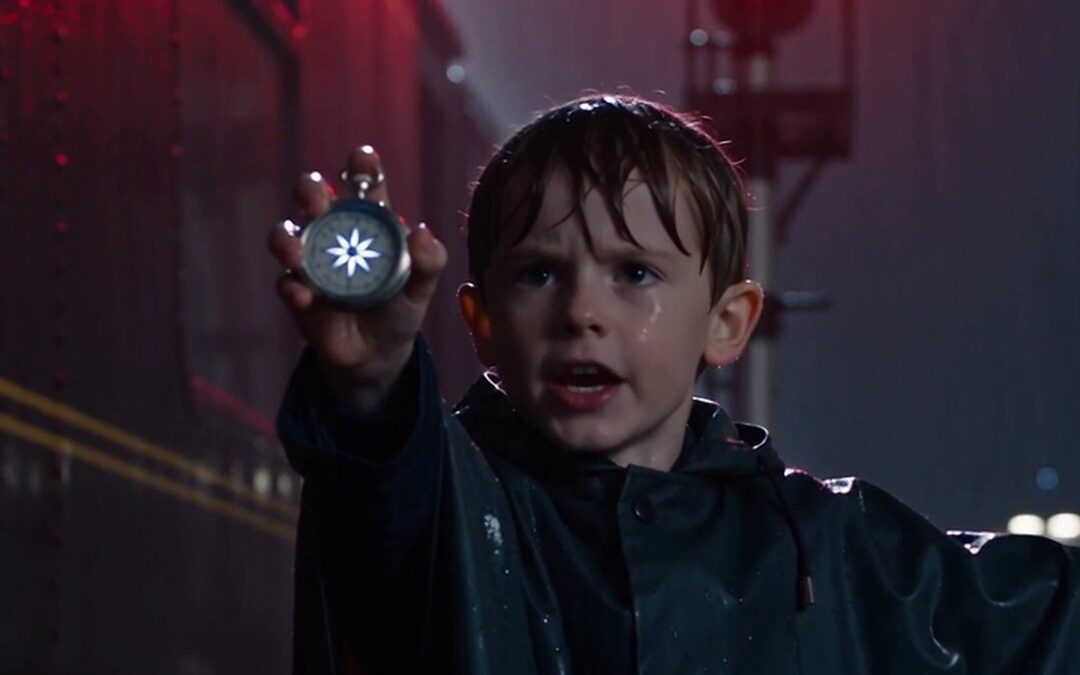
Chapter 2: What the Needle Found
The lights returned in sections.
First, the platform lamps.
Then the train’s cab.
Then the high glass roof above them.
The red signal stayed red.
The figure behind the service door was gone.
Warren kept his hand between Martin Kells and the Reeds.
The compass lay open in Ruth’s palm.
Its two halves had become one.
“Lock the platform,” Warren told the guard.
“Already doing it.”
“Call station security.”
Martin looked toward the dark door.
“That was probably a maintenance worker.”
“Then they can explain the key.”
“You’re stopping a train over a shadow?”
“I stopped it over a signal.”
Warren turned to the driver.
“Stay in the cab.”
The driver nodded.
Martin lowered his voice.
“You are making a scene.”
“It was a scene before I arrived.”
Warren looked at Ruth.
“Can you come with me?”
“Where?”
“Somewhere warm. Somewhere private.”
“I’m not leaving Milo with strangers.”
“He can come.”
“I’m not leaving him at all.”
Warren nodded once.
“Then we go together.”
He gestured toward the waiting room.
Ruth didn’t move.
“Why should I trust you?”
“You shouldn’t.”
“That’s honest.”
“It’s a beginning.”
The station supervisor hurried in from the concourse.
He was carrying a flashlight and wearing one shoe untied.
“Mr. Vale, the service corridor has no access.”
“Someone was inside.”
“Impossible.”
“The lights went out.”
“Probably a transformer.”
“Then you can explain why the door opened.”
The supervisor looked at the brass plate.
Ruth’s compass gleamed in her hand.
His gaze lingered there too long.
Warren saw it.
“Name?”
“Jonas Pike. I supervise the night shift.”
“How long?”
“Eleven years.”
“Did you see anyone enter?”
“No.”
“Did you hear the lock?”
“No.”
“Did you know this door was sealed?”
“Everyone knows.”
“Then how did you know it was a lock?”
Pike looked at Warren.
A beat passed.
“I meant the door.”
“Of course.”
Martin moved between them.
“Let’s avoid turning a maintenance issue into theater.”
“Then stop performing.”
Warren’s voice stayed level.
Martin fell silent.
The waiting room smelled of wet wool and floor polish.
The station clock showed 11:18.
Milo sat on a wooden bench.
Ruth crouched beside him and checked his hand.
The knuckle was scraped.
“I fell near the bus stop,” Milo said.
“Why didn’t you tell me?”
“You looked tired.”
Ruth closed her eyes for a moment.
Then she kissed his hair.
Warren watched from the doorway.
He remembered his mother using the same gesture.
Evelyn Vale’s hands had been small.
She had made them look steady even when she was afraid.
“Mr. Vale,” Ruth said.
“Warren.”
“I didn’t say you could call me Ruth.”
“Then I won’t.”
She gave him a thin, tired look.
“You know my mother’s name.”
“I know Evelyn’s.”
“You knew she helped June?”
“I thought she helped a station employee.”
“What does that mean?”
“It means my father controlled the records.”
“Your father controlled everything?”
“Almost everything.”
“Then why did my mother keep this?”
Warren looked at the compass.
“Because she thought it mattered.”
“Did it?”
“I don’t know yet.”
“Do you know why my mother left town?”
“No.”
“Do you know why she never spoke of Evelyn?”
“No.”
“You know a lot for a man who knows nothing.”
“That’s fair.”
Milo studied Warren.
“Are you the train man?”
“I own the company.”
“Do you drive the train?”
“No.”
“Then why do people call you that?”
“Because they want me to be responsible for it.”
Milo accepted that.
Ruth kept one hand on his shoulder.
A station medic arrived and cleaned the scrape.
The injury was shallow.
Milo watched the bandage with solemn attention.
“I was helping,” he told her.
“I know,” Ruth said.
Warren turned to Pike.
“Bring the night logs.”
Pike hesitated.
“Now.”
The supervisor went.
Martin stayed.
“You can’t keep employees here.”
“I can ask them to answer questions on private property.”
“This is public.”
“The private rail platform is leased.”
“Not the corridor.”
“Correct.”
Martin’s smile had lost its ease.
“Your mother would have hated this.”
“That’s why I’m asking.”
Martin went still.
Ruth noticed.
“What did he mean?”
“Nothing,” Martin said.
Warren answered for him.
“My mother hated secrets.”
“Then she should have told mine what happened.”
“I agree.”
“Will you open that door?”
“If it’s safe.”
“Is it?”
“I don’t know.”
“Then you don’t get to open it.”
Warren looked at her.
She was right.
He had spent years treating access as permission.
“Fair.”
Ruth blinked, surprised by the answer.
Warren called the station’s structural engineer.
He called the city fire marshal.
He called the company’s security director, not Martin.
The two officials arrived twenty minutes later.
They checked the corridor plans.
The sealed door was not on the current building map.
The engineer found a second set of hinges hidden under the paint.
The fire marshal called the city.
No one forced the door.
They waited for a locksmith authorized by the station.
While they waited, the signal stayed red.
The driver finally came inside.
“Tower says the signal is working.”
“Then why did it remain red?” Warren asked.
“Because the track circuit reported a blockage.”
“Was there one?”
“No.”
Milo looked up.
“The door was open.”
The driver frowned.
“Doors don’t affect track circuits.”
“Not usually,” the engineer said.
“Could this one?”
“We’ll know when the corridor is inspected.”
Ruth studied the floor.
“Could the compass point toward the wires?”
The engineer leaned closer.
“What do you mean?”
“Her father repaired signals,” Warren said.
“My father used the compass to check direction in the yards,” Ruth replied. “He said old lines had ways of telling you when something was wrong.”
“Metal can pull a needle,” the engineer said.
“Then the compass may be responding to something behind the wall.”
The engineer tested it.
The needle turned toward the door.
Then toward the track.
Then steadied on the sealed passage.
“That’s useful,” he admitted.
Martin checked his watch.
“This is turning into a circus.”
Warren looked at him.
“Go home.”
“I’m counsel for the company.”
“Then go home as counsel.”
“You are compromised.”
“By what?”
“Sentiment.”
“Leave.”
Martin glanced at Ruth.
“You should be careful about what you assume, Mrs. Reed.”
“I assume you want us gone.”
“And what else?”
“That you’re afraid of what’s behind the door.”
Martin’s face tightened.
Warren saw the answer before Martin spoke.
“I’m afraid of a dead woman’s secrets being used to disrupt a rail schedule.”
“That’s not what I asked.”
“I’m not answering you.”
“That’s an answer.”
Martin walked toward the concourse.
The guard followed at Warren’s signal.
Only the station employees remained.
At 11:52, the city locksmith arrived.
He examined the brass plate.
The compass was placed on a table.
Its blue star matched the narrow mark cut into the plate.
The locksmith removed two screws.
Behind the plate sat a cylinder that did not match the door’s modern lock.
It had been installed decades earlier.
The keyhole was shaped like a star.
Ruth lifted the compass.
The silver edge fit the groove around the plate.
Not as a key.
As a template.
The locksmith studied the piece.
“Someone used this to cut the original lock.”
“Can you open it?” Warren asked.
“Not without damaging the mechanism.”
“Then don’t.”
Ruth looked at Warren.
“Why not?”
“Because we don’t know what it protects.”
The fire marshal agreed.
They checked the door frame and the corridor plans.
No hazardous materials were listed.
The city gave permission for a controlled opening.
The locksmith used a hand tool.
The old cylinder turned once.
A bolt withdrew inside the wall.
The door opened two inches.
Cold air came through the gap.
Milo stepped behind his mother.
Warren moved in front of them.
Inside was a narrow passage.
Its walls were lined with old signal cables.
At the far end sat a locked metal cabinet.
A damp streak crossed the floor.
The engineer spotted a cable splice.
“That’s not original.”
“Could it have caused the signal?” Warren asked.
“Yes.”
“How long has it been there?”
“No idea.”
A fresh tool mark brightened one screw.
The fire marshal photographed it.
The locksmith opened the cabinet with the second key found in the brass plate.
Inside lay a ledger, a reel of film, and a sealed envelope.
The envelope bore no name.
The ledger was dated thirty-one years earlier.
Warren asked the officials to inventory everything.
Ruth watched the pages turn.
One line caught her eye.
“Stop.”
The station archivist leaned over.
“What is it?”
“June Reed.”
The line listed her mother as a signal clerk.
Then came a second entry.
“Evelyn Vale, passenger.”
Warren leaned closer.
A note had been added in different ink.
“Child removed from manifest.”
Nobody spoke.
Ruth gripped the edge of the table.
“Which child?”
The archivist found a second line.
“Female infant. Name withheld.”
Warren stared at the ledger.
His mother had given birth to a daughter before him.
He had never known.
The archivist turned another page.
“Transfer authorization signed by Jonas Pike.”
“Pike was a child then,” Warren said.
“Different Jonas Pike,” the archivist replied. “His father supervised the station.”
Ruth kept looking at the line.
“My mother worked here?”
“Yes,” Warren said.
“She told me she cleaned offices.”
“She may have done both.”
“She never told me.”
“Maybe she couldn’t.”
“Or maybe you’re making excuses for her.”
“I don’t know.”
The film reel was fragile.
The archivist said it needed professional handling.
The envelope could be opened under witness.
Inside was a photograph.
Evelyn Vale stood beside June Reed.
A newborn rested in June’s arms.
The date on the back matched the ledger.
Warren recognized his mother.
He did not recognize the baby.
Ruth stared at June.
“Is that me?”
The archivist examined the inscription.
“It says ‘June and Evelyn, with the child.’”
Warren’s hands had gone cold.
The child’s face was mostly hidden in a blanket.
The photograph proved the women had been together.
It did not prove whose baby it was.
The ledger offered another clue.
The child had been born in a private clinic under an alias.
A physician’s signature appeared beside the entry.
The name was Dr. Amos Vale.
Warren’s father.
Ruth took one step back.
“You think I’m your sister?”
“I don’t know.”
“You want that answer.”
“I want the truth.”
“Those aren’t always the same.”
Milo held out the compass.
“Mom, the needle moved.”
It pointed toward the film reel.
The archivist examined the reel’s container.
A narrow blue star was stamped beneath the label.
The film was not on the station inventory.
It had been stored in the cabinet behind the sealed door.
The city took custody of it.
The station security director called a state investigator.
Warren agreed to hand over the ledger and photograph.
Martin returned before midnight.
He came with two company executives.
He had changed into a dry coat.
“You’ve gone too far,” he told Warren.
“Why are you back?”
“The board is on the phone.”
“They can wait.”
“They’ve already voted to suspend your authority.”
“On what grounds?”
“Interference with company operations.”
“By whom?”
“Me.”
“You don’t have that authority.”
“I do under the emergency clause.”
Warren examined the document Martin offered.
It was properly signed.
The vote had been called ten minutes after the lights returned.
“That was fast.”
“We were prepared.”
“Prepared for what?”
“For you to behave unpredictably.”
Ruth watched Martin.
“You knew what was behind that door.”
Martin looked at her.
“I knew a sealed corridor existed.”
“You knew about the child?”
“I don’t know what you mean.”
“You knew.”
Warren handed the suspension notice to the security director.
“Copy it.”
Martin’s mouth tightened.
“You are not in charge.”
“Not right now.”
“Good.”
“Have the company preserve every communication concerning this station, my mother, and June Reed.”
“You can’t order that.”
“I can request it.”
“You’re suspended.”
“Then the board can explain why it refused.”
Warren called the company’s outside counsel.
He requested an independent preservation notice.
Martin watched him make the call.
“You think paperwork protects you?”
“It keeps people from claiming they forgot.”
At 1:30 a.m., the state investigator arrived.
She was a calm woman named Dana Holt.
She spoke with each person separately.
She photographed the door.
She sealed the ledger.
She took statements from the engineer, the locksmith, and the driver.
When she interviewed Warren, he answered every question.
When she interviewed Ruth, Milo sat beside the waiting-room window.
The compass remained in a clear evidence bag.
Ruth gave her statement without embellishment.
She told the investigator about June’s final illness.
She told her that June had asked for the compass to be returned to the station.
“She said it would be time when the old signal showed red.”
“What did she mean?”
“I don’t know.”
“When did she say that?”
“Three weeks before she died.”
“What did she say about Evelyn Vale?”
“That she was a good woman who got frightened.”
“Frightened of what?”
“My father never knew.”
Ruth looked at the evidence bag.
“Or she never told him.”
Dana Holt wrote that down.
Warren sat across from Ruth afterward.
“Your mother left you an instruction.”
“She left me an object.”
“Do you think she expected this?”
“I think she expected someone to ask.”
“Why didn’t she come herself?”
“She was sick.”
“Could she have come before?”
“Yes.”
“Why didn’t she?”
Ruth gave him a hard look.
“Why didn’t your mother?”
Warren had no answer.
At dawn, a family attorney arrived.
Warren’s father’s old trust records were held in a bank vault downtown.
The attorney had already requested the files.
Ruth refused to go with Warren.
She took Milo home.
“I’ll call the investigator,” she said.
“I’ll send a car.”
“No.”
“It’s raining.”
“We know how buses work.”
“I didn’t mean—”
“I know what you meant.”
Warren stopped.
Ruth softened slightly.
“Don’t make this easier by making it yours.”
He let them leave.
The city kept the station closed until a structural inspection was complete.
The train stayed on the platform.
The red signal remained lit.
At 8:40, a rail technician found the splice hidden behind the service wall.
It had been installed recently.
The splice bypassed a sensor on the track circuit.
A false red signal could hold a train.
A false green could have sent it forward.
The technician could not identify who had installed it.
The camera system covering that corridor had been disabled for two hours.
The station logs showed a manual override under Jonas Pike’s credentials.
Pike denied entering the corridor.
The investigator subpoenaed his phone and work schedule.
Warren went to the bank.
Ruth met him there with Dana Holt.
She had returned because the bank would only release a family record to a beneficiary or investigator.
The bank officer retrieved a sealed trust file.
The first document was a birth registration.
It named Evelyn Vale as the mother.
The child’s name had been left blank.
A second document was signed by Dr. Amos Vale.
It stated that the child had died shortly after birth.
The date had been altered.
The ink did not match.
The trust file included an unsigned letter from Evelyn.
“I could not let him use the child to purchase the railway.”
Warren read the sentence twice.
“Use her how?” Ruth asked.
Nobody knew.
The investigator ordered a search of the family archive.
The bank officer located a later note, dated two days after the altered registration.
It was addressed to Evelyn’s sister.
“June has taken her home. The boy must never know.”
Warren looked up.
“The boy?”
The letter named him.
Warren had been born six years after the infant.
He was not her brother.
He was her son.
The woman who raised him had been his grandmother.
The birth record identified Warren as the infant’s child.
The altered record had disguised his parentage.
Ruth read the line.
Then she looked at Warren.
“Your mother was my mother’s sister?”
“Half sister,” the attorney said. “Same mother. Different fathers.”
Warren gripped the edge of the table.
The trust records explained the secret.
Evelyn had been seventeen.
Amos Vale, already married and already building his rail empire, had fathered a child with her.
Her family feared scandal.
His family feared a claim on the company.
June took the baby to raise as her own.
But the documents did not explain why Warren had been raised as Evelyn’s son.
“Why did she take me back?” Warren asked.
The attorney found another letter.
“Because Amos wanted to control the child’s trust,” he said.
Warren’s father had sought to use the baby’s identity to secure voting shares.
Evelyn had hidden Warren under her own name.
She had raised him as her son to keep him out of his father’s hands.
Ruth leaned back.
“My mother gave up her baby to protect him.”
“She helped my mother,” Warren said.
“She raised you.”
“And carried the secret.”
“Did she know who you were?”
The attorney found a signed custody transfer.
June knew.
She had signed away parental rights when Warren was six months old.
The document stated Evelyn was to raise him without revealing the truth until he was twenty-one.
Warren had been twenty-one when Evelyn died.
The letter had never reached him.
His father had found it first.
A note in Amos Vale’s handwriting sat beneath the transfer.
“Destroy this. The boy is mine.”
Warren stared at his father’s words.
The old wound shifted.
He had believed Evelyn kept him at a distance because she never loved him.
She had been trying to keep him safe.
Ruth saw his face change.
“Your mother did love you.”
“She was my mother.”
“She was.”
“But she was also my aunt.”
“Yes.”
“And June was my mother.”
“Yes.”
Ruth’s voice had gone quiet.
“I don’t know what that makes us.”
Warren looked at the altered record.
“It makes us family.”
“Blood doesn’t fix what people did.”
“No.”
“Then don’t use it to claim me.”
“I won’t.”
The investigator photographed the documents.
The trust attorney located a second envelope sealed by Evelyn.
It contained a handwritten inventory of shares.
The shares had been placed in a trust for the child.
The trust had never been dissolved.
Its value had grown for thirty years.
The beneficiary was listed as Warren Vale, formerly recorded as Warren Reed.
The trust owned a controlling block of the company’s voting shares.
Warren read the balance sheet.
His father had spent decades trying to find the trust.
He had failed.
The shares were now controlled by the company board.
But the legal claim belonged to Warren.
The papers also named June Reed as the only witness to the original transfer.
The compass, the ledger, and the photograph all pointed to the same secret.
The false signal had drawn them to the door.
The door held the evidence.
The evidence held Warren’s birth.
The investigator left with the originals.
The attorney advised no public statement until the records were authenticated.
Warren agreed.
Ruth took Milo to school.
Warren returned to the station.
The train was still there.
A maintenance crew had removed the hidden splice.
The signal turned green.
Warren stood beneath the old glass roof.
He heard a door close behind him.
Jonas Pike stepped onto the platform.
“You should go home,” Warren said.
“I have a statement.”
“Give it to the investigator.”
“I can tell you what happened.”
“You can tell her.”
Pike glanced at the corridor door.
“My father worked here.”
“I know.”
“He said the Vale family had a child hidden in the station.”
“Which child?”
“The one who became you.”
Warren kept his face still.
“Why didn’t you tell anyone?”
“My father told me not to.”
“When?”
“Years ago.”
“Why now?”
“Because Martin Kells paid me.”
The answer was plain.
“How much?”
“Five thousand dollars.”
“What did he ask you to do?”
“Keep the old door sealed.”
“Why?”
“He said the documents would damage the company.”
“Did you splice the signal?”
“No.”
“Who did?”
“I don’t know.”
“Did you disable the camera?”
“I gave Martin the override code.”
“Why?”
“He said it was for an inspection.”
“Were you inside the corridor last night?”
Pike looked down.
“I was.”
“Did you open the door?”
“I turned the key.”
“Why did the lights go out?”
“I don’t know.”
“Did you see someone inside?”
“No.”
“Did you take anything?”
“No.”
“Did you touch the compass?”
“No.”
Warren waited.
Pike’s hands shook.
“I can prove the payment.”
“Then take it to Dana Holt.”
“I’m scared.”
“So is Ruth.”
“I don’t want anything to happen to them.”
“Then tell the investigator everything.”
Pike nodded.
He sat at the end of the platform.
Warren called Dana Holt.
She returned within the hour.
Pike gave a full statement.
His account matched the station access logs.
The payment had come through a consulting firm owned by Martin’s brother.
The firm had no rail clients.
The investigator obtained a warrant for Martin’s office records.
Martin was gone.
The board had suspended him overnight.
By afternoon, the company announced an internal review.
The notice called the signal failure a technical incident.
Warren read it and called the board chair.
“Correct the statement.”
“We don’t yet know who caused it.”
“We know it was not accidental.”
“We know a splice was found.”
“Then say that.”
“The market will react.”
“Then it will react to the truth.”
The chair paused.
“Your position is unclear.”
“My position is under review.”
“That’s an understatement.”
“Put it in writing.”
The chair promised a revised statement.
It appeared twenty minutes later.
The station would remain closed pending a safety audit.
The company would cooperate with investigators.
No one named the Reeds.
No one mentioned the family records.
That night, Ruth called Warren.
“Can you meet at the station?”
“I can.”
“Bring the attorney.”
“Do you want Dana Holt?”
“No. I want to see the passage.”
The fire marshal approved a controlled visit.
The station archivist accompanied them.
The passage looked smaller in daylight.
The old cables hung behind protective covers.
The cabinet stood open.
Ruth approached the photograph.
She touched the glass over her mother’s face.
“June had this picture.”
“Apparently.”
“She never showed it to me.”
“She may have feared what it would reveal.”
“I was her daughter.”
“You were.”
“Why didn’t anyone just tell me?”
“Because people with power thought the truth belonged to them.”
Ruth turned.
“Did you think that?”
“I didn’t know there was a truth to keep.”
“You could have asked why the records were sealed.”
“I could have.”
“Would you have?”
“I don’t know.”
“That is the first answer I believe.”
The archivist placed a copy of the ledger on the table.
Ruth read the entry again.
“Child removed from manifest.”
“It means your mother carried Warren out through the old service route,” the archivist said.
“Why?”
“To prevent Amos Vale from filing the child under his own name.”
Warren looked at the corridor.
The brass line ran from the platform to the door.
His mother had once carried him along it.
Perhaps she had carried him in a blanket.
Perhaps she had been afraid.
“What did she do after?” Ruth asked.
“She raised him,” Warren said.
“While my mother went home without her baby.”
“June agreed to the transfer.”
“She was sixteen.”
The attorney looked at the record.
“Seventeen.”
“That makes it better?”
“No.”
Ruth looked at Warren.
“You got a mother.”
“I got two.”
“My mother lost her child.”
“Yes.”
“And then she raised you anyway.”
“Yes.”
“Don’t call it a gift.”
“I won’t.”
“Don’t call it sacrifice like it was simple.”
“I won’t.”
Ruth turned back to the photograph.
“I want the full records.”
“You’ll have them.”
“I want a copy of every trust document.”
“You’ll have them.”
“I want the investigation to continue.”
“It will.”
“And I want your company to stop using my mother’s name in any statement.”
“I’ll make sure.”
“Make sure?”
“I’ll tell the board.”
“You can’t promise what they’ll do.”
“No.”
“Good.”
The investigator called the next morning.
Martin Kells had returned through a company lawyer.
He agreed to answer questions.
The investigation had found a second payment to Pike.
The transfer came from Martin’s office account.
His badge had accessed the signal room after the camera went dark.
Martin claimed the money was a consulting fee.
The investigator had a copy of his message to Pike.
“Keep the door closed until Vale’s train passes.”
A second message came eleven minutes later.
“Do not let the boy touch the old plate.”
The phone belonged to Martin.
The messages were recovered from a company backup.
The investigator asked Warren to attend a formal hearing.
The board had scheduled one for Friday.
Ruth received an invitation too.
She did not accept immediately.
“Do you want me there?” she asked Warren.
“Yes.”
“Why?”
“Because the company heard you were a cleaner before it heard your name.”
“That’s not enough.”
“Because the truth belongs to you.”
“That’s closer.”
“I’ll answer for my part.”
“You don’t know your part yet.”
“Then I’ll listen.”
She agreed to attend.
Friday’s hearing filled the company’s main conference room.
The board sat beneath a wall of framed route maps.
The family attorney brought the trust papers.
Dana Holt brought the investigation summary.
The station archivist brought the ledger copy.
Ruth sat beside Warren.
Milo stayed with a neighbor.
Martin arrived with his own counsel.
He wore a charcoal suit.
His hair was perfectly arranged.
He appeared calm.
The board chair opened the session.
“We are here to assess the interruption of company operations and allegations of misconduct.”
“Safety failure,” Warren corrected.
“Both.”
“Then say both.”
The chair nodded.
“Safety failure and alleged misconduct.”
Martin presented first.
He argued the station’s old systems were poorly documented.
He argued Pike had acted without authorization.
He argued Warren had clouded the inquiry by turning a technical fault into a family matter.
The arguments were effective.
Some board members took notes.
Some looked at Ruth.
Martin turned toward her.
“Mrs. Reed, do you know how many employees rely on this company?”
“Yes.”
“Do you know what happens if the company is destabilized?”
“People lose jobs.”
“Did you know Mr. Vale planned to stop a scheduled freight departure?”
“I saw him stop it.”
“Was the track unsafe?”
“We don’t know.”
“The signal indicated a blockage.”
“The engineer found a hidden splice.”
“After your son interfered with a secure area.”
“He followed a compass.”
“That is not a safety procedure.”
“No.”
Martin leaned back.
“So the company’s operations were disrupted by a six-year-old and a family object.”
“The operations were disrupted by a false signal,” Ruth said.
The board chair interrupted.
“Mr. Kells, let the witness finish.”
Martin nodded.
“Mrs. Reed, you want the company to accept your claim to a family trust.”
“I want the company to honor the documents.”
“You stand to gain substantial money.”
“I’m not asking for money.”
“Your attorney has filed a beneficiary notice.”
“To preserve the trust.”
“Which controls voting shares.”
“I didn’t know that until yesterday.”
“Convenient.”
Warren stood.
“Let her answer.”
Martin looked at him.
“Are you chairing this hearing?”
“No.”
“Then sit down.”
Warren sat.
Ruth met Martin’s eyes.
“I cleaned your offices for three years.”
“You were employed by the station contractor.”
“I scrubbed your fingerprints from conference tables.”
“That is irrelevant.”
“You walked past me every night.”
“I don’t remember you.”
“That’s why you think my name is convenient.”
The room shifted.
Martin held his composure.
“You were paid for your work.”
“I was.”
“Then what grievance remains?”
“Your company concealed a child’s identity.”
“Allegedly.”
“The ledger says otherwise.”
“The ledger may be incomplete.”
“The photograph is dated.”
“The photograph proves two women met.”
“The trust document has Evelyn Vale’s signature.”
“Signatures can be challenged.”
“The bank verified it.”
“The bank is not a court.”
“No,” Ruth said. “You are not either.”
The board chair asked the attorney to authenticate the documents.
He did.
He explained the chain of custody.
The station cabinet had been sealed by city officials.
The trust papers came from a bank archive.
The birth record matched Dr. Amos Vale’s signed notes.
The trust had been established before the company incorporated.
Martin’s counsel challenged the dates.
The bank supplied its original registration seal.
The archivist explained the ledger’s paper and handwriting.
The company’s own historian identified the notation style as standard for that station.
Martin nearly won when he challenged the photograph.
The image had no negative.
The archivist admitted its source was uncertain.
“It was found in an unlisted cabinet,” Martin said. “It could have been placed there yesterday.”
“Could it?” the investigator asked.
She showed the room the film reel.
The reel had been stored alongside the photograph.
Its first frames showed Evelyn and June standing on the station platform.
The next showed June carrying a bundled infant through the service corridor.
The date stamp was visible.
A later frame showed a man entering the signal room.
His face was clear.
Dr. Amos Vale.
The reel’s perforations matched the station archive format.
The film lab had authenticated its age.
The room fell quiet.
Warren watched his father’s younger face appear on the screen.
His father looked angry.
Evelyn looked afraid.
June looked determined.
The image lasted only seconds.
Then the film showed the old brass plate.
The compass design was visible in June’s hand.
Ruth leaned toward the screen.
“My mother gave the other half to Evelyn.”
The archivist nodded.
“The film supports that.”
Martin’s face had changed.
The investigator showed the text messages.
His own office account.
His badge number.
His payment to Pike.
The messages carried time stamps.
The splice had been installed before the train arrived.
Martin argued that he had ordered a temporary bypass for safety testing.
The engineer testified that no safety test was scheduled.
Martin argued Pike had misunderstood.
Pike’s signed statement contradicted him.
Martin argued the messages were taken out of context.
The full chain showed he had asked Pike to hold the door until the train passed.
The board chair asked why.
Martin hesitated.
“I believed Mr. Vale would make an impulsive decision.”
“So you falsified a signal?”
“I ordered a temporary hold.”
“Did you authorize the splice?”
“I did not install it.”
“Did you pay Pike?”
“Yes.”
“Why?”
“To keep the matter contained.”
“Why conceal the corridor?”
“Because the records could trigger a dispute.”
“What dispute?”
“Trust ownership.”
The investigator read his message aloud.
“‘Do not let the boy touch the old plate.’”
Martin looked at Warren.
“I was trying to protect the company.”
“From what?” Warren asked.
“From your father’s mistakes.”
“You were protecting your position.”
“I was protecting four thousand jobs.”
“By endangering a train?”
“No train was endangered.”
“You don’t know that.”
“The signal stayed red.”
“Until someone cut the splice.”
Martin had no answer.
The board chair suspended him from counsel duties.
The investigator seized his company phone.
He was not arrested at the hearing.
No one made a scene.
The city’s case moved through its own process.
The company placed him on administrative leave.
The independent auditor reviewed the payments.
The state investigator submitted evidence to the prosecutor.
Seven weeks later, Martin was charged with falsifying company safety records, bribery, and tampering with public infrastructure.
Pike was charged separately.
He agreed to cooperate and pleaded to a reduced offense.
The company terminated both men.
Martin’s last public statement accused Warren of using the matter to consolidate control.
Warren answered in one sentence.
“The records can speak without me.”
The trust case took four months.
The court recognized Warren as the child named in Evelyn’s original trust.
It recognized the transfer papers as valid.
The voting shares passed to him.
The court made no ruling on family feelings.
Ruth did not attend the final hearing.
She sent the attorney a letter.
She asked that the trust cover the cost of preserving the station archive.
Warren agreed.
He also created a fund for night workers at the station.
The fund paid for emergency childcare, transit passes, and medical appointments.
He did not attach Ruth’s name without asking.
He asked her first.
She said no.
“Use June’s name,” she said.
“Would that be all right?”
“Ask me again after I think.”
He did.
She said yes.
The June Reed Night Fund opened in winter.
It began with a modest grant and a small office near the station.
Ruth kept her hospital job.
She took a bookkeeping course.
She did not accept a company position.
Warren did not offer her one again.
They met once a month.
At first, the meetings lasted twenty minutes.
They discussed documents.
Then they discussed June.
Then Evelyn.
Then the things neither woman had said.
Ruth brought a box of her mother’s papers.
Warren brought a box of Evelyn’s.
The boxes held no grand confession.
They held receipts, appointment cards, grocery lists, and notes.
June’s handwriting appeared on the backs of old envelopes.
Evelyn had saved a train ticket from the day she gave Warren to June.
On its reverse, she had written: “He was warm.”
Warren read the words alone.
He gave the ticket back to Ruth.
She placed it between two sheets of archival paper.
Milo asked to keep the compass.
Warren said it belonged to the family.
Milo asked whether that meant he could hold it.
Ruth smiled.
“That’s a better question.”
Warren handed it to him.
“Careful with the hinge.”
“I know.”
“How?”
“I watched the archivist.”
The boy opened the case slowly.
The needle pointed north.
He turned toward the station.
The needle shifted a fraction.
“Does it still know things?” he asked.
“It notices things,” Warren said.
“That’s different.”
“Yes.”
Milo carried it carefully.
The company restored the platform’s old signal room.
It became a public archive, not a private office.
The service passage remained accessible for guided visits.
The city required independent inspections.
The station installed new cameras.
Warren did not ask the city to remove the red signal.
He asked them to repair it.
A year passed.
Then another.
Warren learned how to sit through family dinners without checking his phone.
Ruth learned to accept practical help without feeling owned by it.
She still said no when she meant no.
He stopped treating the answer as a negotiation.
Their relationship remained careful.
It also became real.
They shared holidays.
They shared June’s recipes.
They exchanged photographs of Milo’s school projects.
Warren attended Milo’s science fair.
The boy built a model signal tower.
The needle on the model compass pointed to a paper star.
The judges gave him an award for design.
Milo handed it to Ruth.
“You should keep it.”
“You built it.”
“You helped.”
“That’s not the same.”
“It can be.”
Ruth hung the award on the refrigerator.
Warren returned to the station’s platform every year on the date the corridor opened.
He never called it a family anniversary.
Ruth never asked him to.
Five years after the night of the false signal, the station hosted a dedication.
The archive was finished.
The June Reed Night Fund had helped forty-seven workers.
It had paid for emergency childcare.
It had kept people from missing medical appointments.
It had covered rent after unexpected shifts were cut.
No one was required to tell their story.
No one was asked to repay the help.
Ruth stood beside the old brass line.
She wore a navy coat and a new work badge.
She had completed her bookkeeping certificate.
She now handled the fund’s records.
Milo was eleven.
He stood beside her, taller and more certain.
Warren waited near the red signal.
The compass rested in a glass case.
The chain lay beside it.
The two pieces remained joined.
A plaque beneath them named June Reed and Evelyn Vale.
It did not call one woman the mother.
It did not call the other the aunt.
It said they had protected a child and preserved the truth.
Ruth read the plaque.
“Do you like it?”
“I like that it names both.”
“Is it accurate?”
“It’s accurate enough.”
The station archivist approached.
“Would you like to say a few words?”
Ruth looked at the small audience.
“They want the person who cleaned this station to speak.”
“They want you.”
“They wanted me when they needed a story.”
“They want you because you know what happened.”
“I know part of it.”
“So do I.”
She considered that.
“Then we can both speak.”
They stood together beneath the high glass roof.
Warren went first.
He spoke about the night the train stopped.
He spoke about the hidden splice.
He spoke about the truth found behind the door.
He did not call himself brave.
He said he had arrived late to a story his mother and Ruth’s mother had carried alone.
Then he stepped aside.
Ruth addressed the room.
“My mother kept this compass because she believed someone would need it.”
She looked at Milo.
“He used it to tell a powerful man to stop.”
A quiet smile crossed the boy’s face.
“People asked why she waited thirty years.”
“She had reasons,” Ruth said. “Some were fear. Some were love. Some were choices she would make differently now.”
She did not soften the truth.
She did not condemn her mother.
“She did not leave me a perfect story.”
“She left me enough to ask.”
The red signal changed to green.
The platform lights warmed the brass line.
Milo looked at Warren.
“You said it was wrong.”
“It was.”
“But you stopped.”
“I did.”
“Because Mom said so?”
“Because you did.”
Ruth lifted the compass from its case.
The archivist had placed it there for the ceremony.
She gave it to Milo.
The boy held the silver case in both hands.
The blue star caught the light.
The needle settled north.
Beyond the glass, rain began again.
Warren opened the station doors.
Workers came in from the night shift.
Some carried lunch bags.
Some carried sleeping children.
A woman with a soaked sleeve stepped inside and looked toward the fund office.
Ruth went to meet her.
Warren waited.
Milo held the compass toward the brass line.
The needle trembled, then steadied.
“Now it knows where home is,” he said.
Ruth looked back at him.
“Now we do.”
THE END








