“Then Who Are We Burying?”: When a Mafia Heir Found His Pregnant Wife at His Funeral Rehearsal, a Program Exposed His Mother
Chapter 2: The Date on the Back
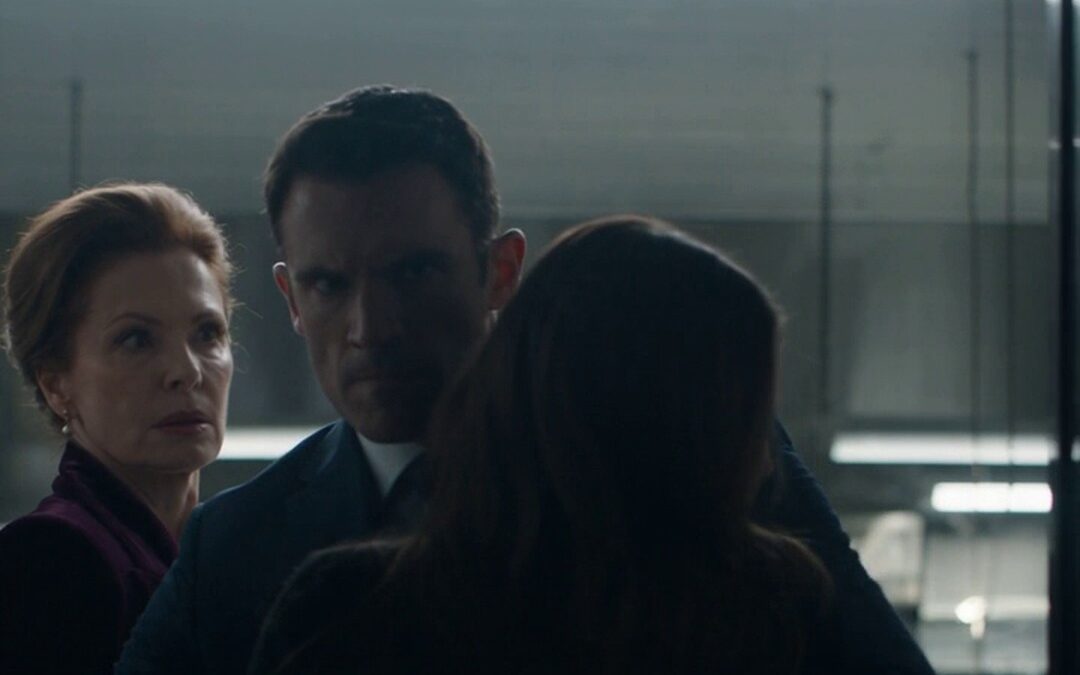
I moved Elena behind me.
My cousin noticed.
So did my mother.
“Keep your hands visible, Rafe.”
He glanced toward the windows.
The curtains were closed against the rain.
We had played cards in this room as boys.
He had taught me to cheat.
Now he stood between my wife and the hall.
“You’re misunderstanding this.”
“Then move away from the door.”
My mother spoke sharply.
“Put that thing away.”
Rafe’s eyes flicked toward her.
That was enough.
I didn’t reach inside my coat.
I didn’t give him an excuse.
“Bernard,” I said, “open the terrace doors.”
The butler stood beside the sideboard.
A bowl of soup shook between his hands.
“Leave the bowl.”
He obeyed.
“Dante, don’t make a spectacle,” Mother said.
“Move, Rafe.”
“There are people outside.”
“Mine.”
He looked at me again.
I had arrived with a driver and security.
They knew why I had come unexpectedly.
They also knew I had stopped answering.
The terrace handle rattled under Bernard’s palm.
Then cold air entered the room.
My security chief, Warren, appeared beyond the glass.
He took in Elena.
The flowers.
My cousin’s jacket.
“Sir?”
“Call the police and an ambulance.”
Mother stepped forward.
“That is unnecessary.”
Elena made a small sound against my shoulder.
I turned immediately.
Her face had lost its color.
“What hurts?”
“My back.”
“How long?”
“I don’t know.”
Mother answered for her.
“She’s been dramatizing every discomfort.”
“Stop speaking.”
The words came quietly.
Mother went still.
I pulled out a chair for Elena.
She caught my wrist.
“Not that one.”
Her eyes fixed on her empty place setting.
I understood enough.
I moved another chair beside the terrace.
Then I knelt in front of her.
“Here?”
She nodded.
Bernard brought the soup.
This time, he walked past my mother.
Elena stared at the spoon.
“May I?”
It wasn’t directed at me.
Her eyes had gone to Mother.
Something cold settled beneath my ribs.
“You don’t need permission,” I said.
She swallowed once.
Then she took the spoon.
Rafe shifted near the door.
Warren’s voice stopped him.
“Stay where you are.”
“I haven’t done anything.”
“Then waiting should be easy.”
My mother looked at the funeral program.
It lay on the table beside my hand.
“Give me that.”
“No.”
“It belongs to the family.”
“So do I,” Elena whispered.
Mother turned toward her.
Elena flinched.
I stood between them again.
Outside, tires hissed across the wet drive.
Warren had called before entering.
He had seen the floral delivery van.
He had read my name on its invoice.
“Your people overreact,” Mother said.
“They’re learning from me.”
Two officers came through the terrace.
Warren stepped aside.
I told them there might be a weapon.
I told them my wife needed medical attention.
I told them nobody should destroy the program.
One officer separated Rafe from the doorway.
The other asked Mother to remain by the sideboard.
She gave him her full name.
“Celestina Bellandi.”
He asked her to show her hands.
For once, her name changed nothing.
When the paramedics arrived, Elena wouldn’t release my coat.
“I’m going with you,” I said.
“They said you wouldn’t come back.”
“I came back.”
“They showed me pictures.”
“Of what?”
“Your watch beside the water.”
My watch had vanished with my phone.
I had assumed a dock thief took both.
Across the room, Rafe lowered his gaze.
The officer found the weapon beneath his jacket.
There was no struggle.
Only metal placed carefully out of reach.
Only my mother watching the room become something she no longer owned.
Elena took the program from the table.
She held it against her stomach.
“They kept making me practice,” she said.
“Practice what?”
“Reading your goodbye.”
I looked at the neat printed pages.
Then at the woman who had raised me.
“You made her rehearse this?”
Mother lifted her chin.
“I was preparing her.”
“For something that hadn’t happened?”
Nobody answered.
A paramedic brought the stretcher closer.
Elena tugged my sleeve.
“There’s something else.”
“Tell me in the ambulance.”
“No.”
Her voice strengthened.
“Before she explains it away.”
I leaned close.
Mother’s heels clicked once behind me.
The officer stopped her.
Elena whispered against my ear.
“They weren’t asking me to mourn you.”
Her fingers crushed the paper.
“They were asking me to help pay for it.”
* * *
At the hospital, nobody knew our dining-room rules.
A nurse asked Elena what she wanted.
Elena looked at me before answering.
I moved my chair back.
The nurse waited.
“Water,” Elena said.
Then, after a moment, “Something warm.”
They examined her.
They checked our daughter.
They asked questions without my mother interrupting.
Elena was exhausted and dehydrated.
Labor had not properly started.
For now, our daughter was doing well.
The doctor said they would keep watching.
I held onto that phrase.
For now.
It was enough to stand on.
A detective arrived after midnight.
Her name was Celia Voss.
She wore a raincoat and carried a plain notebook.
She asked Elena whether she wanted me present.
“Yes.”
“Would you like him to answer for you?”
“No.”
Voss pulled her chair closer.
“Then I’ll ask you.”
Elena glanced at me.
I nodded once.
Her story came in pieces.
On Tuesday morning, Mother had taken her phone.
She said news would arrive before officials could notify her.
Then she showed Elena a photograph.
My watch.
A wet concrete dock.
A folded jacket that looked like mine.
“She said Rafe identified you.”
Voss wrote that down.
“Did you speak to him?”
“He came that evening.”
“What did he say?”
Elena looked at the ceiling.
“He said I shouldn’t imagine what you looked like.”
My hands closed beneath the chair.
Voss saw.
She waited until I opened them.
“Were you allowed to leave?”
“No.”
“How was that enforced?”
“The driver wouldn’t take me.”
Elena rubbed her thumb over the blanket.
“My shoes disappeared.”
“Were the doors locked?”
“The outside doors had alarms.”
“Could you have opened one?”
“Yes.”
“What stopped you?”
Elena’s mouth trembled.
“They said I’d lose the baby if I got upset.”
The nurse beside her bed didn’t interrupt.
She only moved the water closer.
Mother had used fear where chains would show.
Rafe had supplied details.
A house physician had supplied authority.
Elena gave Voss his name.
Dr. Silas Kelm.
He had prescribed something to help her rest.
The hospital requested the medication information.
They would assess that separately.
Nobody guessed.
Nobody needed to.
“What were you asked to sign?” Voss asked.
“A direction to the trustee.”
I looked up.
Elena’s father had left her a minority interest in a waterfront parcel.
The ground beneath three of our warehouses.
Mother had always called it a sentimental nuisance.
Elena had never sold.
Her father had worked those docks.
His name was still scratched inside one loading office.
“How much?” I asked.
Elena turned toward me.
“Four million dollars.”
The room seemed to contract.
“For what?”
“Emergency expenses.”
She touched the program.
“The funeral, repatriation, debts they said you left.”
“Four million?”
“She said there were people who wouldn’t wait.”
Voss asked who would receive the money.
“Cairn Recovery Services.”
I knew that name.
Not from a bank statement.
From the exit agreement I had refused to sign in Lisbon.
Cairn was supposed to purchase our last interest in an old partnership.
They wanted a settlement payment first.
I had refused because the invoices didn’t reconcile.
Mother had told me to stop insulting old friends.
“Did you sign?” Voss asked.
“No.”
Elena’s answer was immediate.
“My trustee required a private call.”
“Did they arrange one?”
“Tomorrow morning.”
My funeral day.
The rehearsal suddenly looked different.
Not a grieving household.
A woman being trained to repeat a story.
Voss asked permission to take the program.
Elena held it tighter.
“It proves I wasn’t imagining it.”
“It does,” Voss said.
“We’ll photograph it before it leaves.”
The nurse helped flatten the bent cover.
A hospital employee witnessed the handover.
Voss placed it in a protective sleeve.
Elena watched until it disappeared into her case.
“I kept checking the date,” she said.
“Why?”
“I used to order school concert programs.”
Before our marriage, Elena taught music.
She knew printers marked proof versions.
She knew a funeral home wouldn’t print a complete program without someone approving it.
“I asked your mother about Sunday.”
“What did she say?”
“That grief was making me stupid.”
I bent forward.
Elena touched my hair.
“Don’t do that.”
“What?”
“Look as though you can undo Tuesday.”
I sat back.
Voss closed her notebook.
“We’ll speak again when you’ve rested.”
At the door, she turned to me.
“Your cousin’s remark matters.”
“So does his gun.”
“Yes.”
She held my gaze.
“But we establish what happened.”
“I understand.”
“I need you to mean that.”
I looked at Elena.
Then at the monitor beside her.
“I do.”
By morning, my attorney had arrived.
Mara Keene had spent years arguing me out of shortcuts.
She brought coffee nobody drank.
And a list of things she needed.
My travel records.
The dock manager’s contact information.
Every message from Mother.
The documents involving Cairn.
“Nothing edited,” she said.
“Nothing selected for effect.”
“You’ll have everything.”
“Even the things that embarrass you.”
“Especially those.”
Elena slept while we worked in the hallway.
I showed Mara the invoices.
Three supposed refrigeration repairs.
Identical totals.
Different warehouse addresses.
One date fell during a shutdown.
“How do you know?” she asked.
“Because I approved the shutdown.”
“For maintenance?”
“For conversion.”
I opened an old photograph.
An empty warehouse.
Removed machinery.
Sunlight through roof panels.
“There were no refrigeration units left to repair.”
Mara studied it.
Then she asked for the original project records.
By afternoon, Voss had spoken to the printer.
The funeral program’s proof code was genuine.
The order had arrived Sunday.
Mother’s assistant had submitted the text.
Celestina had approved it from her own account.
That established preparation.
Not yet an intended killing.
Voss made that distinction carefully.
I respected her for it.
Then she asked about my itinerary.
“Who knew your movements?”
“My office.”
“Your family?”
“My mother requested the hotel.”
“Your cousin?”
“He arranged the dock inspection.”
Voss stopped writing.
“Why?”
“He said our partners insisted on family.”
“Who changed the departure time?”
I opened the itinerary.
The original inspection had been scheduled for noon.
Rafe moved it to six.
The dock manager had canceled when a severe storm warning came through.
I went earlier to retrieve documents.
My phone and watch vanished from the office.
At six, I was already inland.
Voss asked me to preserve the messages.
Then she left to make a call.
Mara stood very still.
I thought about the dark water.
The empty dock.
My cousin’s irritation when I changed plans.
Then my attorney turned her laptop toward me.
She had found the Cairn payment approval in our company archive.
The authorizing signature was mine.
But I had never signed it.
* * *
I wanted to go home.
Not to sleep.
Not to collect clothes.
I wanted to stand across from my mother without officers between us.
Mara knew before I spoke.
“No.”
“I didn’t ask.”
“You were about to leave.”
I looked through Elena’s hospital window.
She was awake.
A nurse was helping her wash her face.
Mara lowered her voice.
“Your wife needs a husband in this room.”
“I know what she needs.”
“Then stay.”
I stayed.
That was the first useful thing I did with my anger.
The second was handing over my laptop.
Every account.
Every old agreement.
Every favor my father had disguised as business.
Mara warned me that disclosure could have consequences.
“For me?”
“For the company.”
“And for me.”
“Possibly.”
I signed the authorization.
For years, I had believed I could clean the business quietly.
Close one route.
Sell one warehouse.
Pay one final debt.
Quiet had given Mother room.
I wasn’t buying more of it.
The first threat came before lunch.
A petition.
Mother’s attorneys claimed Elena had suffered an acute psychological crisis.
They requested emergency authority to protect her financial affairs.
They described the funeral rehearsal as a therapeutic exercise.
They claimed I had interrupted it violently.
I read that sentence twice.
Then I read it aloud to Mara.
She took the papers.
“They’ve attached no independent assessment.”
“They’ll find one.”
“We’ll answer with the hospital’s observations.”
Elena heard from her own attorney.
We had asked her trustee to recommend someone outside our company.
That attorney, Priya Nair, came directly to the hospital.
She spoke with Elena alone first.
Afterward, Elena asked me back inside.
“They want to decide whether I’m sane.”
“They can ask,” Priya said.
“They don’t get to decide.”
Elena stared at her hands.
“She knew I would sound frightened.”
“Yes,” Priya said.
“That doesn’t make her account true.”
“What if I cry?”
“Then you’ll cry while telling the truth.”
The hearing was brief and remote.
Elena answered questions from her hospital bed.
She knew the date.
She understood the trust.
She identified the proposed transfer.
She explained why she had refused.
Mother’s request for immediate control was denied.
There would be further filings.
There would be time to answer them.
For that afternoon, nobody could sign as Elena.
She sank back against the pillows.
“Did I do it right?”
Priya closed her folder.
“You told them what happened.”
That was the answer Elena needed.
The second threat came from our company.
Three senior managers refused Mara’s request to preserve records.
They said only Celestina could authorize access.
One sent an invoice deletion request to accounting.
Accounting forwarded it to me.
I called the head of finance.
“Freeze routine destruction.”
“For how long?”
“Until counsel tells you otherwise.”
“Your mother said—”
“I’m telling you now.”
He exhaled.
Then he complied.
We copied the instruction to every director.
No dramatic raid.
No smashed computers.
Just ordinary people told their signatures would matter.
Suddenly, many of them became careful.
That evening, Bernard came to the hospital.
He stood in the doorway holding his hat.
Elena saw him first.
“Come in.”
He took two steps.
Then stopped.
“I brought your slippers.”
They were ordinary gray slippers.
Soft.
Worn at one heel.
He placed them on the chair as though they might break.
“Where were they?” Elena asked.
“In Mrs. Bellandi’s dressing room.”
My mother had put them away herself.
Bernard began to cry.
Not loudly.
His mouth folded inward.
“I should have opened the door.”
“Yes,” Elena said.
He bowed his head.
I didn’t rescue him from the answer.
“She told me my grandson would lose his apprenticeship.”
His grandson worked in one of our repair shops.
“He has a baby.”
“So do I,” Elena said.
Bernard covered his face.
For a moment, nobody spoke.
Then Elena moved the slippers closer.
“Tell the detective everything.”
“I already called.”
“Tell her the parts that shame you.”
He looked at her.
“I will.”
After he left, I sat beside the bed.
Elena studied my face.
“You want to punish him.”
“I want to punish everyone.”
She reached for my hand.
“Start by making it stop.”
I pressed her fingers against my mouth.
“I can do that.”
“Without becoming her.”
That took longer to answer.
“Yes.”
Near midnight, our daughter began turning beneath Elena’s palm.
She guided my hand there.
A heel pushed against my fingers.
“She’s stubborn,” I said.
“She knows there’s a dispute.”
“She can stay out of it.”
Elena looked at me.
A little life returned to her eyes.
“You tell her that.”
I leaned toward her stomach.
“Your mother is in charge.”
Elena’s fingers settled on my neck.
For several seconds, the room was only ours.
No company.
No funeral.
No family waiting beyond the door.
Then she asked the question I deserved.
“Why did you leave me there?”
I lifted my head.
I could have said she wanted familiar surroundings.
I could have mentioned the renovation at our apartment.
Both were true.
Neither was the answer.
“Because I thought she wouldn’t hurt you while carrying my child.”
Elena looked toward the window.
“She’d been hurting me before.”
I waited.
“The calls she interrupted.”
Her voice was quiet.
“The friends she called unsuitable.”
“The meals she watched.”
I remembered Elena complaining about the house.
I remembered suggesting patience.
Just a little longer.
Until the apartment was finished.
Until the deal was closed.
Until Mother adjusted.
“I believed she was difficult,” I said.
“I didn’t believe you were unsafe.”
“I needed you to believe me.”
“I know.”
She withdrew her hand.
I let her.
The next morning, Voss returned with a financial investigator.
They had received records from the company.
They had also interviewed Mother’s assistant with her attorney present.
The assistant had retained instructions.
She had been told to order the program discreetly.
She had been told the photographs were for a surprise memorial to my father.
When she questioned the names, Mother threatened dismissal.
Then came the bank trail.
Cairn’s controlling interest led through two companies.
The final beneficial owner appeared in documents our auditors had never received.
Celestina Bellandi.
The disputed payment was intended to cover money already taken from the warehouses.
Four million from Elena would delay discovery.
My death would give Mother a temporary claim to lead the company.
My living refusal had blocked both.
Voss placed a photograph on the table.
Mother outside a private office.
Rafe beside her.
The picture came from the building’s security archive.
Inside, an accountant had kept a handwritten instruction sheet.
He turned it over after his lawyer contacted investigators.
The sheet contained my inspection time.
My expected route.
And five words beneath the projected payment.
Celestina’s handwriting.
Widow signs after the service.
* * *
The company directors wanted a meeting.
So did our lenders.
Rumors had reached the warehouse managers.
A photograph of my funeral flowers had reached the press.
Mother’s attorneys asked for a private resolution.
Mara declined to discuss Elena’s claims as bargaining material.
But the board still needed to act.
Employees needed wages.
Shipments needed refrigeration.
The company could not wait for a criminal case to finish.
The meeting took place eight days after my return.
Elena remained at the hospital.
Our daughter had decided to arrive that morning.
I almost canceled everything.
Elena stopped me while a nurse adjusted her pillow.
“Is the meeting necessary?”
“Yes.”
“Can you attend from here?”
“Yes.”
“Then do that.”
She watched another contraction build on the monitor.
“You’re not getting out of either job.”
I kissed her forehead.
“No, ma’am.”
Between examinations, I sat in the adjoining family room.
The door stayed open.
Mara sat beside me.
Warren stood in the hall.
On the screen, our boardroom filled slowly.
Three independent directors.
The finance chief.
Two family shareholders.
Mother.
She wore navy.
No mourning clothes.
No apology.
Rafe’s chair remained empty.
He had been detained after the dining-room incident.
Investigators were examining his communications and the proposed dock meeting.
His attorney had advised silence.
Mother’s attorney began with procedure.
“Criminal allegations are outside this board’s competence.”
Mara nodded.
“We’re addressing access, oversight, and preservation.”
“Mrs. Bellandi has kept this company solvent for decades.”
“She can answer questions about these payments.”
Mother leaned toward the microphone.
“I’ll answer Dante.”
I looked at her.
“Then answer.”
She had always been good in rooms like this.
She remembered birthdays.
She knew which directors feared layoffs.
She could make theft sound like sacrifice.
“Your father left obligations,” she said.
“Some of them ugly.”
“Name them.”
“I protected your inheritance.”
“With false repair invoices?”
“With arrangements that kept your workers employed.”
The finance chief shifted in his chair.
Mother noticed.
She turned toward him.
“Would you prefer the truth in a newspaper?”
He stared at the table.
She turned back to me.
“You were free to become respectable because I handled reality.”
For a moment, I could hear my father.
The same exhaustion dressed as authority.
The same suggestion that morality was something purchased by other people’s compromises.
“You took company money,” I said.
“I moved money.”
“To a company you owned.”
“To contain a threat.”
“What threat?”
Her attorney touched her sleeve.
She ignored him.
“The old partners would have destroyed us.”
“Then why hide the ownership?”
“Because you would have reacted exactly like this.”
One family shareholder nodded.
My uncle Severin.
He had never signed anything dangerous.
He had profited from plenty.
“We should be careful,” he said.
“Dante, your mother has made mistakes.”
I heard Elena breathe sharply in the next room.
The nurse murmured something reassuring.
I waited until I heard her answer.
Then I faced the screen.
“She told my wife I was dead.”
Mother’s expression softened.
A practiced change.
“Because I believed you were.”
“You printed the service before I disappeared.”
“Families prepare for risk.”
“You rehearsed her grief.”
“She was distressed.”
“You withheld food.”
“She refused to eat.”
Mara shared the hospital’s documented observations with Elena’s permission.
Then Bernard’s sworn statement.
The butler had described three meals removed untouched because Elena would not practice the statement.
Mother leaned back.
“A frightened employee will say anything.”
“He was frightened of you.”
“He has debts.”
“Not to us anymore.”
Mara glanced at me.
I clarified immediately.
“His employment is unchanged pending independent review.”
We had not bought his testimony.
I would not let Mother pretend otherwise.
The independent chair asked her to explain Cairn.
Mother reached for the strongest weapon she had left.
Me.
“Ask Dante about his first year in this business.”
The room quieted.
“Ask about the cash he carried.”
Mara’s foot pressed lightly against mine.
Not a warning to lie.
A reminder to answer carefully.
“I’ve supplied those records to counsel.”
Mother watched my face.
“All of them?”
“All that I have.”
“You’ll ruin your father’s name.”
“He did that work himself.”
Severin looked away.
Mother’s attorney requested a break.
Before the chair answered, Elena appeared in the doorway.
One hand braced her lower back.
The other held the nurse’s arm.
I stood.
“What are you doing?”
“I heard her.”
“You should be resting.”
“I’ll sit.”
The nurse brought a chair.
Elena lowered herself slowly beside me.
Mother saw her on the screen.
For the first time, the composure cracked.
“Elena, darling.”
“Don’t.”
Her voice wasn’t loud.
It carried anyway.
Mother pressed her lips together.
Elena looked at the directors.
“I won’t discuss my marriage with this board.”
She paused until the pain eased.
“But you should know what she asked me to do.”
Mara offered to read her statement.
Elena shook her head.
“I can.”
She described the private trustee call.
The words Mother wanted her to use.
Her supposed urgent need for four million.
Her supposed confidence in Cairn.
Her supposed decision to protect her husband’s reputation.
“I asked to call my own lawyer.”
Mother interrupted.
“You weren’t well.”
“You said lawyers would freeze the money.”
“I was protecting you from publicity.”
“You said my baby would inherit my shame.”
The finance chief looked up.
Mother’s attorney whispered to her.
She brushed him aside.
“You don’t understand this family.”
Elena’s hand closed around mine.
“I understand your instructions.”
A contraction stopped her.
The nurse moved closer.
I reached to end the call.
Elena held my wrist.
“One thing.”
Mara shared the photograph of the program.
The back cover filled every screen.
Sunday’s proof code.
Mother’s approval email beside it.
Then a second image.
The printer’s retained production order.
Mother had supplied both the funeral text and the widow’s statement.
Voss had authorized us to use copies already produced through company counsel.
The original remained evidence.
Mother looked at the documents.
“Those are preparations.”
“Yes,” Elena said.
“For an event you claimed surprised you.”
“The dates could be wrong.”
“The printer confirmed them.”
“The printer wants protection.”
Mara switched to the independent confirmation.
An email from Rafe to the dock manager.
Sent Sunday evening.
Confirming my Thursday absence from the company meeting.
Because I would be unavailable indefinitely.
Attached was the same funeral program draft.
He had sent the wrong file.
The manager had replied asking about it.
Rafe told him it was a family joke.
The manager preserved the exchange in his business mailbox.
He supplied it when investigators asked about my itinerary.
Mother’s face changed.
She hadn’t known about that mistake.
Nobody spoke for several seconds.
Then Severin asked a small question.
“Celestina, why did Rafe have that?”
Her attorney closed his folder.
“We’re ending her participation.”
Mother didn’t move.
On the screen, the independent chair called for the vote.
She was suspended from every management role.
Her system access was revoked.
Outside accountants would review the company.
Family votes could not erase the lender requirements.
The independent directors had enough authority to act.
Mother stared at me.
“You’ll come crawling back when they turn on you.”
I looked toward Elena.
Her eyes were closed.
She was counting through the next contraction.
“No,” I said.
“I’ll answer for what I’ve done.”
We disconnected.
Twenty minutes later, our daughter arrived.
Small.
Furious.
Entirely uninterested in corporate governance.
Elena cried when they placed her against her chest.
I touched one impossibly soft shoulder.
“What’s her name?” the nurse asked.
We had argued affectionately over names for months.
Now Elena looked at me.
“Beatrice.”
My wife’s mother had carried that name.
A woman who had died before I met Elena.
A woman whose absence Mother had tried to fill with ownership.
“Beatrice,” I repeated.
Outside our room, the case continued.
It took months.
Not a single dramatic afternoon.
Investigators obtained records across borders.
The dock manager identified the men Rafe had asked him to admit after hours.
One cooperated through counsel.
He had been paid to intercept me.
The planned violence remained in messages and arrangements.
It had not reached the dock because I had changed the time.
Rafe eventually entered a plea.
He identified Mother as the person who authorized the plan.
His account was checked against payments and communications.
Kelm admitted he had repeated Mother’s false account without independently verifying it.
His prescribing and professional conduct faced separate review.
The assistant surrendered the original approval chain.
The accountant explained the missing money.
Mother fought until the evidence reached her own handwriting.
Then, through lawyers, she negotiated a plea resolving the established charges.
The sentence meant years in custody.
Restitution would consume the assets she had hidden.
At sentencing, she turned toward me.
“You were supposed to protect this family.”
Elena sat beside me with her hand in mine.
“I did,” I said.
The finding entered into the record was simple.
There had never been a death to misunderstand.
* * *
We moved into a narrow house near the water.
It had ordinary locks.
A porch that needed paint.
And a kitchen too small for anyone to eat alone without choosing to.
The first night, Elena stood by the refrigerator.
Beatrice slept against my shoulder.
“What would you like?” I asked.
Elena looked at the shelves.
“Anything.”
I waited.
“Eggs,” she said.
“With toast?”
“Yes.”
I took down a pan.
She remained standing.
“You can sit.”
Her face changed.
I stopped.
“Sorry.”
I put the pan on the stove.
“Where would you like to eat?”
She looked toward the kitchen table.
“Here.”
So we ate there.
The eggs were overcooked.
The toast was worse.
Beatrice woke as soon as my fork reached the plate.
Elena watched me juggle the blanket and the bottle.
“You own refrigerated warehouses.”
“Yes.”
“You could probably locate butter.”
“It’s a different department.”
Her laugh startled both of us.
Then she cried.
I put everything down.
She shook her head when I moved closer.
“Just finish making the toast.”
So I did.
Some nights she checked the locks twice.
Some mornings she woke and needed to hear my voice before opening her eyes.
I stopped disappearing into the bathroom without saying where I was going.
Then, gradually, she stopped needing that.
We found a counselor Elena chose.
I attended when invited.
Other sessions belonged to her.
I learned how many times I had mistaken endurance for consent.
How easily I had said Mother meant well.
How often Elena had translated fear into politeness because politeness was the language my family rewarded.
One evening, she set a notebook between us.
“I wrote down what I need.”
I put away my phone.
“Tell me.”
“No one gets information about me without asking.”
“Agreed.”
“Business emergencies don’t cancel every ordinary promise.”
“Agreed.”
“And if I say someone frightens me—”
“I believe you.”
She watched me.
“You listen first.”
I nodded.
“I listen first.”
That distinction stayed with me.
Beatrice grew.
She learned to grip my finger.
Then my collar.
Then every document I foolishly carried within reach.
Mara called her the only person who could destroy evidence without creating legal complications.
I told her not to give our daughter ideas.
The company survived, although a smaller version emerged.
We sold two businesses.
Closed several accounts.
Removed men who believed loyalty meant never writing anything down.
The review uncovered unpaid taxes and transactions requiring correction.
We paid what was due.
We cooperated with the inquiries that followed.
There were penalties.
There were lost contracts.
I sat through meetings where people looked at me differently.
I accepted that.
My history had not become innocent because my mother was worse.
At the warehouses, workers mostly wanted reliable schedules.
Working equipment.
Paychecks that arrived.
We concentrated on those things.
Severin came to my office one afternoon.
He carried an offer from a group of family investors.
Enough money to restore what we had sold.
Enough influence to smooth certain relationships.
He set the proposal on my desk.
“We can stop the bleeding.”
I read the conditions.
Private appointments.
Restricted audits.
A family representative with veto power.
Celestina’s habits in a new suit.
“No.”
“You haven’t considered the amount.”
“I considered the conditions.”
He folded his hands.
“Your daughter deserves the life you had.”
I looked through the window.
A mechanic was helping an apprentice maneuver a replacement compressor.
The apprentice was Bernard’s grandson.
He had kept his position because his supervisor said he was good.
No favor.
No debt.
“My daughter deserves better,” I said.
Severin left with his folder.
He called twice afterward.
Then he stopped.
Elena’s trust remained hers.
The fraudulent transfer never occurred.
When the waterfront lease came up for renewal, she retained her own advisers.
She negotiated a fair rent.
Then she used part of her income to reopen a neighborhood music program.
She did not ask me to approve the expense.
She asked whether I could watch Beatrice on Tuesdays.
“Yes.”
“Every Tuesday?”
“We may need help occasionally.”
She smiled.
“That sounds like a real answer.”
The program started in a borrowed classroom.
Six children.
A temperamental keyboard.
Chairs that scraped the floor.
I arrived early one evening with Beatrice strapped to my chest.
Elena stood beside the piano, demonstrating a rhythm.
A boy complained that his hands were too small.
“Mine used to be,” she said.
He looked skeptical.
“They still are.”
She held them up.
He grinned and tried again.
I stayed in the doorway.
For months, I had measured her recovery by what she no longer feared.
That evening, I saw something better.
What she wanted.
After class, she found me packing chairs.
“You’re late.”
“I’m twenty minutes early.”
“You missed my best song.”
“Beatrice heard it.”
Our daughter was asleep.
Elena raised an eyebrow.
“She’s a difficult critic,” I said.
There was warmth in the room that no amount of imported marble had ever produced.
Bernard wrote twice.
The first letter apologized.
The second asked whether Elena would permit a visit.
She took three days to answer.
When he arrived, we sat outside.
He had retired after giving his evidence.
The independent review had criticized his failure to seek help.
He accepted the finding.
He had also helped establish what happened.
Both things remained true.
He looked older without his uniform.
Elena brought tea.
He started to rise.
“Stay,” she said.
Then she paused.
“Please.”
He sat.
“I don’t expect forgiveness,” he told her.
“That’s good.”
His hands tightened around his cup.
She let the answer remain.
Then she continued.
“I believe you’re sorry.”
“I am.”
“But you won’t care for Beatrice.”
He closed his eyes briefly.
“Of course.”
“And I won’t pretend you didn’t have choices.”
“I had choices.”
I watched Elena hear him say it.
Her shoulders lowered.
Not much.
Enough.
She asked about his grandson.
He told her about the apprenticeship.
About the small apartment.
About the baby who had begun walking.
They spoke for half an hour.
When he left, she shook his hand.
No embrace.
No promise of another visit.
It was the kindness she could offer.
We accepted its size.
My mother wrote from custody.
Her first letter blamed the people who had advised her.
The second blamed my father.
The third described how lonely she was.
None asked what Elena remembered.
I put them in a file.
Elena knew they existed.
She did not have to read them.
Later came a shorter letter.
Mother acknowledged the false death story.
She admitted trying to force the transfer.
She said fear of exposure had become fear of losing everything.
Mara read it before I did.
Then I sat with it for a long time.
It was closer to an apology.
It was not a key.
I answered once.
I told her Beatrice was well.
I told her we would not arrange visits.
Any future contact would be considered by Elena and me together.
There would be no messages through relatives.
No gifts sent to the child.
No exceptions disguised as birthdays.
She did not like the boundaries.
That did not change them.
On our second wedding anniversary after Beatrice’s birth, I asked Elena to walk with me.
We went down to the water.
The air smelled of salt and wet wood.
She wore shoes she had chosen that morning.
I noticed those things now.
At the railing, I took out a folded paper.
She glanced at it.
“What’s that?”
“The house listing.”
Our old family house had finally cleared the legal restrictions attached to the asset review.
My share could be sold.
The proceeds were no longer needed for restitution.
I had an idea.
I had not acted on it.
“Elena, would you consider seeing it again?”
Her face grew still.
“For what purpose?”
“To decide what should happen to it.”
“You can sell it.”
“I can.”
“You don’t need me to make that decision.”
“No.”
I held the paper loosely.
“But there’s another option.”
I described a proposal from a local nonprofit.
Temporary apartments for families with a parent receiving extended medical care.
The grounds could be divided.
The house could be converted.
Our foundation could provide the building without controlling the residents.
Elena looked toward the boats.
“Would they have their own keys?”
“Yes.”
“Kitchens?”
“Yes.”
“Could they refuse visitors?”
“Yes.”
She turned back to me.
“Ask me again in a month.”
So I did.
A month later, she said yes to seeing it.
Not to the project.
Not yet.
We drove there on a bright afternoon.
At the dining-room doorway, she stopped.
The portrait was gone.
The flowers were gone.
The table remained.
I waited beside her.
“May I hold your hand?” I asked.
She looked at my open palm.
Then she put her hand in it.
This time, she decided when we crossed the threshold.
* * *
Six years later, the dining room smelled of bread.
The long table had been cut down into three smaller ones.
Elena approved that first.
No head seat.
No throne.
Just places where tired people could eat.
The house held eight family apartments now.
Residents had leases.
Private doors.
Their own schedules.
A staff office occupied Mother’s former sitting room.
The terrace stayed open whenever the weather allowed.
I stood there carrying a tray of rolls.
Beatrice ran past me in yellow sneakers.
“Walking,” I called.
She slowed theatrically.
A volunteer hid a smile.
Our daughter was six.
She had Elena’s serious eyes.
And an unfortunate confidence in my ability to repair things.
That morning, she had handed me a broken toy with instructions to “use the warehouse.”
Apparently, the warehouse could fix anything.
Elena stood near the kitchen doorway.
She was speaking to a father whose wife was receiving treatment across town.
His son sat at a small table coloring.
The man kept apologizing for arriving late.
“There’s food,” Elena told him.
“You don’t need a reason.”
I watched him struggle with that.
Then his shoulders relaxed.
Some sentences took time to believe.
Beatrice climbed into a chair beside the boy.
She offered him the green crayon.
Then she looked up at me.
“Daddy, where do we sit?”
“Anywhere there’s room.”
She inspected the tables.
“Next to me, then.”
I set down the rolls.
“Yes, ma’am.”
After lunch, Elena asked me to come upstairs.
The nonprofit director had finished arranging a small archive.
Not a public display.
A locked cabinet containing the property’s history.
The deeds.
The renovation plans.
The legal agreements protecting residents’ privacy.
And one paper I had once expected to burn.
My funeral program.
Investigators had returned it after the case ended.
It remained inside its protective sleeve.
The corners were bent where Elena had held it against her stomach.
The proof date was still visible.
Sunday.
I looked at the cover.
My younger face stared back.
“So,” I said, “I apparently missed a beautiful service.”
Elena touched my arm.
“No jokes about that one.”
I nodded.
“Sorry.”
Some doors had opened.
Some remained closed.
We no longer mistook that for failure.
The director asked whether we wanted it stored elsewhere.
Elena shook her head.
“It belongs with the records.”
“Do you want an explanation attached?”
“Yes.”
She had already written one.
Only a paragraph.
It identified the document.
The deception.
The investigation.
The reason the house had changed.
No lurid details.
No family mythology.
She signed her name beneath it.
Then she handed me the pen.
I added mine.
The director closed the cabinet.
Downstairs, a chair scraped.
A child laughed.
Someone asked for more butter.
Life continued without waiting for us to finish remembering.
On the landing, Elena paused.
“Did you hear from her?”
Mother had written the week before.
Elena knew because we no longer kept such things hidden.
“Yes.”
“What did she want?”
“A photograph.”
Elena looked toward the dining room.
Beatrice was explaining something with both hands.
“Did you send one?”
“No.”
“Do you want to?”
I considered the question.
“I want a different mother.”
Elena took my hand.
“That isn’t what you have.”
“No.”
We stood there a moment.
Then we went downstairs.
Rafe had served his sentence and moved away.
He had no role in the company.
No invitation into our home.
Kelm no longer treated patients.
The stolen funds had been traced and recovered where possible.
The remaining losses had been addressed through the court process and asset sales.
Nobody had escaped into a future chapter.
What remained was ordinary consequence.
And the work of living afterward.
At the table, Beatrice saved us two chairs.
A little girl beside her stared at the food.
Her father was still speaking with a staff member.
“Can I have a roll?” she whispered.
Elena passed the basket.
“You don’t need permission.”
The words settled between us.
Six years earlier, I had said them beside an empty plate.
Now my wife said them in a room full of people who could leave whenever they wished.
The girl took a roll.
Beatrice offered her butter.
I sat beside Elena.
Under the table, her knee touched mine.
An unlocked door.
A full plate.
A daughter who had never learned to fear the sound of approaching heels.
My wife reached for the bread.
Nobody watched to see whether she deserved it.
THE END








