Two Hundred Bikers Filled the County Courthouse—Then a Girl Put a Blue Thread on My Table
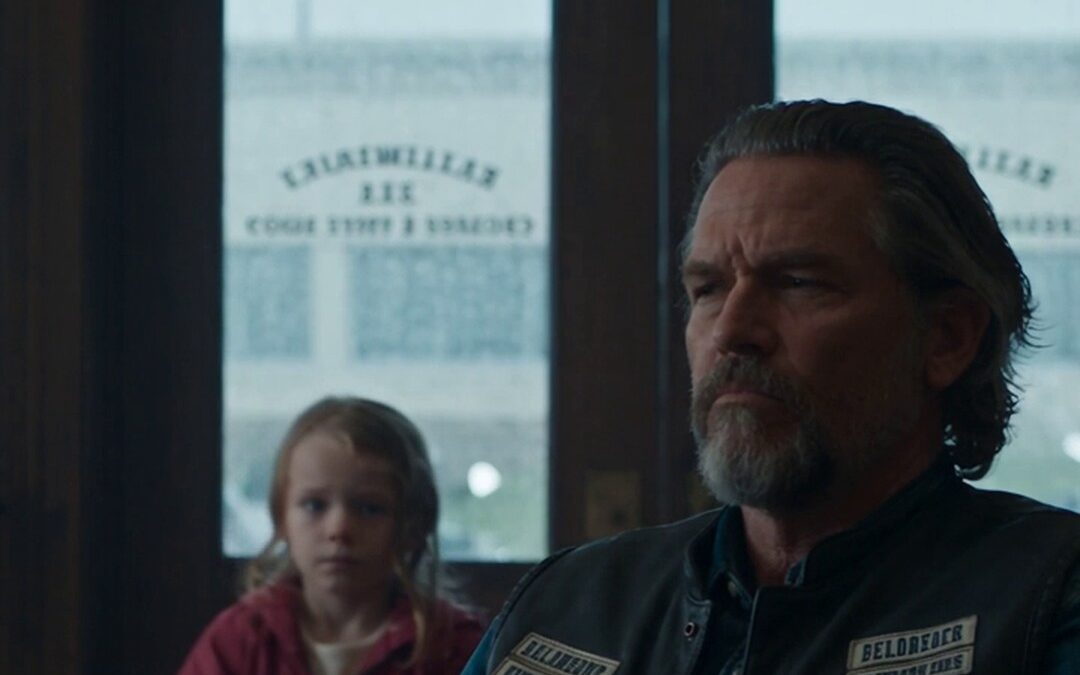
Chapter 2: The Evidence Room
The deputy shut the courtroom doors.
Rain tapped the glass.
June stayed beside my chair.
The envelope rested on the clerk’s palm.
Voss looked at the judge.
“May I explain?”
Judge Bell held up one hand.
“Not until the child is safe.”
Deputy Flores moved between June and Voss.
He asked June if she wanted another woman present.
She looked at the clerk.
The clerk nodded.
June chose her.
Mara waited outside with her phone.
She didn’t like being told to leave.
She did it anyway.
I watched Voss’s hands.
They were calm.
His voice stayed warm.
He was good at that.
“June,” Judge Bell said, “sit anywhere you like.”
The girl chose the chair beside me.
She kept the red coat on.
Her shoes squeaked against the floor.
“Do you know me?” the judge asked.
“No.”
“Do you know why you’re here?”
“Mr. Voss brought me.”
“Why?”
“He said my mom signed something.”
“What did she sign?”
“I don’t know.”
Voss leaned forward.
“Your Honor, I’m her placement supervisor.”
“Are you her guardian?”
“Temporary guardian, pending review.”
“By whose order?”
“Your court.”
“Which case?”
Voss named a number.
The clerk searched it.
“There is no active case under that number,” she said.
“Then it’s probably under the mother’s name.”
“What is her mother’s name?” Judge Bell asked.
Voss looked toward June.
“June’s mother is deceased.”
June’s chin tucked down.
Her fist closed around my sleeve.
The judge noticed.
“Do you know that to be true?”
“I have documentation.”
“Then provide it.”
“It’s at my office.”
“Bring it.”
“Of course.”
Voss stood.
Flores shifted to block the door.
“Stay seated,” the deputy said.
Voss looked at the judge.
“I’m not under arrest.”
“No one said you were.”
“I have children waiting at the office.”
“Your staff can handle it.”
Voss sat again.
Judge Bell asked the clerk to call the prosecutor.
Then she asked Flores to contact child services’ after-hours supervisor.
The steps sounded ordinary.
That made them feel solid.
June watched the floor.
I wanted to ask about the button.
The judge asked first.
“June, what does the thread mean?”
“It’s from my mom’s coat.”
“Why did you bring it?”
“She put the button inside the seam.”
“What did she say?”
“She said if Mr. Voss came back, I should find a grown-up who didn’t work for him.”
“How long ago?”
“Before she went away.”
“Where did she go?”
June rubbed her thumb along the thread’s empty end.
“She went to the river building.”
“What building?”
“The old water office.”
Voss interrupted.
“June has a history of inventing stories.”
The judge’s look stopped him.
“Then we can check.”
June looked at me.
“Can I stay with her?”
“I’m not a woman,” I said gently.
“I meant the clerk.”
The clerk put a hand over June’s.
“Yes, honey.”
June released my sleeve.
My hand was cramped from holding still.
Judge Bell turned to Flores.
“Can you arrange a safe interview room?”
“Already called it in.”
“Keep Mr. Voss here.”
“I’ll cooperate,” Voss said.
The clerk photographed the button and thread through the plastic.
Then she placed them in an evidence bag and sealed it.
June followed every movement.
Her eyes never left the button.
When the judge asked us to wait, I stepped into the hall.
Mara stood beside the old coat rack.
“He’s got a lawyer coming,” she said.
“Good.”
“You think that’s good?”
“Lawyers leave records.”
Mara studied me.
“You saw something on the button.”
“I saw a star.”
“Your daughter used stars.”
“I know.”
“That doesn’t make this the same.”
“I know that too.”
My daughter’s name was Elsie.
She’d been gone eleven years.
Mara didn’t mention it again.
That was one reason I trusted her.
Flores came out.
“Child services is sending a supervisor.”
“Can we leave?” Mara asked.
“Not yet. The judge wants your statement.”
“We’ll give one.”
Flores glanced at me.
“Especially yours.”
I described where I stood, what Voss said, and how June reacted.
I left out the memory of Elsie’s button.
It wasn’t relevant.
The prosecutor arrived twenty minutes later.
Her name was Anika Patel.
She wore a damp navy coat and carried a laptop.
She spoke privately with Judge Bell, then asked Voss to identify himself and his position.
He gave his employee number and office address.
He said a welfare referral had brought him to June.
“Who made the referral?” Patel asked.
“I don’t recall.”
“Do you have a record?”
“It’ll be in the file.”
“Which file?”
“The placement file.”
“Where is it?”
“At my office.”
“Can someone bring it?”
“My office is locked.”
“During business hours?”
“We closed early.”
Patel wrote something down.
June had been taken to a side room with the clerk and a social worker named Tessa.
The judge ordered a temporary no-contact restriction until June’s identity and placement were checked.
Voss protested.
Judge Bell explained that it was not a finding of guilt.
It was a pause.
He disliked pauses.
They gave other people time to ask questions.
Tessa returned carrying a drawing.
June had drawn a window with blue thread across it.
Below was a crooked line of water.
June had identified the old water office as a place her mother used to work.
She had also named a street and bus route.
“Does that place still exist?” Patel asked.
“It’s a county archive now,” Flores said.
“Records moved there five years ago.”
Voss shook his head.
“She was never there.”
June heard him from the doorway.
“He took my mom there.”
Voss stood.
Flores lifted one palm.
“Sit down.”
The judge studied the drawing.
“What did you mean by the thread across the window?”
“Mom said it marked the door.”
“The door to what?”
“The room where she kept the papers.”
“What papers?”
“The ones Mr. Voss wanted.”
Voss laughed once.
It sounded wrong in the room.
“I have no idea what she means.”
“Then that should be easy to prove,” Patel said.
He turned toward her.
“You’re treating a confused child’s statement as evidence.”
“I’m treating it as a lead.”
The judge asked Flores to seek a preservation order for the archive.
Patel called the prosecutor’s office.
Then she called the county records administrator.
The order came through an hour later.
The archive doors were opened under supervision.
Patel went with Flores and Voss.
The judge stayed with June.
I was asked to wait.
Mara retrieved coffee and our coats.
“He’s good at sounding reasonable,” she said.
“That’s how he got trusted.”
The records administrator, Pritchard, met them at the archive.
He gave Patel the key to a locked cabinet marked for disposal.
Inside, they found scanned placement records for twelve children.
Seven had been transferred without court review.
Five had been listed under fake emergency authorizations.
June’s name was on the list.
The judge came into the hall.
“Is her mother’s name there?”
Patel called from the archive doorway.
“Ruth Calder.”
June turned toward Tessa.
“Is my mom there?”
“We don’t know yet,” Tessa said.
Voss sat behind Flores.
His face had gone blank.
Judge Bell looked at him.
“When did you last see Ruth Calder?”
“Years ago.”
“Where?”
“I don’t remember.”
Patel held up a copy of a record.
“Your signature is on her transfer.”
“That is not my signature.”
The clerk looked at the paper.
Then at the sealed bag.
“Your Honor,” she said, “this record has the same star mark.”
The star had been stamped beside the authorization line.
It was a routing mark.
The blue thread was not a keepsake.
It was a key to the file.
And the file had June’s mother’s name.
* * *
The archive smelled like wet cardboard.
A deputy stayed at every door.
Mara and I waited in the front office while Patel and Flores searched.
Pritchard looked like he’d been apologizing all day.
The cabinet held copies.
The originals were missing.
Patel asked for the access logs.
The records showed Voss had entered twice in the last month.
On the second visit, three nights earlier, he’d signed out a box.
The box was never returned.
“What box?” Patel asked.
“Seventeen-B.”
“What was in it?”
“Placement transfer records.”
A camera had caught Voss carrying it to his car.
That didn’t explain what happened to Ruth.
It did explain why he wanted the folder gone.
Patel photographed the cabinet and logs.
Flores recorded the key and camera serial numbers.
A technician was called to export the footage.
Pritchard looked at me.
“Do you know why your name is listed in the file?”
“Which file?”
“An old foster transport report. From eleven years ago.”
My stomach tightened.
“Who was the child?”
Pritchard found the record.
He turned the screen toward Patel.
The child’s name was Elsie Hart.
My daughter.
I read it twice.
The words did not change.
The report said Elsie had been referred to the county after a hospital visit.
A “family stability review” had been closed within a day.
There was no court order, investigation, or follow-up.
The referral had come from a nurse.
It said a child had been alone in a hospital waiting room.
Elsie had not been alone.
Her mother had stepped outside to speak with a doctor.
“Why is this in a placement file?” I asked.
Patel examined the record.
“Someone attached it.”
The upload date was four years after Elsie died.
The name beside it was G. Voss.
I touched the desk.
My fingers felt numb.
“I never saw this.”
“No,” Patel said. “It wasn’t in the case file you’d have received.”
“What did he do with it?”
“We don’t know yet.”
I gave Patel the hospital name, the doctor’s name, and the family liaison’s name.
I had kept the liaison’s letter in my wallet for eleven years.
The paper was soft along its folds.
It thanked us for our patience and said the referral had been corrected.
Patel copied it.
The next morning, the prosecutor’s office confirmed it was authentic.
The hospital confirmed its referral record had not been altered.
The retired nurse remembered the incident.
She said Voss had called her twice after Elsie’s death.
She had not known he later added anything to a county file.
The first secret was verified.
Voss had falsified June’s placement records.
He had attached a false child welfare referral to my dead daughter’s name.
That still didn’t explain why.
Patel requested warrants for Voss’s work computer and the placement contractor’s books.
His attorney argued the county had confused procedural problems with criminal intent.
He said Voss had kept children safe during a staffing crisis.
Some employees wanted that to be true.
Several families did too.
They had seen Voss smiling at coat drives.
They’d heard him speak about children as if he knew each one personally.
June asked Tessa if she had to go with someone that night.
“We’ll find a safe place,” Tessa said.
“Is the place already written down?”
“No. We’ll talk with you.”
“What if I don’t like it?”
“Then we listen.”
“People say that.”
“Then I’ll show you.”
June took one bite of the turkey sandwich Tessa had brought.
It was a small thing.
It mattered anyway.
Judge Bell appointed a child advocate named Nia Webb.
She met June in the courthouse library.
June asked if her mother was alive.
Nia said she didn’t know.
“Can you find out?”
“We’ll try.”
“Mr. Voss says she’s dead.”
“He hasn’t shown us proof.”
June’s shoulders eased.
Not enough to call it relief.
Enough to keep going.
I gave Patel a formal statement.
I said Voss had threatened to have our club removed.
“Did you feel threatened?” she asked.
“Yes.”
“Did he threaten physical harm?”
“No.”
I stayed at the courthouse because June kept asking where I was.
That was the only reason I could explain.
On the second day, audit logs showed someone had accessed Ruth’s old employee account after she disappeared.
The login came from a county terminal.
It was Voss’s.
He had searched the archive for the old water office.
The building had a basement records room, sealed after a pipe burst.
A technician found a small cabinet behind a damaged wall.
It held a brown envelope and a portable recorder.
The device was bagged and taken to the lab.
No one played it in the hallway.
June was asked to identify the cabinet.
She had never seen it.
She remembered her mother mentioning a hidden room.
The blue thread had been tied to a broken window latch outside the basement door.
The button had been removed from Ruth’s coat.
June remembered helping sew it back on.
The thread had been a marker.
The county records team confirmed the star stamp belonged to its routing system.
It marked documents needing expedited review.
Policy required a supervisor’s signature.
The copied transfers lacked one.
Voss had approved them anyway.
The contractor was Northline Family Services.
It had been founded by Voss’s cousin, Warren Pike.
The county had paid Northline more than two million dollars over five years.
Some payments went to addresses with no licensed beds.
Patel said the financial records were under investigation.
No charges had been filed against Pike.
No one had yet proved money went directly to Voss.
That evening, Voss was released from questioning.
His attorney led him through a side exit.
He stopped near the steps.
The rain had cleared.
“Your daughter’s file has nothing to do with June,” I said.
“Then why did you add it?”
His attorney pulled him away.
Voss didn’t answer.
The words followed me into the cold.
* * *
The first threat came through a letter.
It arrived at the club garage in a plain white envelope.
Inside was a copy of my hospital letter.
A red line crossed the liaison’s name.
Mara called Patel.
A deputy photographed the envelope and took it into evidence.
The message had no words.
It didn’t need them.
The club moved June to a family shelter run by a nonprofit.
The address stayed confidential.
Two deputies checked the building first.
Tessa went with her.
I stayed at the courthouse.
Mara stayed with me.
Neither of us slept much.
The next morning, a woman called Patel’s office.
Her name was Lorna Pike.
She’d been Northline’s bookkeeper until six months earlier.
She wanted to give a statement.
Patel met her with a lawyer present.
Lorna brought two boxes of invoices.
She said Northline billed the county for beds it never provided.
The company had paid “consulting fees” to a shell firm owned by Voss’s brother.
She had confronted Voss about it.
He said the fees were authorized.
When she asked for a written policy, he warned her the county would bury the issue.
She quit and kept copies.
Patel had the invoices scanned and compared with county payments.
The state auditor reviewed them.
The money trail checked out.
Voss’s brother’s company had received monthly payments.
Some went to a property trust.
The trust owned a farmhouse outside Bellwether.
The farmhouse had been listed as a placement home.
It had no license.
A county vehicle registered to Voss had been seen there twice.
Patel requested a welfare check and a search warrant.
The judge granted the check.
Flores went with a child services supervisor.
The farmhouse was empty.
They found blankets, canned food, and a locked office.
They also found a calendar with Ruth’s name beside a date nine days earlier.
The entry had been crossed out.
A neighbor said a dark sedan came after midnight sometimes.
The neighbor hadn’t seen the driver.
They treated it as a lead.
That afternoon, June asked to speak with me.
I met her in a public visitation room.
Tessa stayed at the table.
June had a knitted blanket around her shoulders.
“Did you find my mom?”
“Not yet.”
“Did you find the papers?”
“Some.”
“Are they safe?”
“They’re with the prosecutor.”
“Can they lose them?”
“They have copies and records of who handled them.”
She considered that.
“Good.”
June pointed at the scar near my thumb.
“How did you get that?”
“Chain slipped while I was working on a bike.”
“Did it hurt?”
“Not much.”
“Did you cry?”
“I was alone.”
“That means yes.”
“It means I swore.”
She almost smiled.
“Mom swore when she broke a needle.”
“What did she say?”
“She said the needle had it coming.”
Tessa smiled.
June’s face softened.
She asked what my daughter’s name had been.
I answered.
“Was she sick?”
“Yes.”
“Did she know she was going to die?”
“No.”
“Was that wrong?”
I thought before answering.
“It was all I knew how to do.”
June lowered her eyes.
“My mom said she’d come back.”
“Did she say when?”
“No.”
“Then you’re allowed to hope.”
“Does hoping make it worse?”
“Sometimes.”
She waited.
“But not hoping doesn’t make it easier.”
June nodded.
She asked for the blue thread.
I told her it was evidence.
The court would decide when it could be returned.
“I don’t want it because it’s pretty.”
“I know.”
“It was hers.”
“I know.”
Before we left, June asked if I’d come back the next day.
I said I would.
That was a promise I could keep.
The next morning, someone had let the air out of both tires on Mara’s motorcycle.
Nothing else was damaged.
The garage camera showed a hooded man walking through the lot, his face angled away.
Flores took the footage.
We didn’t search for him.
We changed the locks and handed over the video.
Mara was furious.
She wanted to put the whole club on the road.
“Not at them,” I said. “Not without a name.”
“They’re trying to scare you.”
“They’re trying to make us look dangerous.”
“Maybe we already look dangerous.”
“Then let’s not help.”
She stared at me.
“Since when are you the calm one?”
“Since I got old.”
“You’re forty-nine.”
“Exactly.”
The state auditor completed the first review.
Northline had billed for at least eighteen placements that could not be verified.
Eight children had moved without required hearings.
Three records appeared to contain invented parents.
The prosecutor notified the affected families.
Several children were placed with relatives.
One family learned their daughter’s father was alive and had been asking for visits.
The judge suspended Voss from placement duties.
The county put him on paid leave.
He appealed.
The courthouse announced a public review.
Families could attend.
Voss’s attorney said his client had protected children from a failing system.
He said the files were incomplete and payments legal.
Two nights before the review, the shelter received a call.
A man claimed to be June’s uncle.
He knew her mother’s name and birthday.
He said he was coming to collect her.
The shelter director called Nia.
The caller refused to give a last name or identification.
Staff locked the door and called Flores.
The man never came.
The shelter had recorded the call.
The number belonged to a prepaid line purchased near the courthouse.
A store camera showed a man in a county rain jacket.
The image was blurry, but the insignia was clear.
Flores checked who had signed out that jacket.
The log showed Voss had taken it a month earlier.
He said he’d returned it.
There was no return entry.
Suspicious, but not proof.
Patel subpoenaed the phone records.
The activation date and payment card came back.
The card belonged to Northline.
The company used phones for multiple employees, Voss’s attorney pointed out.
Patel needed more.
The recorder from the water office was ready.
A forensic technician had copied its contents and verified the copy.
It contained one audio file, dated eighteen months earlier.
Ruth’s former supervisor recognized her voice.
She also recognized Voss’s.
The recording began with a door closing.
“You said the transfer was temporary,” Ruth said.
“It is.”
“The court never approved it.”
“The judge approved emergency discretion.”
“She didn’t.”
“Then the paperwork will be corrected.”
“It’s been six weeks.”
“Do you want June in a group home?”
“I want her with family.”
“There is no family.”
“There is me.”
“You’re a county employee.”
“I’m her mother.”
“Your employment can be reviewed.”
“I copied the records.”
“You shouldn’t have.”
“I know what you’re doing.”
“You know a lot of things.”
“I know the billing is false.”
“That is not your concern.”
“It became my concern when you put my daughter in a locked house.”
The recording ended in static.
The technician confirmed there were no edits.
The date matched the device’s creation log.
The voice identification wasn’t final, but both speakers were known to the office.
The recording didn’t prove everything.
It proved Voss knew June was in an unlicensed placement.
It proved he’d warned Ruth about her job.
Patel played it for Judge Bell and June’s advocate.
She did not play it for the press.
June asked to hear it.
Nia said she could, but didn’t have to.
“Is my mom on it?”
“Yes.”
“Can I hear her?”
They played it in a private room.
Tessa sat beside June.
I waited outside.
June emerged with the transcript in her hand.
“She sounds mad.”
“She had reason to be.”
“She sounds scared too.”
“Yes.”
“Did she know I was there?”
“She was trying to get you safe.”
June looked at the transcript.
“Can I keep this?”
“The court has the original,” Nia said. “We can make you a copy.”
“Can I give it back to her?”
No one answered quickly.
June folded the paper and put it in her pocket.
The prosecutor reviewed the records again.
That was when she found the name behind the fake emergency referral.
The request had come from the placement office.
It was signed by Paula Voss.
Gideon’s wife.
Paula was not a caseworker.
She’d received temporary access during a staff shortage.
She had filed the false referral for Ruth.
She had used the same route to open the emergency placement.
She had signed Northline’s authorization.
The transfers led to Northline.
Northline belonged to Gideon’s cousin.
The payments had moved to his brother’s company.
His wife had signed the referrals.
Gideon had arranged the system around his family.
He’d used children as entries in a ledger.
He’d used a public office as cover.
Patel requested Paula’s records.
The county said she had resigned two months earlier.
Her last address was the farmhouse.
The farmhouse had been empty during the welfare check.
Paula’s current location was unknown.
Voss agreed to testify at the public review.
His attorney said he would answer questions.
The prosecutor warned the county board not to treat the review as a criminal trial.
The board agreed.
The review would show what the county knew.
The prosecutor would present verified evidence.
The judge would decide custody.
A jury, if charges were filed, would decide guilt.
Each step had a different purpose.
The public hearing was set for Friday.
On Thursday night, Patel called me.
The prosecutor’s office had arrested Voss for records tampering, fraud, and obstruction.
The arrest followed the audio, audit trail, and financial records.
Paula had not been found.
The county issued a warrant for her.
“Does June know?” I asked.
“Nia is telling her with Tessa present.”
“Can I talk to her?”
“After the hearing.”
“Why does the public review still matter?”
“Because the records are bigger than the charge,” Patel said. “Families deserve to hear what happened.”
The next morning, the courthouse square filled early.
Parents arrived with case folders.
Reporters gathered by the steps.
A few club members came in civilian clothes.
They left their vests at the garage.
Mara wore a plain black jacket.
I wore my old coat.
The hospital letter was in Patel’s evidence binder.
June sat with Tessa and Nia in the front row.
She held her red coat across her knees.
The county board sat behind a long table.
The records administrator explained the routing system.
The state auditor described the payment trail.
The prosecutor presented verified documents.
They did not speculate about missing people.
They did not claim to know where Ruth was.
They showed what could be proven.
Northline’s invoices.
The transfer orders.
The access logs.
The phone purchase.
The audio transcript.
The copied file with my daughter’s name.
Voss sat with his attorney.
He had been released on bond.
He wore a dark suit and silver tie.
His hands stayed folded.
The county lawyer argued that Voss acted under emergency authority.
He said staffing failures caused confusion.
He said no child had been sold.
He said the records showed poor administration, not deliberate fraud.
It was a strong argument.
He knew the facts.
He had a clean explanation for each one.
The invoices were estimates.
The false addresses were temporary.
The star marks showed a clerical shortcut.
Ruth had been under stress.
She might have copied documents to protect herself from review.
Then he turned to June’s statement.
She was a frightened child, he said, whose memory could be influenced.
The county had failed her before.
She deserved protection from publicity.
He sounded like a man who cared about her.
That was the worst part.
The board chair asked Voss if he wanted to speak.
He stood.
“I have spent my career keeping children from being forgotten.”
Some parents looked down.
Others watched him.
“The office was underfunded,” he continued. “We had no beds. We had no staff. We made quick decisions because children needed somewhere to sleep.”
The chair asked about the money.
Voss said Northline provided emergency capacity.
He said his relatives’ businesses had been used because they were available.
“Did you disclose those relationships?” the chair asked.
“I believed the county knew.”
“Did Ruth have to leave her position?”
“She resigned.”
“Did you tell June her mother was dead?”
Voss paused.
“I relied on the information in the file.”
“Who entered that information?”
“I don’t remember.”
The pause lasted two seconds.
The answer lasted longer.
Patel introduced the recording.
She explained where it was found and how it was authenticated.
Then the room heard Ruth’s voice.
“You said the transfer was temporary.”
“It is.”
“The court never approved it.”
No one moved.
When Ruth said she was June’s mother, June raised her head.
The recording ended.
Voss’s attorney objected.
The chair allowed the recording into the review.
Voss stood again.
He said it was out of context.
He said Ruth had been unstable.
He said the girl had never been in danger.
June placed the red coat on the bench.
She walked toward the witness table.
Nia stood with her.
The judge’s order allowed June to speak if she chose.
The chair lowered the microphone.
“You may speak,” he said.
“Mr. Voss said my mom was gone.”
Voss’s attorney stood.
“This is not a courtroom.”
“This is a public review,” the chair said. “She may continue.”
“He said I had to live where he told me.”
June looked at the board members.
“I slept in a room with no window.”
The chair offered her a break.
She shook her head.
“My mom said to find a person who didn’t work for him.”
June looked at the sealed evidence bag.
“I found him.”
She meant me.
I kept my hands on my knees.
The county lawyer stood.
“June, no one is blaming you.”
“I know.”
“Would you say your mother told you to come here?”
“She told me to keep the button safe.”
“Did she tell you to accuse Mr. Voss?”
“No.”
“Did anyone tell you what to say?”
“No.”
The lawyer sat down.
He’d asked fair questions.
June had answered them.
Voss’s attorney asked for a recess.
The chair agreed.
During the break, Voss’s lawyer whispered to him.
Voss looked past the rows of parents.
He saw me.
Then he saw the hospital letter in Patel’s binder.
When the review resumed, Patel presented the decisive proof.
The star on the button was a routing stamp.
The button had been stitched into Ruth’s coat.
The thread marked the hidden room.
That room held the recording and copied transfer orders.
The archive technician explained where the cabinet had been found.
The records administrator confirmed it had never been logged.
The forensic technician explained the recorder’s date and chain of custody.
The evidence connected June’s object to the files.
The independent confirmation came from the access logs and the recording.
The timeline did not depend on one person’s memory.
Voss’s attorney challenged the button.
It could have come from any coat, he said.
The records specialist explained that the star matched the office’s expediting tool.
The routing logs showed it on the transfer orders.
The attorney challenged those logs.
A computer technician explained the offsite backups.
The county could not have changed them after the preservation request.
The attorney challenged the recording.
The forensic technician explained the file structure.
A voice examiner said the match was consistent but not conclusive by itself.
The recording was supported by Ruth’s supervisor and the surrounding records.
Voss’s lawyer found the weak points.
He made them visible.
He nearly made them seem like the whole case.
Then the state auditor returned to the payment trail.
Company records showed transfers from Northline to the shell firm.
Bank records showed checks to Voss’s brother.
The county’s approval log showed Voss authorizing the invoices.
The numbers matched.
The dates matched.
The addresses did not.
The county board voted to revoke Northline’s contract.
It voted to release verified records to affected families.
It referred the placement office’s procedures for outside review.
The board did not decide if Voss was guilty.
That belonged to the criminal case.
The judge’s temporary placement order remained in effect.
Voss’s attorney took him by the arm.
Voss pulled away.
“You don’t know what it takes to keep a system running,” he said.
No one answered.
He turned to me.
“Your daughter was sick. You had no way to keep her safe.”
The room tightened.
He had brought Elsie into the hearing.
He had made her illness sound like evidence against me.
I stood.
“My daughter was sick,” I said. “She was loved. That’s the whole truth you get to use.”
Voss looked at me.
He found nothing to answer.
His attorney guided him toward the exit.
Deputy Flores followed.
That was the last time Voss spoke to me in public.
* * *
The criminal case took seven months.
The state charged Voss with records tampering, fraud, obstruction, and misconduct in office.
The county charged Northline with improper billing.
Paula was found at a motel in Pennsylvania.
She had not been hiding from June.
She had been hiding from the investigation.
After her arrest, she gave prosecutors access to the company accounts.
She confirmed Gideon had asked her to create emergency referrals.
She said she believed the county had approved the process.
The records showed otherwise.
Paula had signed the transfers.
Gideon had approved them.
The payments had moved through relatives.
Both pleaded guilty.
No trial was needed.
The court sentenced Gideon to prison and ordered restitution.
Paula received a shorter sentence for her role and cooperation.
Northline’s contract ended.
The state auditor recovered some of the money.
The rest remained under review.
The county settled with the affected families.
The settlement could not repair everything.
It paid for legal support, school records, and counseling.
It required independent oversight of emergency placements.
Ruth was still missing.
Investigators searched the farmhouse and the water office.
They checked the riverbank.
They interviewed former employees.
They reviewed the dark sedan footage.
They asked everyone who had worked with her.
The state never found a body.
It never found proof she was alive.
Her case remained open.
June was placed with Tessa under a kinship arrangement.
Tessa had been Ruth’s closest friend at the county office.
She had known June since birth.
The connection was verified through family photographs and Ruth’s work records.
The judge made the placement temporary at first.
After home visits, school checks, and a background review, she approved it for a year.
Then another year.
June stayed.
I visited when invited.
I never appeared without warning.
I called first.
I learned that a child could value a person and still need a day alone.
The first time June asked me to fix a toy, it was a stuffed rabbit with one loose ear.
I stitched it back with blue thread.
She watched every stitch.
“You’re not very good,” she said.
“I’m retired from sewing.”
“You were never employed.”
“Then I’m naturally bad.”
She tied the loose thread around the rabbit’s paw.
The button from her mother’s coat had been returned after the evidence review.
It rested in a small glass case on Tessa’s bookshelf.
June asked if I could make a place for it.
I built a wooden box with a glass lid.
She chose the stain.
We put the button inside, without the thread.
“The thread showed you where to go,” I said.
“No,” she said. “I showed you.”
“That’s fair.”
She didn’t ask me to be her father.
I didn’t ask her to call me anything.
We became what we became without naming it first.
Mara came over sometimes with groceries.
She always brought too much.
Tessa complained.
June ate the lemon cookies first.
The club paid for school supplies through the county’s new family fund.
We put our name nowhere.
The county accepted the money through a public grant process.
Every dollar was tracked.
I turned down the county’s offer to join a ceremonial advisory panel.
I agreed to attend one training session for new placement volunteers.
The session was about noticing details and reporting concerns.
It didn’t make me an expert.
It made me willing to sit in the room and listen.
The hospital letter went back into my wallet.
Patel gave me a certified copy showing the false referral had been removed.
The original remained in the archive as evidence.
The correction appeared beside it.
The record now said what had happened.
It said the referral was inaccurate.
It said Elsie had never been under county supervision.
It said the attachment was unauthorized.
It didn’t explain why Voss used her name.
The prosecutor thought he’d used old files to make the network look broader and harder to investigate.
He may have wanted to imply every family had been reviewed.
He may have wanted to show a pattern of concern.
I never learned whether he chose Elsie because she was dead or because her record was easy to manipulate.
Both possibilities made me angry.
Neither changed what I knew about her.
At the sentencing hearing, I made a statement.
I didn’t describe the day Elsie died.
I described the day June walked into the courthouse with wet shoes.
I said the county had treated a child’s silence as a completed placement.
I said a signature had been treated as a parent.
I said no one should have to bring a button to court to be believed.
Voss sat in a gray suit.
He did not look at me.
Afterward, June asked if I had said enough.
“I said what I needed.”
“Did it help?”
“I don’t know.”
She considered that.
“Maybe it helped somebody else.”
“Maybe.”
That was enough for that day.
* * *
The following winter, Tessa invited the club back to the courthouse coat drive.
It was held in the same lobby.
The rain stayed away.
The motorcycles lined the square in clean rows.
We brought coats, boots, gloves, and school supplies.
The county had set up a new intake desk, staffed by people outside the placement office.
Families could ask questions without a supervisor hovering nearby.
June came with Tessa.
She wore a blue scarf and red coat.
Her hair had grown past her ears.
She walked into the lobby beside us.
The blue thread’s button sat in its glass box at home.
June had asked to leave it there.
She had chosen the box and its place.
A county employee recognized her.
She didn’t call June by name.
She asked Tessa if they wanted a private room.
Tessa said no.
June had asked to stay in the lobby.
People could see her.
They could also choose not to ask.
The courthouse had been repainted.
The dark rain marks were gone.
The doors had new hinges.
They closed quietly.
Mara stood beside the table.
She gave June a pair of winter gloves.
They were a little large.
“Your hands are growing,” Mara said.
“They were always growing.”
“That’s how they get you.”
June laughed.
The sound was bright and brief.
I’d heard it before.
I let it pass through the room.
A boy by the coat rack stared at our motorcycles.
He held a backpack with a broken strap.
His father spoke with the intake worker.
The boy watched me.
I crouched to his height.
“Need a strap fixed?”
He looked at his father.
His father nodded.
I took a repair kit from the donation box.
The strap was easy to stitch.
I used black thread.
The boy held the backpack steady.
June watched from the table.
When I finished, the boy tested the strap.
It held.
“Thanks,” he said.
“Keep it clean.”
He nodded as if that were a serious instruction.
It was.
The lobby grew louder.
Families came through.
Some left with coats.
Some left with forms and phone numbers.
The work did not end when the courthouse emptied.
After the crowd thinned, June came to my table.
She set a spool of blue thread beside my coffee.
“I brought extra.”
“What for?”
“Someone will need it.”
The spool rolled once.
I stopped it with my hand.
It was ordinary thread.
It could mend a cuff.
It could mark a door.
It could keep cloth attached to a coat.
It could mean someone had thought ahead.
It could mean someone expected to be found.
June picked it up.
She wrapped it around two fingers, then set it down.
“Can you keep this?”
I looked at her.
The words had changed.
This time she wasn’t asking me to protect a secret.
She was asking me to help carry something useful.
“Sure,” I said.
She smiled.
Then she helped Tessa fold the last coat.
The lobby smelled like wool and coffee.
Rain began again outside.
The motorcycles waited under the courthouse lamps.
June stood among people who had come to be counted.
She was not a file.
She was not an emergency number.
She was not a silence someone else could explain away.
She was there.
And this time, the door stayed open.
THE END








