When the Heiress Was Trapped Beneath the Runaway Grand Piano, the Housekeeper Held Up a Stolen Birth Certificate
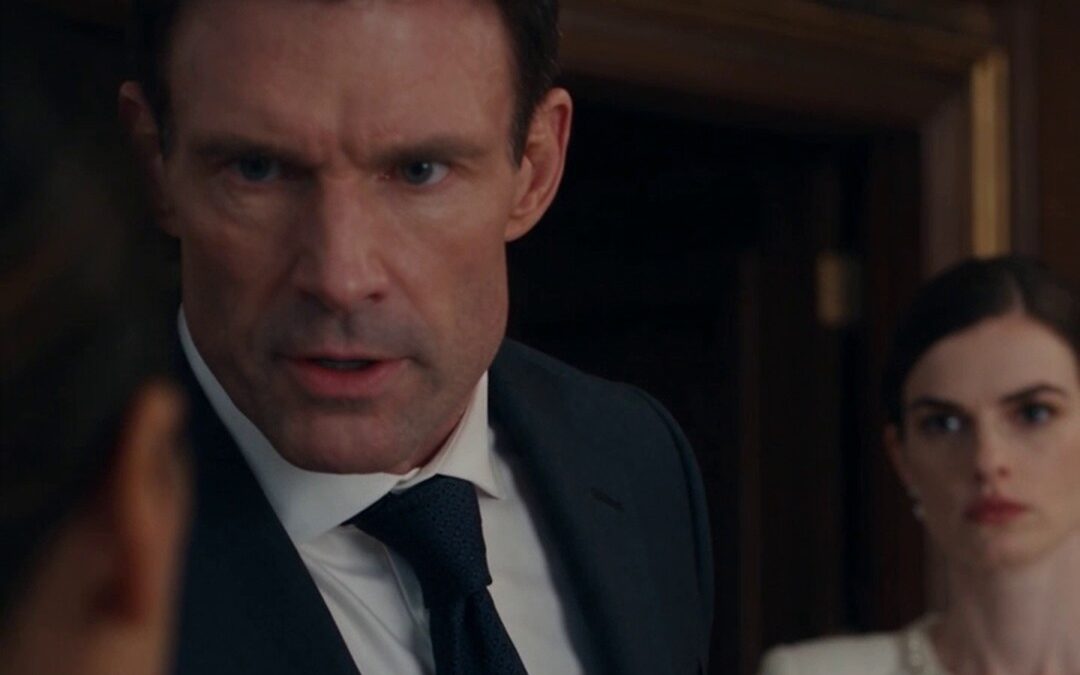
Chapter 2: The Name Beneath
The piano’s last wheel rocked once.
Then it held.
Mara’s arm throbbed beneath the instrument.
June’s fingers stayed wrapped around hers.
Gideon stared at the certificate.
Sloane stared at Mara.
Neither looked at the child.
“Call the doctor,” Gideon said.
“Already done,” Pike replied.
“Move the piano,” Sloane said.
“No,” Mara answered.
Gideon’s gaze snapped toward her.
“Did you hear me?”
“The stand is pinning her leg.”
“Then we get it off.”
“Not until the piano is secured.”
A wheel shifted.
Mara pressed her shoulder harder against the frame.
“Mr. Calder,” Pike said, “she’s right.”
Gideon looked at June’s frightened face.
“Block the wheels.”
Two guards slid padded chocks beneath them.
The piano stopped moving.
“June, can you hear me?” the doctor called.
“Yes.”
“Can you move your toes?”
June tried.
Her face tightened.
“I can.”
“Good. Stay still.”
Mara loosened her grip.
June caught her sleeve again.
“Don’t let her take me.”
The words traveled through the hall.
Sloane flinched.
“Who?” Gideon asked.
June looked at Sloane.
The doctor raised a hand.
“No questions yet.”
“She’s scared,” Sloane said. “Mara frightened her.”
“June is speaking,” Mara replied.
“And you’re holding a stolen document.”
“I found it in the wall.”
“Give it to me.”
“No.”
Sloane stepped forward.
Pike blocked her.
“Mrs. Calder,” he said, “let the doctor work.”
Sloane’s smile returned.
“Of course.”
The doctor checked June’s leg through the gap.
“There may be bruising. I don’t see a break.”
“I want my dad,” June whispered.
Gideon lowered himself beside her.
“I’m here.”
“No. You weren’t.”
His hands stopped.
The doctor slid a thin board beneath the music stand.
“On my count, we’ll lift this.”
“Keep the piano chocked,” Gideon said.
The guards braced the wheels.
The doctor counted.
The stand rose.
Mara eased June backward as the child’s shoe came free.
The doctor supported her ankle.
June crawled against Mara’s chest.
Gideon reached for her.
June turned her face away.
He withdrew his hand.
A paramedic brought a stretcher.
The doctor examined June again before letting her stand.
“She can walk with support,” he said. “Hospital imaging is sensible.”
“I’ll go with her,” Gideon said.
“Me too,” Mara replied.
Sloane stepped forward.
“She doesn’t need the housekeeper.”
“She asked me to stay,” Mara said.
“She’s a child. She doesn’t know what she needs.”
June lifted her head.
“I know what I need.”
Gideon looked at his daughter, then at his wife.
“Both of you will come.”
Sloane’s smile vanished.
At the ambulance doors, Pike stopped her.
“Mr. Calder wants you here.”
“For what?”
“To explain.”
“I already explained.”
“No,” Gideon said. “You offered a story.”
Sloane glanced at the paper in Mara’s hand.
“Do you know what it is?”
“Not yet.”
“It’s nothing.”
“Then you won’t mind if we verify it,” Gideon replied.
At the hospital, imaging showed a deep bruise but no fracture.
June needed rest and observation.
She refused to let go of Mara’s hand.
Gideon waited until the doctor finished.
Then he came into the room alone.
“Can we talk?”
June tucked her chin.
“Here.”
“All right.”
He stayed beside the door.
“I should have listened sooner,” he said.
“You didn’t listen at all.”
“You’re right.”
June looked down at the blanket.
“Why did you believe her?”
“I thought I knew her.”
“You knew her when she was nice.”
He swallowed.
“Yes.”
“She said I made things up.”
“I heard.”
“She said Mom went away because she was bad.”
“Your mother was not bad.”
“You told me she died.”
“She did.”
“You said she didn’t want me.”
“I was wrong to say that.”
June studied him.
“Was she my mother?”
“Yes.”
“Did she want me?”
“Yes.”
“Then why didn’t you tell me?”
“I thought I was protecting you.”
“You protected yourself.”
Gideon let the words land.
“I think you’re right.”
Mara felt June’s grip tighten.
The apology did not repair everything.
But he did not argue.
He turned to Mara.
“You said you found the certificate.”
“In the west nursery.”
“That room was sealed.”
“Someone opened the wall.”
“How did you know?”
“I clean every room.”
“You work nights.”
“I work when the estate is asleep.”
She had learned where dust gathered, which doors stuck, and which walls sounded hollow.
“Why didn’t you tell me?” Gideon asked.
“I did. Last month.”
“When?”
“I reported the nursery wall.”
“Who took the report?”
“Owen Pike.”
Gideon turned toward the doorway.
Pike stood outside, on the phone.
“Bring him in.”
Pike entered.
“The report?”
“I passed it to Mrs. Calder.”
Mara’s expression hardened.
“You told me the contractor checked it.”
“I thought they had.”
“You didn’t.”
“No.”
“Who did?”
Pike looked at Gideon.
“I’ll check.”
“Check now.”
Pike left.
Gideon held out his hand.
“May I see the certificate?”
Mara hesitated, then passed it over.
The seal was faded but intact.
The date was clear.
The certificate listed Elliot Calder as June’s father.
Gideon read the name twice.
“That man died before June was born.”
“Everyone told me that,” June said.
Gideon looked at the paper.
“Elliot died in a boating accident eleven years ago.”
“And my mom?” June asked.
“She died six weeks after you were born.”
“Where?”
“In the hospital.”
“Did you go?”
“I did.”
“Did you see her?”
“No.”
“Why not?”
Gideon had no answer.
The family’s story had been simple.
Wren had been unstable.
She had left after giving birth.
She did not want Gideon or June.
Gideon had repeated it for years.
Now June sat in front of him with a certificate bearing Elliot’s name.
Pike returned.
“The nursery work order went through Mrs. Calder’s office,” he said.
“Who opened the wall?” Gideon asked.
“Northlight Restoration. The contractor had a permit, but no work order.”
“Who authorized them?”
“Mrs. Calder.”
Sloane had opened the wall.
She had known about the certificate.
Gideon looked at June.
“Did she know what was inside?”
“I don’t know,” June said.
“Don’t ask her,” Mara interrupted.
He stopped.
“You’re right.”
Mara wanted a reliable answer, not a guess pulled from a frightened child.
“We need someone who can verify this,” she said.
“I’ll call the family lawyer.”
“No. Your family lawyer serves your family.”
“Then we hire someone independent.”
“Who hires them?”
“I can.”
“Then Sloane will say you paid for the answer.”
He looked at the certificate.
“What do you suggest?”
“Let the police choose the records route.”
“That could take time.”
“Evidence can survive time.”
“June has lived a lie for eight years.”
“And rushing can create another.”
Gideon studied her.
“You’ve done this before?”
“I’ve watched people hide things in plain sight.”
That night, Gideon called an independent family lawyer and a forensic document examiner.
He asked Pike to preserve the camera footage.
He requested a list of everyone who had entered the west nursery.
Mara stayed with June.
At two in the morning, Detective Celia Ward arrived.
She spoke to June with the doctor present.
She did not ask the child to repeat the accident.
She asked what June wanted.
“I want Mara to stay.”
“She can stay,” Ward said.
“I don’t want Sloane in the room.”
“Then she won’t come in.”
“I want to know who my dad is.”
“We’ll check what the paper can tell us.”
“Can you promise?”
“I can promise to check.”
June accepted that.
Ward asked Mara to describe the wall.
Mara told her about the soft section behind the cabinet, the dust after the contractor visit, and the wallpaper strip beneath the trim.
She had seen the contractor’s logo hidden under a magnetic panel.
“Why did you notice that?” Ward asked.
“I empty the service bins. They leave scraps.”
“Do you remember the name?”
“Northlight.”
Ward wrote it down.
“What was inside the wall?”
“A metal document box.”
“Did you open it?”
“No. The certificate was folded into the plaster gap beneath it.”
“Why take it?”
“It had June’s name.”
Ward then asked Gideon about the report.
He admitted he had not seen it.
He had trusted Sloane to handle the nursery work.
He had never requested Wren’s original hospital records.
“I was told she had made her wishes clear,” he said.
“By whom?” Ward asked.
“My father’s attorney.”
“Were you shown a signed statement?”
“No.”
Ward closed her notebook.
“Then we start with what exists.”
The certificate was photographed in front of witnesses.
A county clerk pulled the birth filing from storage.
The original filing listed Wren as the mother and left the father’s name blank.
The certificate Mara found named Elliot.
Both carried the same registration number.
That should not have happened.
A records supervisor found an amended certificate submitted eight years earlier.
The change replaced the blank line with Gideon’s name.
The amendment had no court order or paternity test.
It referred to a sealed affidavit that was missing.
A scanned receipt showed the filing had been delivered by private courier from the Calder Family Trust.
The digital signature belonged to Sloane.
“That tells us who submitted it,” Mara said.
“Not who wrote it,” Ward replied.
“Or who ordered it.”
“Correct.”
The paper gave them a lead, not a conclusion.
A court order preserved the records.
The examiner authenticated the seal and ink.
A medical historian reviewed Wren’s hospital file.
Wren had given birth to a daughter.
She had signed a temporary guardianship request naming Gideon as the person she trusted to raise the child.
It did not say she wanted him told he was the biological father.
It did not name Elliot.
A nurse’s note described Wren as alert and consistent.
She had asked to see June.
She had asked for Gideon.
A final note said Gideon had declined the visit.
The recorded reason was “family request.”
“I never declined,” Gideon said.
The hospital produced its old call log.
Three calls had gone to the estate.
One was transferred to Gideon’s office.
One went to his father’s attorney.
One reached the house manager.
None reached Gideon.
“What did they tell you?” Mara asked.
“That Wren had signed away her rights.”
“She didn’t.”
“No.”
“That she didn’t want to see June.”
“She did.”
“That she didn’t want you.”
He shut the file.
“I don’t know.”
“You have the letter,” Mara said.
“I have a guardianship request.”
“And a nurse’s note.”
“And three unanswered calls.”
“You have a whole family telling you one thing.”
He looked at her.
“And you have a whole family telling you another.”
“I have records.”
The truth did not become simple.
It became checkable.
The detective found a storage invoice showing that the metal box had been removed from the nursery years earlier and returned the month before the accident.
A maintenance worker confirmed delivering it.
He said it was empty.
The contractor who repaired the wall showed Ward his work order.
He had been told only to replace damaged plaster.
He remembered discovering a hollow space and reporting it.
The next day, the box disappeared.
The contractor had not taken it.
“What about the old wallpaper?” Mara asked.
“He kept the scraps,” Ward said. “He restores historic buildings.”
The contractor brought a sealed bag of fragments.
One had a penciled date and the initials W.C. beneath the backing.
The mark was consistent with Wren’s handwriting, but the examiner would not call it conclusive.
“It’s useful,” Ward said. “It isn’t proof of who put the certificate there.”
The access log showed Sloane had entered the nursery three times before the repair.
Once alone.
Twice with an estate attorney.
The last entry had been deleted, but a backup preserved it.
Ward located the clerk who had witnessed the amendment.
Elinor Price had been twenty-six and working for the family trust.
“I was told it was a correction,” she said.
“Who told you?” Ward asked.
“Mrs. Calder.”
“Did you see an affidavit?”
“No.”
“Did you see a court order?”
“No.”
“Did you think the filing was legal?”
“I was told the attorney approved it.”
“Did you sign a false record?”
“I signed what I was shown.”
“Would you sign it today?”
“No.”
Price began to cry.
Mara understood why a young clerk might obey a powerful employer.
She also understood what that obedience had cost June.
On the drive back, Gideon asked Mara, “Did you know my brother?”
“Only from photographs.”
“He used to play that piano.”
“The nameplate has a fresh scrape.”
“You noticed that?”
“I noticed someone had scraped away part of the name.”
“Why would they do that?”
“To hide a name. Or mark it.”
Investigators took the piano into custody.
They photographed the stage and measured the wheel tracks.
The motorized stage lift was disabled.
A wheel chock had been removed.
The piano had been pushed manually.
The wood had been wiped clean.
One camera had been angled toward the curtain.
Another had been switched off at the panel.
The access card belonged to a temporary technician who had left days earlier.
Sloane’s office had signed it out.
She denied touching it.
The evidence showed interference, but not yet who had pushed the piano.
June could not return to the nursery.
She stayed in a guest room near the kitchen.
Mara slept in the chair.
Gideon sat in the hall until dawn.
When June woke, she asked if Sloane was there.
“No,” Mara said.
“Is my dad?”
“He’s outside.”
“Tell him to come in.”
Gideon opened the door.
“Did Mom play the piano?” June asked.
“Yes.”
“Did Uncle Elliot?”
“Yes.”
“Who was better?”
“Your mother.”
“Did you hear her?”
“Only once.”
“Why only once?”
“Because I was afraid of what she wanted to tell me.”
“Were you scared of her?”
“I was scared of my father.”
“That’s different.”
“Yes.”
“Are you going to find out what happened?”
“Yes.”
“Even if it was Sloane?”
“Yes.”
“Even if you love her?”
Gideon took a moment.
“Yes.”
The answer did not make June trust him.
It did make her listen.
Pike later told Mara he had found the camera adjustment himself.
“Why didn’t you tell Ward?” she asked.
“I wanted to confirm the log first.”
“Someone tried to kill a child with a piano.”
“I understand.”
“Do you?”
He looked toward June’s room.
“I should have told Mr. Calder immediately.”
“You were protecting the house.”
“I was protecting the investigation.”
“You were protecting your job.”
Pike did not deny it.
He called Ward.
The adjustment had been made using Pike’s supervisor code.
He had shared it with a subcontractor six months earlier and never retrieved it.
That subcontractor had been hired by Sloane’s office.
Pike surrendered his phone.
His messages showed that Sloane’s assistant, Tessa Rusk, had asked him for the camera blind spot.
Pike had sent her a diagram.
He said he believed the request was for a private family recording.
It was careless.
It was serious.
It did not prove he knew about the piano.
Ward interviewed Tessa.
She admitted requesting the blind spot.
“Sloane told me it was for a surprise,” she said.
“What surprise?” Ward asked.
“She didn’t say.”
“Did you see the piano?”
“No.”
“Did you move the camera?”
“No. I asked for the blind spot.”
“Who instructed you?”
“Mrs. Calder.”
Tessa had also typed a cover letter for the county filing.
She remembered seeing the name Elliot.
When she asked Sloane about it, Sloane called it an old family joke.
“Did you believe her?”
“No.”
“Why send it?”
“She said it was a private family matter.”
Ward asked whether Sloane had told her to delete anything.
Tessa looked down.
“An email.”
“What email?”
“The one where she asked me to find the certificate.”
“Why delete it?”
“She said it was embarrassing.”
“Can you recover it?”
“Maybe.”
A digital examiner recovered the email from a backup server.
Sloane had written: Find the paper Wren hid in the nursery. No copy. Burn it if you find it.
It was dated two months before the piano incident.
Ward requested a warrant for the estate office.
Gideon consented to the search.
Investigators found a phone used to message Pike about the blind spot.
They found no birth certificate.
They found three handwritten notes among Sloane’s files.
One said, “Piano room. Sunday. Make sure June stays near the stage.”
Another was a draft statement: “The child wandered into the performance area despite repeated warnings.”
A printed news article concerned an upcoming vote on June’s inheritance trust.
The trust had been established by Gideon’s mother.
It would transfer control of several hotel shares to June at eighteen.
Sloane had been appointed temporary guardian.
If June died before adulthood, the shares would return to the foundation.
Sloane would keep her board seat.
The motive was taking shape.
Nora Bell, the trust’s neutral co-trustee, met with Gideon and Ward.
“I need evidence of active misconduct,” she said.
“Your job is to protect the beneficiary,” Gideon replied.
“My job is to follow the trust.”
“June is the beneficiary.”
“Then let the evidence speak.”
Nora reviewed the trust instrument.
One clause required two signatures for a change to June’s legal identity.
One signature was missing.
Another clause allowed the co-trustee to suspend distributions during a credible threat.
Nora froze the discretionary account.
Sloane could no longer move the money.
That evening, June asked Mara to play the piano.
“It’s at the police garage,” Mara said.
“Did they take it because it hurt me?”
“They took it to find out how it moved.”
“Will they bring it back?”
“I don’t know.”
“Mom’s piano should be here.”
Gideon, sitting by the window, answered.
“Was it your mother’s?”
“Yes.”
“The label underneath says Wren Calder.”
“I want it back.”
“I’ll ask the investigator when they’re finished.”
“Don’t tell them it’s yours.”
“It is yours.”
“No. It was hers.”
“Then we’ll make sure they know that.”
June asked Mara to play something.
Mara’s fingers found a quiet pattern on the room’s small keyboard.
June closed her eyes.
Gideon watched them from the window.
Three days later, an estate lawyer delivered an envelope from Sloane.
Ward stopped him at the door.
“My client wants to resolve the family’s internal issues,” he said.
“This is a criminal investigation,” Ward replied.
“She has not been charged.”
“She is being interviewed.”
The envelope contained a proposal.
Sloane offered Mara a six-figure payment and a house near Mateo’s college in exchange for a statement claiming the piano was already moving when she entered the hall.
The offer included a confidentiality agreement.
It also listed Mateo’s address.
Gideon read it.
“She knows about your son.”
“She knows the staff files.”
“I’ll move him.”
“No.”
“Someone has given out his address.”
“Then the police can assess it.”
“I can have security there tonight.”
“My son is not a bargaining chip.”
“I didn’t mean—”
“I know what you meant.”
Gideon stopped.
Mara placed the offer in an evidence bag.
“June isn’t a price,” she said.
June stood in the doorway.
“Is it about me?”
“Partly,” Mara told her.
“What does Sloane want?”
“She wants people to lie for her.”
“Will you?”
“No.”
“Even if she gives you money?”
“No.”
“Why?”
“Because you’re not a price.”
Ward contacted Mateo, who was twenty-two and an adult.
He agreed to change his locks and accept a patrol check.
He refused an estate security detail.
No one threatened him directly.
The warning had been enough.
Ward’s search of Sloane’s financial records uncovered payments to a private investigation firm.
The firm had been hired to find Wren’s missing documents.
It had also researched Elliot’s old business partner, Marcus Vale, who had served as his personal attorney.
Ward found Vale living outside Providence.
He met them in a small office above a pharmacy.
“I kept a copy,” he said.
“Of what?” Ward asked.
“Wren’s letter.”
“Why?”
“She told me to.”
“Did Sloane contact you?”
“Once. She asked whether Wren had named a father.”
“What did you say?”
“That Wren had.”
“Who?”
Vale looked at Gideon.
“Your brother.”
“Was Elliot June’s biological father?” Gideon asked.
“Yes.”
“Did my father know?”
“Yes.”
“Did I know?”
“No.”
Mara leaned forward.
“How do you know?”
“Wren told me.”
“That doesn’t answer me.”
Vale accepted the challenge.
“I kept her correspondence. I watched her sign the letter. Her doctor was there. It was notarized.”
“Why didn’t she tell Gideon?” Ward asked.
“She thought he would choose his father’s approval over her safety.”
“Did she say she wanted Gideon kept from June?”
“No.”
“Did she ask you to keep it secret?”
“Yes.”
“Why?”
“She wanted June away from your father’s influence.”
“Then why leave her with me?” Gideon asked.
“She did not leave her with you. She left her with the hospital until her sister could arrive.”
“Wren had a sister?”
“Lydia Shaw. She lived in Vermont.”
“Where is she now?” Ward asked.
“Dead. Six years ago.”
“Was she contacted?”
“I sent her the letter.”
“Did she respond?”
Vale produced a second envelope.
Lydia’s letter said she could not take a baby.
She had three children and a failing marriage.
She hoped to visit when she could.
She never did.
The letter did not reject June.
It explained why Lydia could not raise her.
“What happened after that?” Ward asked.
“Wren died.”
“Who took the baby?”
“The estate’s attorney arranged temporary care. Your father insisted the child stay with the family.”
“Who completed the records?”
“Mr. Harlan.”
“Did Wren authorize the change?”
“No.”
“Did Elliot sign the original certificate?”
“Yes. He wanted June to carry his name.”
“Why didn’t he tell me?” Gideon asked.
“Your father forbade the marriage. Elliot was afraid.”
Gideon stood.
“My father hid my brother’s child from me.”
“I’m telling you what the records and letters say,” Vale replied.
“And Wren?”
“She was denied the chance to explain.”
Vale handed Ward the original letter.
Wren had named Elliot as June’s father.
She had also named Gideon as the person she hoped would raise June if he could learn the truth without his father controlling the answer.
She wrote that Elliot had wanted to tell Gideon but had been afraid.
She wrote that Gideon deserved the chance to choose June freely.
She did not ask him to become someone he was not.
She asked him to give their child a home.
The past changed.
Wren had not abandoned Gideon.
She had entrusted him.
The letter also included a sealed copy of Elliot’s will.
He had left a small personal trust to any child he might have.
After his death, the money had been transferred to the family foundation on the assumption that he had no child.
The probate court preserved the trust records.
The bank ledger showed a payment from Elliot’s account to Wren’s hospital and another to a private laboratory.
The lab had closed, but its archives had gone to a university medical center.
The old sample had been destroyed under the lab’s retention policy.
New testing could not distinguish Gideon from Elliot because they were brothers.
A stored sample from Gideon’s mother did establish that June belonged to the Calder line.
The results did not stand alone.
The letters, hospital records, and legal filings completed the account.
The court appointed an independent guardian for June.
She interviewed June alone, then with Gideon and Mara present.
June wanted Gideon to remain her father in every way that mattered.
She also wanted Elliot’s name on her records.
The court updated her legal parentage.
Elliot was recorded as her biological father.
Gideon remained her legal guardian.
The trust was restored to June.
Nora Bell became its sole fiduciary until June turned eighteen.
Sloane lost her authority over the trust.
Before the estate board could meet, a financial news site published a story accusing Mara of planting the certificate and manipulating June for money.
The article quoted an unnamed estate source.
A photograph showed Mara’s apartment building.
Her phone rang through the night.
She did not answer.
Gideon wanted to call the publisher.
Mara stopped him.
“They want a fight they can sell.”
“Your name is being dragged through the street.”
“It’s been there before.”
“That doesn’t make it acceptable.”
“No. It makes it familiar.”
“What do you want?”
“Truth.”
“Tell me what that means.”
“Ward releases the verified timeline when she can. Until then, I keep showing up for work.”
“You shouldn’t have to.”
“I do.”
The next day, Mara returned to the estate.
Some staff looked ashamed.
Others looked curious.
A new housekeeper stopped her.
“I saw the story.”
“So did I.”
“Do you want me to say anything?”
“No. The facts will do the talking.”
Mara put on her apron.
The piano had returned after inspection.
Its nameplate still bore a fresh scrape.
Investigators had found a small magnetic brake lodged inside the rear wheel assembly.
It had been added after the piano’s last service.
It had not caused the movement.
Someone had pushed the instrument.
A camera backup showed a figure in a maintenance jacket entering the hall.
The face remained hidden by a curtain.
The polished brass caught a reflection of a black watch with a silver border and a notch near the crown.
The watch belonged to Sloane.
She said the reflection proved nothing.
The jacket was used by more than thirty staff members.
The prosecutor agreed the footage alone was not enough.
Ward kept working.
A service tag showed the piano had been opened six days before the accident.
The visit had been ordered by Sloane’s assistant.
The piano technician denied being there.
A fake invoice used his company’s logo and was paid through the Calder Family Trust.
The payment went to Northlight Restoration.
Northlight denied working on the piano.
Its owner recognized the account as belonging to a former employee who had been fired two years earlier.
The man now worked for a private event company.
His phone location placed him near the estate on the day of the service.
He denied touching the piano.
A payment had been routed through an account linked to Tessa’s brother.
Tessa denied arranging it.
The transaction records supported her.
Sloane’s assistant had created the payment.
She said Sloane called it a surprise restoration.
The same assistant had booked the hall, invited June, and arranged the stage.
Each detail looked ordinary on its own.
The old estate records revealed why Sloane had ordered the piano opened.
It had belonged to Wren.
After Wren died, Gideon’s father ordered her name removed from the brass plate.
The family had called the piano Elliot’s.
Sloane had learned about the original name during the nursery repair.
She believed Wren had hidden something inside.
A technician’s photograph showed a narrow compartment beneath the keyboard.
Investigators found a folded letter, a small key, and a photograph inside it.
Wren’s letter was addressed to Gideon.
It said she had written before June was born and had asked to meet without anyone from his father’s office.
She wanted him to listen.
The letter had never been mailed.
The photograph showed Wren holding newborn June.
Elliot stood beside them.
On the back, Wren had written, “She has both your stubborn mouth and your brother’s quiet eyes.”
Wren had not called Gideon June’s biological father.
She had named him as the person who could choose to become a parent.
Her letter did not hide June’s biology.
It gave Gideon the choice his father had taken away.
Sloane had found the letter during the piano service.
She had seen Elliot’s name and the words “June” and “Gideon.”
She knew the family’s legal story could collapse.
She also knew June’s inheritance might return to her.
The plan came into focus.
Sloane had ordered the letter destroyed.
She had arranged a family event with June near the stage.
The piano would strike the rail.
The camera blind spot would support the story that June had wandered into a restricted area.
The remaining evidence linked the plan to the man in the maintenance jacket.
Investigators identified him as the former contractor.
He admitted he had been paid to push the piano far enough to create a fall.
He said he did not know June would be in the hall.
The recovered letter supplied motive.
The fake invoice and payment trail showed preparation.
The camera reflection placed Sloane in the room.
The certificate showed why she wanted the old family story preserved.
Ward took the evidence to the prosecutor.
The prosecutor filed charges based on what the evidence established.
Sloane was summoned to the estate board meeting.
She arrived in a dark blue suit.
Mara sat beside Ward.
Nora Bell sat with the trust documents.
Pike was there too.
Sloane looked at Mara first.
“Of course she’s here.”
“She’s a witness,” Ward replied.
“She’s an employee.”
“She’s a witness.”
Sloane turned to Gideon.
“You let this become a spectacle.”
“You made it a spectacle when you tried to use my daughter’s death.”
“I did nothing to June.”
“Then explain the piano.”
“I wasn’t in the hall.”
“The camera says otherwise.”
“The camera shows a reflection.”
“It shows your watch.”
“Half the staff wore that uniform.”
“The jacket was yours.”
“I donated jackets every year.”
“The invoice came from your trust account.”
“That proves an invoice. Not an act.”
Her argument was composed.
It made one board member look down.
“The certificate was altered before I saw it,” she continued.
“Who altered it?” Gideon asked.
“Your father.”
“Why did you file the amendment?”
“Because the record was wrong.”
“You changed Elliot’s name to mine.”
“To protect June.”
“From what?”
“From a scandal.”
“You erased her father.”
“She had no father.”
“Elliot was her father.”
“Elliot was dead.”
“That doesn’t make it untrue.”
Sloane turned to the board.
“I have spent eight years protecting this family.”
“By telling June her mother didn’t want her?” Mara asked.
“You have no place in this conversation.”
“I was the one who stayed beside her.”
“You were paid to clean.”
“I was paid to clean.”
“And you used that access to steal private records.”
“I found a certificate in a wall.”
“You should have reported it to me.”
“I did.”
Sloane looked at Gideon.
“Is that true?”
Gideon let Mara answer.
She placed the complaint copy on the table.
Its submission date was visible.
“The archive log is verified,” Ward said.
“Then why wasn’t I told?” Sloane asked.
“Because you opened the wall without authorization,” Gideon said.
“I was repairing the nursery.”
“Your work order said repairs.”
“I was authorized to manage the household.”
“Not to alter a child’s record.”
“Someone had to act.”
“You did.”
Sloane turned to Nora.
“The trust would have collapsed if the truth came out.”
“The trust belongs to June,” Nora said.
“That is not what the document says.”
“It is what the court confirmed.”
“Records can be forged.”
“So can stories.”
Sloane looked at Mara.
“Mara has been alone with June for months. She had motive to plant that certificate.”
“Why would I?” Mara asked.
“Money.”
“Then why did I refuse your money?”
Mara placed the settlement offer on the table.
The payment, the house, and the requested false statement were all visible.
“I offered to compensate her,” Sloane said.
“You asked her to lie about when the piano started moving,” Ward replied.
“I offered a resolution.”
“Then why request a false statement?”
Sloane did not answer.
Gideon took the photograph from the evidence folder.
Wren held June in a hospital bed.
Elliot stood beside them.
“Where did you get that?” Sloane asked.
“It was hidden in the piano.”
“You said the piano had been searched.”
“It was.”
“Then why wasn’t it found?”
“It was inside a compartment.”
“Convenient.”
“The forensic team verified it before opening it,” Ward said.
Sloane shook her head.
“They want you to believe anything.”
The decisive proof was Wren’s original letter.
The document examiner authenticated the paper, ink, and handwriting.
A second expert reached the same conclusion.
The doctor who witnessed Wren’s signature confirmed it.
The letter described the hiding place beneath the keyboard’s left brace.
Sloane’s face went still.
“You knew,” Gideon said.
“I found the letter.”
“When?”
“After the investigators searched the piano.”
“You never saw it.”
“I have now.”
“You have no idea what she meant.”
“I have her words.”
“She was confused.”
“The doctor says she was alert.”
“She was dying.”
“She had weeks left.”
“Wren never understood the family.”
“She understood enough to write the truth.”
“She was going to ruin everything.”
The board members looked up.
Ward stood.
“Mrs. Calder, you have the right not to answer.”
“I’m not under arrest.”
“No.”
“Then I can leave.”
“Yes.”
Sloane gathered her papers.
Gideon did not block the door.
At the threshold, she turned toward Mara.
“You think you saved her.”
“I know I did.”
“You have no idea what this family will do to you.”
“You’ve already shown me.”
Sloane turned to Gideon.
“She will never be yours.”
Gideon’s face stayed calm.
“She is my daughter because I show up.”
Sloane left.
The legal process took months.
Sloane pleaded not guilty.
Her lawyers challenged the camera footage and chain of custody.
They argued that someone else had altered the certificate.
The forensic lab testified.
The county clerk testified.
The technician testified.
Tessa testified.
Pike testified about the camera request and his failure to secure the access code.
The digital examiner explained the recovered email.
Nora described the trust.
Mara testified about the piano, the wall, and Sloane’s offer.
Gideon admitted he had not demanded proof of Wren’s supposed abandonment.
He had repeated the family’s story to June without checking it.
The defense argued Sloane never intended to hurt June.
The prosecutor presented the event plan, the camera request, the false service invoice, the calendar note, and the letter Sloane had ordered destroyed.
The jury deliberated for two days.
They found Sloane guilty of falsifying the family filing and conspiracy to destroy evidence.
They could not agree on the attempted endangerment charge.
The judge dismissed that count after the prosecutor reviewed the remaining evidence.
Sloane never admitted pushing the piano.
The evidence showed she had arranged the conditions, but it did not prove she personally moved it.
Investigators identified the contractor who pushed it.
He pleaded guilty to reckless endangerment and evidence tampering.
He said he had been told to create a fall.
He claimed he did not know June would be in the hall.
The court found his account credible.
The assistant was not charged because she cooperated.
Pike lost his security position and accepted responsibility for sharing the access code.
He helped revise the estate’s security procedures.
The county corrected June’s record.
The trust was restored to her.
Sloane received a prison sentence for the records and conspiracy charges, with restitution ordered to the trust.
The estate board removed her name from its charitable programs.
Its public statement did not expose June’s private medical details.
It said the estate had failed to protect a child and repeated unverified claims about her mother.
Gideon changed one sentence in the draft.
He crossed out, “We regret the confusion.”
He wrote, “We told a child the wrong story.”
The board approved it.
June’s bruise faded.
She returned to school in a different classroom.
Mara took unpaid leave to help her settle.
Gideon offered to keep Mara’s salary during the leave.
She accepted.
He also offered her a promotion.
“I don’t want to supervise the house,” she said.
“You’d be good at it.”
“I don’t want it.”
“What do you want?”
“Time to finish my nursing certificate.”
“I can pay the fees.”
“I’ll apply for aid.”
“You could do both.”
“I could.”
He waited.
“I don’t want a gift with a debt hidden inside.”
“There wouldn’t be a debt.”
“You might not mean one.”
“That’s fair.”
Mara enrolled in the evening program.
She returned to work three nights a week and took the estate’s standard tuition reimbursement.
The staff knew she had refused Sloane’s offer.
They knew she had gone back to work.
She did not need everyone to understand.
June asked to visit Wren’s grave.
Gideon had never taken her there.
The cemetery sat outside the city beneath a row of maple trees.
The gravestone read Wren Calder.
Beloved daughter and mother.
The family had not added June’s name.
Gideon brought flowers.
June carried a drawing of three people around a piano.
She placed it beside the bouquet.
“Did she see me before she died?” June asked.
“Yes.”
“Did she hold me?”
“Yes.”
“Did she know my name?”
“Yes.”
“Did she name me?”
“She did.”
“What does June mean?”
“It’s the month she was born.”
“I thought she picked it because it sounded pretty.”
“Maybe she did both.”
June looked at the stone.
“I’m mad at you.”
Gideon nodded.
“You have reason.”
“I’m not going to be mad forever.”
“I understand.”
“I might be mad again.”
“I’ll understand that too.”
June placed her hand on the stone.
“I’m not going to forget you,” she said.
Mara stood a few steps away.
Gideon kept apologizing through what he did.
He stopped answering for June.
He let her choose which photographs stayed in her room.
He gave her the original letters to read when she was ready.
He asked before changing anything.
When she said no, he accepted it.
The estate offered Mara a large payment after the trial.
The board called it a recognition award.
It was not tied to silence.
Mara refused it and asked the board to put the money toward an employee education fund.
They agreed.
The fund covered courses and certificates for household staff.
Mateo visited for dinner while finishing nursing school.
“You really clean all this?” he asked.
“Every night.”
“Why?”
“People spill things.”
He laughed.
Gideon introduced himself.
“You don’t have to impress me,” Gideon said.
“I’m not trying to.”
“Good.”
“I’m here because Mom said the food was decent.”
Mara looked at him.
“Your mother was right.”
June joined them and asked Mateo about his classes.
He told her about a patient who kept hiding the hospital remote.
June laughed.
It came easily.
Gideon later asked Mara to join him in the music room.
The piano stood under a white cover.
The police had released it after the case.
A technician had restored the wheel assembly.
The scratched nameplate remained untouched.
“I want to establish a scholarship in Wren’s name,” Gideon said.
“For June?”
“For anyone studying music or caregiving.”
“Those are different fields.”
“She loved both.”
“Do you know that?”
“I found her class notes.”
“That’s a start.”
“Would you help choose the first recipients?”
“Why me?”
“You know who works hard when no one is watching.”
“That doesn’t make me an expert.”
“It makes you useful.”
Mara folded her arms.
“Is there a salary?”
“There can be.”
“Then I’ll review the terms.”
“Of course.”
“I won’t be the face of it.”
“Understood.”
“The committee needs staff members.”
“Agreed.”
“And the family can’t control it.”
“That may be harder.”
“Then make it harder.”
He smiled briefly.
“I’ll ask Nora.”
“Ask June too.”
“She’s ten.”
“She can still have an opinion.”
He asked her.
June wanted the scholarship to pay for instruments and medical training.
She said Wren would want both.
The fund began the following year.
Its first recipient was a kitchen assistant’s daughter studying occupational therapy.
Mara joined the committee without taking a salary.
She completed her nursing certificate and took shifts at a neighborhood clinic.
Gideon asked before changing her estate schedule.
He asked before moving the piano.
He asked before making decisions that affected June.
He did not always get it right.
When he didn’t, he apologized.
June did not call him Dad for months.
Then, at a clinic fundraiser, she asked him to hold her coat.
The word slipped out.
Gideon took the coat.
He did not act as if he had won something.
June watched him.
“Don’t make a big deal.”
“I won’t.”
“Good.”
The years did not erase what had happened.
They gave the family a way to live beside it.
The estate changed its records policy.
It hired an independent child advocate.
It created a staff reporting line outside the family office.
The old nursery became a music room and study space.
June called it hers.
At thirteen, she began piano lessons with a city teacher.
She practiced on a used upright.
She waited until she wanted to play the grand piano.
At fifteen, she asked Gideon to read Wren’s letter aloud.
He paused at the line about her stubborn mouth.
“That’s true,” June said.
“It is.”
“Was Mom funny?”
“Sometimes.”
“How?”
“She once said my tie looked like an apology.”
“Was it ugly?”
“Yes.”
“Then she was right.”
Mara laughed.
Gideon did too.
Mara graduated from her nursing program.
Mateo came in a borrowed suit.
June brought flowers.
Gideon asked whether Mara wanted a gift.
“No,” she said. “I want to go home and sleep.”
He drove her home without asking for a photograph.
At eighteen, June gained control of her trust.
She did not take the hotel shares.
She moved them into a foundation for youth housing and arts programs.
Nora stayed on as an adviser.
Gideon did not try to control the decision.
He asked if June wanted help reading the documents.
She did.
Mara reviewed the employment terms.
A lawyer reviewed the rest.
The piano stayed in the music room.
The name Wren remained visible beneath the scrape.
The original certificate stayed in the county archive.
A certified copy went into June’s private file.
The original letter went into the scholarship archive.
June kept the photograph near her desk.
It showed Wren holding her.
Elliot stood beside them.
Gideon was not in the picture.
He was not offended by that.
He knew his place now.
He had not been June’s biological father.
He had been the man Wren trusted with a choice.
He had failed to make that choice freely.
Then he chose to show up.
Years later, the foundation held its annual concert in the same hall.
The piano stood on the stage.
The rail had been reinforced.
The wheel locks were visible.
June, now twenty-one, waited behind the curtain with the young musicians.
Mara sat in the front row beside Gideon.
June walked to the piano and rested one hand on the nameplate.
Wren Calder.
“I’m going to play a piece my mother loved,” she said.
Gideon’s hand moved beside Mara’s.
He waited.
She placed her hand over his.
June began.
The first notes wavered, then settled.
No one hurried her.
No one asked her to perform a version of the past that made them comfortable.
When the song ended, June looked at Mara, then Gideon, then Wren’s name.
The piano had once rolled toward a child.
Now it stood where she chose to play.
The certificate had once been hidden to erase a father.
Now its truth had helped a family find its way forward.
The housekeeper had held up the paper.
The child had kept hold of her hand.
And the man who arrived too late learned how to stay.
THE END


