When the Hotel Heiress Found a Boy Trapped Beneath the Ballroom Floor, the Night Janitor Held Up a Brass Room Key
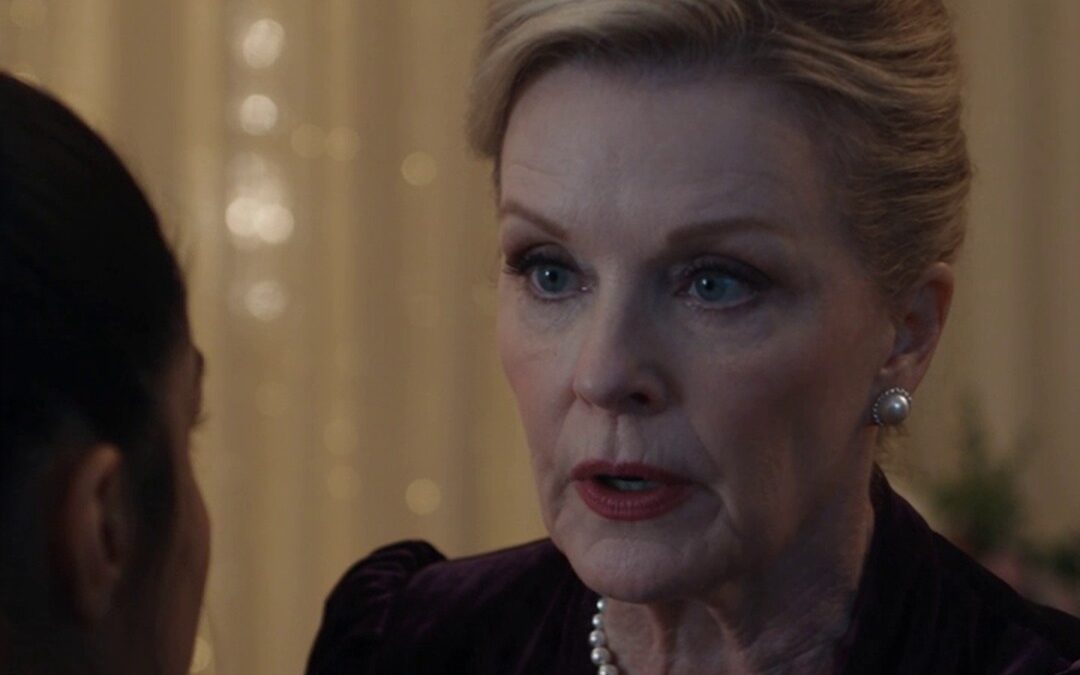
Chapter 2: The Room Below
The boy’s hand disappeared.
Nessa heard a scrape below the hatch.
Then a cough.
Marjorie stepped between her and the opening.
“Everyone out,” she said.
Nobody moved.
The guests had come for the Bellweather’s centennial gala. They had expected champagne, a speech, and Marjorie Vale announcing the hotel’s sale.
They had not expected the heir to vanish beneath the ballroom floor.
Nessa held the hatch open.
“Eli, stay where you are.”
“I am.”
“Can you see the ladder?”
“No. It’s getting dark.”
“Keep talking.”
“I can hear the music.”
“There’s no music now.”
“I hear something else.”
“What?”
“Water.”
Nessa leaned over the opening. Damp, stale air rose from below.
Marjorie reached for the hatch.
“Don’t touch that.”
“I own this building.”
“He’s ten.”
“He’s my grandson.”
“Then let me get him.”
Marjorie’s eyes stayed cold.
“You have no idea what you’re opening.”
“I know who’s under it.”
Nessa took the brass key from the lock. The number 19 flashed under the ballroom lights.
The boy knocked below.
Once.
Twice.
A third time.
Nessa had heard that pattern years earlier from the old night engineer.
Three knocks meant someone was still there.
“Eli, knock again.”
Three knocks answered her.
Nessa took the flashlight from her belt.
Marjorie grabbed her arm.
“Let the engineers handle it.”
“Where are they?”
“They’re coming.”
“From where?”
Marjorie didn’t answer.
Nessa called emergency services.
“My name is Nessa Ortiz. Bellweather Hotel, ballroom. A child is trapped below the stage. There may be water in the lower service level.”
Marjorie turned sharply.
“Hang up.”
“No.”
The dispatcher asked whether Eli was conscious.
“He’s talking.”
“Do you know what’s beneath the ballroom?”
“An old service passage.”
“Is there another exit?”
“There should be.”
The boy called up again.
“I found a door.”
“What does it look like?”
“Metal. With a number.”
“What number?”
A pause.
“Seventeen.”
The brass key in Nessa’s hand felt heavier.
Marjorie recognized the number.
Nessa saw it in her face.
“Mrs. Vale?”
“Don’t go down there.”
“Why?”
“It’s unsafe.”
“You said the engineers were coming.”
“They are.”
“Then why are you afraid of the door?”
A man in a black suit pushed through the crowd. Darnell Pike, the hotel’s head of security, held out his hand.
“Give me the key.”
“Why?”
“You’re not trained.”
“Neither are you.”
“I’m responsible for the guests.”
“Then call the fire department.”
“I have.”
Nessa glanced at his dark phone screen.
“You’re lying.”
Darnell lowered his hand.
“Watch your mouth.”
Marjorie turned to him.
“Get the crowd upstairs.”
A guest lifted a phone.
“I’m recording this.”
Several others followed.
Marjorie’s expression shifted.
“Please remain calm,” she told them.
Nessa turned back to the hatch.
“Eli, stay by the metal door. Don’t touch anything else.”
“It’s cold here.”
“I know.”
“Are you coming?”
“Yes.”
Marjorie blocked the opening.
“You can’t.”
“Move.”
“Your job is cleaning rooms.”
“My job is keeping people safe.”
“That isn’t in your contract.”
“No. It’s in my bones.”
A murmur passed through the guests.
Nessa climbed down.
The ladder was narrow and slick. The ballroom noise faded above her. At the bottom, her flashlight caught a brick corridor and a shallow channel of water running toward a drain.
“Eli?”
“Here.”
He crouched beside a metal door, clutching a small gold frame. His tuxedo jacket was gone, and his shirt was dark at one elbow.
“You all right?”
“I think so.”
“Can you stand?”
He tried, then winced.
“Your ankle?”
“It hurts.”
“Can you move your toes?”
He did.
“Good. We’ll go slowly.”
The photograph in the frame showed a young woman in a Bellweather uniform. Nessa recognized her mother.
On the back, faded ink marked the date: October 14, 1986.
“Where did you find this?”
“Behind the door.”
“Why were you down here?”
“I was looking for something.”
“What?”
“My dad’s notebook.”
Eli looked toward the metal door.
“My grandmother said it was gone.”
A thin stream of water ran beneath the door. Nessa saw the number 17 scratched into its paint and a brass lock beneath it.
Her key was marked 19.
“Don’t try it,” Eli said.
“Why?”
“Grandma said not to open any old rooms.”
“Did she tell you why?”
“No. She said they were dangerous.”
A metallic bang sounded behind them.
Then came two more.
Nessa turned her flashlight toward a swollen door at the far end of the corridor. The old maintenance map showed another exit there, near the kitchen.
She tried the handle.
It didn’t move.
Eli caught her sleeve.
“Don’t leave me.”
“I’m right here.”
She called up for someone to send the fire crew to the kitchen side. Marjorie ordered her to stay where she was.
Nessa ignored her.
She studied the lock on the metal door. Brass was polished around its edges. Someone had used it recently.
She inserted the key.
It turned halfway and stopped.
A sliver of metal had been wedged inside the lock. Nessa pulled a hairpin from her bun and worked it free. A folded strip of paper came out with it.
She eased the key again.
The lock turned.
Nessa read the paper beneath her flashlight.
“Night watch received an envelope from L. Bell,” she said. “Original room 19 sealed under order of M.V.”
“Who’s M.V.?” Eli asked.
Nessa looked at him.
“Marjorie Vale.”
Above them, the ballroom hatch slammed.
Eli seized Nessa’s hand.
“Did she do something to my mom?”
“I don’t know yet.”
“Is she coming down?”
“I don’t know.”
“Are we stuck?”
“No.”
The corridor water reached Nessa’s ankles.
She opened the metal door.
The room beyond was dry, with shelves against the walls and an old cabinet beneath a rusted vent. A clean cardboard box sat on top.
“That wasn’t here before,” Eli said.
“How do you know?”
“I found the picture through the gap. There was no box.”
The cabinet lock had been forced. Inside lay a bundle of papers wrapped in oilcloth and a silver watch.
Nessa knew it at once. Her mother had worn it until the night she disappeared from the hotel payroll. She had told Nessa it was lost.
Nessa lifted the oilcloth.
The notebook beneath it belonged to Thomas Vale, Eli’s father. A typed note on the cover read:
“To Leah Bell, in case I fail.”
Footsteps sounded overhead.
Then Marjorie’s voice.
“Eli!”
The boy recoiled. Nessa moved in front of him.
“Stay with me.”
The hatch groaned.
A firefighter called from above, “Clear the landing.”
“I’m the owner,” Marjorie said. “You need my authorization.”
“The child is below. Step aside.”
Nessa opened the notebook. Its last entry was dated three days before Thomas’s death. One line had been underlined twice.
“If Marjorie says the ledger was lost, ask what happened to Leah.”
Nessa looked again at the note.
The metal door rattled behind her.
“Eli?” Marjorie called. “Come out now.”
“I don’t want to go with her,” Eli whispered.
“You don’t have to decide that down here.”
“You said we’d be safe.”
“I said I’d stay.”
The water was rising. Nessa found a narrow service stair marked in pencil on the wall map. She tucked the notebook beneath her jacket and led Eli toward it.
They reached the kitchen corridor, where a fire captain waited with two firefighters. He called for a medical check.
“I’m fine,” Eli said.
“We’ll check you anyway,” the captain replied.
Marjorie appeared behind them, her hair loose and her composure gone.
“You’re trespassing in a sealed area.”
“Your grandson was trapped there,” Nessa said.
“You opened a door that was sealed for a reason.”
“Then explain the reason.”
Marjorie looked at Eli.
“Come here.”
He stepped behind Nessa.
The captain raised one hand.
“Give the child room, Mrs. Vale.”
A firefighter took Eli toward the medical team.
Marjorie reached for the notebook.
“Give that to me.”
“You can ask the police.”
“It’s company property.”
“Then call your lawyer.”
“I can have you arrested.”
“Then explain why the boy was trapped beneath your floor.”
Marjorie lowered her voice.
“You’ve always been nosy.”
“I’ve always been observant.”
The police arrived twelve minutes later. They photographed the hatch, the passage, the door, and the room. Eli went to the hospital with a paramedic and a social worker.
Nessa gave the officers the brass key. They photographed it before bagging it as evidence. She described the rescue, the water, the papers, and the watch.
When asked how she knew the passage, she explained that the old night engineer had shown her the route during her first month at the hotel.
“Did you see Mrs. Vale put anything in the room?” an officer asked.
“No.”
“Did you hear her order the boy down there?”
“No.”
“Did she know the passage existed?”
“She knew the room.”
“That isn’t the same.”
“No.”
At the hospital, Eli sat upright in bed with his ankle wrapped. The social worker, Ms. Bennett, spoke with him privately before inviting Nessa in.
Maribel Shaw arrived soon after. She was Thomas Vale’s sister, and Eli’s aunt.
“Thank you,” she told Nessa.
“He needs to be safe.”
“He needs the truth.”
“Those aren’t always the same thing.”
Maribel glanced at the notebook. She knew Thomas’s handwriting but didn’t know what he had left behind.
Nessa asked who could verify it.
“An attorney,” Maribel said. “Someone who understands the old accounts.”
“Call them.”
Eli held the photograph of Nessa’s mother.
“Is she your mom?”
“Yes.”
“She looked kind.”
“She was.”
“Did she know my dad?”
“I think so.”
“Grandma says Dad made up stories.”
“I don’t know if he did.”
Eli looked down at the photo.
“She came here the night he died. My piano teacher told me.”
Maribel leaned closer.
“Did you speak to her recently?”
“Last week. She said Dad asked someone to keep a key.”
“Which key?” Nessa asked.
“The one Grandma had.”
“Do you mean the one you found?”
Eli nodded.
The police had recovered that key from his wrist. It was stamped 17. Nessa’s key was marked 19.
“Did your grandmother put it on you?” Nessa asked.
“No. I found it in her desk.”
“When?”
“Yesterday.”
“Why didn’t you tell anyone?”
“She said it belonged in the room.”
“Did your father talk about the key?”
“He called it the witness key. He said the numbers were wrong.”
Maribel went very still.
The key opened the old records cabinet, she explained. There should have been another cabinet in the sealed room.
Eli remembered a map hidden behind the ballroom clock, but he said his grandmother had told him not to open the clock.
“Why didn’t you mention this before?” Maribel asked.
“I forgot.”
“What did Grandma tell you about the floor?” Nessa asked.
Eli looked at her.
“She said it was loose and Dad left something below. She said the party would be loud, and nobody would hear me.”
Maribel reached for his hand.
“Did she tell you to go alone?”
He nodded.
The social worker stood.
“That needs to be included in the report.”
Eli’s face tightened.
“Am I in trouble?”
“No,” Ms. Bennett said. “You’re not.”
Nessa kept her voice soft.
“You did the right thing by telling us.”
Eli turned toward the window.
“Grandma said Dad was a thief.”
Nessa looked at Thomas’s notebook.
The old room held the watch, but the witness key opened the records cabinet. They needed a warrant and someone who could explain what to look for.
Maribel called Detective Luis Gentry, who had taken statements at the hotel.
He agreed to secure the ballroom clock and request the hotel records.
“Could Marjorie destroy them?” Nessa asked.
“She could try,” he said. “We’ll move quickly.”
Nessa went to the station that afternoon. Gentry had logged the notebook, photograph, watch, and both keys. The ballroom footage showed Eli entering the passage. Marjorie followed him and stood beside the hatch for eleven seconds before walking away.
Darnell entered two minutes later.
He returned alone.
Nessa watched the footage.
“Did he open the hatch?”
“The camera doesn’t show it,” Gentry said.
“Did he bring anyone?”
“No.”
The next clip showed Nessa running toward the stage.
“You heard Eli calling,” Gentry said.
“Yes.”
The footage caught Marjorie’s expression when Eli mentioned the key.
Nessa watched it once more.
Marjorie wasn’t afraid for him.
She was afraid of what he had found.
The police secured the clock and found a hidden compartment behind its face. It contained a folded map and a small ledger. The map showed two cabinets: one in the sealed room and another inside the hotel’s old records office, now converted to a private suite.
The ledger listed payments from a charitable trust created to fund staff pensions and emergency housing. The trust once held six million dollars. Its final balance was less than forty thousand.
Several transfers had gone through shell companies. One was Bellweather Renewal, registered to Darnell Pike.
The financial crimes unit took over the tracing.
“Why would the head of security own a company?” Nessa asked.
“I’ll ask him,” Gentry replied.
The trust’s original agreement named Thomas as trustee. After his death, Marjorie took control. The agreement required an independent audit every two years. No audit had been filed for eleven years.
A clause protected staff members who reported misuse. Leah Bell’s name appeared in a confidential witness annex.
Maribel stared at the page.
“I didn’t know Thomas had put her in there.”
“Would he have told you?” Nessa asked.
“Maybe not. He thought Marjorie had access to everything.”
“Did you suspect her?”
“I suspected she controlled the family. That’s not the same as knowing she stole from the trust.”
Nessa thought of the watch.
“Did she know my mother had a daughter?”
“I think she did. She once asked whether Leah had left the city.”
The police found a second cabinet inside the records office. It held false invoices, calendars of transfers, and altered pension records.
One page listed employees whose balances had been changed.
Leah’s name was first.
Another name was circled: Thomas Vale.
Beside it, someone had written “deceased.”
A forensic examiner inspected the silver watch and found a paper roll behind its back plate. It contained account numbers and dates. Wrapped around it was a letter from Leah to Thomas.
She had found altered pension records while working the night desk. She had copied them after her own wages went unpaid. She confronted Thomas, who asked her to keep the copies safe. He believed Marjorie was using the trust to cover private debts.
The final line stopped Nessa.
“If the room is opened, tell my daughter I did not leave because I was ashamed.”
Nessa set the letter down.
“She knew she might leave,” Gentry said.
“She told me she took a better job.”
“Maybe she thought that was safer.”
“Why didn’t she tell me?”
“Maybe she was protecting you.”
“From whom?”
The detective didn’t answer.
Nessa learned that Leah had moved to Albany under her mother’s maiden name. She had worked at a clinic four blocks from the apartment where Nessa grew up.
Her mother had never told her the hotel followed her.
The old personnel file confirmed that Leah’s resignation note had been replaced. The original said, “I am leaving because I saw the trust accounts.” The replacement said she was leaving for family reasons.
Marjorie had signed out the file three days after Leah’s last shift.
The final payroll check had been endorsed by someone else. A handwriting analyst matched it to Marjorie. A bank archive confirmed she deposited it into her personal account.
The amount was less than eight hundred dollars, but it proved she had handled Leah’s wages after claiming Leah had left.
Nessa sat with the file open.
“Did she know my mother was pregnant?”
“There’s no record,” the investigator said.
Nessa thought of her mother’s story: a new job, a new town, a chance to begin again.
Maybe some of it was true.
Maybe she had refused to give fear a name.
Maribel found an unsent letter in Thomas’s estate papers.
“I am sorry I let her make your fear look like guilt,” he had written.
“I should have taken the case to the board sooner.”
“Do not trust my wife.”
The letter changed the past again. Thomas had not been hiding a romance. He had been trying to protect a witness.
The financial investigator traced the transfers over fourteen years. False construction invoices went to companies that did no work. Money flowed to accounts connected to Marjorie and Darnell.
The retired hotel accountant agreed to cooperate. She said Marjorie had told her to classify the payments as temporary expenses and promised to restore the money after the sale.
The sale was scheduled for the following week.
Marjorie intended to dissolve the old charitable trust and place the remaining assets in a foundation she controlled. The transfer would make the missing pension money harder to recover.
The architect of the theft was Marjorie Vale.
Her motive was control.
The money paid for her house, her security, and the life she had built around the hotel. The sale would bury the theft before anyone could demand a proper audit.
Darnell had helped because Marjorie promised him a consulting contract with the buyer. His company had received more than half a million dollars from the trust.
The police secured the records office and referred the financial evidence for prosecution.
Then a message arrived on Nessa’s phone from an unknown number.
Stop making a problem out of old records.
A second followed.
You have a sister who needs school.
Nessa gave the phone to Gentry.
“Does your sister work at the hotel?” he asked.
“No.”
“Then someone is trying to scare you.”
“They know about Paloma.”
He documented the messages. They came from a prepaid phone that had pinged near the hotel service entrance while Darnell was working.
Darnell denied sending them.
The police could not prove who had.
Nessa asked Paloma to stay with a friend.
“I can take care of myself,” Paloma said.
“I know.”
“Then stop talking to me like I’m twelve.”
“I’m scared for you.”
“I’m scared for you too. Call tomorrow.”
That night Nessa stayed with a friend. An officer drove past Paloma’s apartment. Nothing looked wrong.
At the hotel, former employees learned the trust had lost nearly five million dollars. Some were angry. Some cried. Nessa found her own pension short by $18,400.
She had thought the balance was low because of her years working part-time.
It was lower because somebody took the money.
The next day, Marjorie’s attorney requested a private meeting. He offered to restore Nessa’s pension and pay Paloma’s remaining tuition if Nessa signed a confidentiality agreement and confirmed she had not seen Marjorie direct Eli into the passage.
Nessa let him finish.
“Did she send Eli below the floor?”
“I can’t answer that.”
“Did she know the room was unsafe?”
“I can’t answer that either.”
“Then I can’t sign.”
“Your sister is close to graduating.”
“I know.”
“This would cover much more than tuition.”
“My family doesn’t need a bribe.”
The attorney took the check away.
Nessa gave Detective Gentry a copy of the offer.
The hotel board scheduled a public hearing before the sale. Nessa agreed to testify about the rescue and the key. Maribel would explain the trust. The retired accountant would describe the false invoices.
The night before the hearing, someone forced a service door at Nessa’s apartment building. No one reached her floor, and nothing was taken. A note was left on the landing.
Stop before you ruin the hotel.
Nessa handed it to Gentry. He photographed it and increased patrols. Darnell denied knowing about it. Marjorie denied knowing about it. The note went into the case file.
At the hearing, employees, reporters, and hotel guests filled the ballroom. The old brass clock hung above the west arch. The hatch was sealed with an evidence marker.
The board chair opened the meeting.
“We are here to decide whether the sale proceeds.”
Marjorie’s lawyer called the investigation preliminary. He said the missing records were incomplete and the transfers might have been legitimate expenses.
Marjorie spoke after him.
“I have served this building for thirty-eight years.”
She listed its renovations, awards, and the workers she claimed to have helped. She described the night of the gala as an accident caused by a child’s curiosity.
She said Nessa had opened a dangerous hatch without authorization.
“Fear is not proof,” she said.
Several people nodded.
Marjorie looked at Nessa.
“Ms. Ortiz has worked hard for us. I hope no one turns her into a symbol before hearing what happened.”
Nessa took the witness chair.
She described hearing Eli, finding the hatch, and entering the flooded passage. She admitted keeping the key for seven years.
The lawyer made much of it.
“Isn’t it convenient that your key opened a secret room?”
“No.”
“Can you explain how it got beneath the stage?”
“No.”
“Then perhaps someone put it there.”
“Perhaps.”
“Perhaps you did.”
“No.”
“You have no proof.”
“I have the key, the lock, and the records.”
“Did you see Mrs. Vale place the child below the floor?”
“No.”
“Did you hear her threaten him?”
“No.”
“Then you cannot say she sent him there.”
“I can say Eli told me she sent him.”
“That is hearsay.”
“The police have his statement.”
“Did you enter without authorization?”
“Yes.”
“Could your action have made the situation worse?”
“The child was trapped below the floor.”
“That wasn’t my question.”
“No. I went down because he was there.”
The answer left the room quiet.
The financial investigator testified next. He described the transfers, invoices, shell companies, and bank records. Each claim had a source: a company filing, a signed invoice, a pension statement, or a bank record.
The retired accountant explained that Marjorie had instructed her to classify the payments as operational expenses.
Maribel presented the original trust agreement. It required an independent audit every two years.
Marjorie’s attorney argued the agreement had been superseded.
The board secretary produced an unsigned amendment created three years after Thomas’s death.
The chair asked Marjorie whether she approved payments to Bellweather Renewal.
“I don’t recall the company.”
The investigator displayed its registration. Darnell was its manager. Marjorie’s signature appeared on its first invoice.
She said the signature was not hers.
The retired accountant identified it. She had watched Marjorie sign.
A records clerk had found a faint impression on the original invoice showing a second company, controlled by Marjorie’s brother. It had also received trust payments.
Marjorie’s hands tightened.
Detective Gentry took the stand. He said the investigation had found enough cause to seek further warrants. The brass key had opened the records cabinet, where police found an original payroll copy showing Leah’s wages redirected after she left.
A bank archive verified the deposit. A document examiner matched the handwriting to Marjorie.
Leah’s letter was genuine. The notebook’s paper and ink were consistent with the period. The key had been in police custody since the rescue.
The independent confirmation came from the former accountant, who remembered seeing Marjorie enter the sealed room in 1999. She remembered Marjorie accusing Leah of taking something from the family.
During a recess, Marjorie approached Nessa.
“You have what you wanted.”
“I wanted to know what happened to my mother.”
“You have the records.”
“I have some of them.”
“You’ve ruined a family.”
“You did that.”
“You think your mother was innocent.”
“I think she told the truth.”
“She was a frightened girl.”
“She was a grown woman.”
“She wasn’t prepared for what she started.”
“She was prepared enough to keep the proof.”
Marjorie looked toward the clock.
“You think this brings her back?”
“No.”
“Then why keep digging?”
“Your grandson deserves the truth.”
“He has a family.”
“He has a right to know it.”
Marjorie’s expression sharpened.
“Perhaps you should stop pretending you belong here.”
Nessa looked at the employees, the board, the old clock, and the sealed hatch.
“I belong where the truth is.”
The board reconvened and suspended the sale. It placed the trust under an independent administrator and removed Marjorie from financial authority. The findings went to the state attorney general and district attorney.
Darnell was placed on leave.
Marjorie stayed seated while police served her with a notice to preserve records. She signed it.
Before leaving, she turned to the employees.
“I built this hotel. You all benefited from it.”
Some of you will discover this place has no use for you once the money is gone.
Nessa stood.
“You don’t get to speak for everyone.”
“You have no idea what they’ll lose.”
“I know what they lost already.”
“They lost a future.”
“They lost wages, pensions, and trust.”
“They lost you,” Marjorie said.
“No. They lost the chance to decide for themselves.”
The employees stood one by one: kitchen workers, housekeepers, engineers, and porters. Marjorie left through a side door. No one followed.
The legal process took months.
The district attorney charged Marjorie with fraud, theft from a charitable trust, falsification of business records, and witness intimidation. Darnell pleaded guilty to conspiracy and financial fraud, then cooperated.
Investigators traced the threatening phone to a device purchased with cash using a hotel security access code. Darnell’s office controlled that code. An email recovered from the company server showed Marjorie had ordered him to “make the employee stop talking.”
The police could not prove Marjorie personally sent the messages or identify who left the note at Nessa’s building. The case did not depend on either fact.
Marjorie’s lawyers argued that the transfers were misunderstood and that Thomas had authorized the expenses. The records contradicted them. The court appointed a receiver to sell her lake house and investment accounts.
Part of the pension money was recovered. The rest was gone.
Marjorie was convicted after trial and ordered to pay restitution. She received a prison sentence. Darnell received less time for cooperating.
The hotel sale was canceled. The Bellweather stayed open under independent management. The staff association gained a seat on the board, and every pension account was reviewed. Some were restored in full; others were repaired through installments.
Nessa’s pension was restored through recovered funds and an insurance settlement. The money did not make her rich. It made her future less fragile.
The hotel offered her a promotion to facilities supervisor. She accepted the raise and health benefits, but declined a place on the family foundation.
Instead, she asked for paid safety training for night staff and an archive for workers’ records. The board agreed.
Eli lived with Maribel while the case proceeded. A social worker checked on him regularly. Maribel kept her promises, gave him his own room, and never pressured him to visit his grandmother.
After several months, he asked to send Marjorie a letter.
He wrote that he was angry. He asked why she had sent him under the floor. He said he did not want to visit yet.
Marjorie wrote back. She admitted she had told him to look beneath the stage. She said she believed the passage was empty and wanted him to find the key. She had thought the notebook might help her prove Thomas hid money.
She did not say she had hoped he would destroy it.
She did not pretend she was protecting him.
Eli read the letter with Maribel, then put it in a drawer.
For months, he blamed himself.
He thought that if he had stayed away, Nessa would not have lost her job, and the hotel would not have been thrown into turmoil.
Nessa visited him at the park after asking Maribel’s permission. Eli wore a blue cast he had chosen himself.
“Do you think my dad was good?” he asked.
“I think he did good things.”
“Did he do bad things?”
“Probably.”
“Did he know Grandma was stealing?”
“Yes.”
“Why didn’t he stop her?”
“He tried.”
“Was he scared?”
“Maybe.”
“Were you scared?”
“Yes.”
“Then why did you go down?”
“Because you were there.”
“What if you’d gotten hurt?”
“I’d still have gone.”
Eli looked at the ground.
“I caused everything.”
“No.”
“I went under the floor.”
“Your grandmother told you there was something you needed to find.”
“I could’ve stayed away.”
“You were ten.”
“Doesn’t that make it her fault?”
“It makes the adults responsible.”
“Do you hate her?”
“I’m angry with her.”
“Is that the same?”
“No.”
“Will you forgive her?”
“I don’t know.”
“Will I have to?”
“No.”
He looked relieved.
Nessa showed him the silver watch. The police had returned it after completing the evidence review. She had cleaned it gently. Its second hand still skipped.
“Can I see?”
She placed it in his palm.
“Why did she keep it?” he asked.
“I think it helped her remember who she was.”
“Can I keep it?”
“It belongs to my family.”
“You’re part of my family now?”
“I’m part of your life.”
“That’s not the same.”
“No. It’s better.”
A month later, Eli asked to visit the hotel with Maribel. The social worker approved.
The ballroom had been closed for repairs. The stage floor was replaced, but the hatch remained visible under a brass plate marked EMERGENCY ACCESS.
“Is the room still there?” Eli asked.
“Yes.”
“Can we go down?”
“Not today. Investigators are still cataloging the records.”
“I don’t want to go down anyway.”
“That’s okay.”
He looked at the old clock.
“Is the map still inside?”
“The police removed it.”
“What happened to the room?”
“It became part of the archive.”
“The real one?”
“Yes.”
“Can I see it later?”
“Later.”
He stared at the brass plate.
“I thought Grandma wanted me to find something important.”
“She did.”
“But she wanted it for herself.”
“Yes.”
“Did I ruin her plan?”
“You helped uncover it.”
“That feels bad.”
“It can feel bad and still be right.”
He thought about that.
“Is that what Dad wanted?”
“I think he wanted people to be safe.”
“Then he got what he wanted.”
Not all of it, Nessa thought.
But some.
The archive opened a few months later. The board invited former staff to a small ceremony without reporters or speeches from the family.
The silver watch sat beside the original ledger page. A copy of Leah’s letter lay open beneath it. Nessa chose not to display private details. She displayed the lines about the trust.
Her mother’s name appeared in black ink.
Leah Bell.
Witness.
Paloma arrived in her nursing uniform. She had finished her program and begun work at a rehabilitation clinic.
“You did it,” Nessa said.
“We did.”
“I didn’t take the check.”
“You didn’t.”
“I almost did.”
“I know.”
“You’d have been furious.”
“I’d have been relieved about tuition and furious about the rest.”
“That sounds right.”
Paloma hugged her.
Their mother’s name stood behind glass, no longer hidden in an employment file.
A former dishwasher brought an old staff photograph. A porter brought a union card. The retired accountant brought her faded badge.
The archive filled with pieces of a history the hotel had left out.
Maribel came in with Eli. He had grown taller, and his ankle had healed.
He stopped at the watch.
“Does it still work?”
“Yes.”
“Can I hear it?”
With the curator’s permission, Nessa opened the case.
The second hand clicked once, then again, then skipped.
“It’s not perfect,” Eli said.
“No.”
“It still works.”
He looked at the photograph of Leah.
“Do you think she would’ve wanted this?”
“I think she would’ve wanted the truth kept safe.”
“Even if it made people angry?”
“Yes.”
“Why?”
“So they could decide what to do with it.”
Eli nodded.
“Can I add Dad’s note to the archive?”
“If your aunt agrees.”
Maribel agreed.
They placed Thomas’s letter beside Leah’s photograph.
The archive held no family portraits. It held evidence, names, and what each person had chosen to preserve.
Maribel remained on the hotel board and voted for the workers’ representative. She did not try to erase her own failure. She admitted that she had believed Marjorie because it was easier.
Nessa heard her.
She did not absolve her.
Maribel could be Eli’s aunt and help protect the hotel. She could not speak for Leah.
Eli chose to see Marjorie again two years later. Their first meeting took place in a supervised room.
He brought no gift.
Marjorie apologized. She admitted she had treated him like a tool and tried to control the truth by controlling him.
“I understand if you never visit again,” she said.
“Why did you do it?” Eli asked.
“I was afraid of losing the hotel.”
“That’s not an answer.”
“No,” she said. “It isn’t.”
He did not forgive her that day. He did not promise he would.
He kept the right to leave.
Nessa never attended their visits. Her life belonged to her.
The hotel offered her the foundation job again when she became facilities supervisor. She declined. She preferred the building and the people who worked through the night.
The archive received its own room and became the Leah Bell Staff Archive. Nessa asked the board to include Thomas Vale’s name too.
Not as a romance.
Not as a scandal.
As witnesses.
The archive held the ledger, the watch, and both brass keys. One was marked 19. The other was marked 17. Their labels explained how the numbers had been used to misdirect.
Neither key told the whole story alone.
A copy of the old map hung on the wall, with the hidden passages marked in blue. The unsafe floor had been rebuilt. The water channel had been sealed. Exit doors worked.
Every year, Nessa trained the night staff there.
“Know your routes.”
“Know your exits.”
“Know who to call.”
“Know the difference between a closed door and a locked one.”
One new housekeeper asked whether the passage was haunted.
Nessa looked toward the archive shelves.
“Only by bad paperwork.”
The class laughed.
It was the first time Nessa had laughed inside that room.
Eli was there that day. He rolled his eyes.
“That’s not funny.”
“It’s a little funny.”
“It’s not.”
He was eleven, back to piano lessons and practicing a melody his father used to play. He performed it in the ballroom at the hotel’s next gathering.
His hands stumbled the first time.
The second time, he finished.
The guests applauded.
Nessa stood near the stage. The clock above the west arch had been repaired. Its hands showed the correct time.
Eli came to her afterward.
“Would she have liked it?”
“I think she would have.”
“Even the wrong notes?”
“Especially those.”
“She would’ve liked that I finished.”
“She would.”
He stood beside Nessa and looked toward the archive case, where the keys caught the light.
“Are you still glad you opened it?”
“Every day.”
“Even when it cost you the job?”
“I lost that job.”
“You got another one.”
“I did.”
“You got me.”
Nessa looked at him.
“That part wasn’t a trade.”
“I know.”
One day, Eli would choose what the Bellweather meant to him. He would choose what to remember, and who could stand beside him.
Nobody would make that choice for him again.
The ballroom floor held.
The clock kept time.
The watch kept ticking.
And the door beneath the stage stayed open to the truth.
THE END


