When the Senator’s Granddaughter Was Sealed Inside a Flooding Archive, the Night Custodian Raised a Brass Nameplate
Chapter 2: What the Water Kept
The lock turned again.
Mara held the ladder steady.
June clung to its top rail.
Warren Mercer stood on the landing.
His hand hovered over the emergency release.
“Senator?”
A voice came through the door.
Warren looked back.
“Open this door.”
A key scraped.
Then a metallic click.
Water pressed against the widening gap.
The facilities worker pushed from outside.
Mara kept the ladder from rolling.
“Can you climb?” she asked June.
“I’m trying.”
“Take the rail.”
“My hands hurt.”
“Move one hand.”
June shifted her grip.
She lifted one shoe to the next rung.
Warren reached through the doorway.
“Take my hand, sweetheart.”
June backed away.
The ladder swayed.
“Don’t move,” Mara said.
Warren withdrew his hand.
Mara climbed the lower bars.
Her damaged shoulder throbbed.
She reached June and placed herself between the girl and Warren.
“Let me take her.”
“Fine.”
“Don’t make her choose.”
“I said fine.”
Mara lifted June down.
The girl grabbed her uniform.
“You’re not leaving me?”
“No.”
“Even if he says?”
“Even then.”
The facilities worker wedged a doorstop under the frame.
The flood alarm began ringing.
It was too late for the records downstairs.
Warren stared at Mara’s brass plate.
“Where did you get that?”
“From the shelter where my brother died.”
“That plate was never there.”
“I found it beneath a wall panel.”
“Why didn’t you report it?”
“I did.”
“I never saw a report.”
“You weren’t supposed to.”
The senator looked toward the open door.
The facilities worker kept his eyes lowered.
Mara carried June upstairs.
Warren followed.
The girl refused his hand.
A medic checked June’s breathing and warmed her in a dry room.
She had swallowed no water.
She was cold and frightened.
That was enough.
Warren asked to stay.
June shook her head.
He stepped outside.
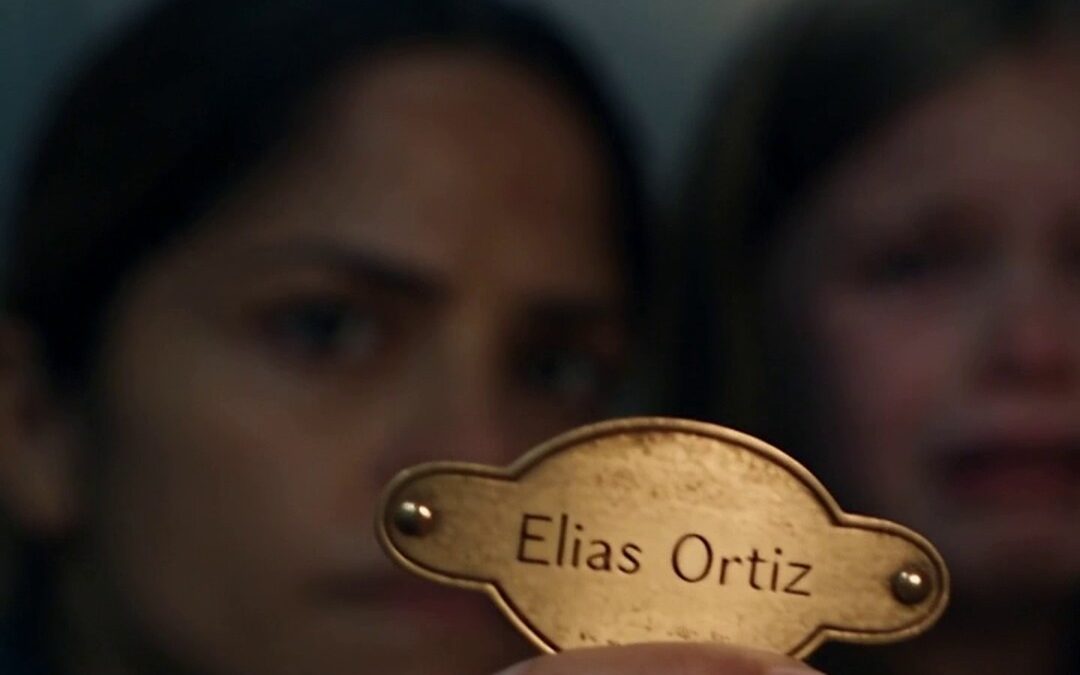
The brass plate lay between June and Mara.
Its letters caught the emergency lights.
ELIAS ORTIZ.
Below the name, a line had been added by hand.
MERCER ARCHIVE, BOX 418.
Warren stopped at the doorway.
His mouth opened.
Nothing came out.
June looked at him.
“Did you know my mom?”
“Yes,” Warren said.
Mara felt the answer land.
Not because it surprised her.
Because he had waited too long.
“Tell me the whole truth,” June said.
“I will.”
“Now?”
“After you’re warm.”
June touched the plate.
“My mom’s name was in that room.”
“Yes.”
“You told me it wasn’t.”
Warren swallowed.
“I lied.”
The medic stepped out to call a family liaison.
Mara leaned closer to June.
“Do you want me here?”
“Yes.”
“Then I’m staying.”
Warren looked at her.
“You saved her.”
“She saved herself.”
“That’s generous.”
“It’s true.”
June traced the stamped letters.
“Why was my mom’s name hidden?”
Warren stared at the plate.
“Because someone wanted it forgotten.”
Detective Bell arrived with two officers.
They took statements in separate rooms.
Mara asked to stay with June.
Bell agreed.
She had silver in her short hair and a calm voice.
“Did you see who shut off the pump?”
“No.”
“Did June?”
“I saw the green light.”
“That helps.”
“Can you see who changed it?”
“Building logs may show that.”
“May?”
“It depends how the system was set up.”
Mara held the plate in her palm.
“Is that evidence?” Bell asked.
“It could be.”
“Tell me where it came from.”
Mara described the shelter basement, the cracked tile, and the panel that never sat flush.
The city had sent her to clean up after the fire.
She had been twenty-three.
Her brother Elias had been twenty.
“He was a volunteer,” she said.
“He stayed after the storm.”
“Was there an investigation?”
“There was a report.”
“What did it say?”
“That a damaged outlet started the fire.”
“Was your brother blamed?”
“No. But he wasn’t named.”
“Did you report the missing nameplate?”
“Three times.”
“To whom?”
“Facilities. The city archive. The senator’s office.”
“Did anyone reply?”
“The archive sent a standard letter.”
“Keep it.”
“I have it.”
Bell looked at the plate.
“Did you photograph it?”
“Twice. On my old phone.”
“Don’t delete anything.”
“I won’t.”
June had fallen asleep.
In the hall, Bell’s colleague questioned Warren.
“No, I didn’t lock the door,” the senator said.
The detective asked something Mara couldn’t hear.
“The archive has a fail-safe,” Warren continued. “Someone disabled it.”
“Did you authorize that?”
“No.”
“Who did?”
“I don’t know.”
“Did you ask anyone to move files?”
“I signed a transfer form.”
“Why?”
“I was told they were duplicates.”
“Did you check?”
“No.”
Bell’s colleague made a note.
Mara watched Warren through the glass.
“Does he usually cooperate?” she asked.
“I don’t know him,” Bell said.
“He’s a senator.”
“That’s a job.”
“It’s also a shield.”
“It can be.”
The building engineer found water halfway up his legs.
Several storage cabinets were ruined.
Some boxes on higher shelves had survived.
No one knew how much had been lost.
When June woke, she asked for her grandfather.
Mara did not answer for him.
“Do you want him here?”
“I don’t know.”
“That’s okay.”
“He used to read me stories.”
“He can still do that.”
“But he lied.”
“He did.”
“Can both be true?”
“Yes.”
June stared at the blanket.
“I don’t want to forgive him.”
“You don’t have to decide tonight.”
Warren returned after midnight.
He asked permission before entering.
June let him sit by the door.
He did not reach for her.
He waited while the medic checked her temperature.
“Why did you say Mom’s name wasn’t there?” June asked.
“Your mother, Rachel, worked for my campaign when she was young.”
“You said she moved away.”
“She did.”
“You said she never came back.”
“She came back.”
“Why did you lie?”
“I thought I could keep you out of a fight.”
“Who was fighting?”
Warren looked at Mara, then June.
“I was.”
June turned away.
Detective Bell returned with a printed log.
“The pump was switched off at 7:14,” she said.
“Can you tell who did it?” Warren asked.
“Not yet. The archive door opened with an override code at 7:09.”
“Whose code?”
“The system records the assigned number. It was a maintenance account.”
“Could it be shared?” Mara asked.
“Yes.”
“Who had access?”
“Contractors, archive staff, security.”
Mara knew the card with the override number.
“It was on a laminated sheet in the boiler room.”
“Who maintained it?” Bell asked.
“The facilities director. Grant Pike.”
Warren frowned.
“Grant has worked for the city fifteen years.”
“He also knows this building,” Mara said.
“He maintained my office before the archive.”
“Did you sign off on his access?”
“Yes.”
“Did you ask him to open the room?”
“No.”
“Did you ask anyone to erase a name?”
“No.”
Bell closed her notebook.
“One question at a time.”
June lifted her head.
“Grandpa, did you know my mom’s name was in the archive?”
Warren looked at her.
“I knew she had asked for records.”
“That isn’t what I asked.”
“Yes.”
“Why?”
“She wanted to prove the city had covered up the shelter fire.”
Mara’s fingers tightened around the plate.
“Was that why Elias died?” June asked.
“The fire killed seven people,” Mara said. “Elias was one of them.”
“Was it an accident?”
“I don’t know yet.”
Warren stood.
“I can request the original files.”
“They’re in the flooded room,” Bell said.
“Not all of them.”
“Where are the rest?”
“An off-site storage annex.”
“Who moved them?”
“Grant Pike’s team.”
“Who signed the transfer?”
“I did.”
“Was it routine?”
“I thought so.”
“Did you check?”
“No.”
June pushed her blanket aside.
“Were you helping him hide Mom’s name?”
“No.”
“Then why did you move the records?”
“I thought I was protecting your mother.”
“You hid her.”
“I thought I was protecting you both.”
“You hid her.”
Warren said nothing.
June turned toward the medic.
“I want to go home.”
The medic agreed to discharge her after one more check.
Warren offered his car.
June refused.
Mara’s hatchback was in the staff lot.
Before they left, Bell asked Mara to sign a statement.
Mara wrote the time and every detail she remembered.
At the bottom, she noted where the brass plate had come from.
Bell turned the plate over.
The numbers were scratched into the back.
BOX 418.
A date followed.
April 12, 2019.
The year the shelter records had been moved.
Warren’s face went pale.
He had signed that transfer.
***
Mara took June to her apartment above a bakery.
The heat clicked and clanked.
June fell asleep on the couch beneath a blanket with a hole near one corner.
Mara made tea she never drank.
The brass plate rested on the table.
She had carried it for seven years.
She had never read the smaller inscription clearly.
The next morning, a city records clerk brought a preservation log.
The flooded room was sealed.
Detective Bell had obtained a temporary hold on the damaged materials.
The log showed Mara’s complaints.
“Why are you giving this to me?” Mara asked.
“Your name appears as a reporting party.”
“Who signed the closure?”
The clerk pointed to Grant Pike.
The report said no missing plate had been found.
Mara had been the one who found it.
“Who reviewed this?” she asked.
“Senator Mercer’s liaison. Julian Saye.”
Mara knew the name.
He had answered the senator’s constituent line for years.
The clerk gave Bell a copy of the log.
The detective asked for Mara’s old phone.
Its screen was cracked.
It took three tries to turn on.
Mara found the photographs from 2019.
One showed the broken wall panel.
The second showed the brass plate.
Behind it, something white showed through the narrow gap.
Bell enlarged the picture.
A folded document sat behind the plate.
“I thought it was plaster,” Mara said.
“You weren’t looking for it,” Bell replied.
“I should have.”
“You found what you could.”
Bell called the records unit.
The annex stood across town in a former tax office.
Its basement had been sealed after a pipe burst.
A contractor had managed the building for three years.
Grant had signed that contract too.
Mara went with Bell and a search team.
Warren met them at the entrance.
June stayed with a family liaison and child advocate.
The senator did not argue.
Inside, dust covered the shelves.
The lower rooms smelled of wet cardboard.
A supervisor unlocked the storage cage.
“Box 418 is here,” he said.
“Is it dry?” Bell asked.
“It should be.”
The box sat on the top rack.
Its tape had been cut and replaced.
A yellow inventory slip called the contents duplicate payroll.
The ledger inside contained shelter reports, insurance claims, and a list of residents moved after the fire.
Mara found her brother’s name.
Elias Ortiz.
Beside it: Volunteer. Reported locked exit. Requested inspection.
The next page had been removed.
“Can you tell when?” Bell asked.
The supervisor examined the binding.
“Not exactly.”
Mara found a carbon copy tucked into the spine.
It was brittle, but legible.
“Exit alarm disconnected,” she read.
“Shelter staff requested repair two days before the fire.”
The report named Pike Building Services, Grant’s former company.
Warren sat on a folding chair.
The fire report blamed an outlet.
This record described a locked exit.
Mara found another line.
“Witness statement attached.”
The attachment was gone.
Bell photographed the page.
“Who signed this?”
A name stood at the bottom.
Rachel Mercer.
Warren stared.
“She was there?”
“She filed the report,” Mara said.
“She was an intern.”
“An intern who reported the contractor.”
“Why didn’t I know?”
“You did.”
“I knew she said something was wrong.”
“You moved the records.”
“I was told they were duplicates.”
“By Grant?”
“Yes.”
“Did you check?”
“No.”
Bell bagged the carbon copy.
A transfer sheet carried Grant’s initials and another signature.
Julian Saye.
“Your aide moved the box too,” Bell said.
Warren’s expression hardened.
“Julian handled the paperwork.”
“Did he have archive access?”
“Yes.”
“Could he use the override?”
“He knew the number.”
A second folder bore Rachel’s full name.
Inside was a letter addressed to Warren.
The envelope was unopened.
It was seven years old.
Mara slid it across the table.
“You should read it.”
“I know.”
“Here.”
“I can’t.”
“Then you can’t keep asking for the truth.”
Warren lifted the envelope.
Rachel had written that she found evidence the contractor removed safety equipment before the storm.
She had tried to tell Warren.
Grant claimed the records were incomplete.
She feared the campaign would choose its donors over the people who died.
The final line read:
If I disappear from the file, it will not be because I left town.
Warren set the letter down.
Mara read it again.
“Did she disappear?”
“She moved away,” Warren said.
“That’s what you told June.”
“She left the city.”
“Why?”
“She was afraid.”
“Of whom?”
“I thought the contractor.”
“Did you tell the police?”
“No.”
“Did you tell the city?”
“No.”
“Did you tell June?”
“No.”
Warren looked down.
“I didn’t believe Rachel was in danger.”
“But you believed she was afraid.”
“Yes.”
“And you did nothing?”
“I asked her to stop investigating.”
“You asked her to go quiet.”
“I asked her to leave the city.”
“She left.”
“She took June.”
“Did you follow?”
“No.”
“Did you check on them?”
“I sent money.”
“That’s not checking.”
“I know.”
“You made her carry the danger alone.”
“I know.”
The letter had a return address in western Pennsylvania.
Bell asked the state liaison to verify it.
Rachel was alive.
She used another last name for work.
She worked at a community college library.
She agreed to speak by video.
June asked for Mara to sit beside her.
A child advocate remained in the room.
Rachel appeared on screen.
Her hair ended at her chin.
Her eyes went straight to June.
“Hi, June.”
“Hi.”
“I’m sorry.”
“Where were you?”
“In a place where I could work and keep you safe.”
“Were you hiding from me?”
“No.”
“Were you hiding from Grandpa?”
“Somewhat.”
“Why?”
“I thought he would ask me to stop.”
“He did?”
“Yes.”
“Why didn’t you ask for me?”
Rachel closed her eyes.
“I thought Warren could keep you safer than I could.”
“Was that true?”
“I don’t know.”
June looked at Mara.
“Did you know about this call?”
“No.”
“Did Grandpa?”
“No.”
June faced the screen again.
“Did you send the letter?”
“Yes.”
“Did you know he never opened it?”
“No.”
Rachel’s mouth tightened.
“I’m sorry.”
“You keep saying that.”
“I know.”
“What do you want me to do?”
“Nothing.”
“You want me to forgive you?”
“No.”
“You want me to visit?”
“If you want.”
“Do you want me to?”
Rachel wiped her cheek.
“Yes.”
“Then say that.”
“I want you to visit.”
“Okay.”
June asked for a break.
No one urged her to continue.
Warren waited outside the room.
June saw him.
“You can come in.”
He entered slowly.
“Your mother is alive,” he said.
“I know.”
“She wants to see you.”
“I know.”
“I won’t decide for you.”
“Good.”
“I am sorry I lied.”
“About her?”
“About the archive. About her leaving. About why.”
“Are you sorry you moved the records?”
“Yes.”
“Are you going to tell the police?”
“Yes.”
“Even if it hurts you?”
“Yes.”
“Then do it.”
He did.
Before the day ended, Warren gave Bell a signed statement.
He described the transfer.
He named Grant and Julian.
He admitted he had not opened Rachel’s letter.
He acknowledged he had accepted the contractor’s explanation without checking it.
The lie led closer to home.
It led to Warren’s office.
***
The threat came the next night.
Mara’s apartment was quiet.
June slept in the room near the kitchen.
Mara stayed awake on the couch.
Her phone vibrated once.
A blocked number.
She did not answer.
A message appeared.
Stop carrying that plate.
She saved a screenshot.
Then a small envelope appeared on the mat.
There was no address.
Inside lay a printout of Mara’s old work schedule.
Her night shifts were circled in red.
A note said:
You work alone again Tuesday.
Bell arrived with a uniformed officer.
They checked the hallway.
No one was there.
The door showed no damage.
“Has anyone threatened you before?” Bell asked.
“No.”
“Does the schedule come from a public system?”
“It’s posted on the staff board.”
“Who could see it?”
“Employees. Contractors.”
“Grant?”
“Yes.”
“Julian?”
“He visited.”
The officer took the envelope.
“You’re staying somewhere else tonight,” Bell said.
“June is asleep.”
“We can arrange a room.”
“I won’t move her without telling her.”
“Then tell her.”
“I won’t scare her over a note.”
“You’re allowed to be scared.”
“I’m allowed to be careful.”
“Both can be true.”
Mara woke June and explained that an officer would stay outside.
June listened without crying.
“Did they say they’d hurt you?”
“No.”
“Did they say they’d hurt me?”
“No.”
“Then why the schedule?”
“To make us nervous.”
“Is it working?”
“Yes.”
“Can we stay with the officer?”
“Yes.”
“Then I want to stay here.”
They spent the night at a family center with two locks on the door.
The next morning, Warren visited.
He asked June’s advocate before entering.
June agreed.
“I’m sorry about the note,” he said.
“You didn’t send it?”
“No.”
“Do you know who did?”
“Not yet.”
“Can the police find out?”
“They’re trying.”
“Can you help them?”
“Yes.”
“Then do that.”
Warren nodded.
Mara stood by the window.
“Your office had access to the staff board.”
“Julian could see it.”
“Grant too.”
“Grant doesn’t work for the city anymore.”
“Does he work?”
“He runs a private maintenance company.”
“Then he didn’t stop.”
“No.”
Bell had the same information.
Pike Building Services was registered under Grant’s nephew’s name.
Mara knew Warren’s habit of making a bad fact smaller.
He seemed to notice it now.
“I’ll tell Bell everything I know,” he said.
“Everything?”
“Yes.”
June asked whether Elias had been scared during the fire.
Mara sat beside her.
“I don’t know.”
“Do you think he was?”
“He probably was.”
“Did he know he was helping people?”
“I think so.”
“Would he have stayed?”
“Yes.”
“Even with the door broken?”
“Yes.”
“Why?”
“Because people needed him.”
June nodded.
“That sounds brave.”
“It was.”
The next day, Mara studied the plate with Bell and an archive conservator.
Under angled light, the worn engraving appeared.
R-12.
The conservator recognized the format.
It matched a shelf and drawer code from the old shelter records system.
“Is there an R-12 drawer?” Bell asked the archive supervisor.
“Not anymore.”
“Was there?”
“Yes.”
“What happened to it?”
“The catalog says it was empty.”
“Who marked it empty?”
“Grant Pike signed the deaccession record.”
“Was there a destruction certificate?”
“There should be.”
“Is there?”
“I can’t find one.”
“Then it may not have been destroyed.”
The old shelf still stood in the annex.
A city team located it and found the drawer locked.
The plate fit a narrow slot beneath its handle.
It was not a key.
It was the drawer’s label.
The drawer had been removed from its cabinet and hidden beneath a false bottom.
A conservator opened it.
Inside were three envelopes.
One held handwritten statements from shelter residents.
One held photographs of the exit door.
The third held maintenance payments.
The statements described a door chained shut before the storm.
One resident wrote that Elias had tried to open it.
Another said he had gone back inside for a child.
A photograph showed the chain, dated two days before the fire.
The payment list recorded a transfer from Pike Building Services to a subcontractor.
Nineteen thousand dollars.
The description said “alarm and exit work.”
The subcontractor had never completed the job.
A note in Rachel’s handwriting listed three people who had seen the chain.
Two were dead.
One was alive.
“Who?” Mara asked.
Bell read the name.
“Edwin Cross.”
Warren recognized it.
“He worked in my finance office.”
“What did that have to do with the shelter?” Bell asked.
“He arranged the donor dinner.”
“Who paid for it?”
“Pike Building Services.”
“And Edwin was there?”
“Yes.”
“Did he know about the chain?”
“I don’t know.”
Bell had enough to request a warrant for the company’s records.
Mara wanted to go to Grant’s office.
She wanted to put the plate on his desk.
Instead, she gave it to Bell and signed the chain-of-custody form.
June watched an officer seal it in a clear evidence bag.
“You’re giving it away?”
“I’m letting them prove what it means.”
“Will they give it back?”
“After the case.”
“What if they don’t?”
“Then I’ll keep asking.”
June nodded.
That night, she slept with a paper nameplate Mara made from a cereal box.
Elias Ortiz.
The letters were crooked.
June had written them herself.
Mara sat on the floor beside the bed.
“Do you want the light on?”
“Yes.”
“Okay.”
“Can you stay?”
“For a while.”
“Do you think Mom will come?”
“I think she said she wants to.”
“Will you go with me?”
“If you want.”
“I do.”
“You can change your mind.”
“I know.”
“You don’t owe her a visit.”
“I know.”
“You don’t owe Grandpa one either.”
“I know.”
June closed her eyes.
“Good.”
Mara stayed until she slept.
Bell called after midnight.
“Grant Pike was at the archive.”
“Was he arrested?”
“No. He tried to enter the sealed building.”
“Did he get in?”
“No.”
“Was he alone?”
“His nephew was with him.”
“Did they take anything?”
“We’re checking.”
The nephew told investigators that Grant wanted a flash drive from the pump control cabinet.
“Can it prove who disabled the pump?” Mara asked.
“It may show access logs.”
“Why was it hidden?”
“That’s what we’re asking.”
An hour later, Bell called again.
The drive contained a maintenance schedule and a list of archive file movements.
It included Rachel’s report and every complaint Mara had filed.
Each was marked resolved.
A final note read:
Keep Mercer from opening the box.
The account field showed Julian Saye.
The architect had a name.
Julian Saye had planned the archive breach.
***
Three weeks later, the public hearing began in a city room lined with cameras.
June sat beside her advocate.
Mara sat behind her.
Warren sat at the witness table.
Reporters filled the back wall.
The hearing concerned the flood, the archived records, and the shelter fire.
Grant had been charged with tampering and attempted evidence concealment.
Julian faced separate charges.
The attorney general’s office had opened an inquiry into the old fire investigation.
The chairwoman started with the pump shutdown.
A city engineer explained the override system.
The pump had been disabled from a terminal in the west service corridor.
A camera showed Grant entering with a toolbox and leaving without it.
Grant’s lawyer stood.
“The video proves only that he entered a corridor.”
“It matches the control log,” the engineer said.
“Logs can be changed.”
“Not without server access.”
“Who had that access?”
“The city administrator.”
“Could the administrator change it?”
“Technically.”
“Could Senator Mercer?”
“Not without the administrator’s credentials.”
The lawyer turned to Warren.
“Did you order the pump turned off?”
“No.”
“Did you order the archive locked?”
“No.”
“Did you ask anyone to move files?”
“I signed a transfer form.”
“Because you believed they were duplicates?”
“Yes.”
“Did you verify it?”
“No.”
“So your poor judgment is being treated as a crime.”
“I’m not asking you to excuse it.”
“Did you deliberately hide the files?”
“I did not order their destruction.”
“Did you know Rachel had sent you a letter?”
“I didn’t know.”
“Did you read it?”
“No.”
“Why not?”
“It was sealed in an archive box.”
“Were you aware the box existed?”
“Not until three weeks ago.”
“Yet you approved a project that removed it.”
“I did.”
“Convenient.”
“It was careless.”
The chairwoman leaned forward.
“Do you accept responsibility?”
“I accept responsibility for the decisions I made.”
“Even if someone exploited them?”
“Yes.”
Mara took the witness stand.
She wore a clean dark blouse.
The brass plate remained in evidence.
“You worked in the archive?” the chairwoman asked.
“For six years.”
“What did the job teach you?”
“To notice when a record doesn’t belong.”
“Explain.”
“Boxes have an order. A missing file changes the shelf. A label can be copied. A date can be wrong.”
“How did you find the plate?”
“I was cleaning the shelter after the fire.”
“Why keep it?”
“It had my brother’s name.”
“Did you know it had an archive code?”
“No.”
“Did you report it?”
“I reported the plate missing from the archive.”
“Did anyone investigate?”
“No.”
“Why do you think?”
“I can’t say.”
“Do you believe Senator Mercer deliberately hid it?”
“I don’t know.”
“Could he have found it?”
“Yes. He had the transfer file.”
The chairwoman marked the closure notice as an exhibit.
Mara identified the old photographs on her phone.
The plate had been photographed years before the flood.
That proved the markings were not added afterward.
“What does R-12 mean?” the chairwoman asked.
“It matched a restricted drawer.”
“Did you know that when you found it?”
“No.”
“Did you remove the drawer?”
“No. The recovery team did.”
“Did you guide them?”
“I told them where the code might lead.”
“Did you know what was inside?”
“No.”
Grant’s lawyer stood.
“Ms. Ortiz, your brother died in the shelter fire.”
“Yes.”
“You may want someone to blame.”
“I want the records read.”
“Do you hate Mr. Pike?”
“I don’t know him well enough.”
“You want the city to pay you?”
“No.”
“You have spoken to reporters.”
“Only when asked.”
“Your anger could affect your memory.”
“It could.”
“So we shouldn’t trust you.”
“You should trust the photographs, logs, and signed reports.”
“Those records were found because of you.”
“The recovery team found the drawer after the code was verified.”
“Convenient.”
“My brother’s name was missing for seven years,” Mara said. “I want the record to show that he reported the locked exit.”
“What do you want after that?”
“For the families to know the city didn’t lose the file by accident.”
The chairwoman called the conservator.
She demonstrated the plate under angled light and matched it to the old catalog system.
The evidence photograph from Mara’s phone showed the same mark years earlier.
Then Detective Bell presented the access logs.
The system recorded Grant’s credential.
The camera placed him near the pump cabinet.
The flash drive carried the maintenance schedule.
A separate log showed Julian’s account had accessed the closed complaints.
Julian sat at a table near the door.
He wore a blue tie and looked composed.
His hands did not.
The chairwoman called him to testify.
“Did you order the archive files marked resolved?”
“I processed records.”
“Who asked you?”
“The senator’s office.”
“Which person?”
“Senator Mercer.”
Warren leaned toward his microphone.
“That is false.”
The chairwoman raised a hand.
“Did Senator Mercer tell you to erase complaints?”
“He said old files were creating a distraction.”
“Did he say erase?”
“No.”
“Did he say destroy?”
“No.”
“Did you close the review?”
“I processed the request.”
“Was it an official request?”
“It came from his office.”
“Did he sign it?”
“No.”
“Then what did you do?”
“I made a judgment call.”
“Did you remove the complaints?”
“No. They were transferred.”
“Why does the log say resolved?”
“That was the status code.”
“Who selected it?”
“I don’t recall.”
The chairwoman showed him the flash drive log.
His account appeared beside the note: Keep Mercer from opening the box.
“Did you write that note?”
“No.”
“Do you know who did?”
“No.”
“Did you tell Grant to retrieve the drive?”
“No.”
“Why was your account on it?”
“I can’t explain that.”
The access time showed Julian had logged in at 6:58.
The archive room door opened eleven minutes later.
The pump shut down at 7:14.
Julian’s face stayed still.
His hands did not.
The independent confirmation came from Grant’s nephew, who had recorded a call with Julian.
A forensic examiner verified the source and timestamp.
No edits were found.
The recording played.
Julian’s voice said, “Get the drive before they see the archive log.”
Grant answered, “And if the door doesn’t open?”
“Then make sure the water takes what’s left.”
The file ended.
A chair creaked.
A pen dropped.
June’s hand found Mara’s sleeve.
Julian’s lawyer requested a recess.
During the break, Warren approached Mara.
“May I speak to you?”
“Here?”
“Here.”
She stayed seated.
“I should have believed your reports.”
“Yes.”
“I should have read Rachel’s letter.”
“Yes.”
“I should have checked the transfer.”
“Yes.”
“I can’t change that.”
“No.”
“I can help repair what I did.”
“How?”
“Open the full archive records.”
“Not just this case.”
“All of them.”
“Fund an independent review.”
“Yes.”
“Let the families choose the reviewers.”
“Yes.”
“Publish the reports, with witnesses protected.”
“Yes.”
“You don’t get to call it a gift.”
“I won’t.”
“You don’t get to name a room after yourself.”
“I won’t.”
“You don’t get to use my brother’s name for a campaign.”
“I won’t.”
He looked toward June.
“She may never forgive me.”
“That’s her choice.”
“I know.”
“Do you?”
“I’m learning.”
When the hearing resumed, Julian’s lawyer argued that his client had followed procedures from the senator’s office.
Warren’s failure, he said, had created confusion.
The lawyer argued that the flash drive’s author field proved nothing and that the recording showed no instruction to harm anyone.
The defense nearly shifted the room.
Then the chairwoman asked Julian a question.
“If Senator Mercer asked you to close the files, why did you tell Mr. Pike to make sure the water took what was left?”
“I didn’t say that.”
“The recording says you did.”
“It could be misheard.”
“By whom?”
“I can’t know.”
The chairwoman called the forensic examiner again.
She confirmed the voice match with high confidence.
The recording had not been edited.
Then Edwin Cross testified by video.
He had worked in Warren’s finance office and arranged a donor dinner before the shelter fire.
Pike Building Services paid for it.
Edwin remembered Grant complaining that shelter staff had “made a fuss over a door.”
He remembered Rachel confronting Warren after the dinner.
He remembered Warren telling her, “I’ll look into it.”
He remembered little else.
A photograph from the dinner showed Grant seated beside Julian.
Warren sat in the center.
A city procurement officer sat at the end.
The chairwoman admitted it as evidence of a connection, not proof of the conspiracy.
The attorney general’s investigator explained the next steps.
The city had issued preservation orders.
The county had seized the contractor’s records.
The state had referred possible charges to prosecutors.
The hearing could not decide the old fire case.
The chairwoman said no public conclusion would replace a criminal investigation.
A week later, Grant was formally charged with evidence tampering, unlawful system access, and obstruction.
Julian was charged with conspiracy and obstruction.
Neither had been convicted.
The court ordered them to surrender passports and barred them from city records systems.
Warren left the archive oversight board.
He did not resign from the Senate.
He agreed to be questioned by investigators.
The hearing’s final witness was June.
She had asked to speak.
A child advocate explained what that meant.
June chose to read a statement.
She stood on a small platform.
Her hands trembled.
Mara sat close.
“Grandpa said my mother left,” June read.
“He told me her name was not in the archive.”
She paused.
“He said he wanted to protect me.”
The room stayed still.
“I believe he wanted that.”
She looked toward Warren.
“But he made me think she had forgotten me.”
Warren lowered his eyes.
“I want to know my mother.”
“I also want to decide when.”
June tightened her grip on the paper.
“I don’t want the people who hid her name to decide anything for me.”
She faced the chairwoman.
“Please keep the records safe.”
Then she sat down.
Warren did not approach her afterward.
He waited.
June chose to speak with him in the hallway.
“Are you going to stay?”
“For as long as you want.”
“Even if I’m mad?”
“Yes.”
“Even if I don’t talk?”
“Yes.”
“Even if I visit Mom?”
“Yes.”
“Will you tell me if you’re scared?”
“Yes.”
“Will you tell me the truth when it hurts?”
“I will.”
“Try harder.”
“I will try harder.”
That was not forgiveness.
It was a start.
***
The city archives reopened in stages.
An outside reviewer checked every transfer.
Old complaints went online.
Names of living witnesses remained protected.
Mara received a certified copy of the page naming Elias.
The fading ink said he had reported the exit chain.
For the first time, the record described what he had done.
The city issued a correction.
It did not call the fire an accident.
It said the investigation had failed to account for evidence of a chained exit and an incomplete repair.
That did not bring Elias back.
It gave his family a truthful account.
The families received copies of the recovered records.
One family sought damages.
The city settled with them and created a shelter safety fund.
Mara chose not to seek damages.
She asked that her share go into the fund too.
The attorney offered to name it after Elias.
She refused.
“Put the safety rules on the wall,” she said.
“Put the checklist in every shelter.”
The attorney asked her to reconsider.
She didn’t.
The brass plate came back six months later.
The evidence clerk returned it in a padded box.
Mara signed the release and held the brass in both hands.
The corner remained bent.
Elias Ortiz.
Box 418.
R-12.
The city offered to display it in the archive lobby.
Mara said no.
“It belongs at the shelter memorial.”
The family chose the words.
They did not call Elias a hero.
They named what he had done.
He stayed when others needed help.
The city installed a safety board in every shelter.
It listed exit checks, alarm tests, and inspection contacts.
No donor names appeared.
No elected official’s photograph appeared.
Mara’s archive job changed.
She returned to night shifts, but her new position kept her on the public floors.
The schedule was fixed.
The archive paid for treatment for her shoulder.
She accepted those things.
Warren offered money from his own foundation.
She declined it.
He offered to fund repairs through an independent trust.
She accepted after the trust published its rules.
“You’re certain?” he asked.
“Yes.”
“You’ll review it?”
“The families will.”
“Will you sit on the board?”
“Only if they ask.”
“They may.”
“Then I’ll decide.”
Warren nodded.
That answer suited him better than the first offer.
June’s first visit with Rachel was short.
They walked around a small park.
Rachel brought a sketchbook.
June asked why she had stayed away.
Rachel told the truth.
She had feared the records would bring danger.
She had believed distance would protect June.
She had also been ashamed.
June did not comfort her.
She agreed to another visit.
On the ride home, June sat beside Mara.
“Was Mom scared?”
“Yes.”
“Was she wrong?”
“About leaving you alone?”
“Yes.”
“Yes.”
“Can she be scared and wrong?”
“Yes.”
“Can Grandpa be sorry and still wrong?”
“Yes.”
“Can people be both?”
“They usually are.”
June considered that.
“Can I love them and be mad?”
“Yes.”
“Good.”
Mara smiled.
“Good.”
Warren invited them to dinner.
June chose a public restaurant and a seat near the door.
He arrived early without reporters or staff.
He brought the paperback he used to read her.
“What is that?” June asked.
“The story I used to read you.”
“Do you still remember it?”
“Most of it.”
“Did you change the ending?”
“No.”
“Good.”
He read slowly.
June corrected him twice.
“Grandpa.”
“I know.”
“You skipped the line.”
“I did.”
“Start again.”
He did.
Warren did not promise the past could be repaired.
He did not ask June to forgive him.
He read the story.
After dinner, June took Mara’s hand.
“Will you come next time?”
“If you want.”
“I do.”
Weeks passed.
Then months.
Rachel visited every six weeks.
Some visits were easy.
Some ended early.
She apologized without asking for an answer.
She brought no gifts unless June asked.
Warren kept his promise.
He spoke with investigators and gave them every email he could find.
His office released the transfer records.
He named the people he had relied on.
That honesty did not erase his choices.
It made them visible.
Grant’s case moved slowly.
The prosecution had to prove the dates, system access, and intent.
The archive logs were incomplete.
The flash drive helped.
The recovered documents helped more.
Grant’s lawyer argued the pump shutdown was a routine test.
The technician showed it had been scheduled for another day.
Julian’s defense argued staff could have used his account.
An access card record placed him at the terminal.
His messages showed he knew the box number.
A year after the flood, Grant accepted a plea agreement.
He admitted disabling the pump and arranging the door override.
He admitted trying to remove the flash drive.
He denied intending to destroy the archive.
The judge sentenced him for the acts he admitted.
Julian went to trial.
The jury found him guilty of conspiracy and obstruction.
The recording was one piece.
The archive logs, staff statements, and transfer record completed the case.
The state reopened the shelter investigation.
The fire could not be reconstructed perfectly.
But the corrected record said Pike Building Services had failed to complete the exit work.
The shelter had not passed its final inspection.
Elias had reported the chain.
The city had not acted.
Mara read the new report alone.
Then she read it with June.
“Is it finished?” June asked.
“The investigation is.”
“Is it fair?”
“It tells the truth we have.”
“Is that enough?”
“No.”
“What else?”
“Remembering.”
June leaned against Mara’s shoulder.
“I can do that.”
Mara placed the report in a folder beside the brass plate.
She did not polish away the scratches.
She left the date and drawer code visible.
The city asked again to display the plate.
This time, Mara agreed to lend it to the shelter memorial.
June came with her.
She had returned from another visit with Rachel two days earlier.
“Does Elias have a place here?” June asked.
“Everywhere,” Mara said.
“No.”
June pointed to a blank section near the door.
“Can we put his name there too?”
The director looked to Mara.
“If the family agrees.”
They agreed.
The new inscription read:
Elias Ortiz stayed when someone needed help.
Mara read it once.
Then again.
***
Four years later, the old shelter became a community center.
The city kept the front doors.
It replaced every exit.
The walls carried the names of the seven people who died.
Elias’s name stood near the entrance.
The families had chosen the order.
Mara came to the opening with June.
Rachel came too.
Warren arrived without a security detail.
He had lost his Senate seat the year before.
He did not ask anyone to mention it.
He had spent the year speaking with investigators and families.
He had also learned to wait.
The center’s staff presented a brass plaque bearing all seven names.
Mara asked where it would go.
“Inside the front hall,” the director said.
“Can children reach it?”
“From the floor.”
“Good.”
June touched the old plate through its case.
“Does it still belong to you?”
“It belongs to the families.”
“Could we lend it?”
“We could.”
“Do you want to?”
“I want people to see why the records matter.”
“Then put it there.”
“You’re sure?”
“Yes.”
“What should the label say?”
June thought.
“Not just his name.”
“What else?”
“That he tried to open the door.”
They worked on the label together.
The final line read:
Elias Ortiz reported a chained exit and remained inside to help others.
The plate was mounted beside the corrected report.
No one added a senator’s title.
No one shortened the sentence.
Visitors stopped to read.
Some left flowers.
Some left notes.
Mara never corrected the flowers.
June stood beneath the display.
She was taller now.
Her hands were steadier.
Her mother stood on one side.
Her grandfather stood farther away.
No one forced the distance smaller.
The doors opened for a group of children.
A boy ran in with a backpack.
His teacher called him back.
He turned, laughing.
The sound filled the hall.
Mara watched June watch them.
“What?” June asked.
“Nothing.”
“You’re doing the face.”
“What face?”
“The one where you remember something.”
“I remember a lot.”
“Does it still hurt?”
“Sometimes.”
“Does it always?”
“No.”
June took her hand.
The old shelter had new exits.
The archive had duplicate records.
The families had the truth.
Rachel had returned.
Warren had learned to ask.
June had learned to choose.
The brass plate stayed visible.
And the names stayed where everyone could find them.
THE END


