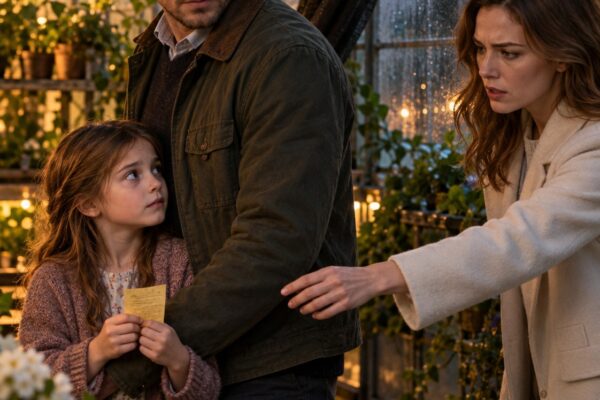
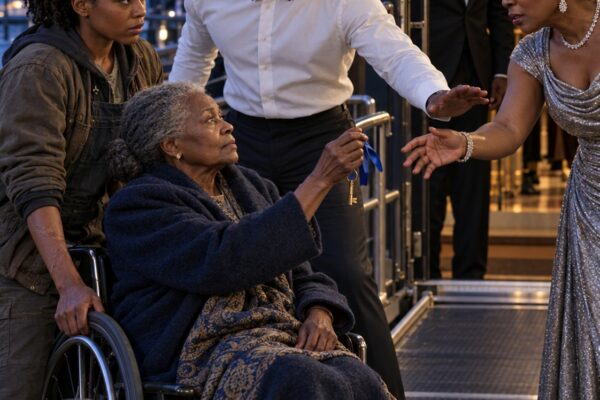
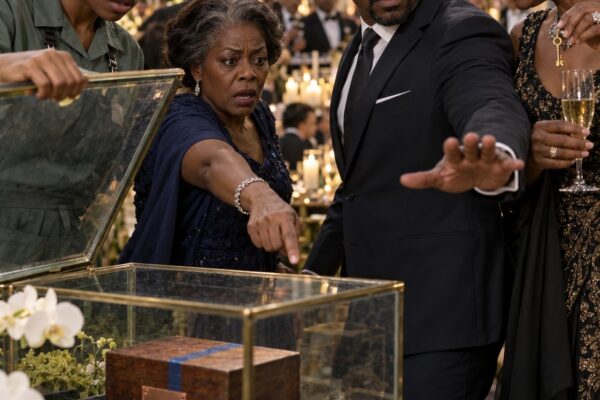
My Daughter Heard a Man Beneath Our Yacht’s Deck, and My Wife Tried to Throw Away the Key
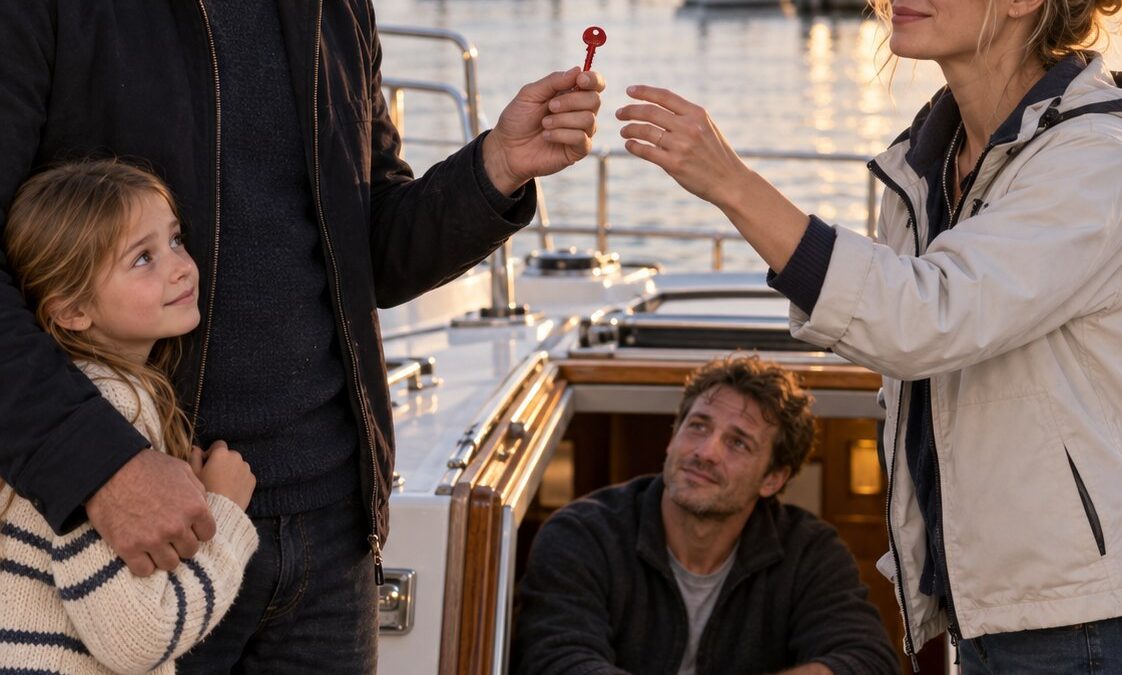
Chapter 2: What the Key Opened
Miles pulled the hatch open.
Warm air rose from below.
Ben sat on the bottom step.
His face was pale.
His left ankle had swollen above his shoe.
But he was breathing.
That was enough for one second.
“Poppy?” Ben asked.
“She’s here.”
Ben closed his eyes.
Sloane moved toward the gangway.
Miles looked up.
“Stay where you are.”
“You have no right.”
“You locked him in.”
“That is his story.”
“It’s mine too,” Poppy said.
Sloane turned toward her.
Miles stepped between them.
The yacht rocked gently against its lines.
Beyond the rail, the harbor looked ordinary.
A fuel truck passed the marina office.
Two gulls fought over a paper cup.
Miles took out his phone.
He called harbor police.
Then he called for an ambulance.
Sloane watched both calls.
“You’ll regret making this public,” she said.
“Ben needs help.”
“He broke onto this boat.”
“He may have.”
“That’s a crime.”
“So is locking the hatch.”
Miles crouched.
Ben tried to stand.
His ankle folded beneath him.
“Don’t,” Miles said.
Ben gave a tired laugh.
“You always say that late.”
Miles had no answer.
Poppy stood close enough to touch his shoulder.
She had pulled her hands inside her sleeves.
Miles knew the habit.
She did it when she was afraid.
“Are you hurt anywhere else?” he asked Ben.
“My pride.”
“Ben.”
“My ankle.”
Miles reached down.
Ben let him steady his arm.
For three years, Miles had imagined meeting his brother.
He had rehearsed hard questions.
He had rehearsed walking away.
He had never imagined a narrow stairwell.
Or Poppy listening above them.
“Did she put you here?” Miles asked.
“Yes.”
Sloane spoke from behind him.
“He grabbed me.”
Ben looked at her.
“I grabbed my bag.”
“Which you brought onto my property.”
“You knew I was coming.”
“I knew you were threatening us.”
Poppy tugged Miles’s jacket.
“She said he was a repairman.”
Miles looked at Sloane.
Sloane’s expression did not move.
“He told your daughter lies,” she said.
“He told me he was Uncle Ben,” Poppy said.
Miles turned back to Ben.
“Why come aboard?”
“I tried the office.”
“You know the office barred you.”
“Exactly.”
A siren sounded beyond the marina fence.
Ben looked toward the sound.
“I need you to listen.”
“I am listening.”
“No board members.”
“All right.”
“No company lawyers.”
Miles hesitated.
Sloane noticed.
“Ask him why,” she said.
Ben gripped the stair rail.
“Because their copies came from us.”
“Copies of what?”
“The accident report.”
Miles felt Poppy’s hand find his.
Ellen had died five years earlier.
A ferry had struck a breakwater in fog.
Six passengers had gone to hospitals.
Three crew members had been injured.
His wife had gone into the water.
The inquiry blamed a steering failure.
Miles had read its findings until he knew them by heart.
“The steering failed,” he said.
“Yes,” Ben said.
“Then what changed?”
“The date they knew it could.”
Sloane made a small sound.
It might have been a warning.
Ben heard it.
He looked straight at her.
“You told him I stole the repair money.”
“You did.”
“I found out where it went.”
The harbor officer stepped onto the dock.
Miles raised a hand.
Poppy pressed closer.
Ben looked at his brother one last time.
“Ellen knew before I did.”
* * *
At the hospital, Ben’s ankle was wrapped.
The doctor said he could go home that evening.
A harbor officer took separate statements.
Poppy gave hers with Miles beside her.
She described the voice.
The hatch.
The key.
Sloane’s hand over her mouth.
Miles did not correct a word.
He wanted to.
Not because Poppy was wrong.
Because he wished she had never needed to learn how carefully adults could lie.
Ben’s bag remained on the yacht.
Harbor police photographed it where it lay.
They photographed the hatch and padlock too.
Sloane told the officer Ben had entered without permission.
Ben agreed.
“I climbed aboard,” he said.
“Why?”
“To give my brother records.”
“Why not email them?”
“I tried.”
He showed the officer his phone.
Three messages to Miles’s work address.
All had been answered.
None had reached Miles.
The replies called Ben a thief.
The last threatened legal action.
Miles recognized the signature block.
It carried his name.
He had written none of them.
Sloane managed his work inbox.
That had once seemed convenient.
It no longer did.
The officer kept her tone even.
“Can you show us the records?”
Ben glanced at Miles.
“They’re safe.”
“Where?”
“I’ll give them to an investigator.”
“We can arrange that.”
Ben nodded.
Miles waited until the officer left.
Then he closed the hospital room door.
Poppy sat beside Ben, drawing boats on the back of a meal order slip.
Miles kept his voice low.
“Tell me what happened.”
Ben stared at the bandage.
“Start with the money?”
“Start with Ellen.”
Ben swallowed.
The three years between them felt suddenly small.
“She called me the night before the accident,” he said.
“Why you?”
“Because you were in Boston.”
Miles remembered that trip.
A bank had wanted revised figures before renewing a loan.
He had left before dawn.
Ellen had told him to call when he landed.
He had.
“She found a maintenance request,” Ben said.
“For which ferry?”
“The Alder.”
Miles leaned against the sink.
“The accident ferry.”
“Yes.”
“What kind of request?”
“Steering response.”
“That was investigated.”
“The request was dated twelve days earlier.”
Miles frowned.
“The inquiry said the first report came that morning.”
“That’s what the company submitted.”
“Ellen had something else?”
“She had the original entry.”
Ben had been fleet manager then.
He knew the system’s dull habits.
Crews wrote faults in a paper log.
A dispatcher entered them later.
A mechanic signed the work order.
The logbook stayed aboard.
The work order stayed ashore.
Those records should agree.
Sometimes they did not.
Usually it meant somebody had forgotten to copy a number.
Ellen had noticed two different numbers.
She wanted Ben to check them.
“Did you?” Miles asked.
“I started.”
“Before the accident?”
“I called the yard.”
“And?”
“They said the Alder was booked for a steering inspection.”
“When?”
“The following week.”
Miles stared at him.
Ben looked away.
“I should have stopped the sailing.”
“You didn’t have authority.”
“I could have called you.”
“Yes.”
“I know.”
That admission landed harder than a defense would have.
Poppy looked up.
“Was my mom on that boat?”
Miles sat beside her.
“Yes.”
“Did Uncle Ben make it happen?”
“No,” Ben said.
His voice cracked.
“I should have said something sooner.”
Poppy studied him.
Then she returned to her drawing.
Miles did not know whether she believed him.
He barely knew what he believed himself.
“What did Ellen do?” he asked.
“She went to the terminal.”
“To find the logbook?”
“To speak to the captain.”
That part made sense.
Ellen trusted the crew more than executives.
She rode ferries with Poppy in a stroller.
She remembered deckhands’ birthdays.
“She sent me a photograph,” Ben said.
“Of what?”
“The paper log.”
“Do you still have it?”
“Yes.”
Ben held up his phone.
The image showed a page under a yellow work light.
Miles read the date.
Then the fault.
Steering lag at low speed.
Inspection requested.
His eyes went to the signature.
The captain’s initials were there.
So were the dispatcher’s.
“Where was this during the inquiry?”
“That’s what I asked.”
Ben had asked it at work.
He had asked it again when auditors found a missing transfer.
Two million, four hundred thousand dollars had left a maintenance reserve.
The board’s finance committee said Ben authorized it.
Ben denied it.
He demanded the underlying records.
The next morning, his access card stopped working.
By Friday, a lawyer had sent him a demand letter.
Miles had believed the board.
Worse, he had helped them.
“I saw your signature,” Miles said.
“I know.”
“I saw the transfer approval.”
“I know.”
“Why didn’t you show me this photo?”
“I did.”
“No.”
“I brought it to the house.”
Miles remembered the day.
Rain.
A shouting match in the front drive.
Ben standing beside a battered truck.
Sloane had taken Poppy upstairs before Miles went out.
“Not to me,” Miles said.
“To Sloane.”
Ben’s face tightened.
“She said you couldn’t bear another accusation about Ellen.”
“She was right about that.”
“She said you’d see me after the auditors finished.”
Miles looked down at his hands.
“I never knew you came.”
Poppy’s pencil stopped.
“Did you think he didn’t want you?” she asked Ben.
Ben managed a smile.
“Yes, kid.”
“That’s sad.”
“It was.”
Miles turned toward the window.
A ferry moved across the gray water.
It carried people to work.
It carried people home.
He had spent five years insisting the company deserved trust.
He had built that trust with Ellen.
Now every account he had relied on was shifting.
“What’s in your bag?” he asked.
“Copies.”
“Of the log?”
“Of the money trail.”
“Where did you find it?”
“An old vendor kept records.”
“Which vendor?”
“The shipyard.”
Miles faced him.
“Why would the yard have our bank transfer?”
“It didn’t.”
Ben touched the photograph on his phone.
“The yard had a canceled appointment.”
“Then where did you find the money?”
“I found the company that received it.”
Ben had spent three years working small marine jobs.
He had followed public filings when he could afford the fees.
He had persuaded two former coworkers to talk.
One had found a billing code.
Another had remembered a late-night call.
Neither detail proved a crime.
Together, they gave him a direction.
The money had gone to a company called North Quay Consulting.
Its listed office was a mail service.
Its manager had resigned six months before the transfer.
But the payment instructions remained on file.
“They were approved by my login,” Ben said.
“You said you didn’t approve them.”
“I didn’t.”
“How could they use your login?”
“I left my tablet at the terminal.”
“You always did.”
“So did half the staff.”
Miles knew that too.
He had scolded Ben for it more than once.
The hospital door opened.
The harbor officer entered with a woman in a plain blue coat.
“Detective Walsh,” she said.
“We’re taking custody of the bag now.”
Ben nodded.
“What about Sloane?” Miles asked.
“We’ve spoken with her.”
“That’s all?”
“For now.”
Walsh waited.
Miles recognized the patience of someone refusing an argument she could not yet answer.
“Your brother says you may have relevant company records,” she said.
“I do.”
“Preserve them.”
“I will.”
“Do not search her accounts for us.”
Miles nodded.
He owned the company.
He did not own the investigation.
Walsh turned to Ben.
“One more thing.”
She held up a photograph of the red enamel key.
“Is this yours?”
“It was Ellen’s,” Ben said.
Poppy looked up again.
Miles stared at him.
Ellen had carried a ring of old harbor keys on her coat.
She had liked the enamel ones best.
Miles had kept the ring after she died.
Or thought he had.
“Why did you bring it?” he asked.
“Because it opens the box she left me.”
* * *
The box sat in a marina locker.
Number 41.
Ben had rented it three days after the accident.
He had paid every year since.
Miles wanted to go himself.
Detective Walsh asked him to wait.
Ben agreed to open the locker with her present.
That was how Miles received the news.
By phone, the next morning.
The box contained Ellen’s notes.
It also contained a sealed envelope addressed to him.
Walsh photographed everything first.
Then she let him collect the envelope.
Miles opened it at his kitchen table.
Poppy was at school.
The house felt too large without her.
Sloane was staying with her sister.
They had agreed to communicate through lawyers.
The agreement had lasted seventeen hours.
Sloane had already sent six messages.
The first asked whether Poppy had eaten.
The others asked about Ben’s bag.
Miles put his phone facedown.
Ellen’s handwriting tilted to the right.
She had never learned to slow it.
The note was dated the night before the accident.
Miles read it twice.
Ellen had found the maintenance entry.
She had spoken with Ben.
She planned to meet the captain before departure.
She had written one sentence about Miles.
I know he would stop the boat if I could show him.
Miles set the page down.
The kitchen clock clicked.
He thought of Boston.
The hotel room.
The bank meeting he had refused to miss.
Ellen had called while he sat with three lenders.
He had texted that he would ring afterward.
Afterward, she was gone.
His phone lit up.
It was Ben.
“Did you read it?”
“Yes.”
“Did she blame you?”
“No.”
“Then don’t do it for her.”
Miles looked at the note.
“That’s easier from your end.”
“No,” Ben said.
“It isn’t.”
They stayed on the line.
Neither tried to fill the quiet.
Then Ben told him about the other papers.
Ellen had written down the name of a dispatcher.
She had listed a shipyard supervisor.
She had drawn a line between the first fault report and a later version.
Beside the line, she had written: Ask who changed this.
Ben had taken the notes to Walsh.
Walsh was checking the sources.
Not the feelings around them.
The sources.
Miles knew that distinction mattered.
He also hated waiting for it.
That afternoon, someone used Sloane’s credentials to request access to the company’s archived accident files.
The request went through a remote portal.
The system flagged the unusual download size.
Miles’s head of security called him.
“What was taken?” Miles asked.
“Nothing yet.”
“Can you preserve the request?”
“We already have.”
“Send it to Walsh.”
“Done.”
Miles stared at the garden beyond his office window.
Poppy’s bicycle lay on its side.
He went out and set it upright.
When he came back, another message waited.
This one came from an unknown number.
You are putting your daughter through another inquiry.
There was no threat in the words.
That made them worse.
Miles saved the message.
Then he forwarded it to Walsh.
Poppy came home carrying a library book.
She found him in the hallway.
“Did Uncle Ben go to jail?”
“No.”
“Did Sloane?”
“No.”
“Are they both mad?”
“Yes.”
“At each other?”
Miles considered lying.
“At me too,” he said.
Poppy set down her backpack.
“Because I heard him?”
“Because you told us.”
“Was that wrong?”
“No.”
He knelt.
“You were brave.”
“I was scared.”
“You can be both.”
She leaned against him.
He held her until the front doorbell rang.
Ben stood outside with a cane.
He had brought no flowers.
No gift.
Only a paper bag from a bakery.
“I was nearby,” he said.
“You live an hour away.”
“I was nearer than that.”
Poppy opened the bag.
“Cinnamon rolls.”
“They still make the good ones,” Ben said.
Miles let him in.
They ate at the kitchen counter.
Poppy told Ben about her school project.
She was building a model harbor.
It had painted cardboard ferries.
Every boat had a schedule.
Ben asked whether storms changed it.
“Of course,” she said.
He nodded seriously.
“That’s a good harbor.”
Miles watched them.
Poppy had Ellen’s habit of explaining rules with her whole body.
Ben had missed years of it.
Miles had helped take those years.
After dinner, Poppy went upstairs.
Ben stayed.
“I should have kept pushing,” he said.
“You did push.”
“Not enough.”
Miles rinsed a plate.
“I should have checked the transfer myself.”
“You trusted your board.”
“And Sloane.”
Ben moved the cane aside.
“She was good at making every choice seem reasonable.”
Miles turned off the water.
“Did you know she was involved then?”
“I suspected.”
“That isn’t the same.”
“No.”
Ben looked toward the stairs.
“I don’t want Poppy hearing a trial through us.”
“She won’t.”
“You can’t promise that.”
“I can promise how I’ll talk to her.”
Ben accepted that.
The next day, Walsh called them to the station.
A shipyard supervisor had confirmed the appointment.
The yard’s system showed the Alder scheduled for inspection.
It had been canceled the afternoon before the accident.
The cancellation came from the ferry company.
The caller had given a name.
Miles waited.
Walsh turned one page.
“Sloane Harrow.”
Miles sat very still.
“She was finance director,” he said.
“Why would she cancel maintenance?”
“That’s what we intend to ask.”
Ben leaned forward.
“There’s more.”
Walsh nodded.
“The supervisor remembers the conversation.”
“She said the boat was already cleared,” Ben said.
“The yard had no record of a clearance,” Walsh said.
Miles thought of Ellen’s note.
Show him.
She had tried.
Walsh slid another page across the table.
It was a payment approval.
North Quay Consulting.
The reserve money.
The account that received it had passed funds onward.
One destination was a loan secured by company shares.
The borrower’s name sat at the bottom.
Board chairman Victor Haldane.
* * *
Victor had been Miles’s father’s closest friend.
He had chaired the company board for eleven years.
He spoke softly at memorials.
He sent handwritten cards to injured crew.
When Ellen died, he had been the first person at Miles’s door.
He had put a hand on Miles’s shoulder.
He had said they would find out everything.
Miles remembered that hand.
He remembered believing him.
Walsh laid out what she could confirm.
Victor had borrowed heavily against his shares.
A lender wanted repayment.
The maintenance reserve had been moved through North Quay.
The money reached the lender weeks later.
Walsh could trace it.
She could not yet say who had authorized every step.
The canceled inspection had saved more than an inconvenience.
If the ferry was pulled, the company faced a missed service guarantee.
Its refinancing deal might have been delayed.
Victor needed that deal to close.
Sloane had prepared the financial projections.
“She knew the risk,” Miles said.
Walsh did not answer for her.
“What did the crew know?” Ben asked.
“The captain reported the fault.”
“Did he see the cancellation?”
“We’re speaking with him.”
“He retired.”
“We found him.”
Miles rubbed his forehead.
“Why frame Ben?”
Walsh looked at the transfer.
“He had access.”
“And he had started asking questions,” Ben said.
The room went quiet.
Miles noticed his brother’s cane against the wall.
Ben had brought himself back here on a damaged ankle.
He had been called a thief in public.
He had lost his job.
Miles had let him go without a fight.
“I’ll give a statement,” Miles said.
“We’ll take one.”
“I’ll also give you the board records.”
“Through counsel,” Walsh said.
Miles almost objected.
Then he understood.
His company had supplied false records once.
This time, the chain of custody would be clean.
He called an outside attorney.
She had never worked for the ferry company.
By evening, she had arranged preservation of server logs and board minutes.
Employees received instructions not to delete anything.
The instruction made its way to Victor.
He called Miles at nine.
“Let’s speak as family,” he said.
“We can speak with counsel present.”
“Ellen would hate this.”
Miles gripped the phone.
“You don’t get to tell me that.”
“Your daughter will see your company dragged through years of headlines.”
“She already saw Sloane lock a man belowdeck.”
“Sloane panicked.”
“Did you?”
Victor paused.
“There are things you don’t understand.”
“Then tell Walsh.”
Victor’s voice cooled.
“Be careful whom you trust.”
The call ended.
Miles saved the record.
He did not call back.
At breakfast, Poppy asked why Victor had left her a voicemail.
Miles had not known he had.
He played it first.
Victor sounded kind.
He asked whether she still liked the little ferry model in his office.
He hoped they could talk soon.
Miles forwarded the voicemail to Walsh.
Then he blocked the number on Poppy’s tablet.
He told Poppy why.
“Is Victor in trouble?” she asked.
“He may be.”
“Because of Mom?”
“Yes.”
“Did he hurt her?”
Miles did not know how to answer.
He knew what the evidence suggested.
He knew what it did not yet prove.
“He may have hidden a problem that put people in danger.”
Poppy turned her spoon over.
“Mom was people.”
“Yes.”
“Uncle Ben too.”
“Yes.”
She pushed away her cereal.
Miles did not ask her to finish it.
At school, a classmate had heard about the yacht.
Parents talked.
Children heard.
Poppy asked to stay home the next day.
Miles considered saying she needed normal routine.
Instead, he asked what she wanted to do at home.
“Build my harbor.”
Ben came over after lunch.
He showed her how to fold a cardboard ramp.
Miles watched them from the doorway.
Poppy painted a red line across the model dock.
“What’s that?” Ben asked.
“Where people stop if a boat is unsafe.”
“That’s useful.”
“I made it wide.”
Ben touched the edge of the cardboard.
“Good idea.”
Later, while Poppy washed her brushes, Miles and Ben spoke outside.
“I’m sorry,” Miles said.
Ben looked at him.
“For believing them?”
“Yes.”
“For not asking me?”
“Yes.”
“For what you said in the drive?”
Miles remembered.
He had told Ben never to come back.
“Yes.”
Ben looked toward the kitchen window.
“I’m not ready to say it’s fine.”
“I know.”
“But I’m here.”
“That means something.”
“It means Poppy makes good cinnamon roll choices.”
Miles almost smiled.
His phone rang.
It was the outside attorney.
She had found a board minute from the week after the accident.
Victor had proposed an internal review.
Then Sloane had asked to limit its scope.
Her reason was attorney-client privilege.
The company’s old lawyer had approved the wording.
But the original draft of the minutes held a deleted comment.
The attorney read it aloud.
Confirm Ben has no copies before distribution.
“Who wrote that?” Miles asked.
“The document history says Victor.”
Miles looked through the window.
Poppy lifted her model ferry.
Ben watched her keep it level.
Victor had needed a thief.
He had chosen the one man who knew where to look.
* * *
The company held an emergency board meeting the following Monday.
Miles asked for it.
He did not invite the press.
The people in the room mattered more.
The board.
The outside attorney.
An independent auditor.
A representative for the crew.
And Victor.
Sloane attended with her own lawyer.
Miles’s attorney had warned him to keep the meeting narrow.
The board could protect records.
It could suspend authority.
It could appoint an independent committee.
It could not hold a criminal trial.
Miles understood.
He still wanted Victor to hear what he had found.
Ben sat beside him.
His ankle remained stiff.
Poppy stayed with a trusted neighbor.
Before Miles left, she gave him a drawing.
It showed three people beside a ferry.
All three held the same red rope.
“I don’t know if ropes work like that,” she said.
“We’ll find out,” Miles said.
He folded it carefully.
At the meeting, Victor began with sympathy.
He had always been good at it.
He acknowledged the strain on the family.
He praised Ben for seeking answers.
He called the canceled inspection an error.
He called the transfer complicated.
He called Sloane’s decision on the yacht regrettable.
Miles listened.
Victor had given every fact a softer name.
Then Victor turned to the board.
“The company cannot survive if grief becomes management.”
Two members looked down.
One nodded.
Victor saw it.
He pressed harder.
“The public record found an unforeseen mechanical failure.”
“A new criminal inquiry would devastate our crews.”
“Mr. Harrow’s family deserves peace.”
For a moment, Miles understood why people followed him.
Victor gave fear a practical voice.
He offered everybody a way to stop looking.
Sloane spoke next.
She admitted shutting the hatch.
She said Ben had frightened her.
She said she believed he intended to take company documents.
“I handled it badly,” she said.
“I have told the police that.”
Ben gripped his cane.
Sloane did not look at him.
“I also carried this family through its worst years.”
She turned toward Miles.
“You know that.”
He did.
That knowledge hurt more than her lie.
Sloane had taken Poppy to school.
She had sat through fevers.
She had remembered Ellen’s birthday without being asked.
Miles had mistaken care for innocence.
They were different things.
Victor’s lawyer stood.
He challenged the auditor’s access.
He questioned whether old system records were reliable.
He questioned Ben’s motives.
He reminded the board that Ben had entered a yacht without permission.
The chair of the independent committee asked for a recess.
Miles’s attorney touched his sleeve.
“Stay with the documents.”
He nodded.
During the recess, Ben stood at the window.
“Say something if you need to,” Miles told him.
“I’ve said it for three years.”
“I’ll listen now.”
Ben looked over.
“That helps.”
They returned to the table.
The auditor presented the transfer trail.
It showed the reserve money leaving the company.
It showed North Quay receiving it.
It showed the lender receiving funds.
Victor said he had arranged an emergency loan.
He had intended to replace the money.
“That may be true,” the auditor said.
“Replacement does not explain the recorded approval.”
Victor spread his hands.
“Ben approved it.”
Ben sat forward.
“No.”
“You left your credentials unsecured.”
“Yes,” Ben said.
“I did.”
Victor’s expression sharpened.
“So you cannot rule out your own mistake.”
“I can rule out being there.”
Ben produced a time sheet.
He had been at the shipyard when the approval occurred.
Victor leaned back.
“People can use a tablet remotely.”
“Mine was at the terminal,” Ben said.
“Then someone there used it.”
“That is what I’ve said.”
The auditor raised another page.
The approval also required a second signoff.
The second signoff belonged to Sloane.
She said she had reviewed the paperwork afterward.
The system log showed otherwise.
Her signoff came first.
A board member asked whether timestamps could be wrong.
The auditor explained the server clock.
The outside vendor had checked it against its own logs.
No one interrupted.
Sloane looked at Victor.
Victor did not look back.
Miles thought of the red key.
Ellen had carried it for years.
Ben had kept paying for locker 41.
The little object had survived all their arguments.
In that locker, Ellen had left the note that began this inquiry.
His attorney placed a copy on the table.
Then she placed the photograph of the paper maintenance log beside it.
Victor read both.
“These were never authenticated,” he said.
“Ellen’s handwriting has been,” the attorney replied.
“That does not authenticate the log.”
“No,” Miles said.
He stood.
“That comes next.”
The attorney called the shipyard supervisor into the room.
He had agreed to answer the committee’s questions.
He carried the yard’s booking record.
The Alder had been scheduled.
The appointment had been canceled.
The cancellation came from Sloane’s office phone.
Sloane said an assistant could have used it.
Then the retired captain joined by video.
He recognized the photographed log page.
He had made the entry.
He had kept a carbon copy after the accident because the submitted copy differed.
He had given that carbon copy to investigators that morning.
Miles had not known.
Neither had Victor.
The captain looked straight into the camera.
“I reported the steering lag twelve days before we struck,” he said.
“Was the ferry cleared?” the committee chair asked.
“No.”
“Did you know the inspection was canceled?”
“No.”
Victor’s lawyer asked why he had waited five years.
The captain’s jaw worked.
“I told the first inquiry about the log.”
“They showed me a different page.”
“I thought my copy had a filing error.”
“What changed your mind?”
“Detective Walsh showed me the photograph Mrs. Harrow took.”
The captain looked down.
“She came to ask me about it that morning.”
Miles sat.
He could feel Ellen’s note in his pocket.
The room held still.
The committee chair spoke first.
She moved to suspend Victor from all company authority.
Another member seconded it.
The vote passed.
Sloane’s access was suspended separately.
The company would turn over the records to investigators.
A full independent review would follow.
Victor rose.
He looked at Miles.
“You’re handing strangers your father’s company.”
Miles stood too.
“My father built boats people could trust.”
Victor’s face hardened.
“Trust won’t bring Ellen back.”
“No,” Miles said.
“But the truth belongs to everyone who boarded that ferry.”
Victor left with his lawyer.
Sloane remained seated.
For a moment, she looked exhausted.
Then she looked at Miles.
“I loved Poppy.”
Miles believed she had, in the way she understood love.
“You frightened her to protect yourself,” he said.
Sloane lowered her eyes.
There was nothing more he wanted from her in that room.
The investigation lasted months.
Miles gave statements.
Ben gave statements.
The captain gave another.
Other workers supplied emails, logs, and old schedules.
The inquiry into the ferry accident was reopened.
Its revised findings said the earlier maintenance warning had been omitted from the material provided.
Investigators did not claim the missed inspection alone proved every cause of the collision.
They did find that the warning should have led to a check before the ferry sailed.
The company accepted that finding publicly.
Victor and Sloane were charged over the transfer and the altered records.
Sloane also faced a charge arising from the yacht.
Their cases moved through court on separate schedules.
Sloane admitted several facts.
Victor contested most of them.
After hearings and negotiations, both received sentences under the law.
The details mattered to prosecutors and judges.
To Miles, the necessary thing was that the record no longer called Ben a thief.
* * *
By spring, Poppy’s model harbor had lost one cardboard ferry.
The cat had sat on it.
Poppy held a small funeral for the hull.
Ben attended with a roll of tape.
“We can repair it,” he said.
“It needs a new roof.”
“Most ferries do.”
Miles brought scissors.
Poppy assigned him the job of cutting windows.
She inspected every one.
“You made this one crooked.”
“It has a view.”
“It has a problem.”
Ben laughed before he could stop himself.
Poppy looked pleased.
Miles replaced the window.
Life had not become simple.
Some mornings, a reporter waited outside the company office.
Some nights, Miles woke at the hour Ellen had called him.
Poppy sometimes asked whether Sloane would visit.
Miles answered the question she asked.
“Sloane is living somewhere else.”
“Does she still like my drawings?”
“I think she does.”
“Can I send one?”
“You can decide later.”
Poppy thought about it.
“Not today.”
“Then not today.”
She had started seeing a school counselor.
The counselor helped her name what happened on the yacht.
Miles listened when Poppy wanted to talk.
When she did not, they built boats.
Ben came by most Sundays.
At first, he stayed for an hour.
Then lunch.
Then the whole afternoon.
He and Miles disagreed about engines almost immediately.
Some habits survived betrayal.
One Sunday, Ben found Miles in the garage.
The red key lay on a workbench.
Walsh had returned it after the evidence photographs were complete.
“You kept it,” Ben said.
“Ellen did.”
“Then I did.”
“Now I do.”
Ben touched the chipped enamel.
“I thought you’d throw it away.”
“I thought you’d never come back.”
They stood beside Poppy’s bicycle.
Its tires were soft.
Ben picked up the pump.
“You know I can’t work for you again.”
“I know.”
“I have a job.”
“I know.”
“I like it.”
Miles nodded.
Ben worked for a small boatyard north of town.
The owner trusted him.
The work paid less than his old position.
It let him sleep.
“I wanted to offer,” Miles said.
“You just did.”
“Was that wrong?”
“No.”
Ben filled the front tire.
“It matters that I can say no.”
Miles held the wheel steady.
The company’s independent review changed more than its board.
Maintenance reports now went to two separate teams.
Canceled inspections required written reasons.
Crew representatives had a standing place in safety meetings.
Miles had once thought those measures would slow everything.
They did.
A ferry sometimes stayed tied to a pier longer than passengers wanted.
Miles went down to explain those delays himself.
Some people shouted.
Most wanted to know the boat was safe.
He could answer that question only when he listened to the people who worked on it.
The company offered Ben a settlement for the accusation.
He took advice from his own lawyer.
He accepted enough to cover the wages and legal costs he had lost.
The rest went into a fund for crew members who reported safety concerns.
Miles did not put his name on it.
Ben would not have wanted that.
At home, Poppy asked why Uncle Ben had received money.
“Because the company treated him unfairly,” Miles said.
“Does money fix it?”
“No.”
“Why give it?”
“Because unfair things can cost people money too.”
She considered that.
“Did you say sorry?”
“Yes.”
“Did he say okay?”
“He said he heard me.”
“That’s different.”
“It is.”
On Ellen’s birthday, they went to the waterfront.
Miles brought flowers.
Ben brought an old photograph.
Poppy brought a paper boat.
She wanted to know if Ellen had ever been afraid of water.
“Sometimes,” Ben said.
“She respected it.”
“Did she like ferries?”
“She loved the people on them,” Miles said.
Poppy set the paper boat on a dry bench.
She did not want it washing away.
That evening, she asked to hear the story of her mother finding the key.
Miles knew that story.
Ellen had found it in a box of discarded marina hardware.
The enamel was already chipped.
She had bought it for a dollar.
“She said it looked stubborn,” he told Poppy.
“Did it open locker 41 then?”
“No.”
“She found a job for it.”
“Yes.”
Poppy held it in her palm.
“Can I keep it someday?”
“When you’re older.”
“How old?”
“I don’t know yet.”
She handed it back.
“Can I visit the boat?”
Miles looked at her.
“The yacht?”
“Yes.”
The boat had stayed moored after the police finished their work.
Miles had considered selling it.
He had considered never seeing it again.
“If you want,” he said.
“Can Uncle Ben come?”
“That’s his choice.”
Ben came.
They walked the dock together.
The hatch was open.
Sunlight reached the bottom step.
Poppy stopped several feet away.
Miles waited.
She took Ben’s hand.
Then she took his.
“I thought he would run out of air,” she said.
“I was afraid too,” Ben told her.
“You sounded calm.”
“I wanted you to feel safe.”
“I didn’t.”
“I’m sorry.”
She nodded.
They stayed until she was ready to move.
Then Ben asked whether she wanted to steer.
“The boat isn’t moving,” she said.
“The wheel still turns.”
Poppy looked at Miles.
“May I?”
“Yes.”
She went to the helm.
Ben showed her where to stand.
Miles watched the red key swing from his fingers.
A small thing.
A heavy thing.
Afterward, Poppy asked to leave.
They left.
No one made her look at the hatch again.
* * *
Four years later, the yacht sat in a different slip.
Its name had been changed.
So had its purpose.
Miles had given it to a local maritime program.
Students used its deck to practice inspections.
They learned how to read a log.
They learned how to question a date.
They learned that a report mattered only if someone acted on it.
Poppy was twelve.
She arrived that morning with Ben.
He now taught one class each month.
Miles came when his schedule allowed.
The program director greeted them at the gangway.
A group of teenagers waited aboard.
Poppy carried a small wooden box.
Inside lay the red enamel key.
She had asked to bring it.
Miles had said yes.
Ben had asked why.
“Because everybody asks about locker 41,” she said.
“Do you want to tell them?”
“Some of it.”
“That’s enough.”
They gathered beside the forward hatch.
It stood open for the lesson.
No one was inside.
Poppy looked down the steps.
For a moment, Miles saw the child she had been.
Eight years old.
Hands inside her sleeves.
Asking him to believe what she heard.
Then she turned toward the students.
“My mom kept this key,” she said.
She held it up.
“She used it for a box of notes.”
“Did the notes solve the case?” one student asked.
“They helped people ask better questions.”
Ben stood beside her.
Miles stayed near the rail.
Poppy explained the two log entries.
She explained that a captain had kept a copy.
She explained that a shipyard kept its own booking record.
She did not tell the students how Sloane’s hand had covered her mouth.
That part belonged to her.
When she finished, a girl raised her hand.
“What made you check the hatch?”
“I heard my uncle,” Poppy said.
“What if nobody believed you?”
Poppy glanced at Miles.
“He did.”
Miles felt the old shame.
Then the steadier thing beside it.
He had believed her that day.
He had learned to keep believing what the records and witnesses showed him, even when the truth cost him.
After the class, Ben walked Poppy along the dock.
Miles stayed behind to lock the teaching supplies.
He found them waiting at the gangway.
Poppy held out the key.
“You can put it away,” she said.
“I thought you wanted to keep it.”
“I do.”
She looked at Ben.
“Can it stay here?”
The program director had offered them a display case.
It stood inside the cabin beside a copy of Ellen’s note.
The case could be opened for lessons.
Miles asked Poppy once more.
“Are you sure?”
“Yes.”
“Why?”
“So people can ask what it opened.”
Ben smiled.
Miles placed the key inside.
They shut the case together.
Outside, the harbor was busy.
A ferry eased away from its berth.
Its crew checked the lines.
A child on the upper deck waved at the dock.
Poppy waved back.
Then she took her father’s hand.
Ben walked on her other side.
The three of them followed the ferry until it cleared the harbor, safe in the morning light.
THE END